

Luxor Egypt: Best Things to Do & Travel Guide
To begin with, Luxor Egypt brings together monumental temples, royal tombs, Nile scenery and the living heritage of ancient Thebes. Moreover, it is one of the best places in Egypt for travelers who want to understand the New Kingdom in its original landscape.
What Makes Luxor Egypt Worth Visiting?
In fact, Luxor is the modern city built around ancient Thebes, one of the great religious and royal centers of pharaonic Egypt. First, the East Bank contains Karnak Temple and Luxor Temple. Across the Nile, however, the West Bank opens into the Theban necropolis, including the Valley of the Kings, royal mortuary temples and the villages of the people who built and decorated the tombs. Consequently, three to four days give first-time visitors enough time to explore the major monuments without turning the trip into a race.
Updated September 2026 • Ticket rules, tomb openings and operating hours can change, so reconfirm details before travel.Luxor, Ancient Thebes and the Nile
Geographically, Luxor is a city in Upper Egypt on the east bank of the Nile, directly opposite the archaeological landscape of ancient Thebes on the West Bank. Therefore, for travelers, the destination is easiest to understand as two connected zones: the East Bank for Karnak, Luxor Temple, museums and the modern city; and the West Bank for royal tombs, mortuary temples and the Theban necropolis.
Why Visit Luxor Egypt?
Historically, Luxor stands on the site of ancient Thebes, a city that became one of Egypt’s most important religious and royal centers. Thebes flourished during the Middle and New Kingdoms; moreover, UNESCO recognizes Ancient Thebes with its Necropolis as a World Heritage property.
Today, visitors can explore Karnak and Luxor Temple on the East Bank. Meanwhile, the West Bank reveals royal tombs, mortuary temples, artisans’ villages and desert landscapes. Therefore, a well-planned stay connects architecture, religion, kingship and everyday life across more than three thousand years of history.
Luxor East Bank vs West Bank: What Should You Visit?
In practice, the Nile creates the simplest way to understand the city. In general, the East Bank works best for monumental state temples and evening walks, whereas the West Bank is essential for royal tombs, mortuary temples and the archaeological landscape of the Theban necropolis.
Luxor Egypt East Bank
For first-time visitors, start here for the ceremonial heart of ancient Thebes and the easiest evening sightseeing.
- Karnak Temple and the Great Hypostyle Hall.
- Luxor Temple, especially near sunset or after dark.
- Avenue of Sphinxes between the two temple complexes.
- Luxor Museum and riverside restaurants.
Luxor Egypt West Bank
By contrast, cross the Nile for the royal necropolis, desert cliffs and some of Egypt’s most celebrated tombs.
- Valley of the Kings and selected royal tombs.
- Hatshepsut Temple at Deir el-Bahari.
- Medinet Habu, Deir el-Medina and the Tombs of the Nobles.
- Valley of the Queens and the Colossi of Memnon.
Top Luxor Egypt Attractions: Temples, Tombs & Nile Views
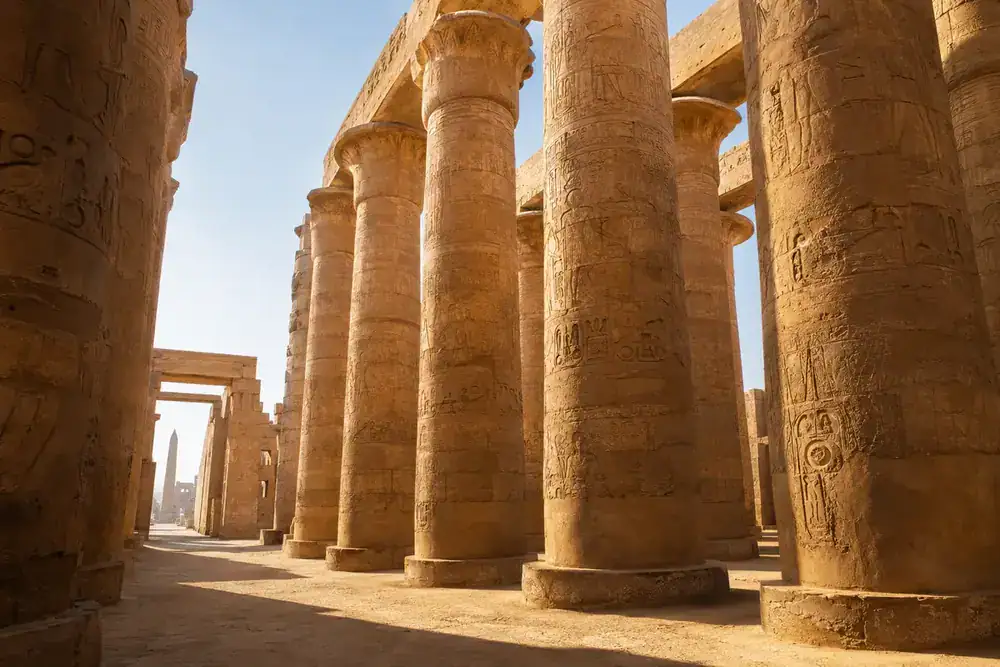
Karnak Temple in Luxor
To begin, walk through the Great Hypostyle Hall with its 134 monumental columns, then explore royal obelisks, pylons and sacred precincts dedicated principally to Amun-Ra.
Explore Karnak Temple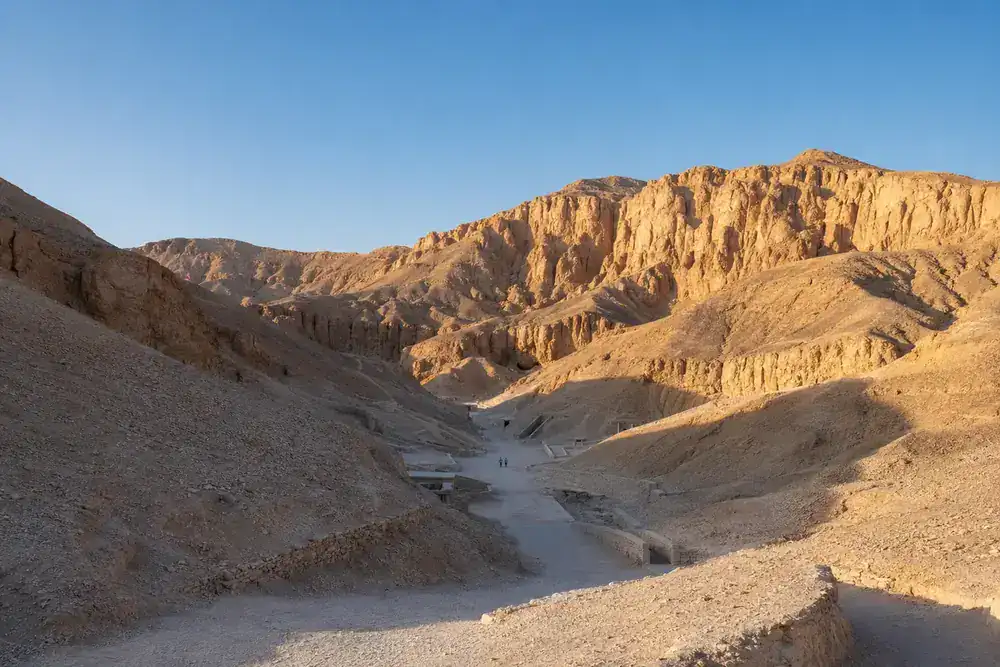
Valley of the Kings
Next, enter selected royal tombs decorated with sacred texts and vivid scenes created for the pharaohs’ afterlife.
Explore Valley of the Kings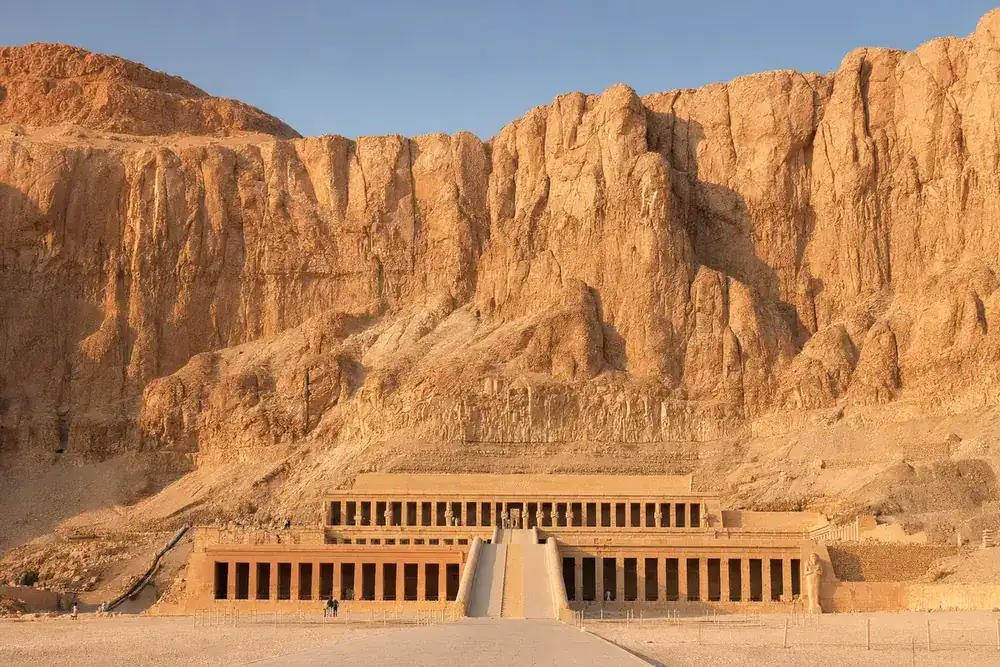
Hatshepsut’s legacy
Finally, discover the female pharaoh’s terraced temple at Deir el-Bahari and her soaring granite obelisk at Karnak.
Explore Hatshepsut TempleBest Historical Sites and Attractions in Luxor
More importantly, the destination is divided naturally by the Nile. While the East Bank contains the living city and its principal state temples, the West Bank contains the ancient necropolis and monuments associated with eternity.
Luxor East Bank temples
- Karnak Temple — a vast sacred city with the Great Hypostyle Hall, obelisks and Sacred Lake.
- Luxor Temple — a ceremonial temple expanded by Amenhotep III and Ramesses II.
- Avenue of Sphinxes — the restored processional road connecting Karnak and Luxor Temple.
- Temple of Mut — an important sacred precinct south of Karnak’s main enclosure.
Luxor West Bank royal valleys
- Valley of the Kings — the burial ground of New Kingdom pharaohs, including Tutankhamun.
- Valley of the Queens — royal family tombs, including the celebrated tomb of Nefertari.
- Tombs of the Nobles — decorated private tombs depicting ceremonies, work and daily life.
- Deir el-Medina — the village and tombs of the artisans who created the royal burials.
Mortuary temples of ancient Thebes
- Hatshepsut Temple — three terraces rising against the cliffs of Deir el-Bahari.
- Medinet Habu — the remarkably preserved mortuary temple of Ramesses III.
- Ramesseum — the mortuary complex of Ramesses II with monumental fallen statues.
- Colossi of Memnon — two enormous seated statues of Amenhotep III.
Museums and cultural places
- Luxor Museum — carefully displayed sculpture and objects from ancient Thebes.
- Mummification Museum — an introduction to embalming tools, materials and beliefs.
- Howard Carter House — the archaeologist’s former home near the royal valleys.
- Luxor Souq — local spices, textiles, crafts, cafés and evening street life.
Best Things to Do in Luxor Egypt
See the city from a balloon
For example, watch sunrise illuminate the Nile, fields and West Bank monuments from above.
Ride a sunset felucca
Moreover, enjoy a quieter view of the city, banana groves and surrounding mountains.
Visit Luxor Temple at night
In addition, see illuminated columns, statues and reliefs after the heat subsides.
Cycle on the West Bank
Similarly, travel between villages, fields and archaeological sites at a relaxed pace.
Explore local markets
Meanwhile, browse spices, alabaster, scarves, baskets and everyday Egyptian products.
Try Upper Egyptian food
Furthermore, sample fresh bread, molokhia, grilled meats, lentil dishes and sugarcane juice.
Attend a sound and light show
Finally, experience Karnak’s architecture through evening illumination and historical storytelling.
Luxor Egypt Itinerary: 2, 3 or 4 Days
For most travelers, two days cover the essential East and West Bank monuments. However, three or four days create a much better balance between famous sites, quieter tombs, museums and Nile experiences.
Essential Luxor Egypt in 2 Days
Begin day one at Karnak, Luxor Temple and the East Bank. Next, use day two for the Valley of the Kings, Hatshepsut Temple, Colossi of Memnon and Medinet Habu. Overall, this is the minimum itinerary I recommend for a first visit.
Classic Luxor Egypt in 3 Days
Then, add Deir el-Medina, the Valley of the Queens or Tombs of the Nobles. Afterwards, finish with Luxor Museum, a felucca ride or Luxor Temple after dark.
Slow & Deep Luxor Egypt in 4 Days
Finally, use the extra day for less-crowded West Bank sites, a sunrise balloon flight or a dedicated excursion toward Dendera. Consequently, this pace works especially well for history-focused travelers.
Best Day Trips from Luxor Egypt
Afterwards, once the main Theban sites are covered, several excursions extend the historical story beyond the city. In particular, Dendera is one of the strongest half- or full-day additions, while Abydos rewards travelers who want a deeper temple-focused journey.
Dendera Day Trip from Luxor Egypt
For example, travel north to the Temple of Hathor, known for its preserved roof, astronomical imagery and richly decorated chambers.
Abydos Day Trip from Luxor Egypt
Likewise, continue farther north for the Temple of Seti I, the famous king list and one of ancient Egypt’s most important sacred landscapes.
Nile Cruise from Luxor Egypt to Aswan
Alternatively, continue south by cruise through Edfu and Kom Ombo toward Aswan. Compare Nile cruises.
Luxor Egypt Travel Guide: Hotels, Transport & Practical Tips
Where to Stay in Luxor Egypt
- East Bank: convenient for the railway station, restaurants, Karnak and the riverside temple.
- West Bank: peaceful guesthouses close to fields, villages and archaeological sites.
- Luxury choices: Sofitel Winter Palace, Hilton Resort & Spa and Steigenberger Nile Palace.
- Resort setting: Mövenpick Resort on nearby Crocodile Island.
How to Reach Luxor Egypt
By air: flights connect the international airport with Cairo and selected destinations. Meanwhile, daytime and sleeper trains run along the Nile Valley. Alternatively, Nile cruises connect the city with Edfu, Kom Ombo and Aswan.
In addition, private road transfers are practical for Dendera, Abydos, Hurghada and Aswan.
Essential Luxor Egypt Travel Tips
- Ideally, begin open-air sites shortly after sunrise.
- In addition, carry water, sunscreen, a hat and comfortable shoes.
- Before photographing tomb interiors, check the current camera rules.
- Likewise, keep individual tomb tickets separate from the main valley ticket.
- Also, use licensed guides for deeper historical context.
- Finally, leave extra time for security checks and transport between both banks.
Luxor Egypt Distances & Trip Pacing
For example, Karnak lies about 3 km north of the city center, while the main West Bank monuments require a river crossing and road transfer. However, Dendera is roughly 65 km north and needs at least half a day. By comparison, Abydos is considerably farther and works best as a dedicated excursion.
| Season | Conditions | Best for |
|---|---|---|
| October–November | Warm days and pleasant evenings | Balanced sightseeing and sailing |
| December–February | Mild days, cool nights and peak demand | Long West Bank visits |
| March–April | Warm and generally comfortable | Temples, museums and Nile activities |
| May–September | Extremely hot around midday | Sunrise starts and indoor breaks |
Ancient Thebes: Why Luxor Is a UNESCO World Heritage Site
UNESCO describes Ancient Thebes with its Necropolis as a major testimony to Egyptian civilization at its height. In addition, the World Heritage property includes Karnak and Luxor temples on the East Bank together with the extensive necropolis on the West Bank. In other words, the modern city sits beside one of the most important archaeological landscapes in the world.
Egypt Tours That Include Luxor
If you want to include Luxor in a wider Egypt itinerary, these journeys connect the city with different destinations and travel styles. At the same time, each option includes important Luxor sightseeing while offering a different route beyond the city.
Cairo, Luxor & Alexandria Tour
For example, combine Cairo and Alexandria with a dedicated Luxor visit covering the Valley of the Kings, Hatshepsut Temple, the Colossi of Memnon, Karnak and Luxor Temple.
View 6-Day TourWonders of Egypt: Cairo, Alexandria, Luxor & Aswan
Alternatively, travel through four major Egyptian destinations in one private journey, with domestic flights, guided sightseeing and a dedicated Luxor section within the itinerary.
View Wonders of EgyptNile Cruise from Luxor to Aswan
Finally, start in Luxor with Karnak and West Bank sightseeing, then sail south through Edfu and Kom Ombo before completing the journey in Aswan.
View Luxor–Aswan CruiseMore Egypt Itineraries Featuring Luxor
Discover longer Egypt journeys that include Luxor alongside other destinations. Each program has its own itinerary and can help you choose the route that suits your trip.
11-Day Private Egypt Tour
A tailor-made private journey through Egypt, including Luxor.
Explore itinerary13-Day Egypt Tour
Cairo, Alexandria, Aswan, Luxor and Hurghada.
Explore itinerary9-Day Cairo & Nile Cruise
Explore Cairo, Luxor and Aswan on a Nile journey.
Explore itinerary8-Day Private Egypt Tour
Visit Cairo, Luxor, Aswan and Alexandria.
Explore itinerary10-Day Egypt Tour with Abu Simbel
Combine major historic destinations with Abu Simbel.
Explore itineraryLuxury Egypt Tours
Discover a premium Egypt itinerary including Luxor.
Explore itineraryExplore Luxor with Egypt-Based Travel Experts
Since 2007, Yalla Egypt Travel, operated by Yalla Egypt Vision, has arranged private Egypt journeys. In addition, our team combines Luxor’s archaeological sites with private transfers, Egyptologist-guided visits, Nile cruises and onward travel to Aswan, Cairo or the Red Sea according to each traveler’s route.
Where Is Luxor Egypt? Map & Location
Moreover, the city lies in Upper Egypt on both banks of the Nile. Meanwhile, Cairo is to the north, while Edfu, Kom Ombo and Aswan continue south along the classic Nile route.
Luxor Egypt FAQ: Essential Travel Questions
Planning Your Luxor Egypt Stay
How many days do I need in Luxor Egypt?
Generally, for most first-time visitors, two full days cover the essential East and West Bank monuments. However, three or four days are better if you want museums, quieter tombs, a balloon flight or a slower pace.
What are the best things to do in Luxor?
Begin with Karnak and Luxor Temple. Then cross to the West Bank for the Valley of the Kings, Hatshepsut Temple, Medinet Habu and the Colossi of Memnon. Afterwards, add a museum, felucca ride or balloon flight if time allows.
Which is better, Luxor East Bank or West Bank?
In short, neither replaces the other. For evening sightseeing and major state temples, the East Bank is best; meanwhile, the West Bank is essential for royal tombs, mortuary temples and the necropolis landscape.
Can Karnak and Luxor Temple be visited on the same day?
Yes. For example, visit Karnak early in the morning and save Luxor Temple for late afternoon, sunset or evening.
Tickets, Seasons & Experiences in Luxor Egypt
Does one Valley of the Kings ticket include every tomb?
No. Usually, the standard ticket covers a limited selection of open tombs, while some special tombs require separate tickets. Because arrangements change, confirm the current ticket system before entering.
Is a hot-air balloon ride in Luxor worth it?
For many travelers, yes. In return, a sunrise flight gives a broad view over the West Bank, Nile, fields and desert edge. Nevertheless, flights depend on weather and operating conditions.
What is the best time of year to visit Luxor?
Overall, October through April is generally the most comfortable period for outdoor sightseeing. By contrast, summer can be extremely hot, so very early starts become especially important.
Can I start a Nile cruise from Luxor?
Yes. Finally, Luxor is one of the classic starting points for Nile cruises sailing south toward Edfu, Kom Ombo and Aswan. Therefore, it combines naturally with a wider Upper Egypt itinerary.
Where is Luxor in Egypt?
Luxor is in Upper Egypt on the Nile, south of Cairo and north of Aswan. Meanwhile, the modern city is mainly on the East Bank, while many famous archaeological sites, including the Valley of the Kings and Hatshepsut Temple, are on the West Bank.
Is Luxor worth visiting for a first trip to Egypt?
Yes. Above all, Luxor brings together major New Kingdom temples, royal tombs and the landscape of ancient Thebes in one destination. For first-time visitors interested in ancient Egyptian history, therefore, it is one of the most important stops to combine with Cairo and, when time allows, Aswan.
Private Luxor Day Tours & Nile Experiences
Choose a private Luxor excursion, visit nearby temples or include Luxor in a longer Nile journey. Explore these itineraries and tailor them to your interests.
Ready to discover Luxor?
Therefore, build a private journey around Karnak, the riverside temple, the royal valleys, Nile experiences and expert-guided historical visits.