

Ramesseum Temple Egypt
Ramesseum Temple Egypt is the memorial temple of Ramesses II, where fallen colossi, Osiride pillars, Battle of Kadesh reliefs and ancient granaries preserve the ambitions of Egypt’s most celebrated pharaoh.
Why Ramesseum Temple Egypt Still Commands Attention
Ramesseum Temple Egypt stands on Luxor’s West Bank as the great memorial complex of Ramesses II. Moreover, built during the 13th century BCE, it united royal worship, religious ritual, administration and economic activity inside one monumental enclosure.
Unlike a royal tomb, the Ramesseum was designed to keep the king’s name and cult alive in the world of the living. Therefore, its courts, columned halls and sanctuaries presented Ramesses as a divinely supported ruler. At the same time, storerooms, kitchens and workshops sustained the temple community.
Today, fallen masonry makes the complex feel dramatic rather than incomplete. In fact, its surviving statues and reliefs reveal both the scale of Ramesses II’s ambitions and the organisation behind an Egyptian “temple of millions of years.” For a broader route, explore our guide to ancient Egyptian temples .
Ramesses II and His Memorial Temple at Thebes
Ramesses II ruled for more than six decades during Egypt’s 19th Dynasty. Consequently, his name appears on monuments from the Nile Delta to Nubia. However, the Ramesseum had a special purpose: it supported his cult beside the royal necropolis of western Thebes.
First, the temple connected the king with Amun-Re and the sacred landscape of Thebes. Moreover, its decoration celebrated military power, royal ceremonies and divine offerings. Therefore, the building expressed the ideal image of kingship rather than serving as a simple historical record.
Furthermore, Ramesses created the rock-cut temples at Abu Simbel and completed important work at Abydos Temple . As a result, visiting these monuments together reveals how he adapted architecture to different landscapes and religious traditions.
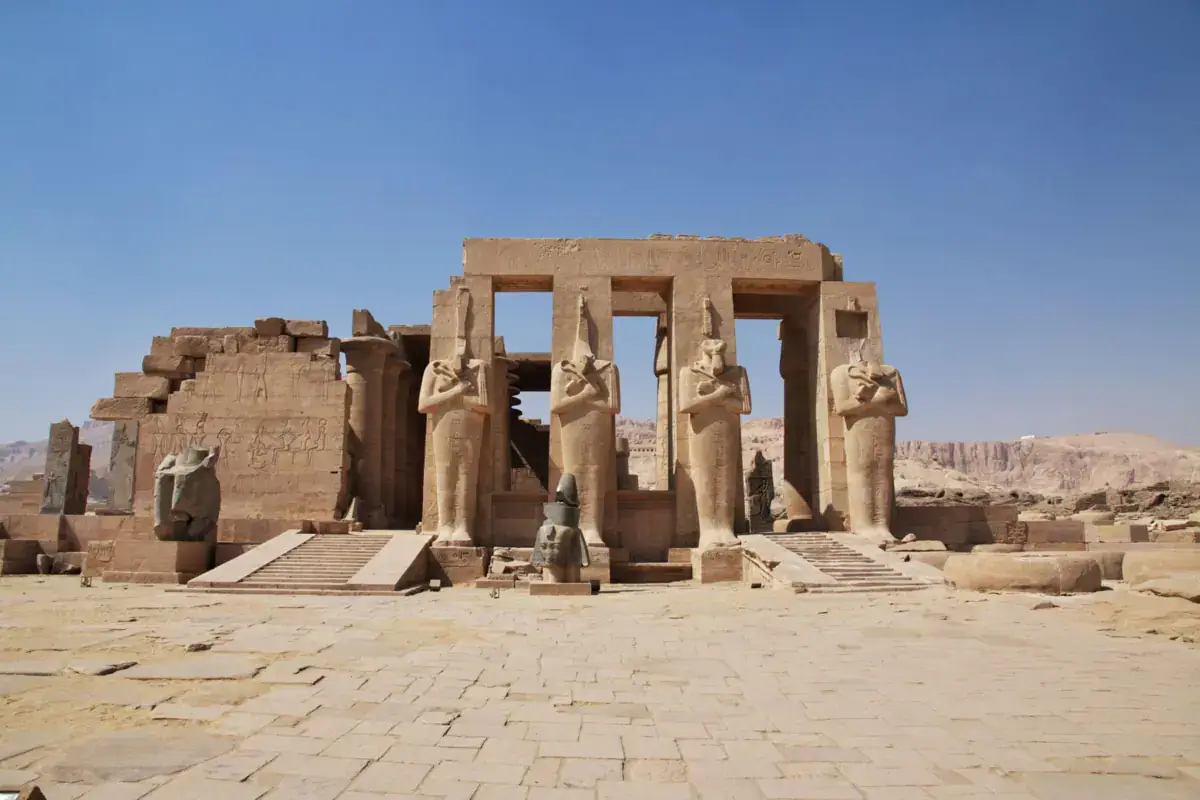
The Fallen Colossus and the Memory of Ozymandias
In particular, one of the Ramesseum’s most unforgettable sights is the broken colossus of Ramesses II. Originally, the enthroned figure rose more than 17 metres and weighed roughly 1,000 tonnes according to Egypt’s official monument guide.
Although the statue lies in enormous fragments, the surviving head, torso and carved throne still demonstrate exceptional engineering. Moreover, the contrast between the king’s intended permanence and the fallen stone later helped connect the site with the name “Ozymandias,” a Greek form of Ramesses II’s throne name.
In addition, for reliable archaeological background, consult the official Egyptian Ministry of Tourism and Antiquities guide to the Ramesseum .
The broken colossus does not diminish the monument. Instead, it makes the scale of Ramesses II’s original vision easier to grasp.

Battle of Kadesh Reliefs at Ramesseum Temple
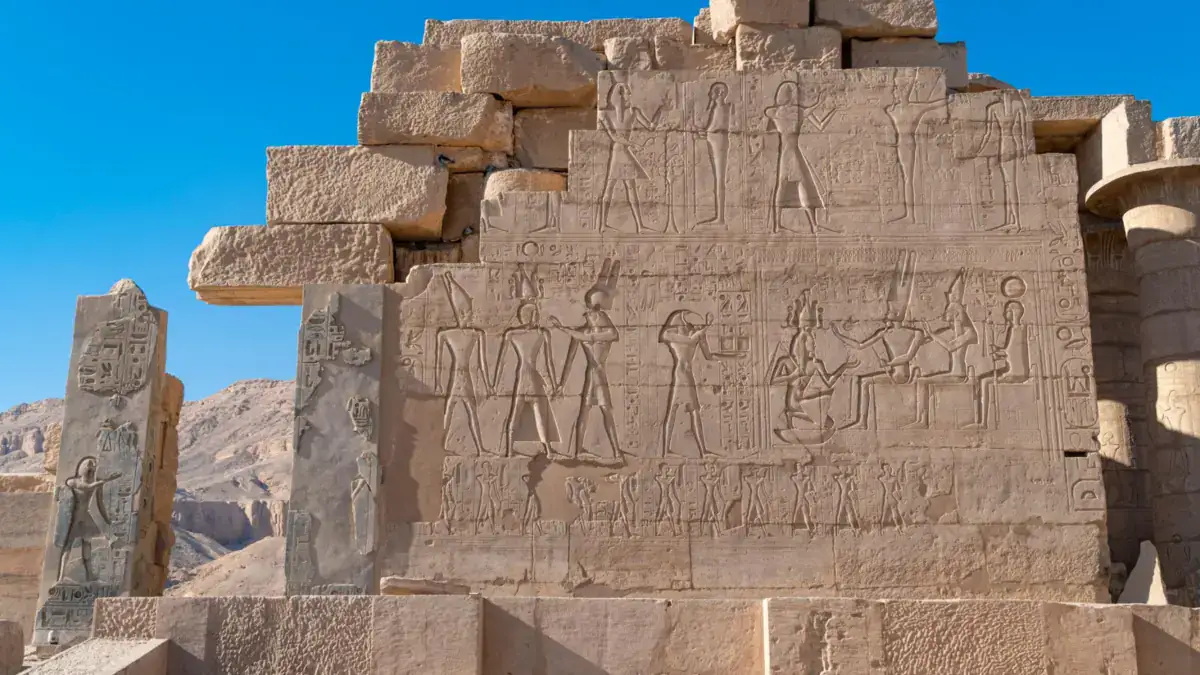
For example, the first pylon and court preserve episodes connected with the Battle of Kadesh, fought between Egyptian and Hittite forces. Rather than offering a neutral report, the scenes present Ramesses II as the decisive defender of Egypt and cosmic order.
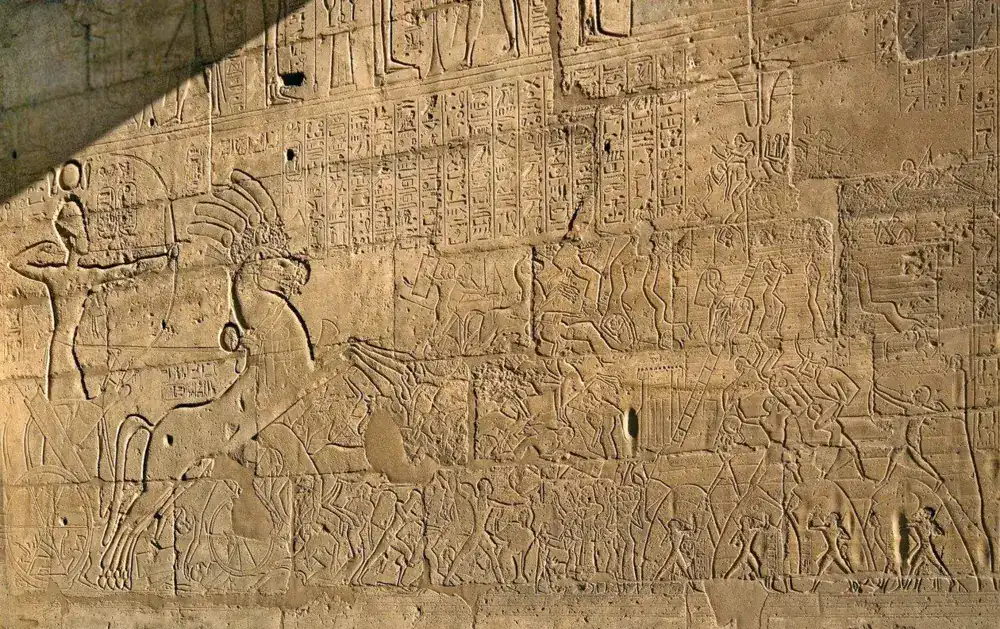
Battle and Royal Power
First, dense groups of soldiers, chariots and fortified places transform warfare into a monumental royal narrative.

Royal Processions
Next, ordered processions place the royal family and officials inside the temple’s ceremonial programme.

Offerings to the Gods
Finally, offering scenes show the king maintaining maat through ritual action before the gods of Egypt.
Osiride Pillars, Courts and the Hypostyle Hall
First, visitors move through a sequence of pylons, courts and columned halls. Next, as the route advances, spaces become more restricted and symbolically sacred. Consequently, this gradual transition is common in Egyptian temple architecture, yet the Ramesseum gives it a strongly royal identity.
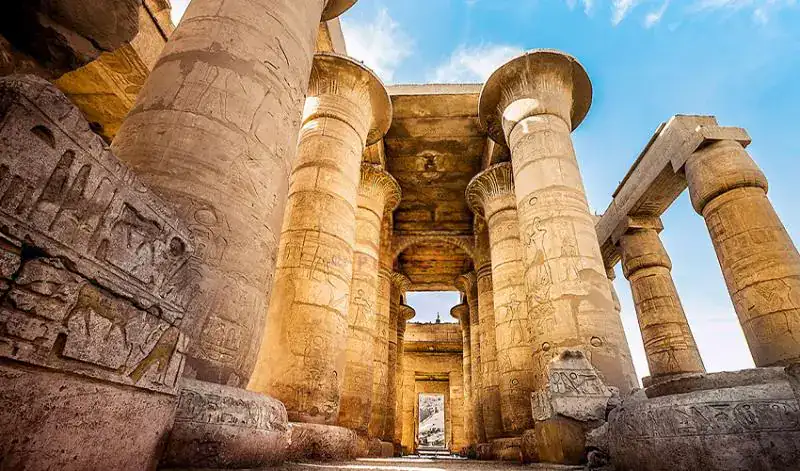
Moreover, in the second court, Osiride figures merge the king with the form of Osiris. Beyond them, the hypostyle hall originally contained rows of monumental columns decorated with ritual scenes. In addition, several columns and ceiling sections still preserve traces of colour.
Meanwhile, the orientation and decoration connected the complex with the wider Theban landscape. Therefore, compare this ceremonial architecture with nearby Karnak Temple and Luxor Temple on the East Bank.
- Monumental pylons defined the temple approach.
- Open courts hosted visible royal ceremonies.
- Osiride pillars linked Ramesses II with renewal.
- The hypostyle hall led toward the sacred inner rooms.

Ramesseum Granaries, Storerooms and Daily Life
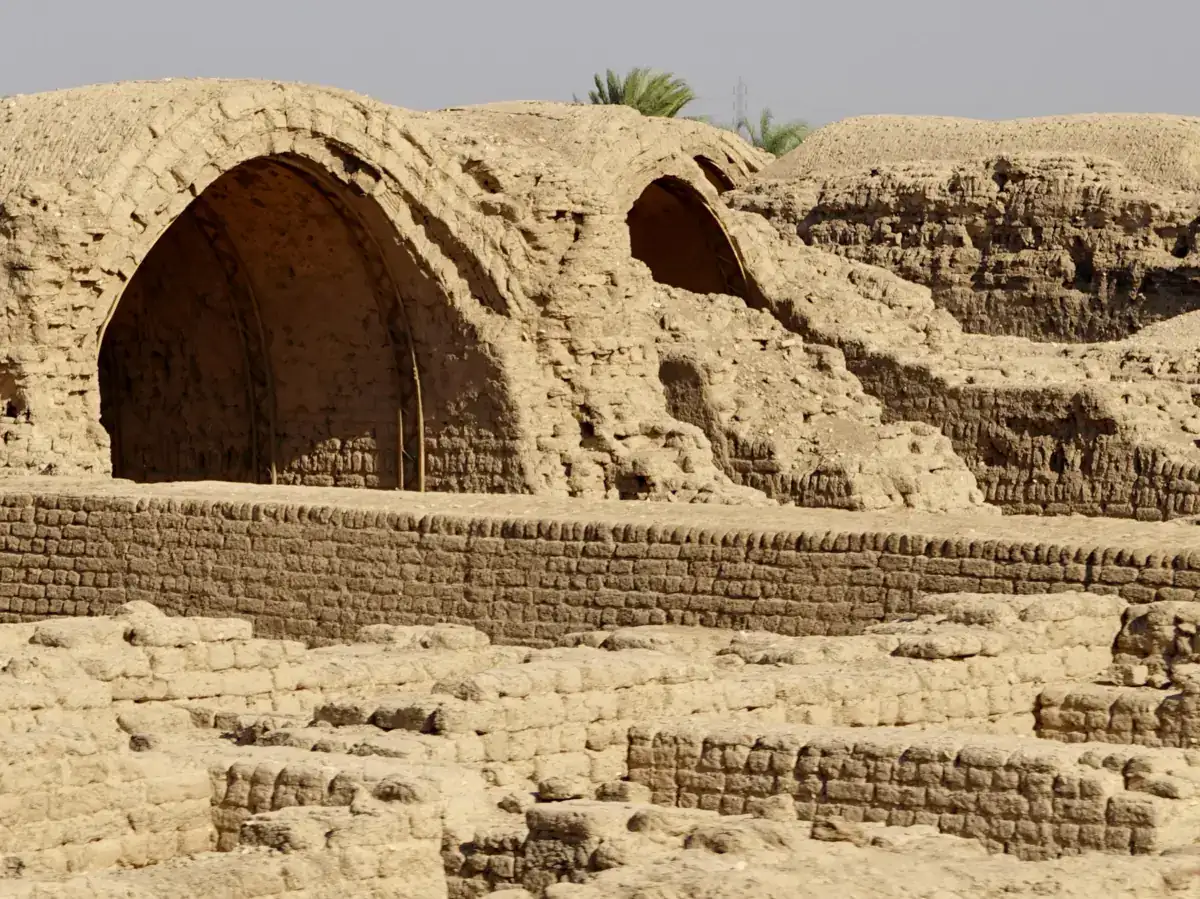
The Ramesseum was more than a setting for royal ritual. Around the stone temple, extensive mudbrick buildings stored grain, equipment and supplies. Therefore, the complex also operated as an economic institution with staff, workshops and administrative responsibilities.
Remarkably, rows of vaulted magazines still survive. Their thick mudbrick walls moderated heat, while their repeated chambers created practical storage areas. In addition, archaeological evidence from the wider complex points to scribal and institutional activity.
These buildings help explain how temples controlled resources and supported workers and priests. Consequently, they are essential to understanding the Ramesseum as a living organisation rather than an isolated monument.
Ramesseum Temple Egypt Gallery
Look beyond the famous colossus. The surviving pillars, reliefs, passages and mudbrick buildings reveal how architecture, worship and administration worked together across the complex.





Visiting Ramesseum Temple in Luxor
First, the Ramesseum lies on Luxor’s West Bank near several major mortuary temples and tomb areas. Therefore, it combines well with Medinet Habu, the Valley of the Kings or Deir el-Medina. Nevertheless, allow enough time to examine the reliefs and mudbrick magazines rather than treating the site as a quick photo stop.
A slower visit suits history and photography enthusiasts.
Cooler temperatures make open courts more comfortable.
Softer light improves relief visibility and photographs.
Add the Valley of the Kings or nearby temples.
Before You Go
However, opening hours, ticket prices and photography rules can change. Consequently, confirm current arrangements shortly before your visit. Finally, bring water, sun protection and comfortable shoes because much of the site remains exposed.
Find the Ramesseum
The temple stands between the cultivated Nile plain and the Theban desert, west of modern Luxor.
Open in Google Maps →Ramesseum Temple Egypt FAQ
Who built the Ramesseum Temple?
Ramesses II built the Ramesseum during Egypt’s 19th Dynasty as his royal memorial temple on the West Bank of Thebes.
Why is it called the Ramesseum?
The modern name refers to Ramesses II. Originally, the monument carried a longer ceremonial name that identified it as the king’s “temple of millions of years” within the estate of Amun.
What is special about the Ramesseum?
This site combines a colossal fallen statue, Battle of Kadesh reliefs, Osiride pillars, a hypostyle hall and unusually extensive mudbrick storerooms and granaries.
How long should I spend at the Ramesseum?
Allow about 60 to 90 minutes. However, visitors interested in reliefs, architecture or photography may prefer a longer visit.
Can I combine the Ramesseum with the Valley of the Kings?
Yes. Both sites lie on Luxor’s West Bank. In addition, you can combine the temple with Medinet Habu, Deir el-Medina or the Colossi of Memnon.
Is the Ramesseum the tomb of Ramesses II?
No. The Ramesseum was his memorial temple. Ramesses II’s royal tomb, KV7, lies separately inside the Valley of the Kings.
Walk Through the Legacy of Ramesses II
Let Yalla Egypt Travel connect the Ramesseum with Luxor’s West Bank monuments in a comfortable private itinerary led by a knowledgeable Egyptologist.