
Valley of the Kings
The Valley
of the Kings
Step beneath the silent Theban cliffs and enter Luxor’s legendary royal necropolis—where celestial ceilings, sacred texts and the stories of Egypt’s greatest pharaohs have survived for more than three millennia.
Quick Answer
What Is the Valley of the Kings?
The Valley of the Kings is a royal burial ground on the west bank of Luxor, ancient Thebes. New Kingdom pharaohs and several other royal or elite individuals were buried in rock-cut tombs here, especially during Egypt’s 18th, 19th and 20th Dynasties (c. 1550–1069 BCE). The site is famous for tombs such as Tutankhamun’s KV62, Seti I’s KV17 and Ramesses VI’s KV9, and it forms part of the UNESCO World Heritage property of Ancient Thebes with its Necropolis.
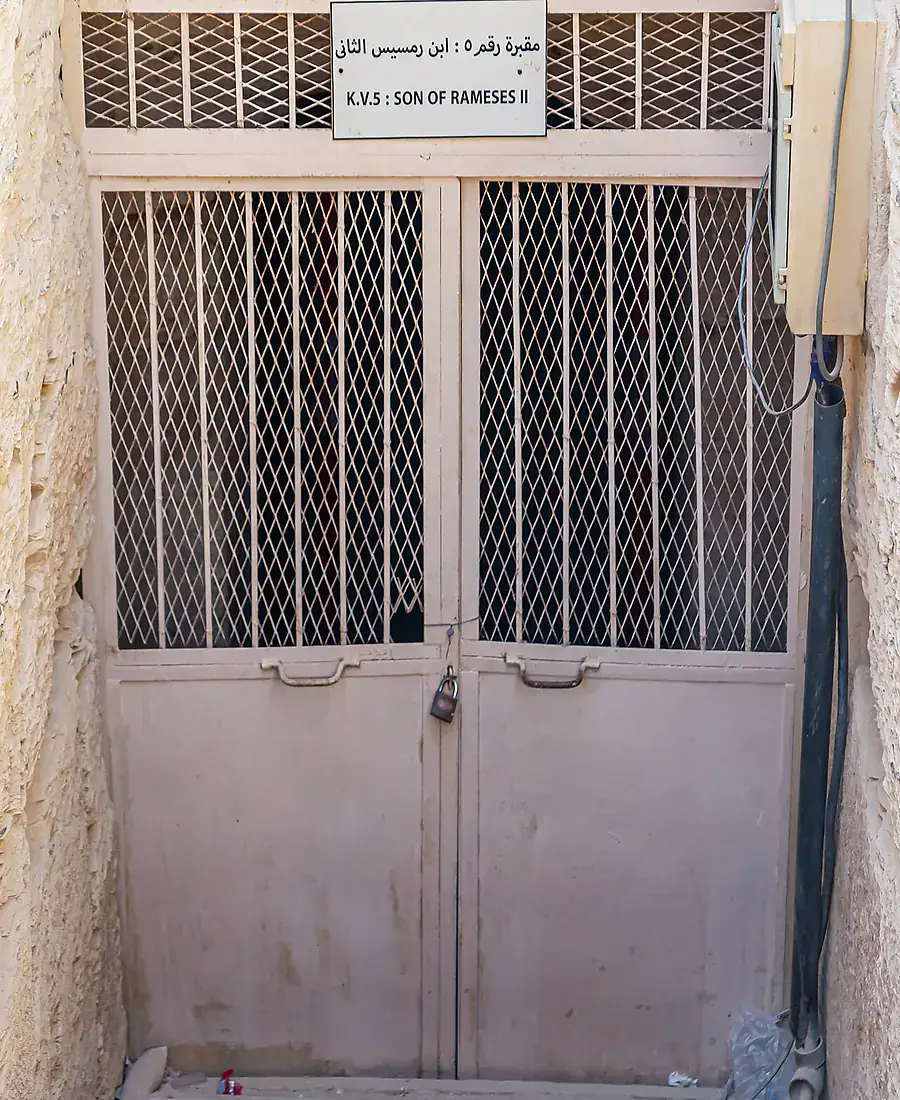
A Sacred Landscape
Why Was the Valley of the Kings Chosen?
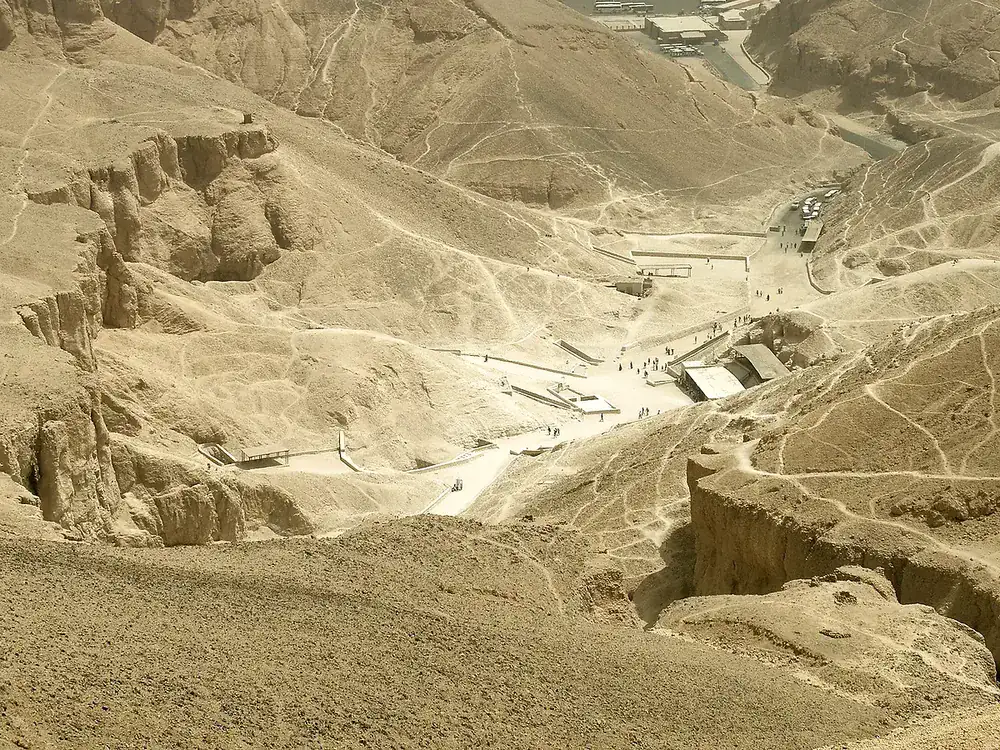
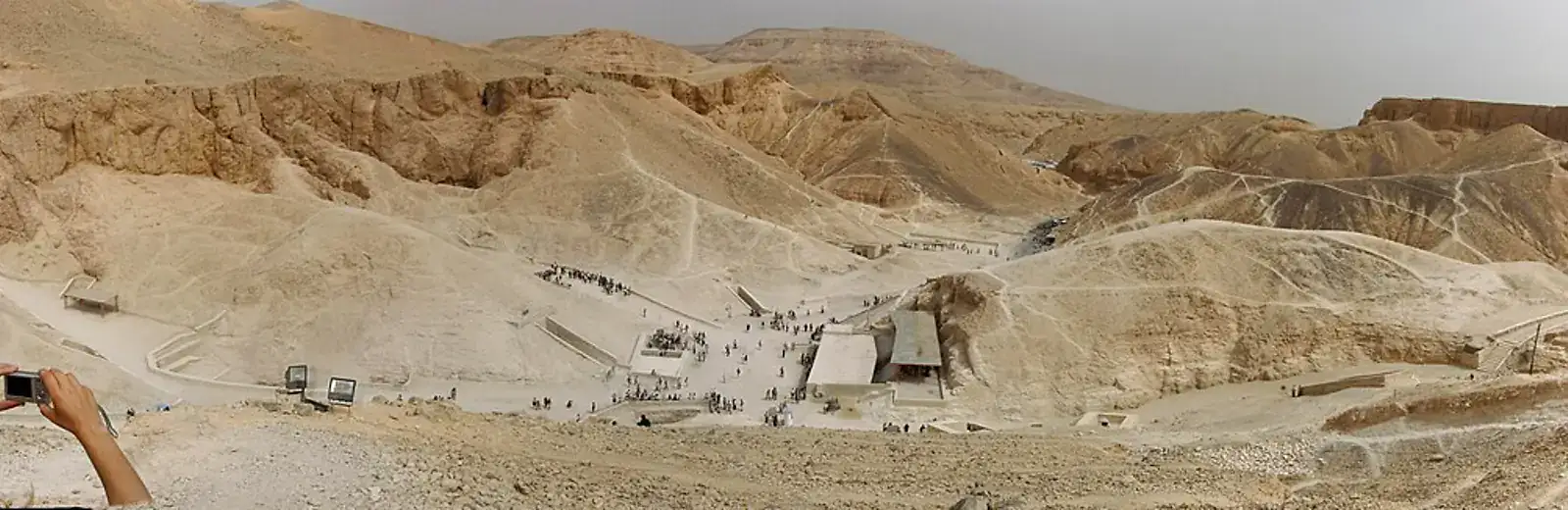
The Valley of the Kings is the New Kingdom royal necropolis on Luxor’s West Bank, used especially by rulers of the Eighteenth, Nineteenth and Twentieth Dynasties. The official Egyptian Ministry describes more than sixty tombs, plus unfinished cuttings, divided between the famous East Valley and the smaller West Valley.
New Kingdom rulers placed their tombs in a secluded desert wadi rather than inside highly visible pyramids. The west bank carried funerary associations because the sun set in the west, while the pyramid-shaped peak above the valley reinforced ideas of rebirth. The isolation also offered greater security, although many tombs were robbed in antiquity.
Architecture of Eternity
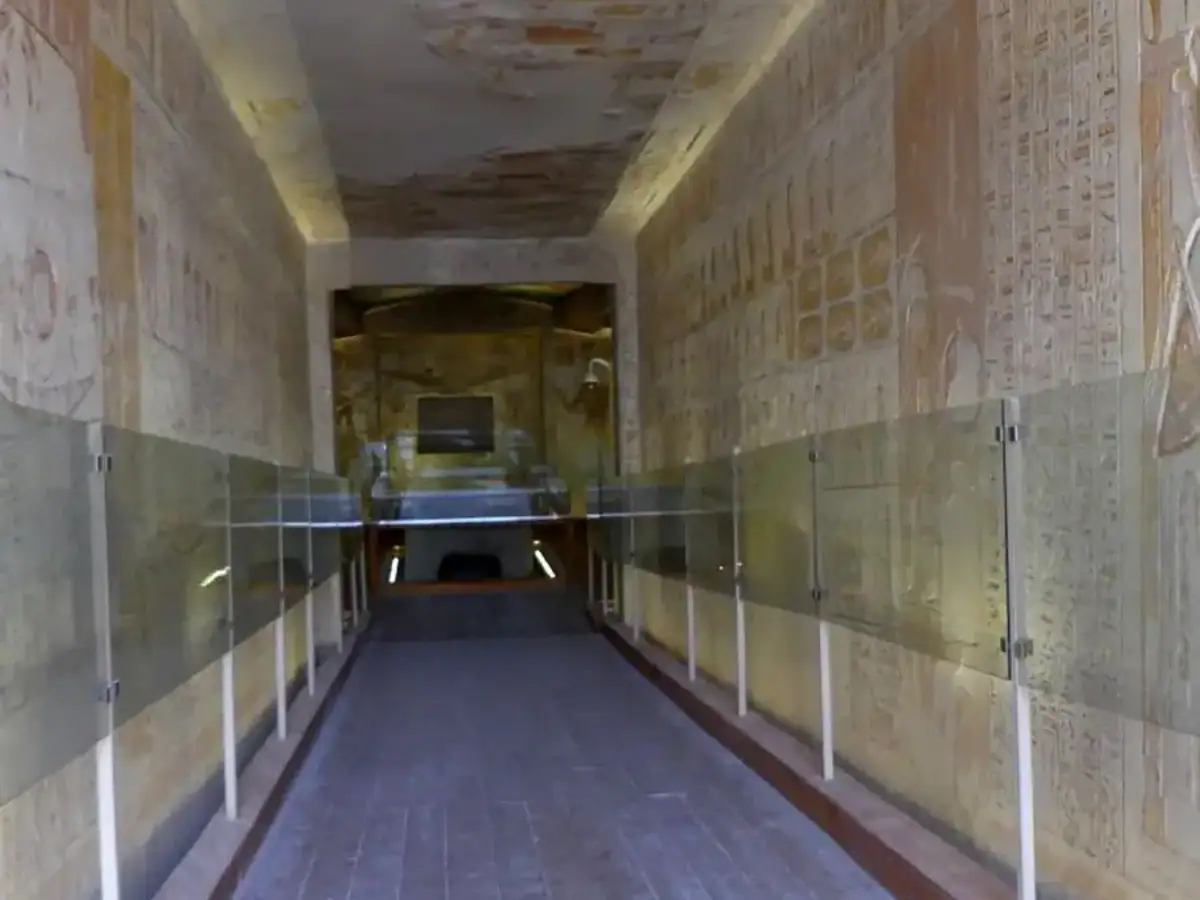
Inside a Valley of the Kings Tomb
Every passage transformed architecture into belief. In other words, the descent became a symbolic journey through darkness toward the king’s eternal rebirth.
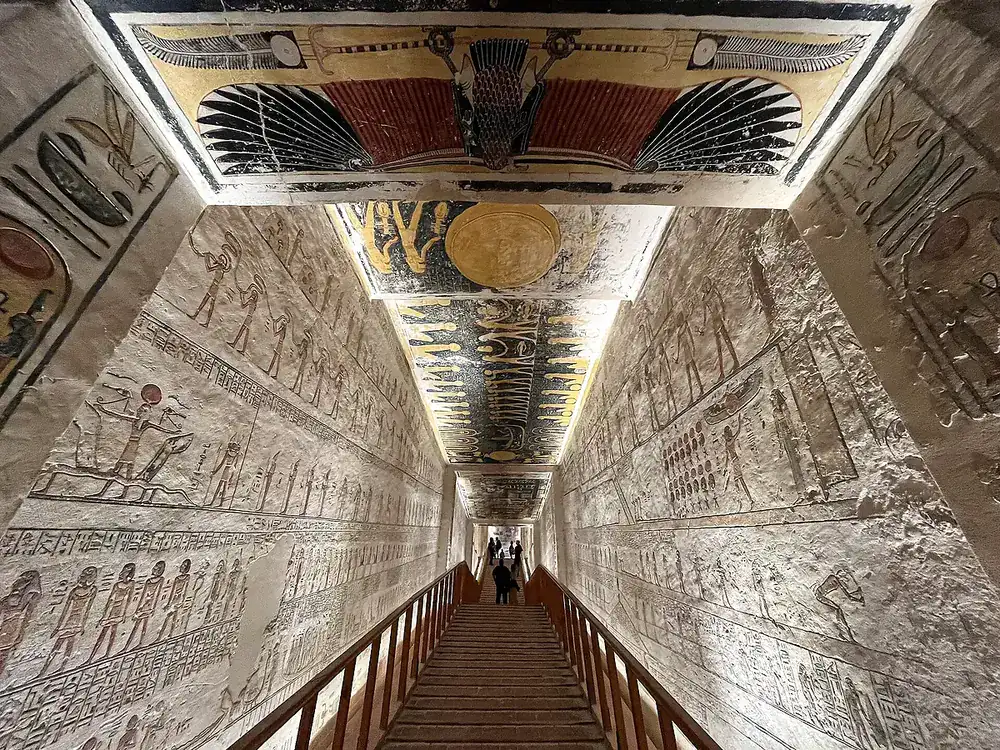
Entrance and Corridors
Stairs and sloping passages carried the royal burial deep into the mountain, away from the world of the living.
Painted Gates
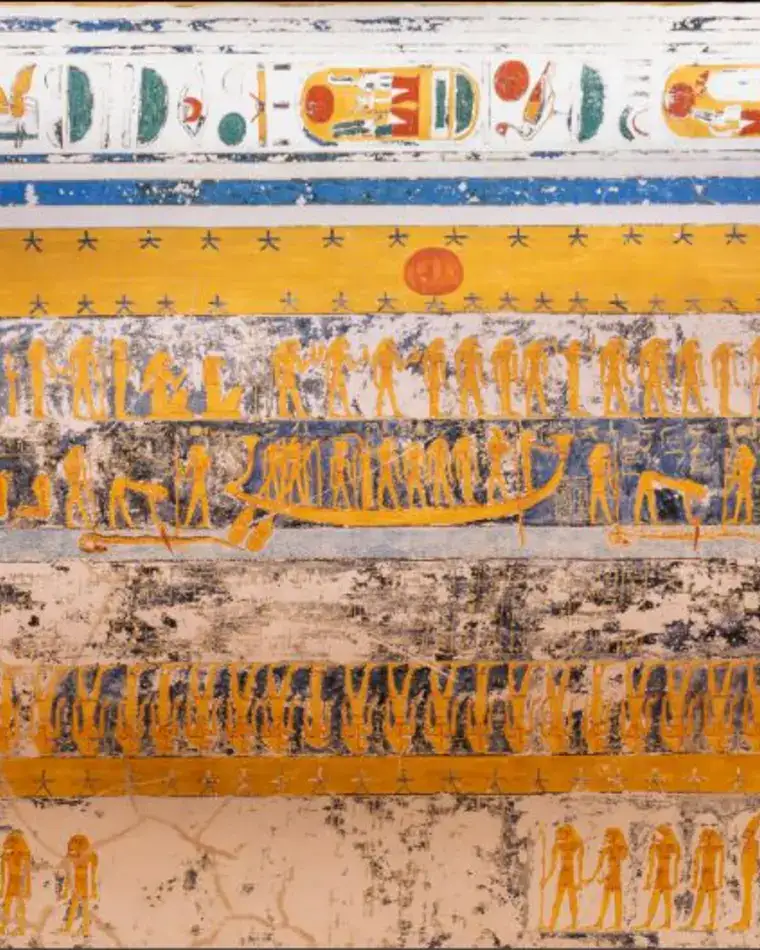
Scenes from the Amduat, Book of Gates and other sacred compositions mapped the sun god’s journey through night.
Pillared Halls
Side chambers held funerary objects while the changing plan reflected centuries of evolving royal beliefs.
Burial Chamber
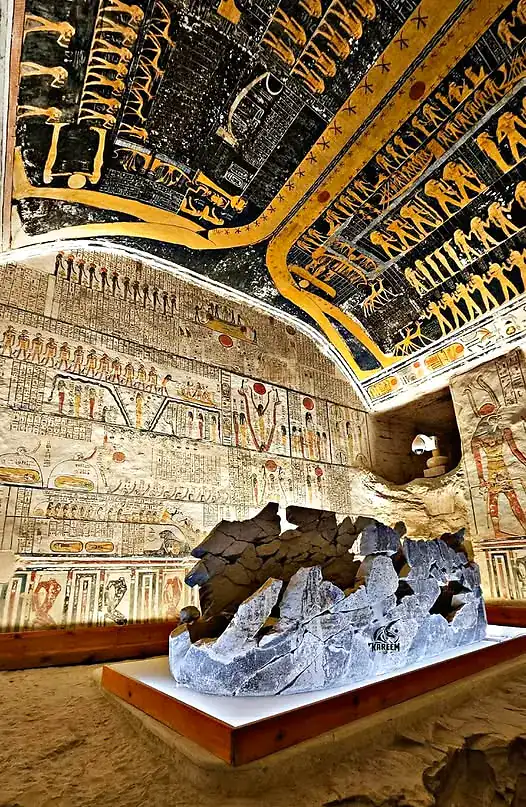
At the tomb’s heart stood the sarcophagus beneath a painted cosmos of stars, gods and renewal.
Painted Worlds Below Ground
Five Famous Valley of the Kings Tombs
Each tomb has its own rhythm, colour and atmosphere. Together, they reveal five centuries of royal ambition and sacred art.
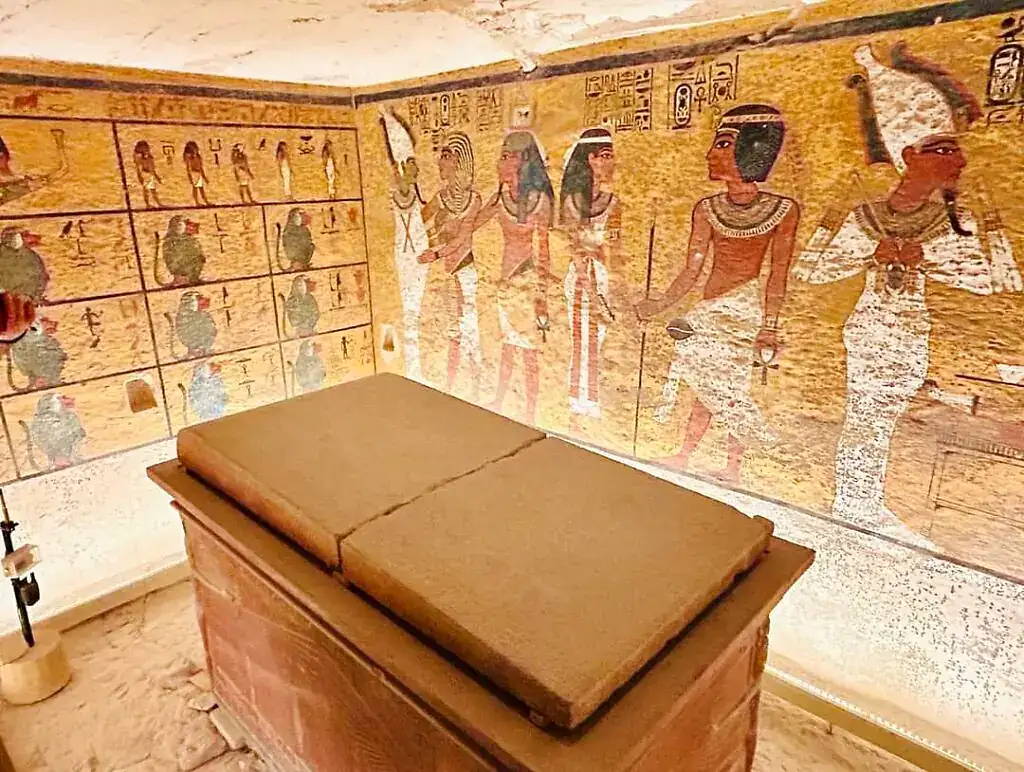 KV62 · 18th Dynasty
Tutankhamun
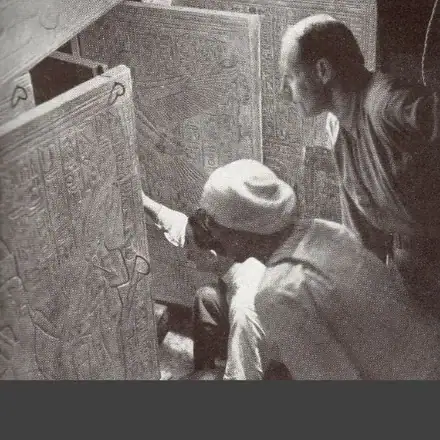
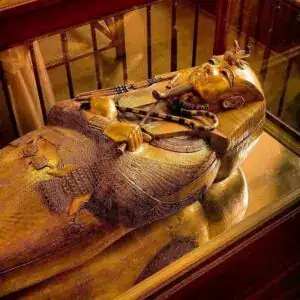
Howard Carter’s team uncovered the first sealed steps of KV62 in November 1922. The tomb is surprisingly small for a king, probably because Tutankhamun died young and his burial had to be prepared quickly.
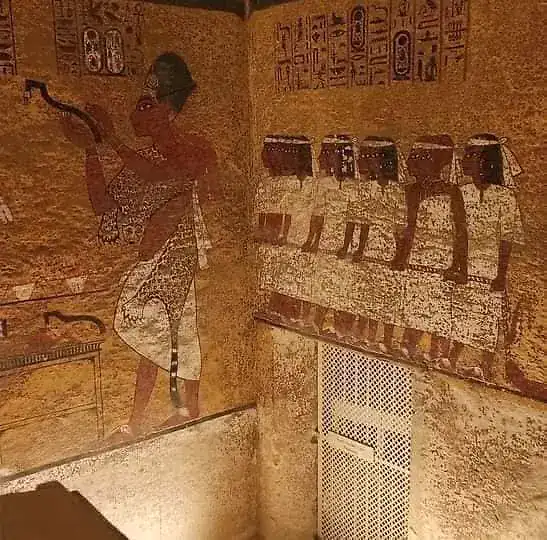
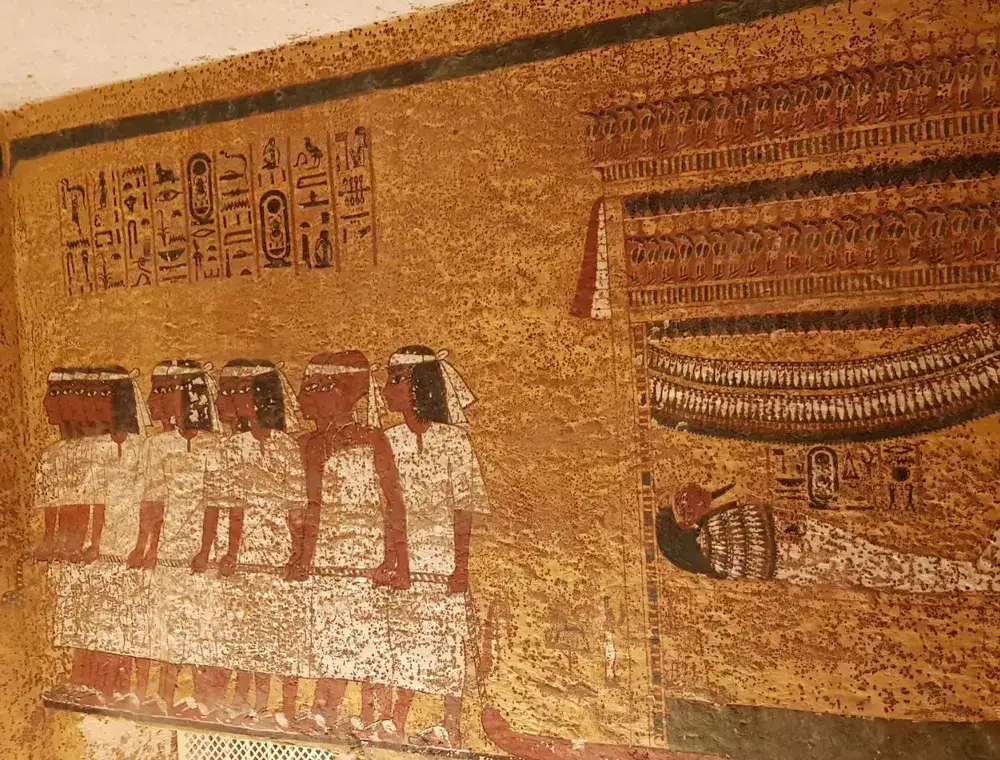
Its four chambers contained thousands of objects: gilded shrines, chariots, furniture, ritual statues and the nested coffins that protected the royal mummy. Today the treasures are preserved in museums, but the burial chamber still surrounds the king with scenes of his funeral and rebirth among the gods.
Look for the golden-yellow burial chamber and royal mummy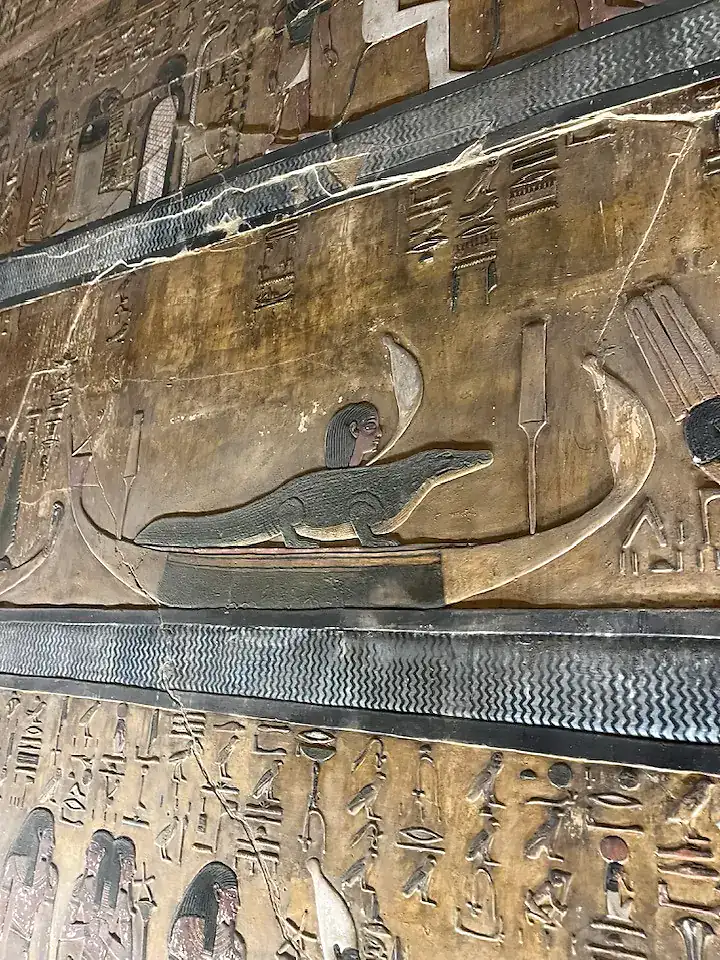 KV17 · 19th Dynasty
Seti I
Discovered by Giovanni Battista Belzoni in 1817, KV17 is among the longest, deepest and most complete royal tombs in the valley. Nearly every accessible surface was carved or painted with exceptional precision.
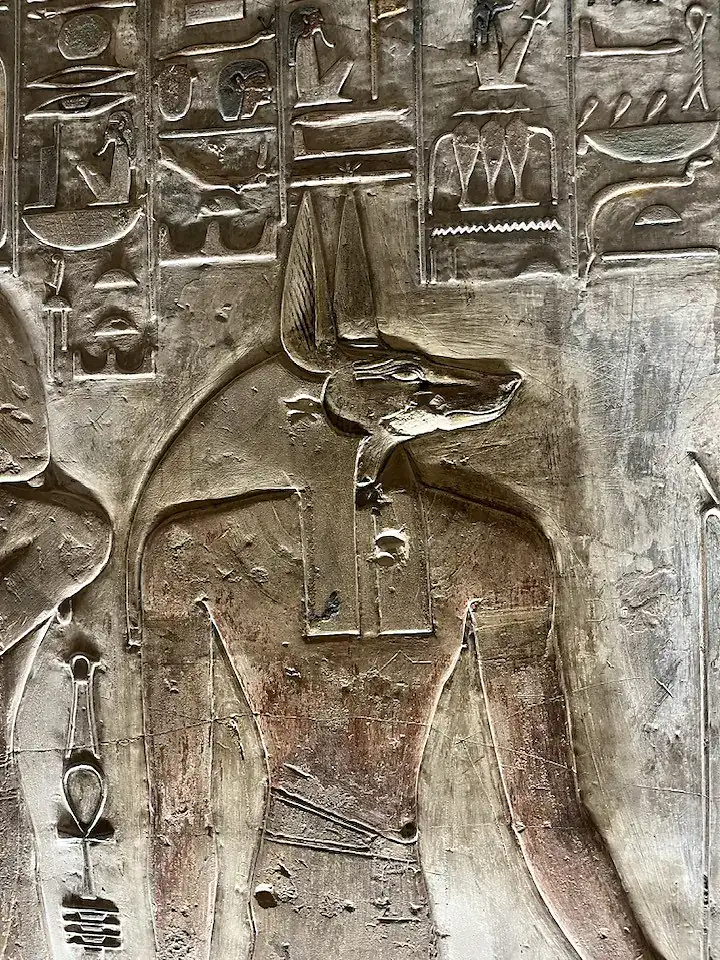
The decoration brings together several funerary compositions, including the Litany of Re, Amduat and Book of Gates. Instead of simple painted outlines, many scenes were cut as delicate relief, giving gods, hieroglyphs and ritual gestures extraordinary depth beneath the colour.
Look for exquisite reliefs and celestial imagery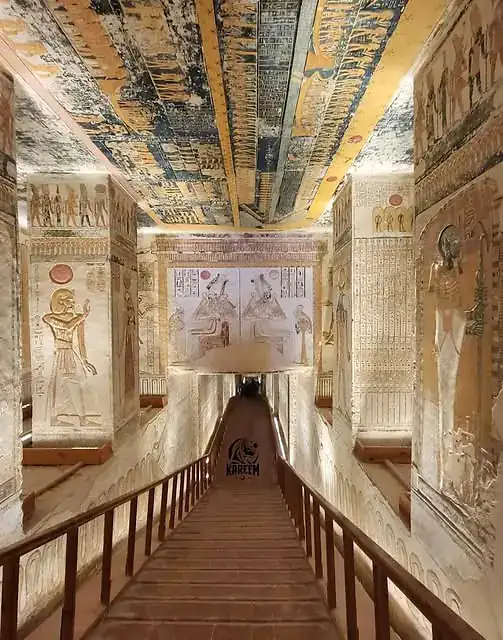 KV9 · 20th Dynasty
Ramesses VI
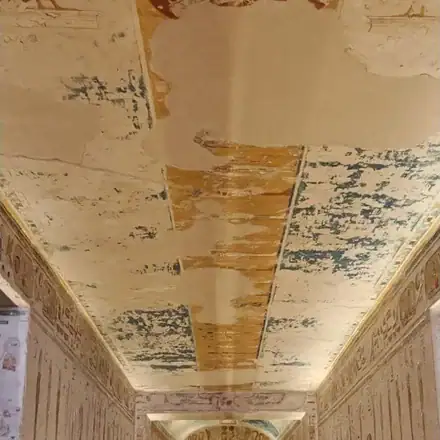
KV9 was begun for Ramesses V and later enlarged and redecorated for Ramesses VI. Its long, almost straight axis draws the eye through successive painted corridors toward the burial chamber.
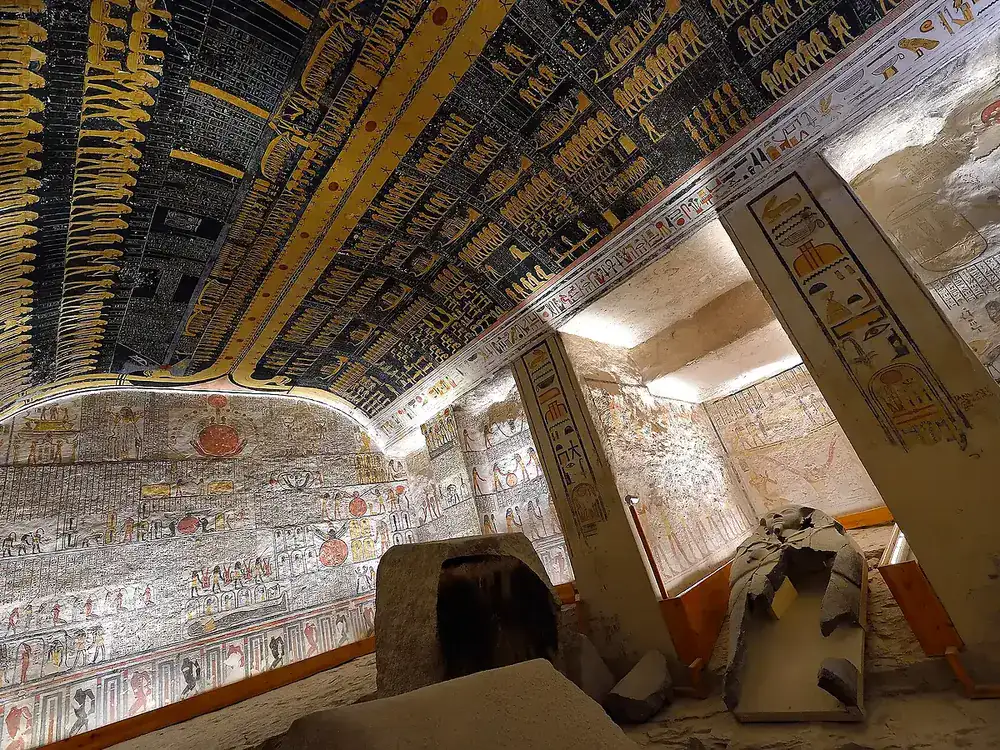
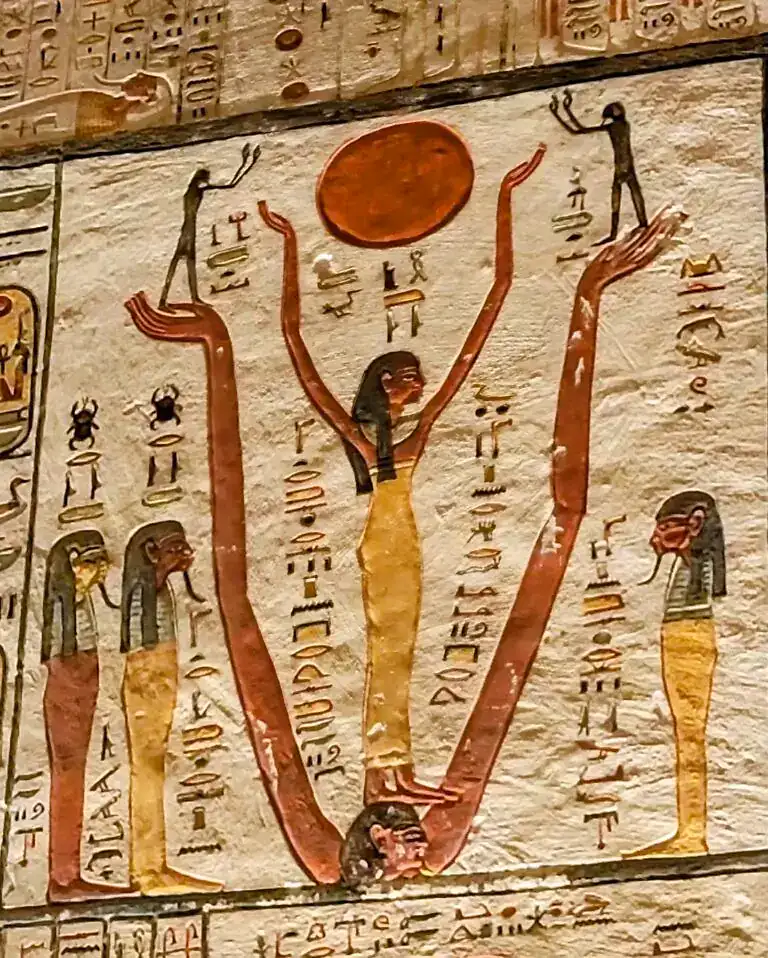
The ceiling becomes a vision of the cosmos. Monumental images of the sky goddess Nut show the sun entering her body at night and being reborn at dawn. This combination of scale, colour and celestial symbolism makes KV9 one of the valley’s most visually overwhelming interiors.
Look for the dramatic astronomical ceiling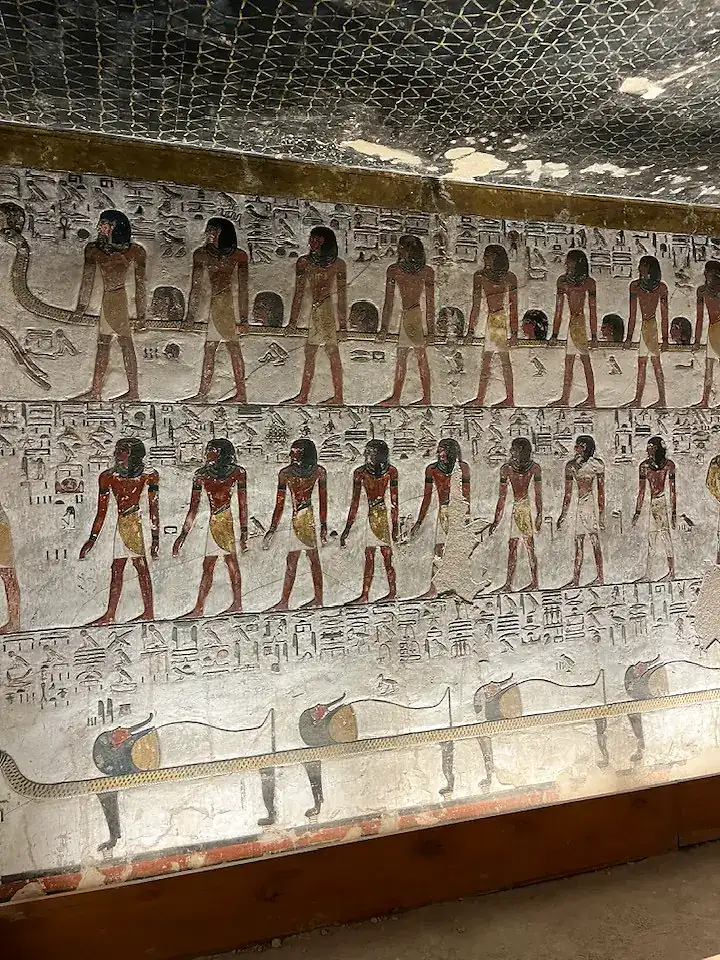 KV57 · 18th Dynasty
Horemheb
Horemheb’s burial marks an important change between the Eighteenth and Nineteenth Dynasties. Its architecture introduces a straighter axis, while its walls present one of the earliest extensive royal versions of the Book of Gates.
Some rooms were left unfinished when the king died. Red guidelines, black corrections, carved outlines and completed colour survive close together, allowing visitors to follow the ancient artists’ working process almost step by step.
Look for deities against vivid blue backgrounds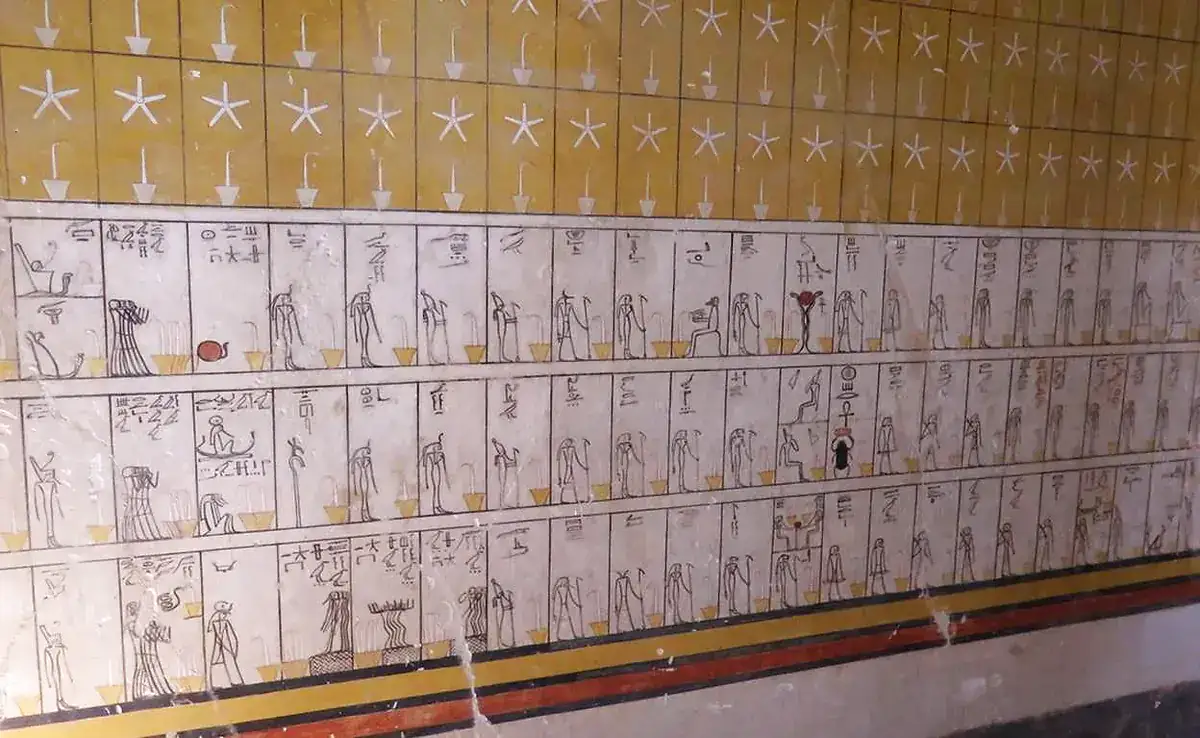 KV34 · 18th Dynasty
Thutmose III
Hidden high in a narrow ravine, KV34 is reached by a demanding climb. Its sharply turning corridors lead to an unusual oval burial chamber shaped like the royal cartouche that enclosed a king’s name.
The walls carry the complete Amduat in a deliberately restrained style: dark, almost calligraphic figures move across pale yellow surfaces like an enormous sacred papyrus. The result feels older, stranger and more intimate than the richly modelled tombs of later kings.
Look for elegant figures drawn across pale wallsDiscovery and Archaeology
Discoveries in the Valley of the Kings
Ancient visitors left graffiti, while robbers searched for treasure. Later, modern archaeologists mapped a landscape that still rewards careful investigation.
First, many tombs were robbed, and priests relocated royal mummies for protection.
Subsequently, Giovanni Battista Belzoni entered the magnificent tomb of Seti I.
Decades later, Howard Carter’s team discovered the sealed steps of Tutankhamun’s KV62.
Today, digital mapping, high-resolution recording and conservation continue to document and protect the necropolis. The Theban Mapping Project maintains detailed archaeological records, while conservation programs study how tourism and the tomb environment affect fragile wall paintings.
Plan Your Visit
How to Visit the Valley of the Kings
A little planning makes the visit far more rewarding. In particular, tomb access can rotate to protect fragile interiors.
Best Time
Visit early, particularly from October to April. The exposed valley becomes very hot by midday.
Getting There
The site lies on Luxor’s West Bank, around 40–50 minutes by road from central East Bank hotels.
Choose Tombs
The standard ticket covers selected open tombs; some celebrated tombs require separate tickets.
What to Bring
Wear sturdy shoes and carry water, a hat and sun protection. Some tombs have steep stairs.
Protecting Fragile Masterpieces
Conservation in the Valley of the Kings
Rock instability, flash floods, dust, humidity and heavy visitation all threaten these tombs. Consequently, conservation teams must balance public access with the survival of original pigments and plaster.
For deeper research, see the Getty Conservation Institute’s Tutankhamun conservation project and the Theban Necropolis Preservation Initiative.
Interactive Tomb Gallery
Move Through the Painted Afterlife
Swipe or use the arrows to travel through the gallery. Select any image to open it at full size, then continue with the previous and next controls.
Continue Exploring Luxor
Complete the Story of Ancient Thebes
Connect the royal tombs with the temples, monuments and landscapes that shaped New Kingdom Thebes.
Frequently Asked Questions
Valley of the Kings FAQ
Why is it called the Valley of the Kings?
The modern name describes its main role as a burial place for New Kingdom rulers. Archaeologists identify its tombs with “KV” followed by a number.
How many tombs are in the Valley of the Kings?
The site contains more than sixty numbered tombs, along with additional unfinished cuttings and pits ranging from small chambers to vast royal complexes.
Which tomb is the best to visit?
It depends on what is open. KV9 is admired for astronomical ceilings, KV17 for exceptional decoration, and KV62 for its connection to Tutankhamun. Separate tickets may apply.
Is Tutankhamun’s golden mask still inside?
No. The tomb retains the king’s mummy and burial chamber, while the famous mask and other funerary objects are preserved in museum collections.
How long should I spend in the valley?
Allow around two to three hours for several tombs, and more if you plan to enter separately ticketed tombs or combine the visit with other West Bank sites.
Can visitors take photographs?
Rules vary and may change. Follow current signs and staff instructions, avoid flash, and never touch painted walls.
Where is the Valley of the Kings?
The Valley of the Kings lies in the Theban hills on the west bank of the Nile at Luxor, opposite the ancient city of Thebes. It forms part of the wider UNESCO World Heritage property of Ancient Thebes with its Necropolis.
What are the East Valley and West Valley?
The necropolis has two principal branches. Most famous royal tombs lie in the East Valley, while the West Valley contains fewer tombs and is sometimes called the Valley of the Monkeys.
Research & Sources
Authoritative Sources for the Valley of the Kings
This guide combines practical local travel knowledge with archaeological and conservation sources. Visitor conditions can change, so official sources should be checked before travel.
Walk Through the Afterlife with a Private Guide
Discover the stories hidden in the walls—not only the names at the entrances.