
Karnak Temple in Luxor
Karnak Temple
Explore Karnak Temple in Luxor, the vast sacred complex of ancient Thebes shaped by generations of pharaohs and dedicated principally to Amun-Ra.
Karnak Temple in Luxor: Two Thousand Years of History
A monumental religious landscape that records the rise of Thebes, the power of Egypt’s pharaohs and the worship of Amun-Ra.
First, Karnak Temple in Luxor stands on the east bank of the Nile in Luxor, the site of ancient Thebes and part of the UNESCO World Heritage site of Ancient Thebes. In fact, it is not a single building, but an immense complex of temples, pylons, courtyards, chapels, obelisks and sacred spaces developed over almost two thousand years.
Moreover, the earliest substantial remains belong to the Middle Kingdom, when Senusret I established an important sanctuary for Amun. Consequently, Karnak reached its greatest splendour during the New Kingdom, when Hatshepsut, Thutmose III, Seti I, Ramesses II and other rulers enlarged it to honour the gods and express royal authority.
The Great Hypostyle Hall
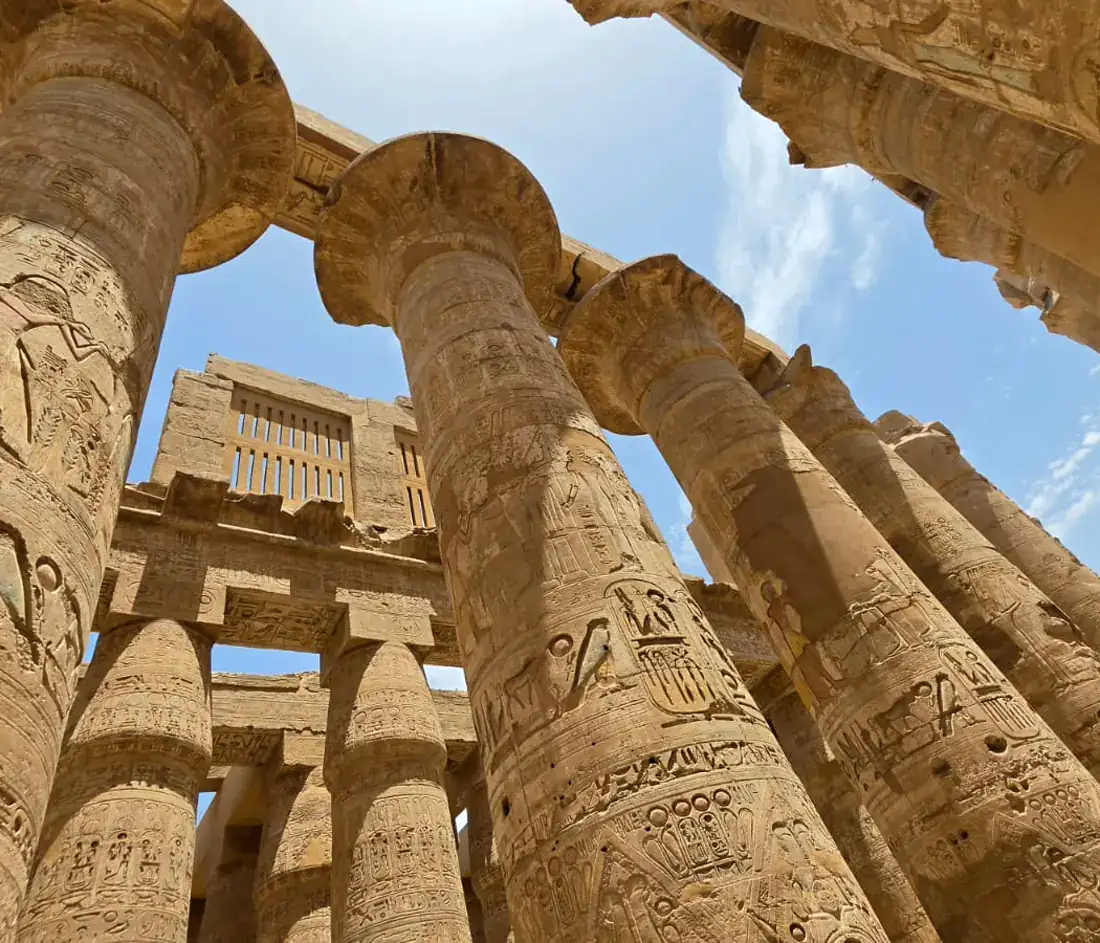
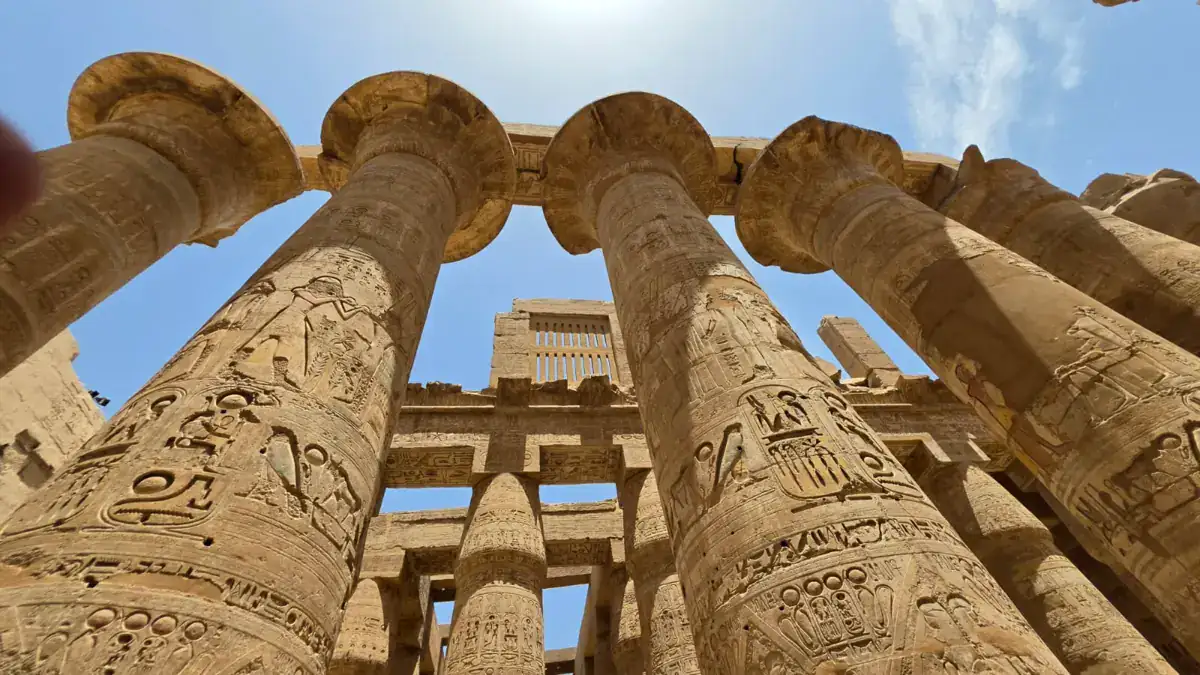
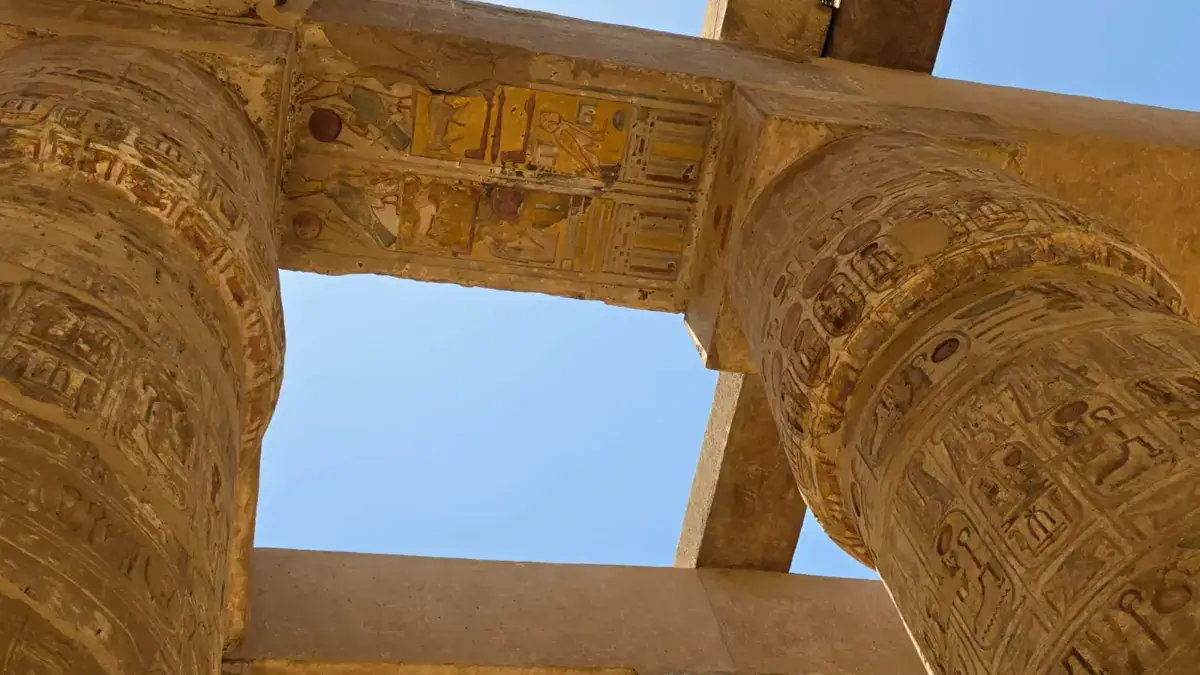
At the heart of the complex, one of Karnak’s greatest wonders contains 134 colossal columns arranged in 16 rows across roughly 5,000 square metres. Meanwhile, twelve central columns rise about 21 metres, creating a stone avenue once lit through high clerestory windows. Moreover, Seti I began much of its decoration, and Ramesses II continued the work.
For specialist architectural and epigraphic research, consult the Karnak Great Hypostyle Hall Project.
A Forest of 134 Columns
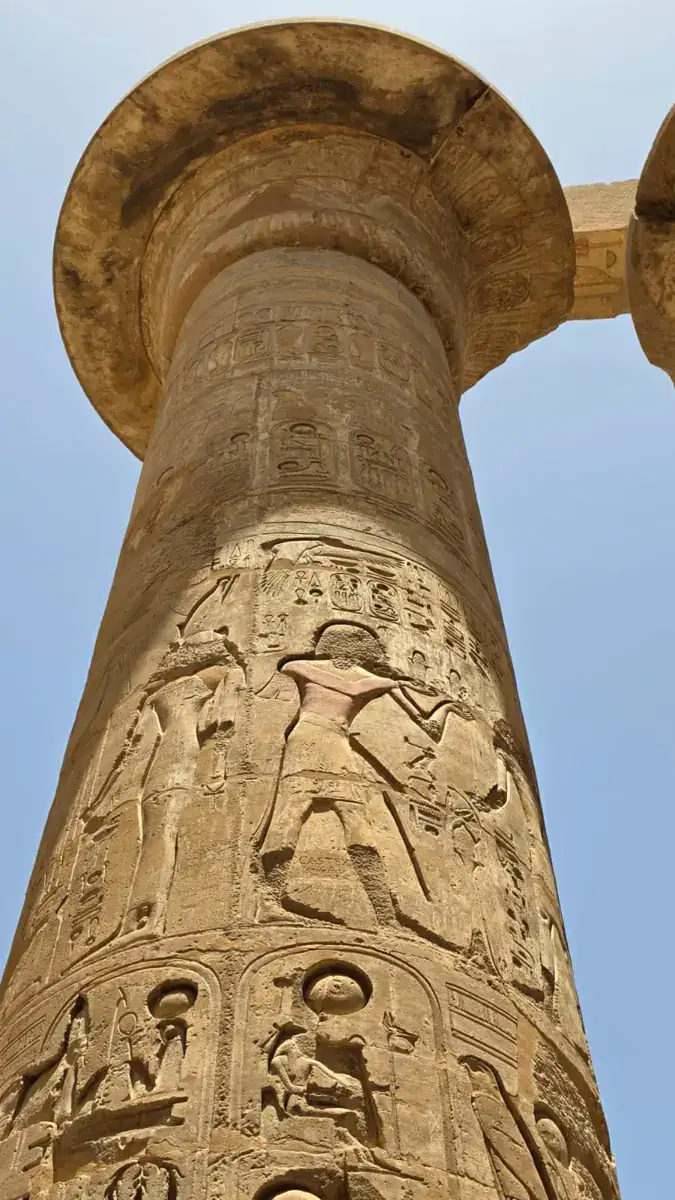
Symbolically, the columns evoke papyrus plants growing from the primeval marsh. Moreover, their immense shafts, capitals and surrounding walls carry royal names, divine images and scenes of offerings to Amun-Ra.
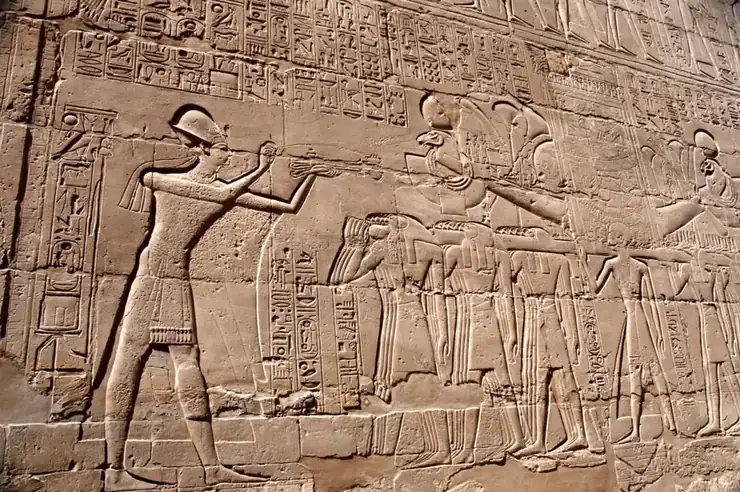
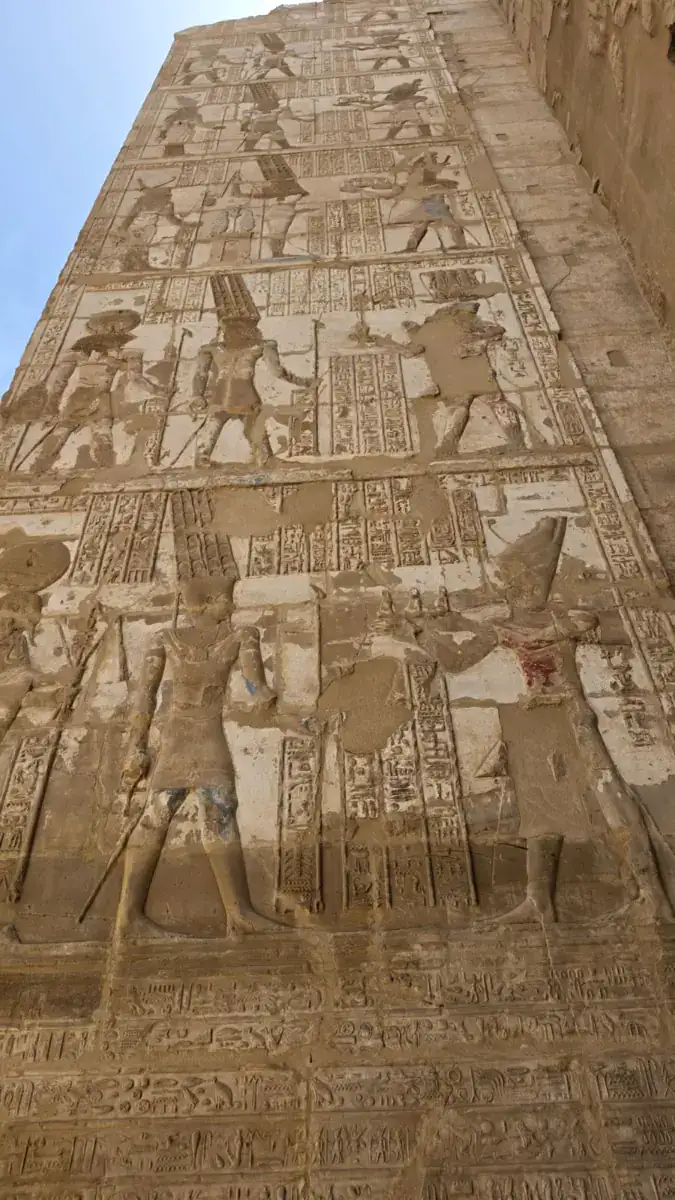
In addition, reliefs on the exterior walls record military campaigns of Seti I and Ramesses II, linking religious devotion with royal power.
- 134 monumental sandstone columns in 16 rows.
- Twelve central columns approximately 21 metres high.
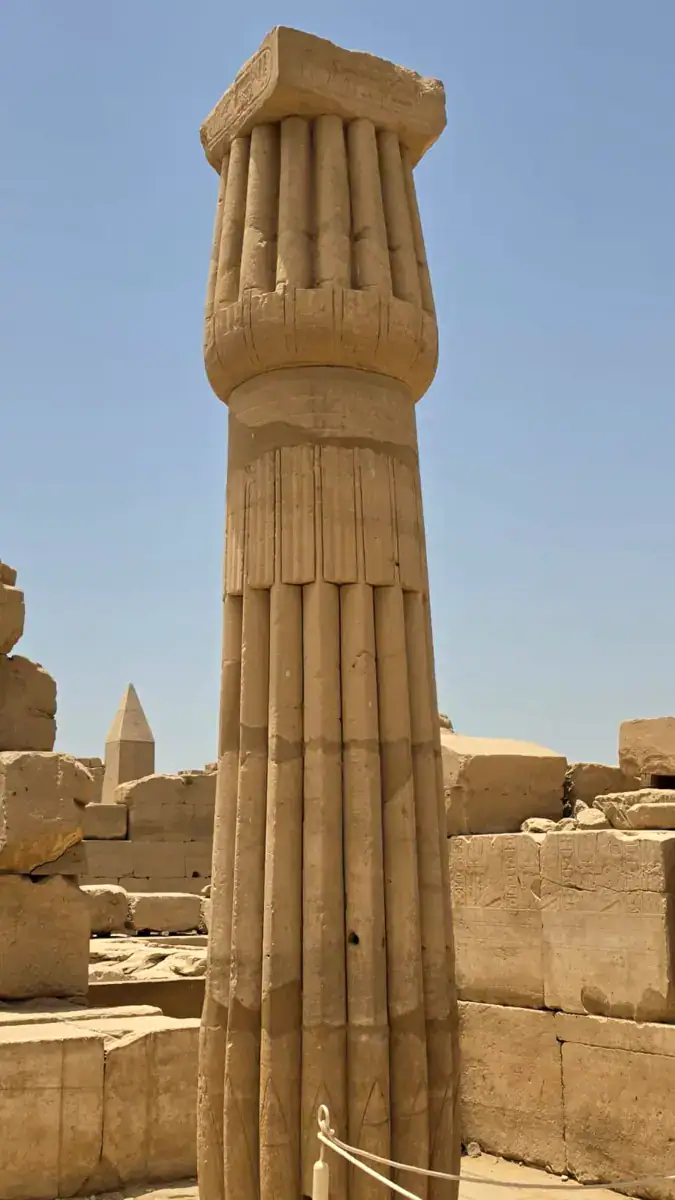
- Open and closed papyrus capitals.
- Religious, royal and military inscriptions.

The Obelisks of Karnak
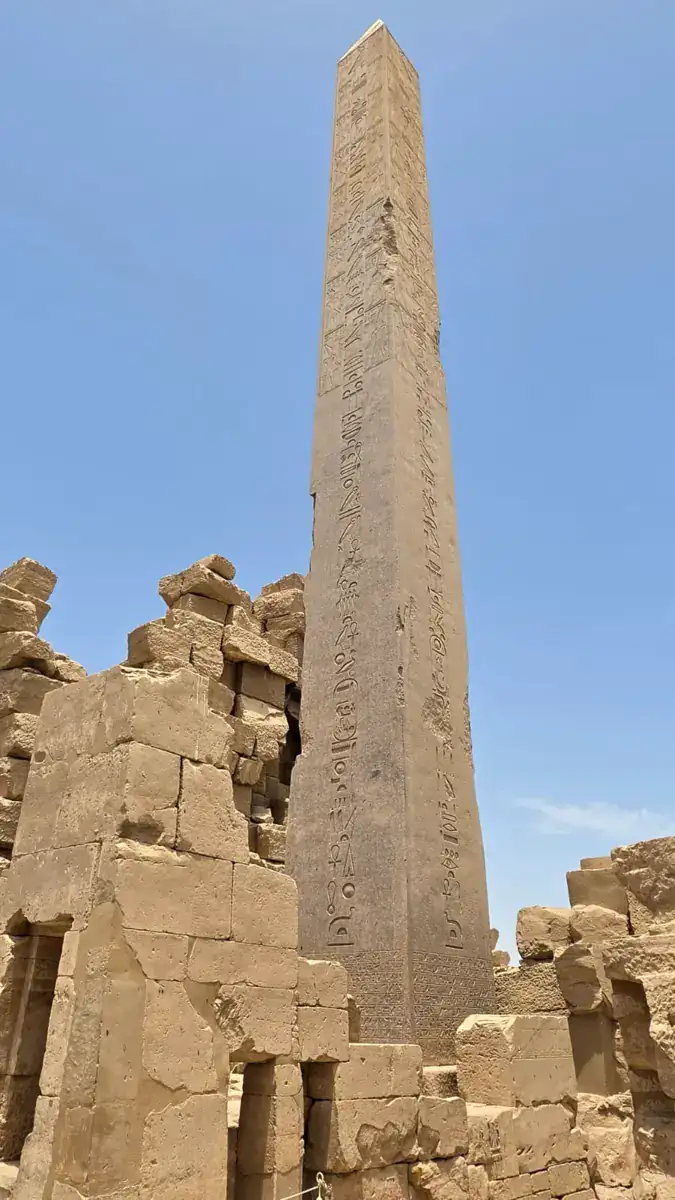
Furthermore, Karnak once displayed several granite obelisks raised in honour of Amun-Ra. Notably, the standing obelisk of Hatshepsut rises to about 29.5 metres and is among the tallest surviving ancient obelisks in Egypt.
Meanwhile, transported from Aswan and erected with extraordinary precision, these granite monoliths symbolised the sun’s rays. Their inscriptions celebrated the pharaoh’s devotion and lasting relationship with the god.
Hatshepsut and Thutmose I
As a result, the surviving obelisks of Hatshepsut and Thutmose I remain among the complex’s most recognisable landmarks and reveal the ambition of the Eighteenth Dynasty’s building programme.
“Karnak is a history of Egypt written in stone, shaped by generations of rulers who transformed a local sanctuary into a monumental sacred city.” Yalla Egypt Travel
Pharaohs Who Shaped Karnak
Over time, Karnak grew through repeated construction, alteration and renewal. First, Middle Kingdom rulers established its early importance, while New Kingdom pharaohs transformed it into Egypt’s foremost state temple.
For example, Hatshepsut erected obelisks and sacred buildings; Thutmose III added pylons, courts and his Festival Hall; Seti I and Ramesses II created and decorated the Great Hypostyle Hall. Later, Kushite, Late Period and Ptolemaic rulers continued adding chapels, gateways and inscriptions.
Finally, modern excavation and conservation continue to document reused blocks, buried statues and successive building phases, making Karnak one of the richest archaeological records of ancient Egyptian history.

Amun-Ra and the Opet Festival
Above all, Karnak was the principal cult centre of Amun-Ra, whose worship became closely connected with kingship and state power. In addition, together with Mut and Khonsu, Amun formed the Theban Triad.
Therefore, priests performed daily rites within restricted sanctuaries, offering incense, food, drink and prayers while caring for the divine image. Therefore, the temple was understood as the god’s earthly residence.
The Procession to Luxor Temple
During the Opet Festival, the sacred barques of Amun, Mut and Khonsu travelled from Karnak to Luxor Temple. As a result, the celebration renewed divine energy and reaffirmed the pharaoh’s legitimate rule. Today, the restored Avenue of Sphinxes preserves the ceremonial link between both temples.
The Sacred Lake at Karnak Temple in Luxor
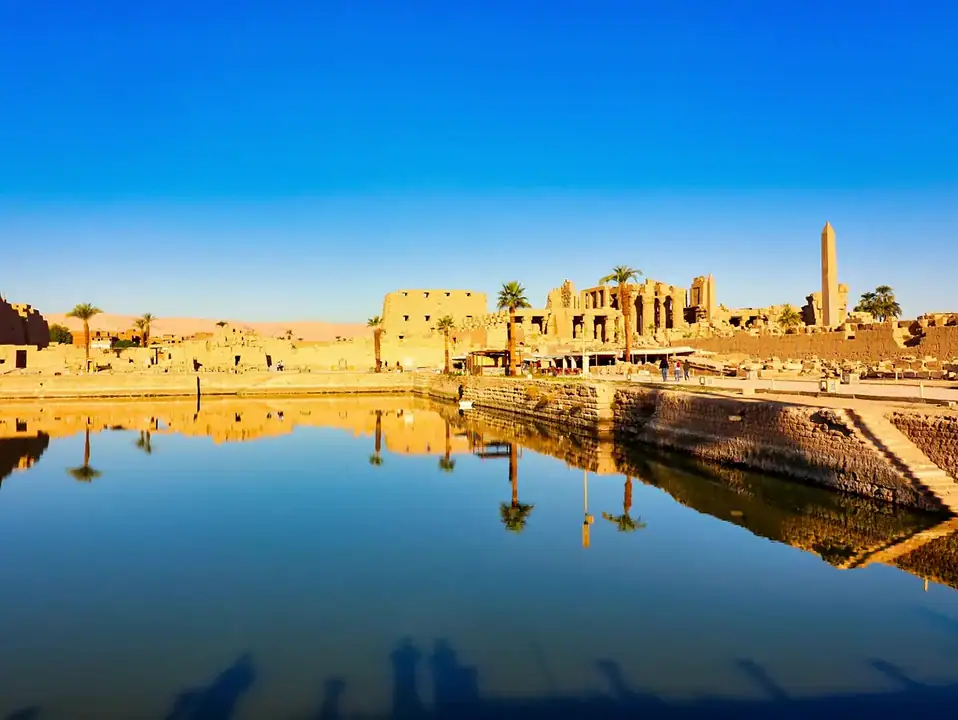
In addition, south of the main Temple of Amun-Ra lies Karnak’s Sacred Lake, the largest surviving example of its kind within an ancient Egyptian temple complex. Measuring approximately 120 by 77 metres, it supplied water for ritual purification and formed part of the daily religious life of the priests.
However, the lake was not intended for public bathing. Instead, priests used its water to purify themselves before entering restricted sacred areas and performing ceremonies for the gods. Moreover, nearby storerooms, priestly buildings and the famous granite scarab associated with Amenhotep III reflect the importance of this part of the complex.
The Avenue of Sphinxes at Karnak Temple
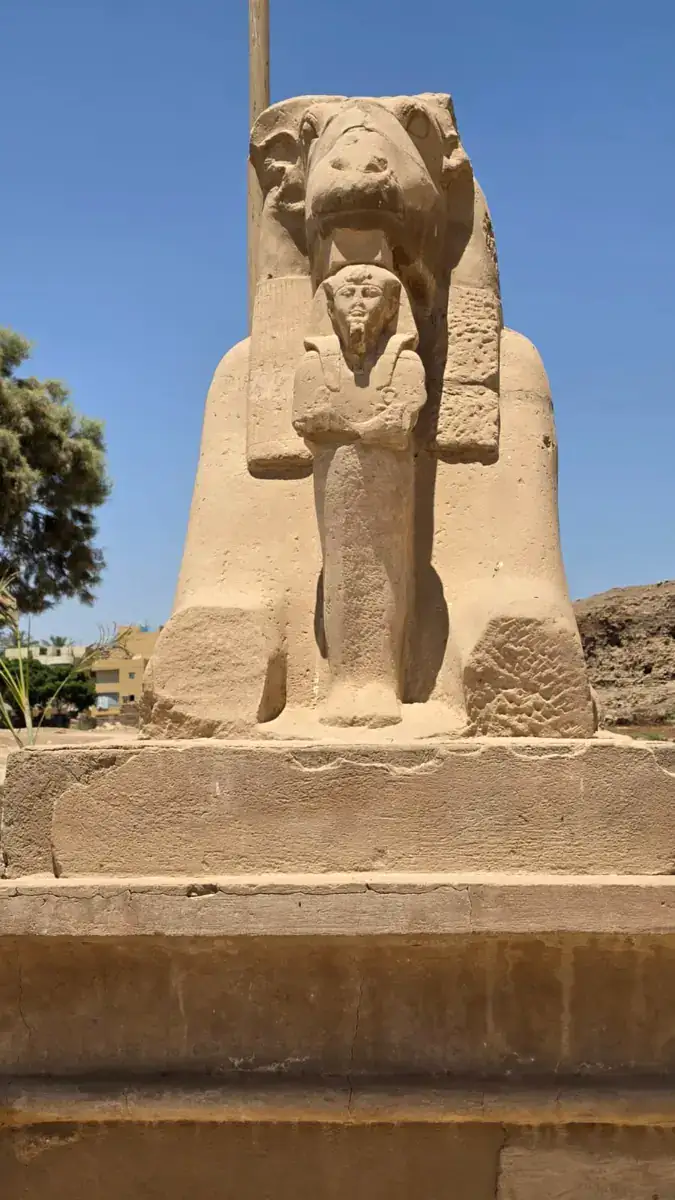
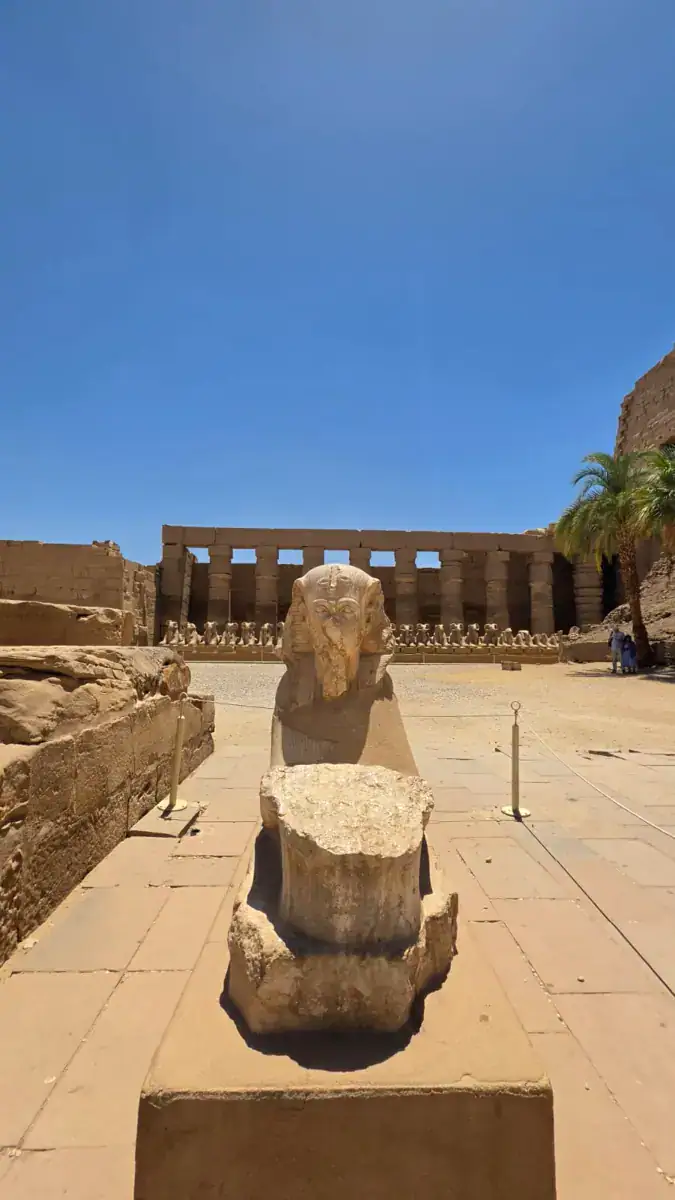
Similarly, Karnak was connected with Luxor Temple by a ceremonial avenue extending for about 2.7 kilometres. Furthermore, rows of sphinxes guarded the sacred route, including ram-headed sphinxes near Karnak and human-headed sphinxes along other sections. Consequently, during major festivals, divine barques and processions travelled between the two temples.
- The Sacred Lake was used principally for priestly purification.
- The ceremonial avenue extends for approximately 2.7 kilometres.
- Ram-headed sphinxes symbolised and protected the god Amun.
- The route played a central role during the Opet Festival.
The Precincts of the Karnak Temple Complex
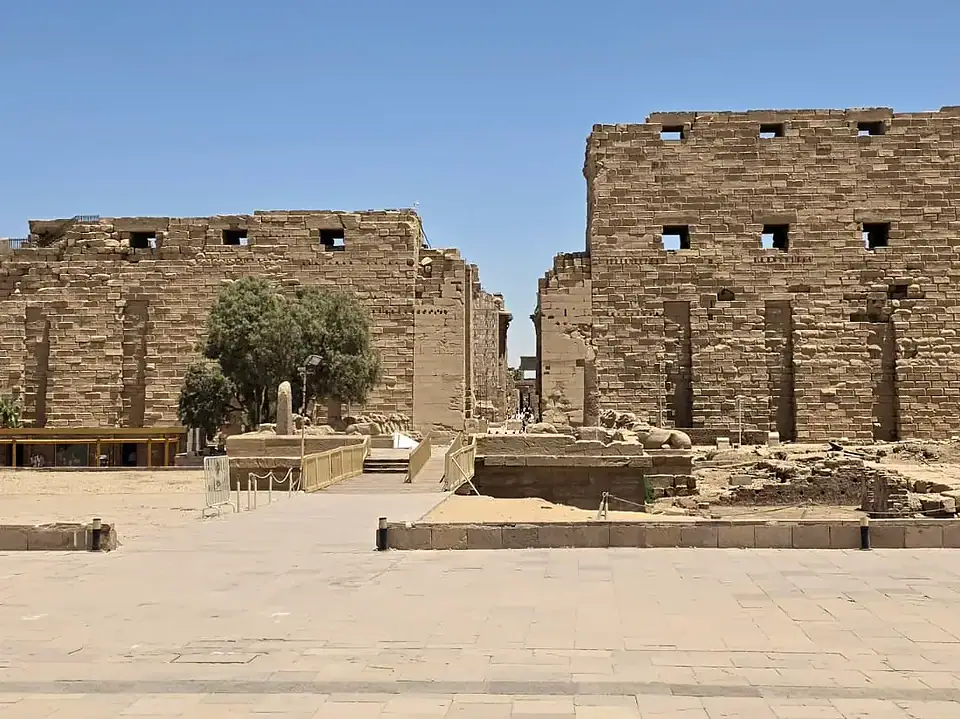
Importantly, the name Karnak describes a vast religious complex rather than one temple. Specifically, its largest and best-known section is the Precinct of Amun-Ra, where visitors encounter the First Pylon, Great Court, Great Hypostyle Hall, obelisks, central sanctuary and Sacred Lake.
For a broader route through Egypt’s sacred architecture, compare Karnak with the monuments in our ancient Egyptian temples guide.
Meanwhile, south of the main enclosure stands the Precinct of Mut, dedicated to the goddess who was regarded as the consort of Amun. By contrast, north of the Amun precinct lies the smaller Precinct of Montu, honouring the ancient Theban falcon-headed god of war.
The Temple of Khonsu
In addition, the Temple of Khonsu, situated in the south-western part of the Amun precinct, is one of Karnak’s best-preserved temples. First, it was begun by Ramesses III and completed or decorated by later rulers. Moreover, Khonsu, the moon god, was worshipped as the son of Amun and Mut, completing the Theban Triad.
- Precinct of Amun-Ra — the largest and principal sacred enclosure.
- Precinct of Mut — dedicated to the divine consort of Amun.
- Precinct of Montu — dedicated to the ancient Theban war god.
- Temple of Khonsu — a well-preserved temple of the moon god.
Discoveries at Karnak Temple in Luxor
Remarkably, Karnak preserves monuments built, dismantled, reused and restored by successive rulers. For example, archaeologists have reconstructed earlier chapels from stone blocks found inside later pylons, revealing how the complex changed as pharaohs reshaped its sacred landscape.
For instance, one of the most remarkable discoveries was the Karnak Cachette, found in 1903 in the court before the Seventh Pylon. As a result, thousands of statues and inscribed objects had been carefully buried there in antiquity, creating an exceptional record of priests, officials, kings and gods.
Meanwhile, Egyptian and international archaeological teams continue to study and conserve Karnak’s pylons, columns, chapels, reliefs and painted surfaces. Consequently, this work stabilises fragile structures while helping researchers understand the complex’s many construction phases.
A Monument Still Revealing Its History
Consequently, reused blocks, foundation deposits and newly documented inscriptions continue to provide evidence about religion, politics, architecture and daily temple administration across different periods of Egyptian history.
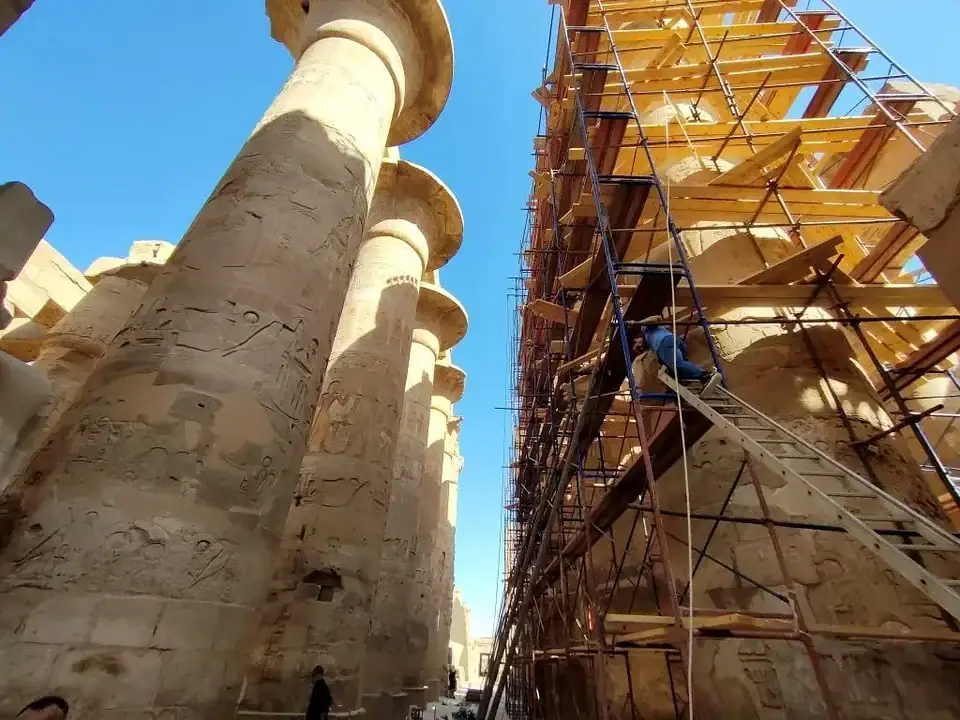
Architecture and Reliefs Gallery
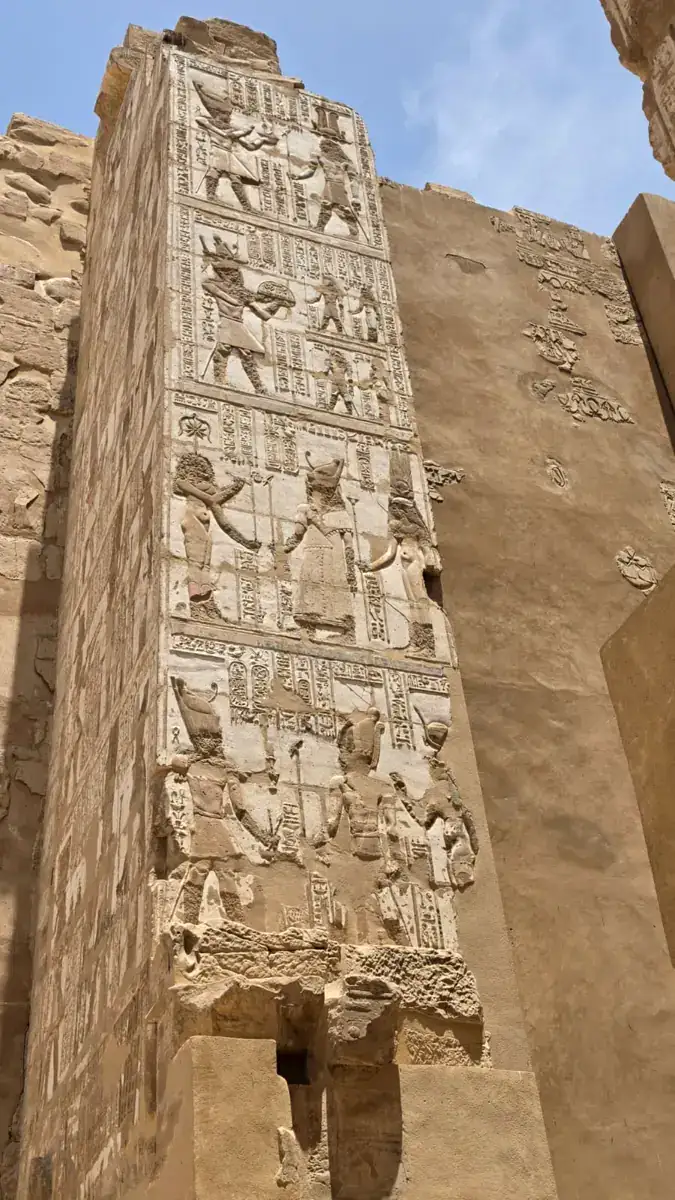
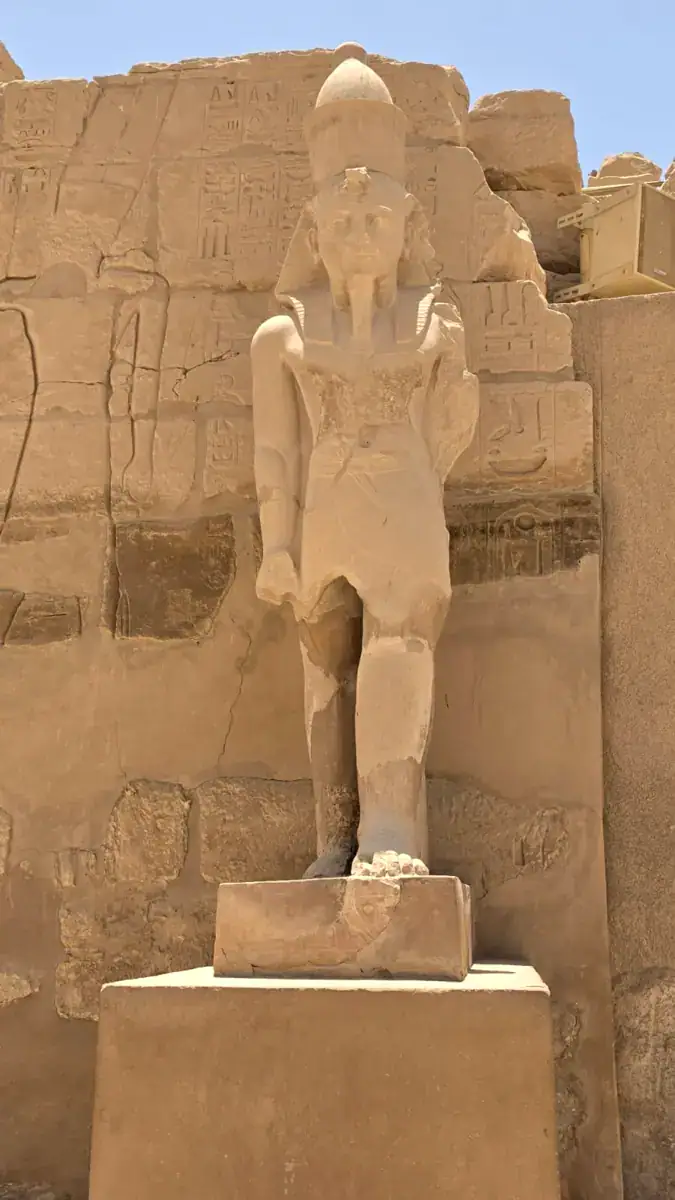
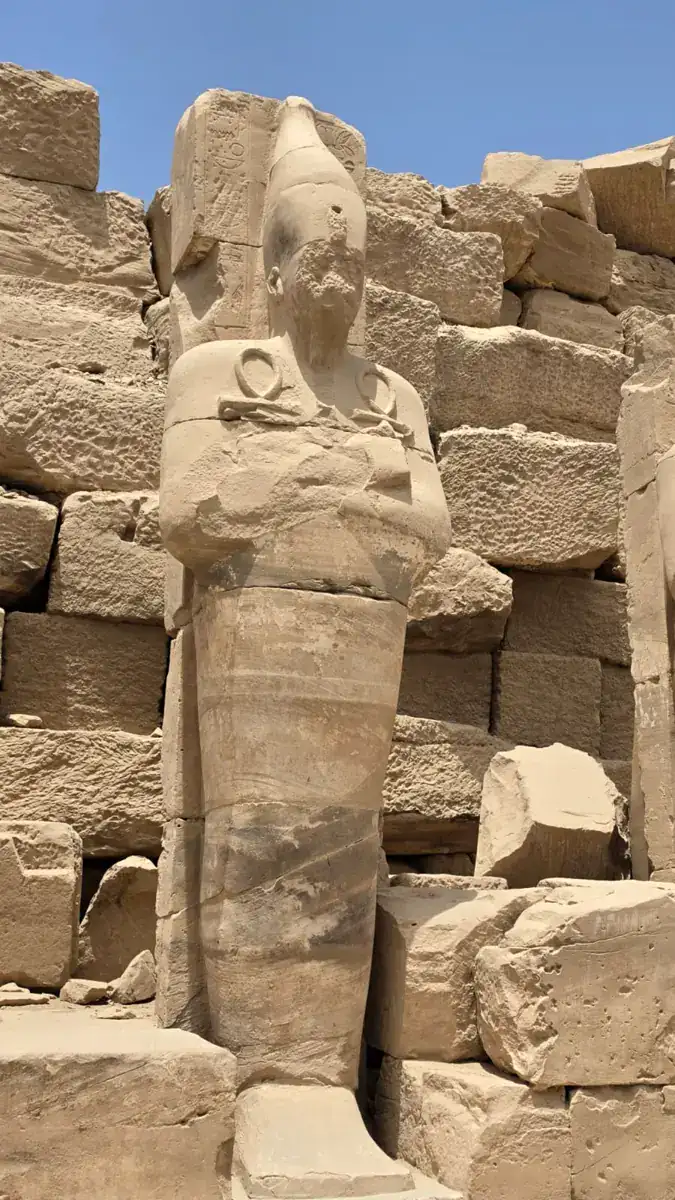
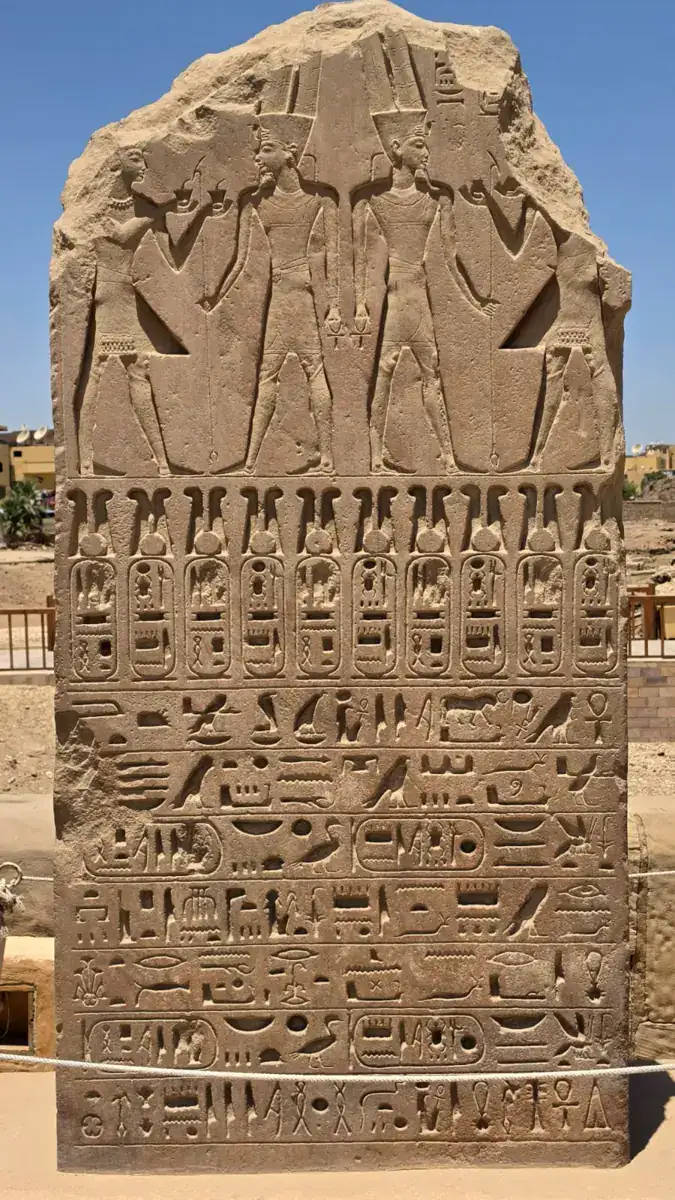
Finally, explore the Karnak Temple Complex through its monumental architecture, decorated columns, reliefs and sacred spaces. In particular, notice the variety of papyrus capitals and the details of the surviving wall scenes.
How to Visit Karnak Temple in Luxor
Karnak Temple in Luxor stands on the east bank of the Nile and is easily reached by private car or guided tour. Moreover, it is also a major visit on many Egypt Nile cruises.
Moreover, travellers can combine the visit with Luxor attractions, Luxor Temple, the Valley of the Kings and the Temple of Hatshepsut, or a wider Egypt tour package.
East Bank of Luxor
The complex stands in the Karnak district, approximately 2.5 kilometres north of central Luxor.
Easy Access from Luxor
For example, visitors can travel by private car, taxi or an organised excursion from Luxor.
Check Current Hours
Opening hours and ticket prices can change. Therefore, confirm them shortly before your visit rather than relying on an old screenshot.
Allow 2–3 Hours
Generally, two hours covers the principal route. However, allow three hours if you want to study reliefs, side temples and the Sacred Lake carefully.
Uneven Ancient Surfaces
Although the main areas are broad, sand, thresholds and uneven stone remain. Therefore, wear supportive shoes and ask locally about the easiest current route.
Sound and Light Show
In addition, Karnak hosts an evening sound-and-light experience. However, schedules and languages vary, so check the official Karnak show programme first.
Karnak and Luxor Temple
First, visit Karnak; then continue to Luxor Temple and the Avenue of Sphinxes for a coherent East Bank story.
October to April
Consequently, the cooler months provide more comfortable conditions for sightseeing and photography.
Location on Google Maps
Karnak Temple is located on the east bank of the Nile in Luxor, approximately 2.5 kilometres north of Luxor Temple.
Open Google MapsFrequently Asked Questions
History and Planning Questions
Walk Through the Glory of Karnak
Add Karnak Temple to your private Luxor itinerary and explore its colossal columns, obelisks and sacred courts with an expert Egyptologist guide.
Contact Yalla Egypt Travel