
Luxor Temple in Egypt
Temple
Explore Luxor Temple in Egypt, a living monument where pharaohs renewed kingship, Amun’s sacred procession arrived from Karnak and 3,000 years of history still meet.
Luxor Temple: Royal Renewal
Luxor Temple in Egypt is a ceremonial masterpiece at the heart of ancient Thebes, shaped by pharaohs, Roman rulers, Christians and the city that grew around it.
First, Luxor Temple stands on the east bank of the Nile in the centre of Luxor, ancient Thebes and part of the UNESCO World Heritage site of Ancient Thebes. Historically, the Egyptians called it Ipet-resyt, “the Southern Sanctuary.” Unlike a remote mortuary temple, it was woven into the ceremonial life of the city and oriented toward Karnak Temple.
Moreover, a small surviving barque shrine belongs to the age of Hatshepsut, while Amenhotep III built the temple’s main core around 1390–1352 BCE. Tutankhamun and Horemheb completed important decoration in the Great Colonnade. More than a century later, Ramses II added the vast northern courtyard, colossal statues and monumental first pylon.
For comparison with other sanctuaries along the Nile, explore our ancient Egyptian temples guide.
Luxor Temple Architecture: The Great Colonnade
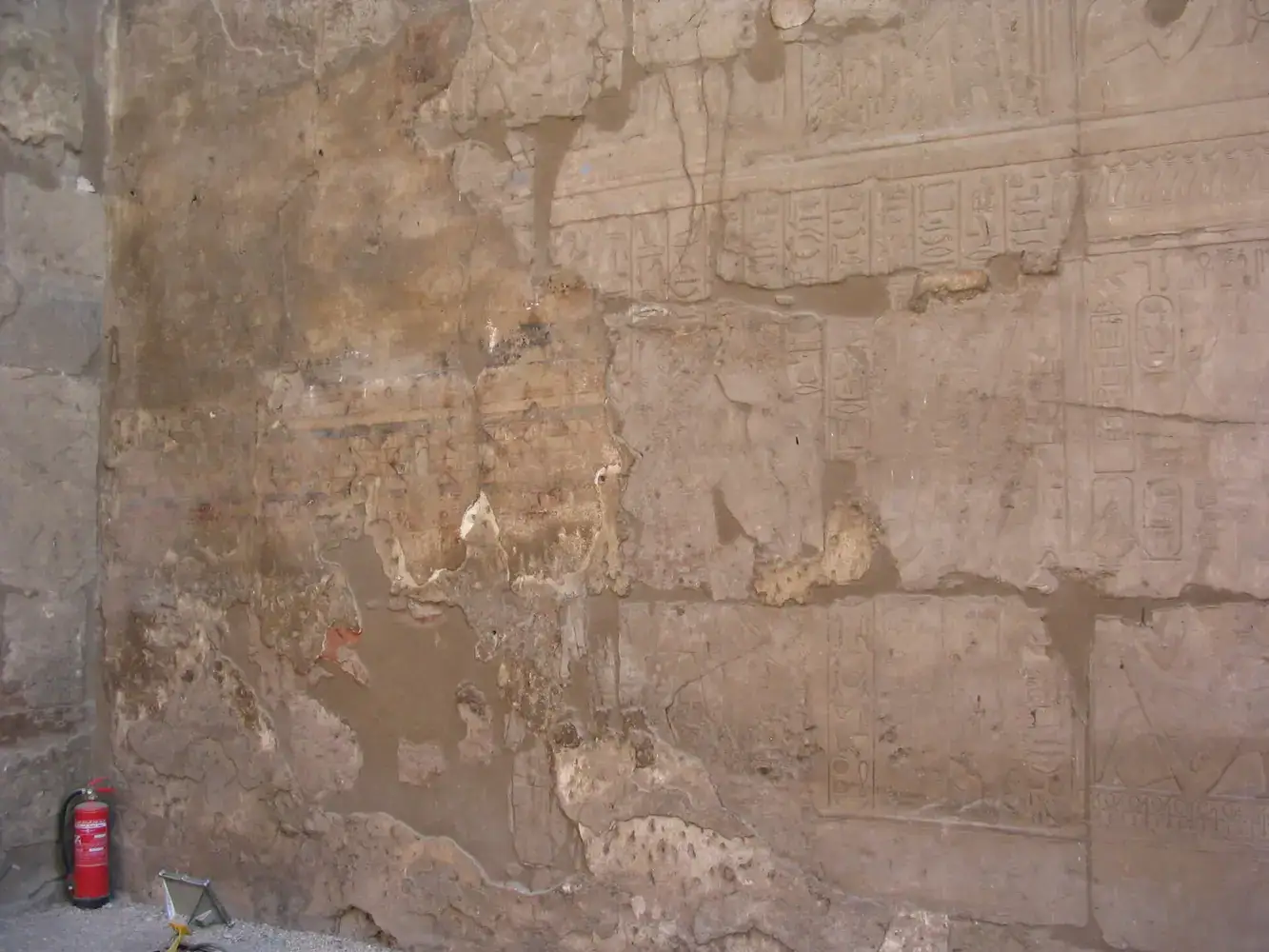
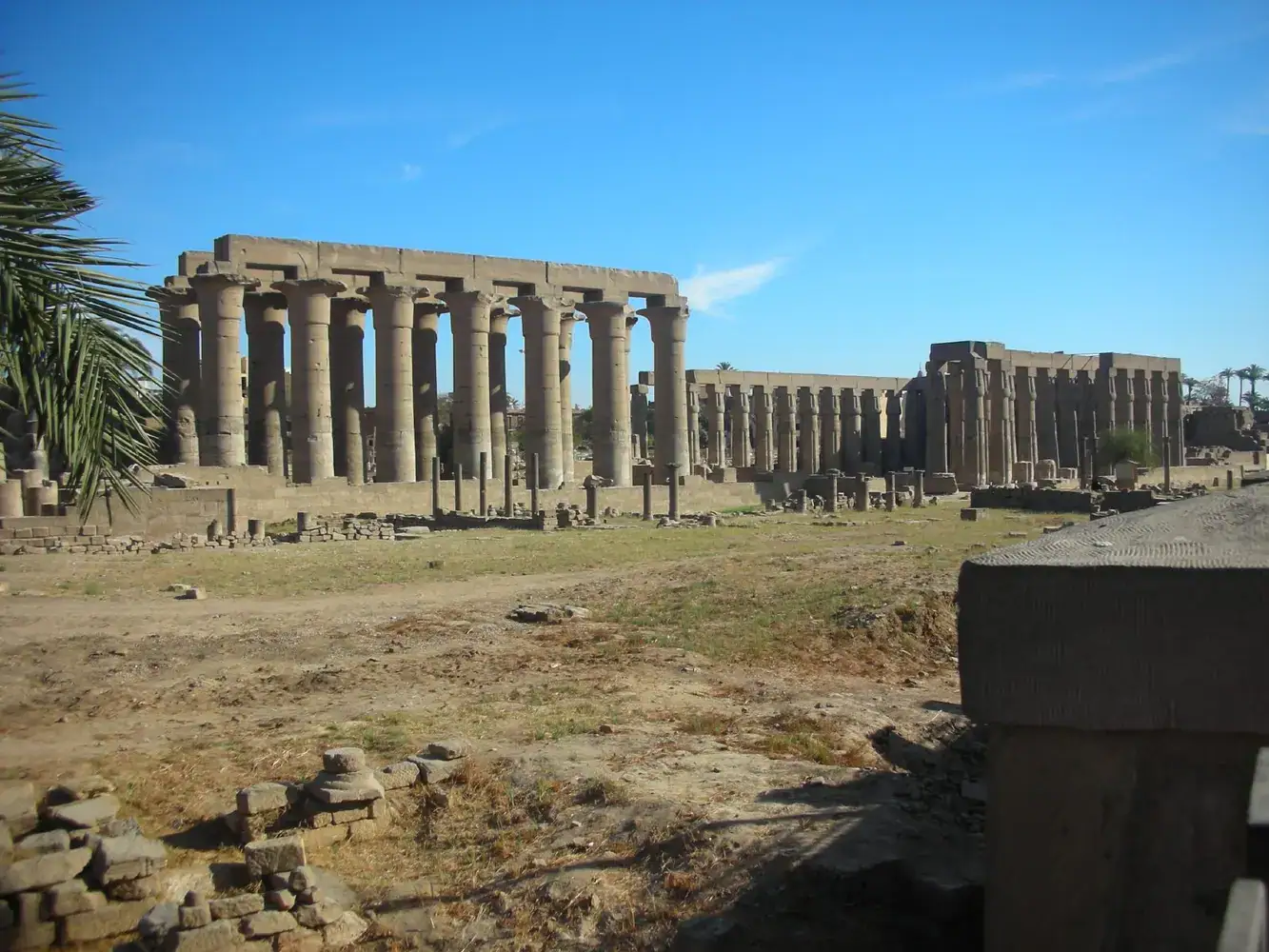
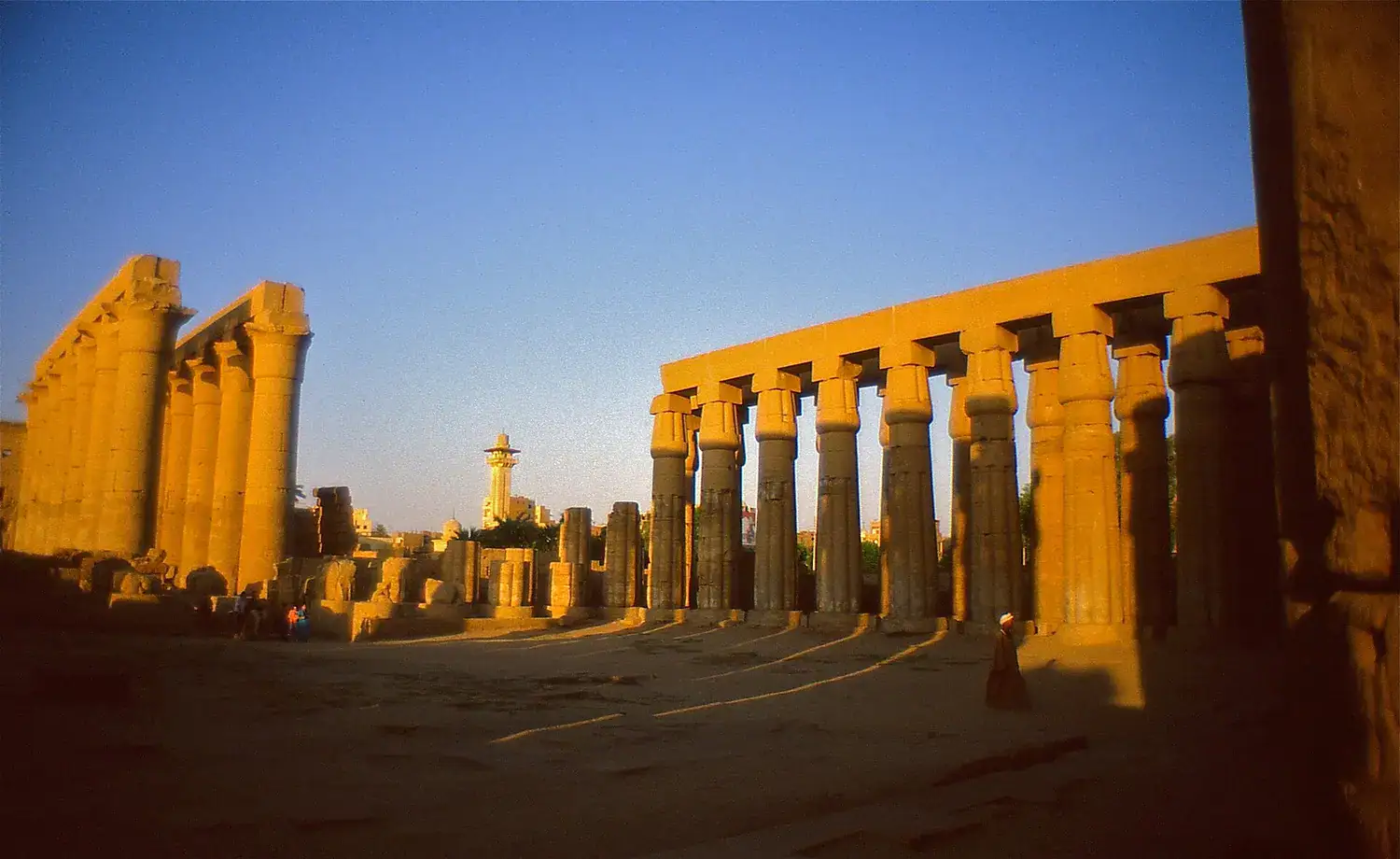
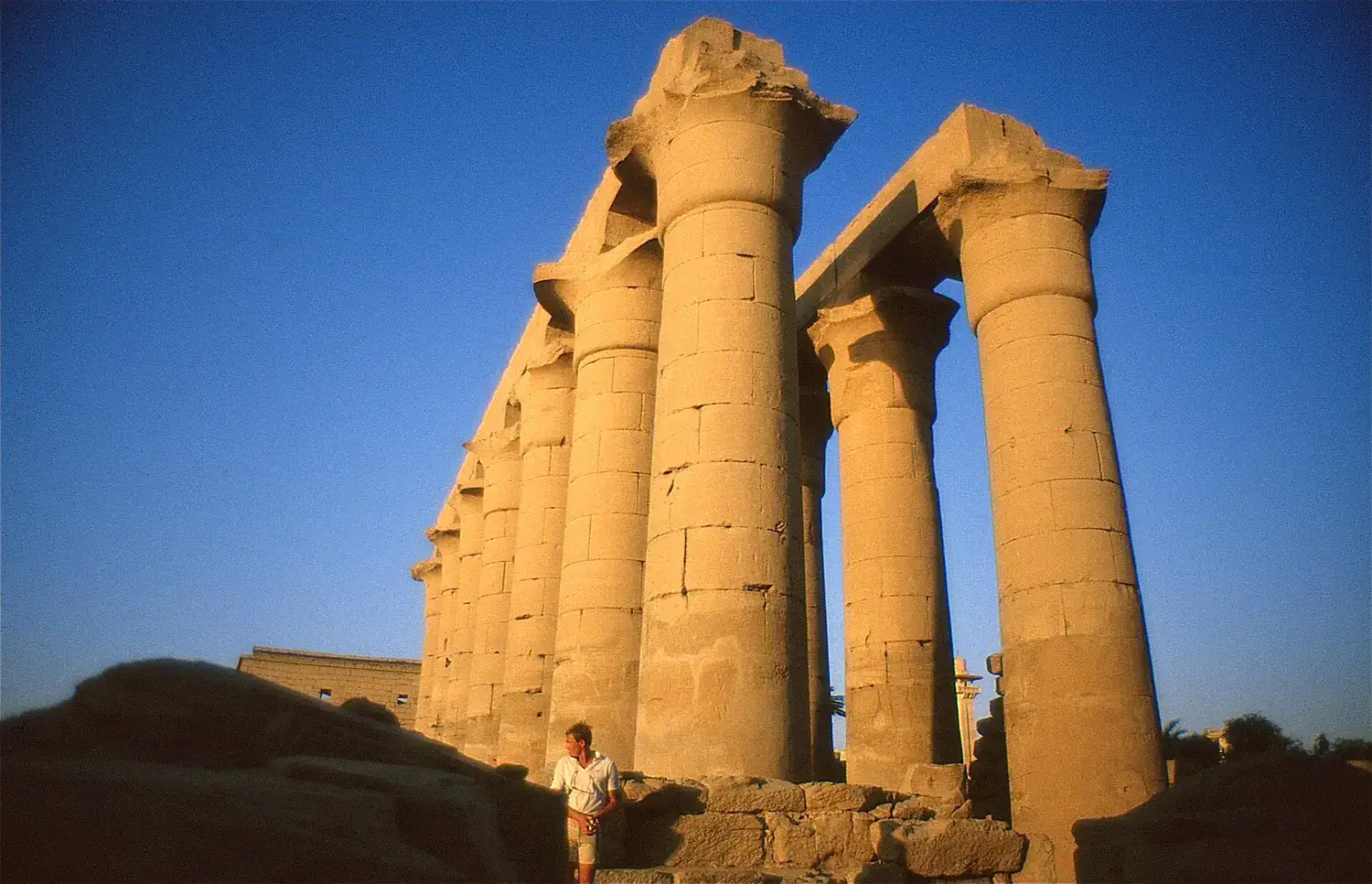
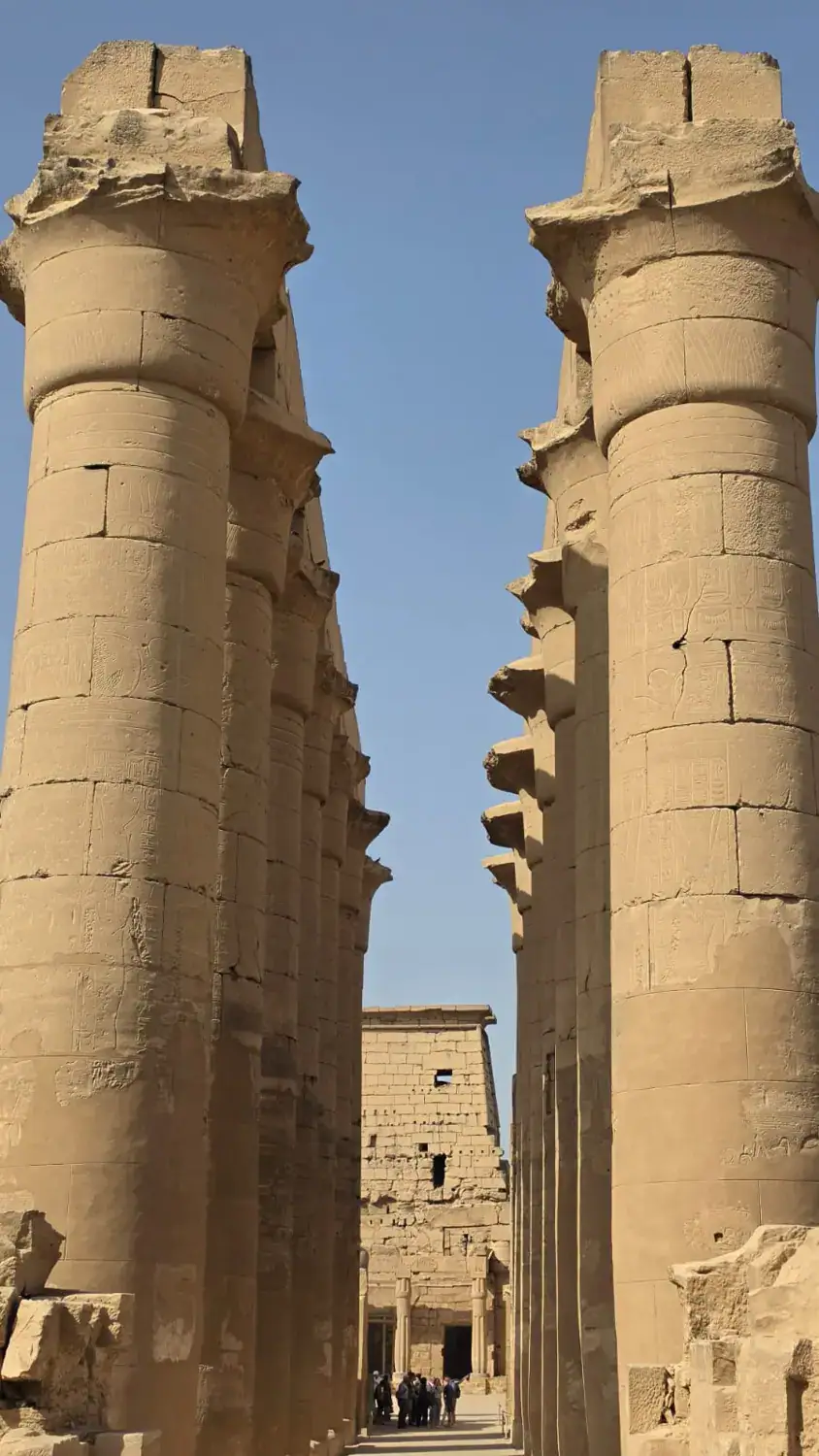
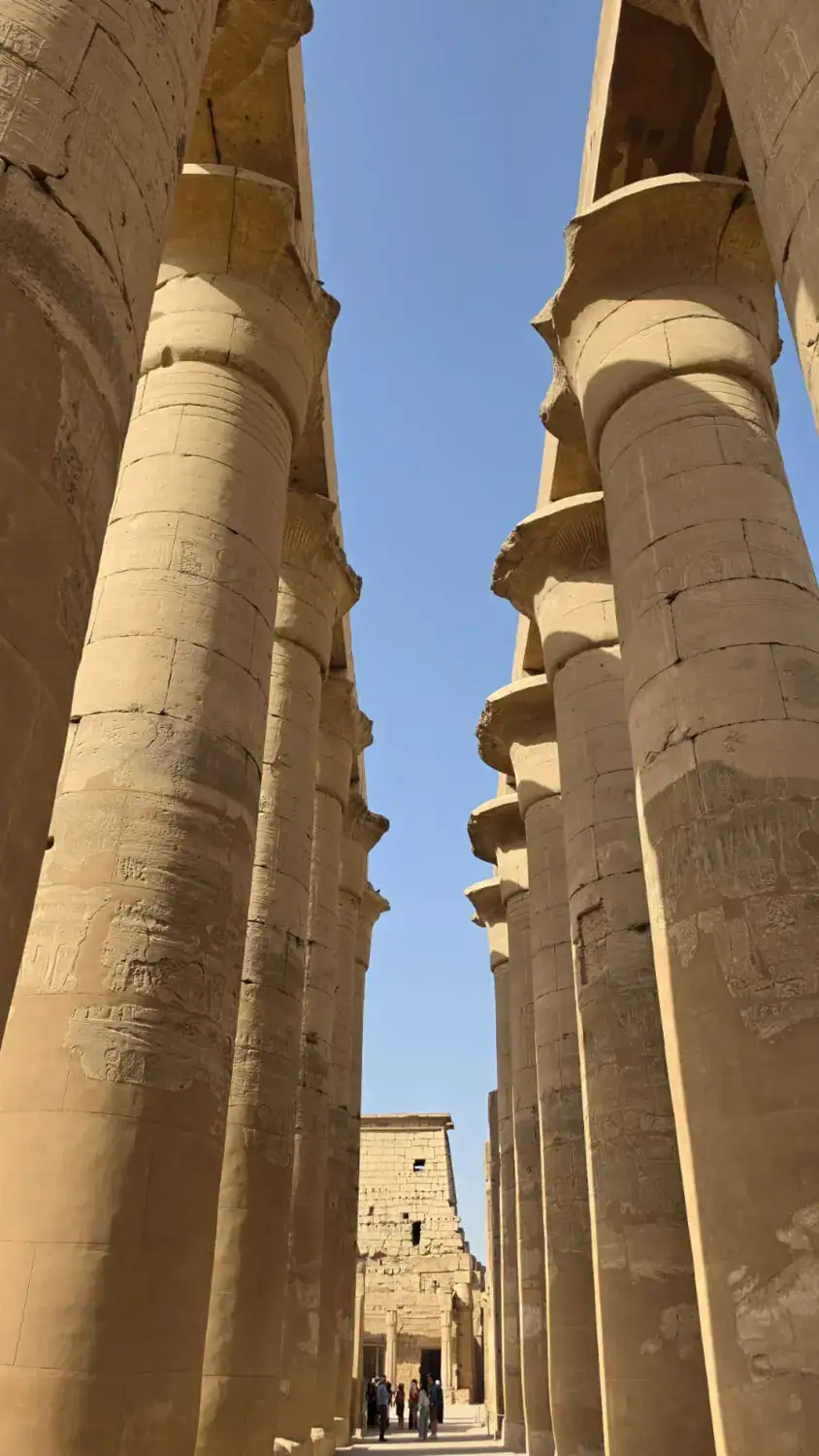
Fourteen open-papyrus columns, each about 16 metres high, form a ceremonial avenue through the temple. In addition, Tutankhamun’s celebrated reliefs show the Opet Festival in motion: sacred barques, priests, musicians and crowds moving between Karnak and Luxor.
Luxor Temple Pylon and Courtyard of Ramses II
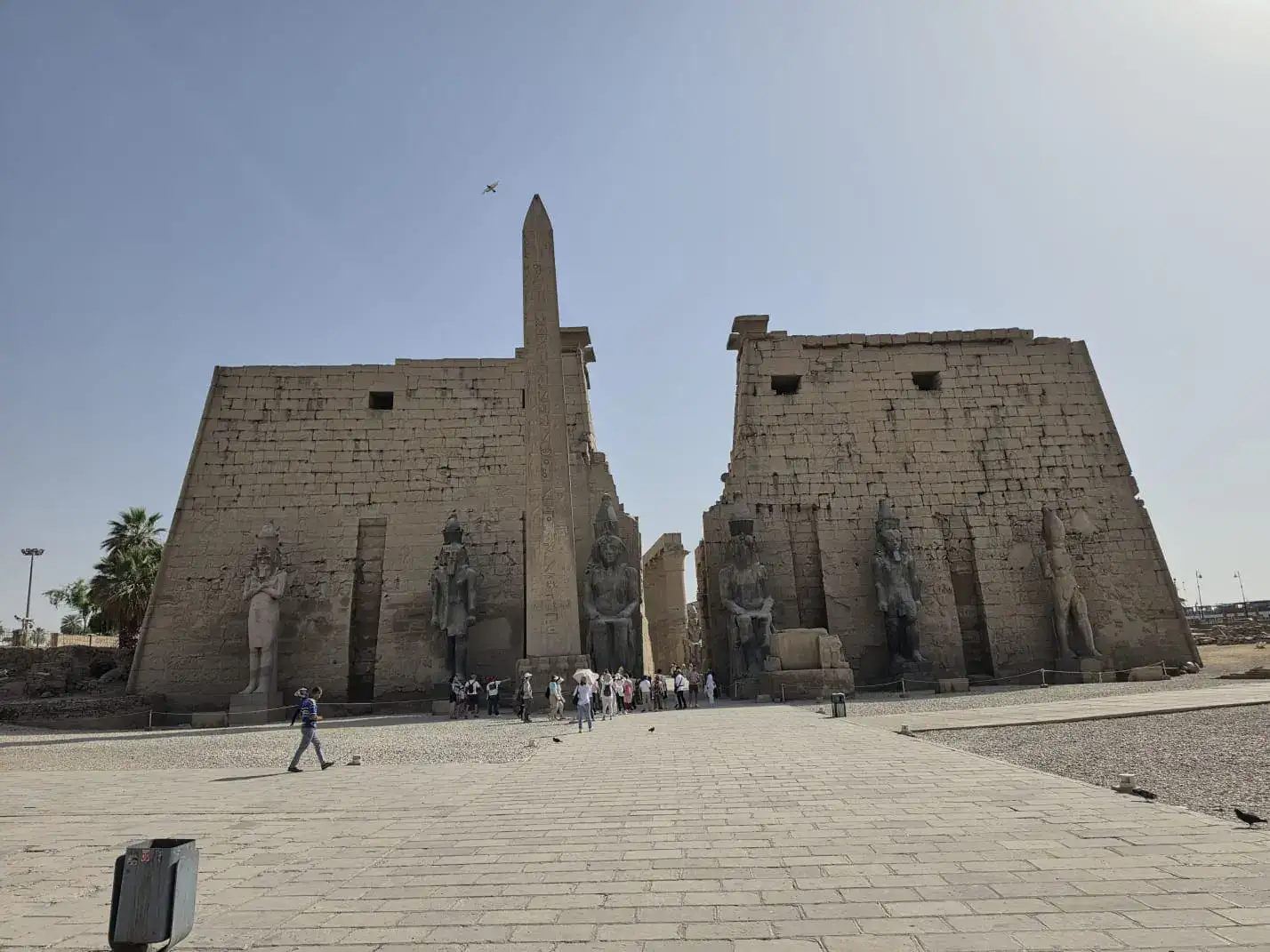
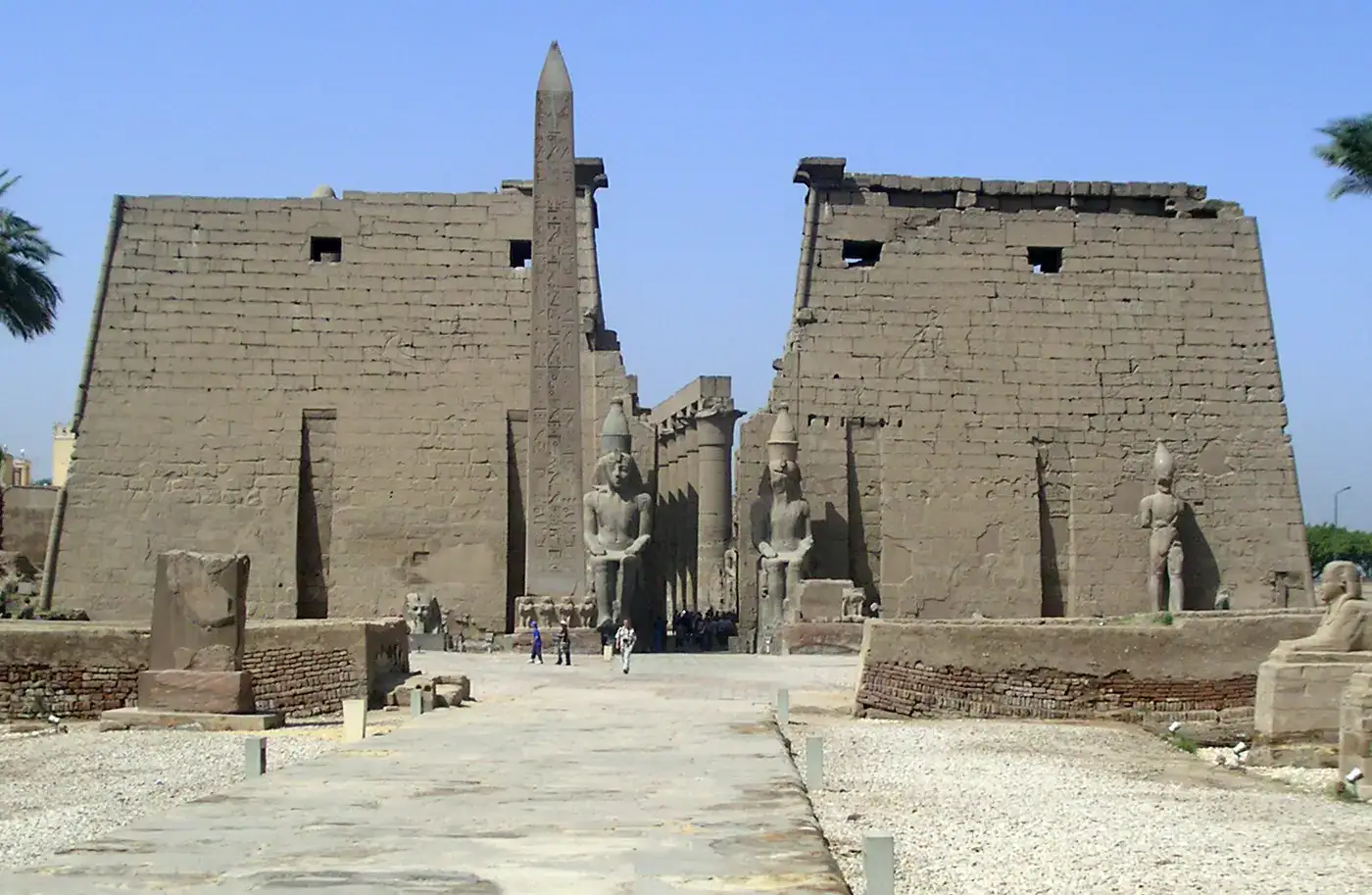
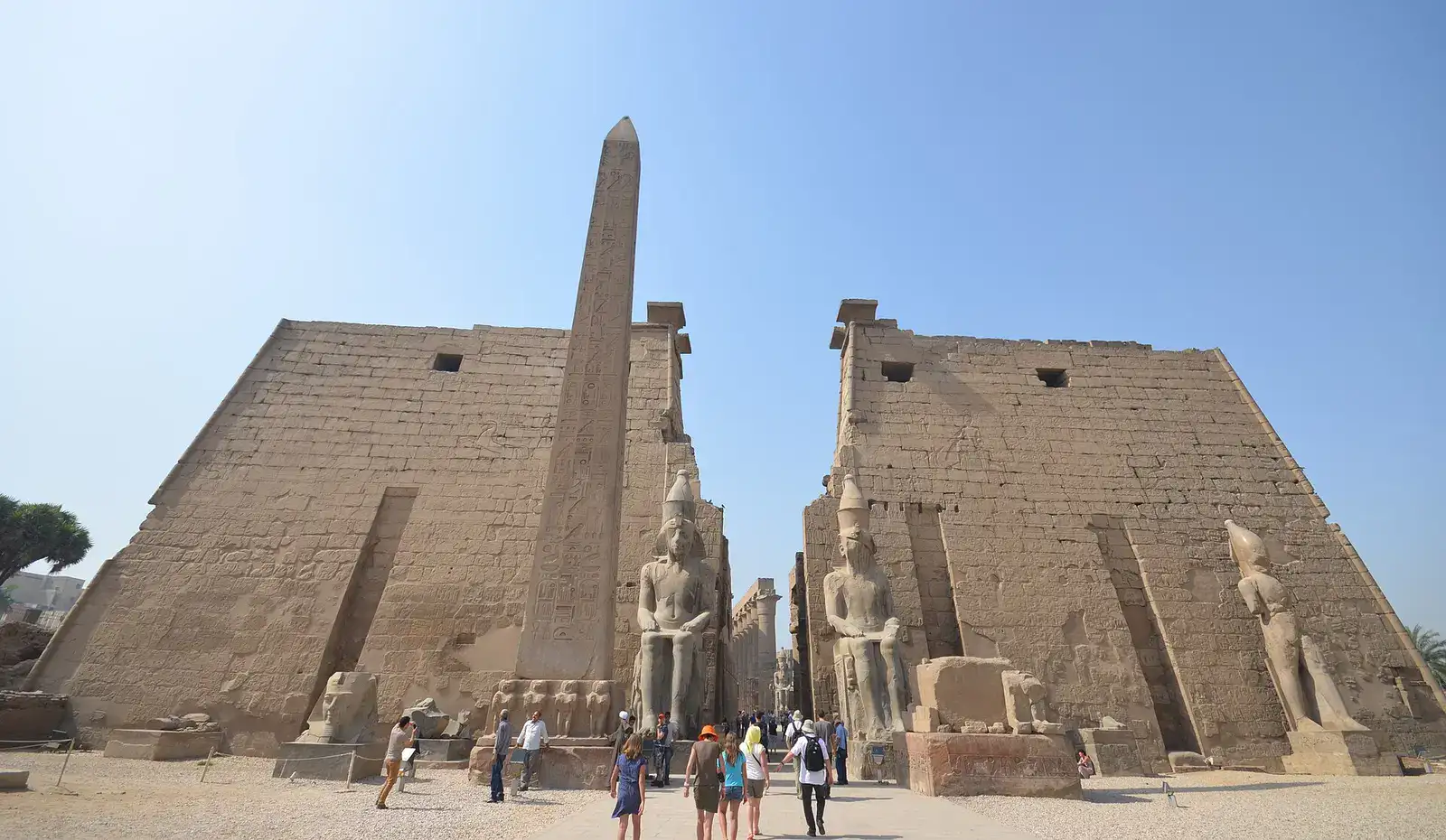
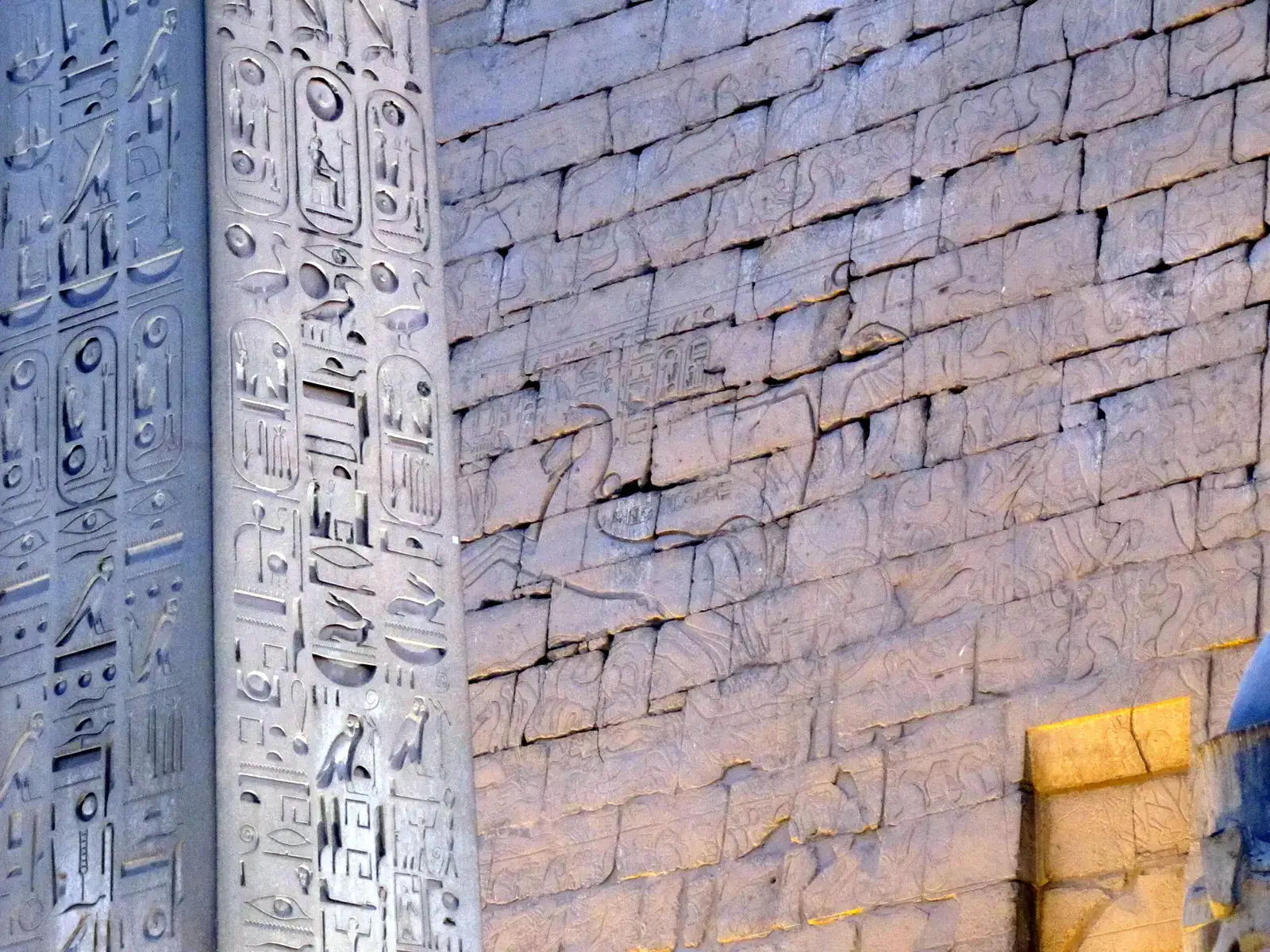
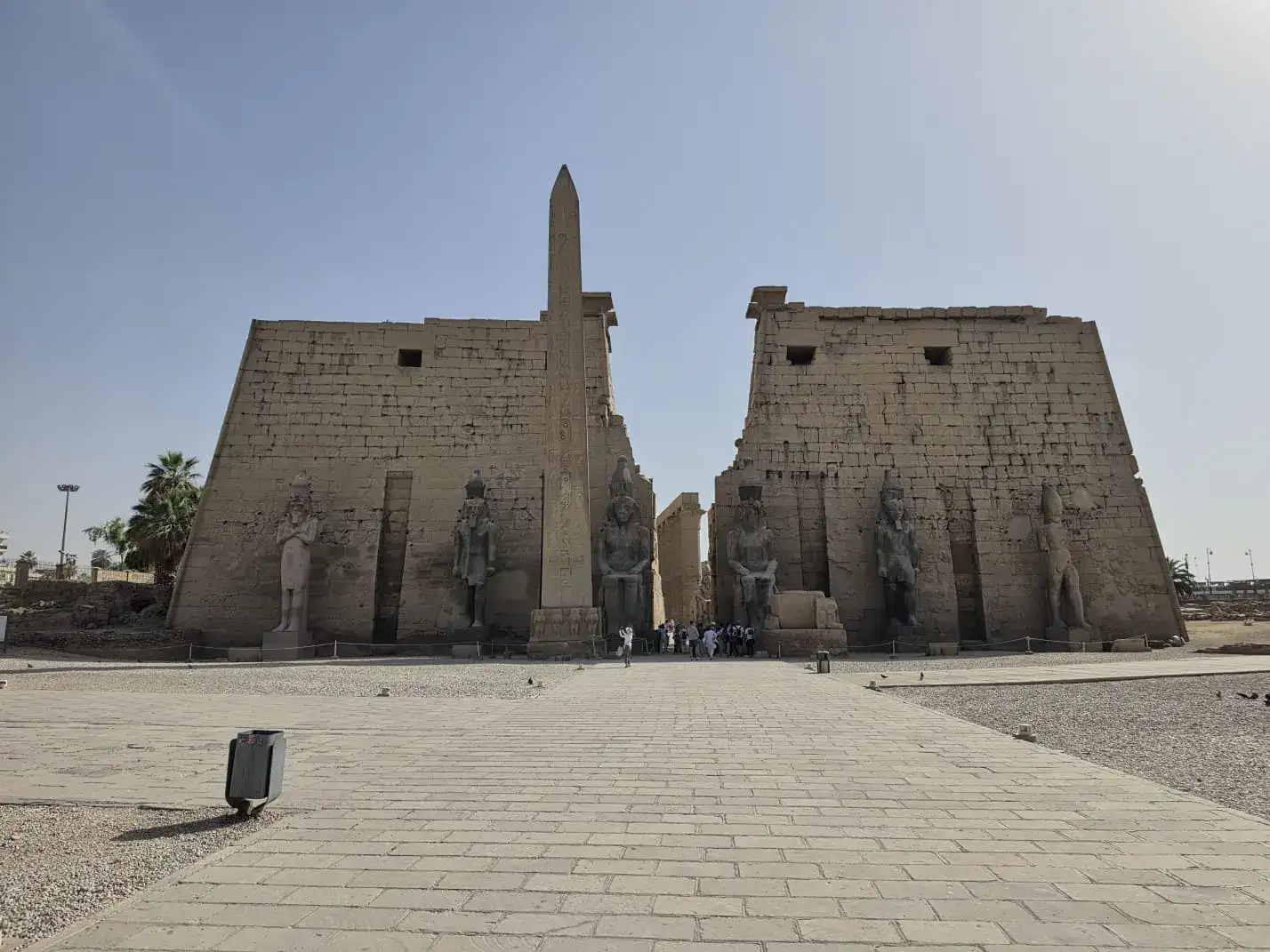
First, Ramses II transformed the temple’s northern approach. His first pylon rises about 24 metres and carries his official account of the Battle of Kadesh against the Hittites. However, the scenes present the king as a heroic defender of Egypt; historians treat them as royal narrative, not a simple record of an undisputed victory.
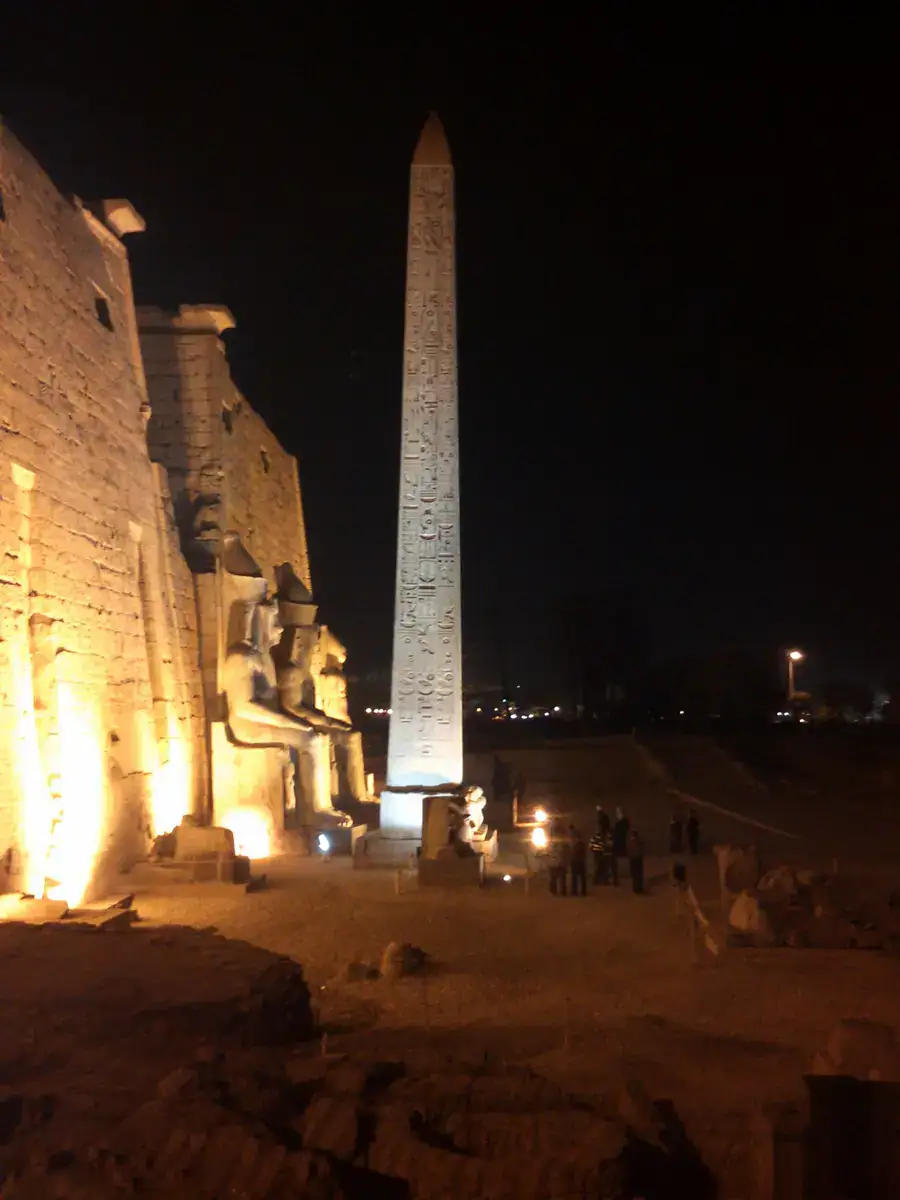
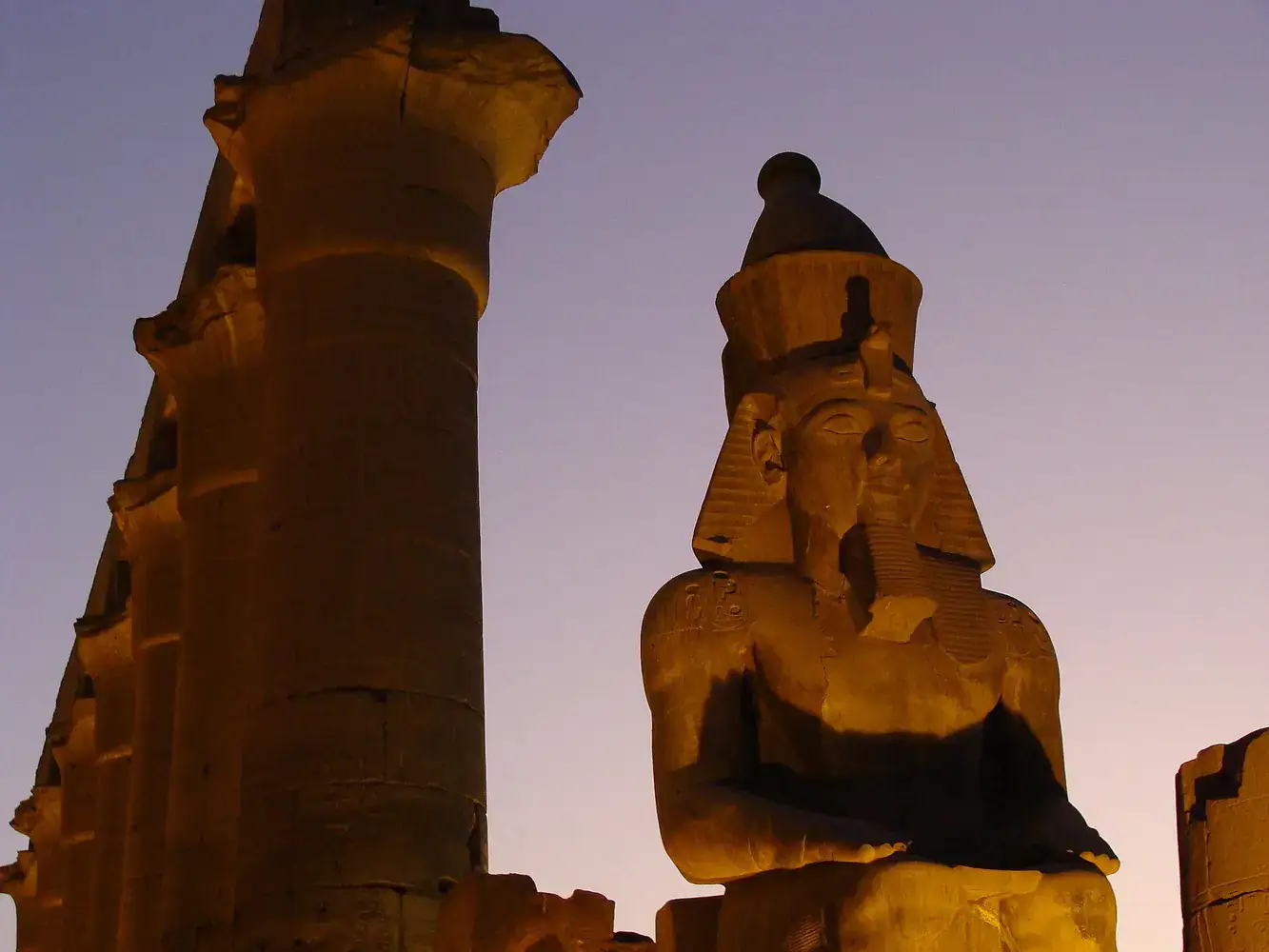
In addition, six colossal seated and standing statues once dominated the entrance. Today, two seated colossi remain before the pylon, together with one of the original pair of red-granite obelisks. Meanwhile, its twin has stood in the Place de la Concorde in Paris since 1836.
Where Is the Other Luxor Obelisk?
Specifically, the western obelisk was presented to France and transported to Paris in the nineteenth century. Consequently, visitors see one obelisk before Luxor Temple while its historic partner stands in the Place de la Concorde.
- The monumental pylon is decorated with the Kadesh campaign.
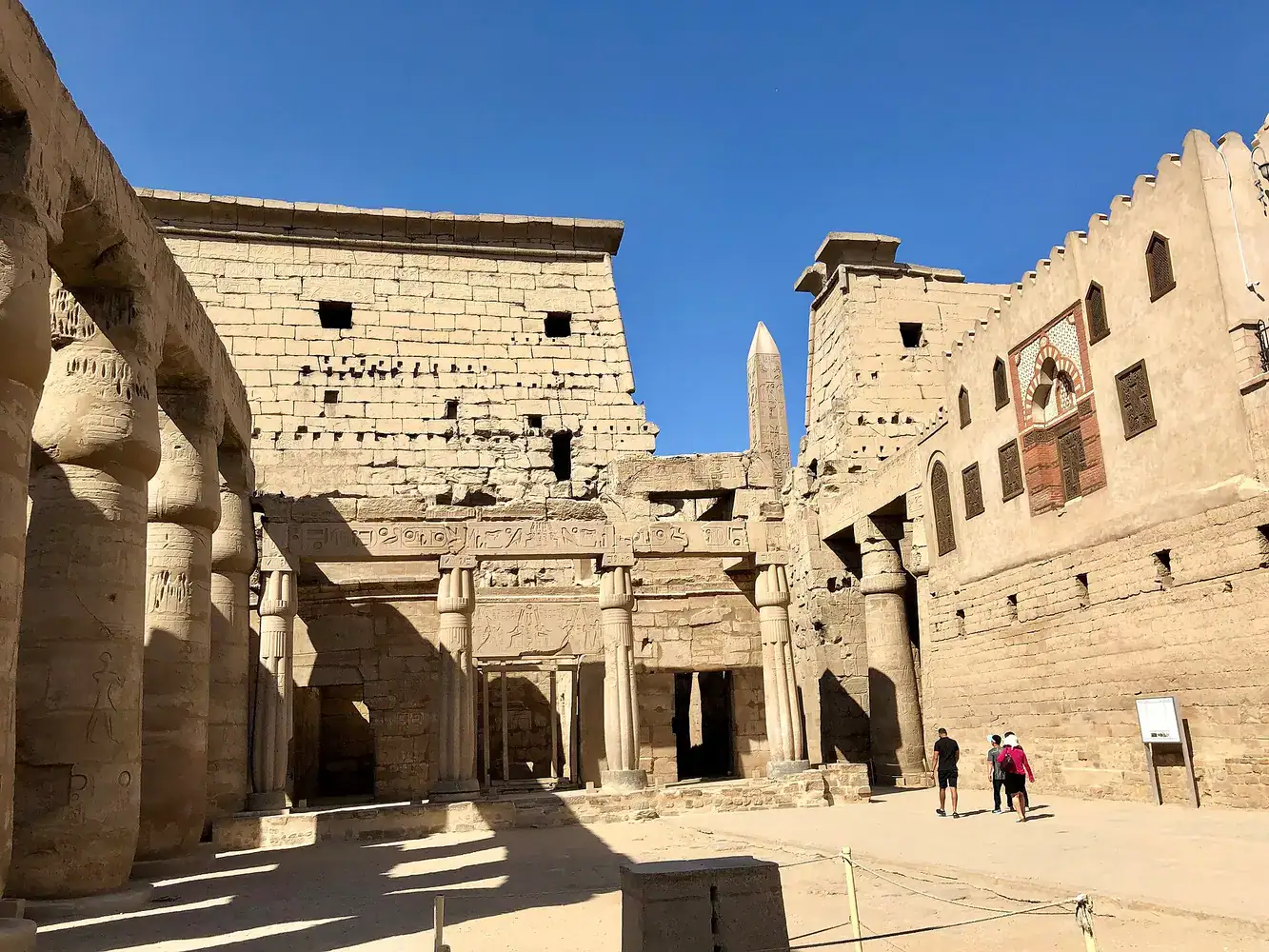
- Double rows of columns surround the peristyle courtyard.
- Colossal statues represent Ramses II and Queen Nefertari.
- Finally, the surviving obelisk rises approximately 25 metres.

Luxor Temple and the Opet Festival
Above all, Luxor Temple’s deepest meaning is tied to the annual Opet Festival. During the celebration, images of Amun, Mut and Khonsu travelled from Karnak to Luxor in sacred barques, first along the processional route and, in some periods, by river. Therefore, the ceremony connected the gods, the city and royal authority.
Furthermore, reliefs on the Great Colonnade, begun under Tutankhamun and later usurped by Horemheb, preserve a vivid visual account: priests shoulder divine shrines, boats are towed, musicians perform and citizens celebrate. The festival symbolically renewed Amun’s creative power and reinforced the pharaoh’s sacred legitimacy.
The Divine Birth of Amenhotep III
Meanwhile, in rooms deeper inside the temple, reliefs tell how Amun fathered Amenhotep III in divine form. As a result, this carefully staged sacred biography proclaimed that the king’s rule was sanctioned by the gods.
“At Luxor Temple, architecture became ceremony: every court, column and relief led toward the renewal of divine order and royal power.” Yalla Egypt Travel
Luxor Temple History Through Later Civilisations
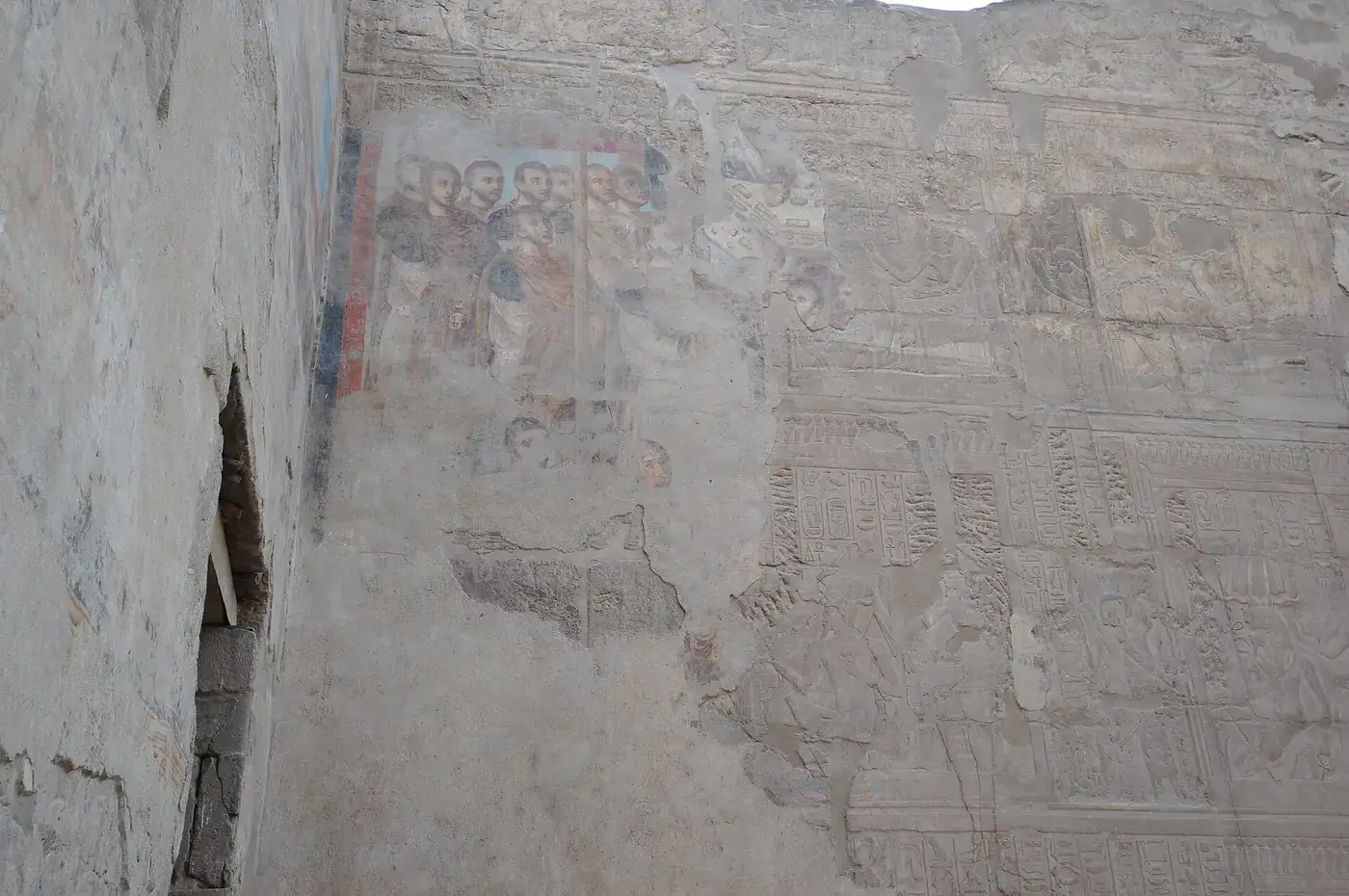
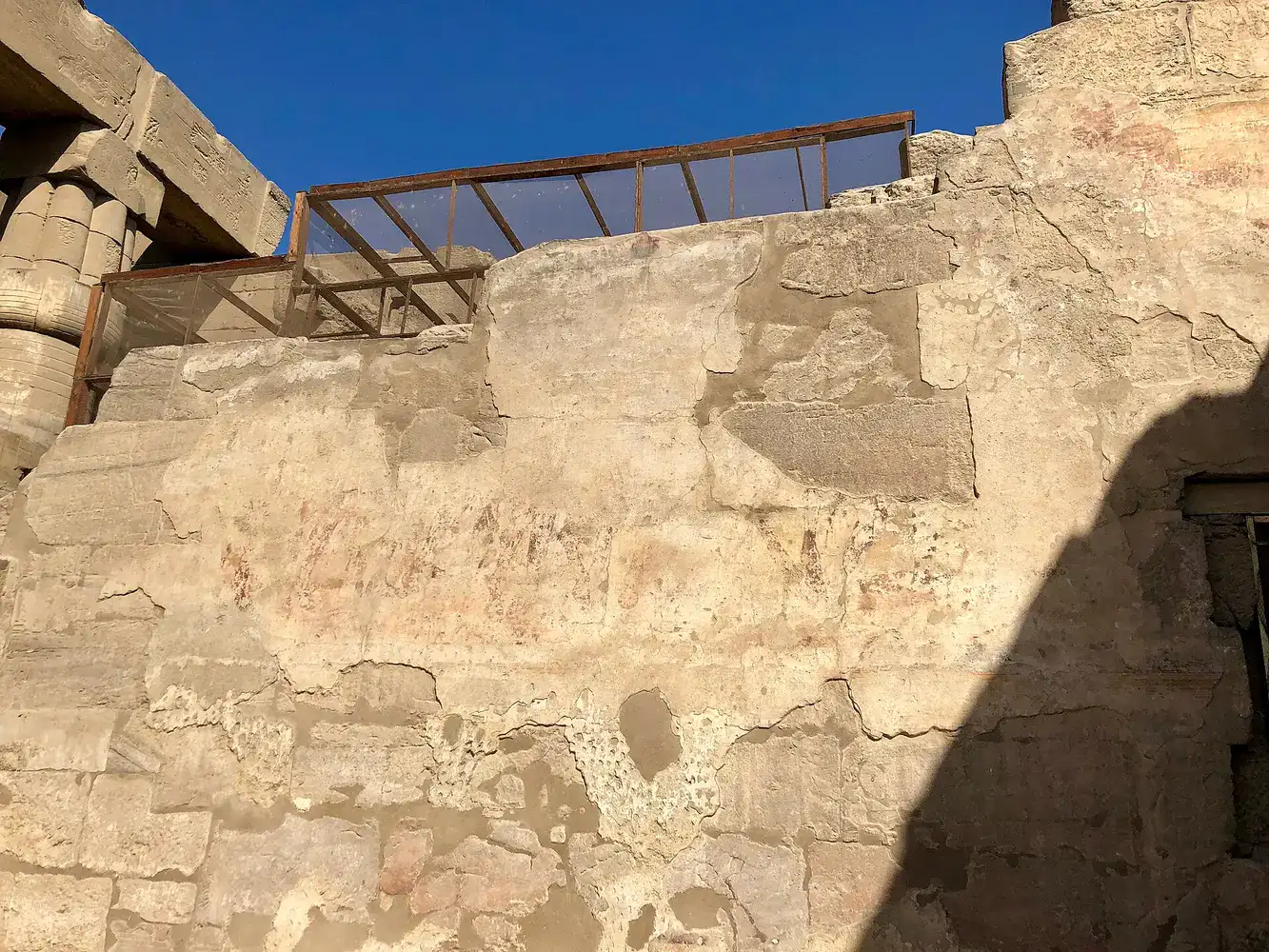
For example, Alexander the Great’s shrine represented him in Egyptian royal form inside a rebuilt barque shrine, presenting himself as a legitimate pharaoh before Amun. In the late third century CE, the Romans surrounded the temple with a military fortress. A chamber was adapted as an imperial cult space and painted with figures of Diocletian and his co-rulers.
Subsequently, Christian communities reused parts of the complex and left churches and painted remains. In addition, the Mosque of Abu al-Haggag, established above the buried courtyard in the medieval period, remains active today. Consequently, its elevated doorway reveals how deeply the ancient court once lay beneath the accumulated city.
The Mosque of Abu al-Haggag
Importantly, the mosque remains an active place of worship rather than a museum display. Its position above the ancient courtyard makes the changing ground level—and Luxor Temple’s continuous place in city life—immediately visible.
Eventually, systematic clearance by Gaston Maspero began in the 1880s. Then, in 1989, workers discovered the Luxor Cachette beneath Amenhotep III’s courtyard: a remarkable group of statues now displayed in the Luxor Museum. Today, the collection includes celebrated images of Amenhotep III and other deities.

Luxor Temple, the Theban Triad and Sphinx Avenue
Above all, Luxor Temple honoured Amun in his local form, Amenemopet, together with Mut and Khonsu. However, its special focus was the regeneration of divine and royal power rather than simply serving as the permanent home of one cult statue.
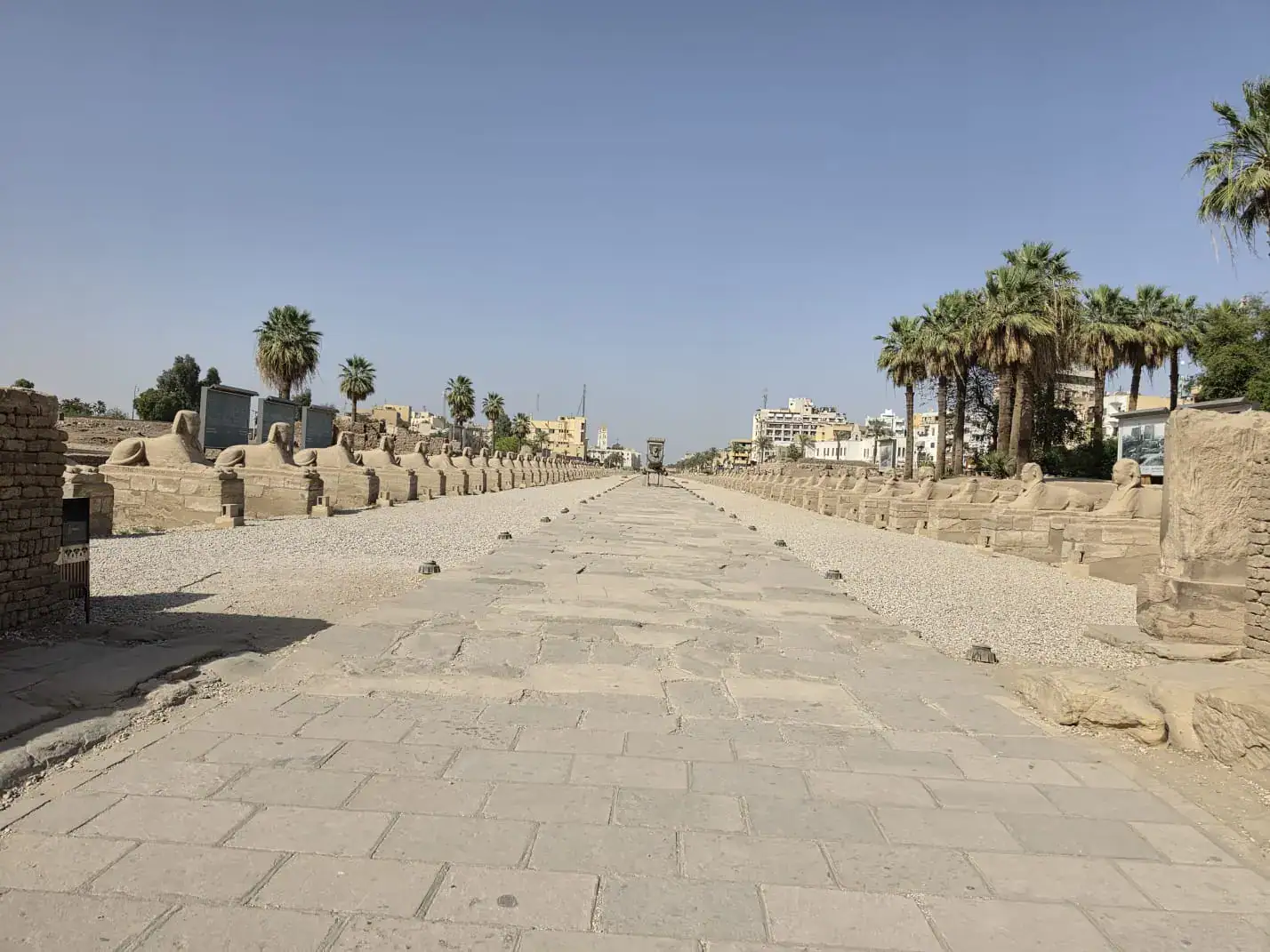
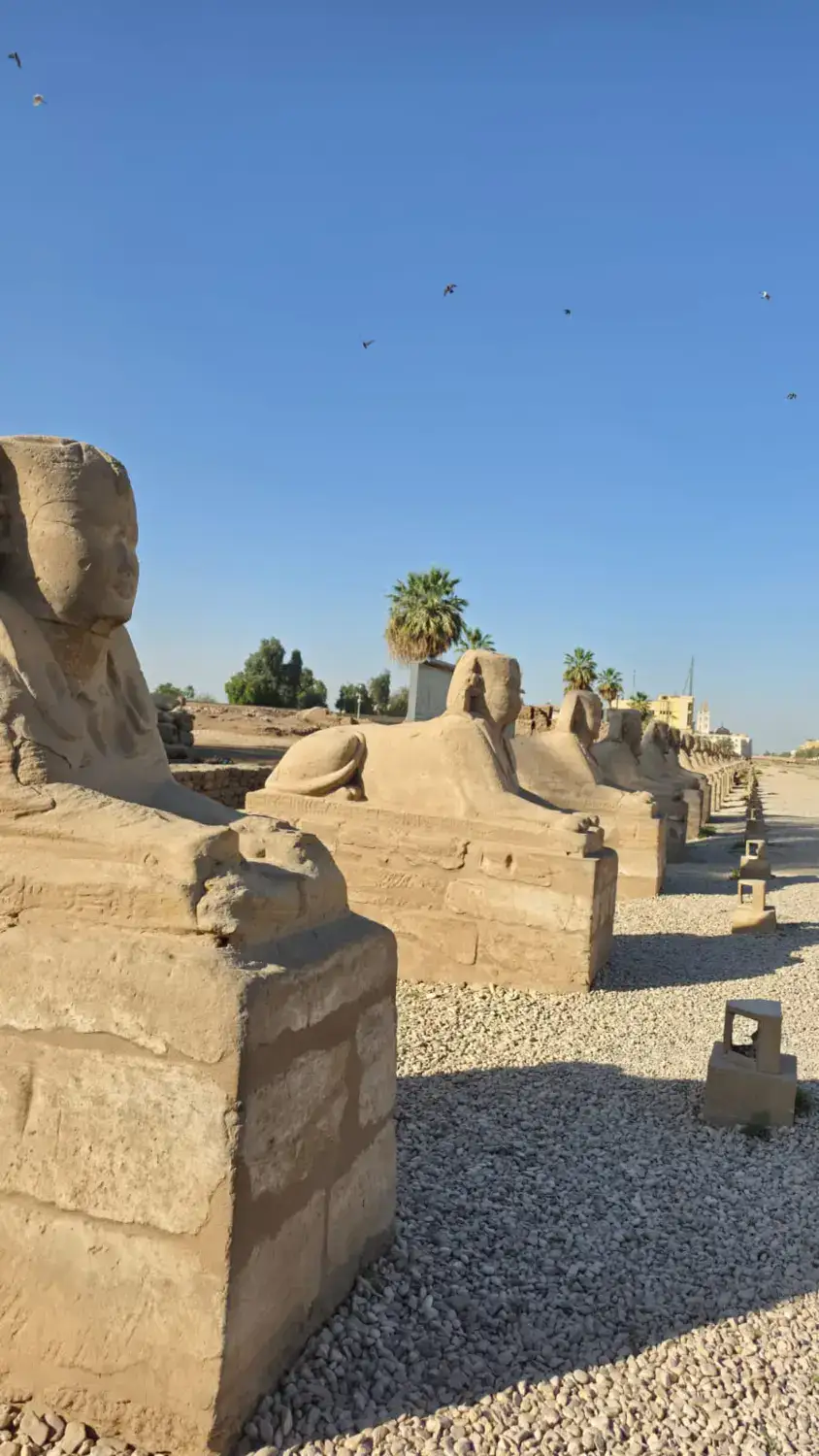
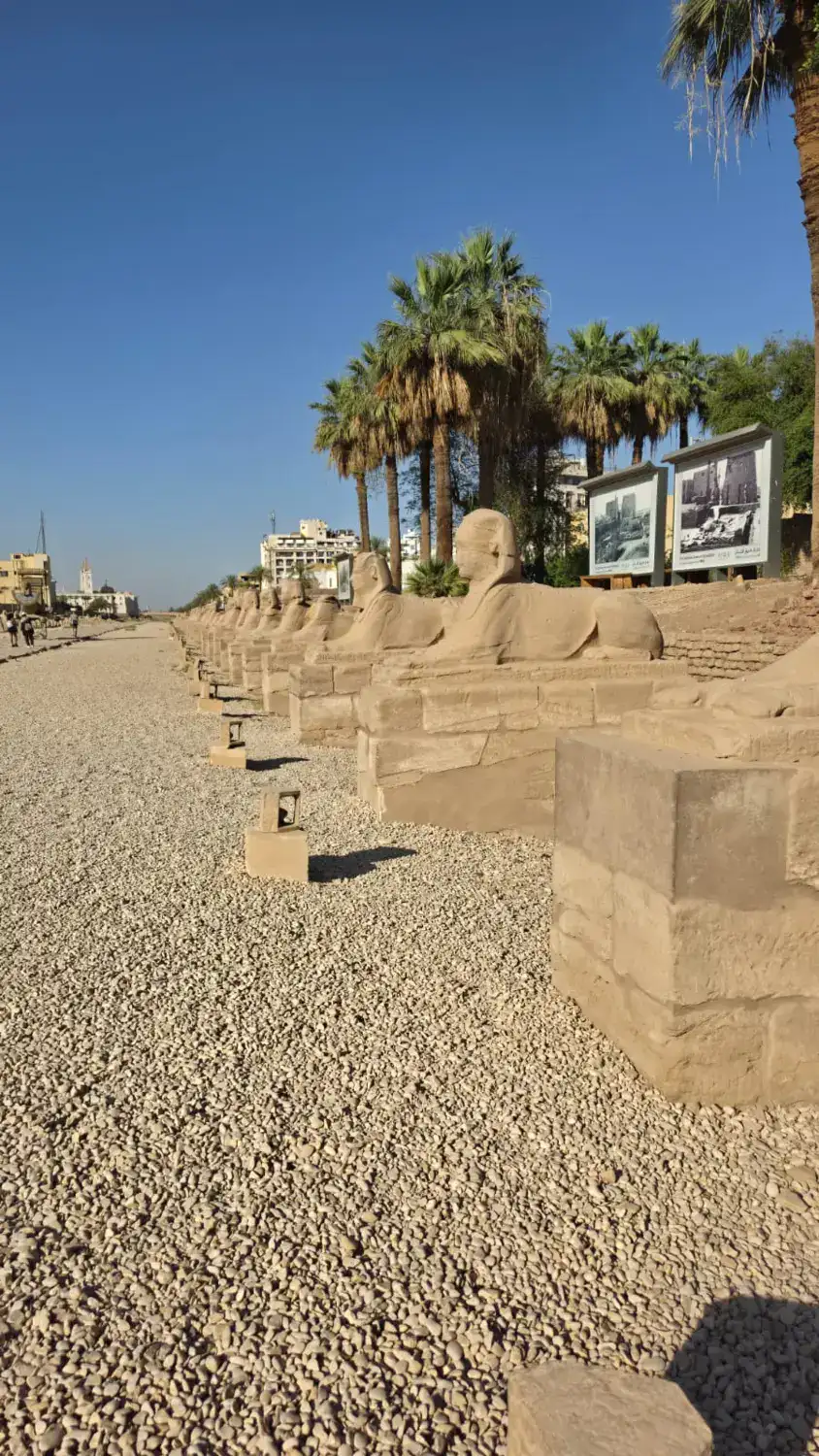
Moreover, the roughly 2.7-kilometre Avenue of Sphinxes connected the complex with Karnak. In fact, different sections carried ram-headed and human-headed sphinxes, turning the route into a monumental stage for processions through ancient Thebes.
Why Luxor Temple Faces Karnak
Unlike most Egyptian temples, this sanctuary does not follow a simple east–west axis. Instead, its orientation responds to Karnak and the sacred relationship between the two sanctuaries. Thus, architecture reinforced ritual movement.
Luxor Temple Gallery
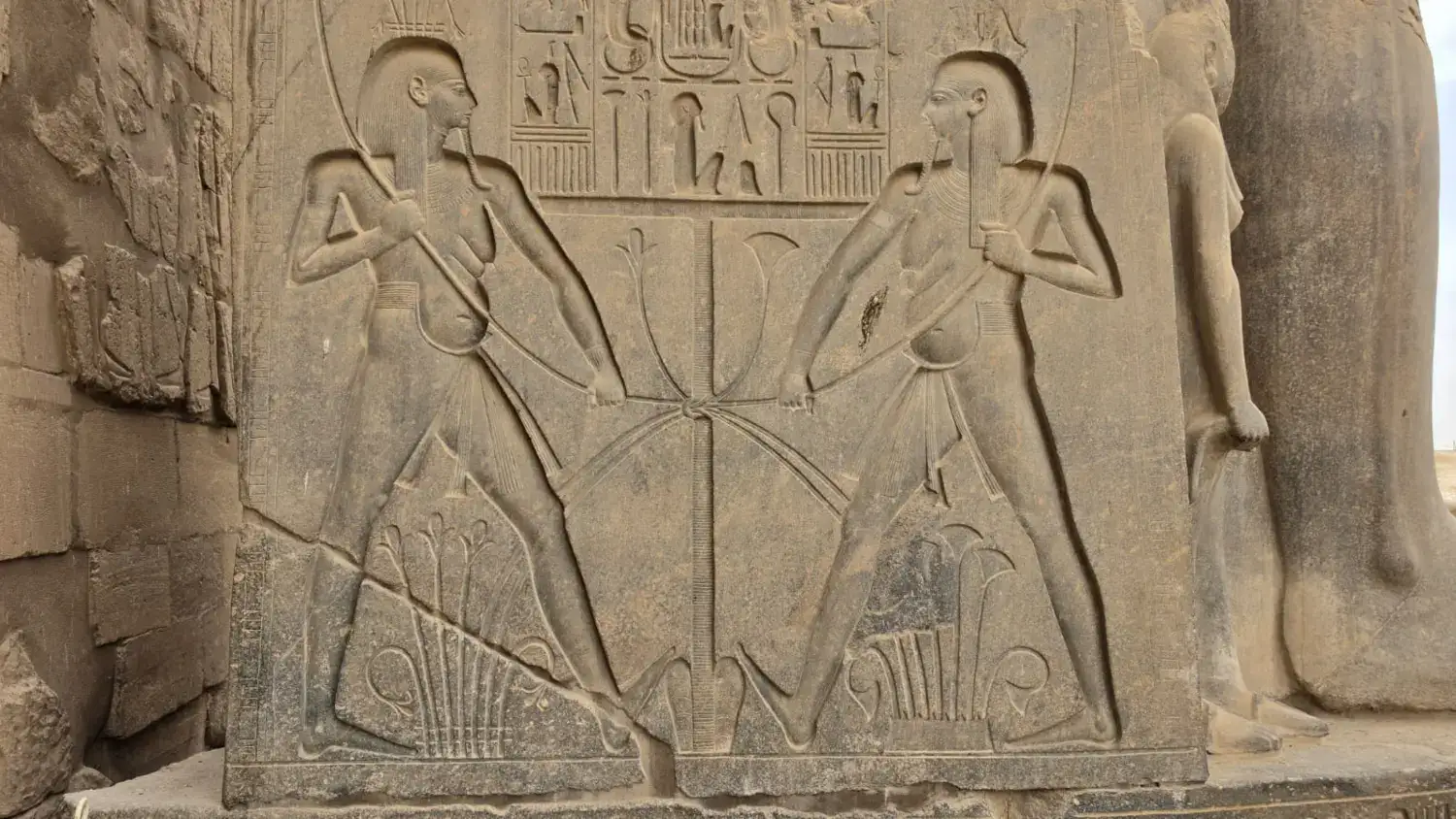
Finally, explore the pylon, colonnades, royal statues, reliefs and later historical layers that make this one of the most atmospheric monuments in Egypt—especially as the stone glows after sunset.
Luxor Temple Visitor Guide and Practical Tips
Luxor Temple stands in the modern city centre and fits naturally into a private Luxor tour or an Egypt Nile cruise itinerary.
In addition, combine it with Karnak Temple, Luxor Museum, the Avenue of Sphinxes or the Valley of the Kings as part of a wider Egypt tour package.
Central Luxor
Specifically, the entrance is beside the Nile Corniche in central Luxor, close to hotels and the souq.
Easy City Access
For instance, reach the monument by private car, taxi, horse carriage or on foot from many central hotels.
Check Current Hours
Since official opening hours and ticket prices may change, confirm them on the day of your visit.
Allow 60–90 Minutes
Generally, 60 to 90 minutes covers the main route. However, allow longer for detailed reliefs, photography and later historical layers.
Daylight to Illumination
If current hours permit, arrive before sunset. Therefore, you can study the carvings in daylight and see the columns illuminated after dark.
Central but Uneven
Although the entrance is central, ancient paving, thresholds and uneven surfaces remain. Consequently, ask locally for the easiest available route.
Karnak and Luxor Temple
First, explore Karnak; then follow the story of the Opet Festival to Luxor Temple and the restored Avenue of Sphinxes.
October to April
Generally, cooler months are ideal; late afternoon also lets you see the monument change from daylight to illumination.
Location on Google Maps
In practical terms, Luxor Temple is located on the east bank of the Nile in the heart of Luxor, around three kilometres south of Karnak Temple along the ancient processional axis.
Open Google MapsFrequently Asked Questions
History and Planning Questions
Experience Luxor Temple at Its Most Beautiful
Add Luxor Temple to a private east-bank tour with an expert Egyptologist, or time your visit for sunset and evening illumination. We can combine it with Karnak and other highlights of ancient Thebes.
Contact Yalla Egypt Travel