

Luxor Museum: Ancient Thebes in a Remarkable Collection
Explore one of Egypt’s finest regional museums, where masterpieces from ancient Thebes are displayed with exceptional care. Moreover, this guide covers the museum’s history, royal statues, mummies, Tutankhamun objects and practical visitor information.
What Is Luxor Museum?
Luxor Museum is an archaeological museum on the Nile Corniche, midway between Luxor Temple and the great complex of Karnak Temple.
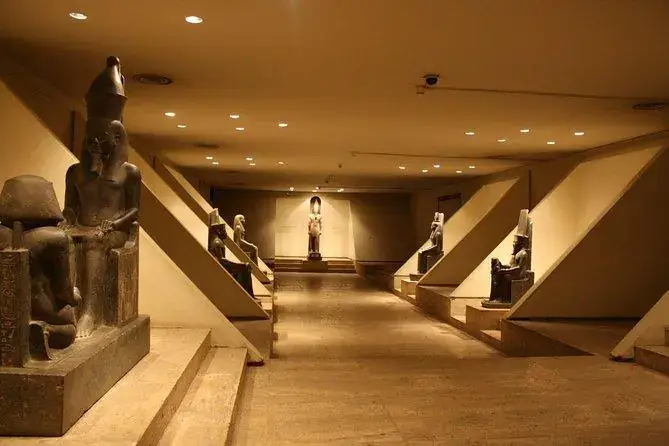
Unlike museums built around enormous collections, Luxor Museum presents a carefully selected group of masterpieces. Therefore, its calm galleries, controlled lighting and clear arrangement make it easier to appreciate the quality of each sculpture, relief and funerary object.
The idea of creating the museum began in the 1950s, and it officially opened in 1975. Afterwards, the Cachette Hall followed in 1991, while the Glory of Thebes Gallery opened in 2004. Most recently, the Cachette Hall reopened in 2026 after renovation and a renewed display.
The History of Luxor Museum
The proposal for a museum devoted to the art of ancient Thebes emerged in the 1950s. However, its purpose was not simply to collect antiquities, but to keep important discoveries close to the temples, tombs and landscapes that gave them meaning.
When the museum opened in 1975, it offered a new kind of regional display. Instead of filling every available space, the designers selected exceptional pieces and gave each object room, focused lighting and a clear historical setting.
The concept of a museum for the art and archaeology of ancient Thebes develops.
Luxor Museum officially opens to visitors on the East Bank of the Nile.
Next, the Cachette Hall opens to display statues found at Luxor Temple in 1989.
Later, the Glory of Thebes Gallery expands the story of royal power, warfare and technology.
Most recently, the Cachette Hall reopens following renovation and a renewed exhibition plan.

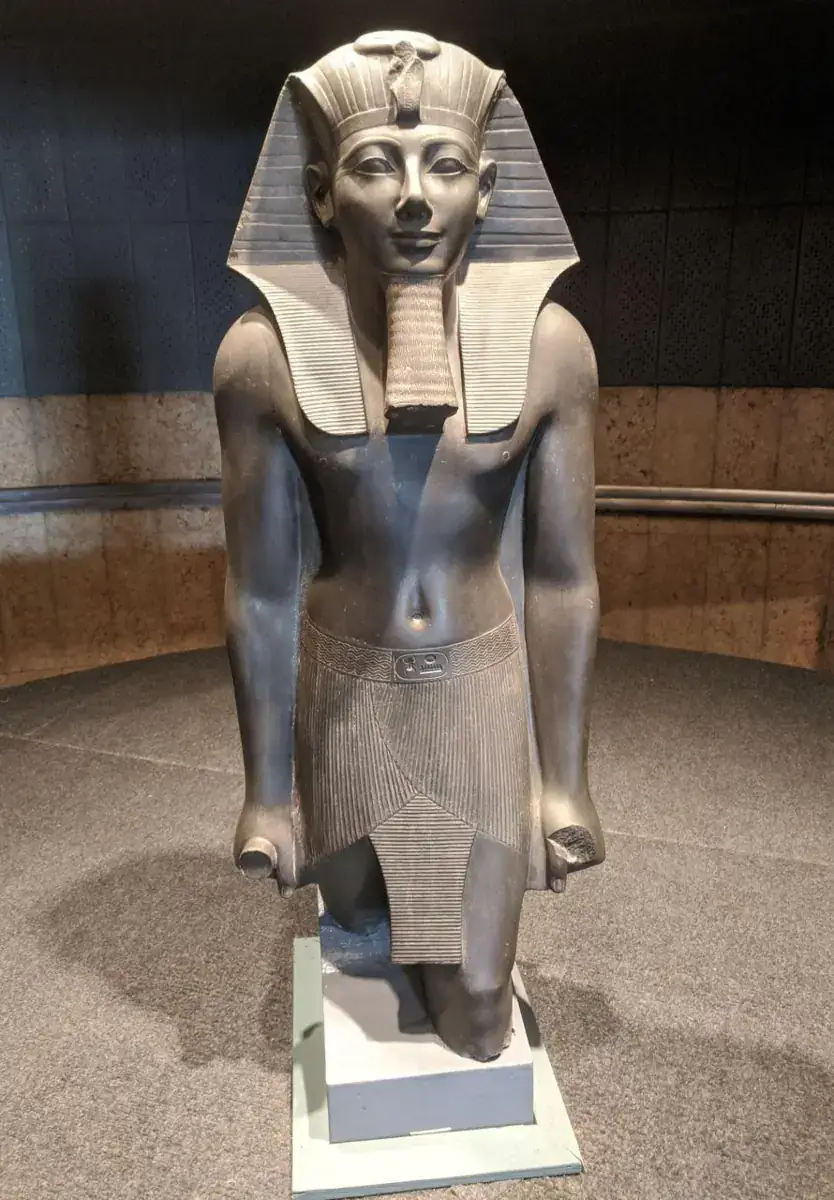
The Statue of Thutmose III at Luxor Museum
One of the museum’s most admired works represents Pharaoh Thutmose III as a youthful and idealized ruler. In addition, the dark schist statue combines royal strength with the refined artistic style of Egypt’s New Kingdom.
Thutmose III expanded Egyptian power across a vast territory. Nevertheless, this sculpture presents more than a military king: its balanced proportions and polished finish communicate divine kingship, control and timeless authority.
How the Luxor Museum Collection Is Arranged
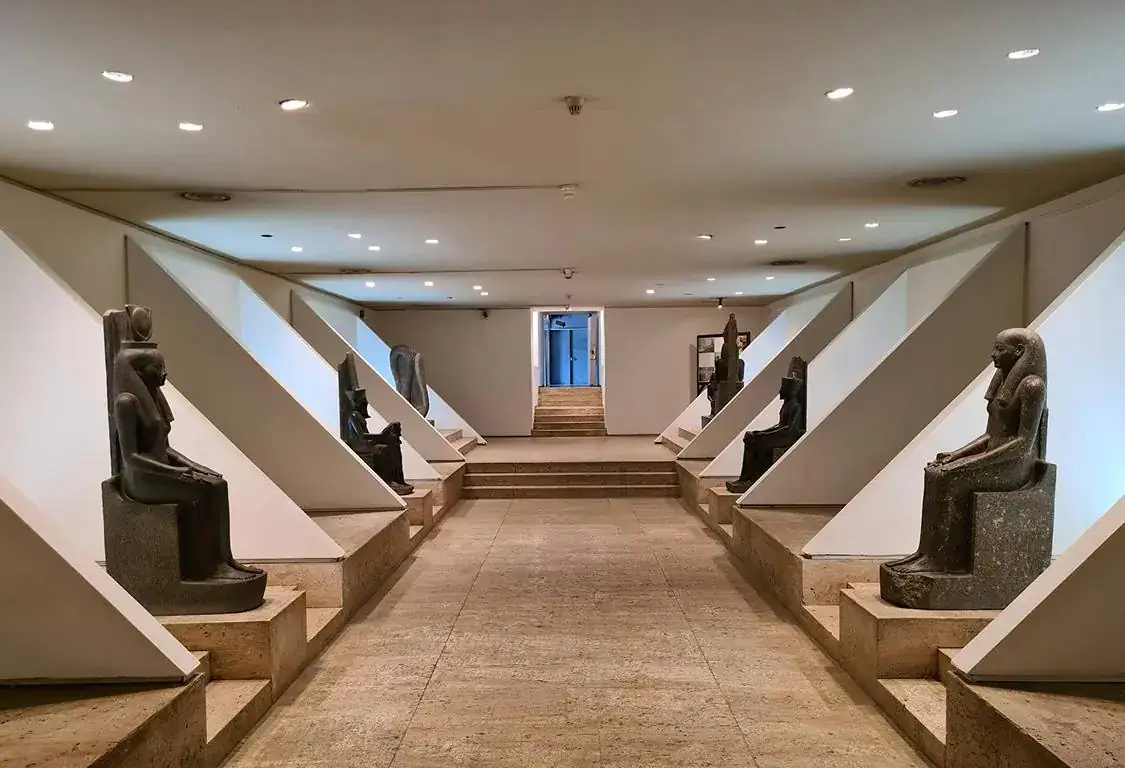
The museum presents objects from prehistoric times through the ancient Egyptian, Greco-Roman, Coptic and Islamic periods. Its strongest concentration, however, is the New Kingdom, when Thebes served as Egypt’s religious capital and the rulers of the Eighteenth to Twentieth Dynasties transformed the region.
Visitors move among sculpture, temple reliefs, funerary equipment, jewelry, weapons, architectural blocks and objects of daily life. As a result, the arrangement helps connect individual masterpieces to the larger story of Thebes: royal ceremony on the East Bank, burial and remembrance on the West Bank, and the authority of the god Amun.
The museum’s relatively compact scale is an advantage. Rather than rushing through thousands of similar objects, visitors can therefore stop, observe the carving and understand why each selected piece matters.
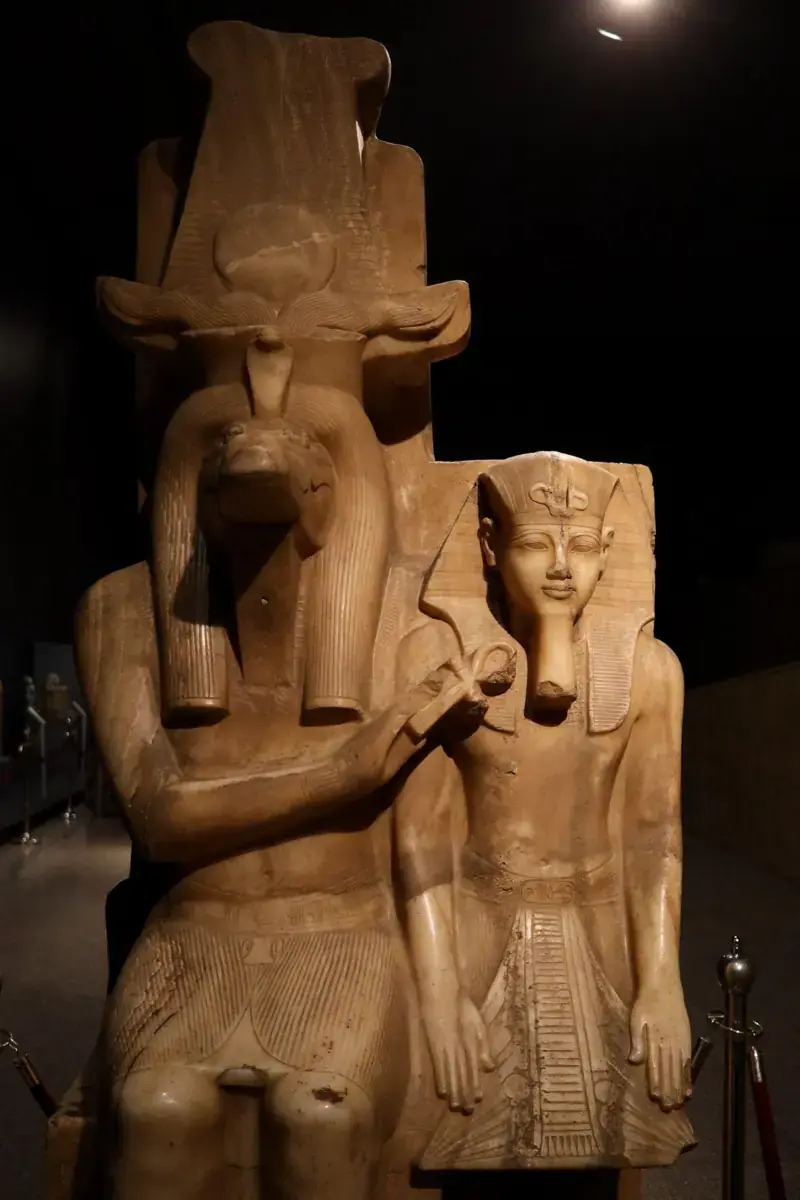
Sobek and Amenhotep III at Luxor Museum
This exceptional alabaster sculpture shows the crocodile god Sobek beside Pharaoh Amenhotep III. Sobek was associated with power, fertility, protection and the life-giving waters of the Nile.
The intimate arrangement places the ruler under divine protection and expresses the close relationship between Egyptian kingship and the gods. Consequently, it is one of the signature masterpieces visitors remember most clearly.
Luxor Museum Highlights
Luxor Temple Cachette
First, admire royal and divine statues discovered beneath the courtyard of Luxor Temple in 1989 and displayed together in a dedicated hall.
Tutankhamun Objects
Next, see selected objects connected with the young king’s tomb, including funerary and military pieces found in the Valley of the Kings.
Royal Mummies
Moreover, encounter royal remains associated with the rulers who reunited Egypt and established the powerful New Kingdom.
Akhenaten Talatat
Study decorated sandstone blocks from Akhenaten’s monuments at Karnak, which reveal the distinctive Amarna artistic style.
Kamose Stela
Discover evidence from the struggle against the Hyksos, an important chapter in the rise of the Eighteenth Dynasty.
Glory of Thebes
Explore military technology, weapons, chariot equipment and objects that illustrate the power of New Kingdom Thebes.

The Luxor Museum Cachette Hall
In 1989, archaeologists working in the court of Amenhotep III at Luxor Temple uncovered a hidden group of statues. Moreover, the discovery included superb representations of kings, queens and deities, many preserved in remarkable condition.
The dedicated Cachette Hall opened in 1991 so the group could be understood together. In particular, its statues demonstrate the extraordinary skill of ancient sculptors and the central role of Luxor Temple in royal and religious life.
After renovation, the hall reopened in 2026 with an updated display. Therefore, it remains essential for anyone who wants to connect the museum’s objects with the living archaeological landscape of Luxor Temple.
Scribes and Officials in the Luxor Museum Collection
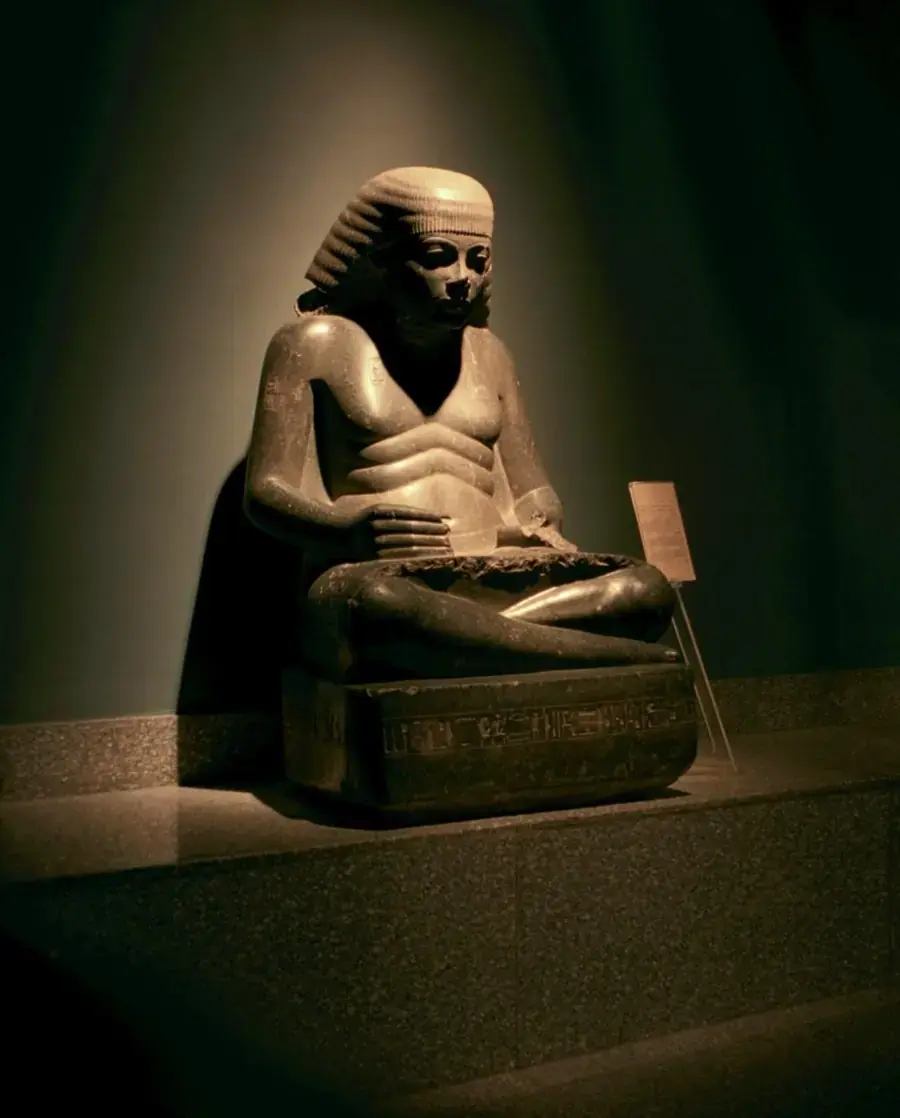
Not every important object represents a king or god. Seated scribes and officials reveal the educated administrators who recorded taxes, organized temple estates, supervised building work and preserved religious knowledge.
The scribal pose—seated with a writing surface or papyrus—communicated literacy, service and status. Furthermore, such statues were placed in temples or tombs so the individual could remain present, receive offerings and participate eternally in sacred life.
Ultimately, these quieter sculptures add a human dimension to the monumental history seen at Karnak, Luxor Temple and the royal necropolises.

Reliefs and Talatat at Luxor Museum
The galleries trace the development of art in Thebes across several periods, with special attention to the New Kingdom. In this way, reliefs and architectural fragments connect the museum collection with the temples and tombs that surround modern Luxor.
The reconstructed wall of talatat blocks is particularly important. For example, these small sandstone blocks once belonged to monuments commissioned by Akhenaten at Karnak and preserve scenes from a period of major religious and artistic change.
Funerary Objects at Luxor Museum
The collection also includes coffins, amulets, jewelry, pottery, tools and funerary equipment. Together, these objects reveal how ancient Egyptians prepared for the afterlife while also recording craft, technology and everyday life.
For a deeper explanation of ancient preservation rituals, continue with our guide to the Mummification Museum in Luxor.
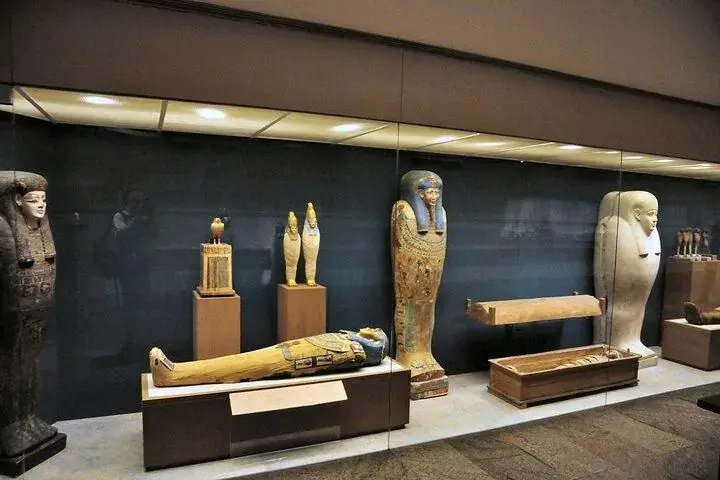
Luxor Museum Opening Hours and Visitor Information
Location
Nile Corniche on Luxor’s East Bank, between Luxor Temple and Karnak Temple.
Opening Hours
The official museum guide lists morning hours from 9:00 AM to 2:00 PM and evening hours from 5:00 PM to 9:00 PM.
Suggested Time
Allow around 90 minutes to two hours. A specialist guide can add valuable historical context.
Tickets
Prices and seasonal schedules can change. Check the official booking page before your visit.
Photography
Mobile-phone photography is generally allowed without charge, but always follow current signs and staff instructions.
Best Time
The evening session is comfortable in warmer months and fits well after daytime archaeological visits.
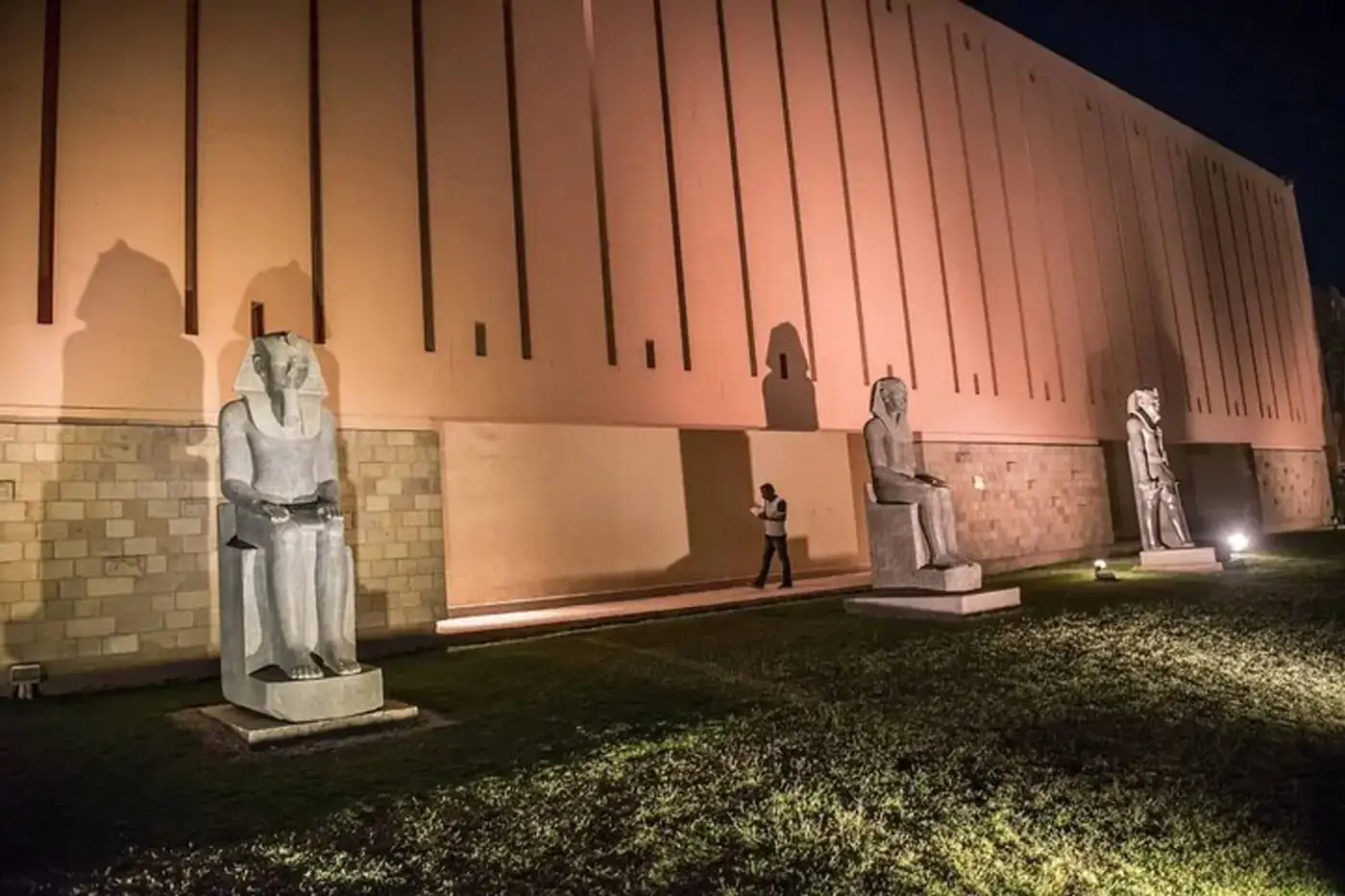
When Is the Best Time to Visit Luxor Museum?
A morning visit works well before the temperature rises, especially if you plan to continue to Karnak Temple. Alternatively, the museum’s evening session is equally attractive: the building is illuminated, the galleries are cool and the visit can follow a sunset walk along the Nile Corniche.
For a balanced East Bank day, first visit Karnak and take a midday break. Next, explore the museum during its evening opening and finish at Luxor Temple after dark. Meanwhile, travelers focusing on the West Bank can visit later the same day and connect the collection with the tombs and temples they have just explored.
Because the galleries are focused and manageable, families may find the museum easier than a very large collection. In addition, children interested in pharaohs, mummies and statues can see major works without an exhausting visit.
Inside Luxor Museum
Related Luxor Attractions and Tours
Luxor Museum FAQ
Where is Luxor Museum located?
It is on the Nile Corniche on Luxor’s East Bank, between Luxor Temple and Karnak Temple.
How long should I spend at Luxor Museum?
Most visitors need around 90 minutes to two hours. Allow longer if you are visiting with an Egyptologist guide.
What are the most important objects in Luxor Museum?
Highlights include the Thutmose III statue, the Sobek and Amenhotep III sculpture, statues from the Luxor Temple Cachette, royal mummies, Akhenaten talatat and selected Tutankhamun objects.
Is Luxor Museum worth visiting?
Yes. Its carefully selected collection, excellent display and focus on ancient Thebes make it one of the most rewarding museums in Egypt.
Can I visit Luxor Museum and Karnak Temple on the same day?
Certainly. The museum lies between Luxor Temple and Karnak, so it combines easily with an East Bank itinerary.
Can I take photographs inside Luxor Museum?
Mobile-phone photography is generally permitted, but restrictions may apply to specific objects. Always follow posted rules and staff instructions.
Explore Luxor Museum with an Egyptologist
Let Yalla Egypt Travel arrange a private visit and connect the museum’s masterpieces with the temples, tombs and history of ancient Thebes.