
Tombs in Egypt
Eight ancient landscapes. Thousands of years of belief, art and royal ambition.
Explore the NecropolisesA Complete Journey Through the Tombs in Egypt
The tombs in Egypt are not silent rooms built only for the dead. Instead, they preserve royal theology, family memories, working life and some of the finest paintings created in the ancient world. Moreover, every necropolis—from the hidden corridors of Luxor to the pyramid fields near Cairo and the cliff tombs of Middle Egypt—reveals a different chapter of Egyptian civilisation.
In Luxor, pharaohs chose the Valley of the Kings while queens and royal children received their own sacred valley nearby. For example, officials decorated the Tombs of the Nobles with lively scenes of banquets, vineyards and workshops. Meanwhile, the artisans of Deir el-Medina created intimate tombs for their own families. Farther north, Saqqara and Dahshur trace the transformation from mastaba to pyramid. Finally, Beni Hasan preserves rock-cut tombs that open a vivid window onto the Middle Kingdom.
Where to Explore the Tombs in Egypt
Choose a site to discover its history, most important tombs, artwork and practical visitor information.
 Luxor • New Kingdom
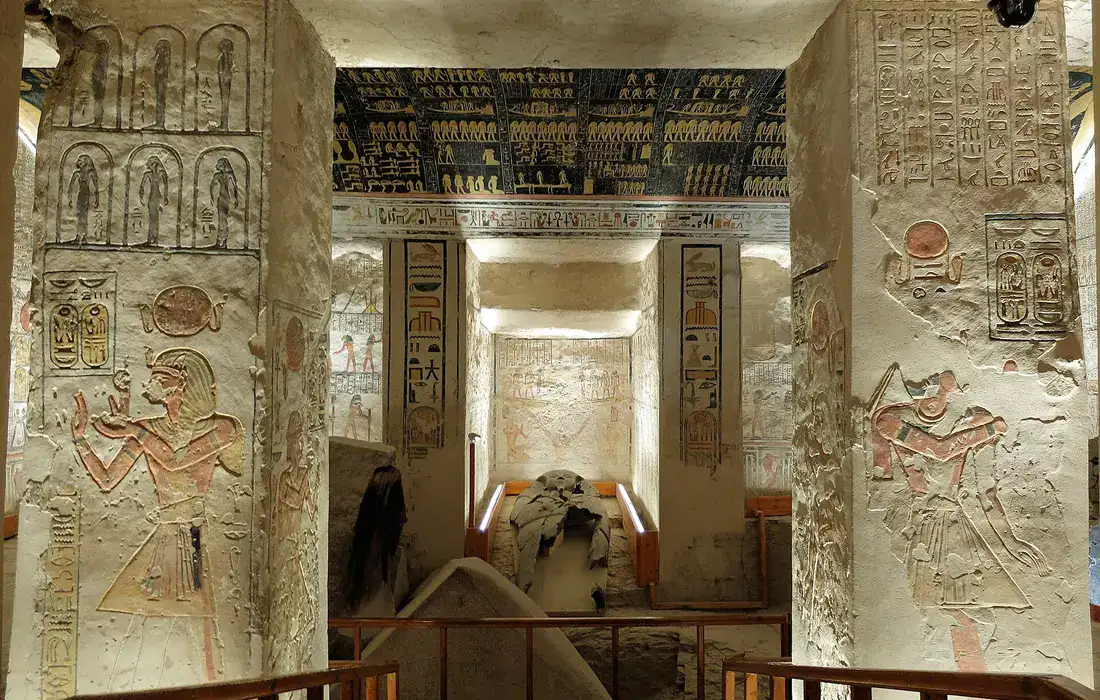
 Valley of the Kings: Royal Tombs in Egypt
Across the Nile from ancient Thebes, rulers of the 18th, 19th and 20th Dynasties cut their tombs deep into a desert valley. Moreover, more than sixty tombs are known here, including those of Tutankhamun, Seti I, Ramesses III, Ramesses VI and Horemheb. Therefore, their corridors illustrate the king’s journey through the night and his rebirth with the rising sun.
Explore the Valley of the Kings →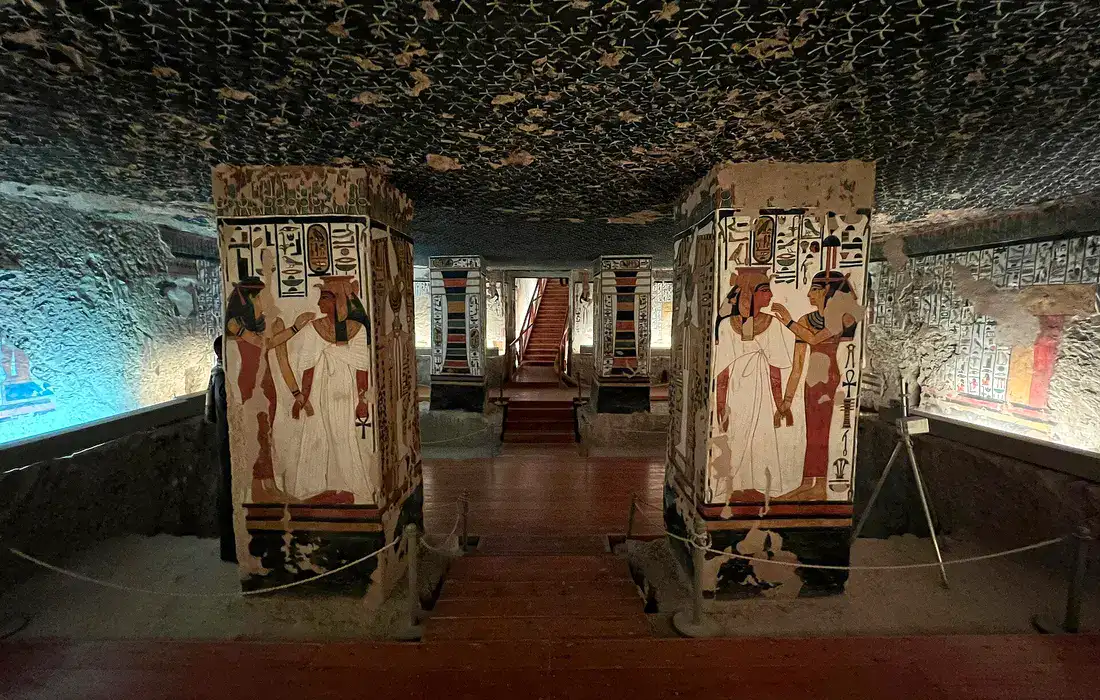 Luxor • Royal Families
 Valley of the Queens: Royal Tombs in Egypt
Known in antiquity as Ta-Set-Neferu, the Valley of the Queens sheltered queens, princes and princesses of the New Kingdom. Above all, the tomb of Nefertari stands out for its graceful figures, rich colours and exceptionally balanced compositions. In addition, important tombs belong to the princes Amunherkhepshef and Khaemwaset.
Explore the Valley of the Queens →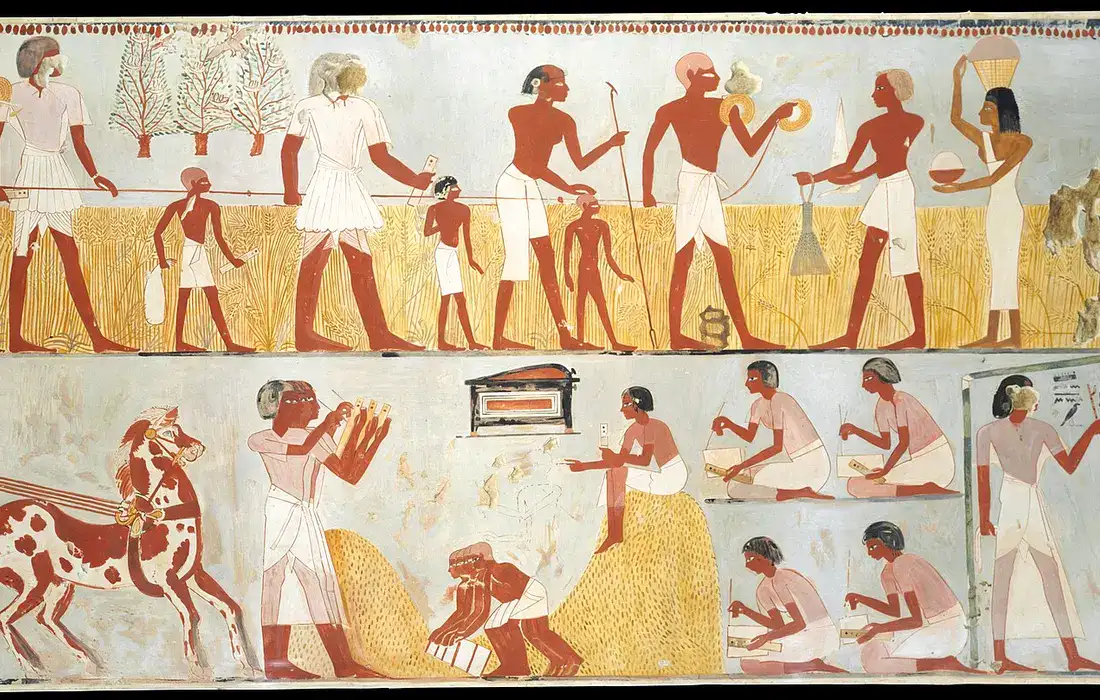 Luxor • Elite Officials
 Tombs of the Nobles: Private Tombs in Egypt
Unlike royal tombs, these private chapels celebrate earthly achievement as well as the afterlife. For example, their paintings show farming, fishing, music, feasts, foreign delegations and skilled craftsmen. Consequently, the tombs of Rekhmire, Ramose, Sennefer, Menna and Nakht are invaluable records of daily life and state ceremony in New Kingdom Egypt.
Explore the Tombs of the Nobles →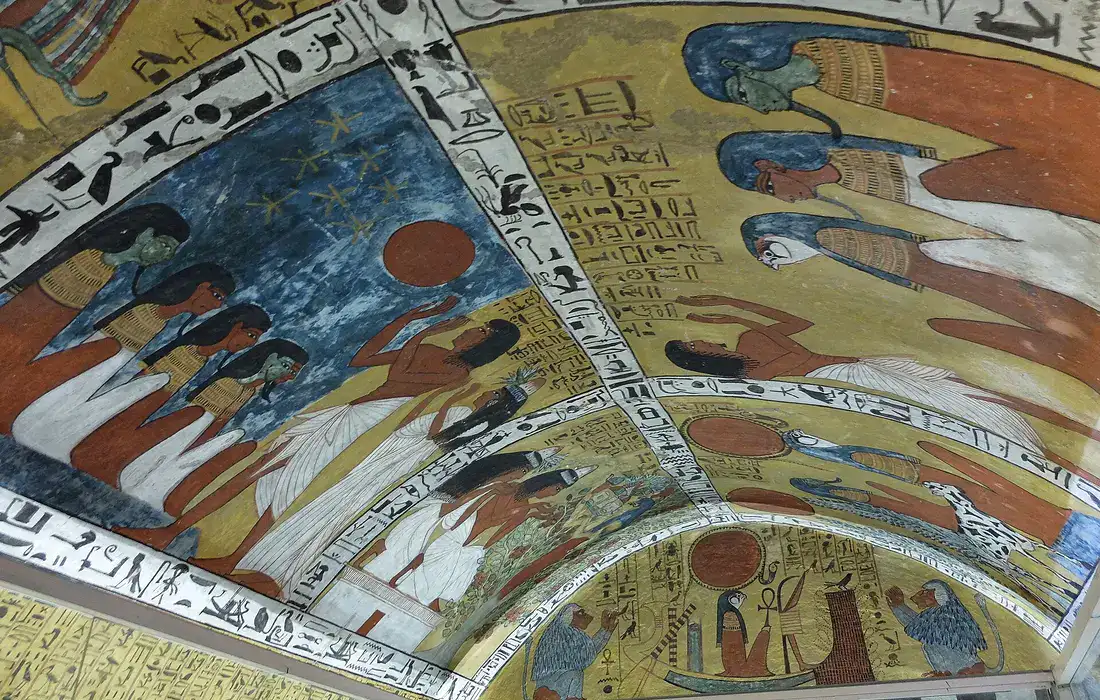 Luxor • Village of Artisans
 Deir el-Medina: Artisan Tombs in Egypt
The painters, sculptors and stonecutters who created royal tombs lived in a planned village now called Deir el-Medina. Moreover, they built beautifully decorated family tombs for themselves. As a result, the tombs of Sennedjem, Inherkhau and Pashedu combine personal devotion with remarkably preserved scenes of the afterlife.
Explore Deir el-Medina →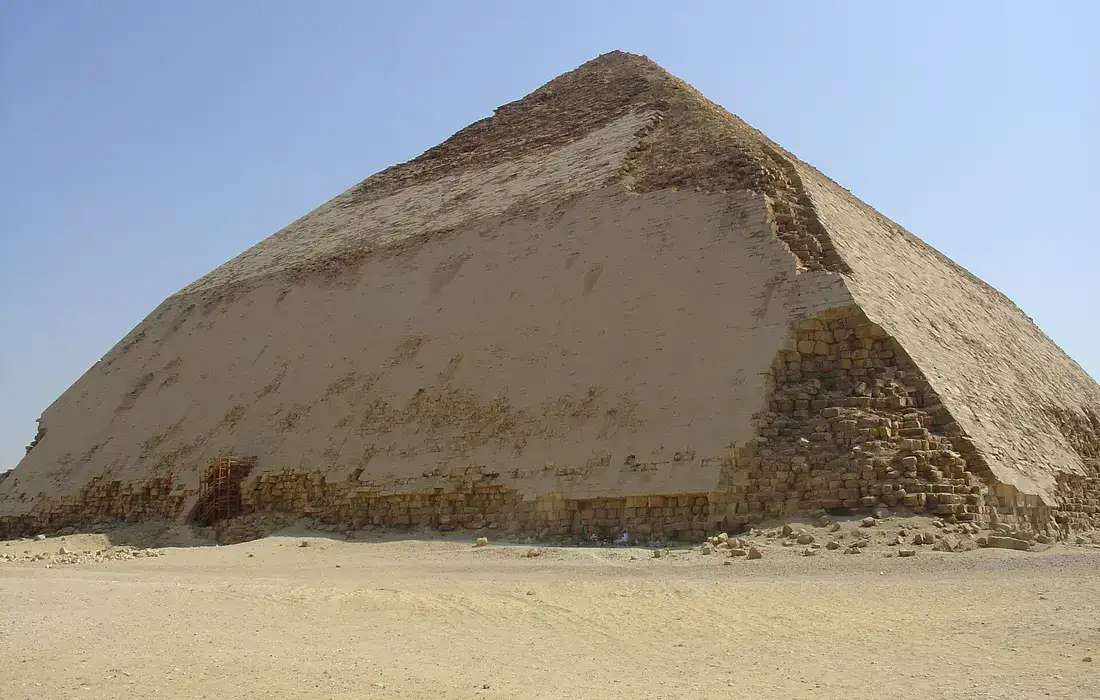 Giza • Pyramid Experiments
 Dahshur: Pyramid Tombs in Egypt
For instance, Dahshur documents a decisive architectural experiment. King Sneferu’s Bent Pyramid changes angle midway, whereas his nearby Red Pyramid became the first successful large true pyramid. Later, Middle Kingdom rulers also chose the area, turning Dahshur into a royal cemetery that spans many centuries.
Explore the Dahshur Necropolis →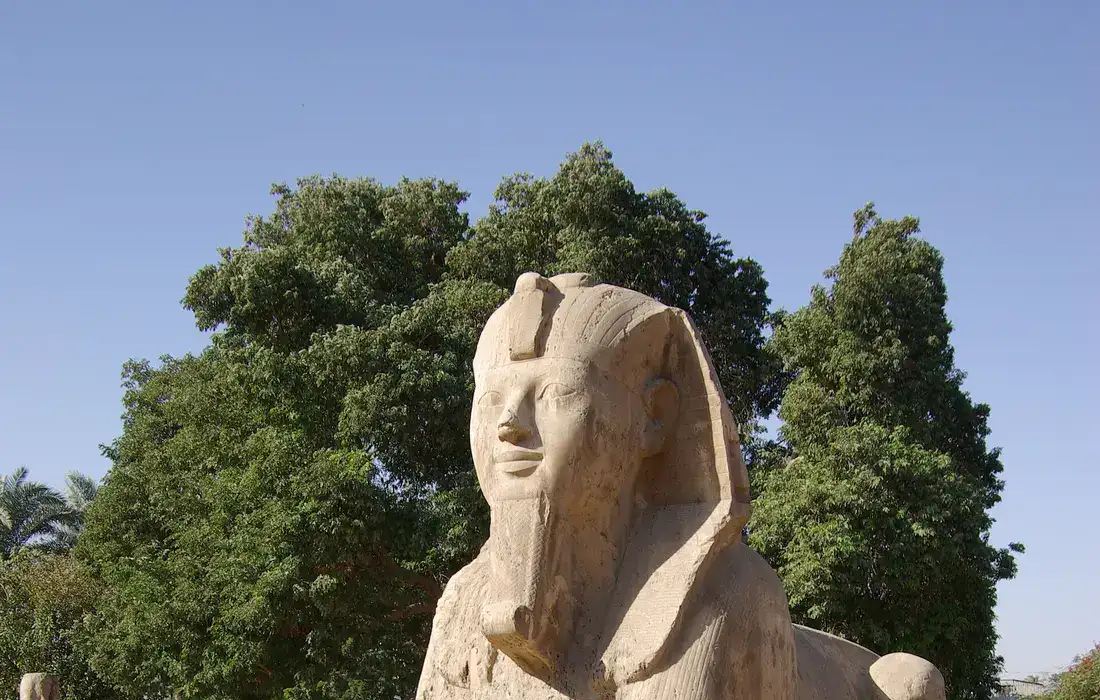 Memphis • Egypt’s First Capital
 Memphis: Capital of the Great Necropolis
Similarly, Memphis stood at the heart of one of the ancient world’s greatest funerary landscapes. Consequently, royal cemeteries spread from this capital across Saqqara and Dahshur. Today, its open-air museum preserves the monumental Alabaster Sphinx and powerful sculptures of Ramesses II, connecting the living city with the vast necropolis that surrounded it.
Explore Ancient Memphis →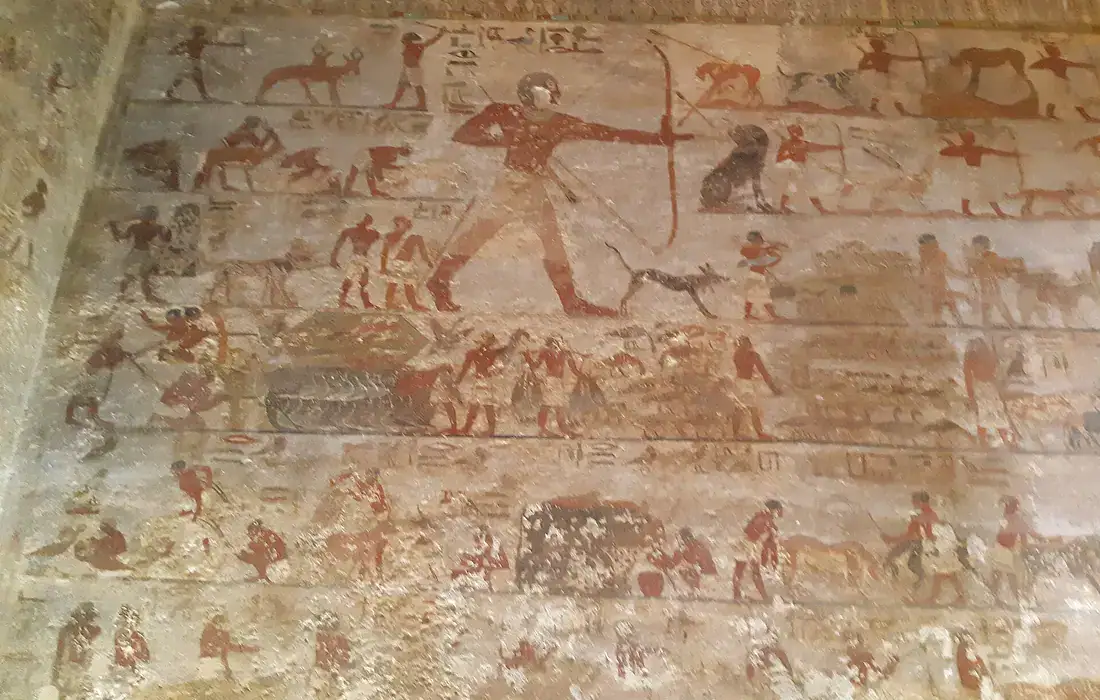 Minya • Middle Kingdom
 Beni Hasan: Tombs Above the Nile
Carved high into limestone cliffs south of Minya, the Beni Hasan tombs belonged mainly to provincial governors of the Middle Kingdom. Moreover, columns, painted wrestling sequences, desert hunts, workshops and the famous Aamu procession make this cemetery different from both the royal valleys and the pyramid fields.
Explore the Beni Hassan Tombs →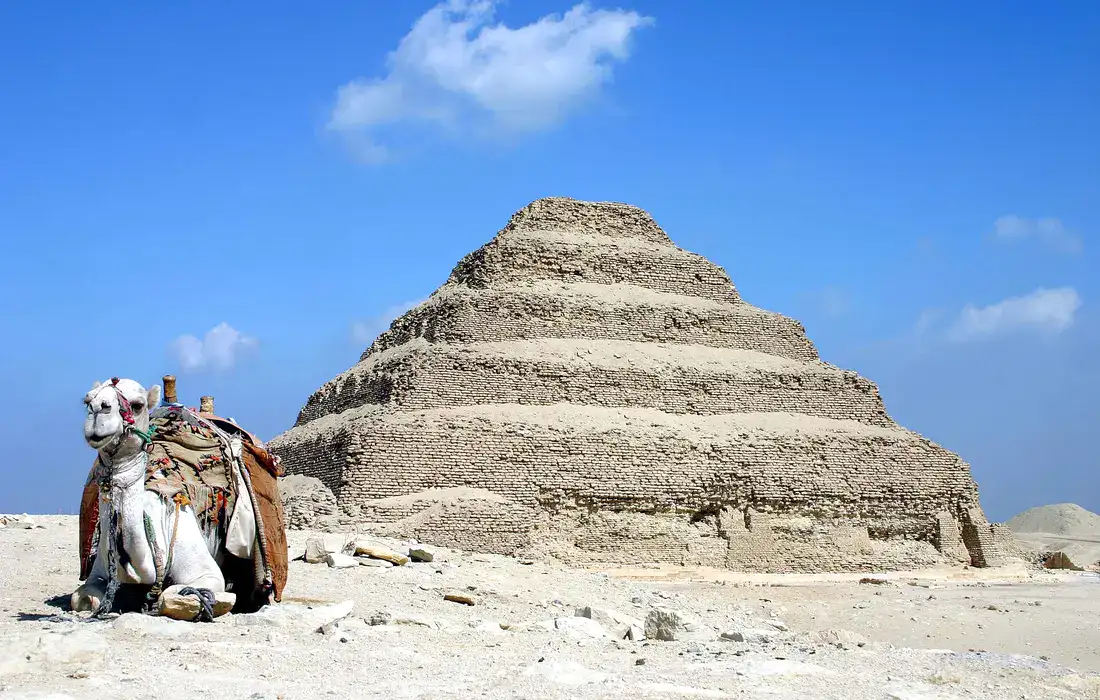 Giza • Ancient Memphis
 Saqqara: Egypt’s Great Necropolis
Saqqara served the ancient capital of Memphis for more than three millennia. For example, its monuments range from early mastabas and Djoser’s Step Pyramid to richly carved Old Kingdom tombs and vast underground galleries. Therefore, visitors can follow the development of Egyptian burial architecture here almost from its beginnings.
Explore the Saqqara Necropolis →Which Tombs in Egypt Should You Visit?
Visiting the Tombs in Egypt: Practical Tips
Start Early
For this reason, morning visits offer cooler weather, softer light and more time to explore several tombs without rushing.
Check Tomb Access
Open tombs and separate-ticket monuments can change. Therefore, confirm the current selection before travelling.
Protect the Art
In addition, follow photography rules, avoid touching painted walls and never use flash inside decorated chambers.
Travel with Context
Above all, a knowledgeable Egyptologist can explain the texts, symbols and historical differences between each cemetery.
For official monument information, visit Discover Egypt’s Monuments. Furthermore, Saqqara and Dahshur form part of the UNESCO-listed Memphis necropolis.
Map of the Main Tombs in Egypt
In addition, the sites stretch across three main travel regions: Saqqara and Dahshur near Cairo, Beni Hasan near Minya, and four great necropolises on Luxor’s west bank.
Open in Google MapsFrequently Asked Questions About Tombs in Egypt
What are the most famous tombs in Egypt?
The tomb of Tutankhamun in the Valley of the Kings and the tomb of Queen Nefertari in the Valley of the Queens are among the most famous. However, Saqqara, Dahshur, Beni Hasan, Deir el-Medina and the Tombs of the Nobles offer equally important but very different experiences.
Are Egyptian pyramids also tombs?
Yes. In fact, pyramids were monumental royal tombs and formed part of larger funerary complexes. Therefore, Saqqara and Dahshur clearly demonstrate how pyramid design developed from earlier mastaba traditions.
Can visitors enter every tomb?
No. However, authorities rotate access to protect fragile interiors, and some famous tombs require separate tickets. Therefore, the available selection may change.
How many days are needed to see these sites?
For example, allow at least two days for Luxor’s west-bank necropolises, one day for Saqqara and Dahshur, and a separate Middle Egypt excursion for Beni Hasan.
Which site is best for colourful wall paintings?
The Valley of the Queens, Deir el-Medina and the Tombs of the Nobles contain exceptional colour. In particular, Nefertari’s tomb is celebrated, while noble and artisan tombs reveal more scenes of everyday life.
Walk Through Egypt’s Hidden History
Finally, build a private itinerary that connects royal valleys, painted tombs and the ancient pyramid fields.
Plan Your Private Egypt Tour