
Memphis Egypt:
City of Ptah
Memphis Egypt preserves the remains of an ancient capital at Mit Rahina, where royal colossi, temple fragments and a monumental sphinx reveal more than three millennia of history.
Memphis Egypt: A Capital That Shaped a Civilisation
Memphis Egypt occupied a strategic position near the meeting point of the Nile Valley and Delta. Therefore, rulers could oversee routes linking Upper Egypt, Lower Egypt, desert corridors and Mediterranean trade networks.
Ancient tradition credited the city’s foundation to Menes around 3100 BCE. Historians often connect Menes with Narmer, yet that identification remains debated; consequently, it is safer to distinguish tradition from proven archaeology.
Although later capitals rose elsewhere, Memphis remained a major administrative, religious and artistic centre for more than three thousand years. Today, its scattered remains survive around Mit Rahina and across the vast Memphite necropolis. You can also browse our guide to Egypt’s temples and ancient monuments.
Why Ancient Memphis Still Matters
Memphis linked royal government, temple institutions and highly skilled workshops. Moreover, its cemeteries stretched from Giza to Dahshur, creating an extraordinary landscape of pyramids, mastabas, temples and tombs beside the living city.
How Memphis Became Egypt’s Ancient Capital
According to later Egyptian tradition, Menes established Memphis after the unification of Upper and Lower Egypt. However, the surviving evidence does not allow scholars to reconstruct one simple foundation event or equate Menes with Narmer beyond doubt.
Nevertheless, the location offered a clear advantage. From here, the state could manage movement between the narrow Nile Valley and the broad Delta while remaining close to fertile land and river transport.
As royal administration expanded, the settlement gained palaces, temples, magazines, harbours and workshops. Thus, Memphis became especially influential during the Early Dynastic Period and Old Kingdom.
- Traditional foundation: around 3100 BCE
- Key landscape: the head of the Nile Delta
- Principal necropolis: Saqqara and neighbouring pyramid fields
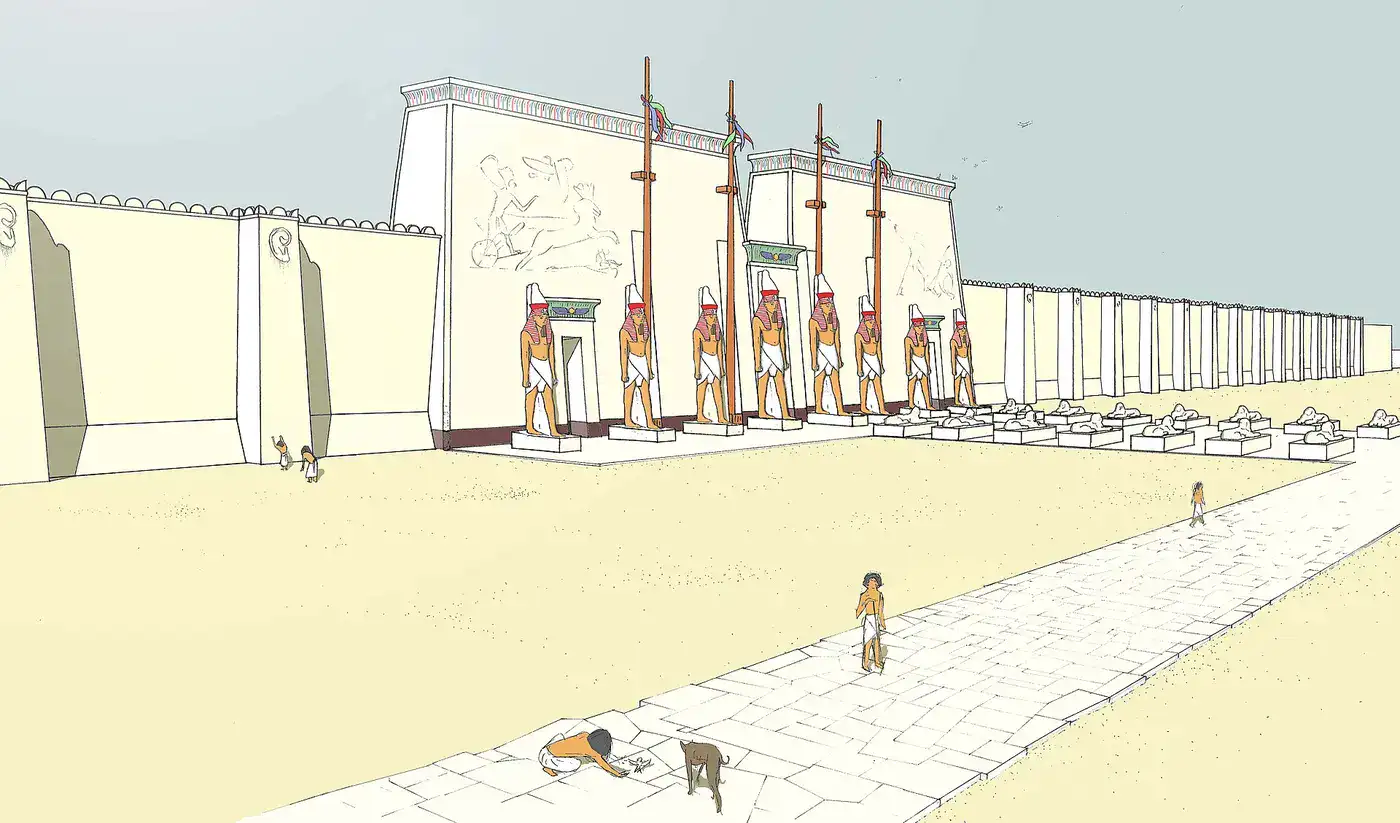
From Inebu-hedj and Men-nefer to Memphis
Early texts used names including Inebu-hedj, usually translated as “White Walls”. Later, Men-nefer referred to the pyramid complex and funerary town of Pepi I at Saqqara; over time, the name became associated with the wider city.
Subsequently, Greek speakers rendered Men-nefer as Memphis. Therefore, the familiar modern name reflects a long linguistic journey rather than one unchanged name used from the city’s foundation.
Another influential name was Hut-ka-Ptah, “Enclosure of the ka of Ptah”. Scholars commonly connect its Greek form with Aigyptos, the root of the modern word Egypt, although the precise linguistic history remains complex.
Memphis was not simply a capital: it was the meeting place of kingship, craftsmanship, theology and the landscape of the pyramids.
Political Power in Memphis Egypt
During the Early Dynastic Period and Old Kingdom, Memphis stood at the centre of royal government. From this region, kings of the Third through Sixth Dynasties directed large building programmes, managed resources and maintained a growing bureaucracy.
Later, political capitals shifted, yet Memphis did not disappear. Instead, its strategic position and institutions allowed it to remain an important administrative and military centre during the New Kingdom, Late Period and periods of foreign rule.
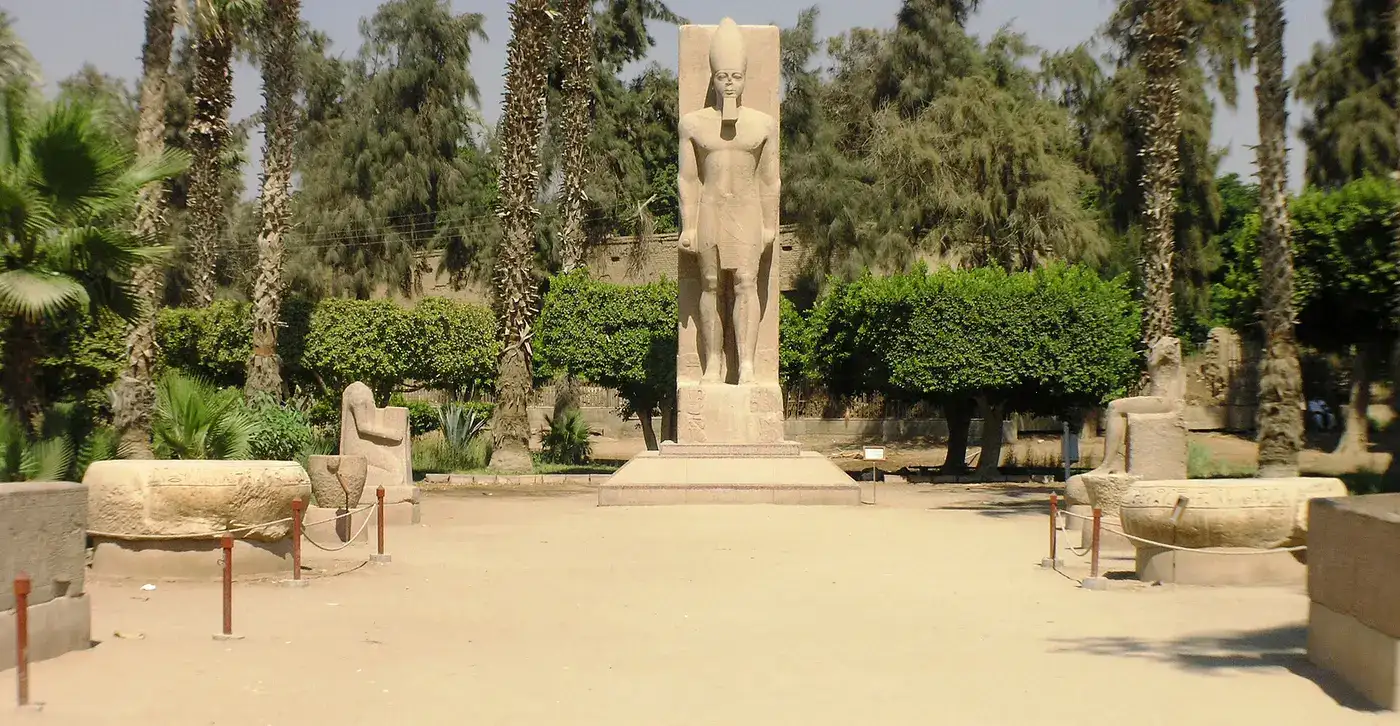
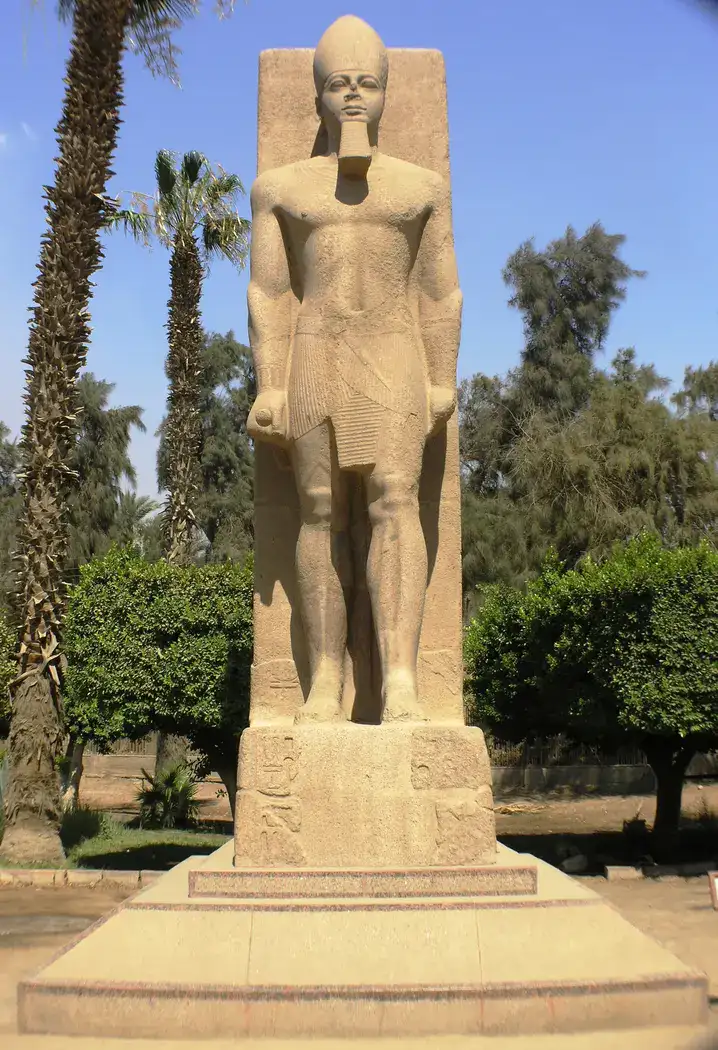
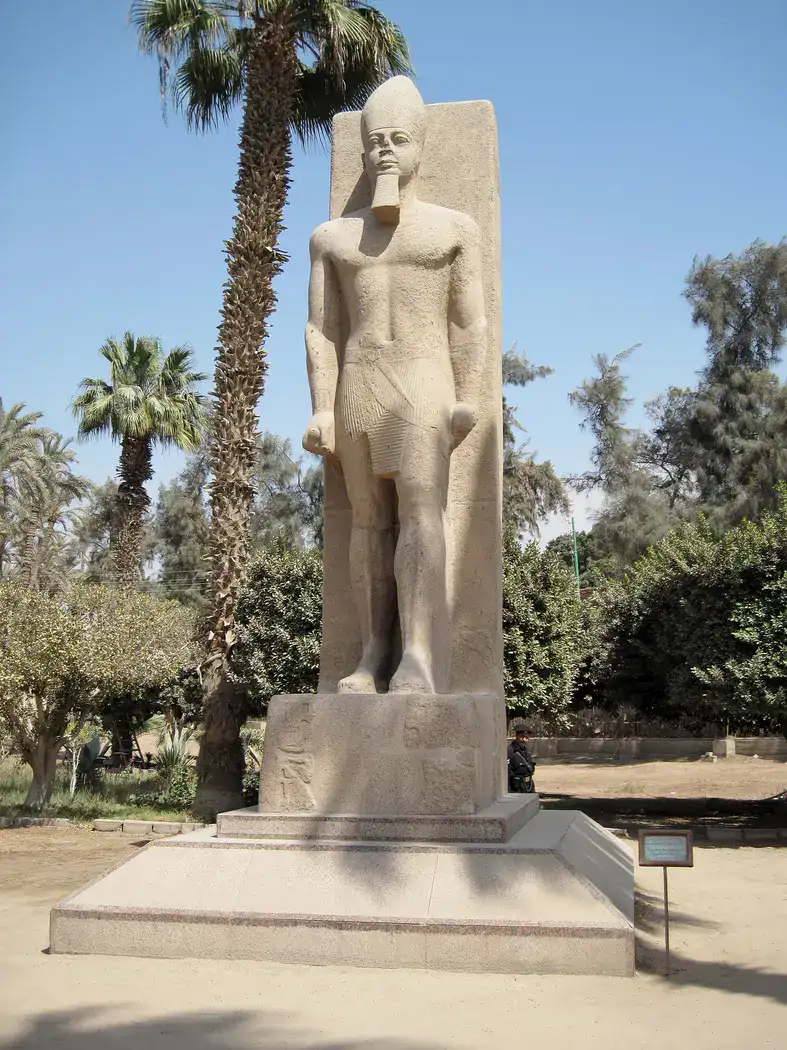
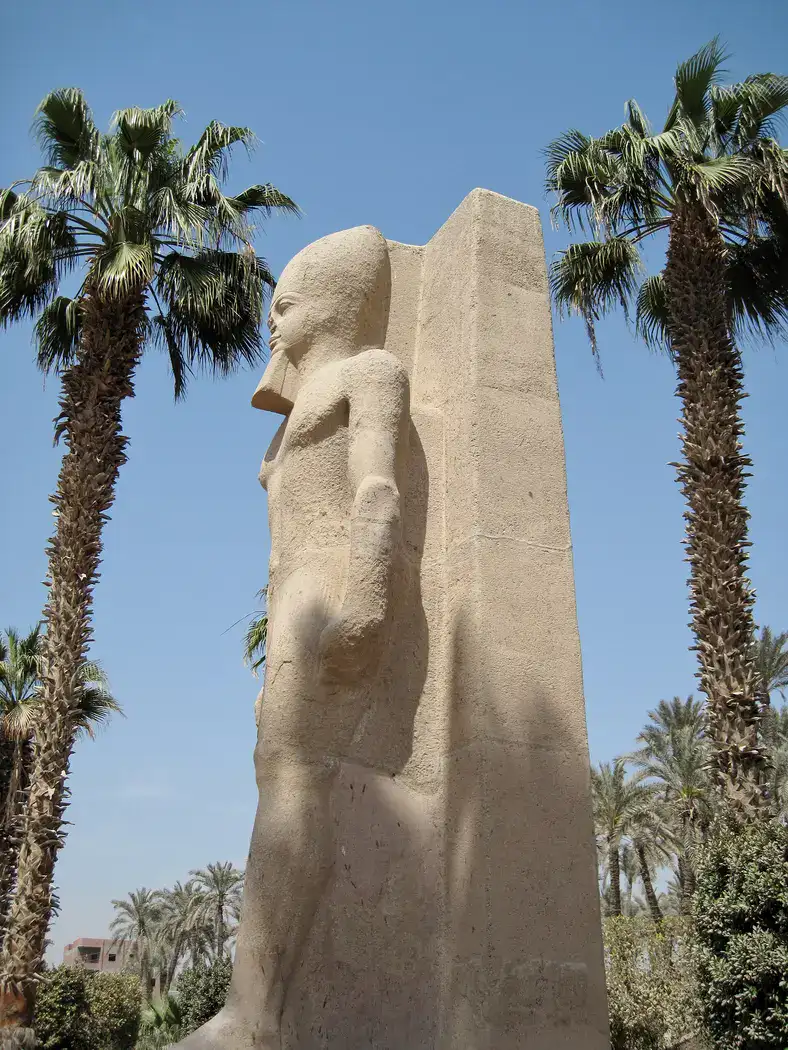
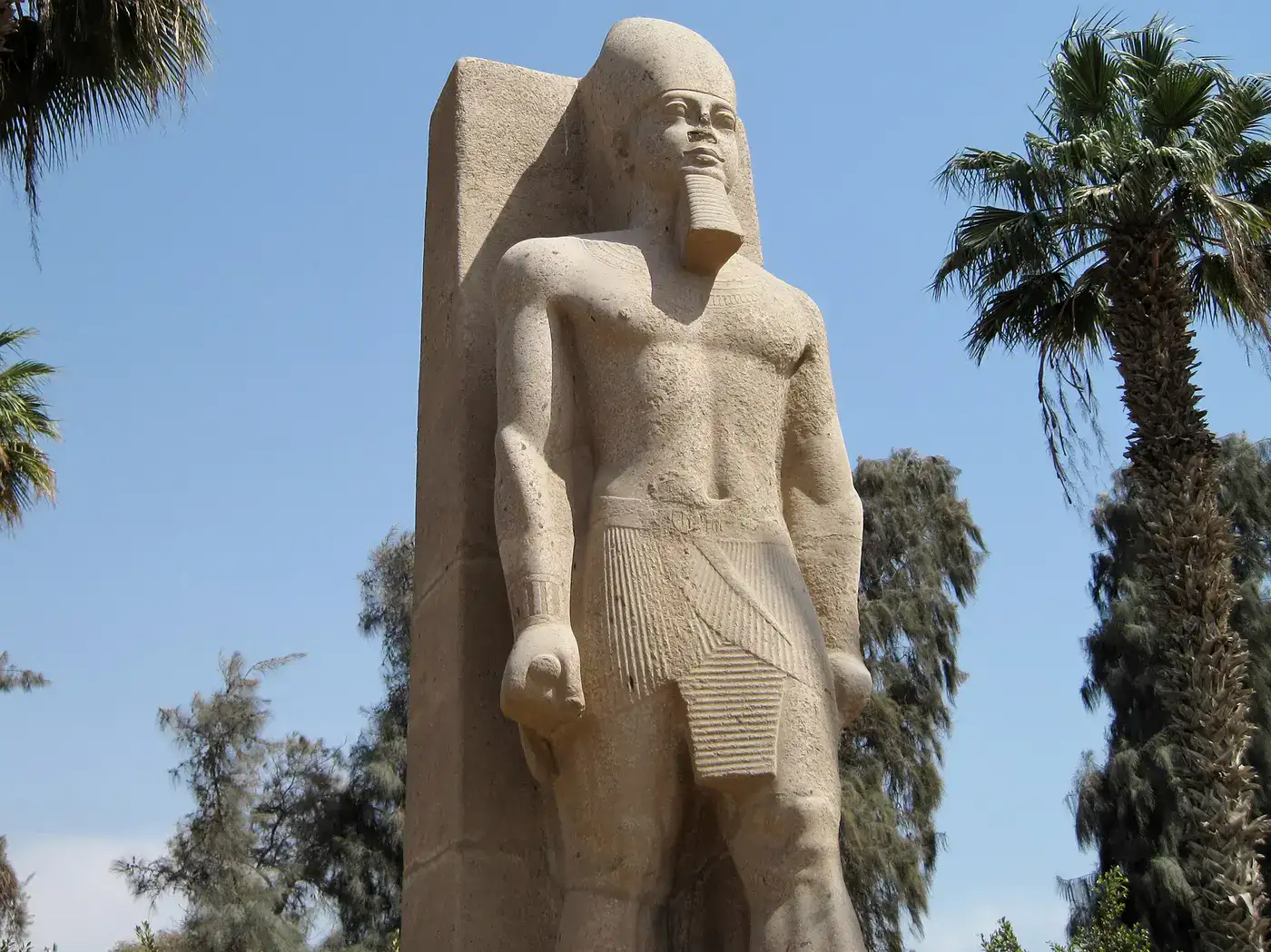
For example, Ramesses II left a powerful monumental presence in the city. In addition, later Egyptian and foreign dynasties continued to use Memphis for coronations, diplomacy and state ceremony.
Ptah, the Memphite Triad and Creation
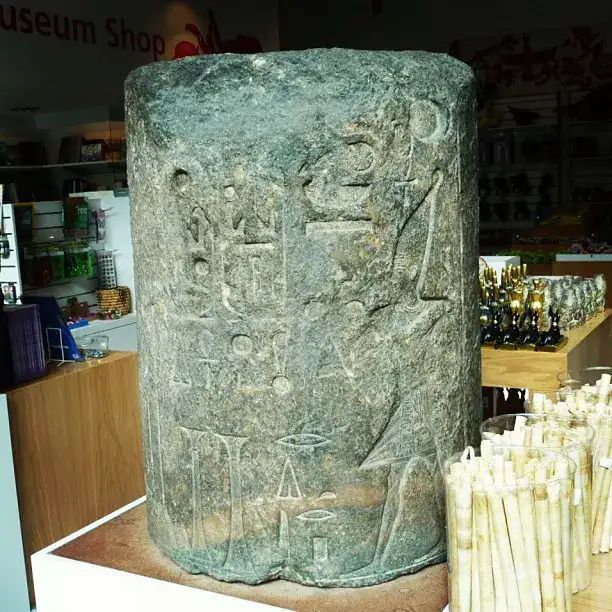
Ptah served as the principal god of Memphis and the patron of craftspeople and makers. In Memphite theology, he brought the ordered world into existence through heart and speech; accordingly, thought and the spoken word carried creative power.
The city’s divine family united Ptah with Sekhmet, a lioness goddess associated with power, protection and healing, and their son Nefertem, who carried solar and lotus symbolism. Together, they formed the Memphite Triad.
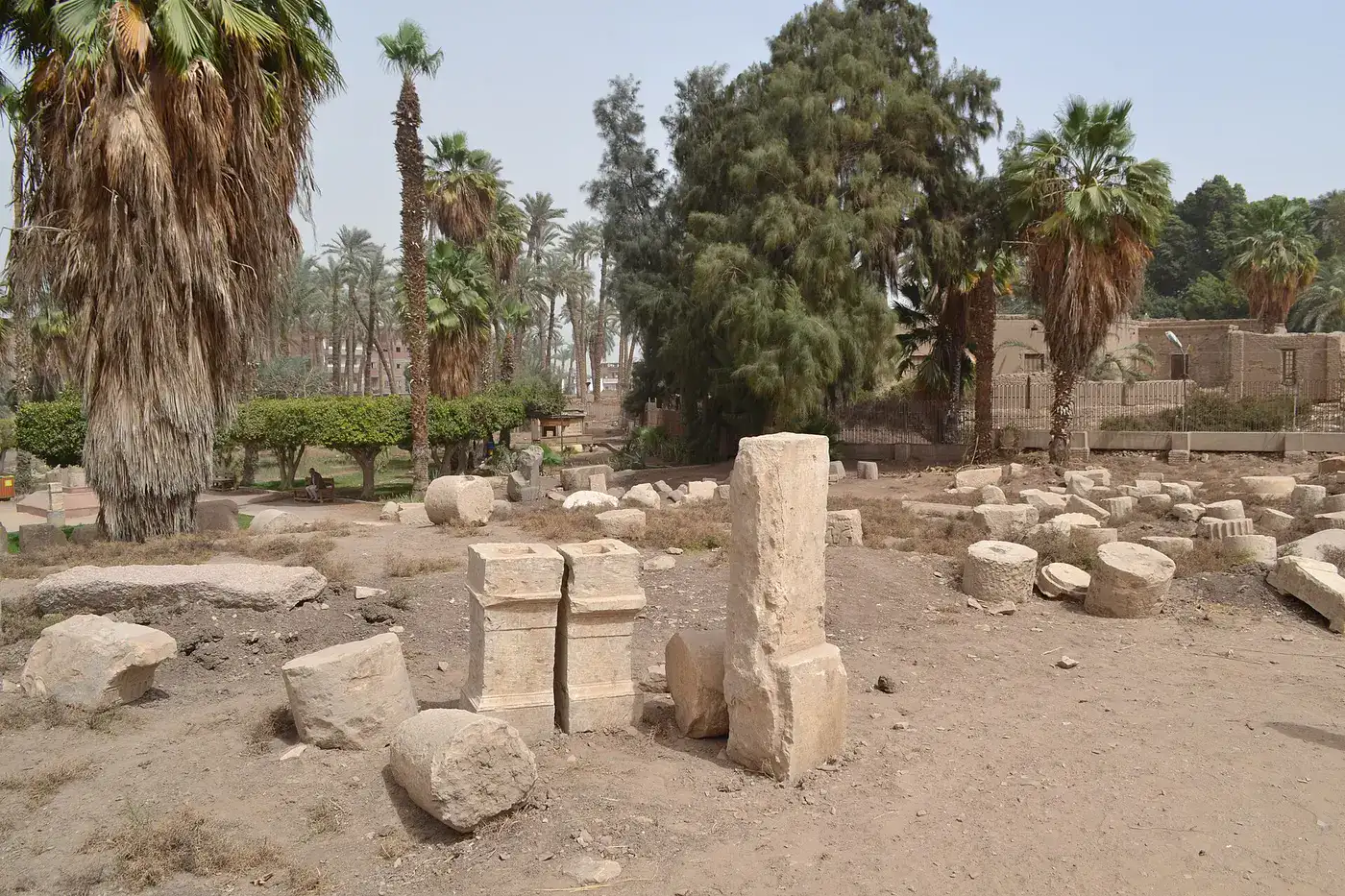
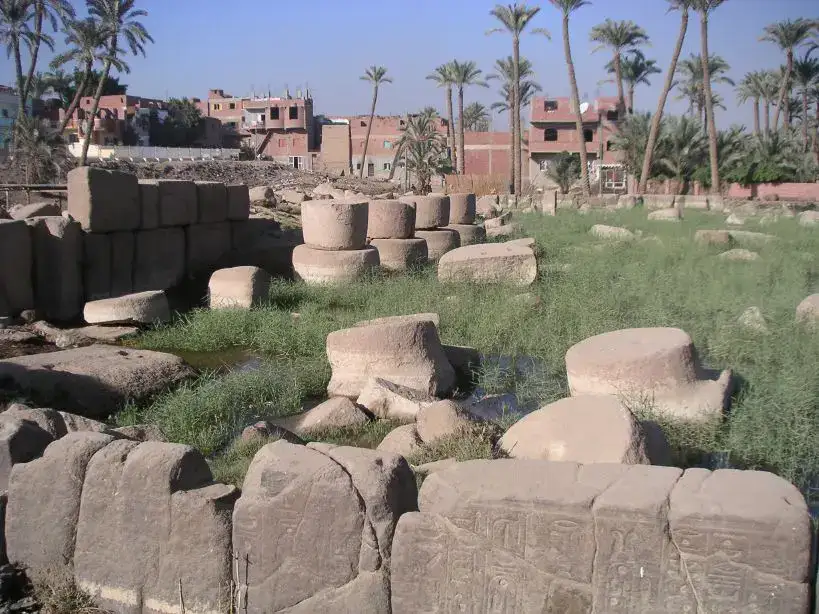
Meanwhile, the great temple known as Hut-ka-Ptah became one of Egypt’s leading sanctuaries. Although only fragments remain visible, inscriptions and excavated blocks demonstrate its former scale and long royal patronage.
What to See at the Memphis Open-Air Museum
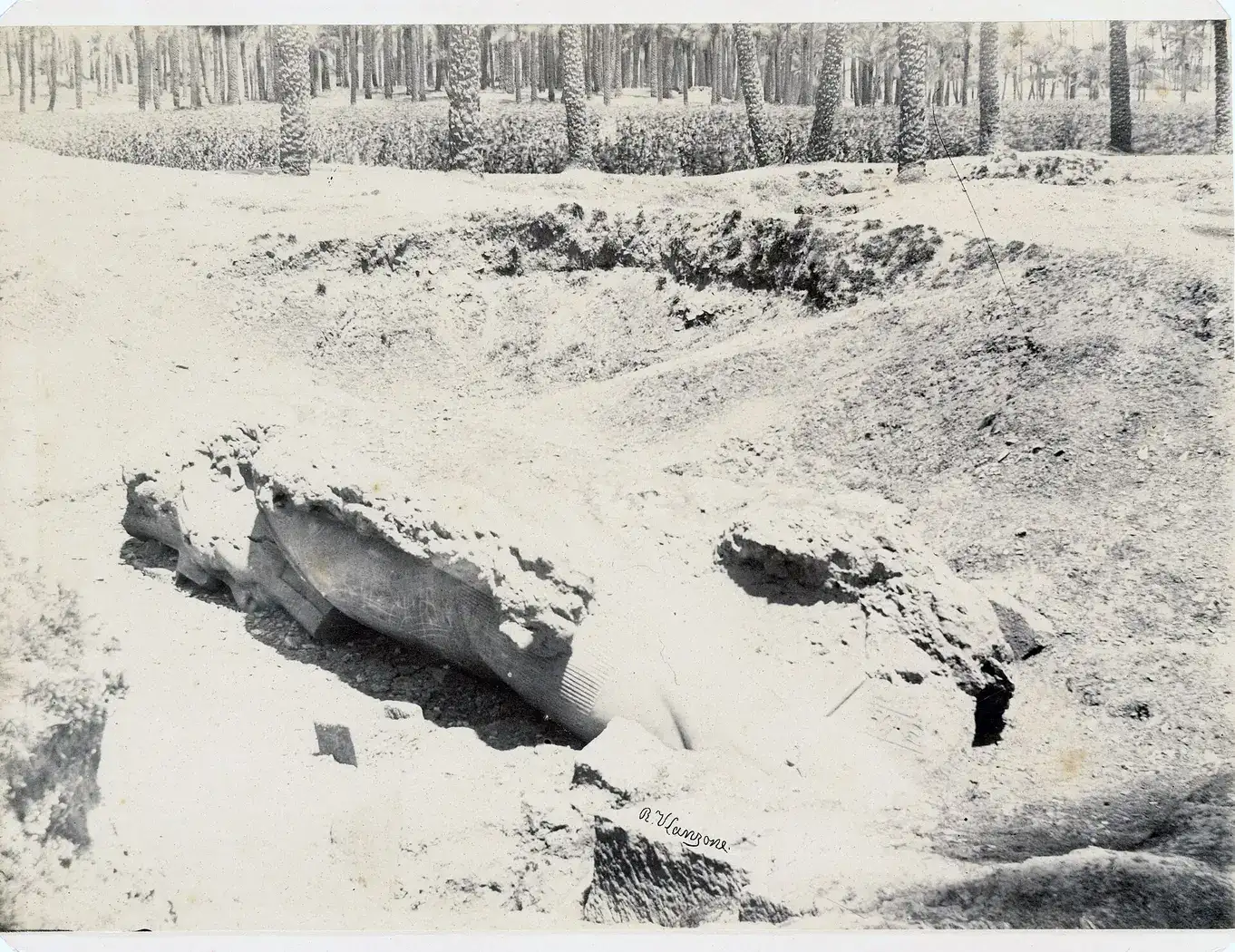
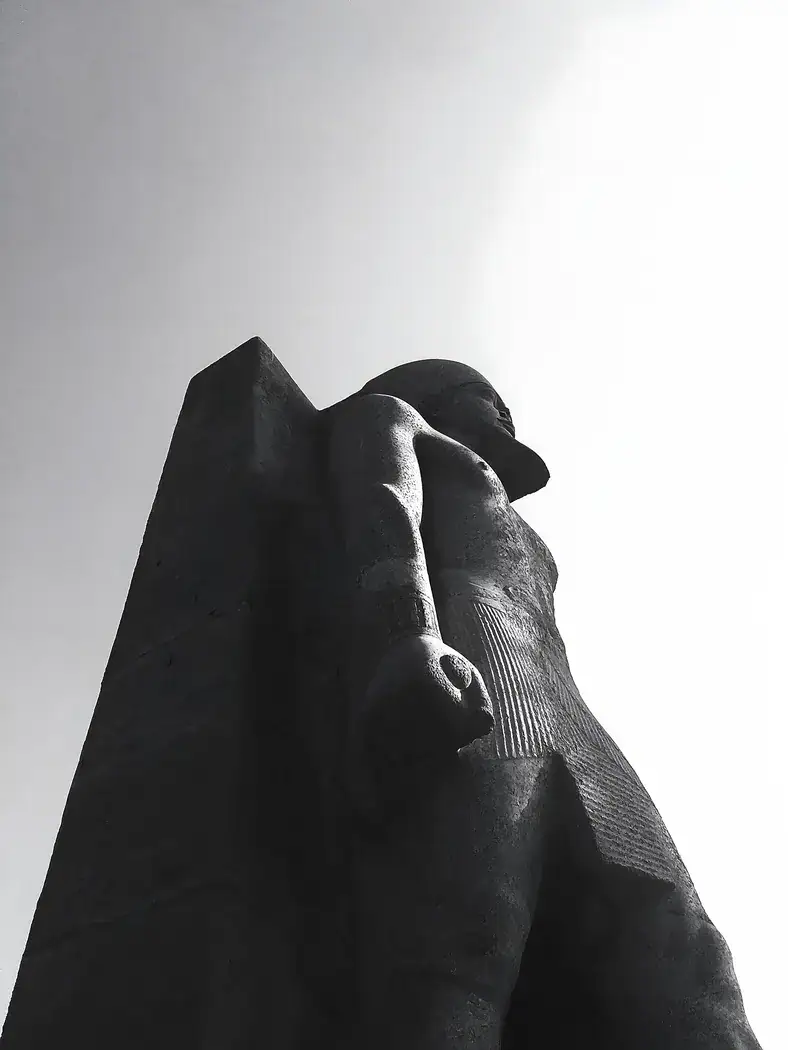
The most dramatic survivor is the limestone colossus of Ramesses II. The fallen statue measures roughly ten metres in its preserved state, while its fine modelling presents an idealised royal image rather than an everyday portrait.
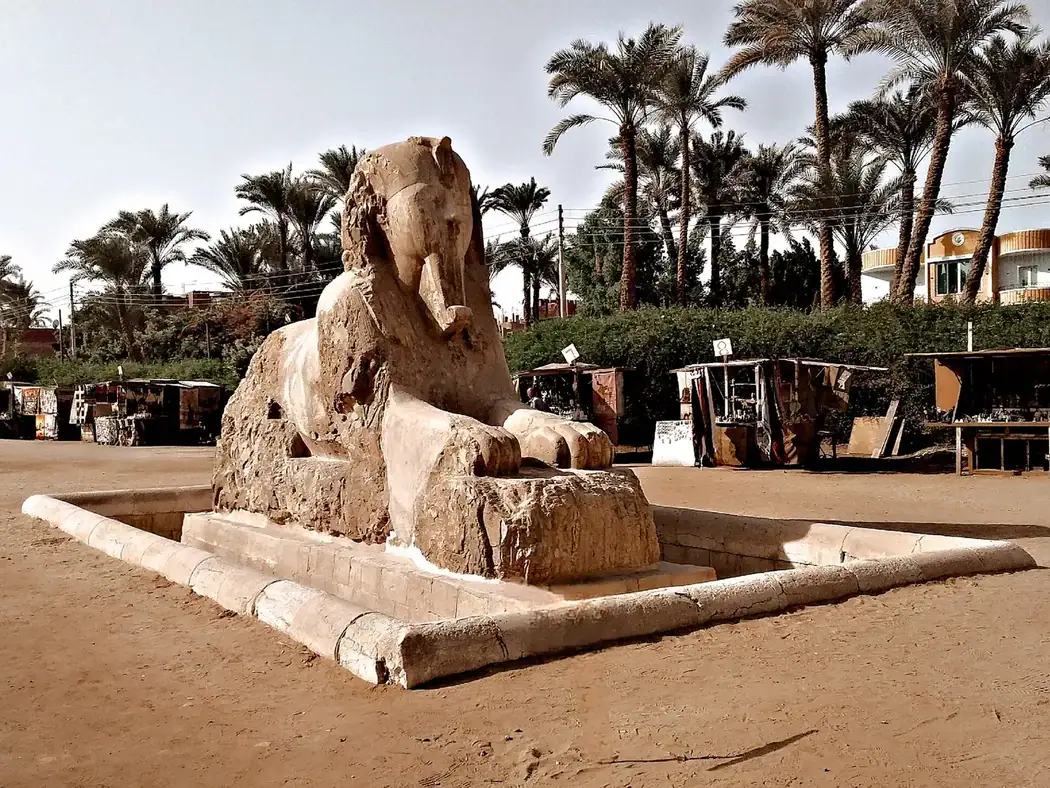
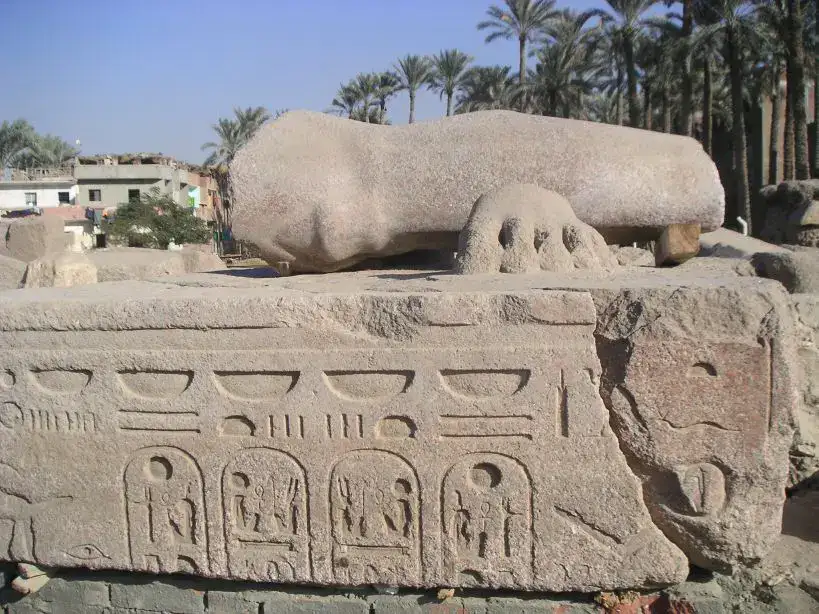
Nearby, a monumental calcite sphinx—often called the Alabaster Sphinx—once guarded a sacred setting. However, the sculpture lacks an identifying inscription, so proposed royal identities and dates remain uncertain.
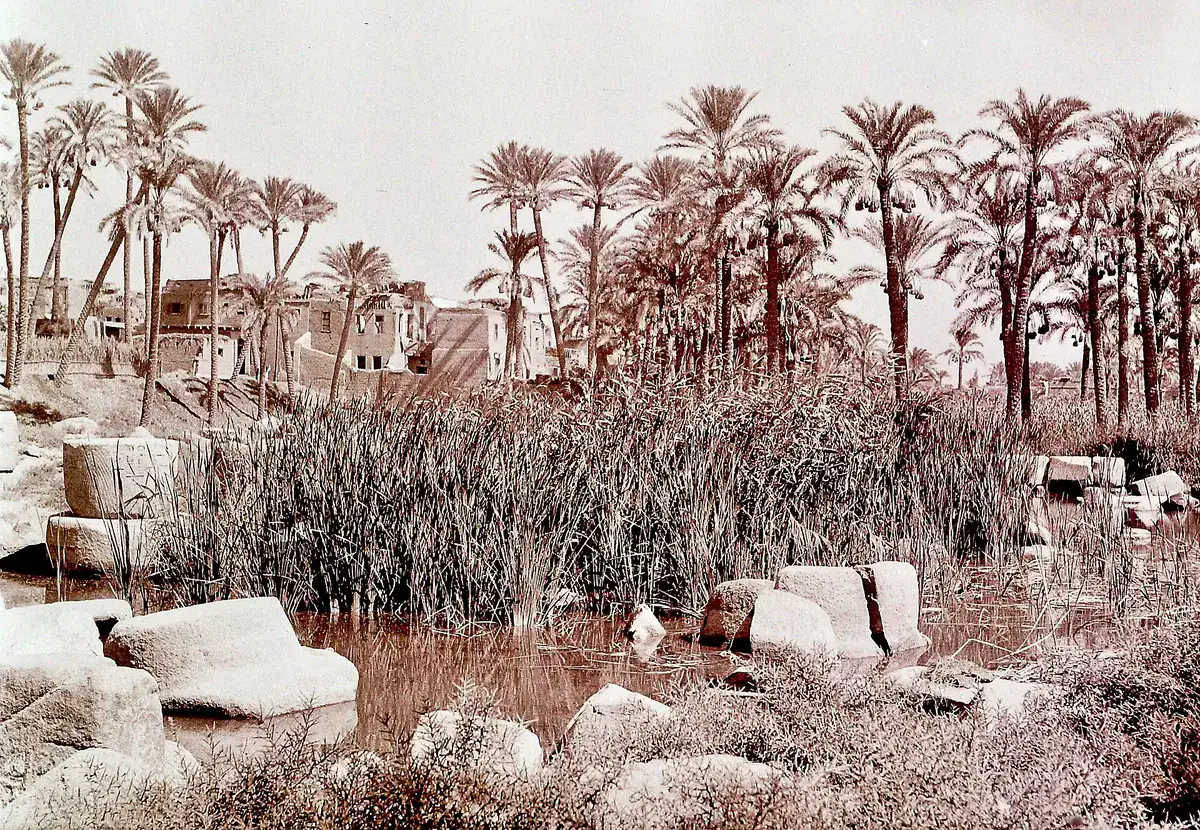
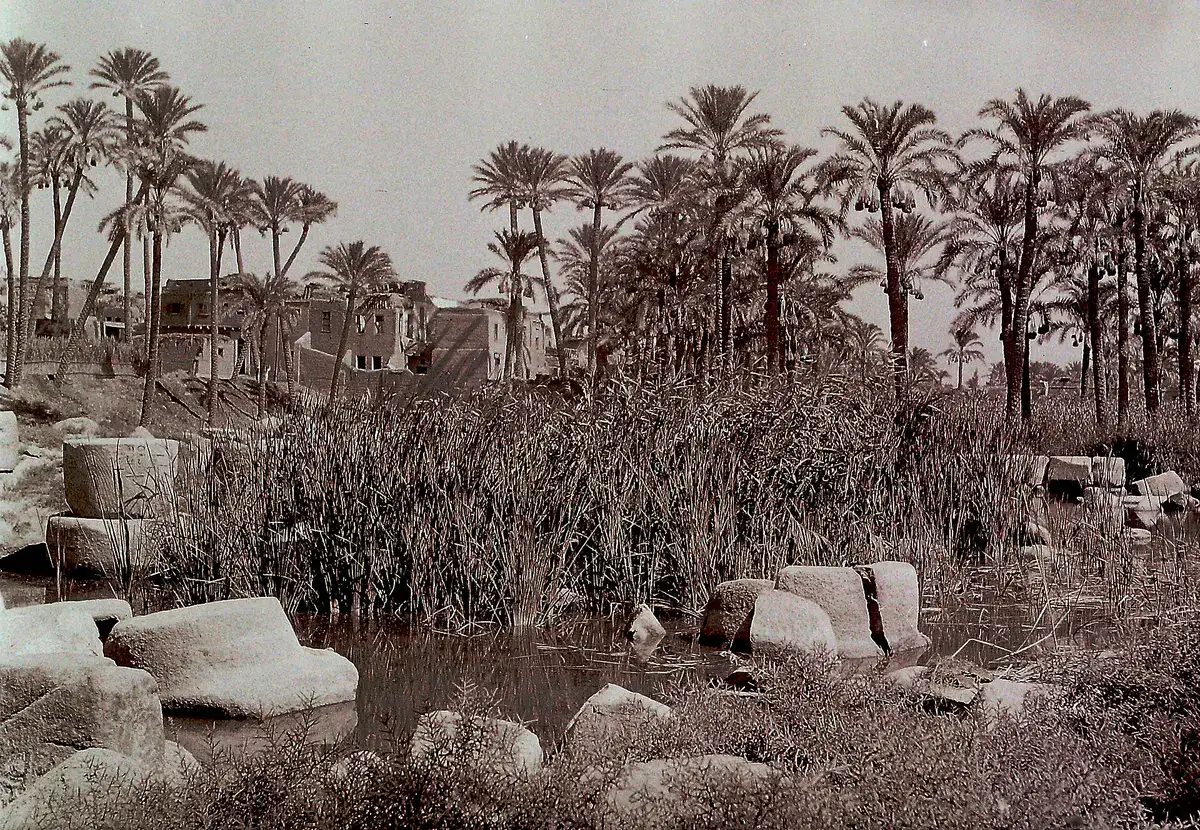
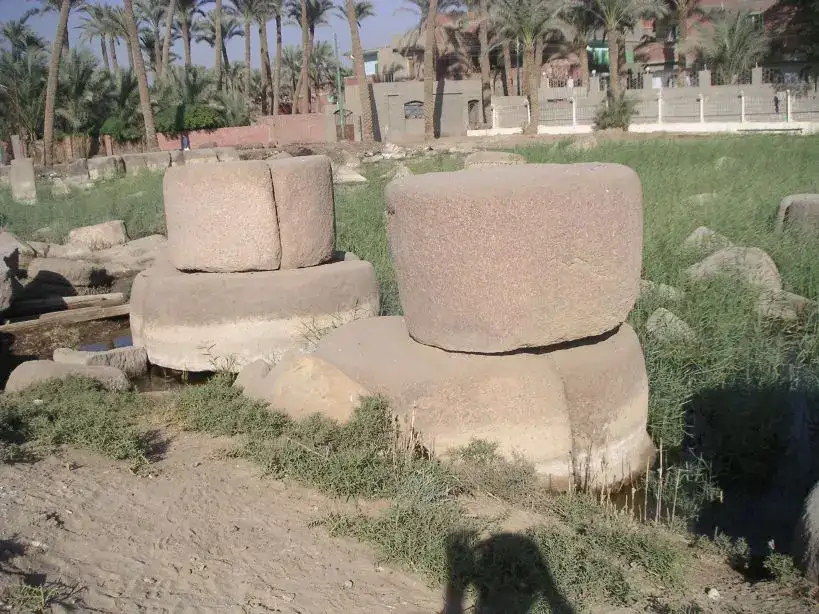
Visitors can also examine standing royal statues, column bases, temple blocks and other architectural fragments. Consequently, the museum offers a compact introduction to a city whose complete ancient plan now lies beneath fields, villages, groundwater and later occupation.
Economic Life in Ancient Memphis
Because Memphis stood beside major river and overland routes, goods and people moved through the city from across Egypt and beyond. Moreover, temple estates, royal projects and military institutions created sustained demand for food, equipment and skilled labour.
Craftspeople worked stone, metal, wood, faience, leather and textiles. Ptah’s close association with artisans therefore matched the practical importance of Memphite workshops.
Nevertheless, the archaeological record is uneven, and the river shifted over centuries. For that reason, broad claims about exact harbour locations or individual trade routes require caution as excavations continue.
From Living Capital to the Ruins of Mit Rahina
After Alexandria became the principal royal capital in the Ptolemaic period, Memphis gradually lost political weight. Later, buildings fell out of use, while generations reused accessible stone in nearby settlements and in the developing cities of Fustat and Cairo.
However, the ancient city never vanished from memory. Classical writers described it, while modern excavation revealed temples, statues, workshops and settlement areas—often under difficult groundwater conditions.
In 1979, UNESCO inscribed “Memphis and its Necropolis – the Pyramid Fields from Giza to Dahshur”. Importantly, this property includes the urban remains and the wider pyramid landscape; it is not a designation limited to the Mit Rahina museum. Travellers can experience these connected sites through our Giza, Saqqara and Memphis itinerary.
Memphis Egypt Gallery
Visiting Memphis Egypt Today
Visit Early Morning
Shade can be limited; therefore, start early for cooler conditions and softer light.
Allow 60–90 Minutes
In addition, leave enough time for the colossus building, sphinx and garden monuments.
Add Saqqara and Dahshur
Afterwards, continue to the Step Pyramid and other monuments in the Memphite necropolis.
Confirm Current Access
Finally, check official opening hours, ticket prices and restoration closures before departure.
Memphis Egypt Map
Mit Rahina Open-Air Museum
First, travel south from Cairo towards Al Badrashin. Then, follow signs to the Memphis museum area in Mit Rahina.
Approximate coordinates:
29.8497° N, 31.2543° E
Memphis Egypt FAQ
Walk Through Egypt’s First Great Capital
Meet the royal colossi, discover the sacred landscape of Ptah and connect Mit Rahina with the pyramid fields of Saqqara and Dahshur.
Plan a Memphis Visit