
Valley of the Queens
The Valley
of the Queens
The Valley of the Queens is Luxor’s graceful royal necropolis, where pharaohs’ wives, princes and princesses entered eternity beneath painted stars, sacred spells and some of ancient Egypt’s finest surviving art.
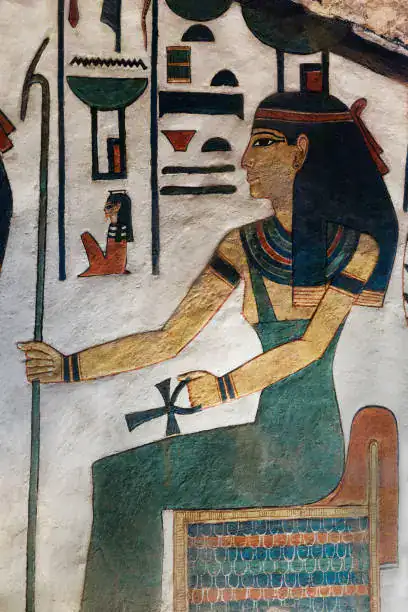
A royal landscape
Why Was the Valley of the Queens Chosen?
The Valley of the Queens lies in a secluded southern branch of Luxor’s Theban necropolis. During the New Kingdom, its sheltered wadis became the burial ground of royal wives, sons, daughters and selected members of the court.
Moreover, the ancient name Ta-Set-Neferu is commonly understood as “The Place of the Beautiful Ones.” As a result, the name and landscape together express the royal hope for beauty, renewal and rebirth beyond the western horizon.
Although the valley is quieter than the nearby Valley of the Kings, its best-preserved chambers feel extraordinarily intimate. In particular, their paintings reveal how royal families imagined protection, transformation and eternal life.
Designed for eternity
Inside a Valley of the Queens Tomb
Each monument creates a symbolic route from the sunlit desert into the protected realm of the afterlife. Therefore, architecture, image and sacred text work together as one carefully planned experience.
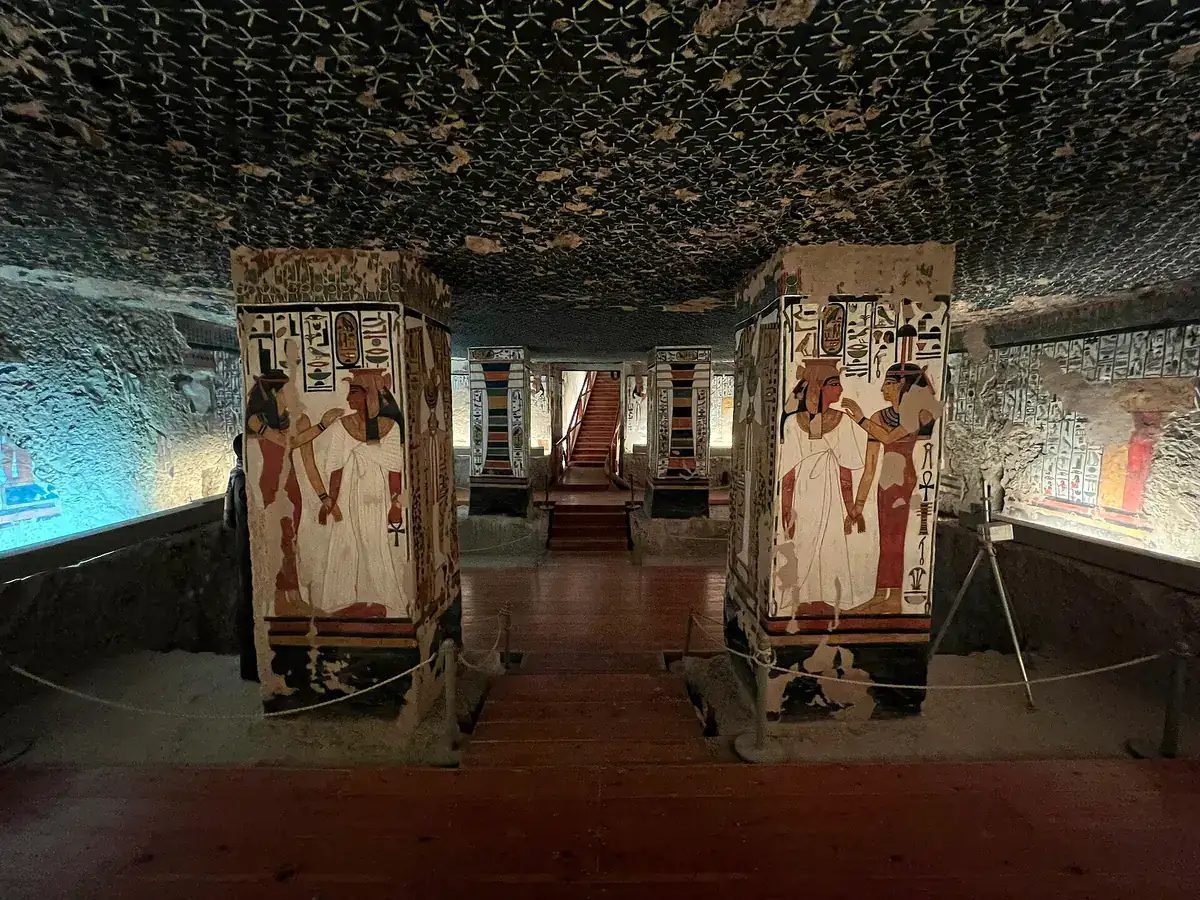
Descending Entrance
First, a sloping stair or corridor separates the tomb from daily life and begins the deceased’s ritual journey.
Painted Chambers
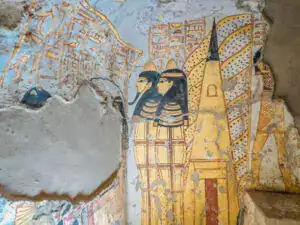
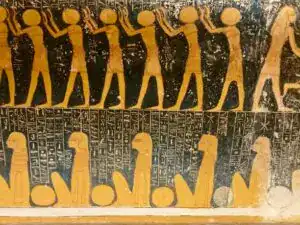
Gods, guardians and spells surround the royal figure. In addition, color transforms the rock-cut rooms into a living sacred landscape.
Burial Chamber
Next, the deepest room once protected the sarcophagus, funerary equipment and offerings needed for eternity.
Celestial Ceiling
Finally, golden stars on deep blue or black ceilings evoke the night sky and the promise of daily rebirth.
Royal masterpieces
Four Must-See Valley of the Queens Tombs
These monuments show the valley at its most moving, from Nefertari’s dazzling color to the tender scenes created for the sons of Ramesses III.
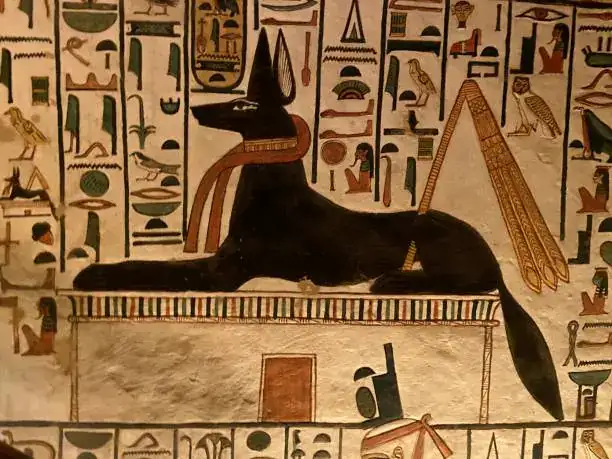 QV66
QV66Queen Nefertari
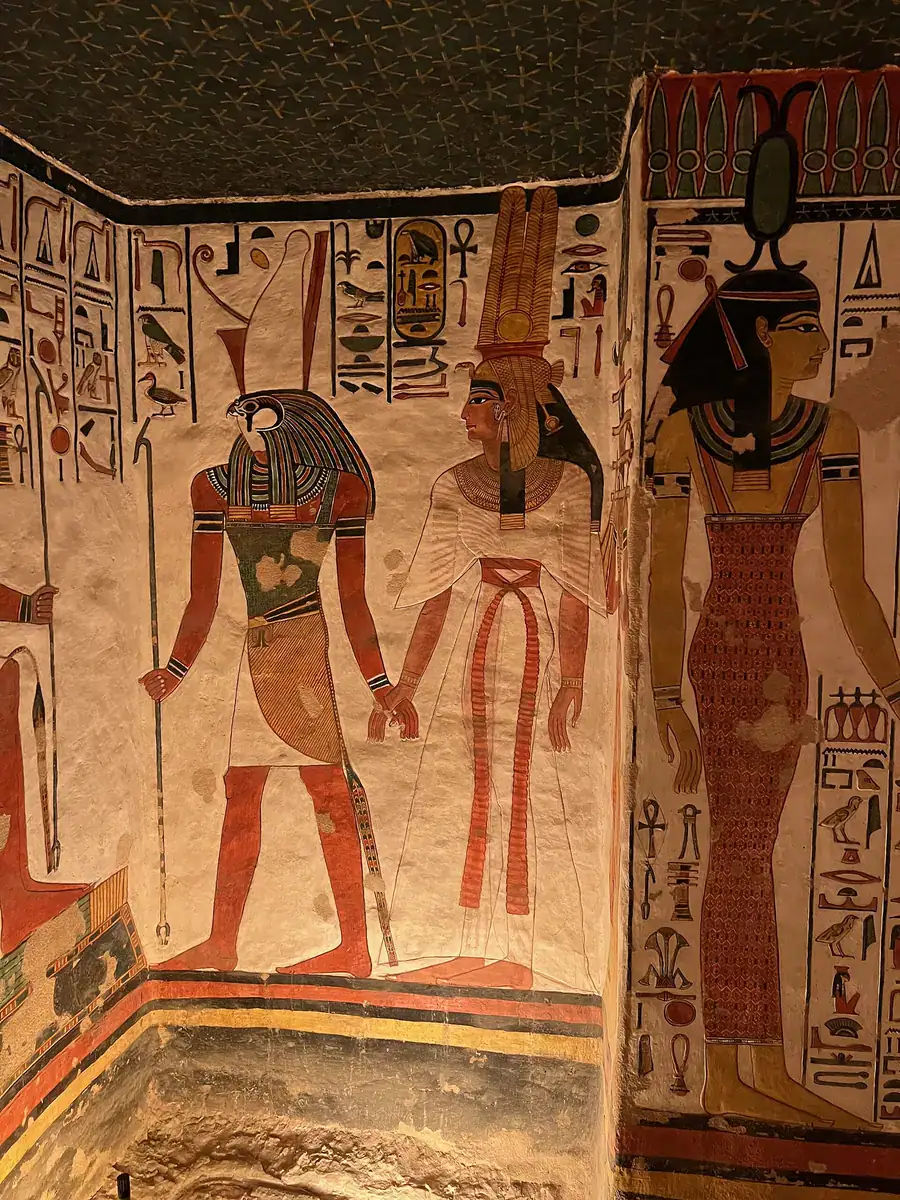
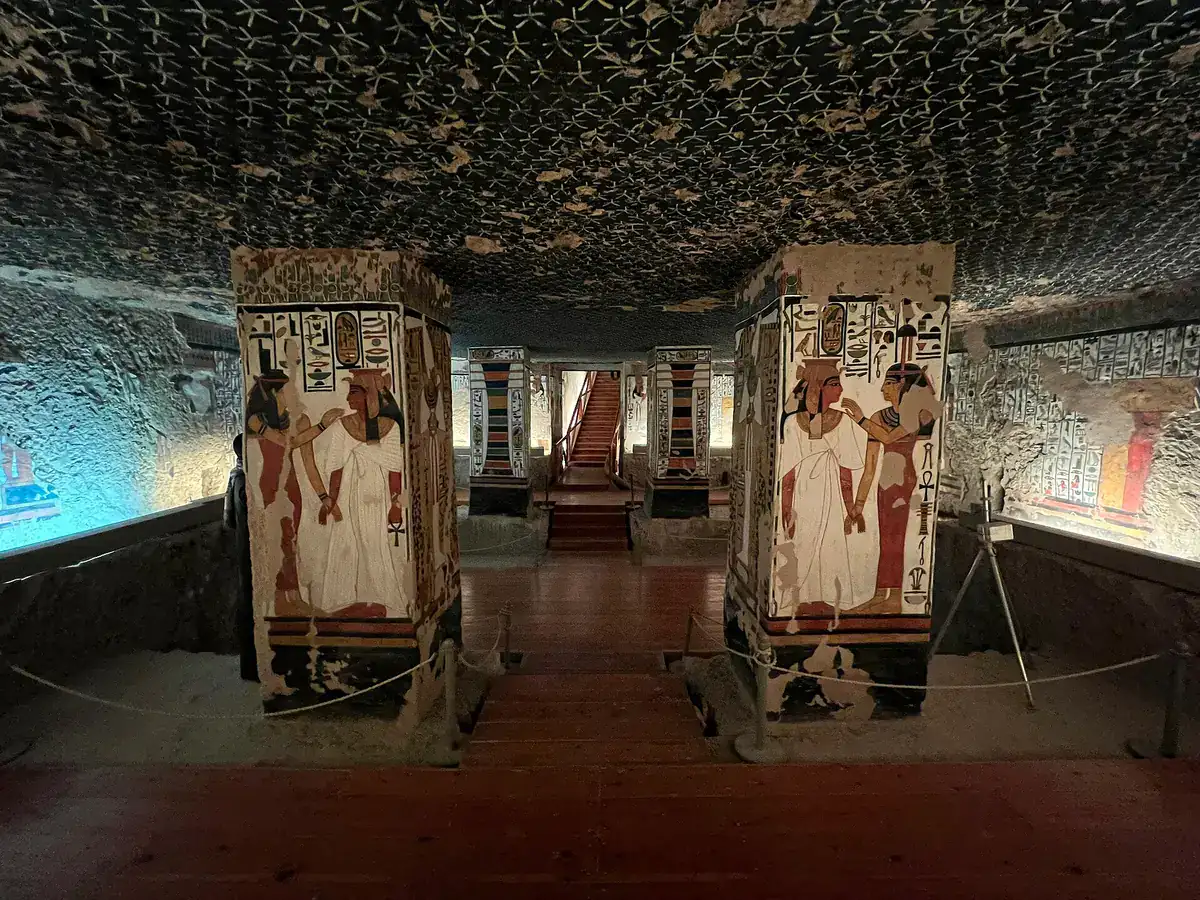
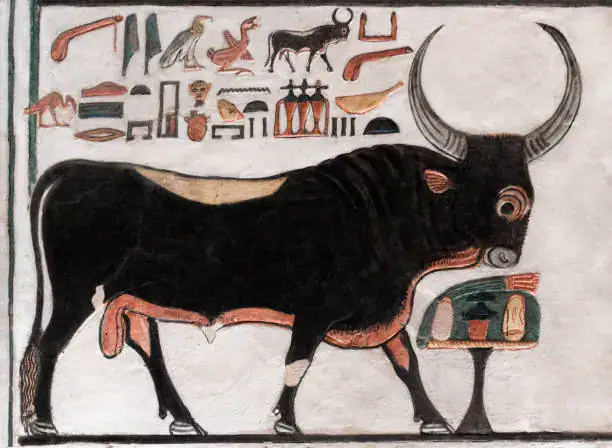
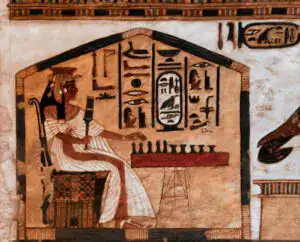
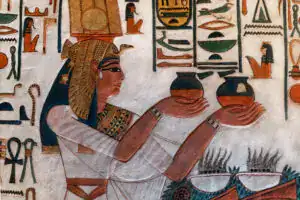
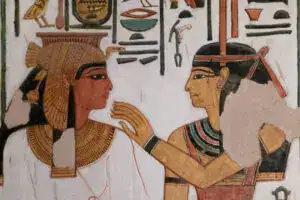
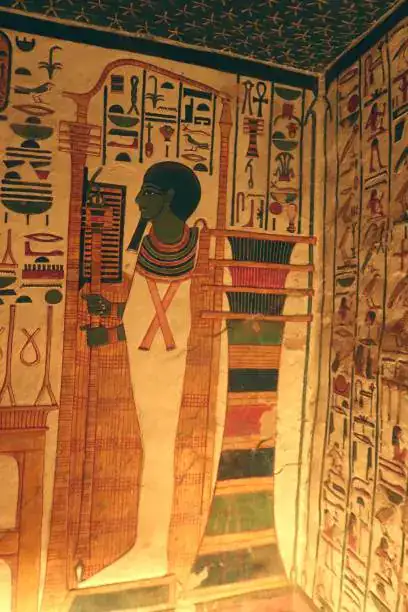
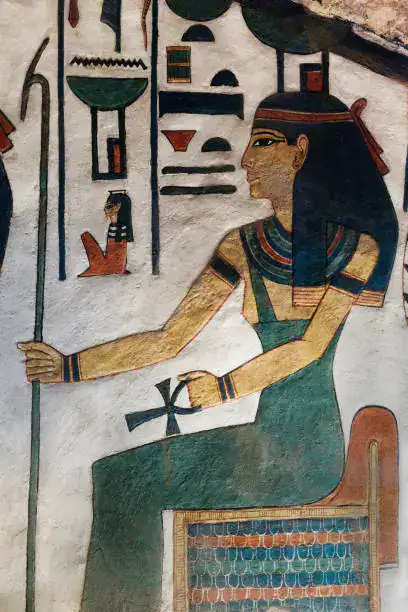
Created for the Great Royal Wife of Ramesses II, QV66 is widely regarded as the artistic summit of the Valley of the Queens. For example, Nefertari appears with Osiris, Hathor, Isis and other deities while brilliant hieroglyphs guide her through the afterlife. Moreover, the elegant drawing, luminous pigments and star-filled ceilings make each chamber feel ceremonial rather than merely funerary. Nevertheless, a separate ticket may be required because access changes to protect the fragile paintings.
 QV55
QV55Prince Amunherkhepshef
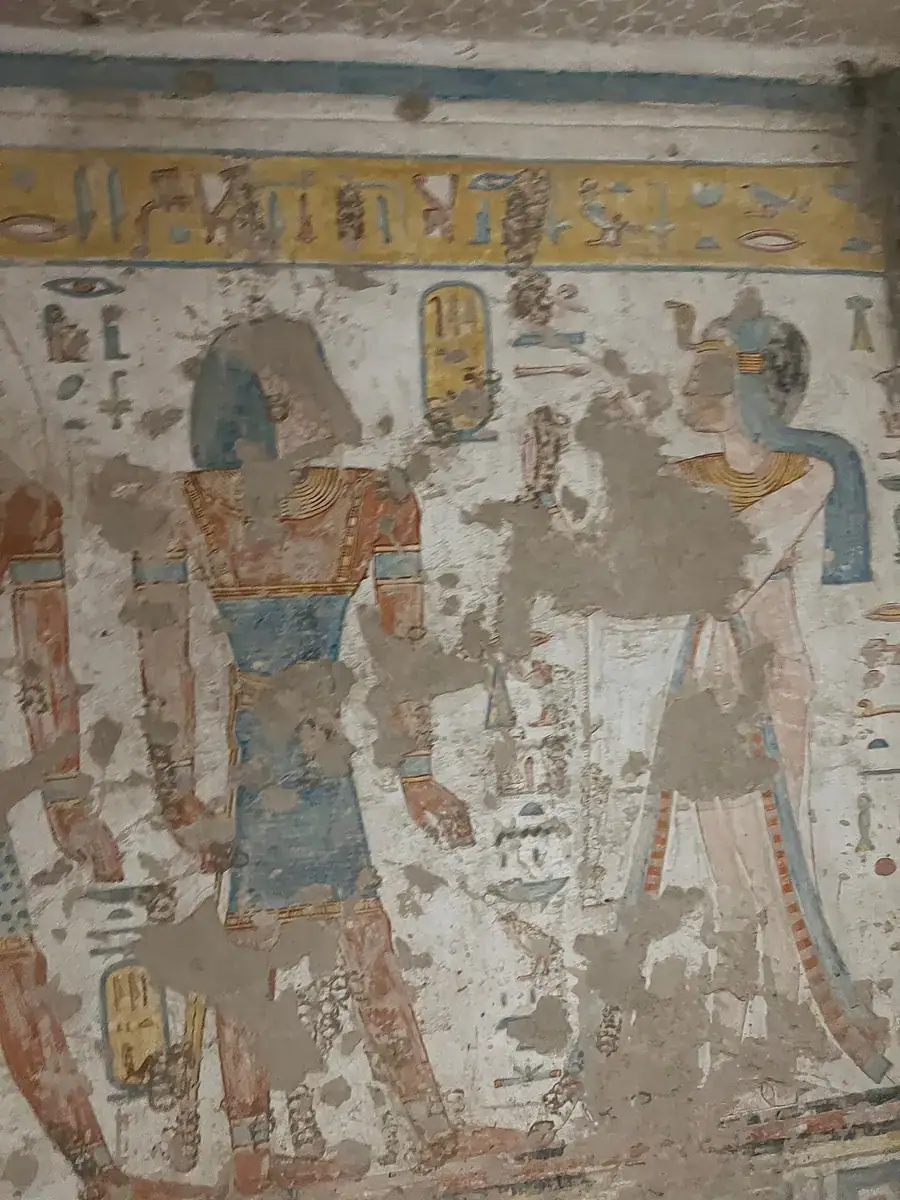
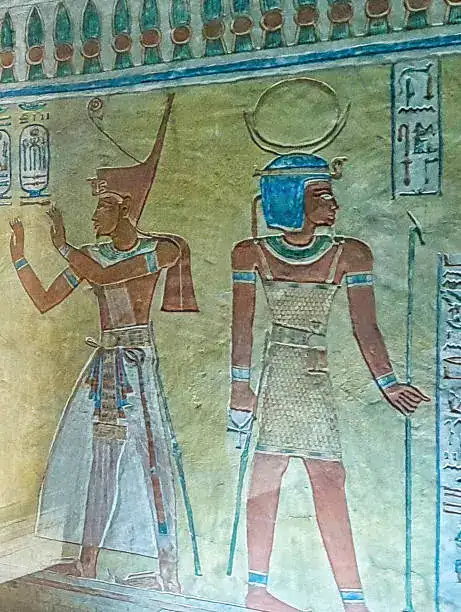
QV55 was prepared for Amunherkhepshef, a young son of Ramesses III. Its surviving decoration is both formal and deeply personal: the pharaoh repeatedly leads his son before divine guardians, asking them to accept and protect the prince. Consequently, the scenes preserve a rare royal expression of care as well as a clear map of funerary belief. Likewise, the prince’s sidelock of youth and the delicate modeling of the figures deserve close attention.
 QV52
QV52Queen Titi
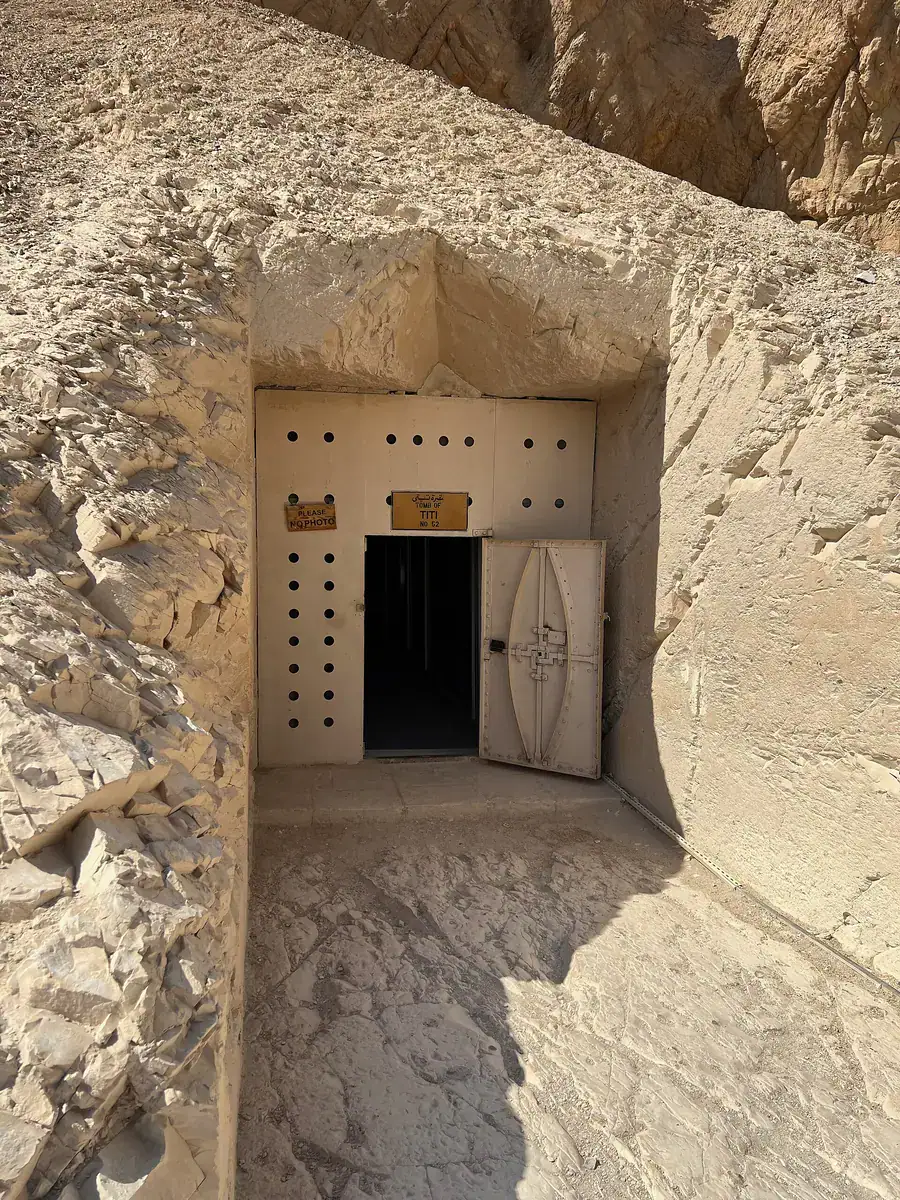
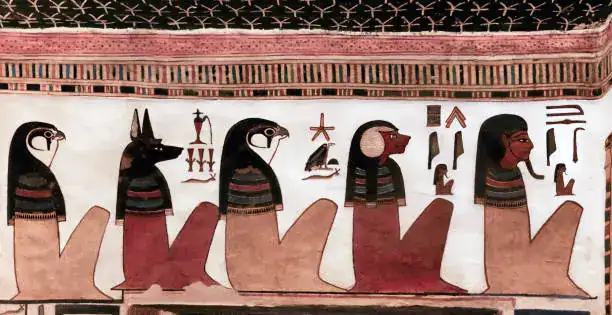
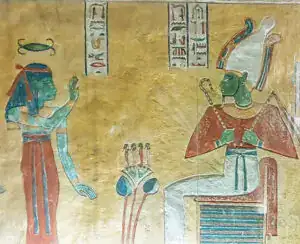
The precise identity and family connections of Queen Titi remain debated; however, QV52 clearly belonged to a high-ranking royal woman of the Ramesside age. Nevertheless, the tomb unmistakably shows Titi before deities such as Isis, Nephthys, Hathor and Thoth. Although parts of the decoration have suffered, the remaining scenes still reveal strong composition, subtle color and a fascinating sequence of transformations.
 QV44
QV44Prince Khaemwaset
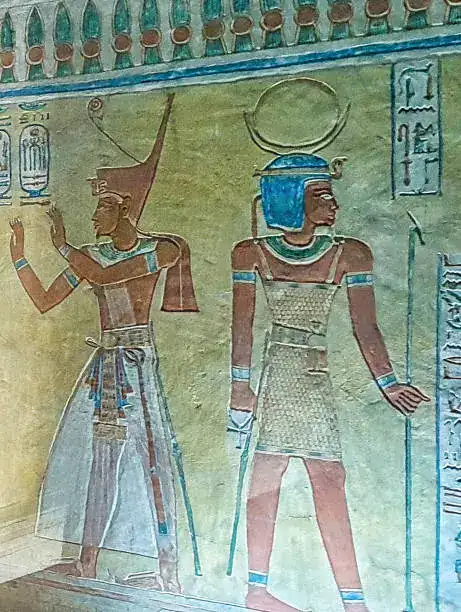
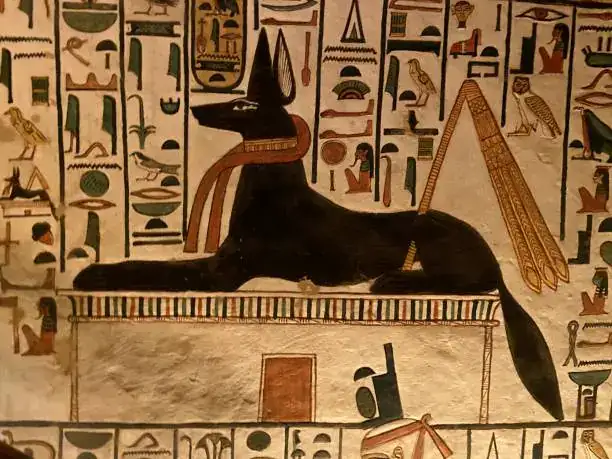
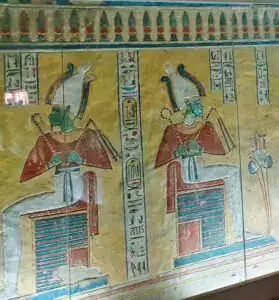
Khaemwaset was a prince and son of Ramesses III, not a queen. In QV44, his father escorts him through a carefully ordered divine world. Meanwhile, gods including Ptah, Thoth and Anubis provide protection and legitimacy. Furthermore, the warm ochres, balanced figures and surviving inscriptions make the tomb an excellent companion to QV55.
Burial, reuse and rediscovery
Discoveries in the Valley of the Queens
The necropolis changed across centuries. First, New Kingdom artisans cut and painted royal tombs. Later, some chambers were reused, disturbed or damaged by flooding and changing settlement patterns.
Queens, princes and princesses receive decorated tombs in the western wadis.
Several spaces are reused, while their paintings face smoke, debris and human activity.
Ernesto Schiaparelli’s Italian mission excavates major monuments, including Nefertari’s QV66.
Conservators monitor humidity, dust and visitor pressure to protect vulnerable plaster and pigment.
Plan the experience
How to Visit the Valley of the Queens
The site is on Luxor’s West Bank and fits naturally into a day with the Temple of Hatshepsut or nearby royal necropolises. However, opening tombs and ticket rules can change.
Arrive Early
First, arrive in the morning for kinder temperatures and quieter chambers.
Check Tickets
In addition, remember that Nefertari’s QV66 may require a separate premium ticket.
Respect the Art
Above all, never touch walls, use flash or cross barriers because the painted plaster is extremely delicate.
Tour with Context
Finally, a knowledgeable Egyptologist can connect isolated scenes into one coherent journey through the afterlife.
A fragile legacy
Conservation in the Valley of the Queens
These paintings survive on thin layers of plaster attached to limestone. Therefore, dust, salts, humidity, vibration and accidental contact can all cause permanent loss.
In addition, Nefertari’s tomb underwent a major international conservation campaign before controlled reopening. Today, visitor limits and changing access are conservation tools, not inconveniences.
An illustrated journey
Valley of the Queens Photo Gallery
Use the arrows on the left and right of the images, swipe on mobile, or open any photograph in the full-screen viewer.
Continue across Luxor
Explore More of Ancient Thebes
Continue your journey through the temples, royal valleys and monuments of Luxor’s West Bank.
Essential answers
Valley of the Queens FAQ
What is the Valley of the Queens?
It is a New Kingdom royal necropolis on Luxor’s West Bank, created mainly for queens, princes, princesses and other members of the pharaonic family.
How many tombs are in the Valley of the Queens?
Archaeologists have identified more than 90 tombs and burial shafts, although only a changing selection is open to visitors.
Is Nefertari’s tomb included in the standard ticket?
QV66 often requires a separate ticket because its exceptional paintings need strict visitor management. Nevertheless, prices and access can change, so confirm locally.
Which Valley of the Queens tombs should I see?
Nefertari QV66 is the masterpiece. In addition, Amunherkhepshef QV55, Titi QV52 and Khaemwaset QV44 offer powerful Ramesside art when open.
Can I take photographs inside the tombs?
Rules vary by tomb and ticket. Therefore, check the signs and follow the site staff; never use flash where photography is permitted.
How long should I allow for a visit?
Allow roughly 60–90 minutes for several open tombs, and longer if QV66 is included or if you are visiting with an Egyptologist guide.
Walk into the place of beauty
Experience the Valley of the Queens with a private expert guide and a thoughtfully paced Luxor itinerary.