
Deir el-Medina Workers’ Village
Deir el-Medina: The Ancient Egyptian Workers’ Village
Walk through the tightly packed homes, painted tombs and written records of the skilled artisans who created the royal burials of Luxor’s west bank.
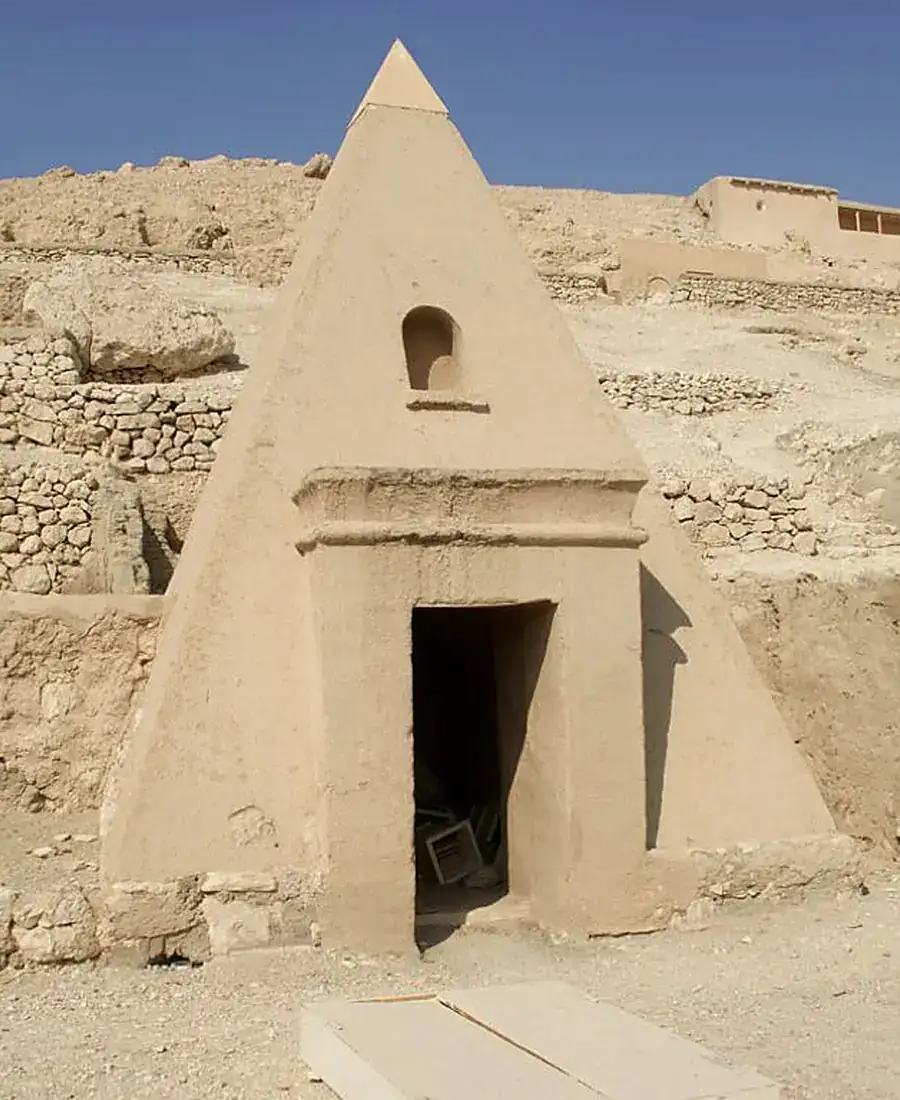
Behind the Royal Tombs
Meet the Community of Deir el-Medina
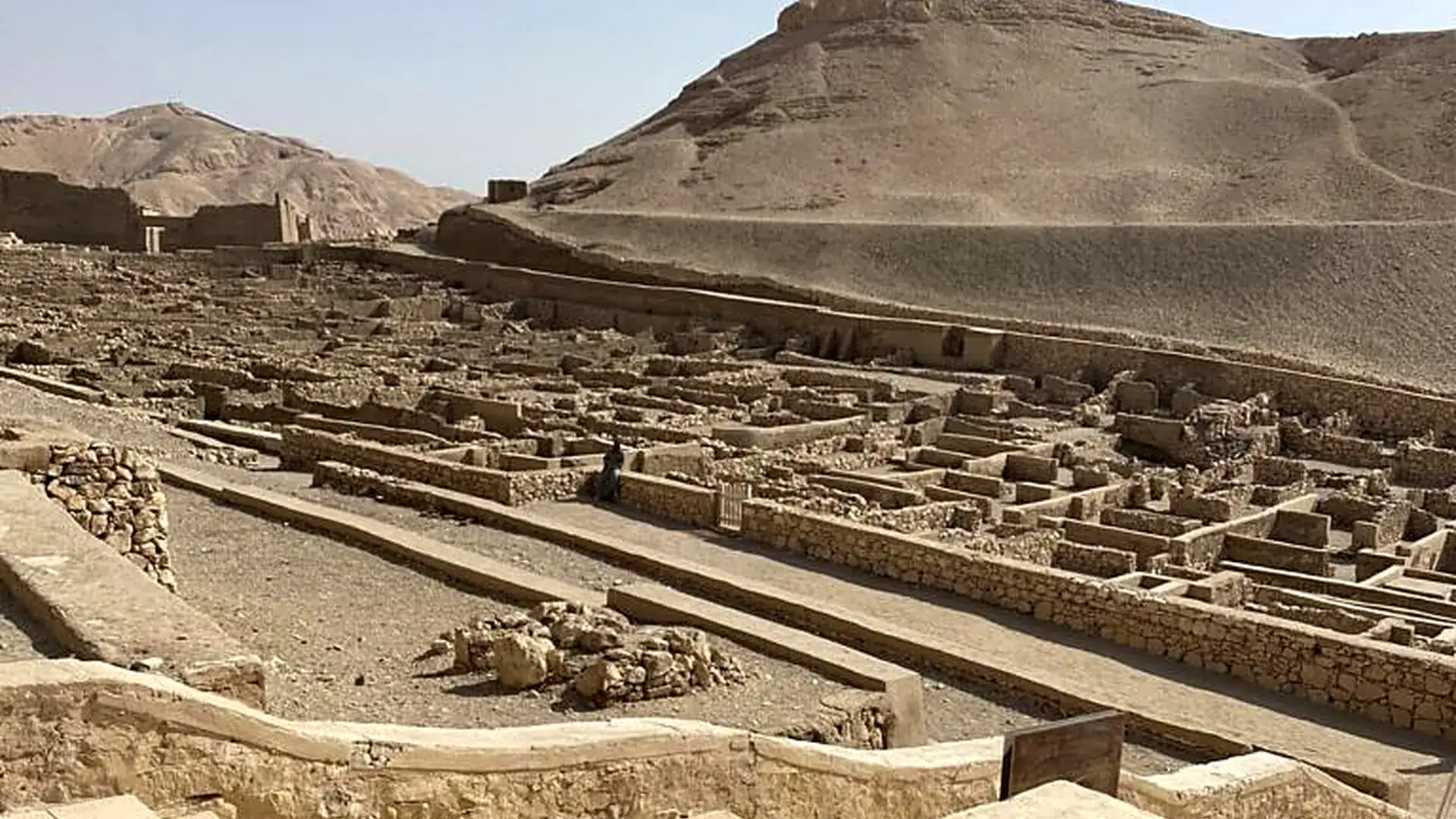
Deir el-Medina was a purpose-built settlement for the craftsmen who cut and decorated the royal tombs in the Valley of the Kings and, at different periods, the Valley of the Queens. Its residents called their community Set Maat, the “Place of Truth,” while its workforce carried the respected title “Servants in the Place of Truth.”
Unlike most Egyptian sites, this village preserves the world of skilled non-royal families. Houses, chapels, tombs, letters, accounts and legal records reveal how people worked, worshipped, argued, celebrated and cared for one another during the New Kingdom.
Because the settlement stood in a dry desert valley, an exceptional quantity of written material survived. Consequently, Deir el-Medina offers one of the clearest portraits of daily life anywhere in the ancient world.
Homes, Tombs and Work
Daily Life in Deir el-Medina
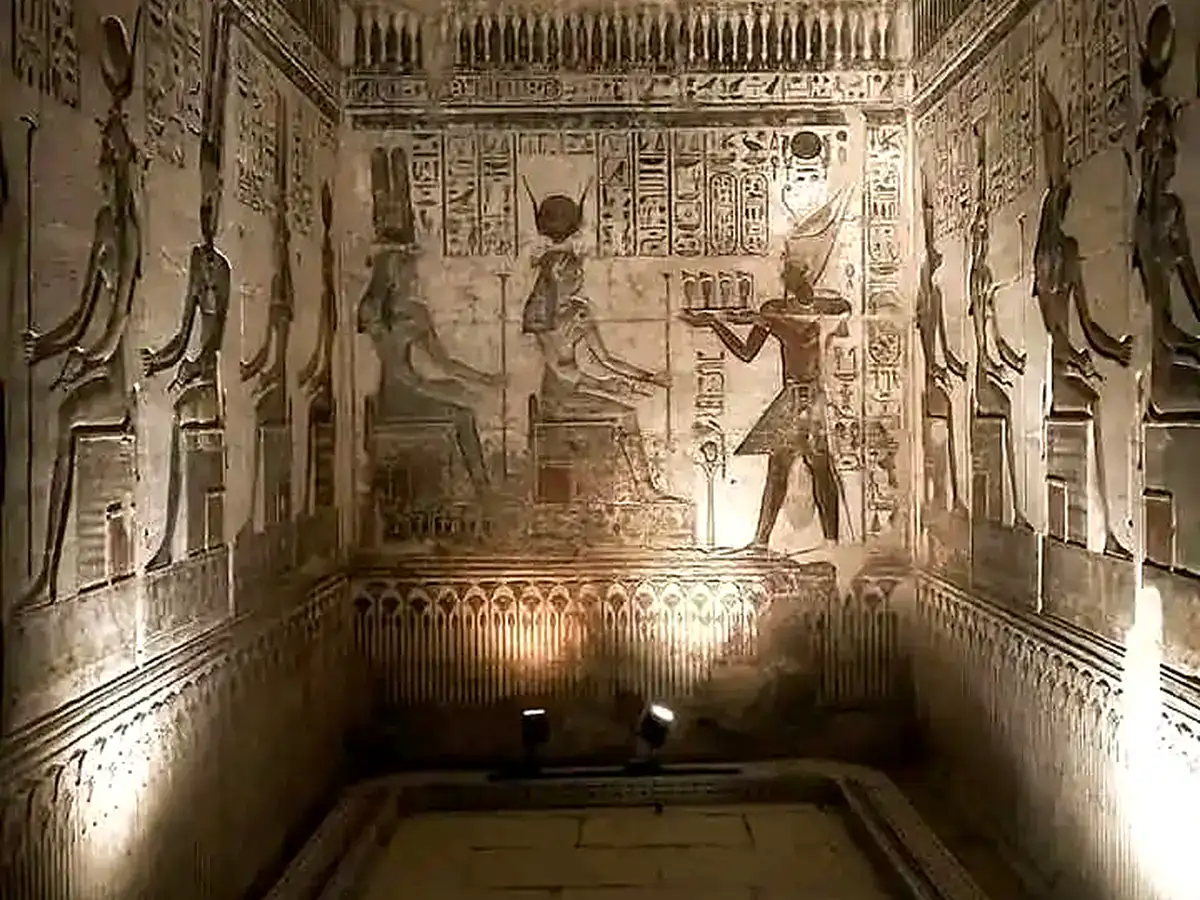
The settlement, its chapels and its private tombs reveal how the royal artisans combined skilled work, family life and funerary belief.
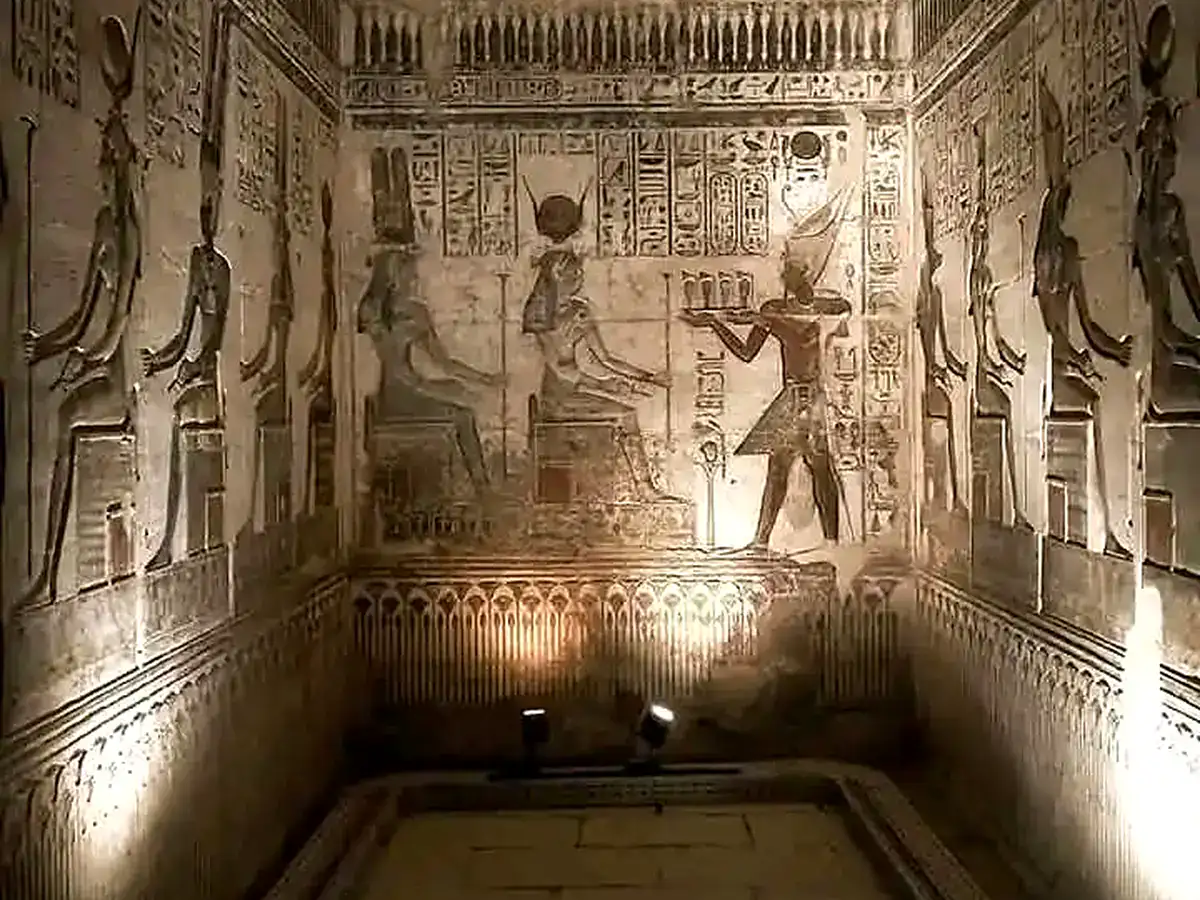
Compact Stone Houses
Homes usually opened from a central street and included reception, living, storage, cooking and sleeping spaces, as well as areas for household worship.
Specialist Crafts
Stonecutters, draughtsmen, painters, plasterers, sculptors and carpenters worked together to transform royal tombs into sacred landscapes.
Organised Work Crews
Foremen directed two work gangs, while scribes recorded attendance, deliveries, disputes and progress at the royal necropolis.
Payment in Provisions
Workers received rations such as grain and other supplies. Delays in those payments could cause serious hardship and collective protest.
Painted for Eternity
Famous Tombs at Deir el-Medina
The artisans who decorated royal burials also created richly painted tombs for themselves and their families.
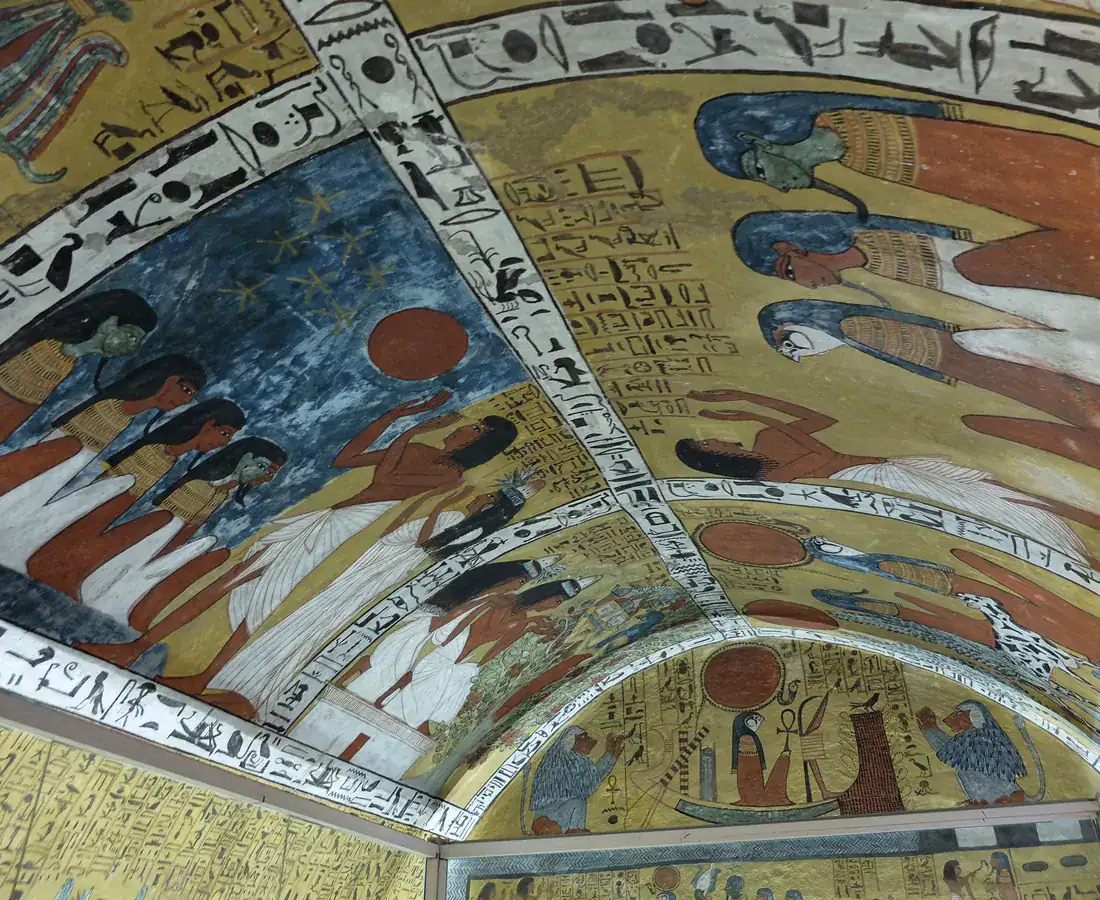 TT1 · 19th Dynasty
Sennedjem
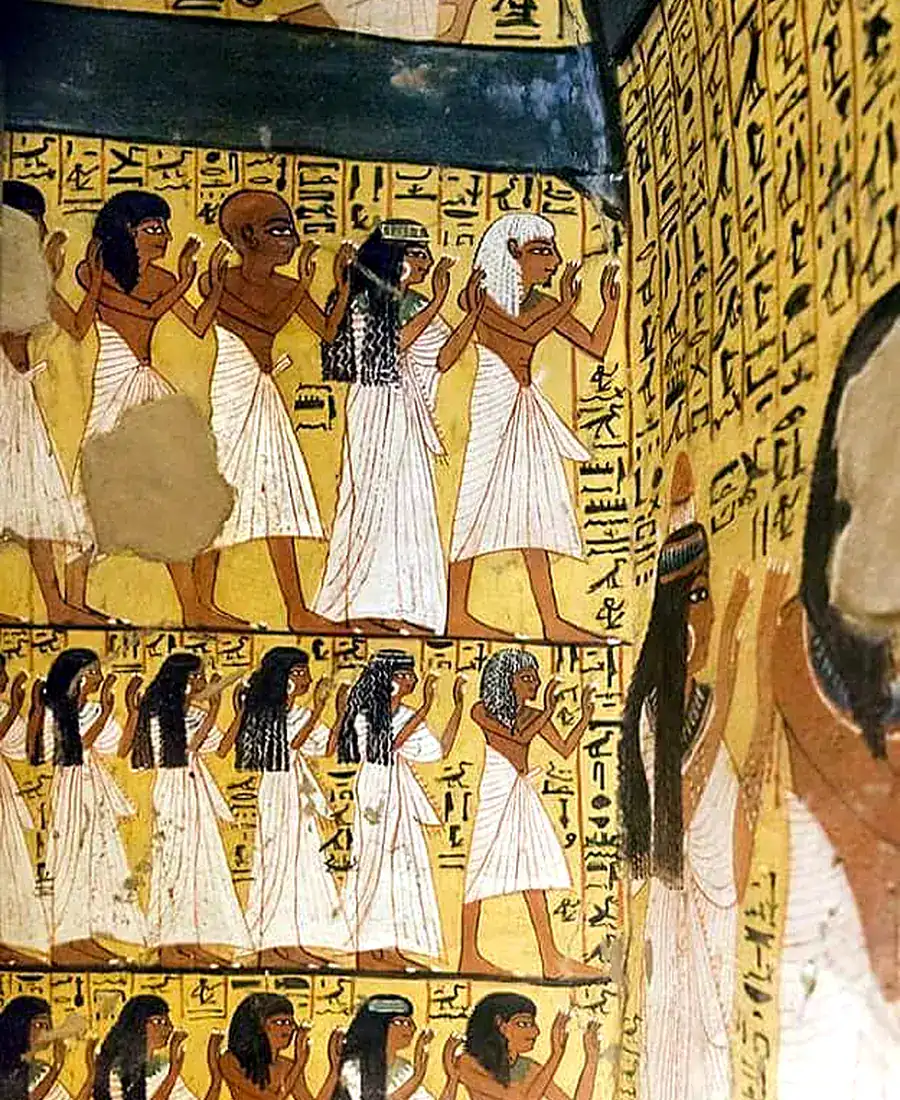
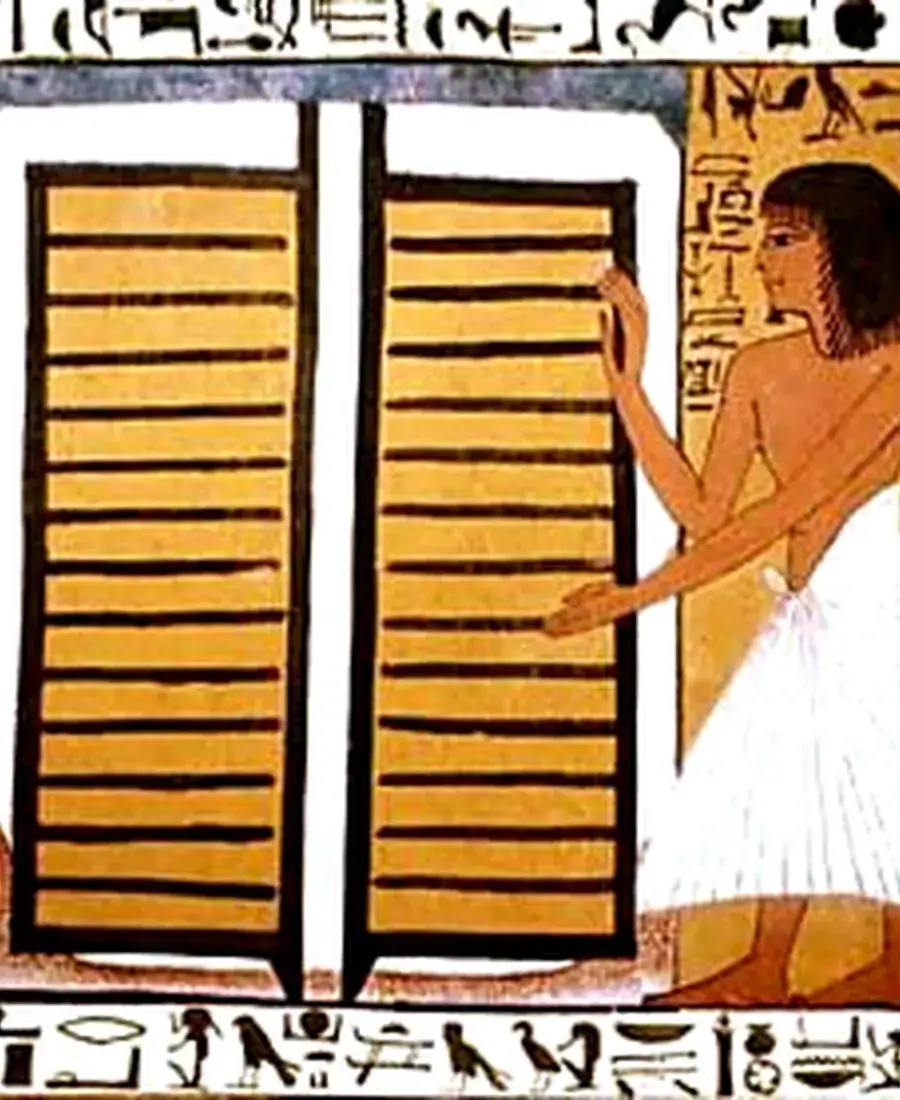
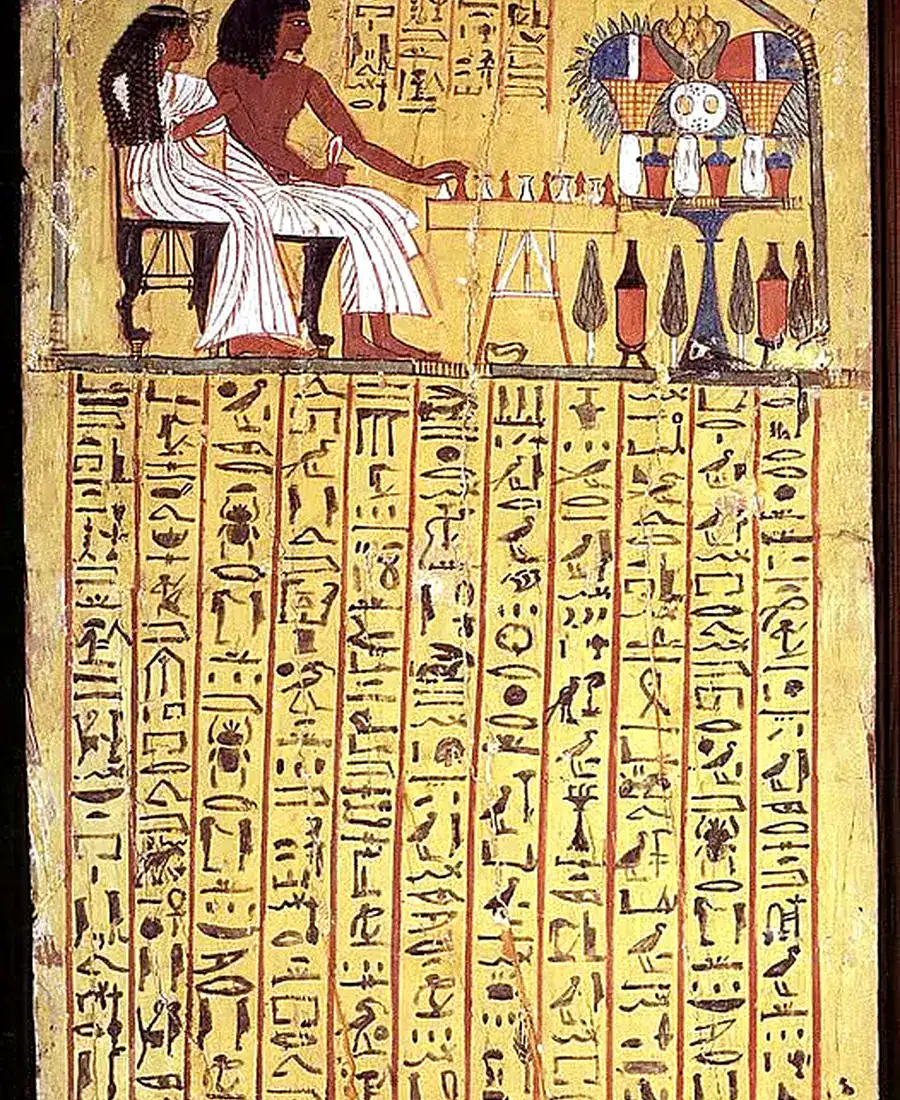
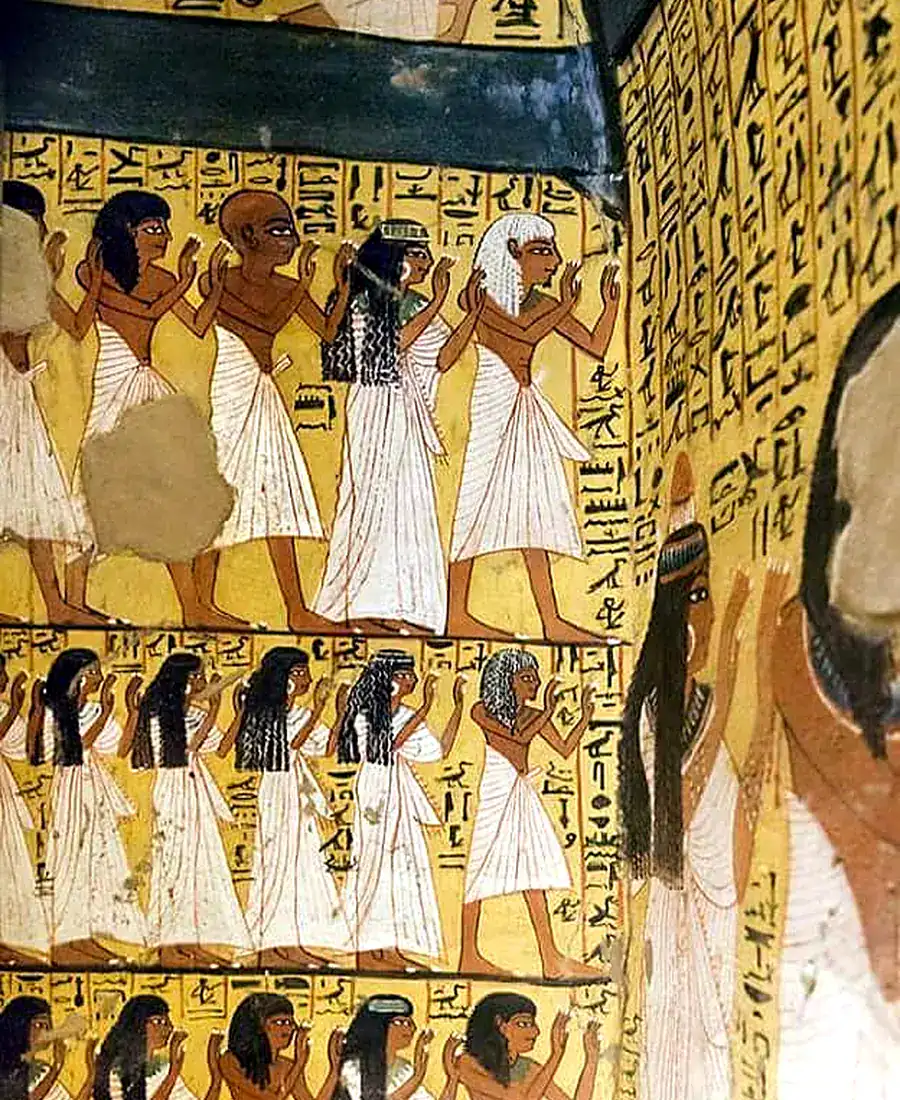
Sennedjem’s family tomb is among the best-preserved monuments at the site. Its colourful burial chamber presents divine guardians, funerary texts and an ideal afterlife in which Sennedjem and his wife Iineferti cultivate the fertile Fields of Iaru.
Discovered intact in 1886, the tomb also contained coffins, furniture, tools and personal objects belonging to several generations of the family.
Look for the brilliant vaulted ceiling and agricultural paradise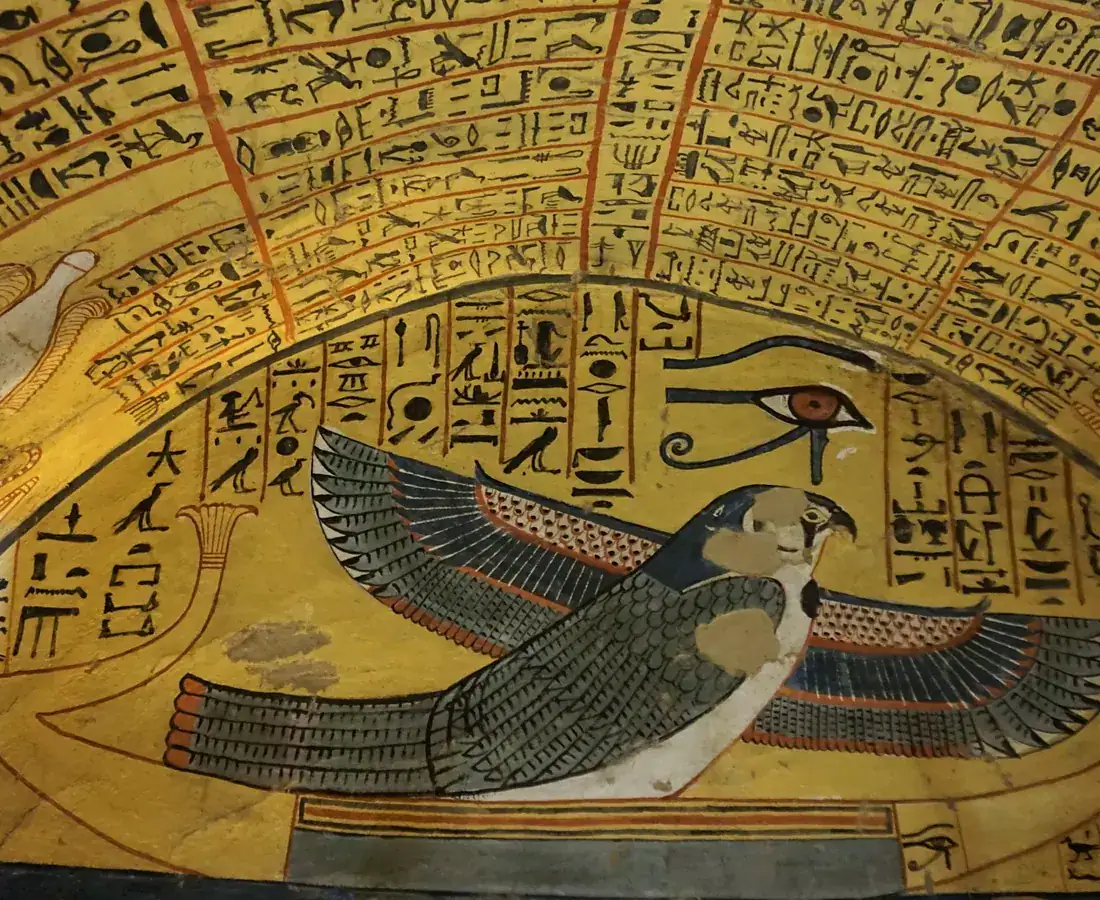 TT3 · Ramesside Period
Pashedu
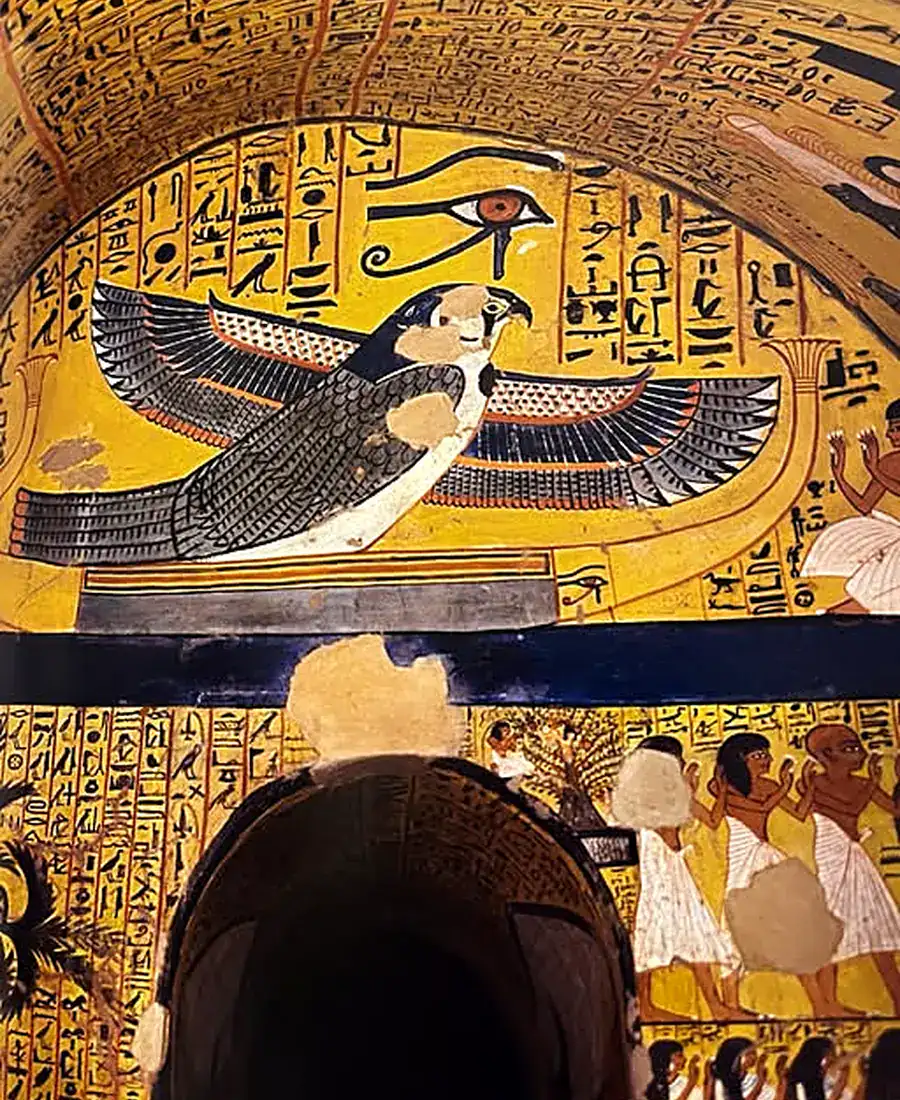
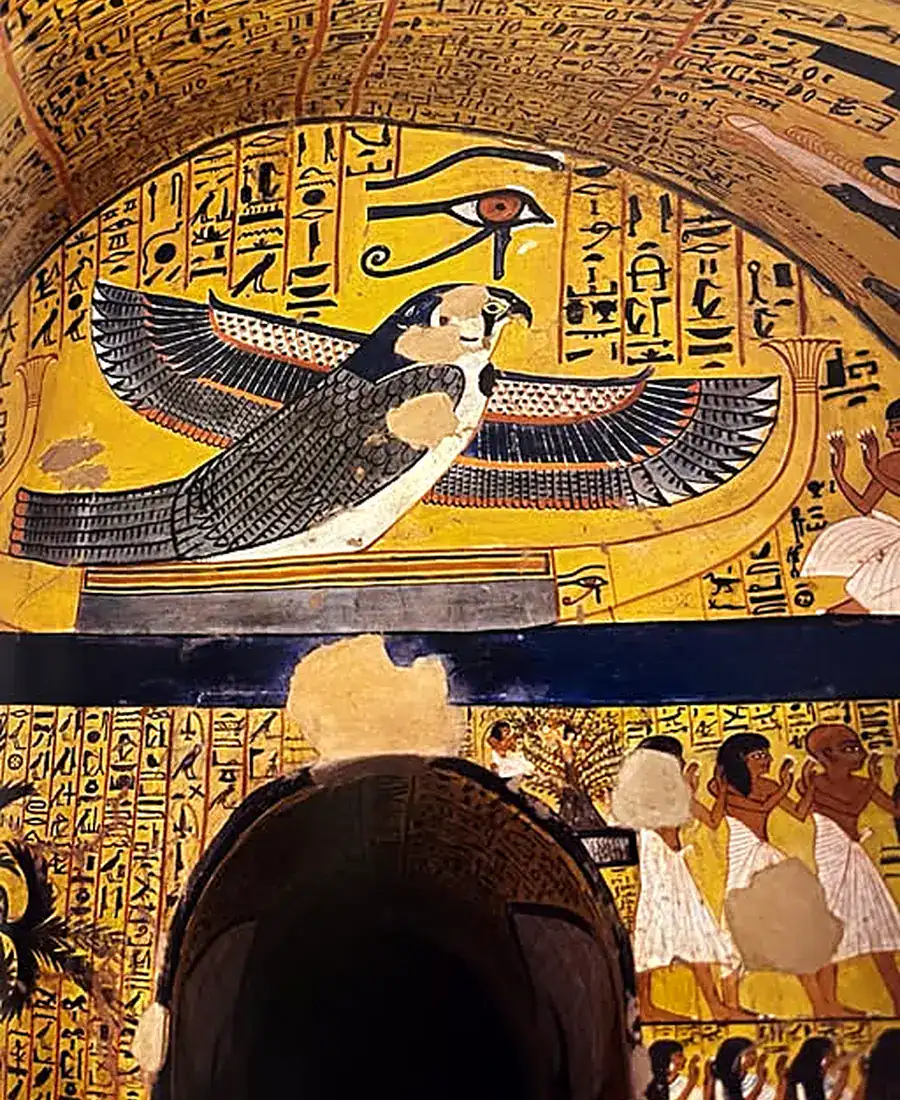
Pashedu was a craftsman connected with the royal necropolis. His compact burial chamber is celebrated for its golden-yellow background, carefully written texts and vivid divine imagery.
The best-known scene shows Pashedu kneeling beneath a date palm to drink cool water, a powerful image of renewal and eternal life.
Look for Anubis, Osiris and Pashedu beside the palm tree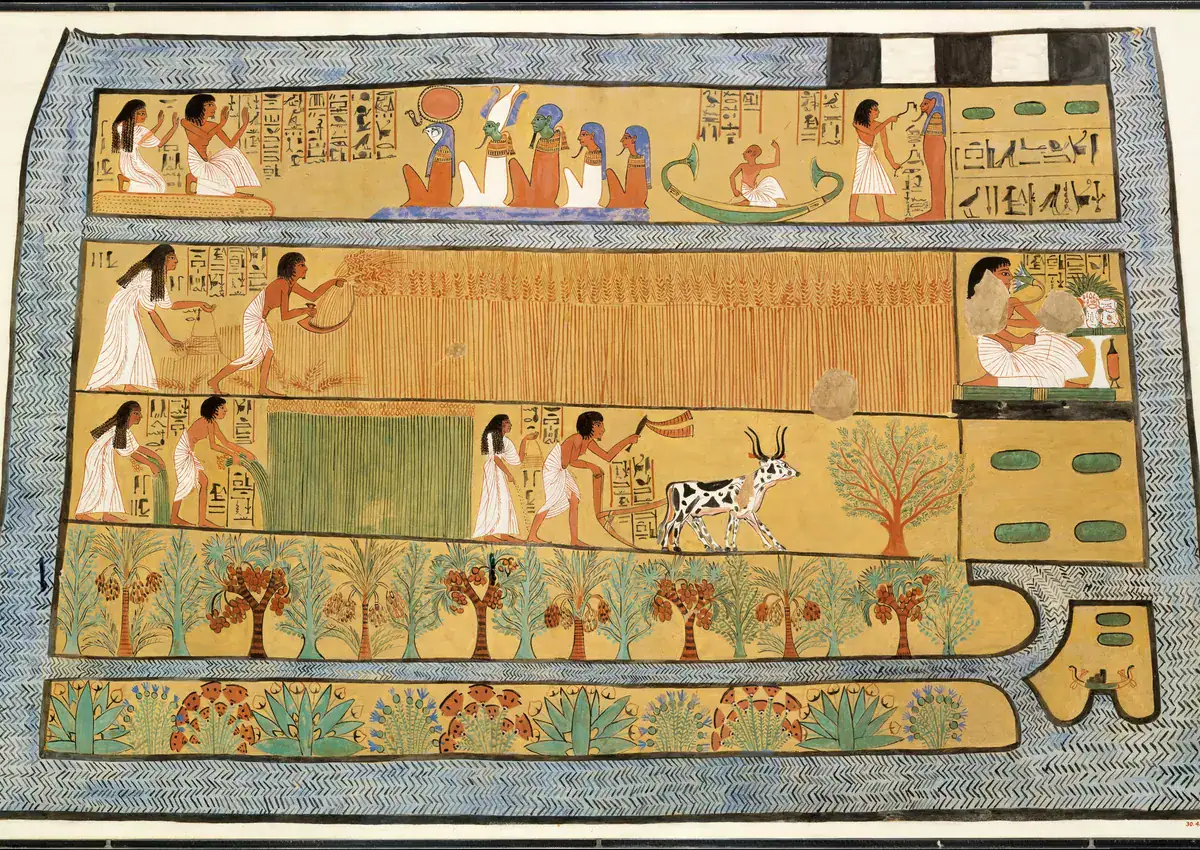 TT1 · Afterlife Landscape
The Fields of Iaru
This celebrated composition turns farming into a vision of paradise. Sennedjem and Iineferti sow, reap and harvest in a perfectly ordered landscape supplied with water, crops and fruit trees.
Rather than ordinary labour, these actions express rebirth, abundance and the hope of living forever in a renewed Egypt.
Look for flax, grain, cattle and irrigated gardens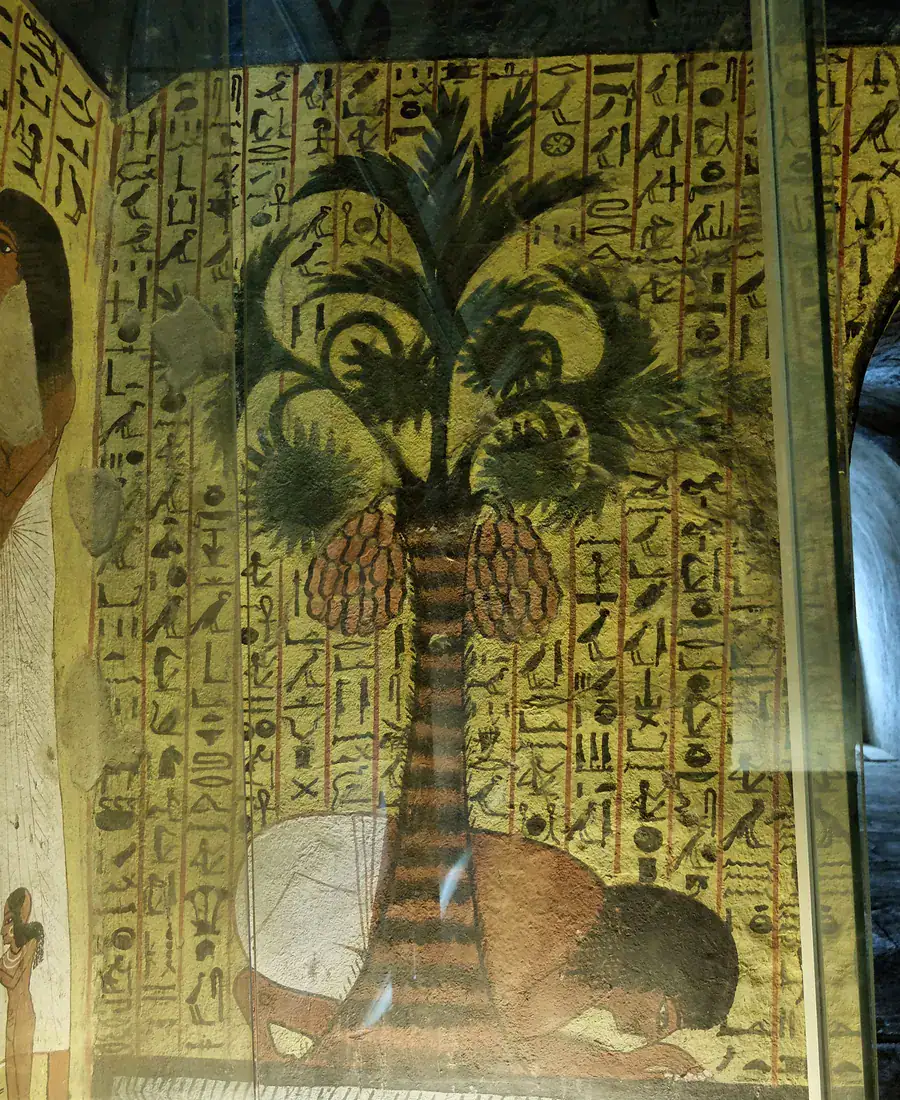 TT3 · Rebirth Scene
Pashedu’s Palm Scene
Pashedu kneels low beside a pool or canal and drinks beneath a fruiting palm. The intimate scale makes the scene especially memorable.
Water, shade and vegetation symbolised restoration in the dry western desert. Therefore, the image combines personal comfort with a deep funerary promise.
Look for the contrast between dark foliage and yellow textsExcavating a Written Village
The Rediscovery of Deir el-Medina
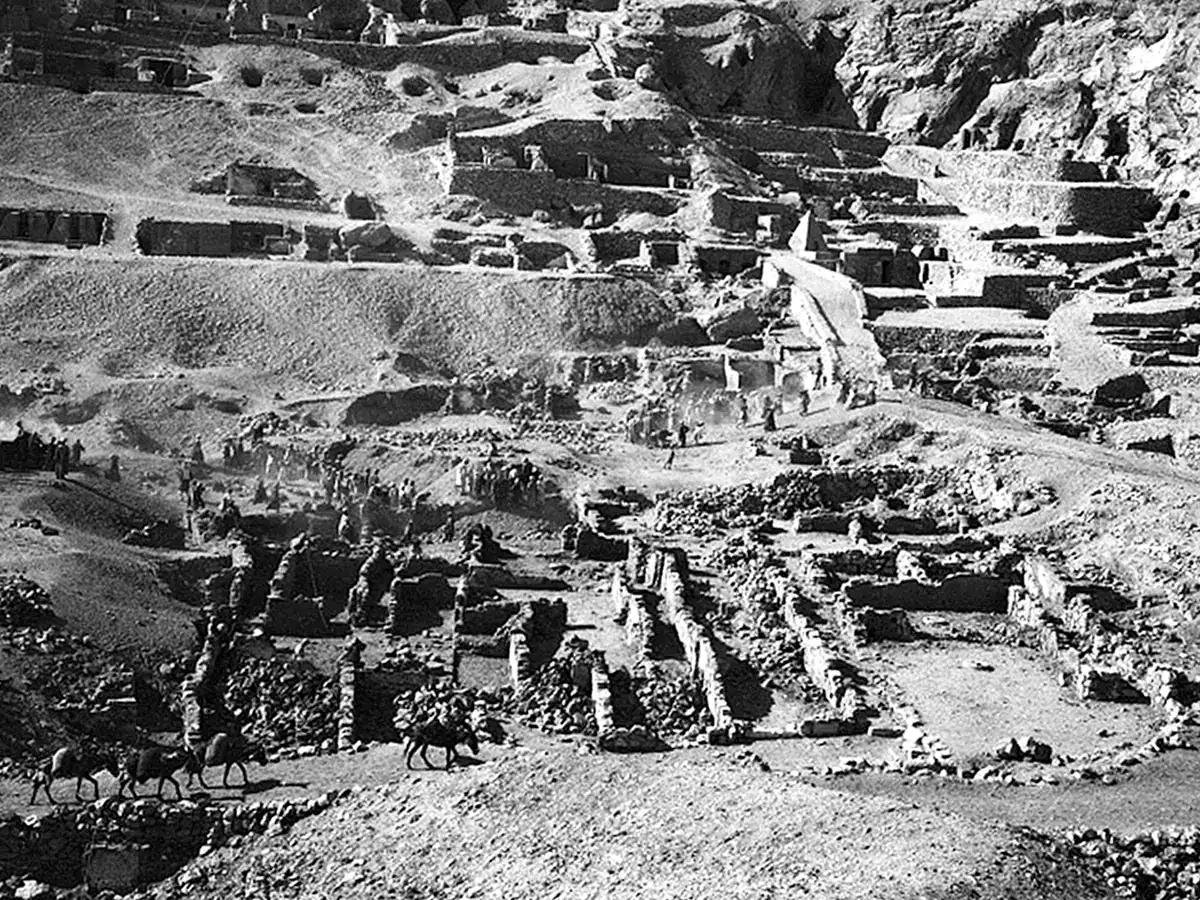
Exploration began before the twentieth century; however, systematic excavations transformed knowledge of the settlement and its people.
Early visitors and archaeologists cleared important tombs, including the intact family burial of Sennedjem in 1886.
Ernesto Schiaparelli’s Italian mission excavated major areas and discovered the intact tomb of Kha and Merit, TT8.
Bernard Bruyère led long-term French excavations that documented the village, cemeteries, chapels and thousands of objects and texts.
Conservation, digital recording and continued study connect houses, texts and tombs into detailed family histories.
Plan Your Visit
How to Visit Deir el-Medina
The village, temple and workers’ tombs form a compact but exceptionally rich West Bank experience.
Visit Early
Morning temperatures are more comfortable, especially when walking through the exposed settlement and cemetery.
Luxor West Bank
The site lies between the Valley of the Queens and the Ramesseum, making it easy to combine with nearby monuments.
Check Open Tombs
The tomb combination and photography rules can change. Confirm current access at the ticket office before entering.
Allow 1.5–2 Hours
Give yourself time for the village plan, Hathor temple and at least two decorated workers’ tombs.
Location Map
Where Is Deir el-Medina?
The village sits in a small desert valley on Luxor’s west bank, close to the royal cemeteries where its residents worked.
The Workers’ Village of Ancient Thebes
Its protected position placed the community near the Valley of the Kings and Valley of the Queens while separating it from the cultivated Nile plain.
Belief and Community
Religion at Deir el-Medina
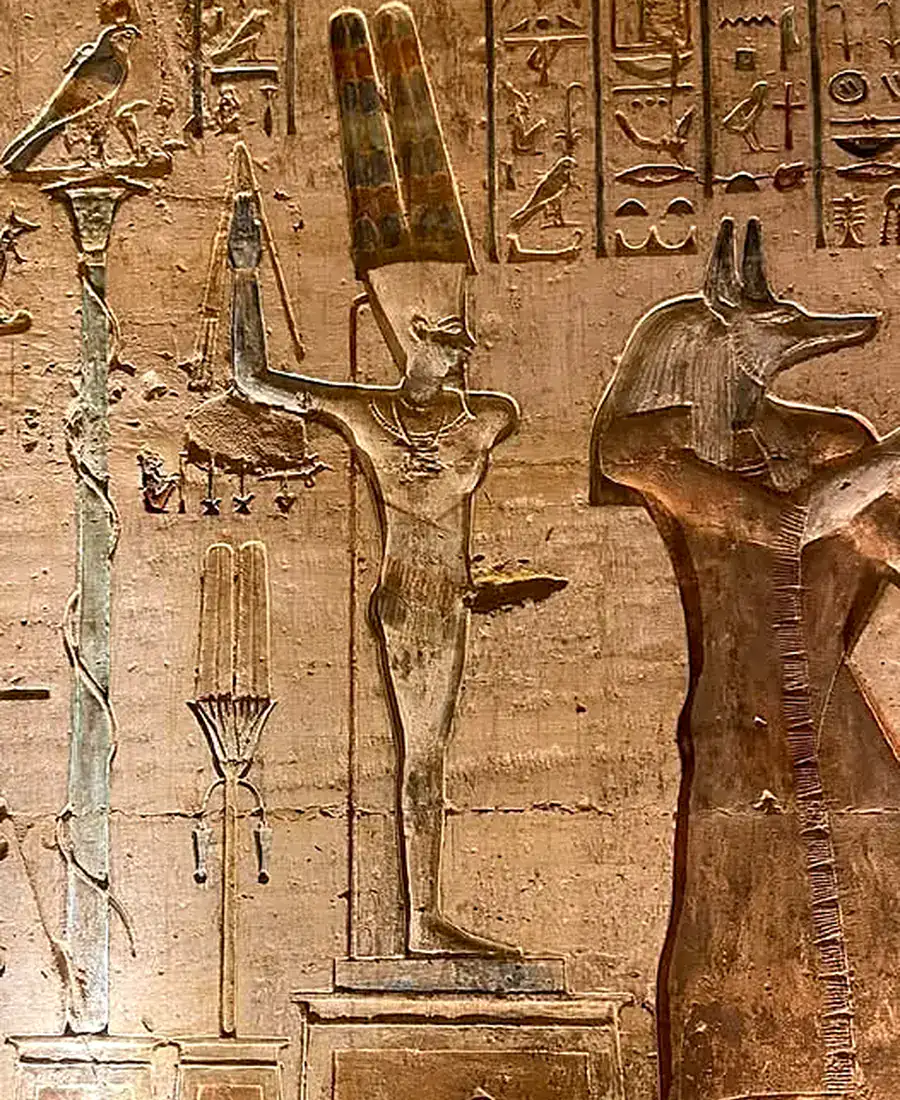
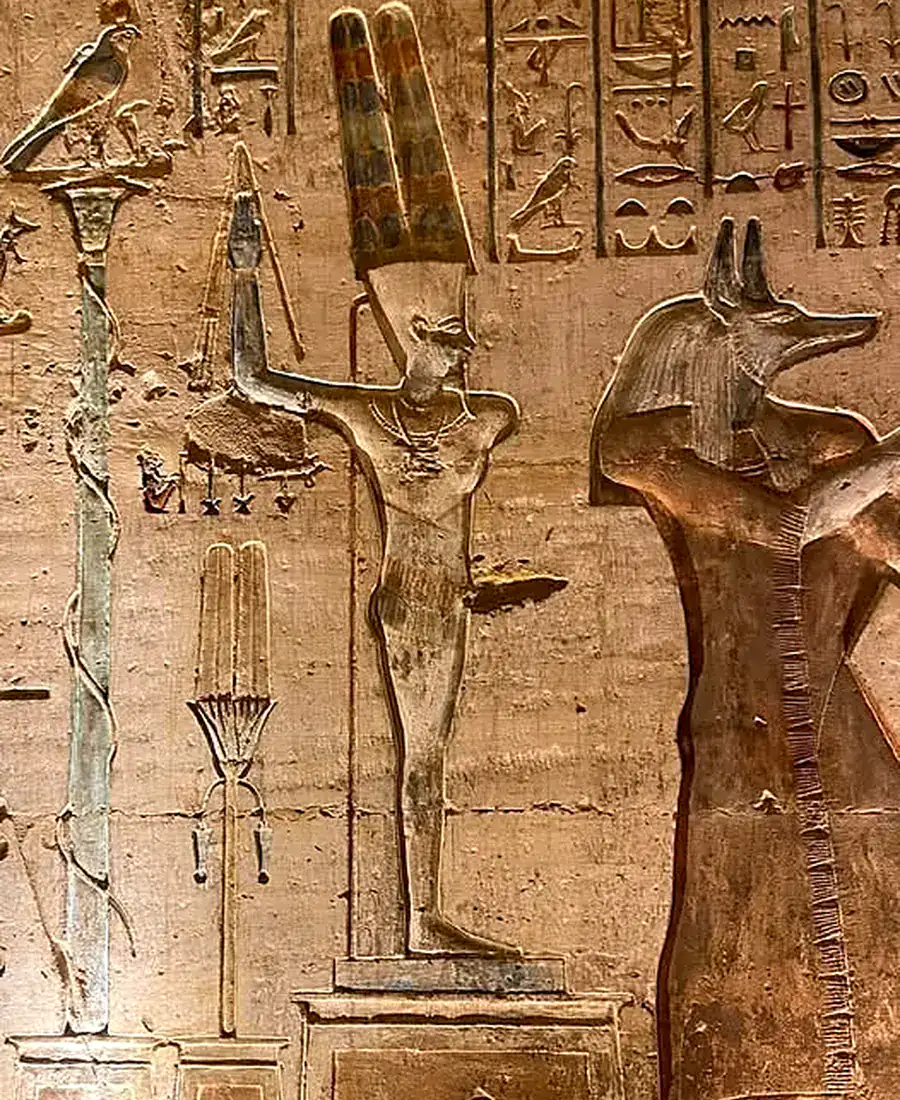
Residents honoured major gods such as Amun, Osiris, Hathor and Ptah, together with local protective figures. Meretseger, “She Who Loves Silence,” embodied the Theban peak and guarded the necropolis.
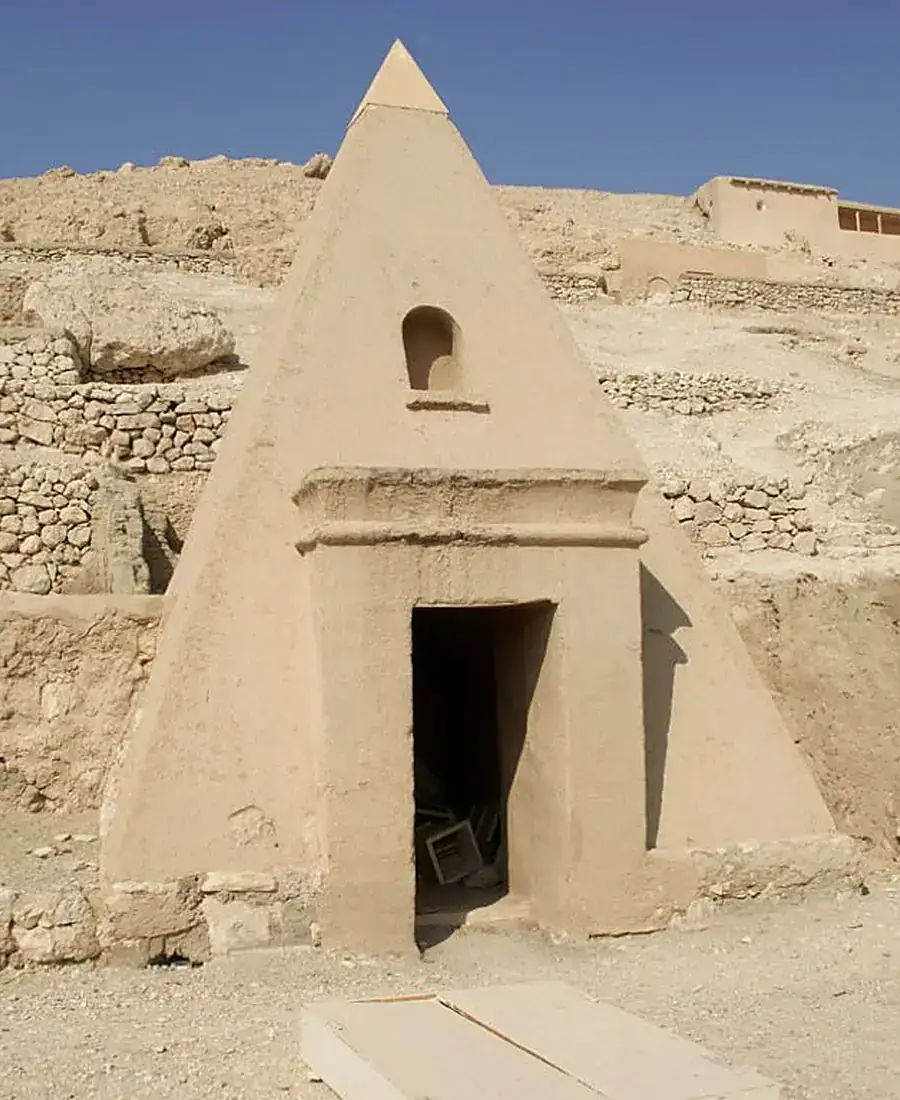
Families also revered deified royal patrons, particularly Amenhotep I and Queen Ahmose-Nefertari. Domestic shrines, votive stelae, ancestor busts and personal prayers show that religious practice extended far beyond formal temple ritual.
Interactive Gallery
Deir el-Medina in Pictures
Swipe or use the arrows to explore the village, excavations and vivid tomb paintings of its artisans.
Continue Exploring Luxor
Explore More of Luxor’s West Bank
Frequently Asked Questions
Deir el-Medina FAQ
What was Deir el-Medina?
It was a planned New Kingdom village for the skilled artisans and administrators who created the royal tombs on Luxor’s west bank.
What does “Place of Truth” mean?
Set Maat, usually translated as the “Place of Truth,” was the ancient name associated with the community and royal necropolis workforce.
Which tombs can visitors see?
Sennedjem, Pashedu, Inherkhau and other workers’ tombs may be included in changing ticket combinations. Confirm the open group locally.
Why are the ostraca important?
These inscribed pottery and limestone fragments record attendance, deliveries, letters, legal disputes, stories, drawings and many details of ordinary life.
Did workers receive money?
The state generally compensated them with rations and goods, especially grain. Administrative records document both deliveries and delays.
How long should I spend at Deir el-Medina?
Allow roughly one and a half to two hours for the village, temple and a careful visit to the open decorated tombs.
Can I take photographs inside the tombs?
Rules can change. Follow current signs and staff instructions, avoid flash where prohibited and never touch the walls.
Historical content checked against Egypt’s Ministry of Tourism and Antiquities, UNESCO, the Metropolitan Museum of Art, the British Museum and Museo Egizio. Visitor arrangements remain subject to local change.
Discover the Artists Behind the Pharaohs
Explore Deir el-Medina with a private Egyptologist guide and a carefully planned Luxor West Bank itinerary.