
Beni Hassan Tombs
Beni Hassan Tombs: Life Painted in Stone
Discover cliff-cut chapels, vivid Middle Kingdom art and the provincial governors whose painted biographies still overlook the Nile Valley.
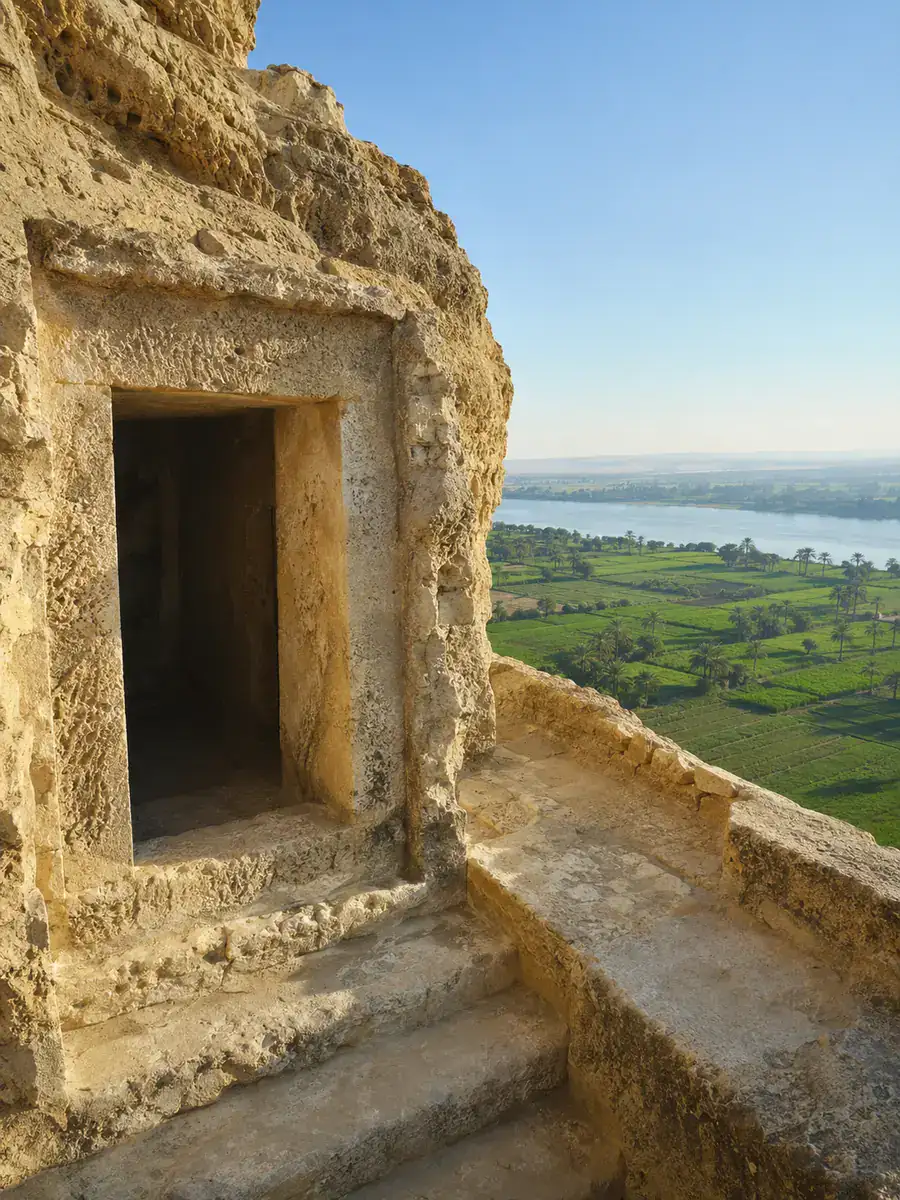
A Cliff above the Nile
Why the Beni Hassan Tombs Are Exceptional
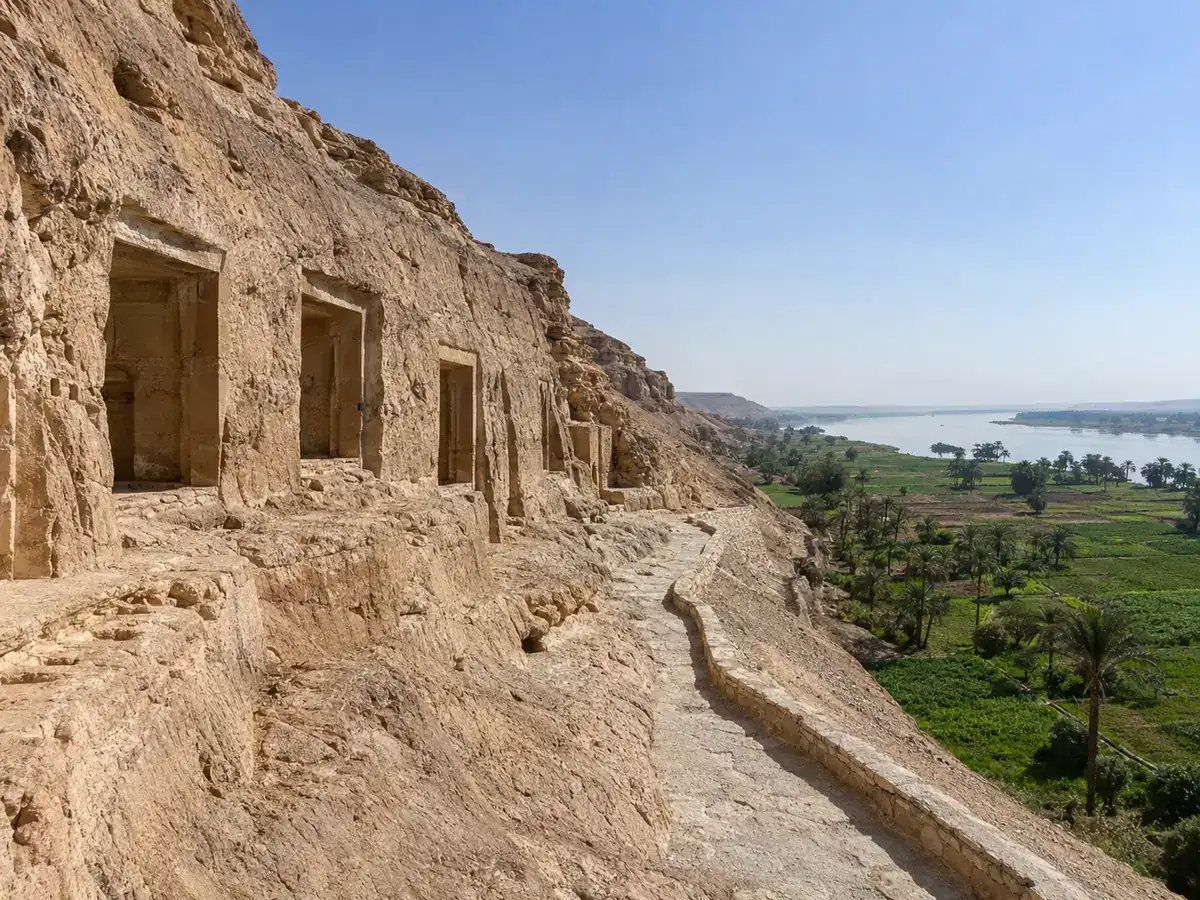
The Beni Hassan Tombs rise high in the limestone cliffs on the eastern bank of the Nile near Minya. Although many Egyptian tombs emphasize royal ritual, these chapels preserve unusually vivid scenes of work, sport, travel, farming and family life.
Moreover, the upper cemetery contains 39 rock-cut tombs, while a much larger lower cemetery includes hundreds of burials. Most celebrated chapels belonged to nomarchs—the governors of the Oryx nome—during the 11th and 12th Dynasties.
Consequently, Beni Hassan reveals how powerful provincial families expressed loyalty to the king while celebrating their own administration, estates and regional identity.
Architecture and Meaning
Inside the Rock-Cut Tombs of Beni Hassan
The architecture transforms the cliff into an eternal residence, combining restrained stone forms with painted biographies.
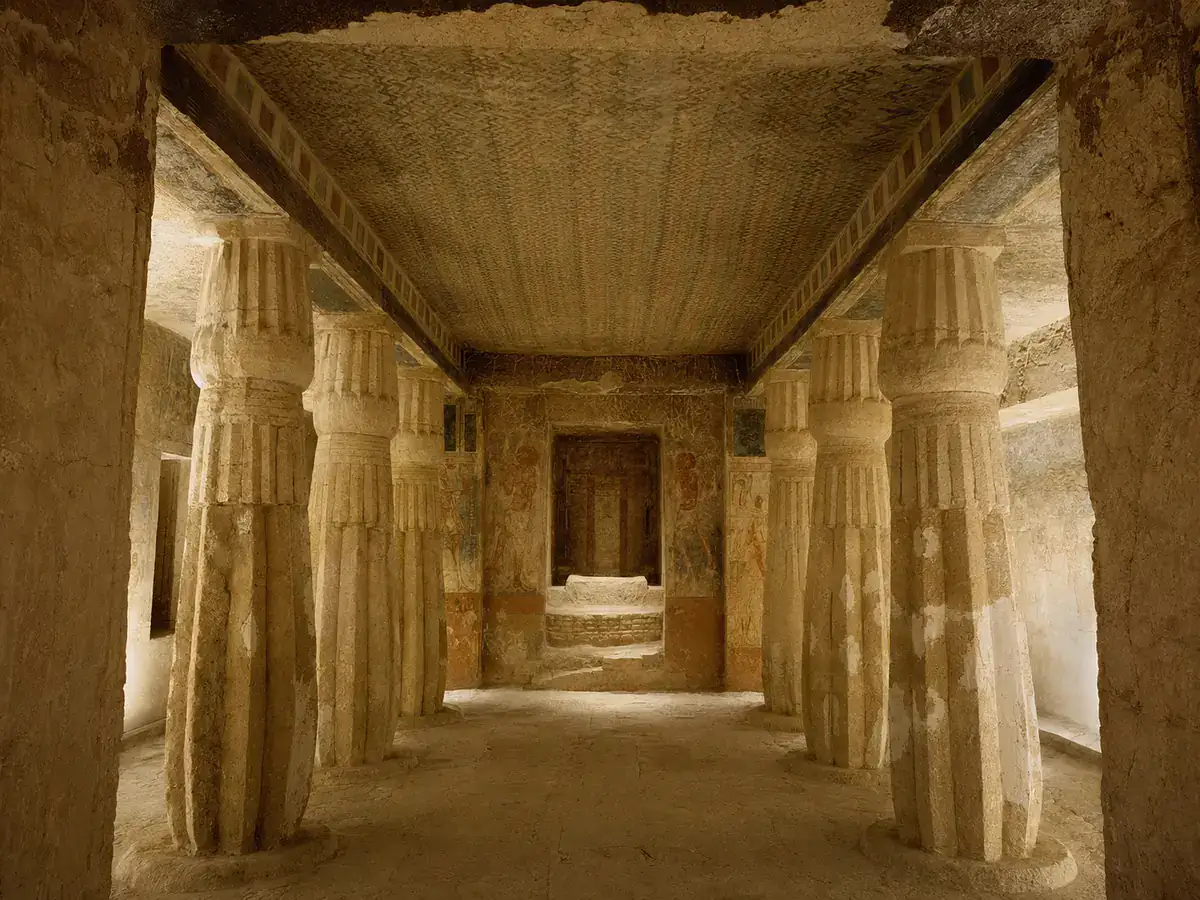
Cliff-Cut Façades
Long causeways once climbed toward forecourts and rectangular entrances cut directly into the limestone face.
Columned Chapels
In addition, several elite tombs contain fluted or lotus-form columns. Their restrained profiles are sometimes described as proto-Doric because they resemble much later Greek forms.
Painted Halls
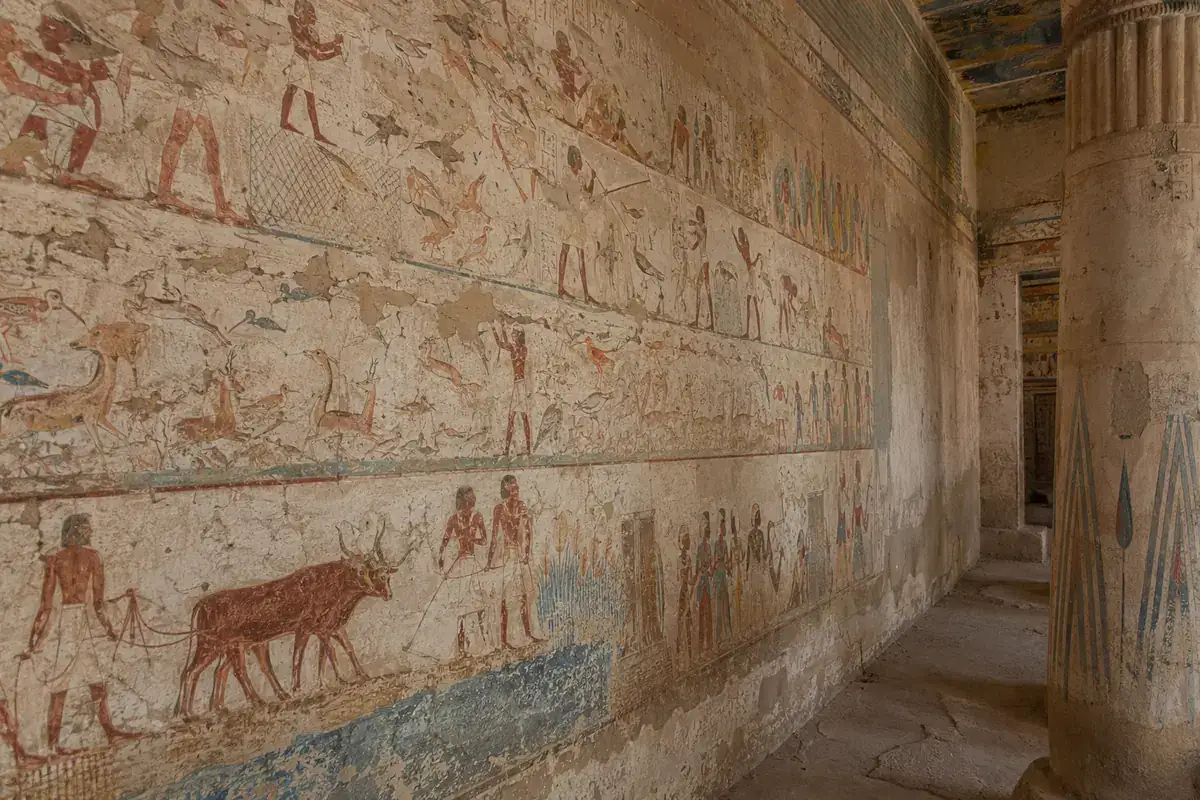
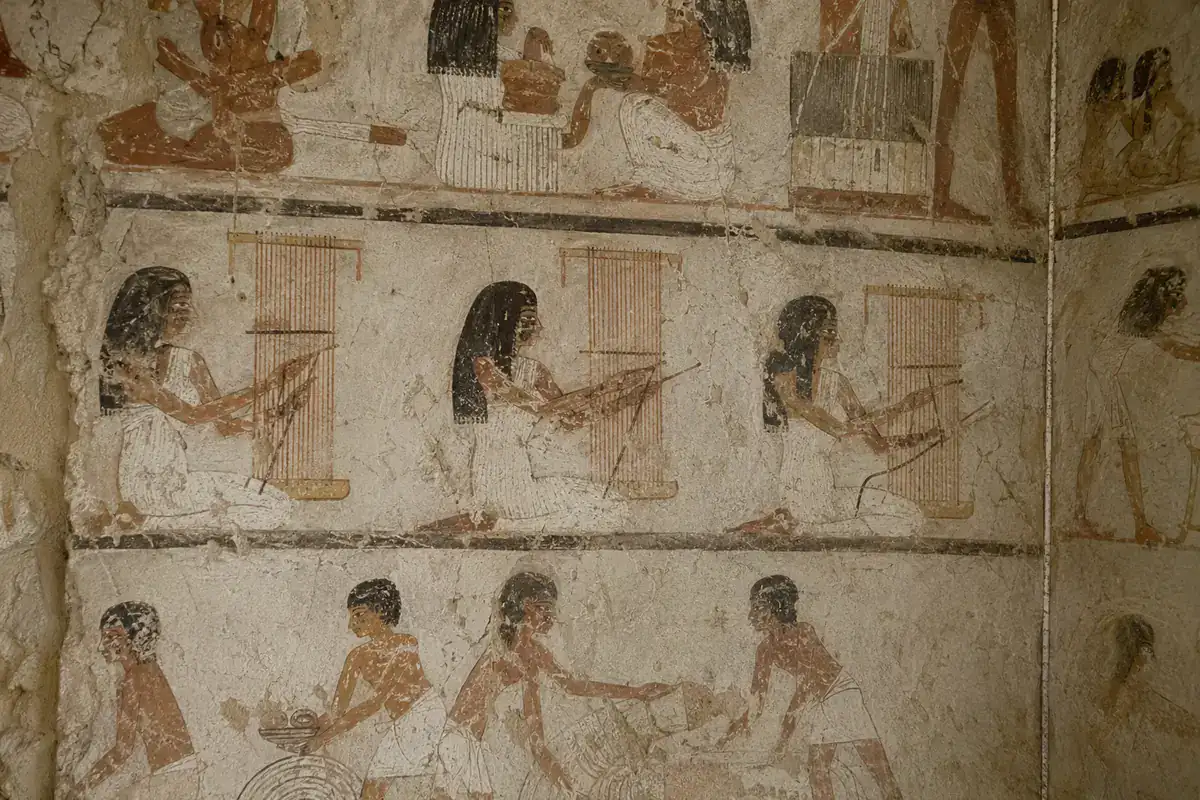
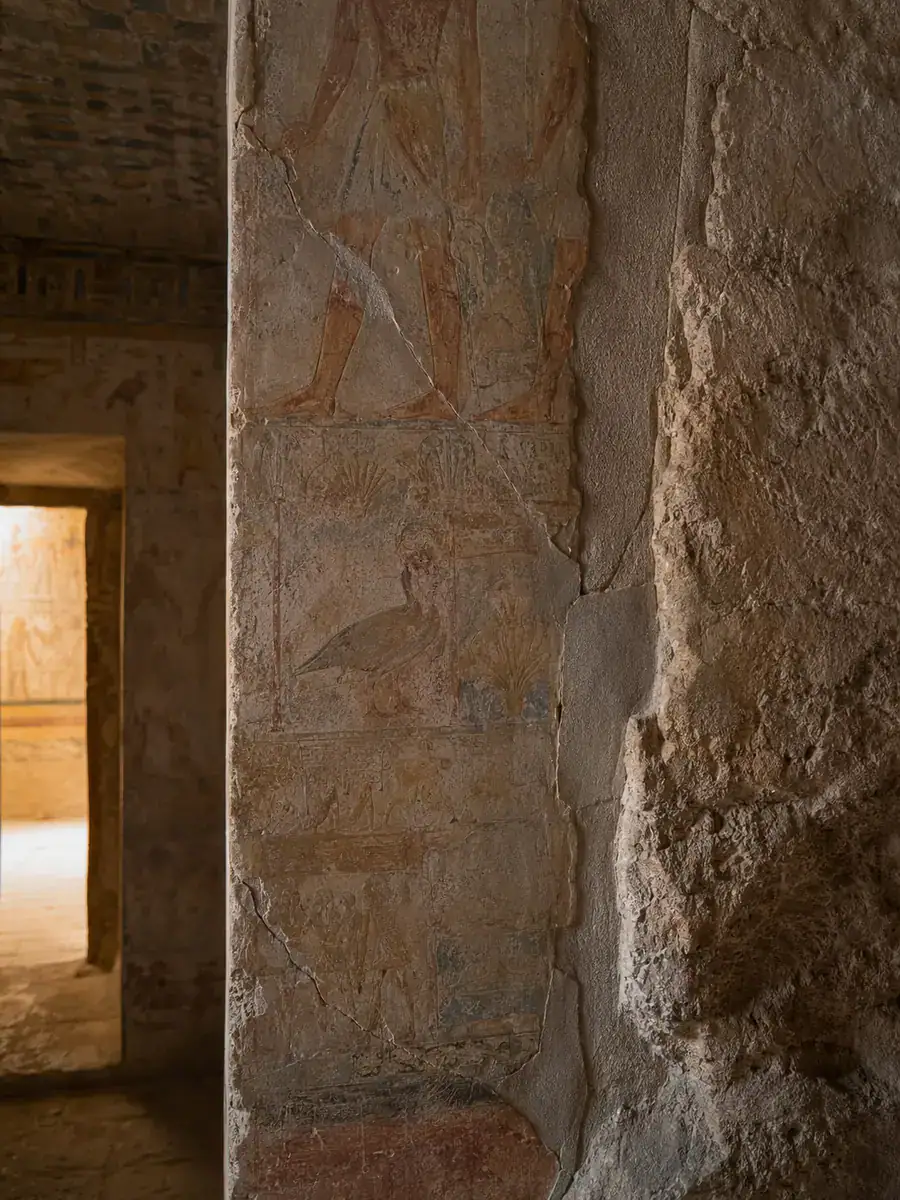
Meanwhile, artists organized hunting, agriculture, crafts, warfare and ceremonies into horizontal registers that wrapped around the chapel walls.
Shrine and Afterlife
Finally, a rear niche or shrine focused the offering cult, linking the tomb owner’s public biography with hopes for eternal renewal.
Essential Tombs
Famous Tombs at Beni Hassan
Four decorated chapels provide the clearest introduction to the site’s architecture, provincial power and extraordinary visual storytelling.
 Tomb 3 · Dynasty 12
Khnumhotep II: Diplomacy and the Desert
Khnumhotep II served as Overseer of the Eastern Desert under Amenemhat II and Senusret II. Notably, his chapel is famous for the arrival of a group from Western Asia, identified by their distinctive clothing and hairstyles.
Elsewhere, hunting, fishing, bird-catching and craft scenes present an ideal world of abundance, order and elite responsibility.
Look for the foreign delegation and finely observed wildlife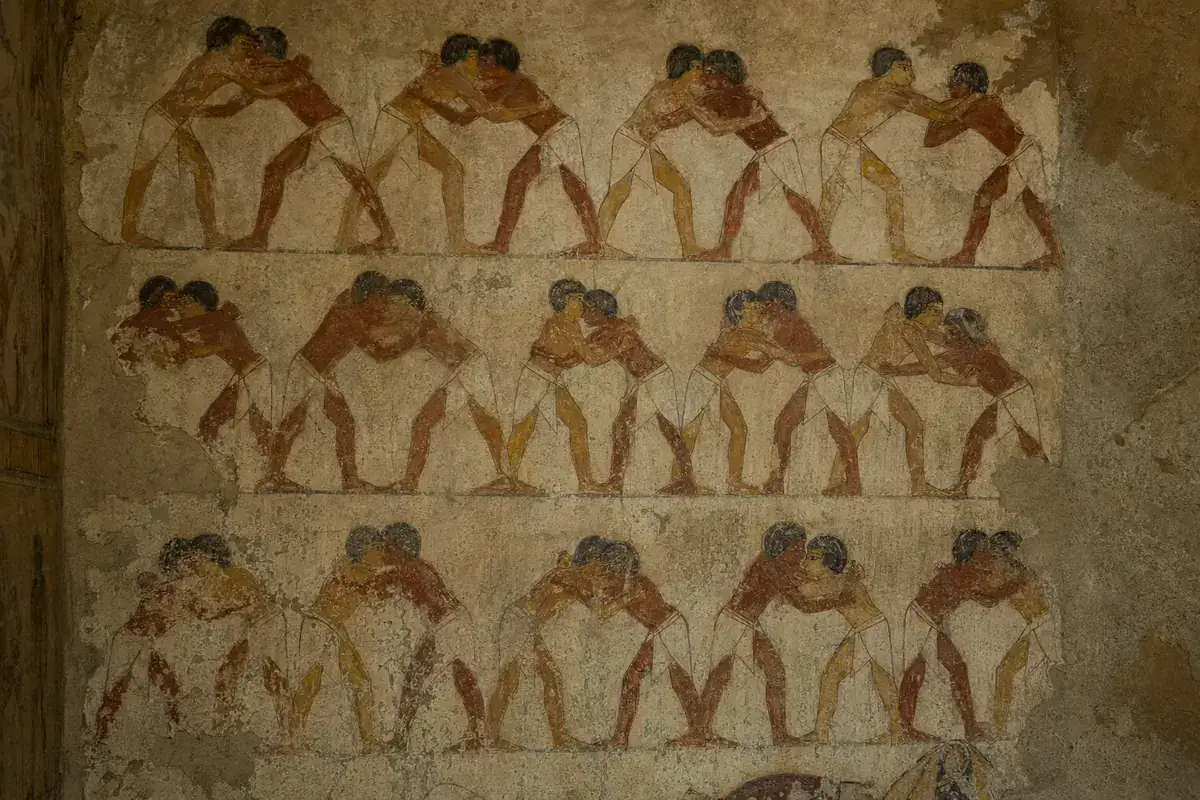 Tomb 15 · Dynasty 11
Baqet III: Wrestling in Motion
For example, the tomb of Baqet III contains one of Beni Hassan’s most celebrated sequences: pairs of wrestlers demonstrate grips, throws and holds across long painted registers.
In addition, desert hunting and working scenes animate the walls, while the decorative kheker frieze unifies the upper edge of the chapel.
Look for repeated bodies turning movement into visual instruction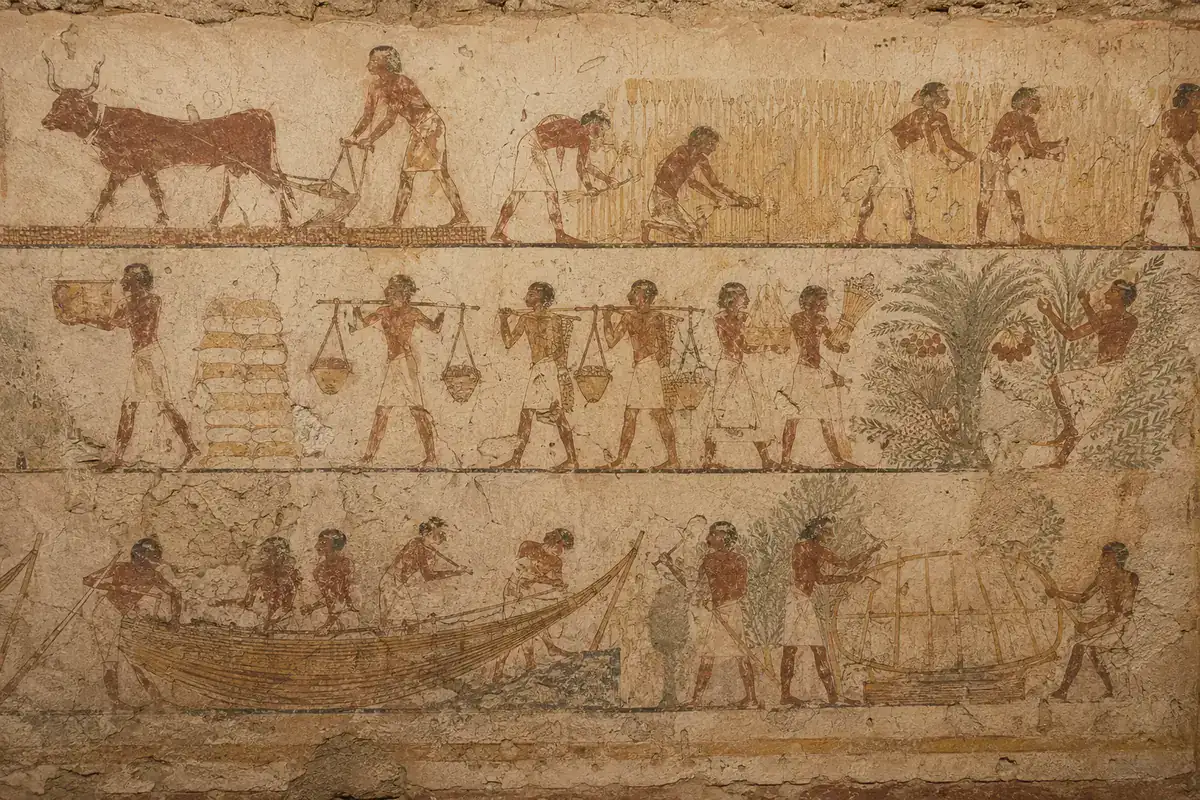 Tomb 2 · Dynasty 12
Amenemhat: Work, Craft and Ceremony
Amenemhat’s tomb preserves some of the site’s finest decoration. Moreover, agricultural work appears beside fishing, fowling and crafts such as carpentry, pottery, sandal-making and bow production.
Rather than serving as a simple record, these scenes symbolically ensured that skill, food and prosperity would continue forever.
Look for workshops, farming cycles and carefully organized registers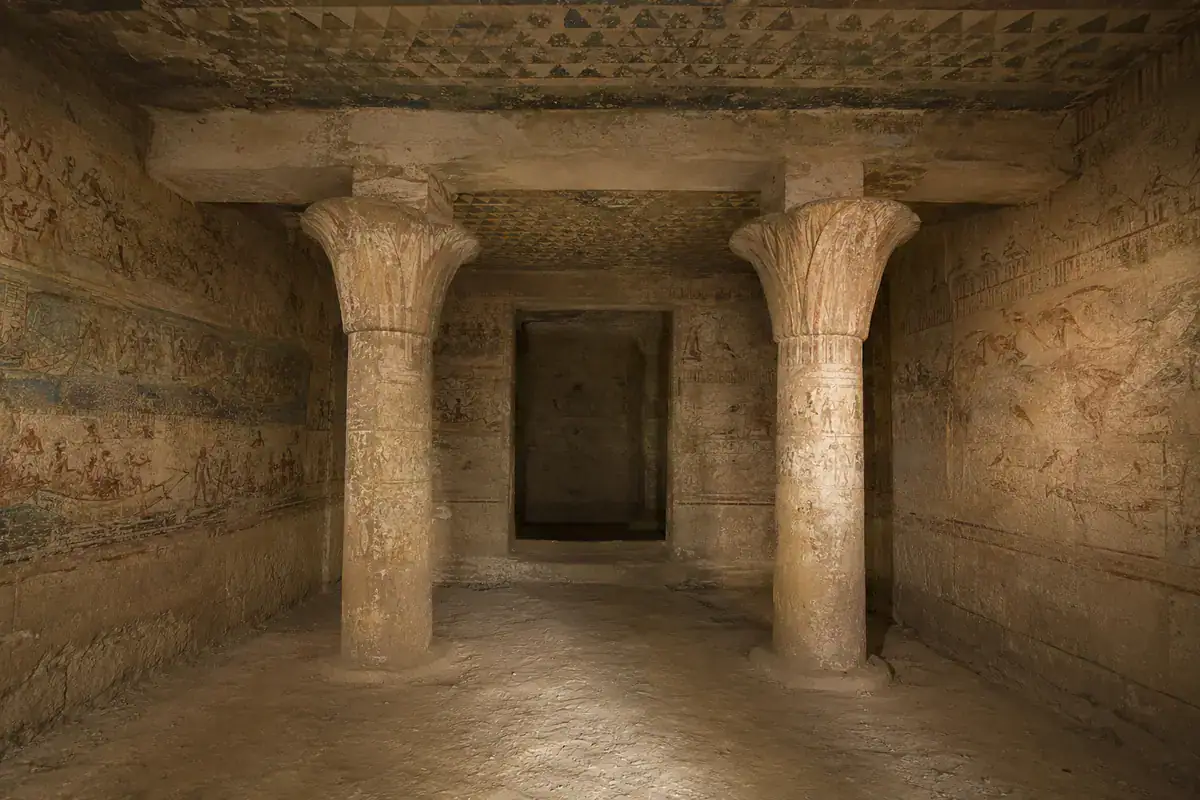 Tomb 17 · Dynasty 11
Khety: A Governor’s Painted Chapel
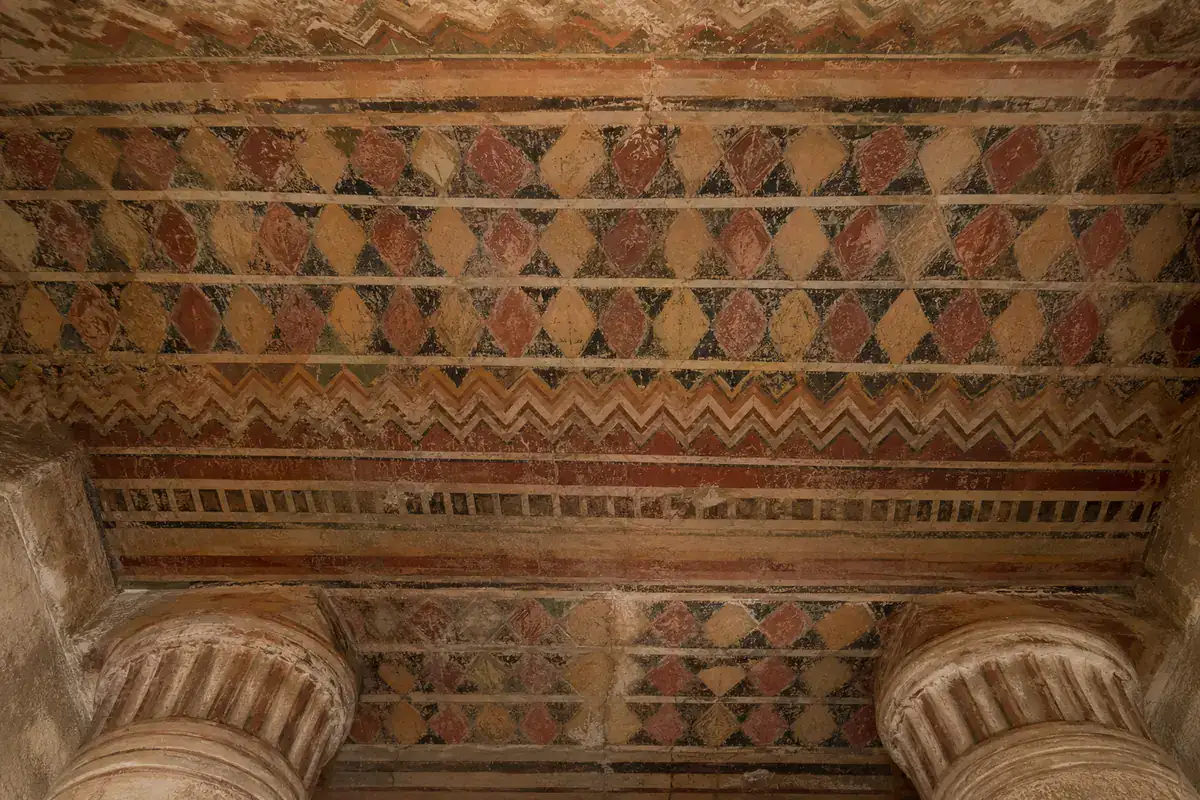
Khety governed the 16th Upper Egyptian nome during the early Middle Kingdom. Inside, his forecourt leads into a chamber that originally contained two rows of three lotus-capital columns.
Furthermore, painted scenes explore wrestling, fishing, bird hunting and regional life, while the remaining columns give the chapel a powerful architectural rhythm.
Look for the surviving lotus columns and geometric ceiling bandsArt and Archaeology
Reading Middle Kingdom Life on the Walls
Beni Hassan’s paintings are not photographs of ordinary life. Instead, they are carefully selected images of order, productivity, authority and abundance designed to preserve the tomb owner’s identity.
Nevertheless, their close observation of tools, animals, clothing and movement makes them an exceptional source for ancient Egyptian society. Early surveyors, including Percy Newberry, published extensive records, while later artists such as Nina and Norman de Garis Davies created precise facsimiles.
First, officials presented themselves as effective governors, estate managers and protectors of their communities.
At the same time, wrestling, hunting and craft scenes show unusual attention to bodily action and sequential storytelling.
Today, drawings, facsimiles, photography and digital recording preserve details that remain vulnerable inside the tombs.
Plan Your Visit
How to Visit the Beni Hassan Tombs
The site is peaceful and rewarding, but the exposed cliff and long stairway make sensible planning important.
Travel from Minya
Beni Hassan lies about 20 km south of Minya on the eastern side of the Nile. Therefore, a private car and local guide are the simplest option.
Prepare for Steps
A substantial stairway climbs from the visitor area to the upper cemetery, so wear supportive shoes and carry water.
Choose Cooler Hours
Ideally, visit early and favor October through April when possible, because shade is limited on the exposed limestone slope.
Allow 2–3 Hours
Finally, leave time for the climb, decorated chapels, exterior façades and wide views across the Nile Valley.
Location Map
Where Are the Beni Hassan Tombs?
The necropolis occupies the limestone cliffs east of the Nile in Middle Egypt, south of modern Minya.
Beni Hassan: Above the Nile Valley
The dramatic position explains much of the site’s appeal: dry desert cliffs protect the tombs, while the fertile valley below recalls the agricultural world painted inside.
Preservation and Research
Protecting the Painted Tombs of Beni Hassan
Age, salt, dust, unstable plaster and changes in humidity all threaten the decorated surfaces. Therefore, conservation must balance visitor access with the fragile condition of pigments laid down nearly four thousand years ago.
Moreover, documentation is equally important. Historical publications and modern digital recording allow researchers to compare changes, study damaged passages and preserve visual evidence for the future.
Interactive Gallery
Beni Hassan Tombs in Pictures
Move from the cliff façades into painted chapels filled with movement, craft and carefully preserved colour.
Continue Exploring Egypt
Discover More Ancient Egyptian Sites
Frequently Asked Questions
Beni Hassan Tombs FAQ
Why are the Beni Hassan Tombs important?
They preserve exceptional Middle Kingdom architecture and paintings that illuminate provincial government, daily work, sport, craft and contact with foreign groups.
How many tombs are at Beni Hassan?
The upper cemetery contains 39 rock-cut tombs, of which about 12 preserve significant decoration. The lower cemetery contains hundreds of additional burials.
Which Beni Hassan tombs are most famous?
The best-known decorated chapels include those of Khnumhotep II, Amenemhat, Baqet III and Khety.
Where are the Beni Hassan Tombs?
They are cut into limestone cliffs on the eastern side of the Nile, approximately 20 km south of Minya in Middle Egypt.
What do the wrestling scenes represent?
Long sequences of paired wrestlers show many grips and positions. They demonstrate the artists’ interest in movement and may also communicate training, strength and disciplined order.
How long should I spend at Beni Hassan?
Allow roughly two to three hours for the climb, the open decorated tombs, exterior views and time with a knowledgeable guide.
Can every tomb be entered?
No. Access to individual chapels may change for conservation and operational reasons, so confirm the current selection locally before your visit.
Historical and architectural details reviewed against Egypt’s Ministry of Tourism and Antiquities overview of Beni Hasan, its official pages for Khnumhotep II, Amenemhat, Baqet III and Khety, together with the Metropolitan Museum of Art’s Beni Hasan facsimile records. Visitor access remains subject to local change.
Explore Middle Egypt beyond the Usual Route
Visit Beni Hassan with a private Egyptologist guide and discover the ancient landscapes around Minya.