
Abu Simbel Temple
Discover the monumental rock-cut temples of Ramesses II and Queen Nefertari, their ancient history, Battle of Kadesh reliefs, famous solar alignment, UNESCO relocation and practical visitor information.
What Is Abu Simbel Temple?
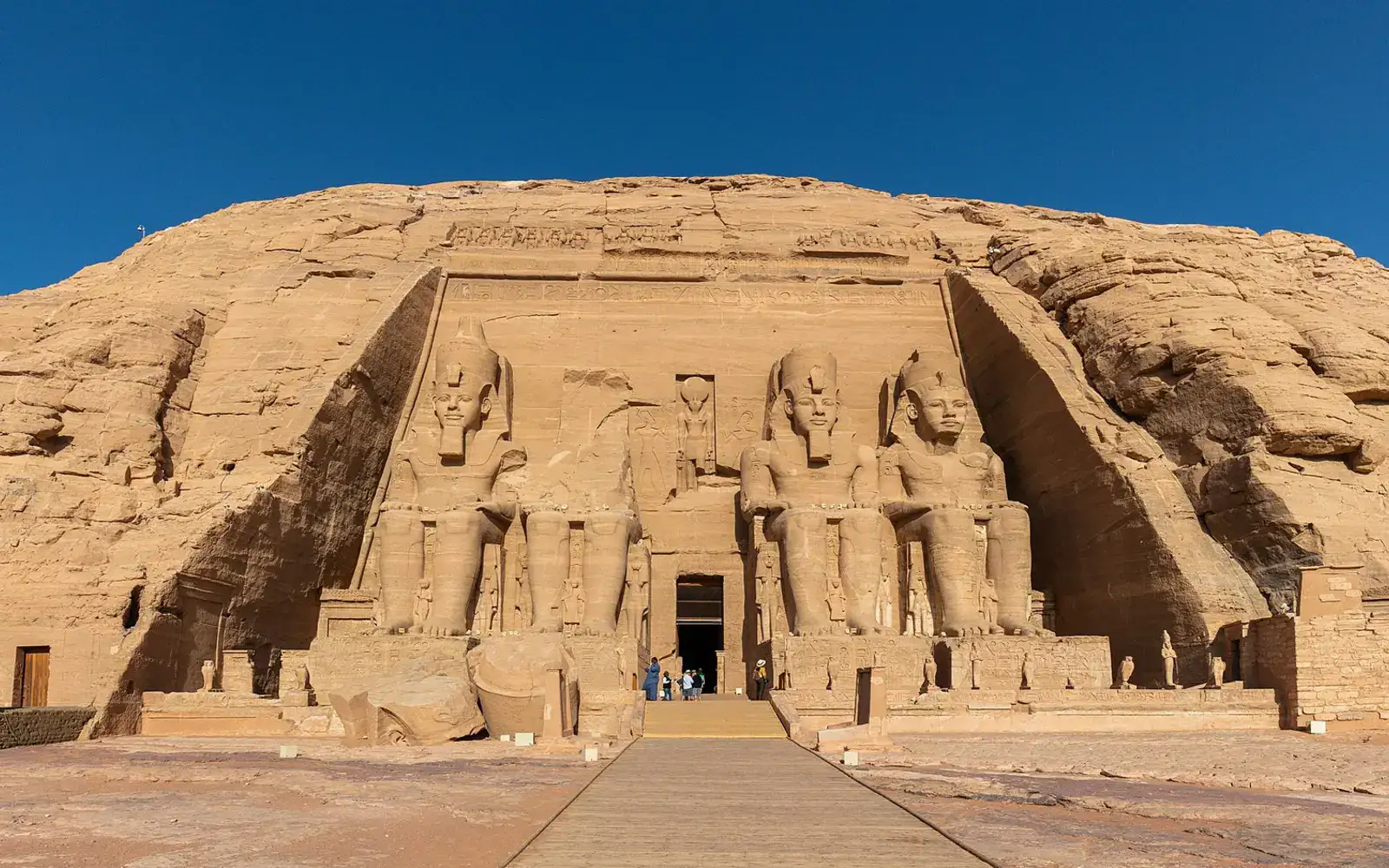
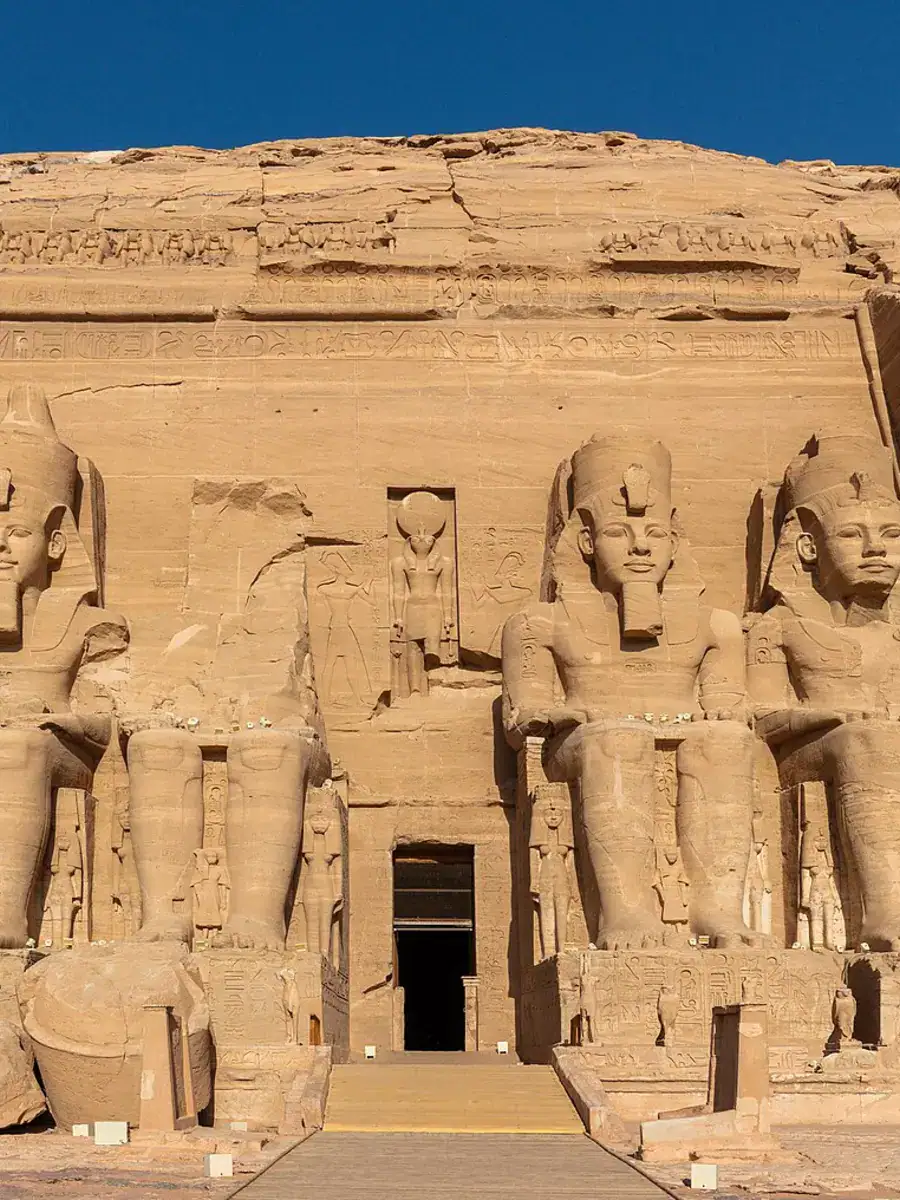
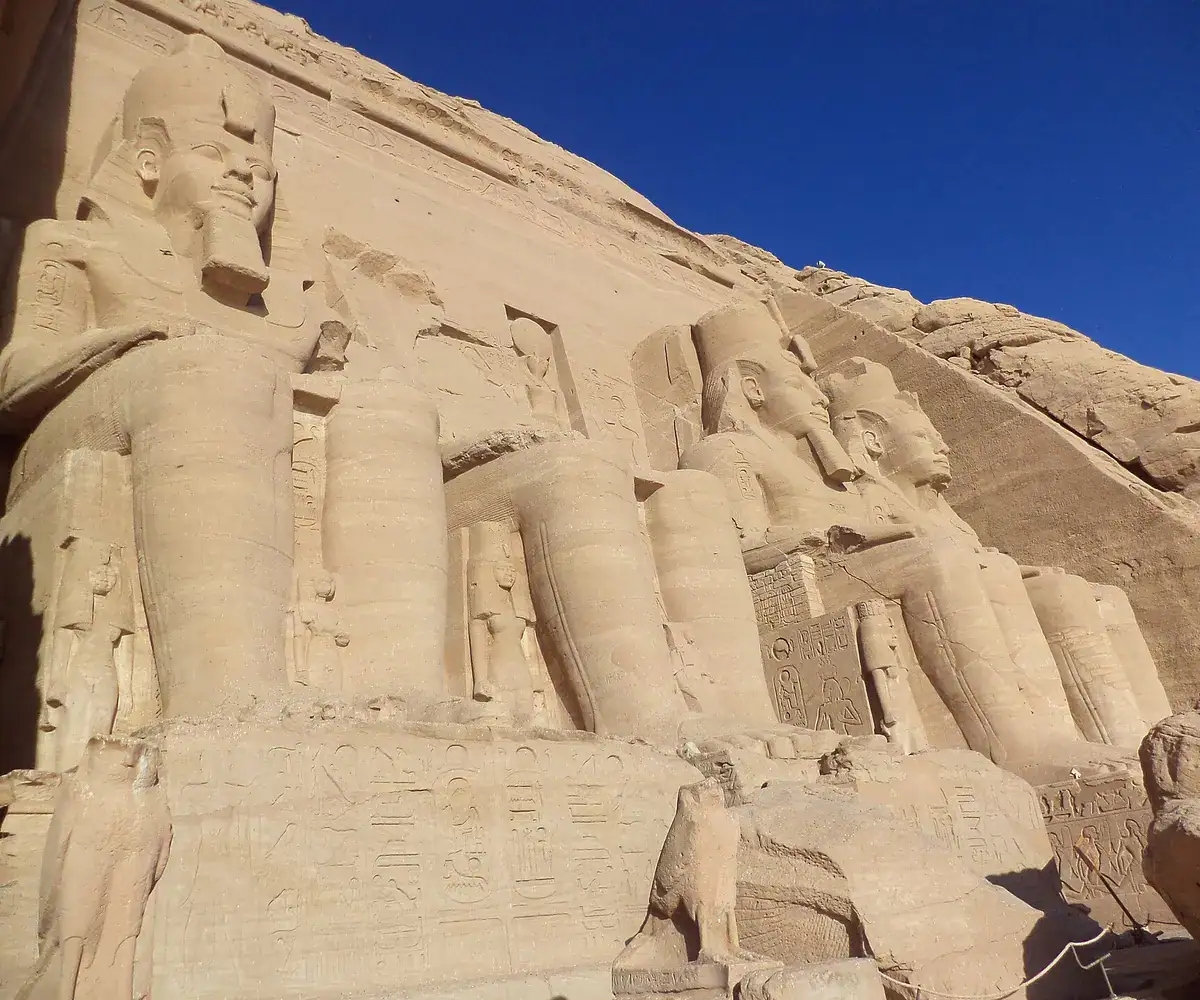
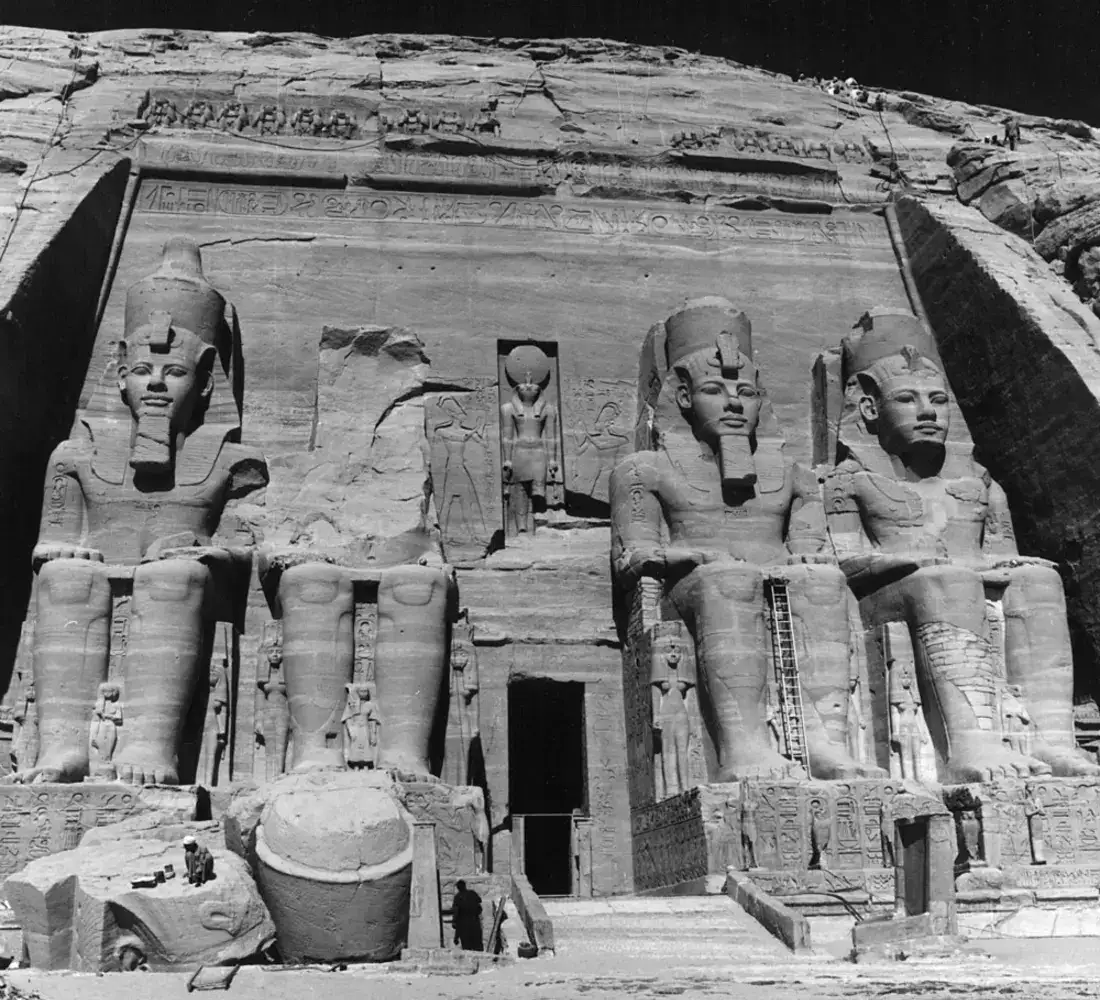
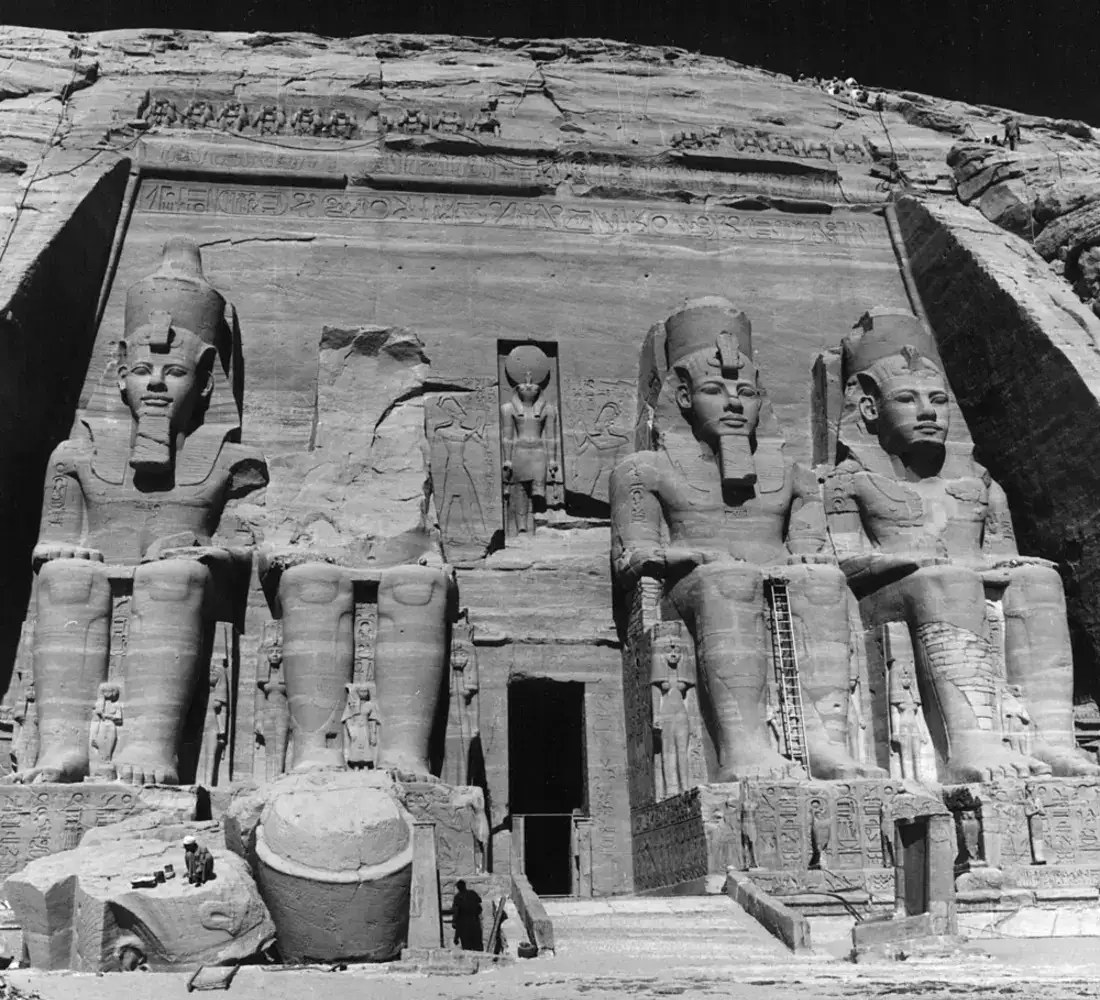
Abu Simbel Temple is a monumental ancient Egyptian rock-cut temple complex in Nubia, southern Egypt. Ramesses II commissioned the two temples during the 19th Dynasty in the 13th century BCE. The Great Temple is dedicated to major Egyptian deities and the deified king, while the neighboring Small Temple honors Hathor and Queen Nefertari. The complex is also famous for its twice-yearly solar illumination and for the international rescue project that relocated the temples during the 1960s.
Abu Simbel Temple: Power Carved into Rock
Abu Simbel Temple lies in southern Egypt near Lake Nasser and the Sudanese border. From Aswan, travelers usually continue south by road or domestic flight to reach this extraordinary archaeological complex.
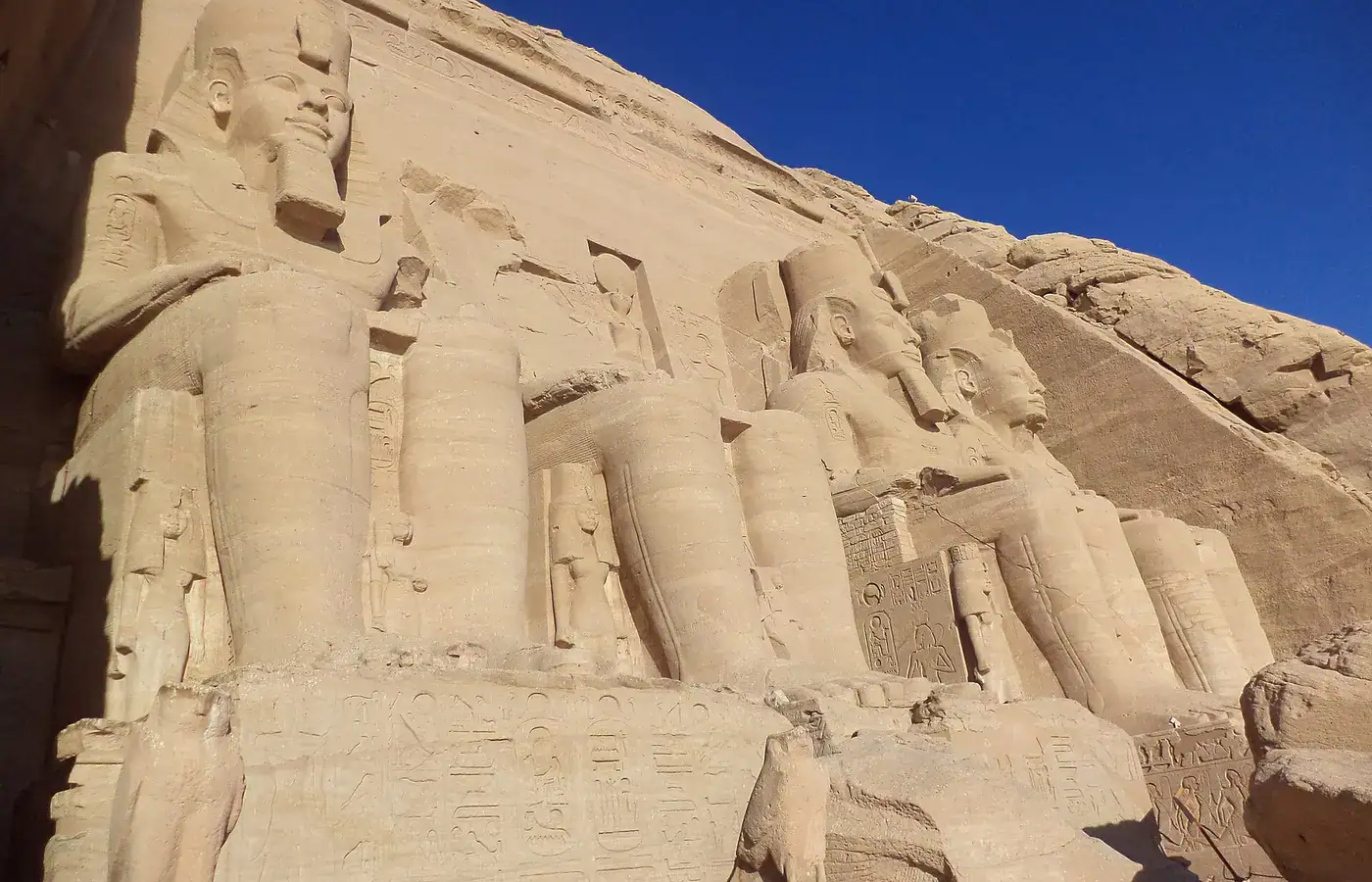
First, Ramesses II ordered the two temples to be cut into Nubian sandstone during the 13th century BCE. Moreover, the complex combines royal ideology, religious worship, monumental art and a commanding frontier location.
The Great Temple honors Amun-Re, Re-Horakhty, Ptah and the deified Ramesses II. Meanwhile, the neighboring Small Temple honors Hathor and Queen Nefertari.
Today, Abu Simbel also represents one of the greatest achievements in international heritage conservation. Between 1964 and 1968, specialists dismantled and reconstructed the temples on higher ground to protect them from the rising waters associated with the Aswan High Dam.
Abu Simbel forms part of the UNESCO Nubian Monuments from Abu Simbel to Philae World Heritage property.
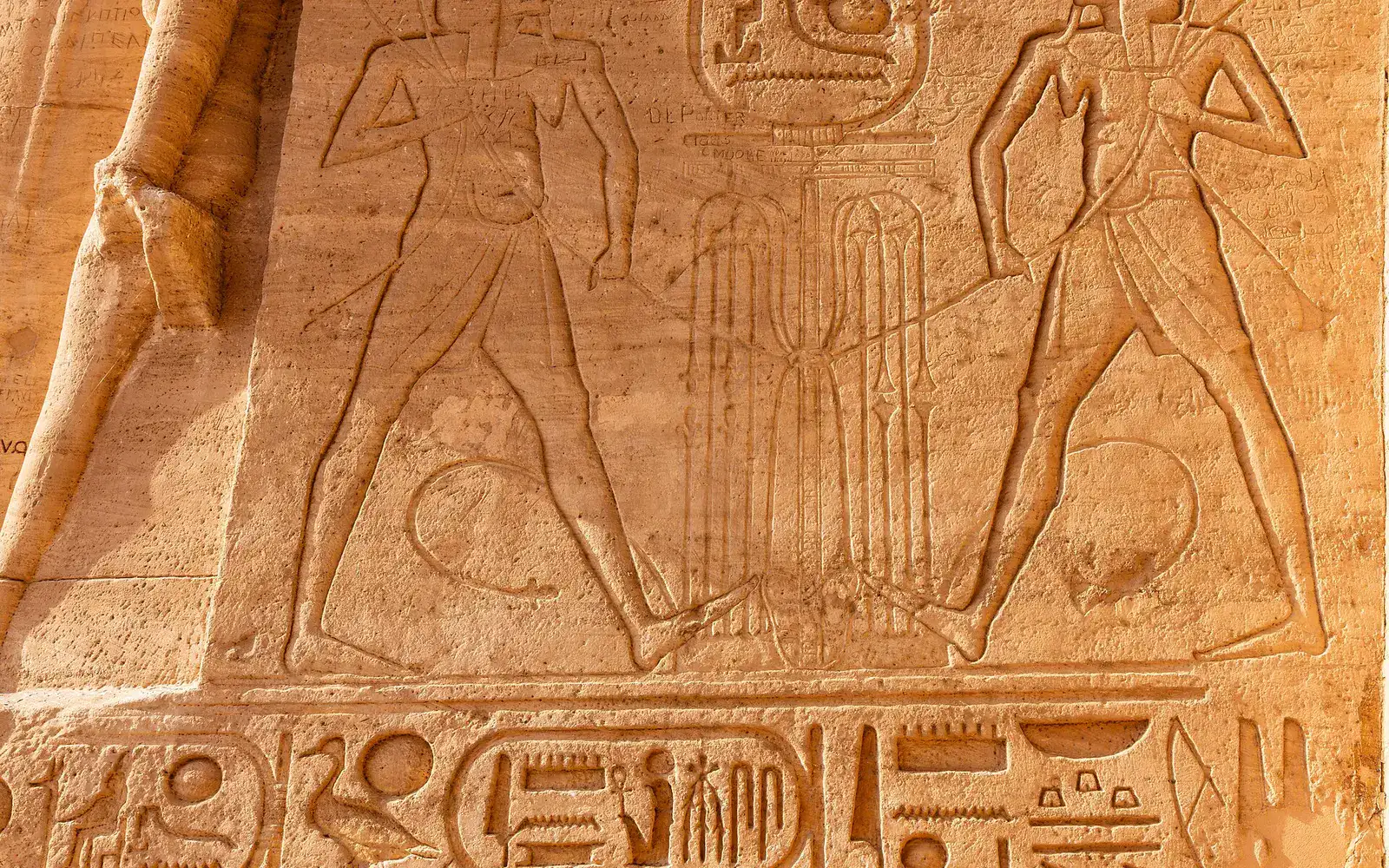
Symbols of Ramesses II’s Authority
Beyond the colossal façade, royal names, bound prisoners and ritual scenes project the authority of Ramesses II. Therefore, the decoration does more than tell a story: it presents the pharaoh as a divinely protected ruler responsible for maintaining order in Egypt and Nubia.
Ramesses II and the History of Abu Simbel Temple
Ramesses II commissioned the Great Temple during Egypt’s 19th Dynasty. Although exact construction dates remain approximate, the monument belongs to the great building program of his long reign.
Politically, the enormous façade projected royal authority toward Nubia. Religiously, however, the temple functioned as a sacred house where priests honored major gods together with the divine form of the king.
In addition, the walls celebrate royal power through scenes of warfare, ritual and offerings. Consequently, the decoration presents Ramesses not simply as a historical king but as the defender of cosmic order.
- Pharaoh: Ramesses II
- Dynasty: 19th Dynasty
- Main deities: Amun-Re, Re-Horakhty and Ptah
- Royal theme: the deified Ramesses II
- Location: Nubia in southern Egypt
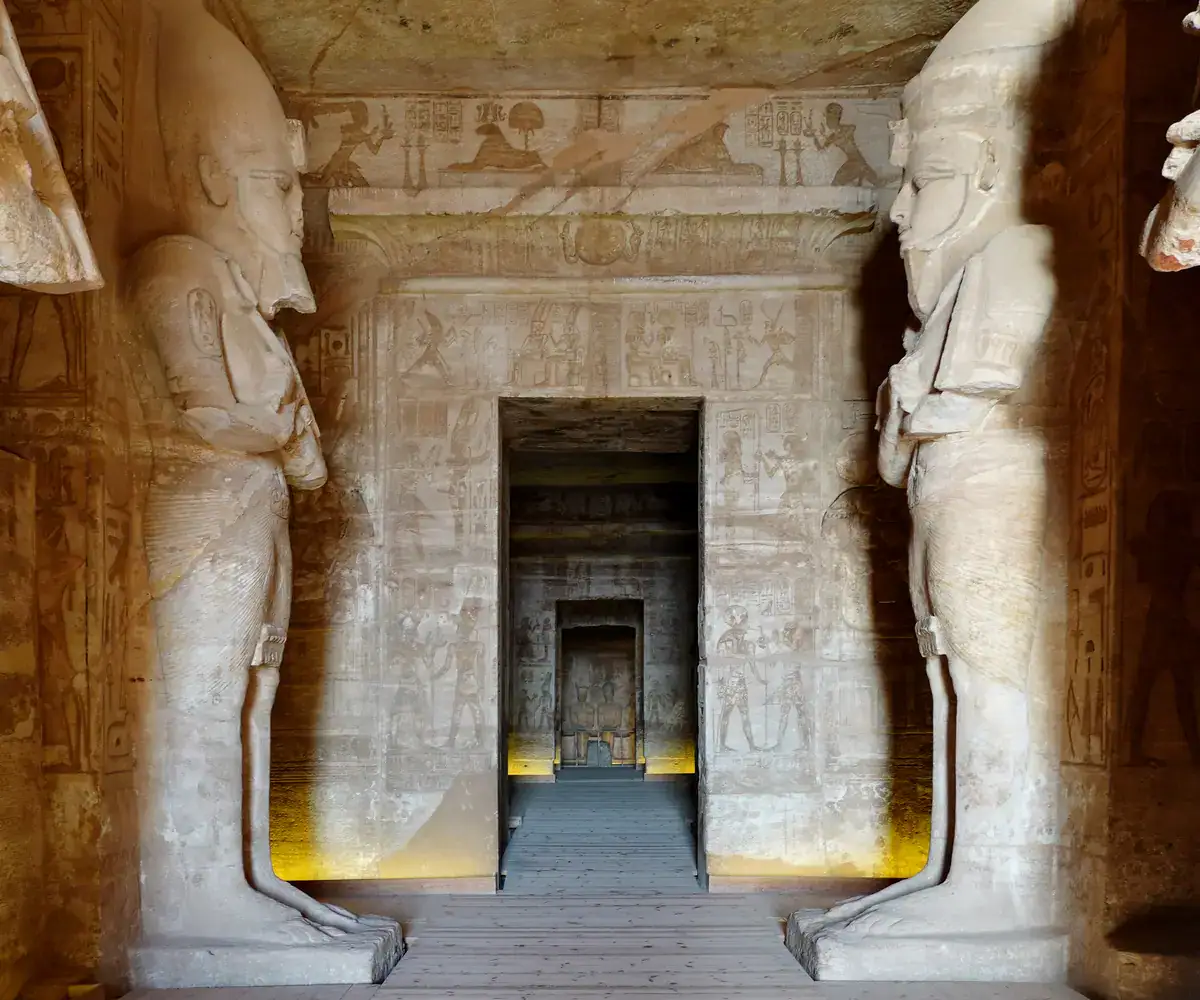
Hypostyle Hall, Battle Reliefs and Sanctuary
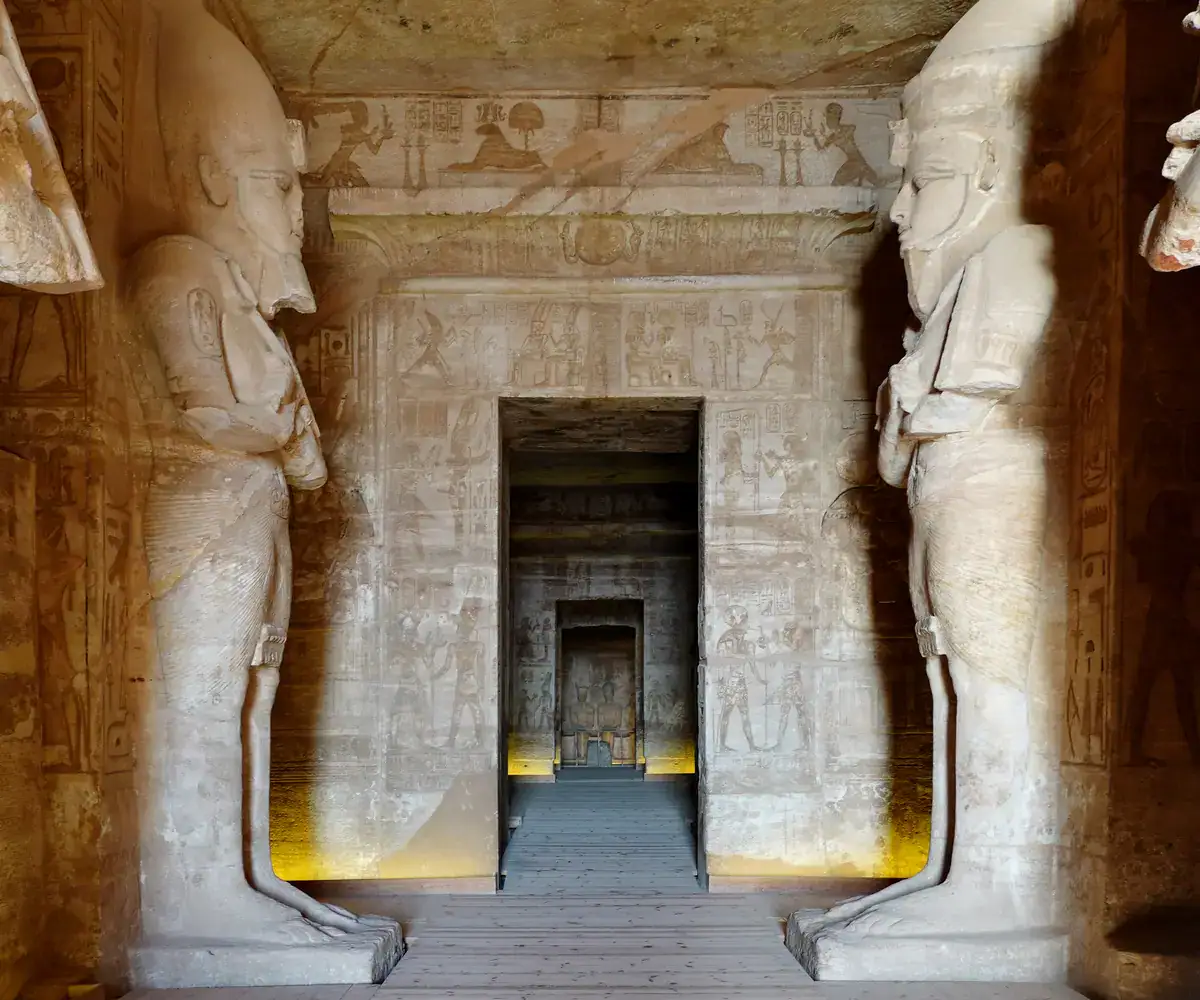
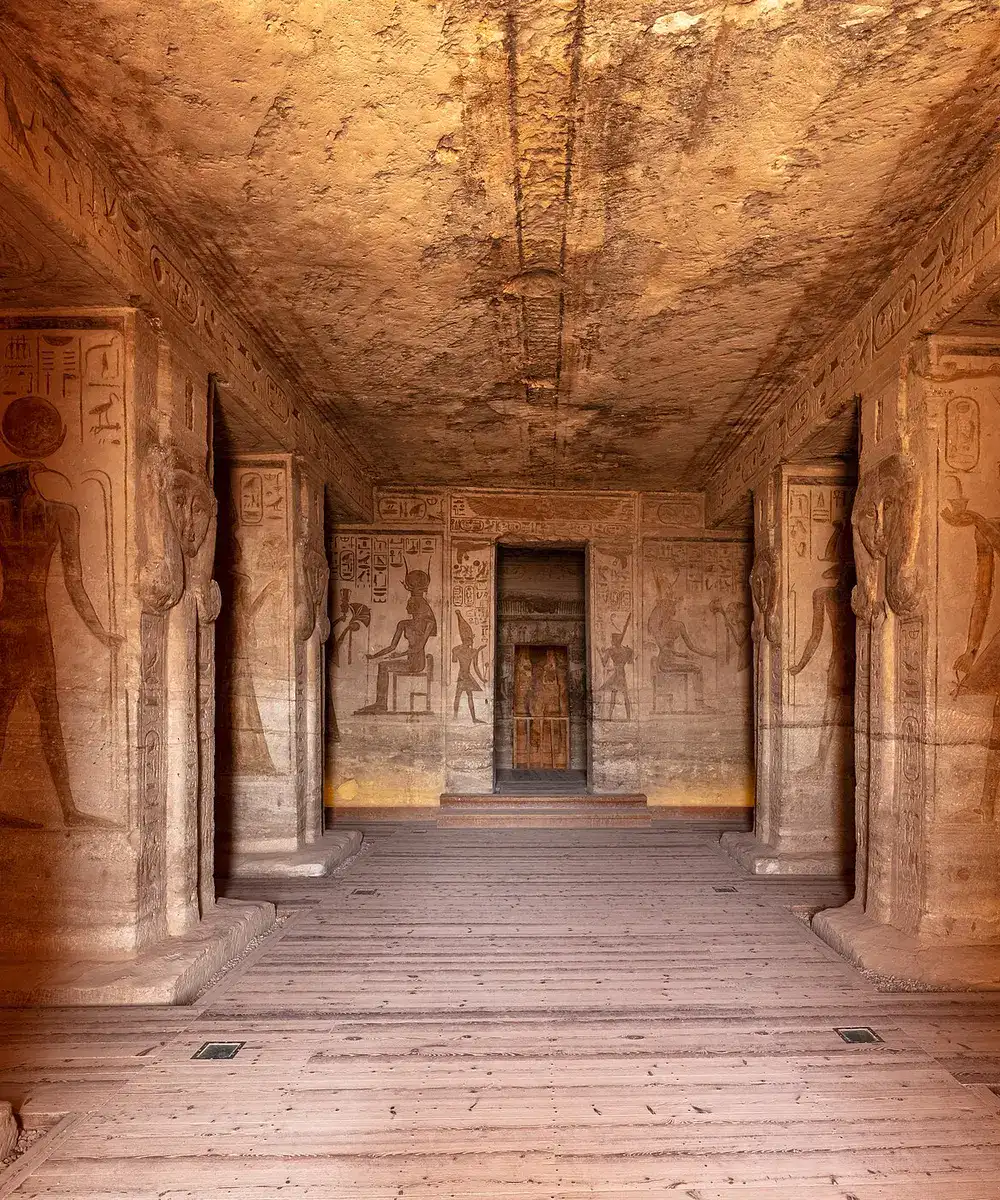
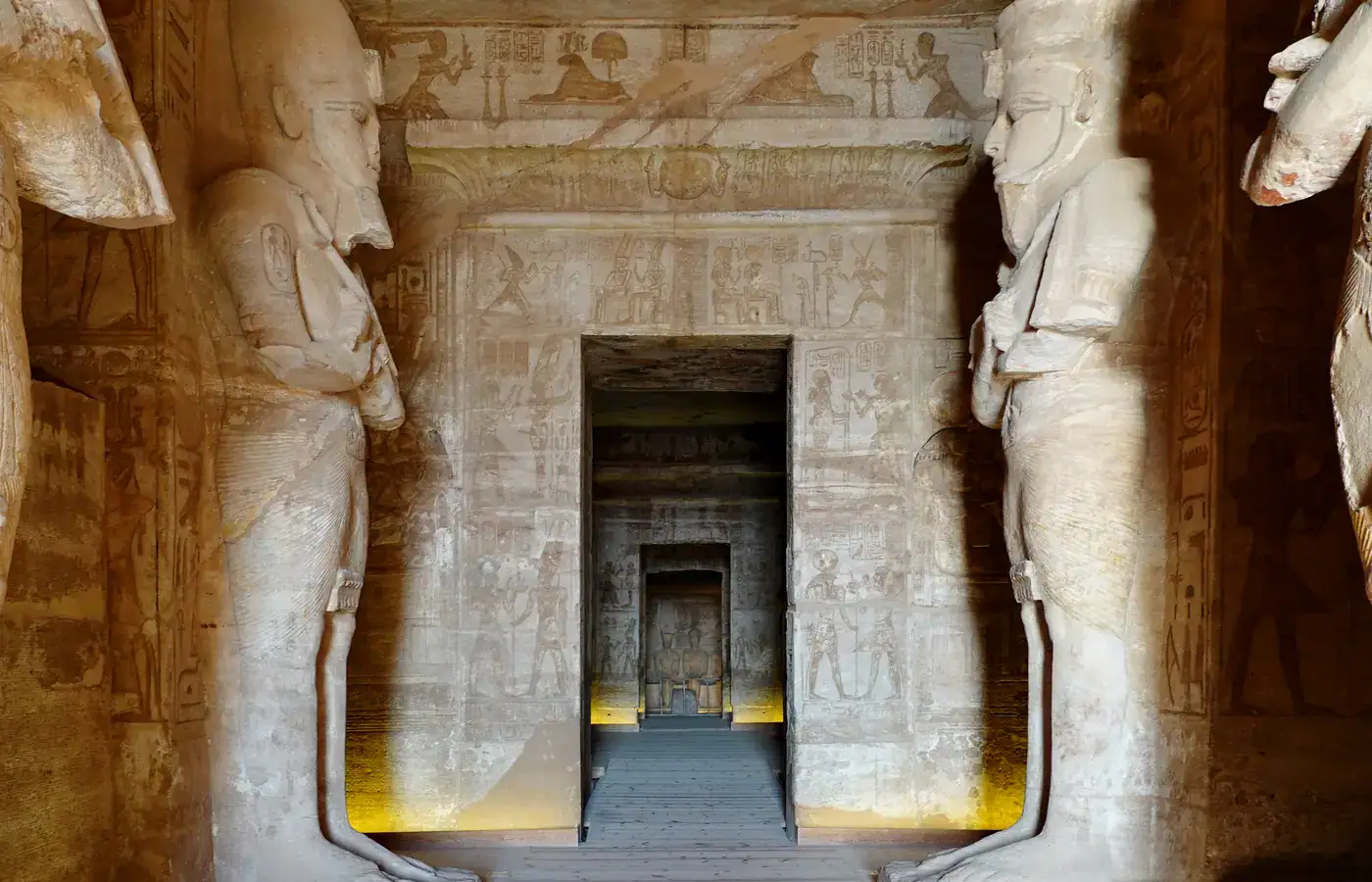
First, visitors enter a vast pillared hall lined with eight Osiride figures of Ramesses II. Consequently, the columns, ceiling and walls create a ceremonial route that gradually narrows toward the sanctuary.
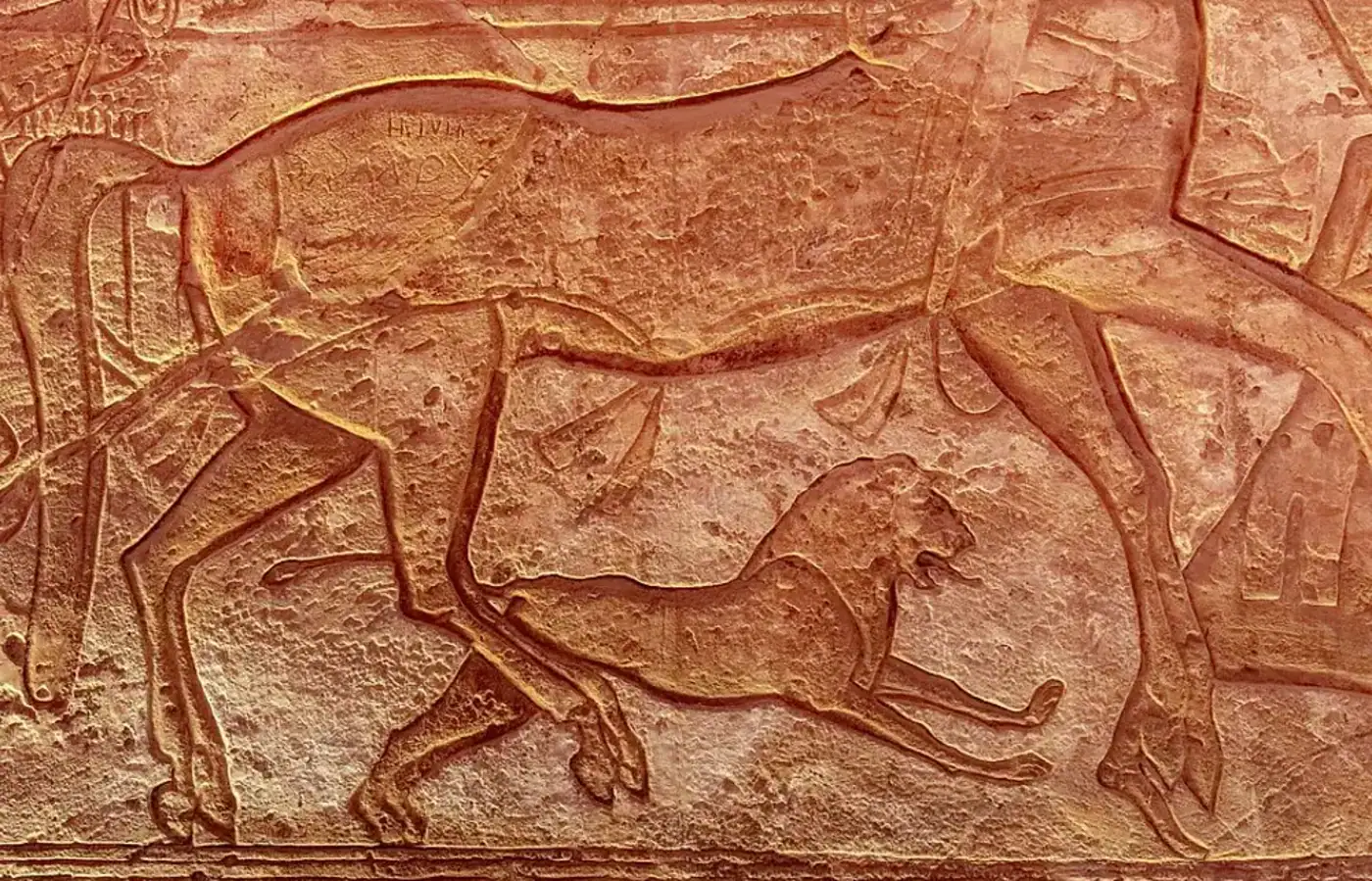
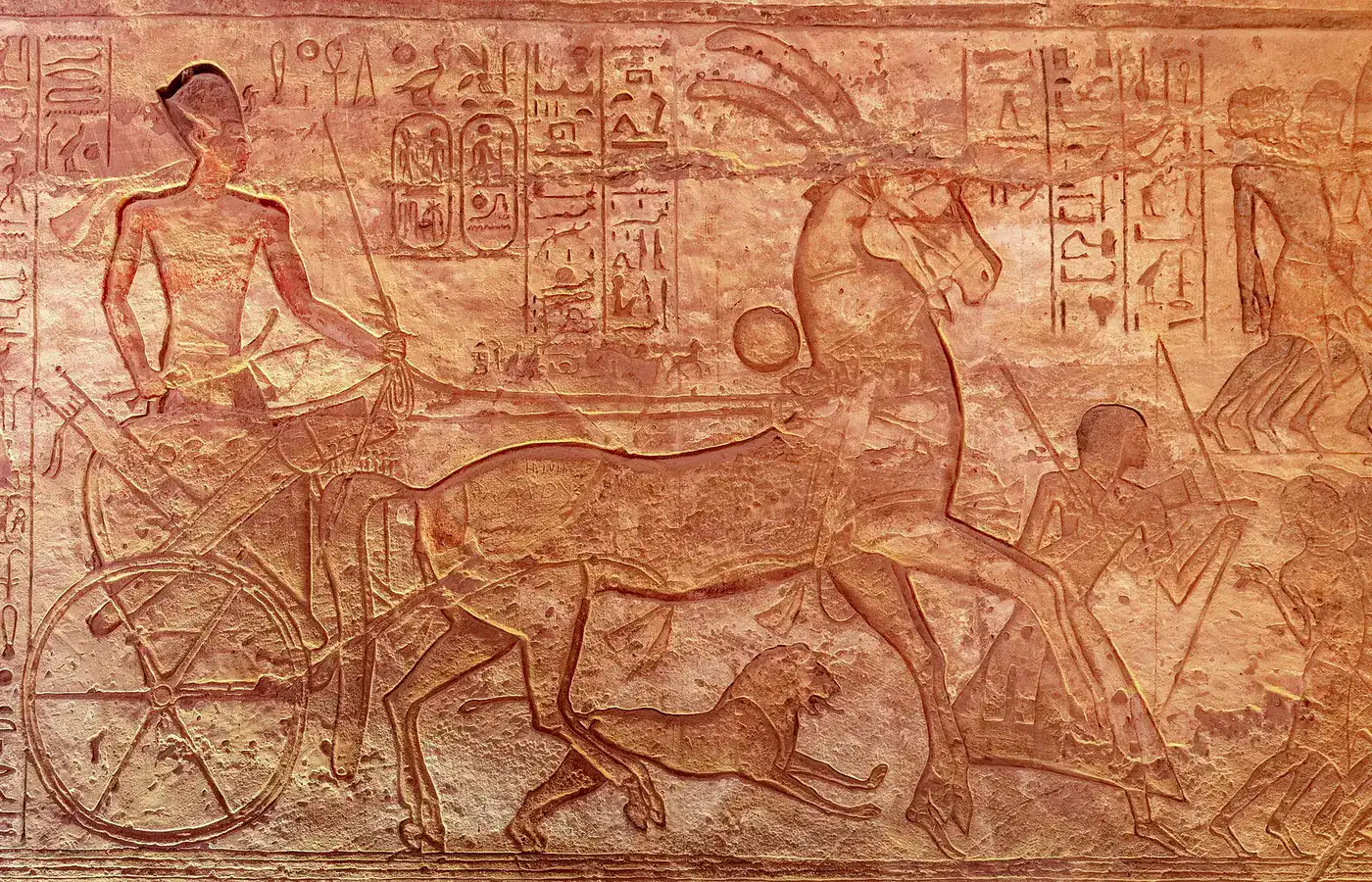
Meanwhile, reliefs portray the Battle of Kadesh against Hittite forces. Ramesses appears charging in his chariot, overcoming enemies and receiving divine support. Comparable royal battle scenes also survive at the Ramesseum Temple on Luxor’s West Bank.
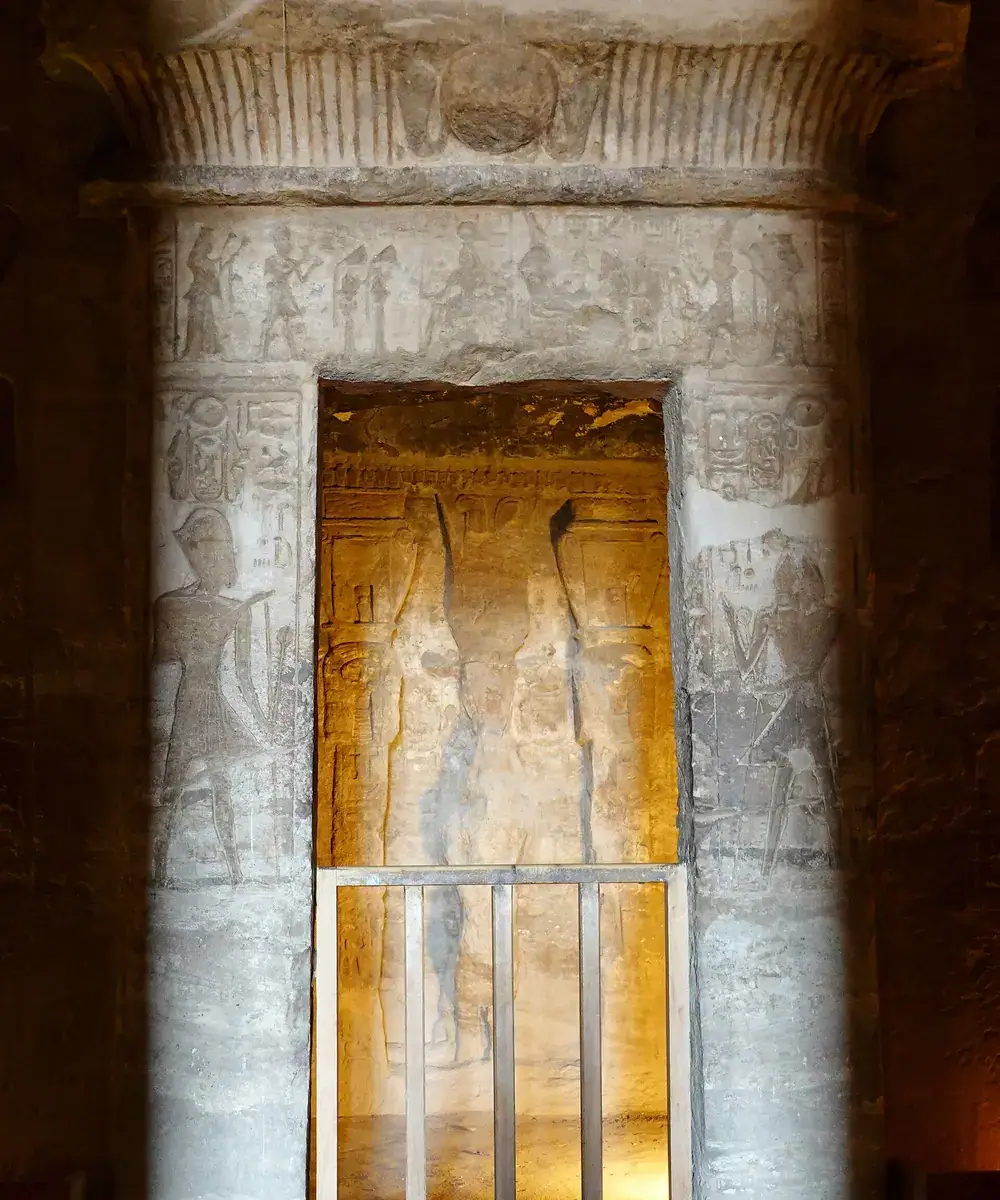
Finally, the temple axis reaches four seated figures representing Ptah, Amun-Re, the deified Ramesses II and Re-Horakhty. This innermost chamber becomes the focus of the celebrated solar alignment.
At Abu Simbel, ancient Egyptian architecture, royal ideology and the Nubian landscape come together in one of the most extraordinary monuments of Ramesses II.
Abu Simbel Sun Festival and Solar Alignment
Twice each year, around 22 February and 22 October, the rising sun travels through the Great Temple and reaches the sanctuary. As a result, sunlight illuminates three of the seated figures while Ptah, a deity associated with darkness and the underworld, remains comparatively shadowed.
Consequently, these dates attract visitors for what is commonly known as the Abu Simbel Sun Festival. Weather, horizon conditions and the relocated setting can affect the exact appearance and timing.
Popular accounts sometimes connect the two dates with important events in the life of Ramesses II. Nevertheless, those specific interpretations should be treated cautiously because direct ancient evidence is limited.
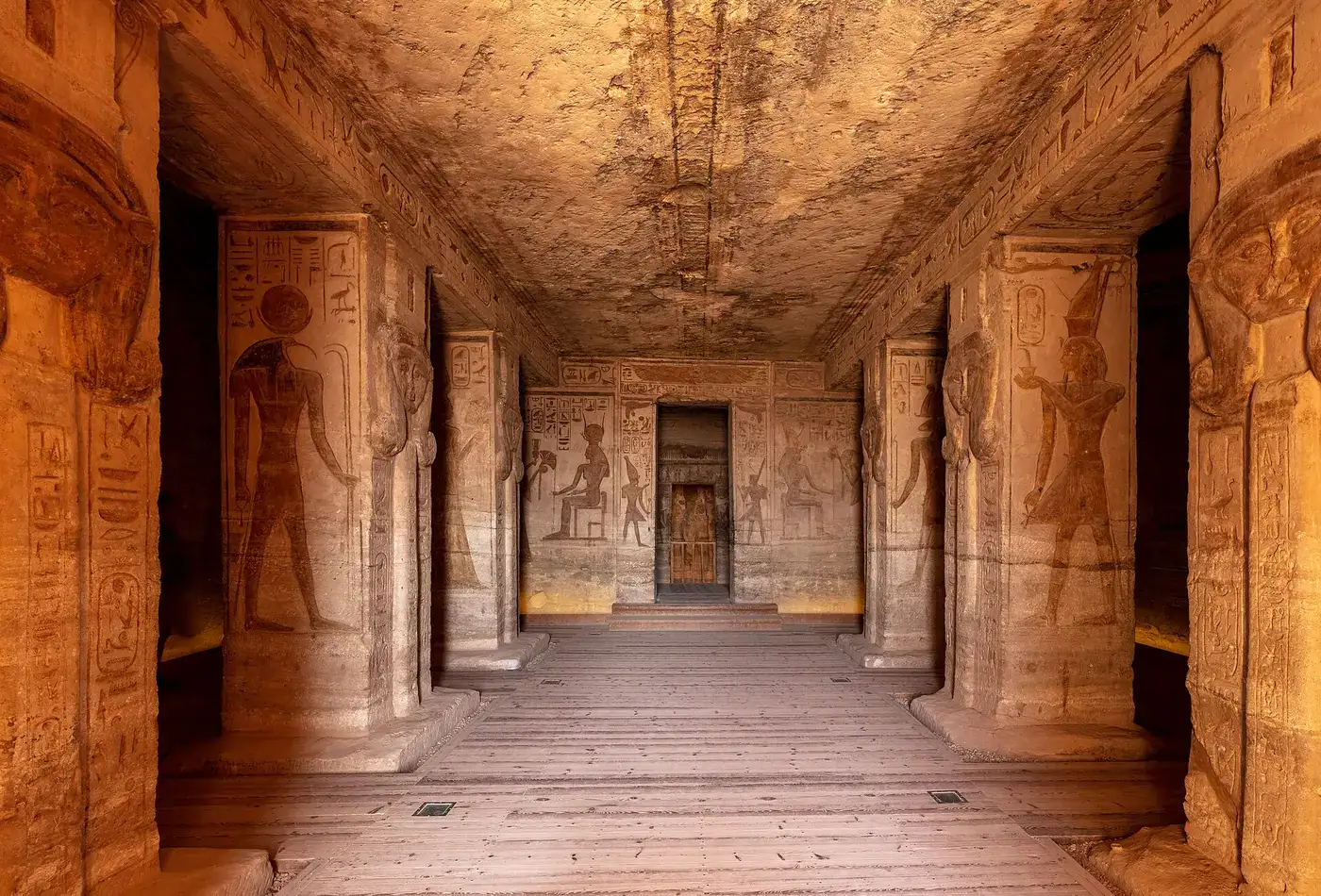
Nefertari’s Temple at Abu Simbel
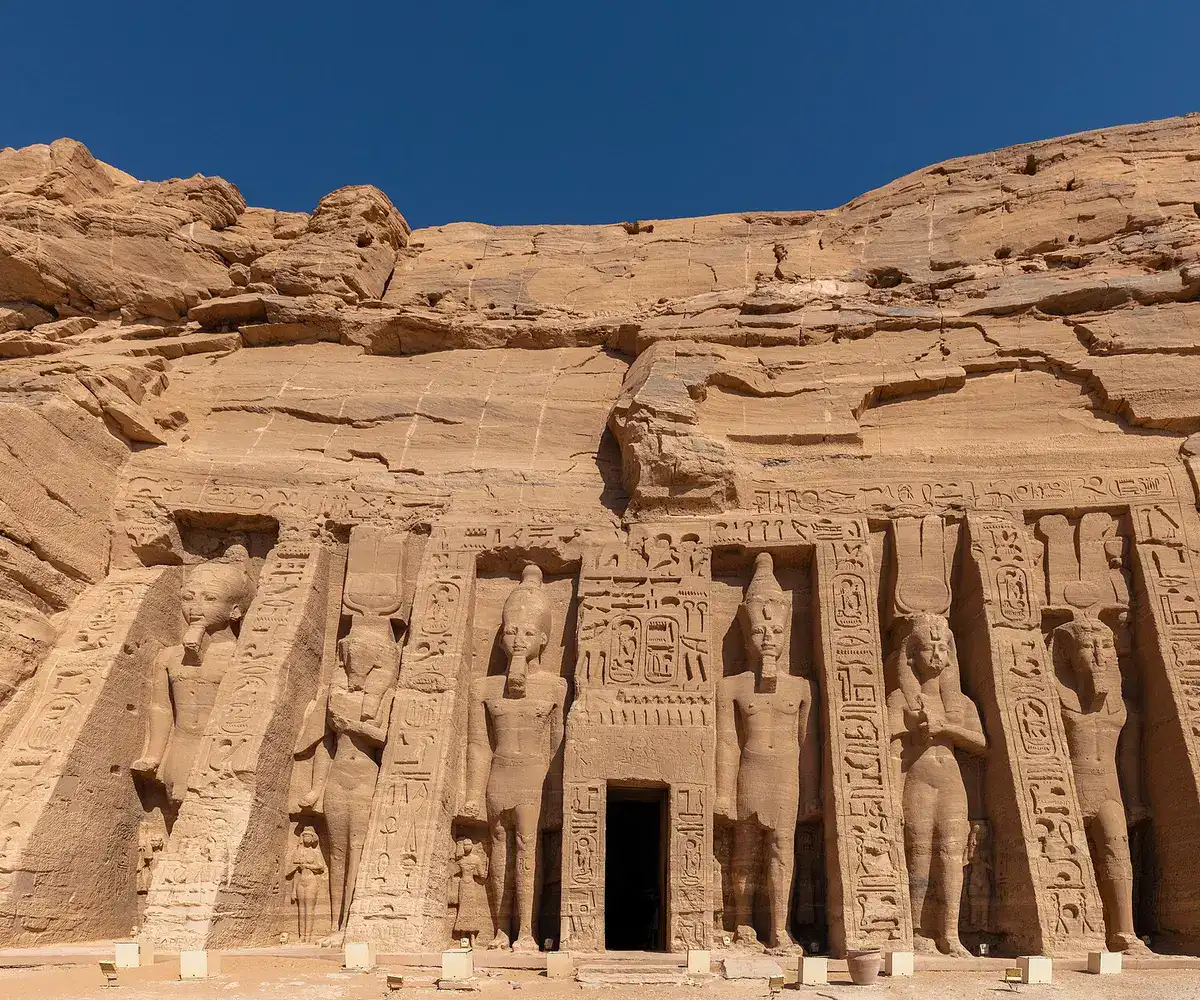
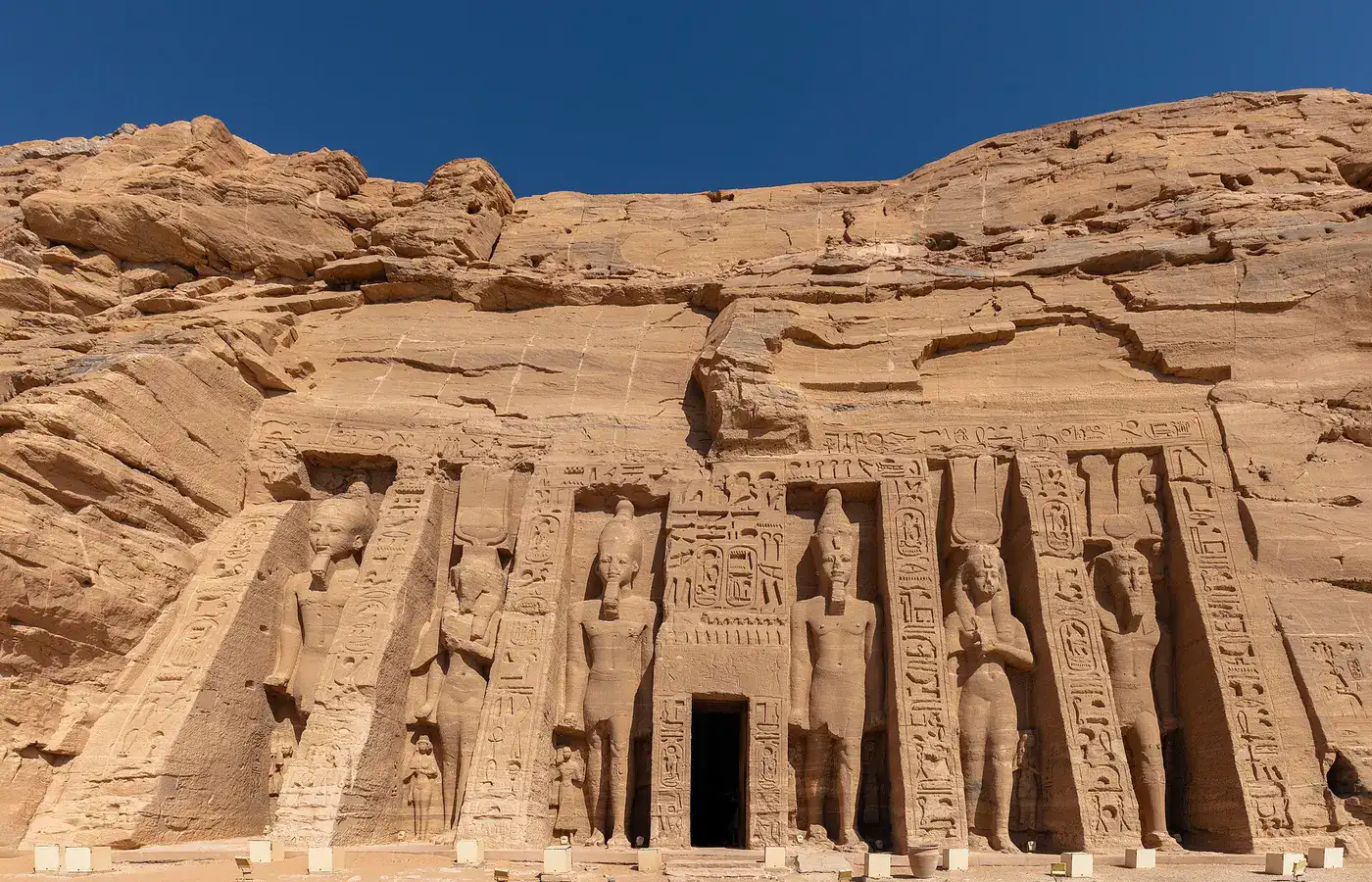
North of the Great Temple stands another rock-cut sanctuary dedicated to Hathor and Ramesses II’s Great Royal Wife, Queen Nefertari.
Six standing figures—four representing Ramesses and two representing Nefertari—dominate its façade. Remarkably, the queen appears at a monumental scale comparable with her husband.
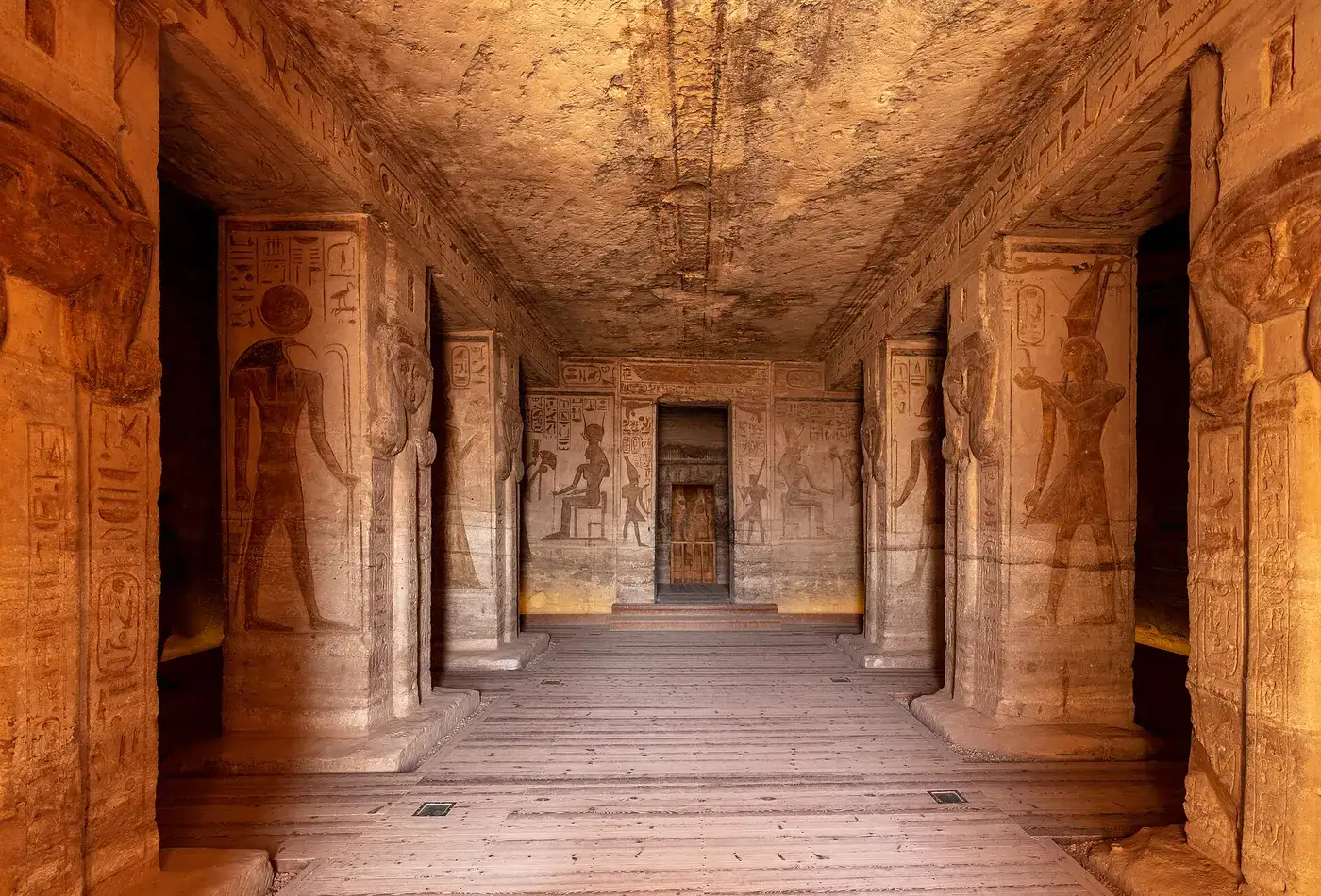
Inside, Hathor-headed columns and reliefs show the royal couple presenting offerings to Egyptian deities. Therefore, the Small Temple both celebrates Nefertari and associates the queen with the goddess Hathor.
How UNESCO Helped Save Abu Simbel Temple
Construction of the Aswan High Dam threatened Nubian archaeological sites with the rising waters of the new reservoir. Therefore, an international campaign was launched to preserve major monuments.
Beginning in the 1960s, specialists cut the Abu Simbel temples into large blocks. Afterwards, the sections were moved and carefully reconstructed on higher ground near their original location.
The reconstructed temples opened at the new site in 1968. Later, Abu Simbel became part of the UNESCO World Heritage property Nubian Monuments from Abu Simbel to Philae, inscribed in 1979.
For authoritative heritage information, see the official UNESCO World Heritage listing .
Battle of Kadesh Reliefs at Abu Simbel
The Great Temple preserves a dramatic monumental version of the Battle of Kadesh, fought between Egyptian and Hittite forces.
Ramesses appears larger than surrounding figures. Moreover, ordered registers, hieroglyphic texts and repeated enemies guide viewers through a carefully constructed royal narrative.
Although the historical campaign was more complex than the monumental version suggests, the temple presents Ramesses as victorious and divinely protected. Thus, the scenes are important evidence for both ancient warfare and Egyptian royal ideology.
Abu Simbel Temple Gallery
Visiting Abu Simbel Temple from Aswan
Visit Early in the Day
First, an early visit usually provides more comfortable conditions, especially during warmer months.
Allow About 2–3 Hours
In addition, allow enough time for both temples, their interiors, viewpoints and the surrounding archaeological area.
Road or Domestic Flight
Most travelers reach Abu Simbel from Aswan. Therefore, the excursion should be planned around transport schedules and your wider Egypt itinerary.
Check Current Official Information
Finally, opening hours, ticket prices and visitor rules can change, so confirm current information before departure.
Egypt Tours Including Abu Simbel Temple
Want to visit Abu Simbel as part of an organized journey? First, choose a dedicated overnight trip from Aswan. Alternatively, include Abu Simbel within a longer private Egypt itinerary combining Cairo, Alexandria, Aswan, Luxor and the Red Sea.
2 Day Abu Simbel Tour from Aswan
Travel privately from Aswan to Abu Simbel, stay overnight and explore the Great Temple of Ramesses II and the Temple of Hathor and Queen Nefertari with an Egyptologist guide.
View 2-Day Abu Simbel Tour →
13 Day Egypt Tour with Abu Simbel
Combine Cairo, Alexandria, Aswan, Abu Simbel and Luxor before finishing beside the Red Sea in Hurghada. Abu Simbel is included in the itinerary as a dedicated excursion from Aswan.
View 13-Day Egypt Tour →Abu Simbel Temple Map
Abu Simbel in Southern Egypt
Abu Simbel lies in Nubia in southern Egypt, near Lake Nasser and the Sudanese border. Aswan is the principal gateway for travelers visiting the temples.
Coordinates:
22.3369° N, 31.6258° E
Abu Simbel Temple FAQ
Experience Abu Simbel Temple
Stand beneath the colossal statues of Ramesses II, enter the ancient rock-cut halls and discover one of Egypt’s greatest archaeological monuments with a private journey designed around your travel dates.