
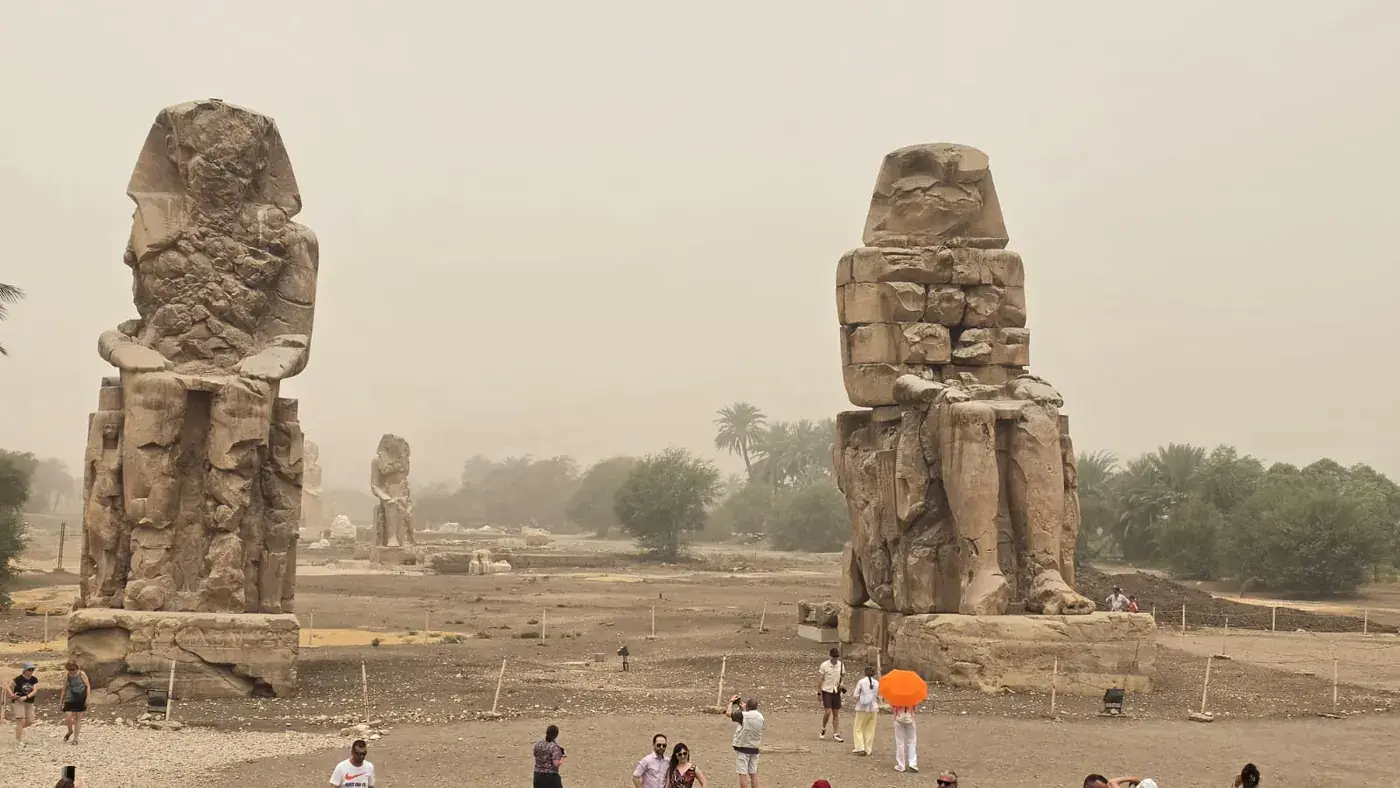
Colossi of Memnon in Luxor
Discover the monumental statues of Amenhotep III, his lost mortuary temple and the ancient story of the “Singing Memnon.”
What Are the Colossi of Memnon?
Colossi of Memnon in Luxor are two enormous seated statues of Pharaoh Amenhotep III on the West Bank. For more than three thousand years, these monumental figures have stood within the archaeological landscape of ancient Thebes.
Although they are known today as the Colossi of Memnon, both statues actually represent Amenhotep III, one of the most important rulers of Egypt’s 18th Dynasty. Originally, they stood at the entrance to his vast mortuary temple at Kom el-Hettan.
Today, the colossi are among the most recognizable monuments on the Luxor West Bank. Moreover, they fit naturally into a wider exploration of Luxor and the monuments of the Theban necropolis.

The monumental statues of Amenhotep III on Luxor’s West Bank.
Amenhotep III and His Monumental Vision
Amenhotep III ruled Egypt during a period of exceptional prosperity in the New Kingdom. In addition, his reign became known for monumental architecture, royal art, international diplomacy and an extraordinary number of statues.
His mortuary temple on the West Bank was created on an immense scale. Therefore, the Colossi of Memnon were not isolated monuments. Instead, they formed part of a much larger ceremonial landscape and represented the king seated majestically on his throne.
Furthermore, smaller royal figures were incorporated into the colossal compositions. As a result, the statues connected the king not only with royal power, but also with his family and the sacred ideology of his reign. For a wider look at his reign, monuments and legacy, explore our Amenhotep III guide.
The two famous statues are only part of a much larger archaeological complex connected with the mortuary temple of Amenhotep III.
The Lost Mortuary Temple Behind the Colossi
Behind the Colossi of Memnon once stood the enormous mortuary temple of Amenhotep III. In fact, the complex formed an important part of the sacred landscape of ancient Thebes.
A Monumental Entrance
First, the seated colossi marked the approach to the royal temple. Consequently, their immense scale projected the power and divine status of Amenhotep III across the Theban landscape.
A Vast Sacred Complex
Beyond the entrance, the temple contained monumental gateways, courts, columns and an extraordinary collection of royal and divine statues, including numerous images of Sekhmet.
Centuries of Change
Over time, natural damage, flooding, stone reuse and centuries of exposure transformed the temple. Nevertheless, the two enormous entrance statues remained among its most visible surviving monuments.
Why Was It Called the “Singing Memnon”?
During the Greco-Roman period, one of the statues became famous for an unusual sound reportedly heard around sunrise. Ancient visitors associated the phenomenon with Memnon, a legendary figure from Greek tradition.
However, the sound may have resulted from physical changes in the damaged stone as temperatures changed after sunrise. For ancient travellers, the phenomenon had a very different meaning. Therefore, hearing the statue became an extraordinary and memorable experience.
Moreover, Greek and Roman visitors travelled to the site, and some recorded their experiences in inscriptions on the monument. As a result, this later tradition helped establish the name Colossi of Memnon, even though the statues themselves depict Amenhotep III.
Both colossal figures represent Pharaoh Amenhotep III.
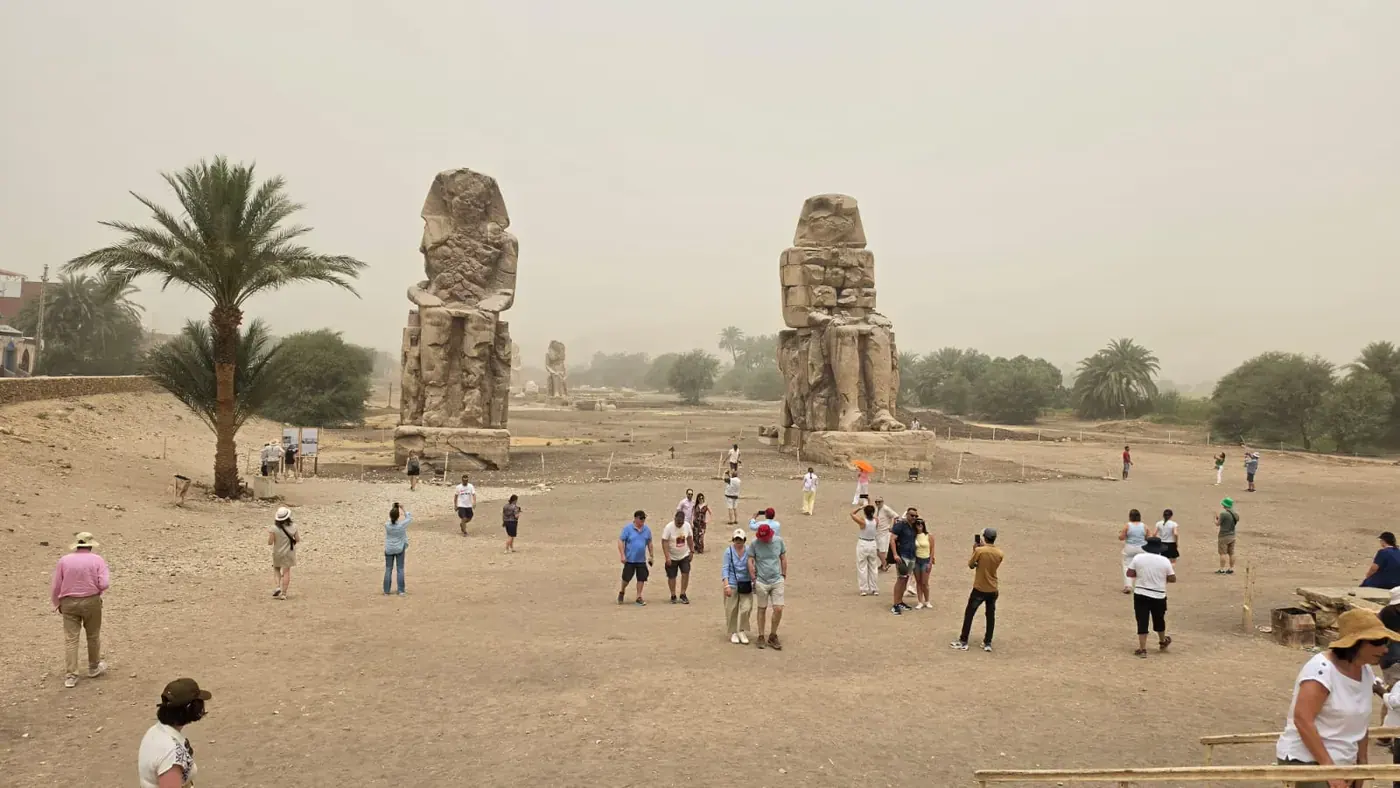
The Colossi of Memnon within the archaeological landscape of Luxor’s West Bank.
Restoring the Temple of Amenhotep III
Today, archaeological and conservation work continues around the temple of Amenhotep III. Consequently, the wider site is revealing far more than the two famous seated colossi alone.
Archaeologists have documented architectural elements, monumental sculpture and numerous fragments from the original temple complex. In addition, conservation teams have worked to protect surviving material and understand how the enormous royal monument was originally arranged.
Meanwhile, recovered sculptures and architectural remains help researchers reconstruct parts of the ceremonial landscape. Therefore, visitors may see conservation activity within the wider archaeological area as work progresses.
Conservation Around the Colossi
The Colossi of Memnon have survived for thousands of years; however, the archaeological site around them continues to change as research and conservation advance.
For this reason, scaffolding or active conservation areas may occasionally be visible during a visit. Rather than diminishing the monument, this work provides a rare glimpse into the continuing effort to preserve the remains of Amenhotep III’s vast memorial complex.
Furthermore, the wider West Bank contains many monuments that place the colossi in their historical context. Visitors can continue to Hatshepsut Temple , Medinet Habu or the Ramesseum .
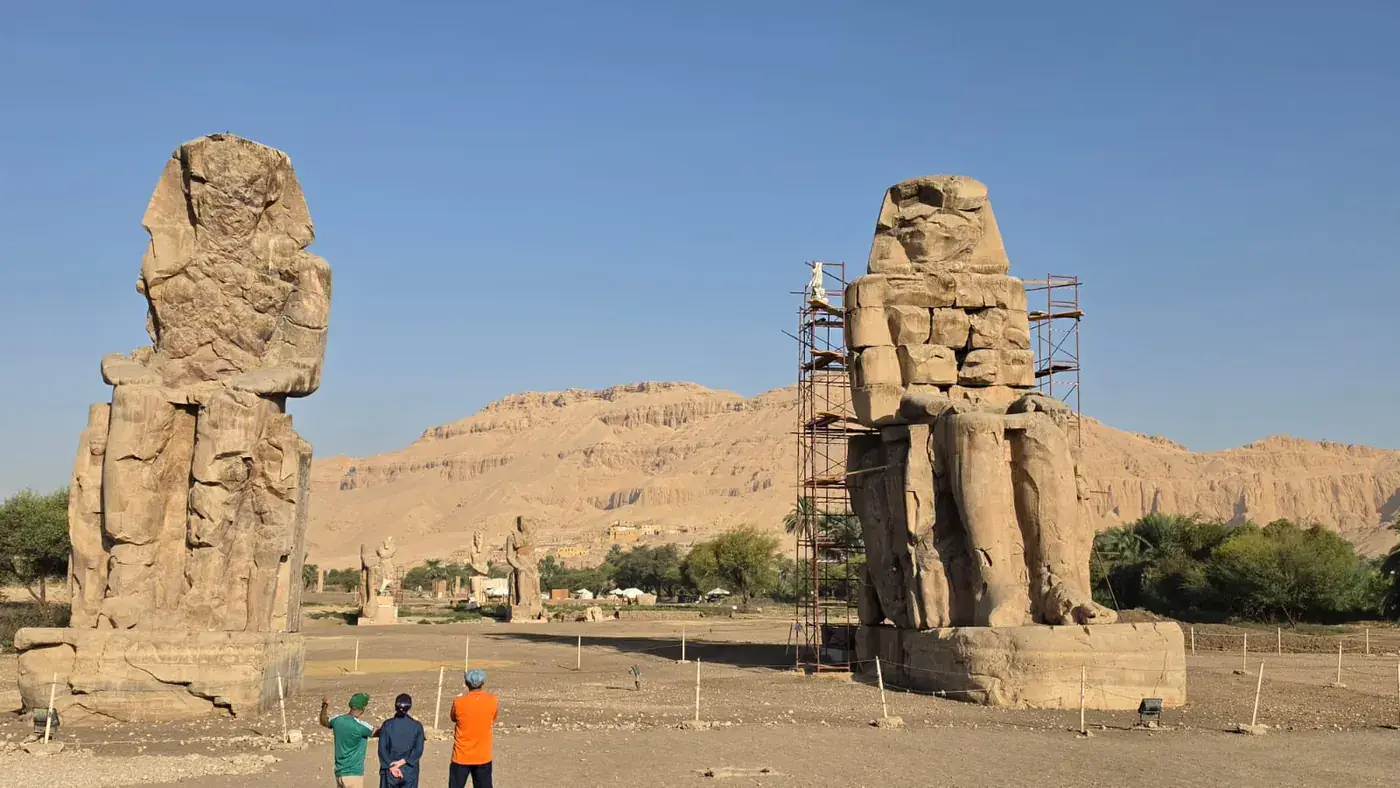
A recent view of conservation work around the Colossi of Memnon.
Visiting the Colossi of Memnon in Luxor
The Colossi of Memnon are conveniently located on Luxor’s West Bank. Therefore, they are easy to include in a day exploring the tombs and temples of ancient Thebes.
Historical Sites Near the Colossi of Memnon
After visiting the statues, continue through the royal tombs and memorial temples that shaped the West Bank of ancient Thebes.
Colossi of Memnon FAQ
Who built the Colossi of Memnon?
Why are they called the Colossi of Memnon?
Did the Colossi of Memnon really sing?
Where are the Colossi of Memnon located?
What happened to the temple behind the statues?
Can I combine the Colossi of Memnon with other Luxor sites?
Discover the Ancient Theban West Bank
Explore the Colossi of Memnon together with Luxor’s royal tombs, temples and archaeological landscapes with local Egypt travel experts.