
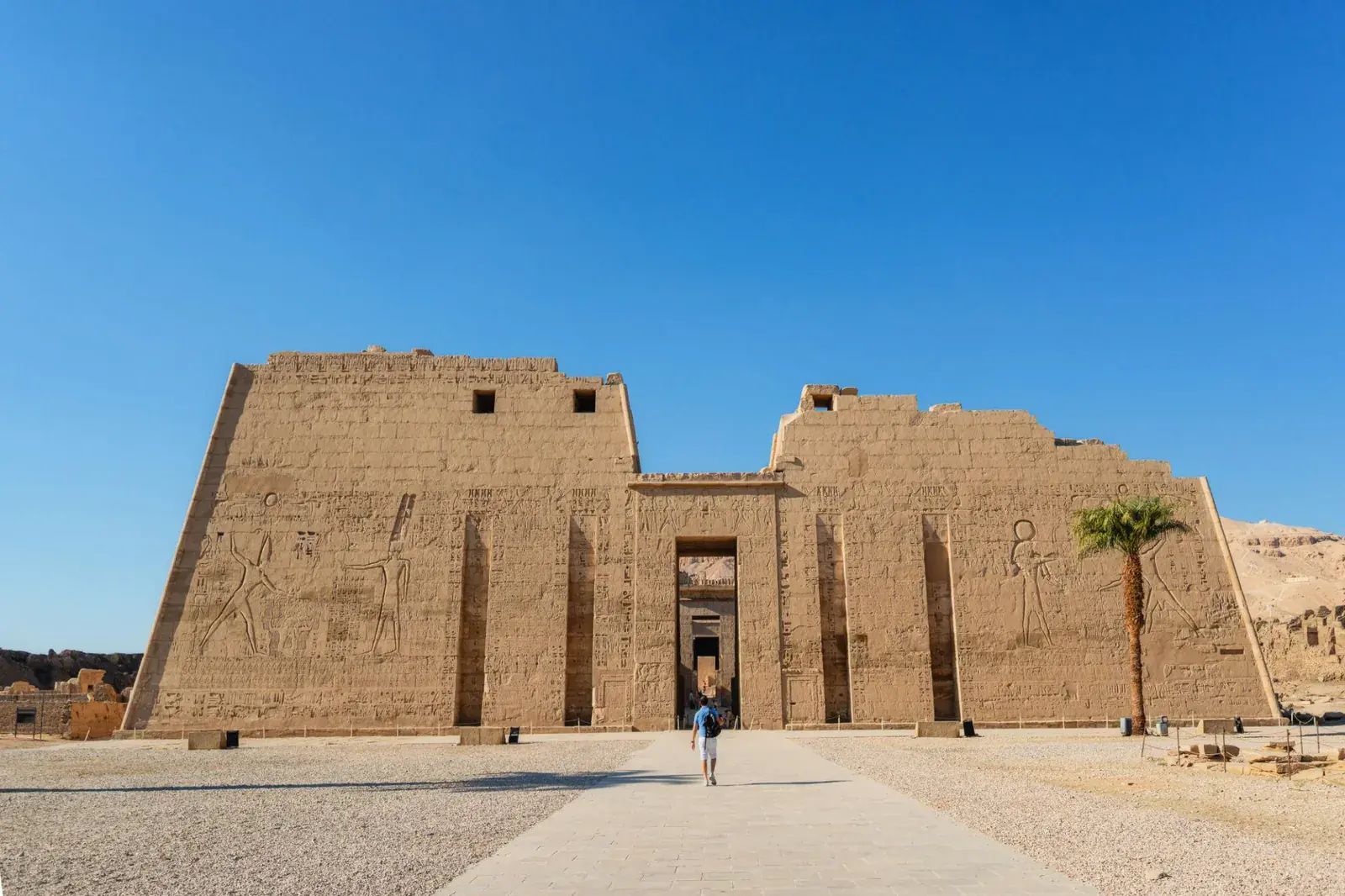
 Medinet Habu Temple
Explore the remarkably preserved mortuary temple of Ramesses III, where monumental pylons, battle reliefs, Osiride statues and vivid ancient colours tell one of the most dramatic stories of New Kingdom Egypt.
Medinet Habu Temple: History and Significance
Medinet Habu Temple is the great mortuary temple of Ramesses III on Luxor’s West Bank. Built for the king’s funerary cult and the worship of Amun, it is one of the most impressive surviving monuments of Egypt’s Twentieth Dynasty.
In addition, its importance goes far beyond architecture. For example, the walls preserve extensive royal inscriptions, religious ceremonies and military narratives, including campaigns against Libyan groups and the celebrated battles involving the Sea Peoples. Therefore, the temple is both a monumental sanctuary and a major historical record of Ramesses III’s reign.
Furthermore, the wider enclosure once contained a royal palace, storerooms, administrative buildings and stables. Consequently, the result was not simply a temple, but a protected institutional complex within the sacred landscape of ancient Thebes.
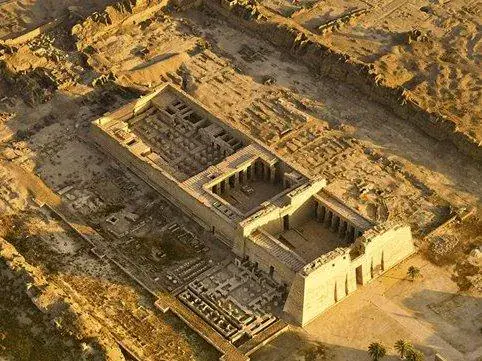
Medinet Habu Temple Architecture: From the First Pylon to the Sanctuary
First, the temple follows a powerful ceremonial sequence. Next, visitors move from the fortified entrance toward pylons and open courts before progressively entering more restricted columned halls and sacred rooms.
High Gate & Enclosure
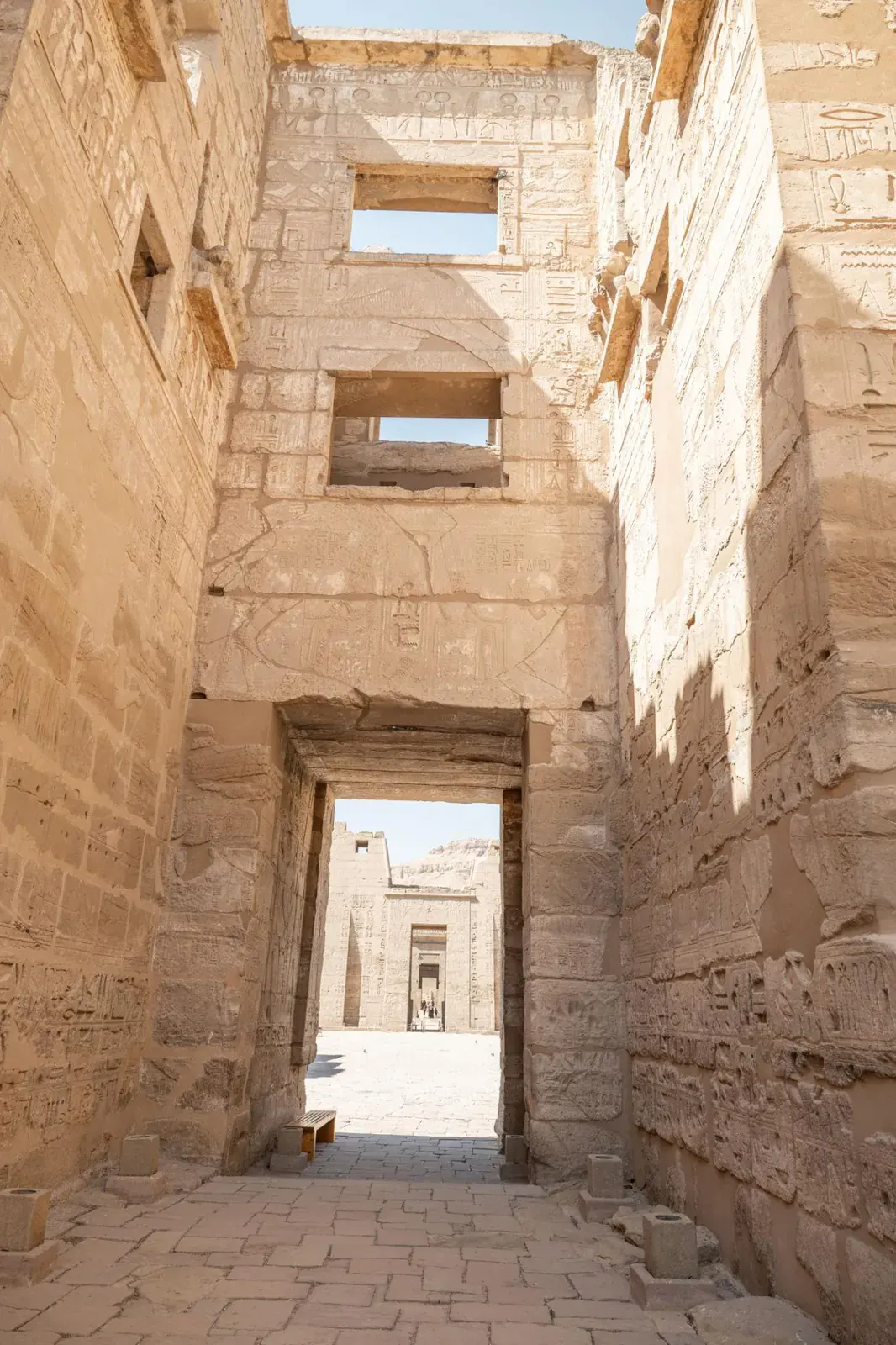
First of all, a massive mud-brick enclosure protected the complex, while the eastern High Gate formed its monumental approach.
Pylons & Courtyards
Next, two great pylons frame successive courts filled with royal imagery, ritual scenes and monumental sculpture.
Columned Halls
Finally, beyond the courts, three columned halls once led toward chapels, the sanctuary and rooms at the heart of the temple.


Ramesses III and the Medinet Habu Battle Reliefs
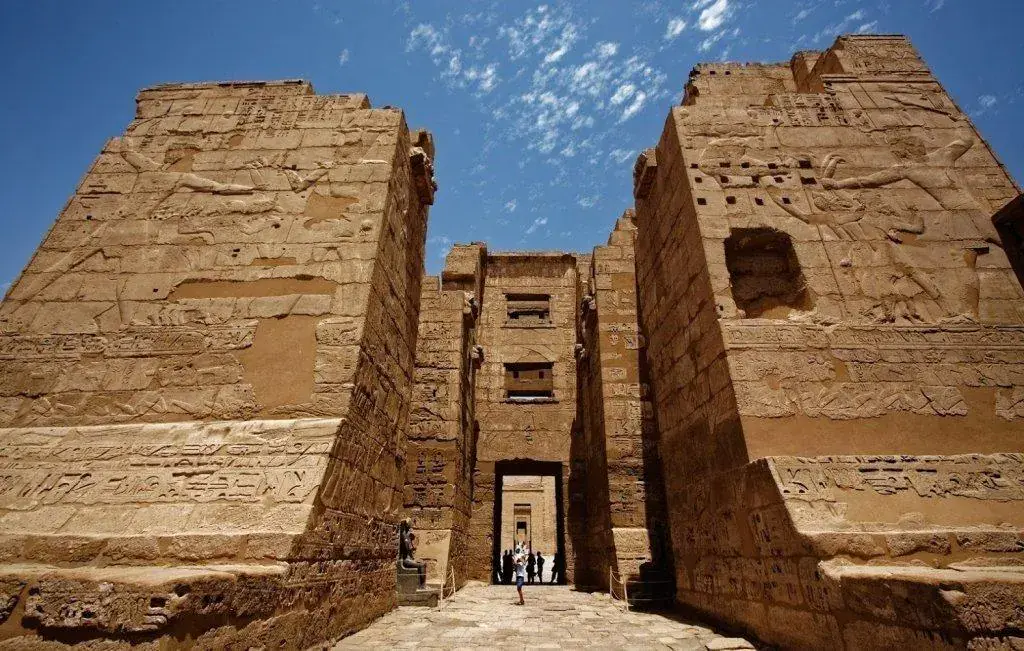
Ramesses III, one of the best-known rulers of the Twentieth Dynasty, decorated Medinet Habu with extensive scenes of warfare, victory and royal ceremony. However, these compositions were not modern documentary reports; they were carefully designed royal images that communicated order, kingship and divine protection.
For example, some of the most important scenes are associated with conflicts against Libyan groups and the Sea Peoples. Moreover, chariots, archers, soldiers, ships and captives turn the exterior walls into a vast visual narrative.
Sea Peoples Reliefs at Medinet Habu Temple
In particular, the battle compositions connected with the Sea Peoples are among the monument’s most discussed historical scenes. At the same time, they show violent combat on land and water and form part of the royal account of conflicts during Ramesses III’s reign.

Osiride Statues and Courtyards at the Temple of Ramesses III
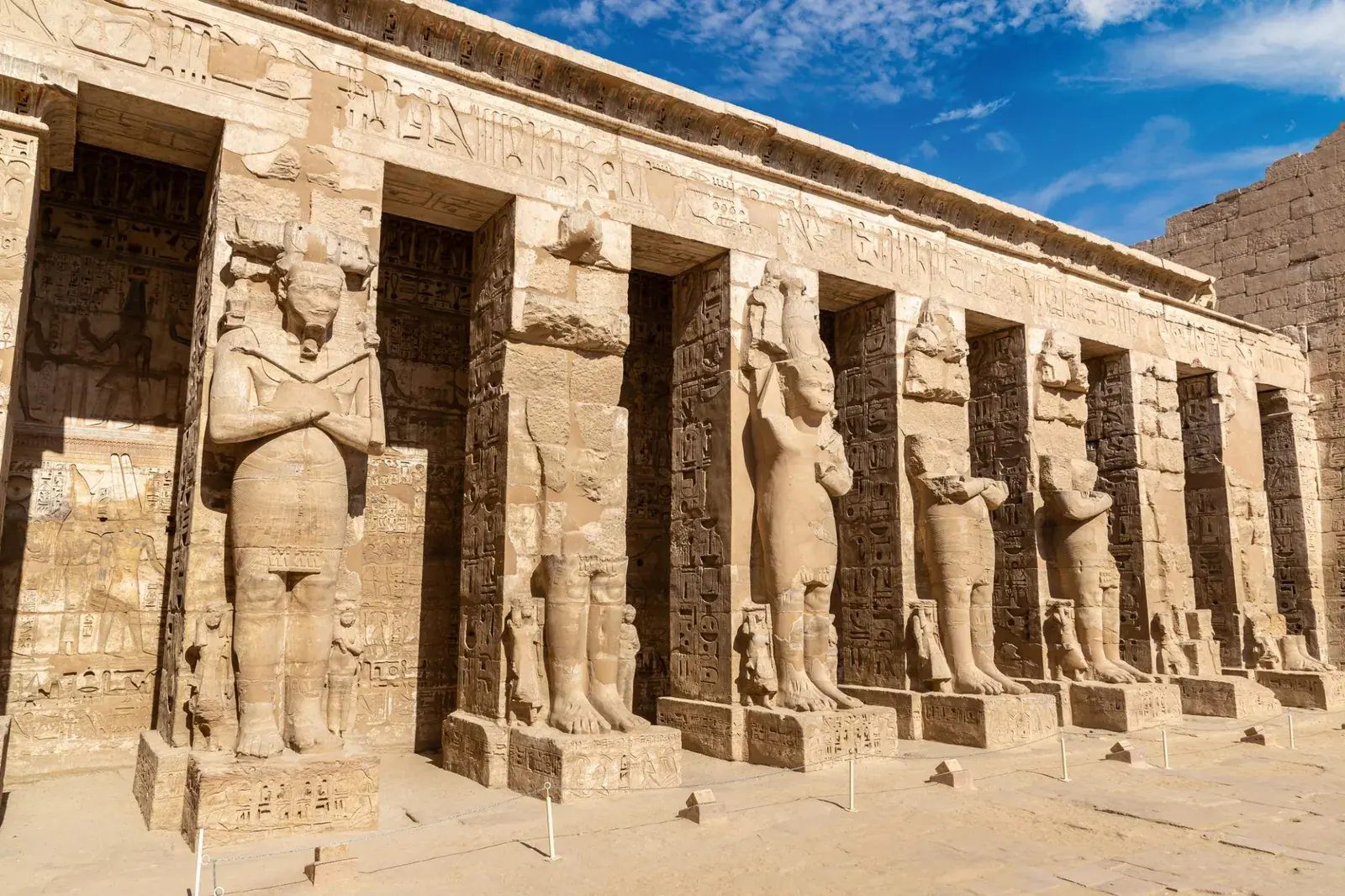
Meanwhile, the open courts are among the most memorable spaces at Medinet Habu. At the same time, rows of pillars and royal figures create a strong rhythm of stone, while the surrounding walls carry deeply carved inscriptions and scenes.
In addition, some pillars represent Ramesses III in Osirian form. Consequently, this imagery connected the king with Osiris and the ideas of death, regeneration and eternal kingship that were central to a royal mortuary temple.
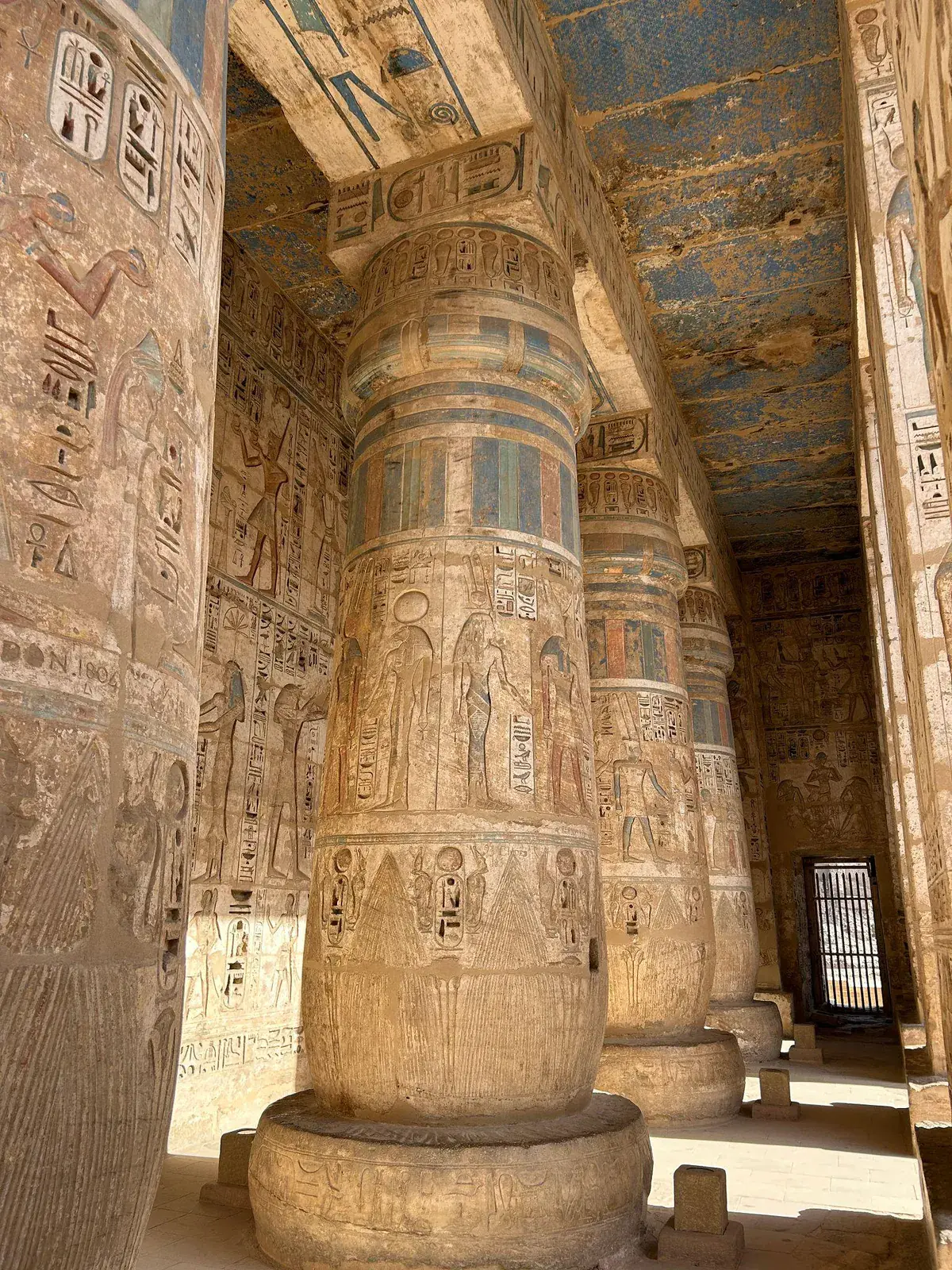
Painted Columns and Ceilings at Medinet Habu
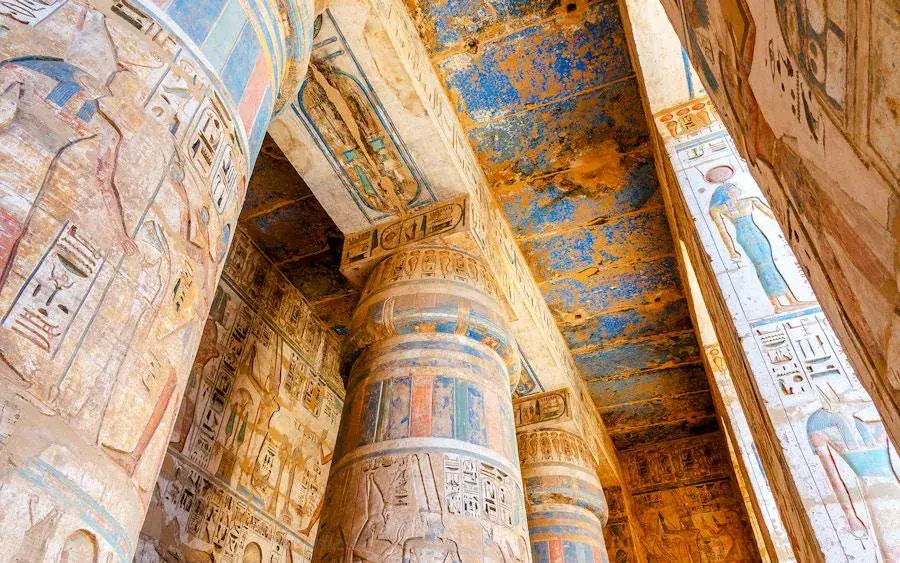
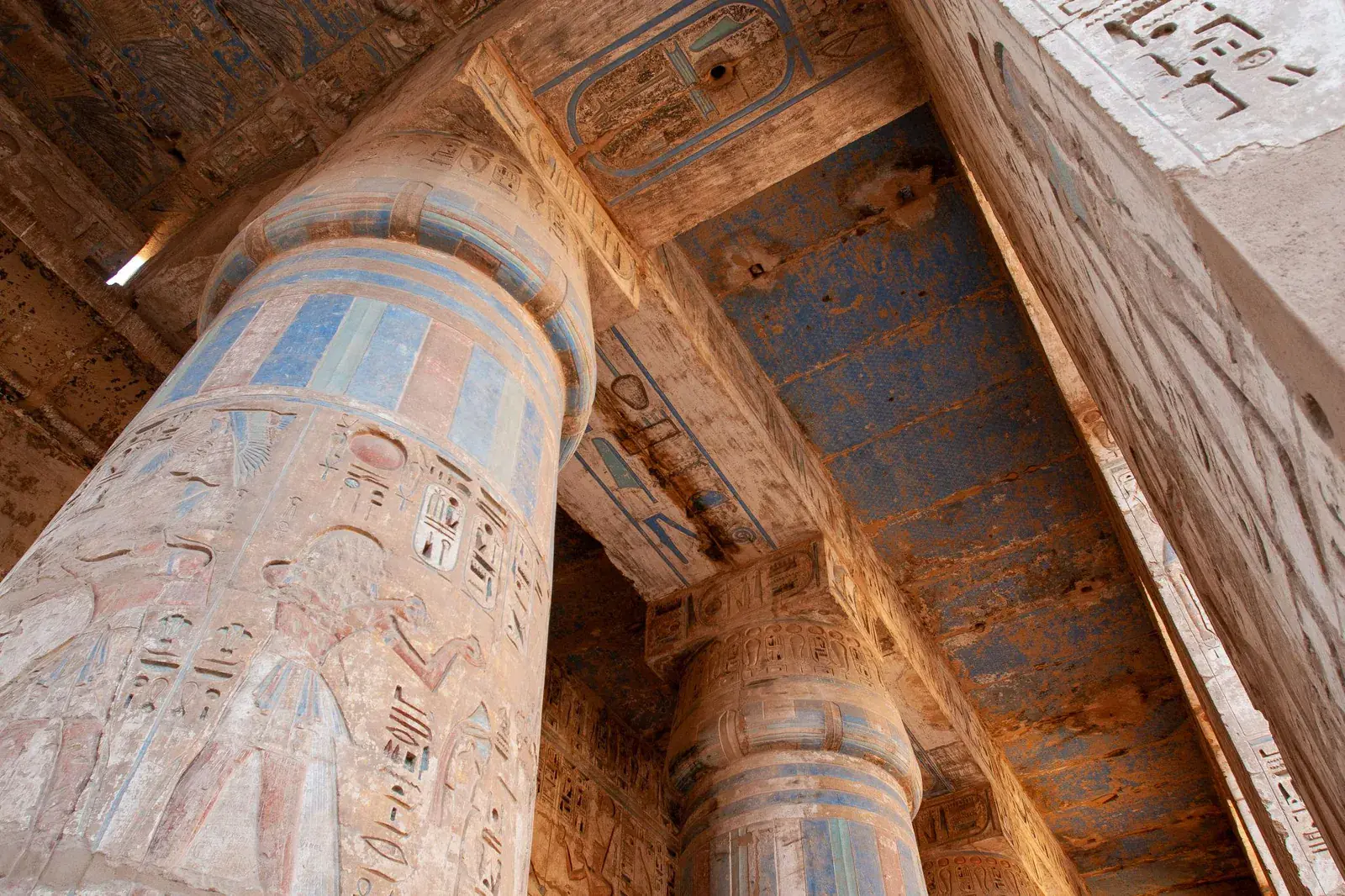
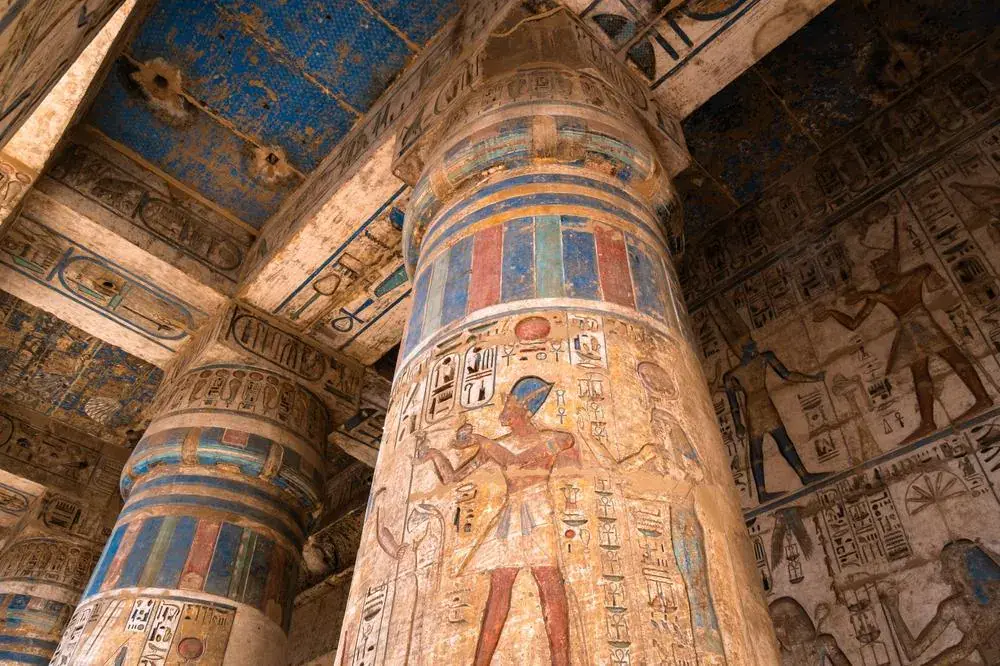
Notably, one of the surprises of Medinet Habu is the survival of colour. For example, blues, reds, yellows and greens still appear across columns, ceilings and carved figures, helping visitors imagine how vivid Egyptian temples once looked.
Medinet Habu Hypostyle Halls and Sacred Space
As a result, the architecture becomes more enclosed as the route moves inward. For instance, columned halls once guided priests toward chapels and the sanctuary, creating a transition from bright public courtyards to increasingly restricted sacred areas.
Nevertheless, although parts of the inner temple are less complete than the great pylons and courts, the surviving columns, wall scenes and architectural fragments make the original ceremonial progression easy to understand.
What to See at Medinet Habu Temple
First Pylon
First, stand back before entering to appreciate the scale of the façade and its royal victory imagery.
Sea Peoples Reliefs
Next, examine the dense battle scenes, especially the naval compositions with ships and archers.
Osiride Figures
Then, notice how the king appears in Osirian form along the monumental courtyard architecture.
Surviving Colour
In addition, look upward and into shaded areas where ancient pigments remain especially vivid.
Religious Reliefs
Moreover, beyond warfare, follow scenes of the king presenting offerings and performing rituals before the gods.
Inner Temple
Finally, continue beyond the courts to understand how the monument becomes progressively more sacred and enclosed.
Plan Your Visit to Medinet Habu Temple
For visitors, Medinet Habu lies on Luxor’s West Bank within the archaeological landscape of ancient Thebes. Therefore, it combines naturally with other West Bank monuments, especially the Valley of the Kings, Hatshepsut Temple, the Ramesseum and Deir el-Medina.
Practical Tips
- First, visit early in the day for cooler temperatures and softer light on the pylons.
- Then, allow roughly 1–1.5 hours for a focused visit; history enthusiasts may want longer.
- In addition, bring water, sun protection and comfortable walking shoes.
- Most importantly, do not rush the shaded columned areas: some of the best-preserved colours are above eye level.
- Finally, opening hours and ticket prices can change, so check the official monument page before visiting.
Official Visitor Information
For the latest details, use Egypt’s Ministry of Tourism and Antiquities website for current opening hours, admission prices and official monument information.
Official Medinet Habu page — Ministry of Tourism & Antiquities ↗
Ancient Thebes and its Necropolis — official heritage overview ↗
Explore More Temples Near Medinet Habu
Use these Yalla Egypt Travel guides to connect Medinet Habu with the wider temple and necropolis landscape.
Medinet Habu Temple Photos and Gallery

Medinet Habu Temple FAQ
Who built Medinet Habu Temple?
Ramesses III of the Twentieth Dynasty built the principal mortuary temple at Medinet Habu for his funerary cult and for rituals connected with Amun.
Why is Medinet Habu famous?
Above all, it is famous for its preservation, monumental pylons, Osiride statues, surviving colour and extensive military reliefs, including scenes associated with the Sea Peoples and Libyan campaigns.
Where is Medinet Habu Temple?
Geographically, it stands on the West Bank of Luxor within the archaeological landscape of ancient Thebes.
How long should I spend at Medinet Habu?
Generally, about 1–1.5 hours works well for a focused visit. However, allow more time if you want to study the reliefs, colours and architectural details carefully.
Can I combine Medinet Habu with other Luxor sites?
Yes. In fact, it fits naturally into a West Bank day with sites such as the Valley of the Kings, Hatshepsut Temple, the Ramesseum or Deir el-Medina.
What should I not miss inside the temple?
First, prioritize the first pylon, battle reliefs, Osiride courtyard figures, surviving painted columns and ceilings, and the increasingly sacred inner halls.
Plan a Medinet Habu & Luxor West Bank Visit
First, tell us your travel dates and interests. Then, we can help build a private Luxor itinerary around the temples, royal tombs and monuments you most want to see.