
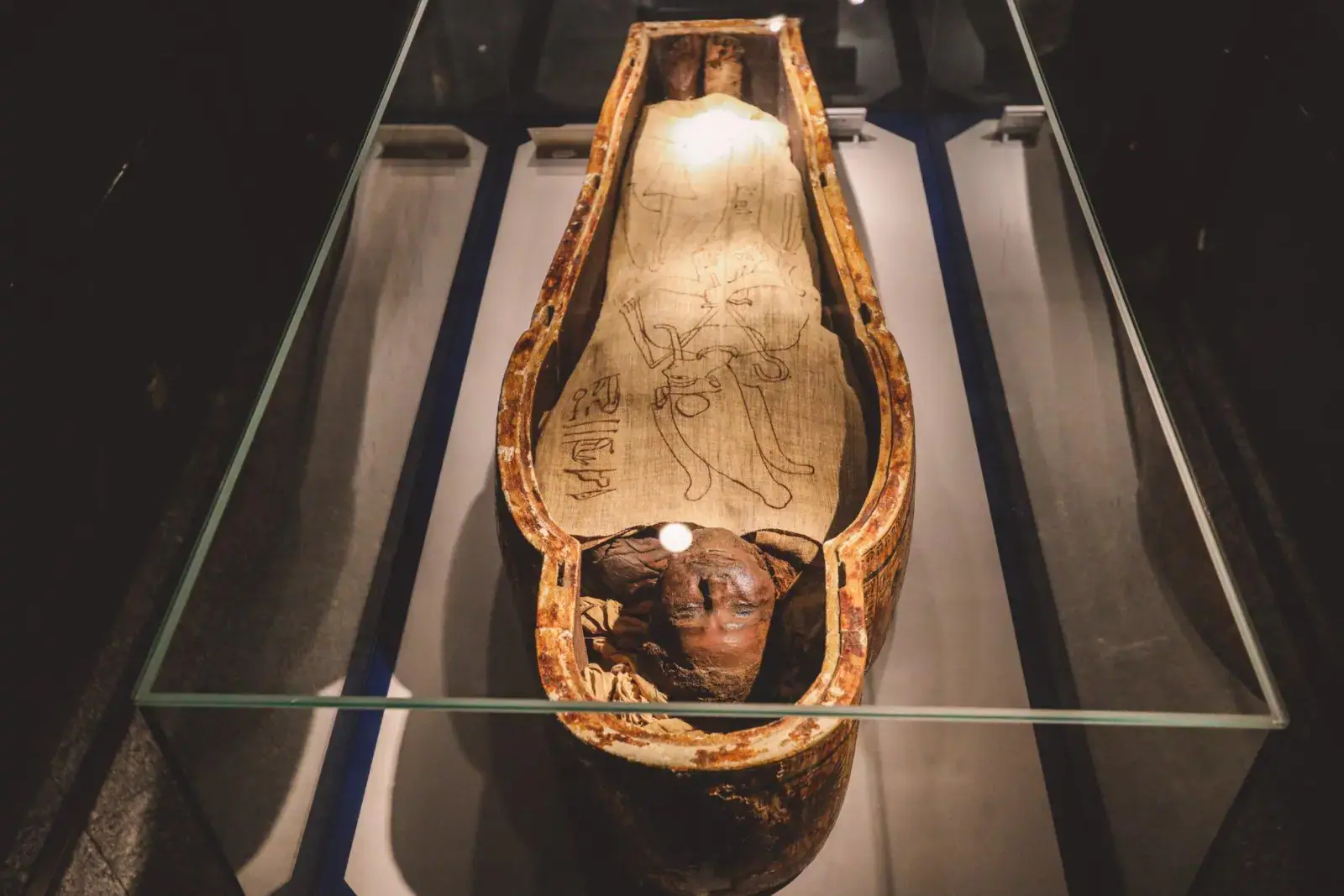
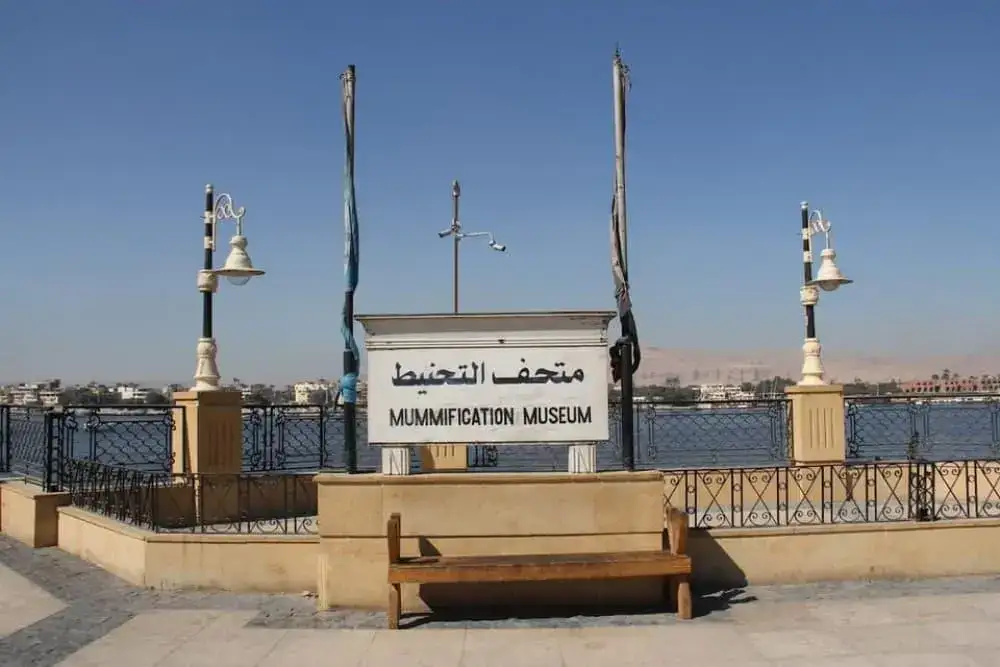
Mummification Museum in Luxor
Discover how the ancient Egyptians prepared the dead for eternity. This complete guide to the Mummification Museum in Luxor explains its history, most important exhibits, embalming materials, religious meaning and practical visitor information.
What Is the Mummification Museum in Luxor?
The Mummification Museum in Luxor is one of Egypt’s most focused archaeological museums, revealing the science, ritual and religious beliefs behind preserving the body for the afterlife.
Located on the Nile Corniche north of Luxor Temple, the museum brings together embalming tools, natron, linen, oils, amulets, canopic jars, coffins and mummified remains. The displays show that mummification was not simply a technical process; it was a sacred transformation intended to reunite the body and soul in eternity.
The collection also explains that ancient Egyptians mummified animals connected with particular deities. Cats, crocodiles, fish, rams and other creatures therefore help visitors understand the relationship between religion, nature and the divine world.
A Museum Dedicated to the Journey into Eternity
The museum was established in 1995 and opened to visitors in May 1997. Its riverside position places it in the heart of modern Luxor and within easy reach of the East Bank’s principal temples and museums.
Unlike a large general collection, the museum concentrates on a single subject. Its galleries follow the materials, instruments, gods, protective objects and funerary equipment associated with mummification from preparation to burial.
This focused approach makes the museum accessible to first-time visitors while still rewarding travelers who have already explored the Valley of the Kings and want to understand its rituals in greater detail.
How Ancient Egyptian Mummification Worked
Ancient Egyptian mummification combined careful physical preservation with sacred ritual. The full process traditionally lasted about seventy days and prepared the deceased for rebirth in the afterlife.
Purification and Organ Removal
The body was ritually purified before embalmers removed selected internal organs. These were treated separately and could be placed in canopic containers under divine protection.
Natron, Oils and Linen
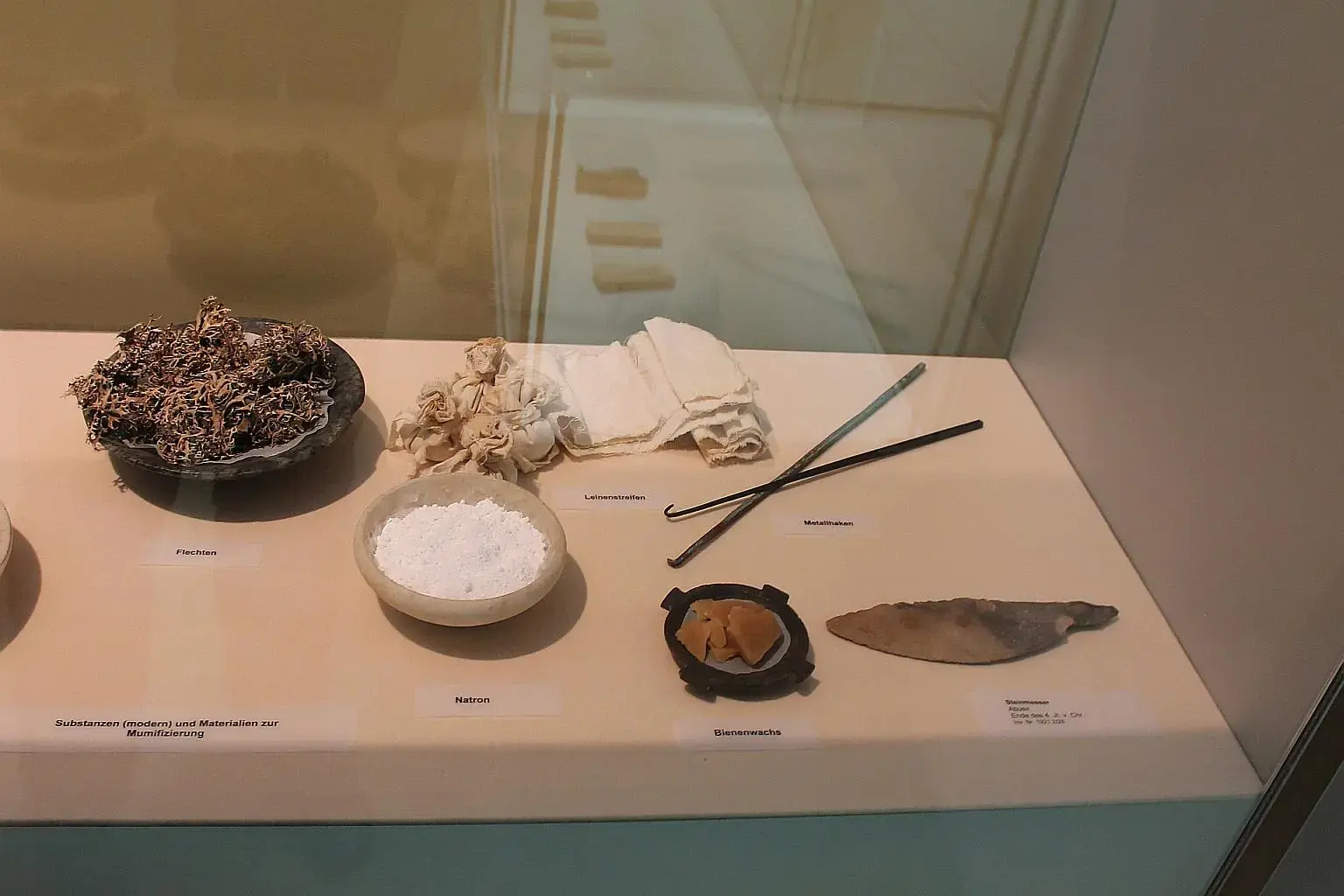
Natron dried the body, while oils, resins and aromatic substances helped preserve and prepare it. Layers of linen then enclosed the body with care.
Protection and Burial
Amulets, prayers and funerary objects protected the deceased. Finally, the mummy was placed in a coffin and prepared for its eternal home.
What You Will See in the Museum
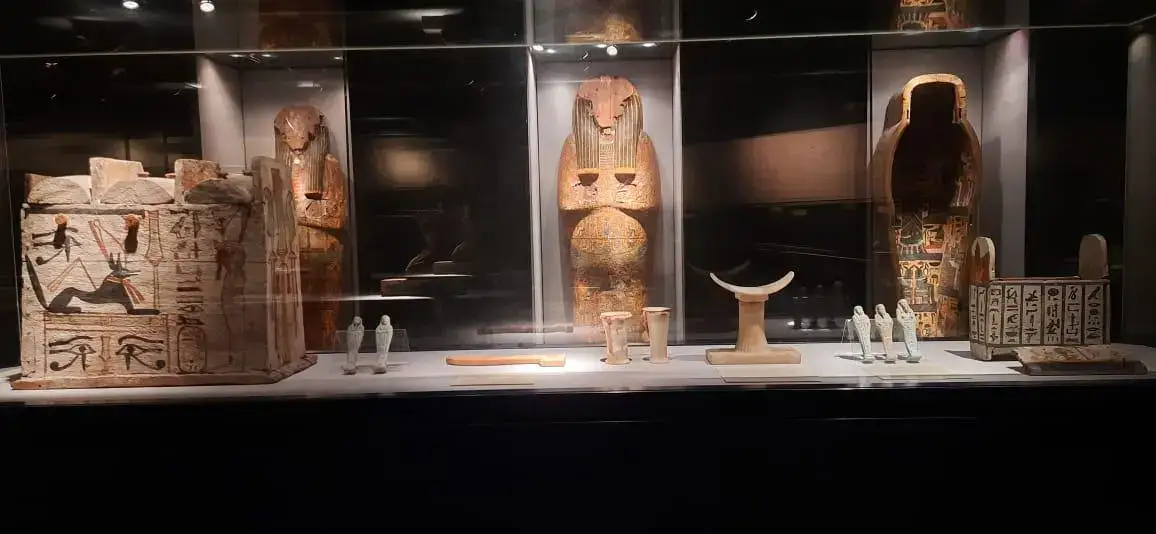
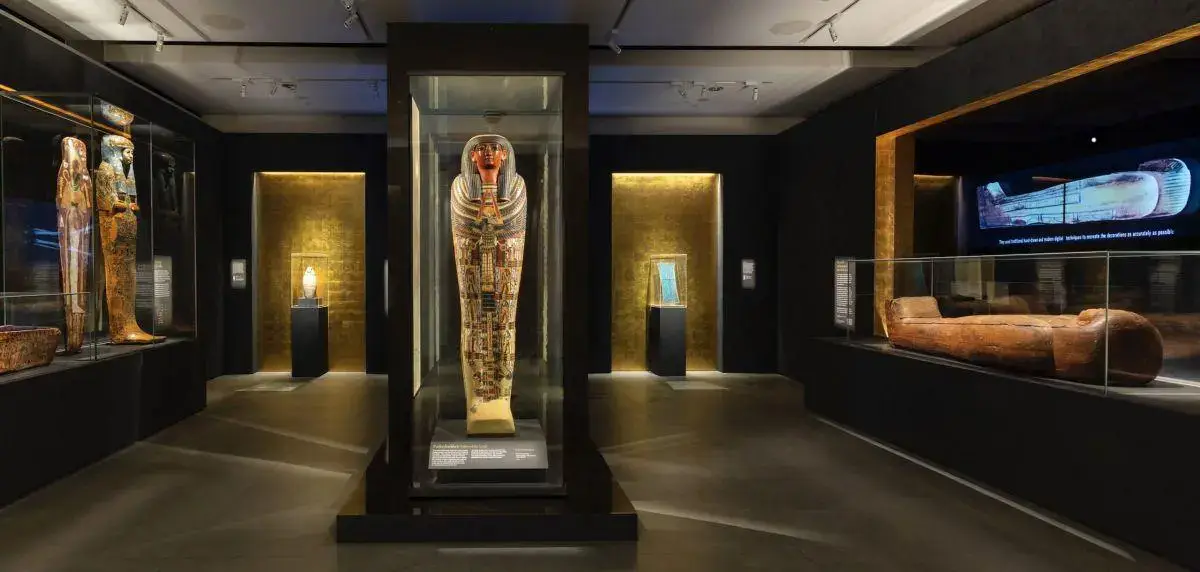
Carefully arranged displays explain mummification through original objects, reconstructed materials and illustrated stages. Visitors can compare the instruments used by embalmers with the containers, protective symbols and coffins created for the dead.
Among the collection’s most memorable objects are embalming tools, canopic jars, protective amulets, statues of funerary deities, decorated coffins and human and animal mummies. The museum also presents the mummy and coffin of Masaharta, a High Priest of Amun from the Twenty-First Dynasty.
The displays are not intended to sensationalize death. Instead, they explain how preservation, ritual knowledge and religious belief formed a single carefully ordered process.
What Not to Miss at the Mummification Museum
Although the museum is relatively small, its collection covers every important part of ancient Egyptian mummification. Prioritize these six themes during your visit.
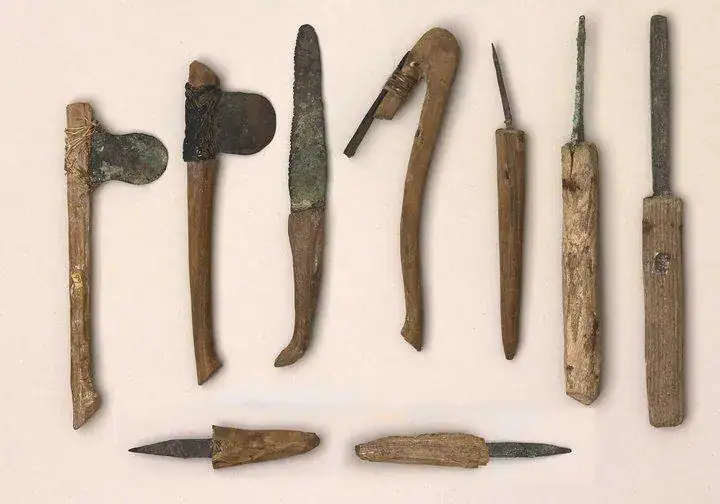
Mummification Tools
Study the specialized instruments associated with opening, cleaning, treating and preparing the body.
Natron, Resin and Linen
See the natural salts, aromatic substances, oils, fillers and textile materials used during preservation.
Canopic Jars and Amulets
Discover how organs and the body were protected by sacred containers, symbols and magical objects.
Royal and Elite Mummies
Observe preserved human remains and learn what they reveal about identity, status and funerary practice.
Animal Mummies
Explore why crocodiles, cats, fish, rams and other animals were preserved in connection with ancient deities.
Coffins and Funerary Art
Read the visual language of decorated coffins, divine figures and scenes made to support rebirth.
The Mummification Process in Five Stages
Use this simple route to connect the museum’s objects with the ancient process they supported.
Purify the Body
The deceased was washed and prepared in a ritual setting under the protection of funerary deities.
Treat the Internal Organs
Selected organs were removed, preserved and associated with protective gods and canopic equipment.
Dry with Natron
The body was covered with natron for about forty days so moisture could be removed.
Anoint and Wrap
Oils and resins were applied before linen bandages enclosed the body, often with amulets between the layers.
Perform the Funeral
Rituals restored the deceased’s senses before the coffin and funerary equipment entered the tomb.
Mummification Museum Visitor Information
The museum is easy to include in an East Bank day, particularly with Luxor Temple, the Nile Corniche or Karnak Temple.
Practical Tips for Your Museum Visit
Read the Process in Order
Follow the displays step by step instead of moving directly to the mummies.
Look Beyond the Body
Pay attention to the tools, ingredients and protective objects; they explain how technology and belief worked together.
Use a Specialist Guide
An Egyptologist can connect the displays with tomb paintings, funerary texts and places you will see elsewhere in Luxor.
Respect the Collection
Do not touch showcases, use flash or photograph other visitors and staff without permission.
Mummification Museum in Luxor Photos
Explore the museum exterior, gallery design, embalming equipment, preservation materials and funerary displays.
Related Luxor Historical Sites
Mummification Museum in Luxor FAQ
Where is the Mummification Museum in Luxor?
It is on the Nile Corniche on Luxor’s East Bank, north of Luxor Temple and close to the city center.
How long should I spend in the Mummification Museum?
Most visitors need about 45–90 minutes. Allow longer if you want detailed explanations from an Egyptologist guide.
What can I see inside the museum?
The collection includes embalming tools, natron, linen, oils, canopic jars, amulets, coffins, statues of funerary deities and human and animal mummies.
Is the Mummification Museum suitable for children?
Yes, for children interested in ancient Egypt. However, parents should explain that the museum contains real human and animal remains.
Why did ancient Egyptians mummify the dead?
They believed preserving the body helped maintain the deceased’s identity and supported rebirth and eternal life in the afterlife.
How long did mummification take?
The complete ritual process traditionally lasted about seventy days, including roughly forty days of drying the body with natron.
Can I take photographs inside the museum?
Personal photography may be allowed under current rules, usually without flash. Confirm the policy at the ticket office and follow staff instructions.
What should I combine with the museum?
Luxor Temple and the Nile Corniche are convenient nearby choices. The museum also provides excellent context before visiting the Valley of the Kings.
Book a Private Mummification Museum Visit
Tell us your travel date, hotel and preferred Luxor attractions. Our local team can arrange a private vehicle, Egyptologist guide and a balanced East Bank or full-day Luxor itinerary.
Understand Ancient Egypt Beyond the Monuments
Explore the beliefs, materials and rituals that prepared ancient Egyptians for eternity with a private guide in Luxor.
Plan Your Luxor Museum Visit