
Thutmose III was one of the most successful rulers of Ancient Egypt. A gifted commander, administrator and temple builder, he expanded Egyptian influence from Nubia in the south to Syria and the Euphrates region in the north. As a result, his victories made Egypt wealthy, while his reforms helped create an empire that endured long after his death.
Why Is Thutmose III So Famous?
Above all, Thutmose III is famous for a series of successful campaigns, especially the Battle of Megiddo, and for transforming Egypt into the dominant power of the eastern Mediterranean. He also left an exceptional architectural and written record at Karnak and was buried in tomb KV34 in the Valley of the Kings.
Thutmose III’s Birth and Early Life
Thutmose III was born around 1481 BCE. His father was Thutmose II, while his mother, Iset (also written Isis), was a secondary royal wife. Because he was not the son of the Great Royal Wife Hatshepsut, his position at court was less secure than that of a prince born to the principal queen.
When Thutmose II died, the young prince became king. However, he was still a child. Hatshepsut therefore acted first as regent and later assumed full pharaonic titles, creating one of the most unusual royal partnerships in Egyptian history.
Thutmose III and Hatshepsut
Hatshepsut initially ruled as regent but later presented herself as king, using the crowns, titles and visual language of pharaoh. Thutmose III remained a king beside her, although she held the dominant political position for roughly two decades.
This period was not simply one of imprisonment or open hostility. Inscriptions show both rulers participating in royal ideology, while Egypt enjoyed stability, ambitious building projects and profitable expeditions to Punt. Meanwhile, Thutmose III probably gained experience in the military, court administration and the cult of Amun.
Thutmose III’s Sole Rule and Political Reform
After Hatshepsut’s death around 1458 BCE, Thutmose III became the undisputed ruler. Consequently, he was able to direct Egypt’s government and military policy without a senior co-ruler. He strengthened the administration, rewarded loyal officials and maintained close ties with the priesthood of Amun. At the same time, he turned Egypt’s army into a highly mobile force capable of campaigning far from the Nile Valley.
His state combined central authority with practical local government. Egyptian officials supervised conquered regions, while loyal local rulers often remained in office. The sons of important Levantine rulers could be educated at the Egyptian court, encouraging future cooperation with the pharaoh.
Thutmose III and the Battle of Megiddo
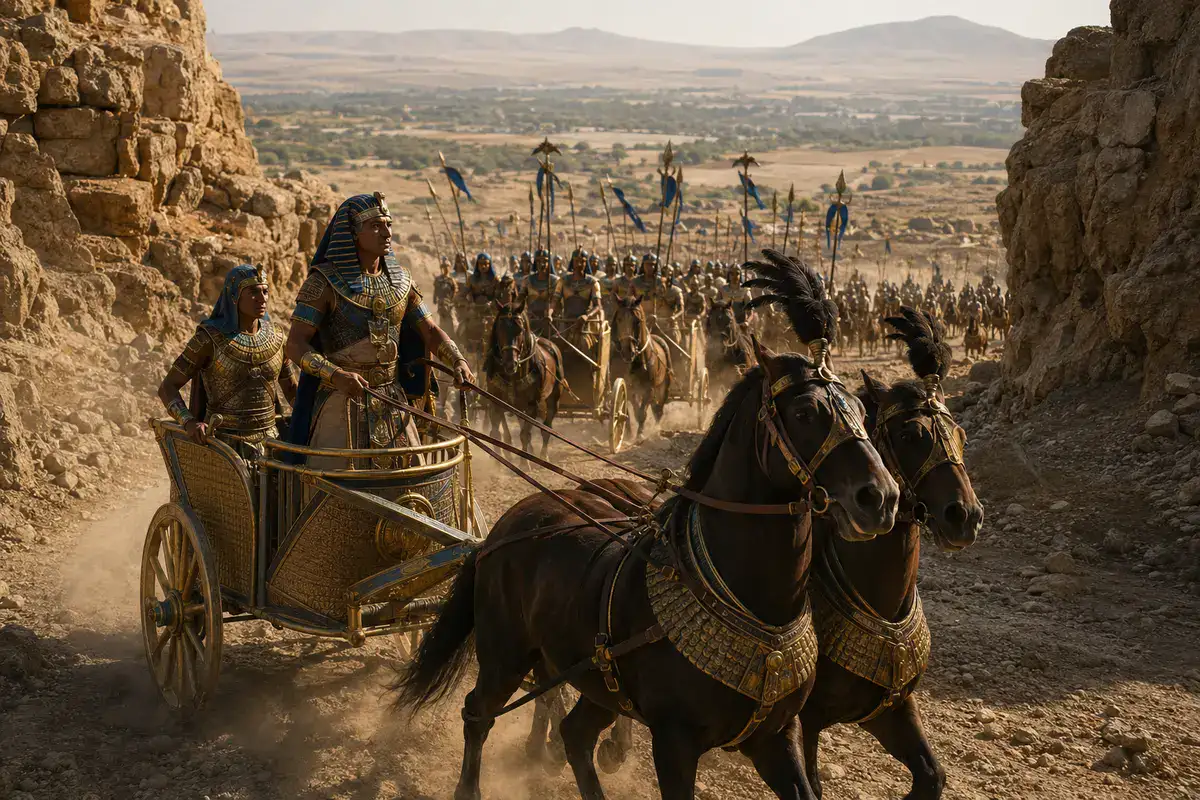
In his first major campaign as sole ruler, Thutmose III confronted a coalition of Levantine princes led by the ruler of Kadesh. Egyptian military records describe three possible roads to Megiddo. The pharaoh chose the most dangerous: the narrow route through Aruna.
Consequently, the decision brought his army close to the enemy before the coalition could react effectively. Egypt won the field battle, although the troops’ rush to collect booty allowed many opponents to escape behind Megiddo’s walls. Afterward, a siege followed until the city surrendered.
Megiddo revealed the qualities that defined Thutmose III: calculated risk, speed, personal leadership and the ability to turn victory into lasting political control.
Why the Megiddo Records Matter
The campaign is recorded in the Annals of Thutmose III at Karnak Temple. Although the text celebrates royal power, it also preserves routes, tribute and military events in remarkable detail. For that reason, Megiddo is often described as the earliest battle recorded in substantial historical detail.
Thutmose III’s Campaigns and Egyptian Empire
During his sole rule, Thutmose III led repeated expeditions into the Levant. These campaigns secured ports on the Phoenician coast, weakened hostile coalitions and eventually brought Egyptian forces to the Euphrates. Eventually, his army crossed the river and confronted the influence of Mitanni, Egypt’s principal northern rival.
Meanwhile, to the south, Egypt already controlled Lower Nubia and extended its power deeper into the region. Nubian gold, trade routes and agricultural resources were vital to the New Kingdom economy. Forts, temples and administrators tied these territories more closely to the crown.
| Region | Main Objective | Result |
|---|---|---|
| Canaan and Megiddo | Break the coalition resisting Egyptian authority. | Megiddo surrendered and Egypt reasserted control. |
| Phoenician coast | Secure ports and supply later campaigns. | Coastal cities supported Egyptian movement north. |
| Syria and Euphrates | Challenge Kadesh and Mitanni. | Egyptian prestige reached its New Kingdom height. |
| Nubia | Protect gold, trade and the southern frontier. | Royal and religious authority expanded southward. |
Diplomacy, Tribute and Royal Hostages
However, military success was only one part of imperial policy. Foreign rulers sent precious metals, timber, horses, luxury goods and diplomatic gifts. Egypt also relied on treaties, local governors and carefully managed royal families. This system reduced the need for permanent occupation in every city.
Thutmose III’s Government and Economy
As a result of expansion, the wealth of conquered territories flowed into Egypt as tribute, taxation and gifts. Gold from Nubia, cedar from the Levant, exotic animals, wine, oil and crafted objects enriched the crown and temples. Therefore, these resources paid soldiers, supported officials and funded large building programs.
Nevertheless, Thutmose III did not govern alone. Viziers, treasury officials, viceroys in Nubia, army commanders and temple administrators translated royal policy into daily government. His reign demonstrates how military expansion and bureaucracy worked together: campaigns gained resources, while administration transformed those resources into long-term power.
Thutmose III’s Architectural Legacy at Karnak
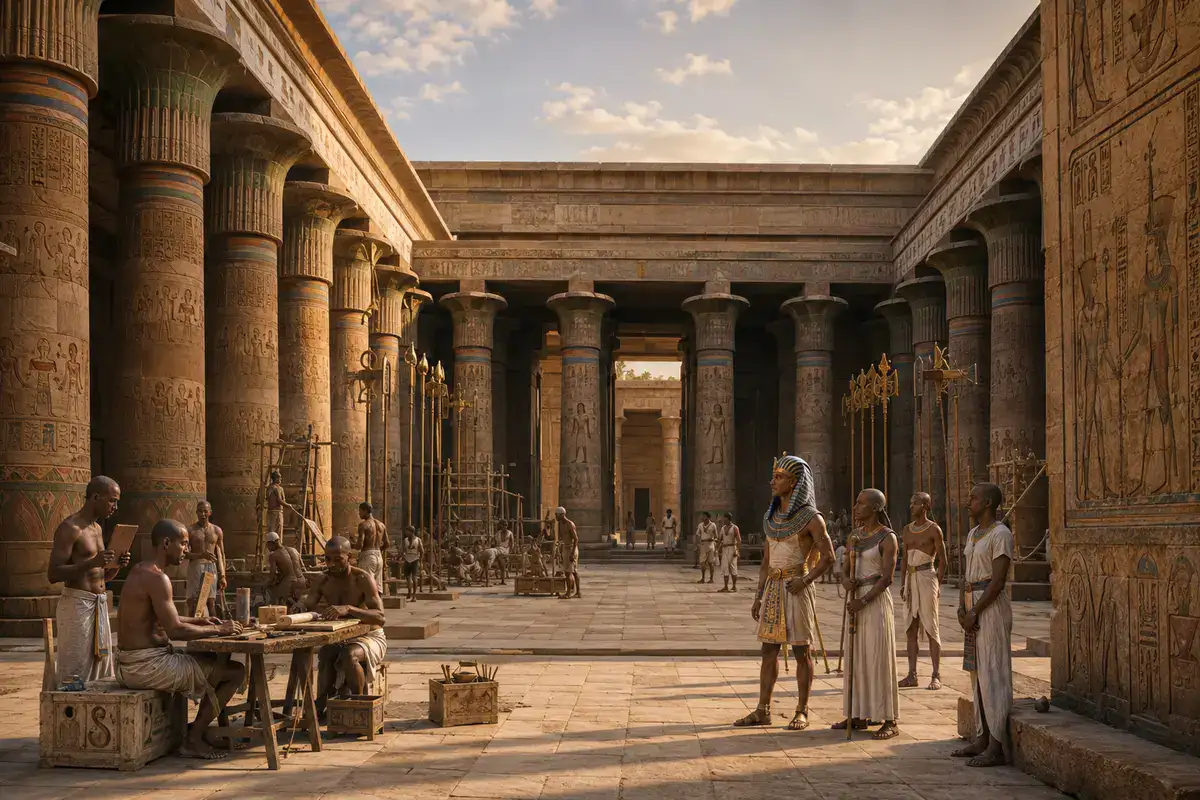
At Karnak, Thutmose III reshaped the sacred landscape of Amun. His most distinctive monument is the Akh-menu, commonly called the Festival Hall. Its unusual columns and decorated rooms celebrated royal renewal, divine favor and Egypt’s relationship with conquered lands.
Moreover, the so-called Botanical Garden records unusual plants and animals encountered during foreign expeditions. In addition, nearby inscriptions preserve the king’s campaign annals. Together, architecture, natural observation and military narrative turned Karnak into a monumental statement of world order under the pharaoh.
The Obelisks of Thutmose III
Furthermore, Thutmose III commissioned several obelisks. Some were later moved far from Egypt, including the monument now standing in Istanbul’s Hippodrome and the pair known as Cleopatra’s Needles in London and New York. Their journeys show how later rulers and empires reused Egypt’s royal monuments.
Thutmose III’s Death and Tomb KV34
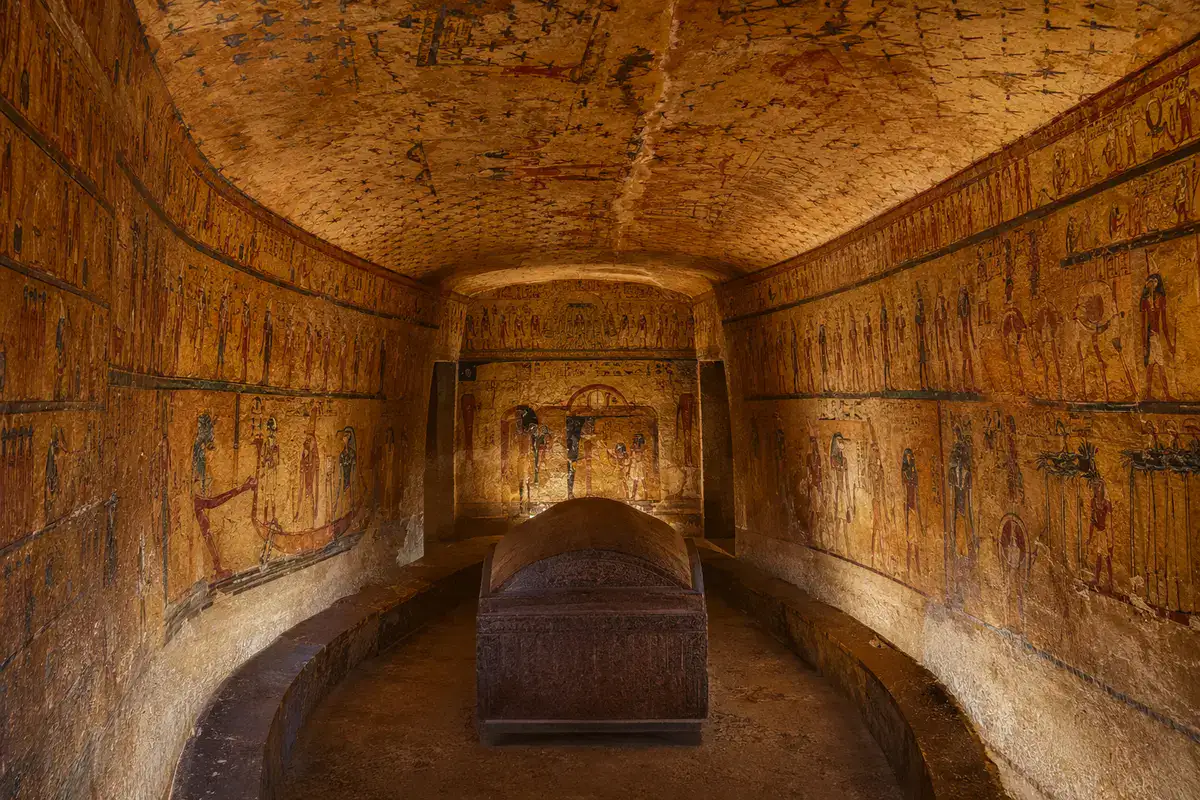
Thutmose III died around 1425 BCE after a reign of more than fifty years when the years of co-rule are included. He was buried in KV34, a difficult-to-reach tomb cut high into the cliffs of the Valley of the Kings.
The tomb’s oval burial chamber resembles the shape of a royal cartouche. Its walls carry a complete version of the Amduat, a funerary composition that follows the sun god through the twelve hours of night. The figures are rendered in a striking, almost cursive style that resembles writing on a papyrus scroll.
Later, ancient robbers disturbed the burial, and priests moved the king’s mummy to the Deir el-Bahari royal cache for protection. It was discovered there in the nineteenth century.
The Legacy of Thutmose III
Ultimately, Thutmose III left Egypt at the center of an international system stretching across northeastern Africa and western Asia. Consequently, later pharaohs inherited his networks of tribute, fortified routes, loyal rulers and military experience. His son and successor, Amenhotep II, presented himself as an equally powerful athlete and warrior.
The nickname “Napoleon of Ancient Egypt” captures Thutmose III’s reputation as a strategist, but it can also oversimplify him. However, he was more than a general. He was a temple builder, ritual king, administrator and diplomat whose achievements depended on institutions and officials as well as personal command.
- He used speed, intelligence and surprise to defeat stronger coalitions.
- He developed coastal bases and supply lines for long-distance campaigning.
- He combined Egyptian oversight with loyal local rulers.
- He recorded campaigns in extraordinary detail at Karnak.
- He funded temples and royal projects with the wealth of empire.
Why Thutmose III Still Matters
In conclusion, Thutmose III transformed victory on the battlefield into an enduring political system. Through war, diplomacy, administration and temple building, he brought New Kingdom Egypt to a peak of influence. His monuments at Karnak, the records of Megiddo and the remarkable decoration of KV34 still allow his reign to speak across more than three thousand years.
Frequently Asked Questions About Thutmose III
Who was Thutmose III?
Thutmose III was an 18th Dynasty pharaoh who ruled during Egypt’s New Kingdom and created the largest sphere of Egyptian influence of his age.
Was Thutmose III Hatshepsut’s son?
No. His father was Thutmose II, but his mother was a secondary wife named Iset. Hatshepsut was his stepmother and royal co-ruler.
Why is Thutmose III called the Napoleon of Ancient Egypt?
The modern nickname refers to his military skill and many successful campaigns. However, it should not hide his importance as an administrator, diplomat and temple builder.
What happened at the Battle of Megiddo?
Thutmose III surprised a coalition by taking the narrow Aruna route. Egypt won the field battle and captured Megiddo after a siege.
How many military campaigns did Thutmose III lead?
His Karnak records traditionally describe seventeen campaigns into western Asia, although their scale and purpose varied.
Where is Thutmose III buried?
He was originally buried in tomb KV34 in the Valley of the Kings. Priests later moved his mummy to the Deir el-Bahari royal cache.
Can visitors enter tomb KV34?
Opening arrangements in the Valley of the Kings can change. Travelers should check the current list of open tombs before visiting.
Plan Your Trip
Tell us your dates and travel wishes. Our local team will prepare a private Egypt itinerary for you.