
Mohamed Ali Mosque Cairo
Mohamed Ali Mosque Cairo: History, Architecture & Visitor Guide
Discover the Alabaster Mosque inside the Salah El-Din Citadel, from its Ottoman-inspired domes and twin minarets to its marble courtyard, richly decorated interior and panoramic views over Cairo.
The Alabaster Mosque
Why Mohamed Ali Mosque Is One of Cairo’s Most Recognizable Landmarks
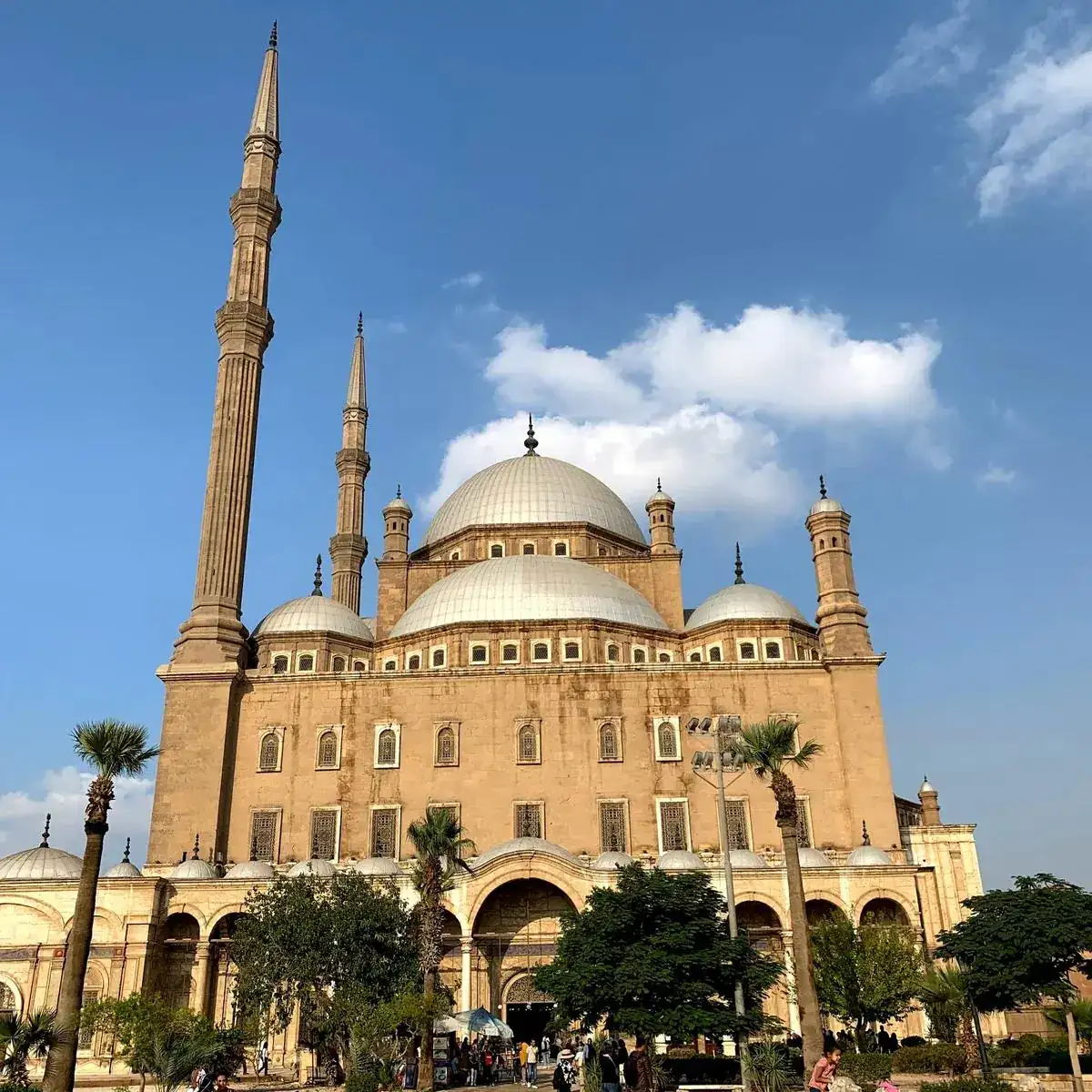
Mohamed Ali Mosque Cairo, also known as the Alabaster Mosque, rises inside the Salah El-Din Citadel and dominates the skyline of Islamic Cairo. Mohamed Ali Pasha commissioned the mosque in the 19th century as both a religious monument and a powerful statement of his new dynasty.
Moreover, its Ottoman-inspired domes, slender pencil minarets and extensive marble cladding distinguish it from the Mamluk architecture that defines many older monuments in Cairo.
Why is Mohamed Ali Mosque famous? It is famous for its dramatic Citadel setting, monumental Ottoman design, alabaster-lined interiors, twin minarets, vast prayer hall and sweeping views across Cairo.
A new dynasty at the Citadel
History of the Mohamed Ali Mosque
Mohamed Ali Pasha ruled Egypt from 1805 to 1848 and transformed the country through major military, administrative, agricultural and educational reforms. In 1830, he commissioned a new mosque inside the Citadel that would become the architectural symbol of his rule.
Construction continued through the final years of his life. However, decorative work and later repairs continued under his successors, including Abbas I and Said Pasha.
The mosque also marked a deliberate stylistic change. Rather than continuing Cairo’s established Mamluk architectural language, Mohamed Ali chose an Ottoman imperial model inspired by the monumental mosques of Istanbul.
For a biographical overview of the ruler, see Encyclopaedia Britannica’s biography of Muhammad Ali Pasha.
Ottoman design in Egypt
Architecture of Mohamed Ali Mosque
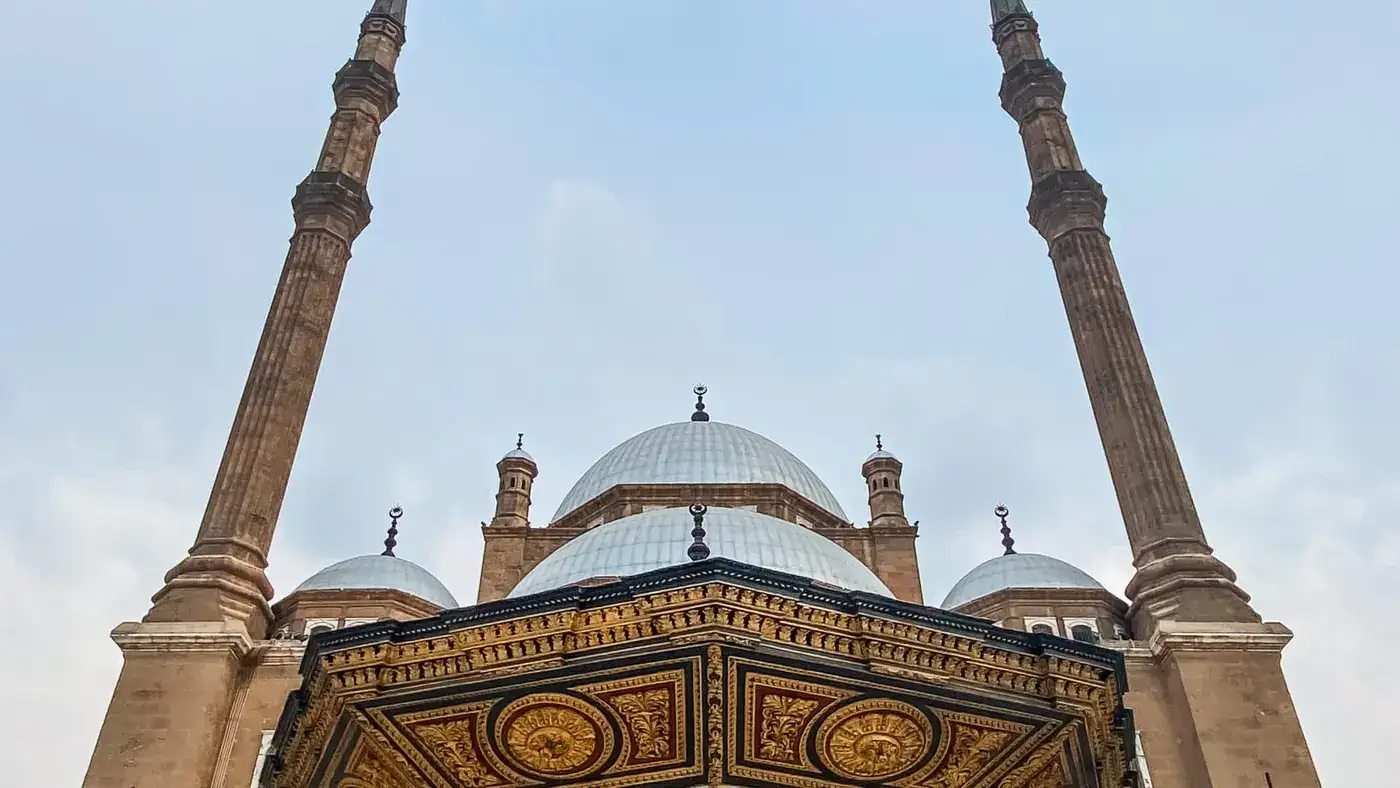
The mosque is built around a large domed prayer hall with a central dome surrounded by semi-domes and smaller domes. This cascading composition strongly reflects Ottoman imperial mosque architecture.
In addition, two tall pencil-shaped minarets rise above the complex. Their slender proportions differ sharply from the broader, more elaborately tiered minarets of Mamluk Cairo.
Stone and marble cladding create the pale appearance that led to the popular name “Alabaster Mosque.” The use of polished surfaces also gives the building a luminous quality in strong Cairo sunlight.
Light, gilding and scale
Inside the Prayer Hall
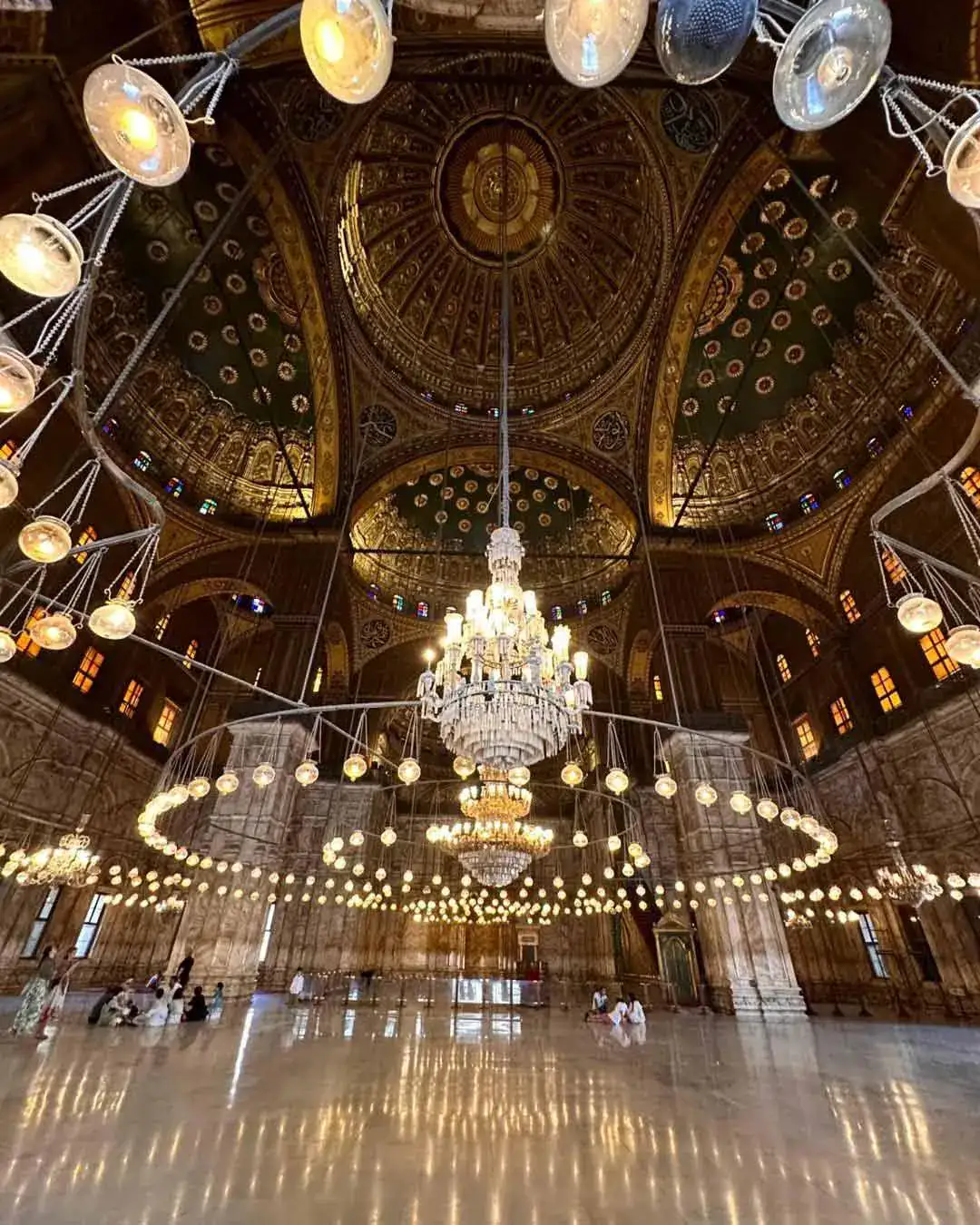
The interior creates a very different atmosphere from the exterior. A vast central dome rises above the prayer space, while smaller domes and semi-domes expand the ceiling outward in a layered composition.
Moreover, chandeliers, hanging lamps, gilded ornament, calligraphy and colored glass enrich the space. The visual effect is theatrical but carefully balanced around the central prayer hall.
The mosque remains a religious monument, so visitors should enter respectfully and follow any instructions concerning dress, footwear and photography.
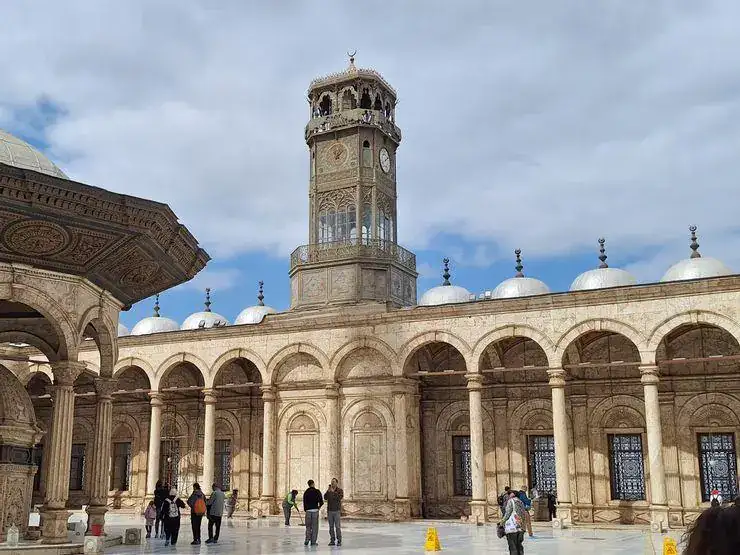
The open courtyard
Courtyard, Fountain and Clock Tower
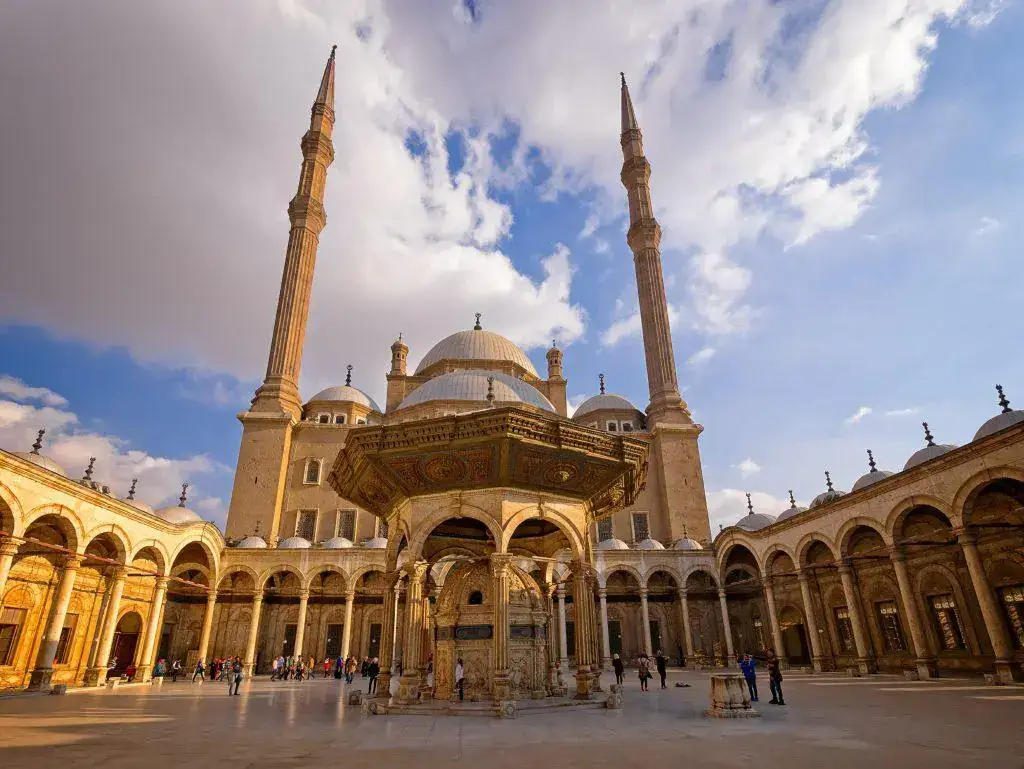
The mosque’s courtyard is surrounded by arcades and finished with polished stone and marble surfaces. At its center stands an ornate ablution fountain beneath a richly decorated canopy.
On the western side, a clock tower holds a clock presented by King Louis Philippe of France in the 19th century. Although the clock became one of the courtyard’s most recognizable features, it has had a complicated history of maintenance and restoration.
From the courtyard and terraces nearby, visitors can also appreciate how dramatically the mosque occupies the highest areas of the Citadel.
Founder and legacy
The Tomb of Mohamed Ali Pasha
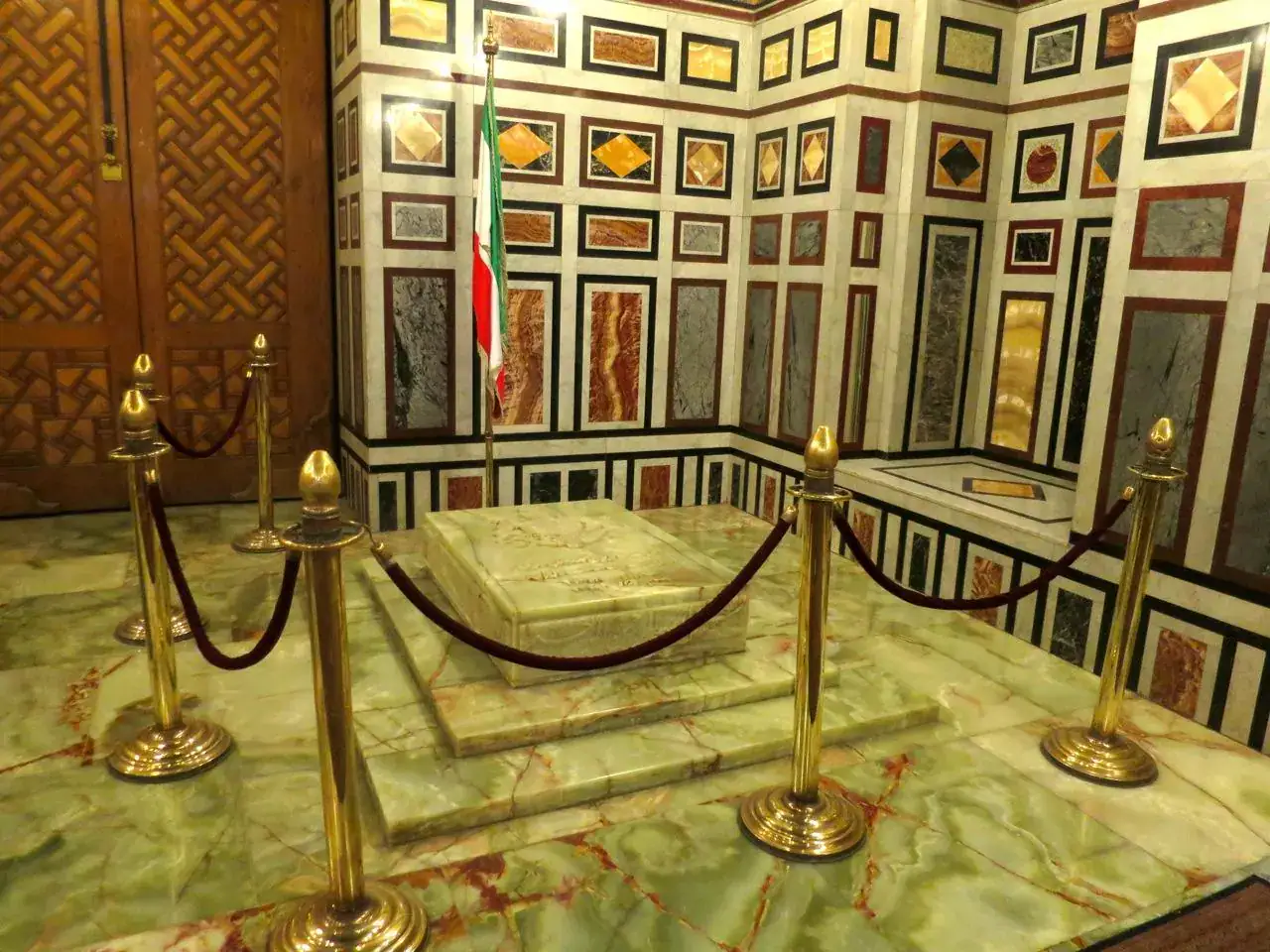
Mohamed Ali Pasha is buried inside the mosque he commissioned. His tomb lies within a richly decorated marble enclosure on the right side after entering the prayer hall.
The burial gives the monument a personal dimension. Therefore, the mosque functions not only as a religious building and political statement but also as a dynastic memorial to the ruler who reshaped 19th-century Egypt.
For broader context, visitors can continue through the Salah El-Din Citadel and then explore nearby Islamic Cairo landmarks such as Al-Muizz Street, Khan El Khalili Bazaar and Al-Azhar Park.
Views over Cairo
Panoramic Views From the Citadel
Because the mosque stands high on the Citadel, its terraces offer some of the most impressive panoramic views in Cairo. On clear days, visitors can see across large parts of the historic city and toward the western skyline.
In addition, the elevated position explains why the mosque itself is visible from many parts of Cairo. Its dome and minarets became part of the city’s visual identity soon after construction.
Afterwards, travelers can combine the visit with the nearby Mosque of Ibn Tulun to compare two very different periods of Islamic architecture in Cairo.
Plan your visit
Visiting Mohamed Ali Mosque in Cairo
Where is the mosque?
Mohamed Ali Mosque stands inside the Salah El-Din Citadel on Mokattam Hill in Cairo.
Opening hours
Opening hours follow the Citadel’s visitor schedule and can change seasonally. Check the official Ministry of Tourism and Antiquities information before travelling.
Do you need a separate ticket?
The mosque is normally visited as part of the Citadel archaeological area rather than with a separate standalone mosque ticket.
How long should you allow?
Allow around 45–75 minutes for the mosque itself, or 2–3 hours if you plan to explore the wider Citadel complex.
What should you wear?
Dress modestly because the building remains an Islamic religious monument. Follow staff instructions regarding footwear in prayer areas.
What can you combine it with?
Combine the Citadel with the Mosque of Ibn Tulun, Al-Azhar Park, Al-Muizz Street or Khan El Khalili for a broader Islamic Cairo itinerary.
Official information: opening hours, access rules and ticket prices may change. Check the latest details on the Egyptian Ministry of Tourism and Antiquities page for Muhammad Ali Mosque.
Salah El-Din Citadel, Cairo
Location of Mohamed Ali Mosque in Cairo
Quick answers
Frequently Asked Questions About Mohamed Ali Mosque
When was Mohamed Ali Mosque built?
Construction began in 1830 under Mohamed Ali Pasha and the main building phase continued through the 1840s, with later finishing and restoration under his successors.
Why is Mohamed Ali Mosque called the Alabaster Mosque?
The popular name comes from the extensive pale stone and alabaster-like marble cladding used on the mosque’s walls and surfaces.
Where is Mohamed Ali Mosque located?
The mosque stands inside the Salah El-Din Citadel on Mokattam Hill in Cairo.
What architectural style is the mosque?
Its design is strongly Ottoman and was inspired by the great imperial mosques of Istanbul rather than by Cairo’s older Mamluk tradition.
Is Mohamed Ali Pasha buried in the mosque?
Yes. His marble tomb is located inside the mosque, linking the monument directly with the founder’s dynastic legacy.
Is Mohamed Ali Mosque worth visiting?
Yes. Its architecture, interior decoration, Citadel setting and panoramic Cairo views make it one of the city’s most important Islamic monuments.
Can I visit Mohamed Ali Mosque and Ibn Tulun Mosque on the same day?
Yes. They are relatively close and offer a valuable contrast between 9th-century Abbasid-inspired architecture and 19th-century Ottoman revival architecture.
Heritage context: the Citadel and mosque form part of the wider historic landscape of Cairo. For the broader World Heritage context, see UNESCO’s Historic Cairo page.
Explore Islamic Cairo
Discover the Citadel and Cairo’s Great Islamic Monuments
Combine Mohamed Ali Mosque with the Salah El-Din Citadel, Ibn Tulun Mosque, Al-Muizz Street, Khan El Khalili and Al-Azhar Park on a private Cairo route.