
Khan El Khalili Bazaar Cairo
Khan El Khalili Bazaar: History, Shopping & Visitor Guide
Explore Cairo’s legendary bazaar, from its Mamluk origins and medieval trade routes to lantern workshops, gold markets, historic cafés and the practical tips that make a visit more rewarding.
A living market in Historic Cairo
Why Khan El Khalili Bazaar Is More Than a Souvenir Market
Khan El Khalili Bazaar is one of the best-known historic markets in Cairo. Its lanes sit within the wider fabric of Historic Cairo, where mosques, madrasas, workshops, cafés and commercial streets preserve layers of Fatimid, Mamluk and Ottoman history.
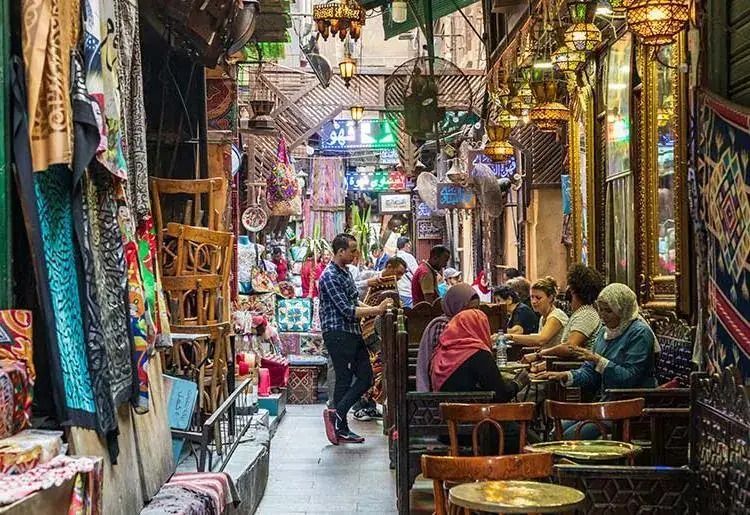
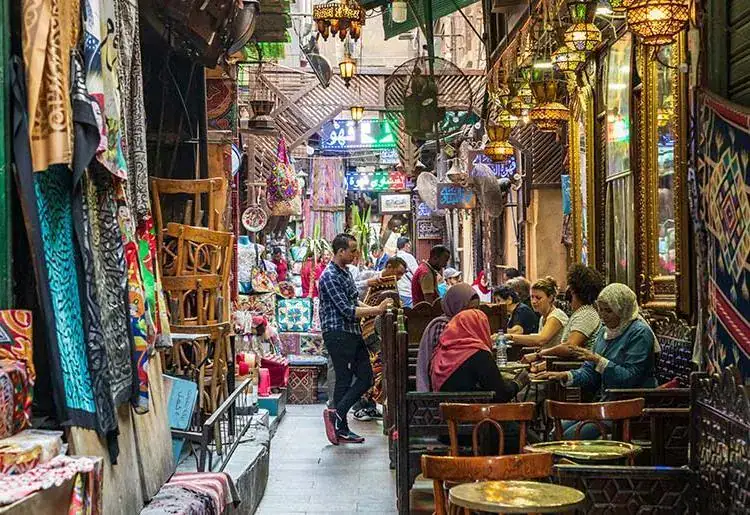
The bazaar is not one single building. Instead, it is a dense commercial district shaped by centuries of trade. Today, visitors move between jewelry shops, perfume sellers, spice merchants, metalworkers, lantern makers, cafés and souvenir stalls while historic architecture remains woven into the surrounding streets.
Why is Khan El Khalili famous? It is famous for its Mamluk history, traditional shopping streets, handmade metalwork and lanterns, gold and silver shops, historic cafés and its location beside some of the most important monuments of Islamic Cairo.
From Fatimid Cairo to the Mamluks
The History of Khan El Khalili Bazaar
The market’s name comes from Amir Jaharqas al-Khalili, a powerful Mamluk official who established a khan—an inn and commercial complex—in 1384 during the reign of Sultan al-Zahir Barquq. The site had previously formed part of the Fatimid royal burial area known as the Za’afran Tomb.
More than a century later, Sultan Qansuh al-Ghuri radically reshaped the commercial quarter. In 1511, he demolished the earlier khan and replaced it with new commercial structures, warehouses, shops and lodging units. Therefore, the district visitors know today reflects several historical phases rather than a single construction campaign.
For a specialist architectural overview, see the Museum With No Frontiers profile of Khan al-Khalili.
Medieval commercial urbanism
Architecture and Layout of Khan El Khalili
Khan El Khalili developed inside the medieval street network of Historic Cairo. Its character comes from narrow lanes, covered passages, shopfronts, carved stone entrances, wooden screens and nearby commercial buildings designed for merchants, storage and lodging.
Moreover, the district is closely connected with the traditional organization of Cairo’s markets by craft and trade. UNESCO notes that the streets of Historic Cairo were historically associated with particular handicrafts and commercial activities, a pattern that still helps explain the character of the old city today.
To understand that wider context, explore Al-Muizz Street, where some of Cairo’s greatest medieval monuments stand only a short walk from the bazaar.
What to look for
What to Buy at Khan El Khalili Bazaar
Lanterns & Metalwork
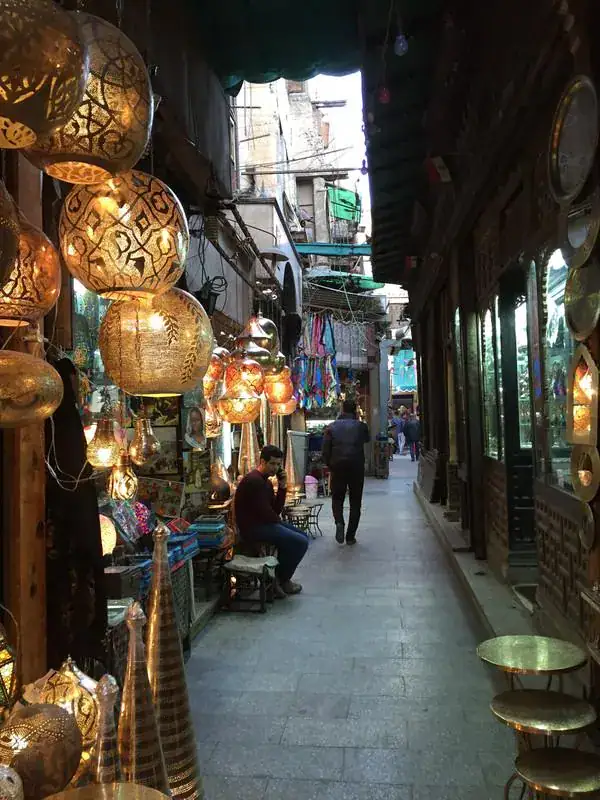
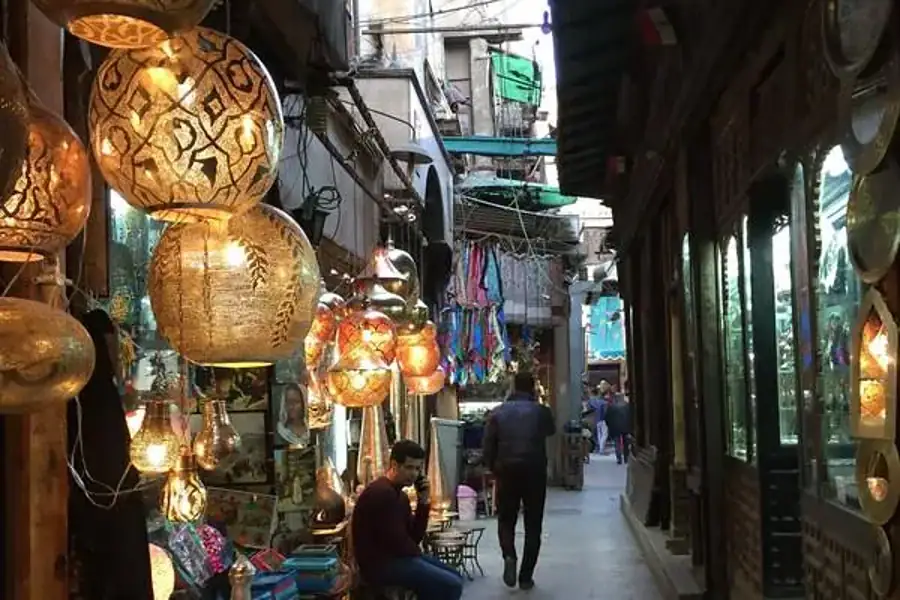
Traditional fanous lanterns, pierced brass lamps, trays and decorative metalwork create some of the bazaar’s most recognizable displays.
Jewelry & Silver
Gold and silver shops remain an important part of the commercial district. Compare workmanship, weight and price carefully before buying valuable pieces.
Spices & Perfumes
Spice shops, incense, essential oils and perfume bottles offer a more sensory side of the market and make easy-to-carry gifts.
Textiles & Scarves
Look for scarves, embroidered fabrics, traditional clothing and decorative textiles in shops around the wider souq district.
Wood & Inlay
Boxes, backgammon boards and small decorative objects often feature mother-of-pearl-style inlay and geometric designs.
Souvenirs
Small statues, papyrus-style art and inexpensive gifts are widely available, although quality varies greatly from shop to shop.
Shopping tip: bargaining is common in many souvenir shops. Ask the price first, compare similar items, negotiate politely and only continue if you are genuinely interested in buying.
Cairo at a global crossroads
Trade and Economic Importance of the Bazaar
Medieval Cairo prospered because it stood at the crossroads of routes linking Africa, the Mediterranean, the Red Sea and Asia. During the Mamluk period, international commerce helped make the city one of the great economic centers of its age.
Khan El Khalili became part of this wider commercial system. Merchants, pilgrims and travelers moved through Cairo, while specialized markets supplied metals, textiles, spices, luxury goods and everyday products. The district’s commercial role changed over time, yet trade remained central to its identity.
Today, tourism supports much of the visible retail activity, but the surrounding streets still preserve workshops and long-established trades. This continuity is one reason the bazaar feels different from a purpose-built shopping mall.
Cafés, writers and everyday Cairo
Culture and Social Life in Khan El Khalili
Khan El Khalili is as much a social place as a shopping district. For generations, its cafés have attracted residents, students, writers, artists and visitors who come to sit, talk and watch the movement of the old city.
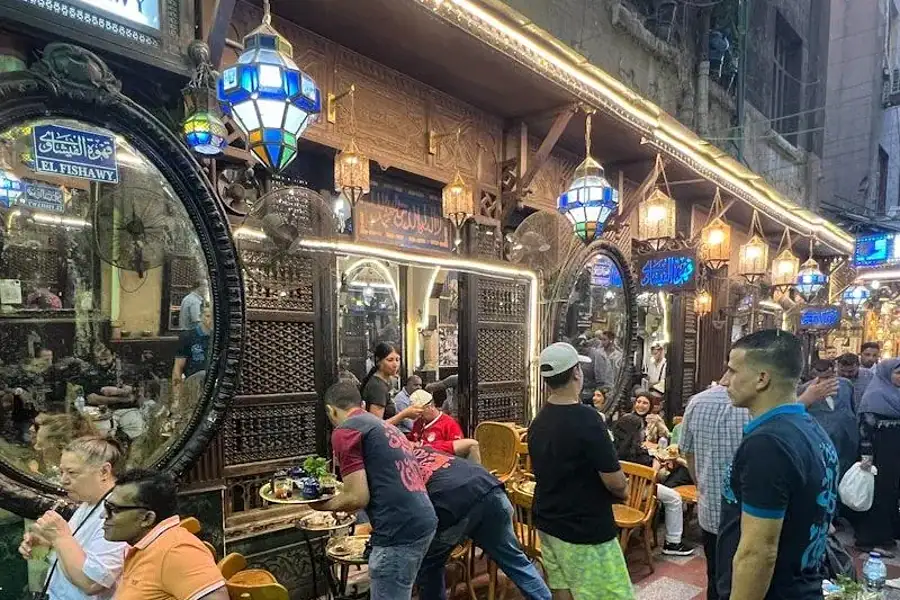
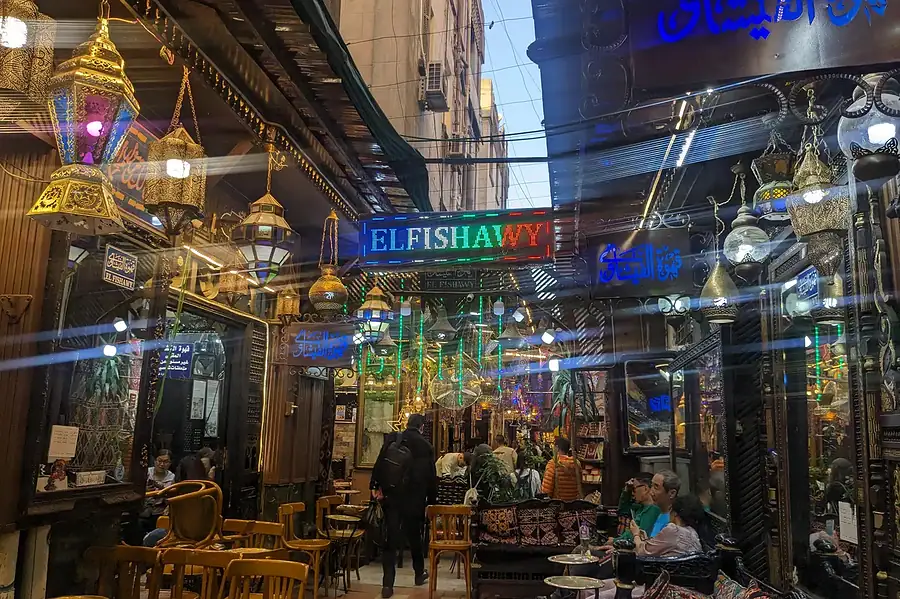
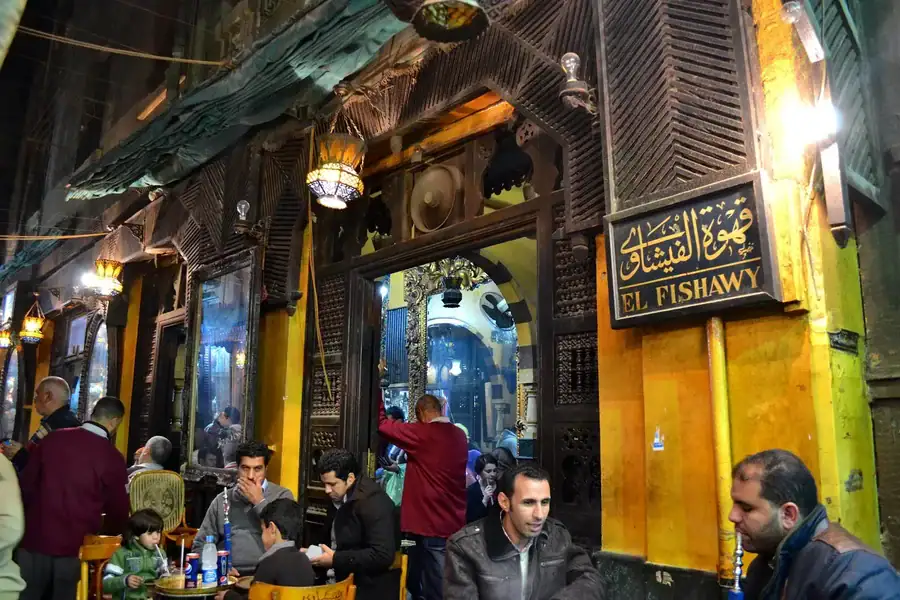
El-Fishawy is the bazaar’s best-known historic café. Sources differ on its exact founding year, but it clearly belongs to Cairo’s long-established coffeehouse tradition and became associated with major Egyptian cultural figures, including Nobel Prize-winning novelist Naguib Mahfouz.
In the evening, the market becomes especially atmospheric. Shop lights, brass lanterns, café mirrors, voices and the surrounding religious architecture create the sensory experience for which Khan El Khalili is famous.
A Cairo coffeehouse tradition
El-Fishawy Café at Khan El Khalili Bazaar
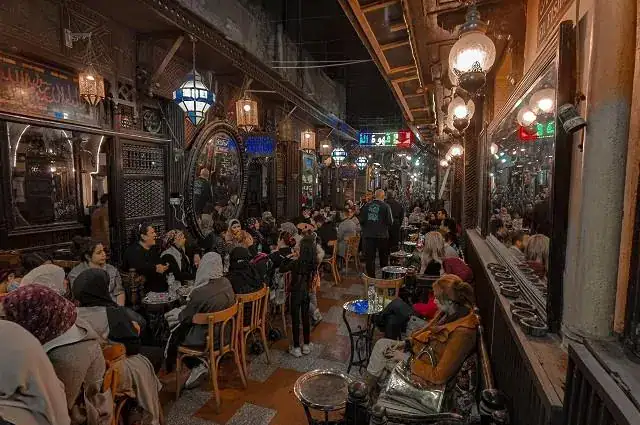
El-Fishawy is one of the most recognizable social spaces in the bazaar. Its mirrors, carved wood, hanging lamps and closely packed tables create the intimate atmosphere that has made Cairo’s historic coffeehouses famous.
Even if you do not plan a long stop, walking through this café alley gives visitors a vivid sense of how trade, conversation and everyday life overlap inside the old market.
Inside a World Heritage city
Khan El Khalili and the Heritage of Historic Cairo
Khan El Khalili forms part of the living urban fabric of Historic Cairo, inscribed on the UNESCO World Heritage List in 1979. UNESCO describes Historic Cairo as one of the world’s oldest Islamic cities and highlights its exceptional survival of medieval architecture, traditional street patterns and commercial districts.
That wider setting matters. The value of the bazaar is not limited to individual shops; it lies in the relationship between commerce, religious monuments, housing, streets and historic architecture. Read the UNESCO Historic Cairo listing for the broader heritage context.
Key point: Khan El Khalili is best understood as a living part of Historic Cairo rather than as a single enclosed market building.
Build a complete Islamic Cairo route
What to Visit Near Khan El Khalili
The bazaar sits beside some of Cairo’s richest historic streets. A natural route continues through Al-Muizz Street, where monumental Mamluk and Fatimid architecture lines the old city.
Afterwards, Al-Azhar Park offers gardens and panoramic views over Historic Cairo. Travelers with more time can continue toward the Salah El-Din Citadel for another major chapter of Cairo’s Islamic history.
Plan your visit
Visiting Khan El Khalili Bazaar in Cairo
Where is Khan El Khalili?
The bazaar is in Islamic Cairo near Al-Hussein Mosque and Al-Azhar, immediately east of the historic Al-Muizz Street area.
What is the best time to visit?
Late afternoon into evening is especially atmospheric as shops and cafés become busier and the lantern-lit streets come alive. Mornings are usually calmer for photography and walking.
How long should you allow?
Allow around 2–3 hours for a relaxed visit with shopping and a café stop. If you combine the bazaar with Al-Muizz Street and nearby monuments, allow at least half a day.
Is Khan El Khalili free to enter?
Yes. The market streets themselves do not require an admission ticket, although nearby monuments and museums may charge separate entrance fees.
Is bargaining expected?
Bargaining is common in many souvenir shops, but not every business negotiates in the same way. Stay friendly, compare prices and agree clearly before paying.
What should visitors wear?
Comfortable walking shoes are useful on uneven and busy streets. Modest clothing is also respectful if you plan to enter nearby mosques or religious sites.
Islamic Cairo
Location of Khan El Khalili Bazaar in Cairo
Quick answers
Frequently Asked Questions About Khan El Khalili Bazaar
How old is Khan El Khalili Bazaar?
The first khan associated with Amir Jaharqas al-Khalili was established in 1384 during the Mamluk period. The commercial district was substantially rebuilt under Sultan Qansuh al-Ghuri in 1511.
Who built Khan El Khalili?
Amir Jaharqas al-Khalili established the original khan in 1384 during the reign of Sultan al-Zahir Barquq. Sultan Qansuh al-Ghuri later transformed the district with a major rebuilding programme in 1511.
What is Khan El Khalili famous for?
It is famous for its historic souq atmosphere, lanterns, metalwork, jewelry, spices, perfumes, cafés and its setting among the monuments of Islamic Cairo.
Is Khan El Khalili worth visiting?
Yes. It is one of the best places to experience the living commercial atmosphere of Historic Cairo and combines easily with Al-Muizz Street and other nearby monuments.
What should I buy at Khan El Khalili?
Popular choices include lanterns, metalwork, silver jewelry, spices, perfume oils, textiles and small souvenirs. Quality varies, so compare similar items before buying.
Do you need a ticket for Khan El Khalili?
No ticket is required to walk through the bazaar streets. However, separate admission fees may apply to nearby historic monuments or museums.
When is the best time to visit Khan El Khalili?
Late afternoon and evening offer the liveliest atmosphere, while mornings are generally better for visitors who prefer quieter streets and easier photography.
How long do you need at Khan El Khalili?
Two to three hours is comfortable for the bazaar itself. Allow half a day or more if you also want to explore Al-Muizz Street and surrounding Historic Cairo.
Explore Historic Cairo
Walk Through Cairo’s Markets, Mosques and Medieval Streets
Combine Khan El Khalili with Al-Muizz Street, historic mosques and the surrounding neighborhoods on a private Cairo visit designed around your interests and pace.