

Al-Muizz Street Cairo
History, Islamic Architecture & Visitor Guide
Walk through centuries of Cairo history along a remarkable street lined with Fatimid gates, Mamluk masterpieces, historic houses, mosques and traditional markets.
Why Al-Muizz Street Cairo Is One of the City’s Essential Historic Walks
Al-Muizz Street Cairo is one of the richest concentrations of Islamic architecture in Egypt. Running through the historic core of Cairo, the street connects centuries of Fatimid, Ayyubid, Mamluk and Ottoman history in a single walkable urban landscape.
Moreover, the historic route stretches from Bab al-Futuh in the north toward Bab Zuwayla in the south. According to Egypt’s Ministry of Tourism and Antiquities, 29 monuments along the route illustrate the development of Islamic Egypt from the 10th to the 19th centuries.
However, unlike an enclosed museum, Al-Muizz remains part of everyday Cairo. In addition, historic façades stand beside workshops, markets, cafés and narrow lanes, giving visitors the unusual opportunity to experience architecture, urban history and contemporary street life together.
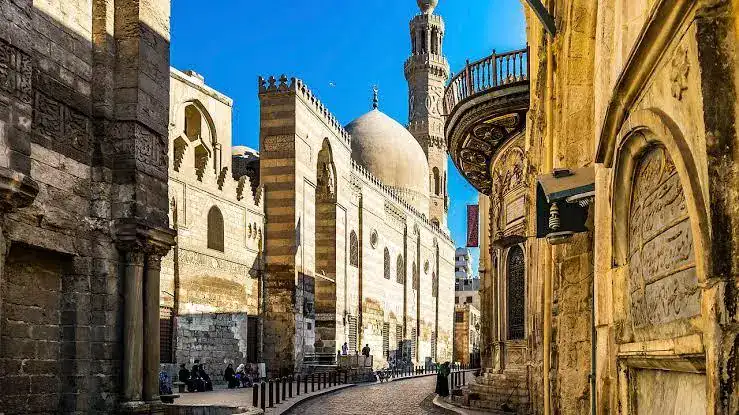
History of Al-Muizz Street
First, Cairo was founded in 969 AD after the Fatimid general Jawhar al-Siqilli established a new royal city on behalf of the Fatimid caliph al-Muizz li-Din Allah.
Next, the great north–south axis through the new city later became known as Al-Muizz Street. As a result, it formed the ceremonial and urban spine of Fatimid Cairo, connecting important gates, palaces, religious buildings and commercial districts.
Moreover, later dynasties did not abandon this important axis. Instead, Ayyubid, Mamluk and Ottoman patrons continued building along and around it. Consequently, a walk along the street reveals architectural layers created across many centuries rather than a single historical period.
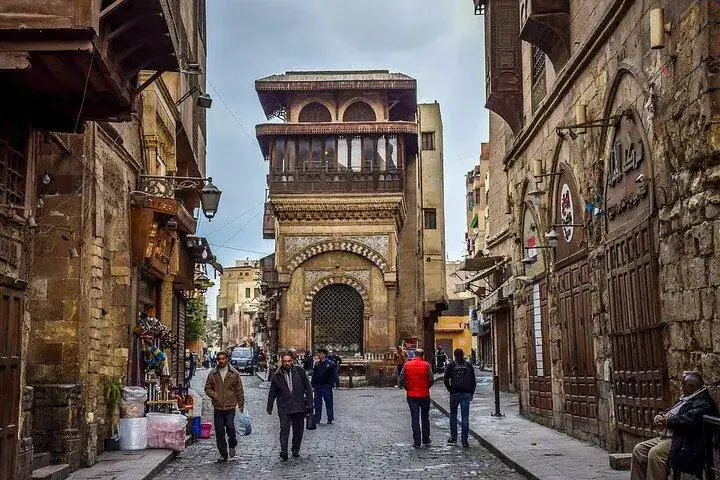
From Bab al-Futuh to Bab Zuwayla
To begin with, Al-Muizz Street runs through the historic Fatimid city from Bab al-Futuh in the north to Bab Zuwayla in the south.
More importantly, its significance comes not only from individual monuments but also from the urban fabric connecting them. For example, mosques, madrasas, mausoleums, merchant buildings, houses and charitable structures were woven into commercial and residential neighborhoods.
A Street Designed for City Life
- Religious: mosques, mausoleums and religious institutions.
- Educational: madrasas and kuttabs.
- Commercial: markets, workshops and merchant buildings.
- Social: sabils, houses and public services.
- Defensive: monumental city gates and fortifications.
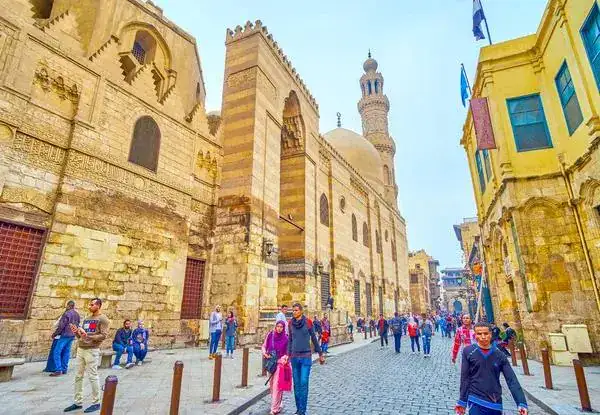
Fatimid, Mamluk and Ottoman Architecture
In addition, one reason Al-Muizz Street is so valuable is the extraordinary variety of Islamic architectural traditions concentrated within a relatively small area.
Fatimid Architecture
For example, early monuments demonstrate carved stone façades, inscriptions, geometric decoration and architectural solutions developed during Cairo’s first centuries.
Mamluk Architecture
Meanwhile, during the Mamluk period, monumental complexes became increasingly elaborate. Moreover, stone carving, muqarnas, soaring minarets, monumental portals and decorative marble created some of medieval Cairo’s most impressive buildings.
Ottoman Cairo
Finally, later buildings added wooden mashrabiyas, residential architecture, sabil-kuttabs and decorative interiors, creating another layer in the street’s architectural story.
Important Monuments on Al-Muizz Street Cairo
The street and its immediate historic surroundings contain an exceptional collection of religious, residential, commercial and defensive monuments. These are among the highlights worth looking for during a visit.
Bab al-Futuh
One of the monumental northern gates of Fatimid Cairo, built under the powerful vizier Badr al-Jamali.
Al-Hakim Mosque
One of Cairo’s major surviving Fatimid mosques and an important landmark near the northern section of the street.
Al-Aqmar Mosque
A celebrated Fatimid monument known particularly for its remarkable decorated stone façade.
Qalawun Complex
A masterpiece of Mamluk Cairo combining a madrasa, mausoleum and historic hospital complex.
Bayt al-Suhaymi
A superb example of historic Cairene domestic architecture, famous for courtyards, woodwork and mashrabiya screens.
Bab Zuwayla
The great southern gate of Fatimid Cairo and one of the most recognizable historic gateways in the city.
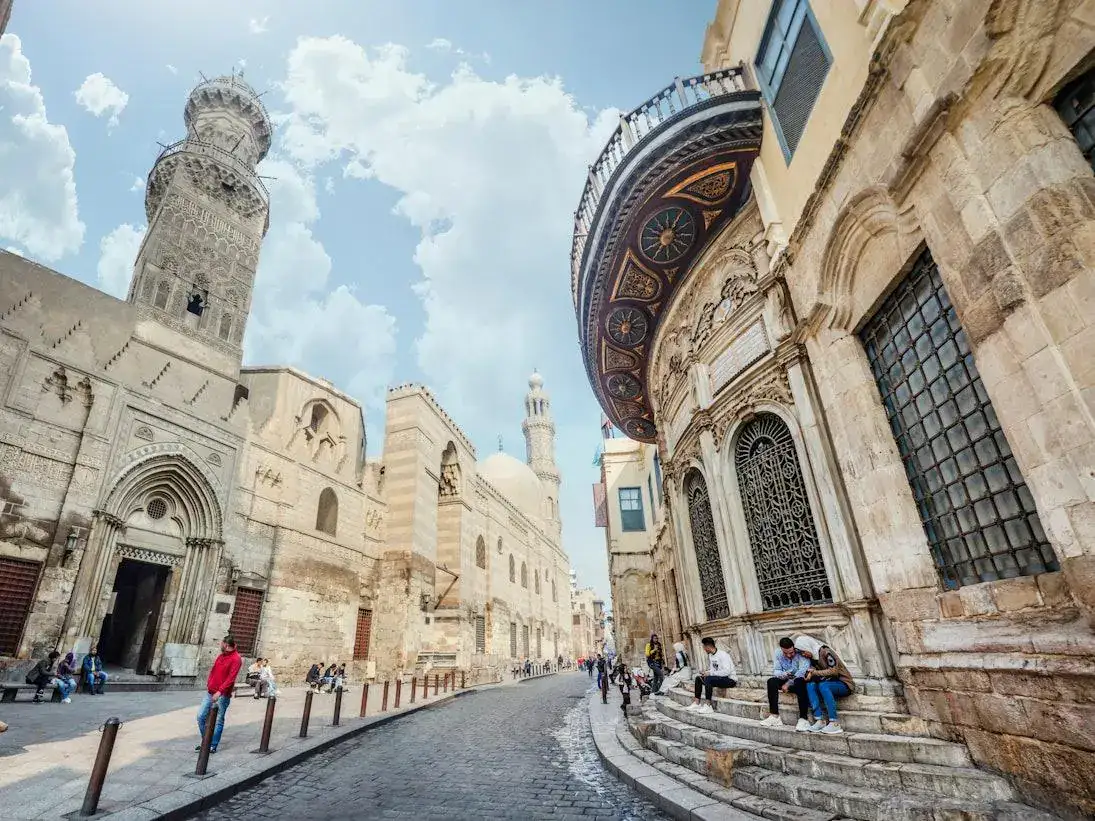
More Than an Open-Air Museum
However, the monuments are only part of the experience. At the same time, Al-Muizz Street remains closely connected to the commercial and social life of Islamic Cairo.
For example, visitors pass traditional shops, local cafés, craftsmen and historic lanes while moving between monumental buildings. In addition, nearby Khan El Khalili adds another layer of market culture, crafts and evening atmosphere.
Therefore, this combination makes the area particularly valuable for travelers who want to understand Cairo as a living historic city rather than simply visiting isolated archaeological sites.
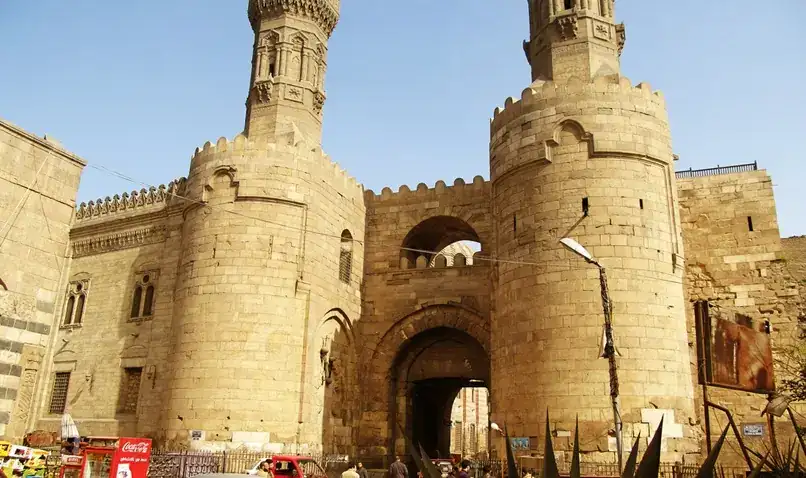
Bab Zuwayla
First, Bab Zuwayla is one of the surviving gates of Fatimid Cairo and forms the historic southern end of the Al-Muizz route. Moreover, the gate was constructed under the Fatimid vizier Badr al-Jamali in 1092 AD.
In addition, its two massive semicircular towers frame the entrance, while the minarets associated with the neighboring Mosque of Sultan al-Mu’ayyad Shaykh rise above the historic gateway.
Finally, Bab Zuwayla also witnessed major events in Egyptian history, including the execution of the last Mamluk sultan, Tumanbay, in 1517 following the Ottoman conquest.
Al-Muizz Street Cairo Visitor Guide
Location of Al-Muizz Street in Cairo
Moreover, Al-Muizz Street is located in the heart of Historic Cairo and can easily be combined with Khan El Khalili Bazaar, Al-Azhar Park and other monuments of Islamic Cairo.
📍 Al-Muizz Street, Historic Cairo, Cairo, Egypt
Al-Muizz Street Cairo FAQ
What is Al-Muizz Street famous for?
Al-Muizz Street is famous for its exceptional concentration of Islamic monuments, including mosques, madrasas, mausoleums, historic houses, sabils and monumental city gates.
Where is Al-Muizz Street in Cairo?
It lies in Historic Cairo and runs through the old Islamic city between Bab al-Futuh in the north and Bab Zuwayla in the south.
How many monuments are on Al-Muizz Street?
Egypt’s Ministry of Tourism and Antiquities identifies 29 monuments along the historic street, representing several centuries of Islamic architecture.
Is Al-Muizz Street part of a UNESCO World Heritage Site?
Al-Muizz Street lies within Historic Cairo, which was inscribed on the UNESCO World Heritage List in 1979.
How long do you need for Al-Muizz Street?
Around two to four hours is a useful starting point, although history and architecture enthusiasts can easily spend longer exploring the monuments and nearby lanes.
Can I visit Al-Muizz Street and Khan El Khalili together?
Yes. The two areas are close to each other, making them an excellent combination for exploring Islamic Cairo, historic architecture, traditional markets and local street life.
Discover More of Cairo
Combine the architecture of Islamic Cairo with Egypt’s most famous monuments and build a private Cairo experience around your interests.