
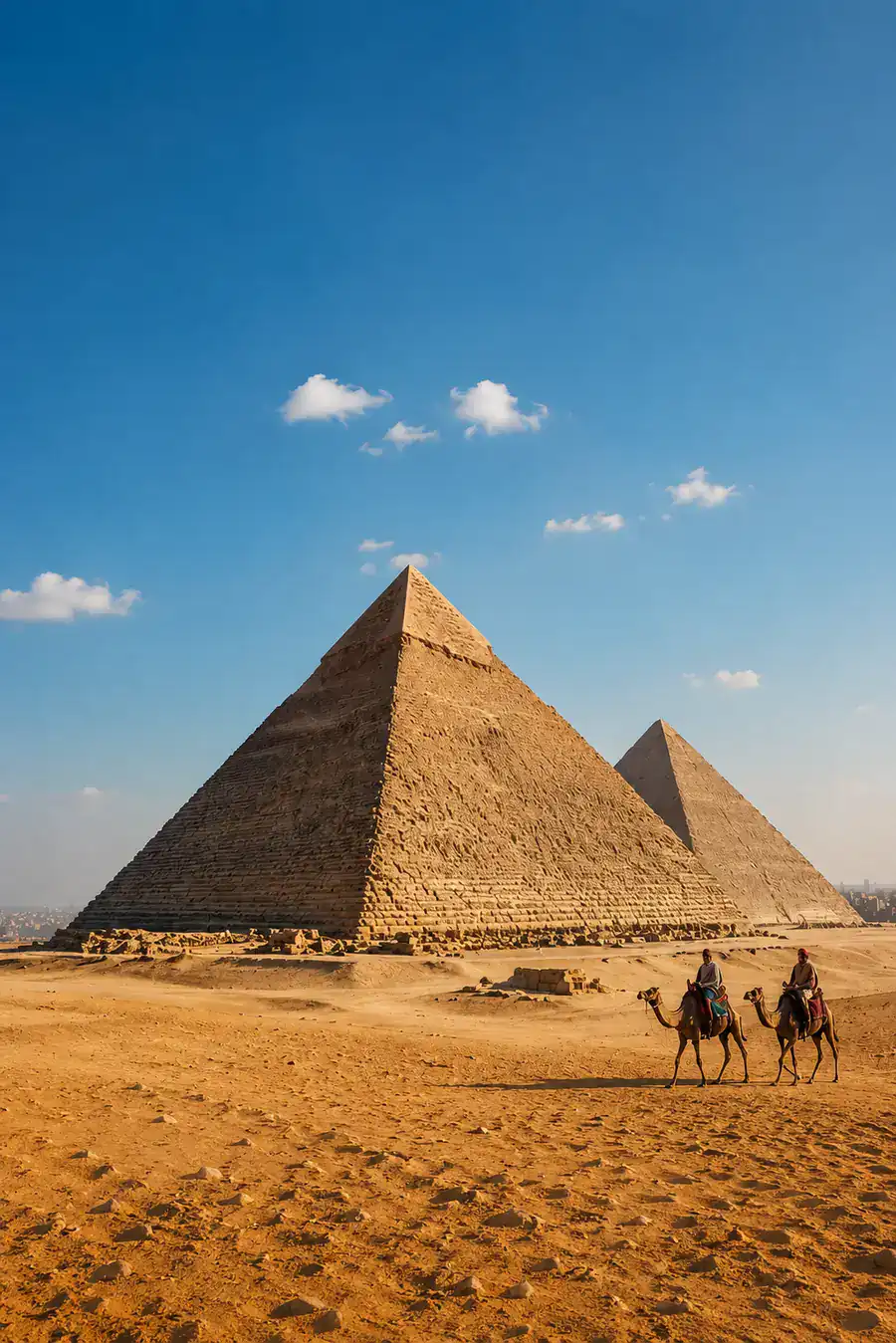
Pyramids of Giza
Complete Guide, History, Tickets & Visitor Tips Complete Visitor GuidePyramids of Giza are Egypt’s most famous ancient monuments. Therefore, this guide covers the Great Pyramid of Khufu, Khafre, Menkaure, the Great Sphinx, recent discoveries and practical advice for planning your visit.
Pyramids of Giza are Egypt’s most iconic ancient monuments. Explore the Great Pyramid, Sphinx and essential visitor tips.
What Are the Pyramids of Giza?
Pyramids of Giza are three major royal pyramids built for the Fourth Dynasty pharaohs King Khufu, Khafre and Menkaure on the Giza Plateau west of Cairo.
In addition, the wider complex contains temples, causeways, queens’ pyramids, mastaba tombs, boat burials and the Great Sphinx. Moreover, the Great Pyramid of Khufu is the oldest and largest of the three.
Most importantly, it is the only surviving monument traditionally counted among the Seven Wonders of the Ancient World.
Why the Pyramids of Giza Matter
Few monuments reveal the scale, ambition and organization of ancient Egypt as clearly as the Giza pyramid complex.
First, every royal pyramid formed part of a much larger funerary landscape. Mortuary temples stood beside the pyramids, while valley temples connected the complexes with lower ground.
In addition, decorated causeways linked these ritual spaces. Around them were smaller pyramids, mastaba tombs, workers’ settlements and evidence of boats connected with royal burial rituals.
Therefore, Giza should be understood as a complete sacred landscape, rather than simply three isolated pyramids.
For comparison, continue to our complete Saqqara Necropolis guide .
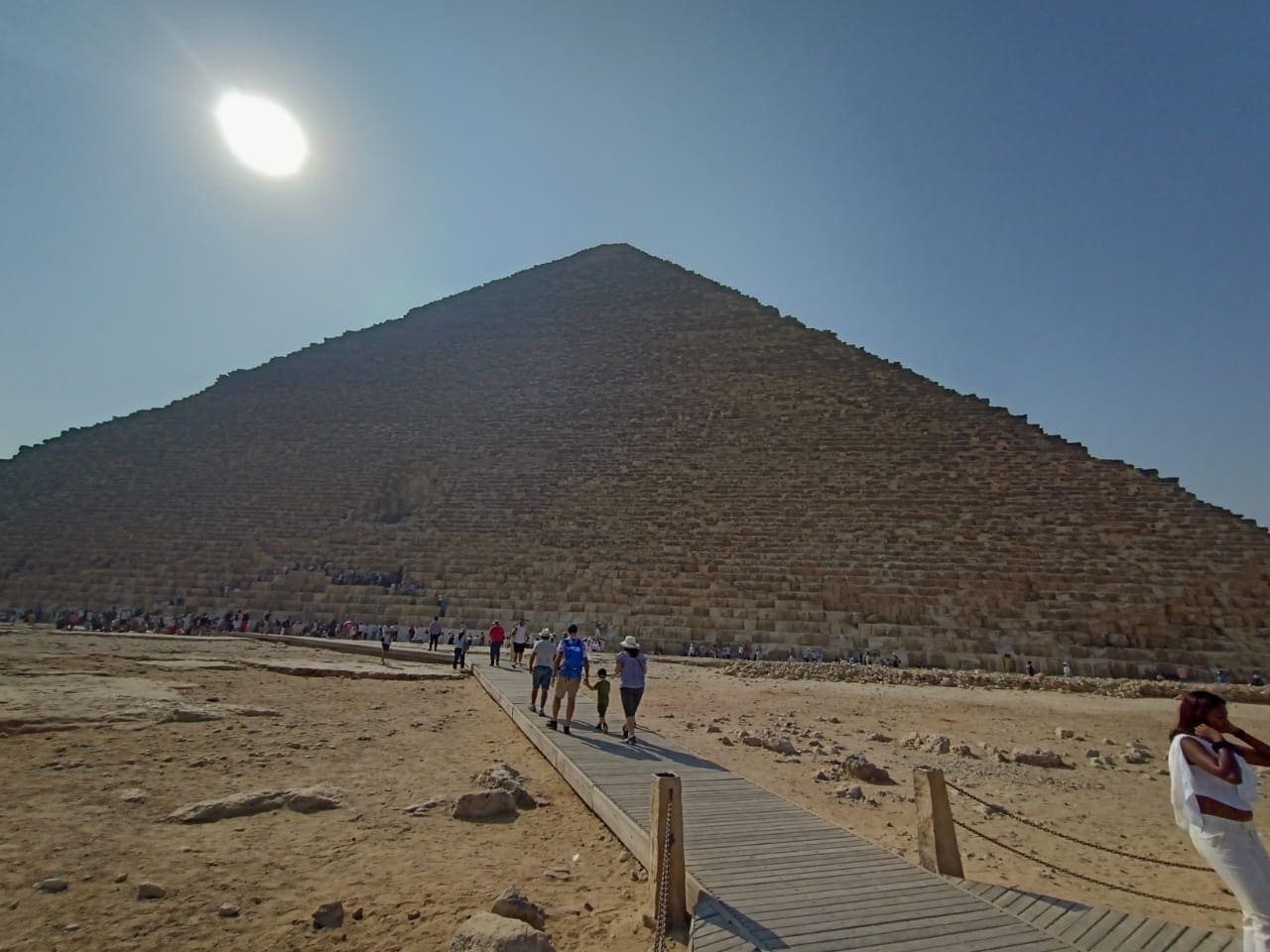
The Three Main Pyramids of Giza
Although the three monuments share a common purpose, each pyramid has distinctive architectural features.
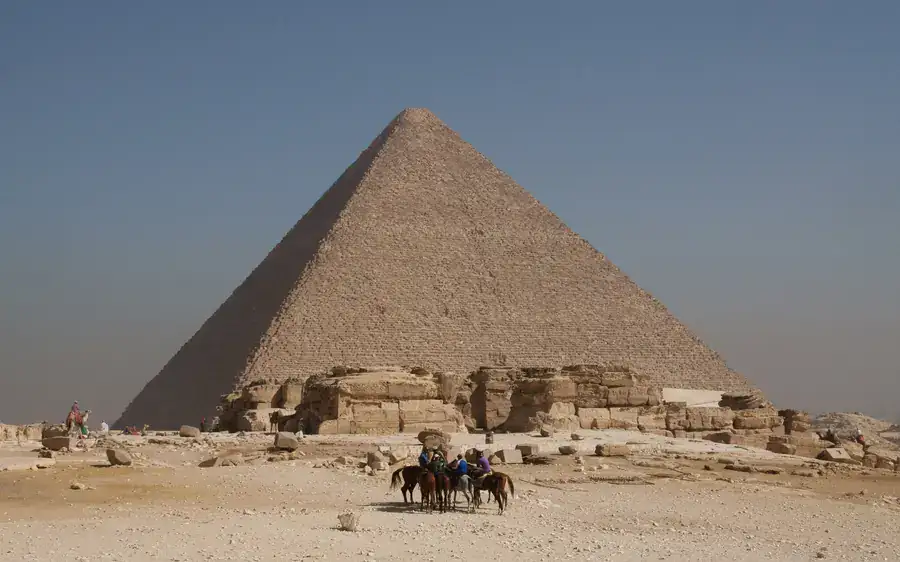
Great Pyramid of Khufu
The Great Pyramid originally reached approximately 146.5 metres. As a result, it remained the tallest human-made structure on Earth for about 3,800 years.
Furthermore, its internal passages and chambers remain among the most sophisticated examples of Old Kingdom engineering.
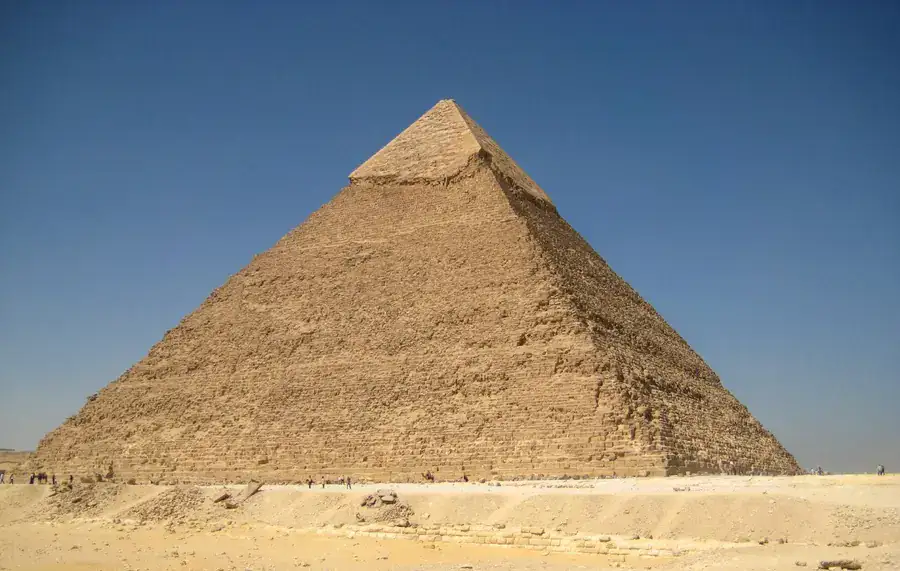
Pyramid of Khafre
Khafre’s pyramid stands on higher bedrock. Therefore, it often appears almost as tall as Khufu’s monument.
In addition, some smooth limestone casing stones remain near its summit, giving visitors a glimpse of the pyramids’ original appearance.
Explore Khafre on a Private Giza Tour →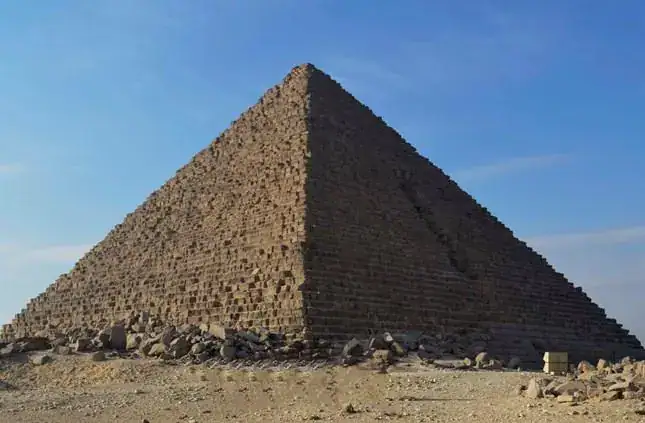
Pyramid of Menkaure
Menkaure’s pyramid is considerably smaller than the other two. However, its lower sections preserve evidence of impressive granite casing.
Consequently, the monument still provides important evidence about the changing design of royal pyramid complexes.
Explore Menkaure on a Private Giza Tour →Inside the Great Pyramid of Khufu
The internal architecture of the Great Pyramid differs from most other Egyptian pyramids. In particular, visitors encounter a network of passages leading to several famous spaces.
However, entering the monument is physically demanding. Passages are narrow, warm and steep in places.
Therefore, entry may not be suitable for visitors with claustrophobia or limited mobility.
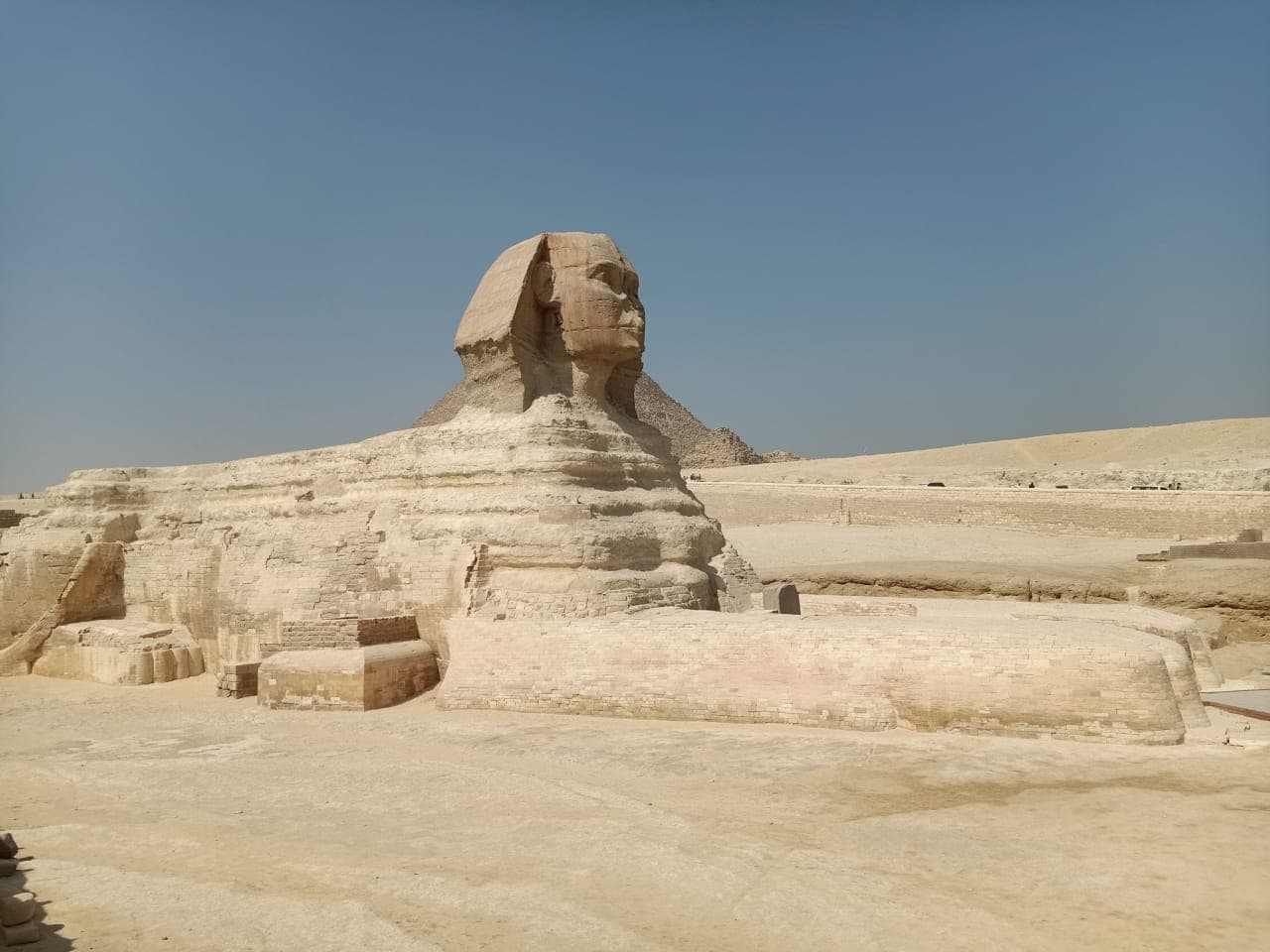
The Great Sphinx of Giza
The Great Sphinx was carved directly from limestone bedrock. Moreover, it combines the body of a lion with the head of a king.
Archaeological evidence closely associates the monument with Khafre’s pyramid complex. At approximately 73 metres long, it is one of the largest surviving sculptures of the ancient world.
What happened to the Sphinx’s nose?
The exact circumstances remain uncertain. However, historical illustrations made before Napoleon’s campaign already show the Sphinx without its nose.
Therefore, the popular story that Napoleon’s soldiers destroyed the nose is not supported by the evidence.
How Were the Pyramids of Giza Built?
Although researchers continue to debate the complete construction process, archaeological evidence reveals a highly organized workforce.
The Diary of Merer: Evidence From Khufu’s Reign
One of the strongest documentary links between King Khufu and the Great Pyramid project comes from the Wadi el-Jarf papyri. The logbook of an official named Merer records the work of his crew during Khufu’s reign, including the transport of fine limestone from Tura toward Akhet-Khufu, the ancient name of Khufu’s pyramid complex.
Therefore, this administrative record gives researchers unusually direct evidence from the pyramid age itself. Readers can consult the published English translation of Merer’s logbook by the Institut français d’archéologie orientale.
Were the pyramids built by slaves?
Contrary to a popular myth, evidence from workers’ settlements and cemeteries points toward organized teams of laborers, craftsmen and specialists.
Moreover, these workers were supported by a large administrative system. Therefore, the construction program reflects state organization as much as engineering skill.
Recent Discoveries Inside the Great Pyramid
Modern researchers increasingly use non-destructive technology to investigate hidden spaces inside the monument.
For example, cosmic-ray muon radiography identified the ScanPyramids North Face Corridor behind the chevron blocks on the north face of Khufu’s pyramid.
Subsequently, a scientific study measured the corridor at approximately nine metres long with a cross-section of roughly two by two metres.
Nevertheless, its exact ancient purpose remains under investigation. Therefore, researchers continue to study the space without damaging the surrounding masonry.
Read the peer-reviewed study in Nature Communications .
In addition, explore the archaeological questions surrounding hidden spaces in our guide to the Forbidden Chamber of the Great Pyramid.
Visiting the Pyramids of Giza
Before visiting, it is useful to plan around the weather, walking distance and access arrangements.
Generally listed as open daily from 8:00 AM to 4:00 PM.
October through April usually offers more comfortable weather.
Early morning usually offers cooler weather and softer light.
Allow at least three to four hours. Half a day is more relaxed.
| Giza Plateau Ticket | Foreign Adult | Foreign Student |
|---|---|---|
| Giza Plateau Area Entry | EGP 700 | EGP 350 |
| Pyramid interiors | Separate tickets; availability can change | |
However, ticket prices and access arrangements may change. Therefore, confirm the latest information on the official Egyptian Ministry Giza Plateau page .
Expert Tips for Visiting the Pyramids
Pyramids of Giza and the Grand Egyptian Museum
The Giza Plateau and the Grand Egyptian Museum make one of Cairo’s strongest full-day combinations.
First, explore Khufu, Khafre, Menkaure and the Great Sphinx. Afterwards, continue to the museum to place these monuments within the broader story of ancient Egyptian civilization.
Therefore, travelers interested in both monuments and artifacts can experience two complementary parts of Egyptian history in one day.
See our Giza Pyramids & Grand Egyptian Museum private tour .
Pyramids of Giza and Saqqara in One Day
Giza and Saqqara Necropolis together reveal the evolution of Egyptian pyramid construction particularly well.
At Saqqara, the Step Pyramid of King Djoser represents an earlier stage in monumental stone architecture. Between this early step-pyramid tradition and the great monuments at Giza, King Sneferu oversaw major pyramid projects at Meidum and Dahshur Necropolis, including the Bent Pyramid and Red Pyramid. These experiments helped establish the true smooth-sided pyramid tradition that reached an extraordinary scale under his son Khufu at Giza.
Therefore, combining both sites provides much more historical context than visiting either one alone.
Continue reading: Saqqara Necropolis Complete Visitor Guide .
Continue Exploring Cairo and Ancient Egypt
King Djoser
Discover the Third Dynasty pharaoh behind the Step Pyramid at Saqqara, his architect Imhotep and the beginning of Egypt’s monumental pyramid tradition.
Read the King Djoser Guide →King Khufu
Discover the pharaoh behind the Great Pyramid, the Diary of Merer, his royal boats, family and surviving statue.
Read the King Khufu Guide →King Sneferu
Discover Khufu’s father and the pharaoh behind the Bent Pyramid, Red Pyramid and major advances in true pyramid construction.
Read the King Sneferu Guide →Historical Sites in Egypt
Explore ancient cities, necropolises, museums and major heritage landmarks.
Explore Historical Sites →Cairo Travel Guide
Plan museums, Islamic Cairo, Coptic Cairo and other major attractions.
Explore Cairo →Cairo Day Tours
Explore Cairo privately with flexible transportation and local guides.
View Cairo Day Tours →Pyramids of Giza and UNESCO World Heritage
The Giza Plateau belongs to the UNESCO World Heritage property Memphis and its Necropolis – the Pyramid Fields from Giza to Dahshur .
Moreover, the protected landscape preserves major stages in the development of monumental stone construction and royal funerary architecture.
Most importantly, UNESCO identifies the Great Pyramid of Khufu as the only surviving wonder of the ancient world.
Where Are the Pyramids of Giza?
The archaeological plateau lies on the western side of Greater Cairo. Therefore, travel time depends heavily on traffic and your starting point.
Pyramids of Giza Frequently Asked Questions
How old are the Pyramids of Giza?
The principal monuments are more than 4,500 years old.
Who built the Great Pyramid?
The Great Pyramid was built for King Khufu during Egypt’s Old Kingdom. His pyramid complex was known as Akhet-Khufu.
Can tourists go inside the Great Pyramid?
Yes. However, access requires a separate ticket when the interior is open.
How long should I spend at Giza?
Three to four hours is a useful minimum. Half a day is more comfortable.
Are the pyramids tombs or temples?
The pyramids themselves were royal tombs. However, each belonged to a wider complex containing temples and causeways.
Can I visit Giza and Saqqara on the same day?
Yes. With an early start and private transportation, both can be combined. Saqqara also lets visitors explore the Step Pyramid of King Djoser, an essential earlier stage in the story of pyramid building.
What is the best time to visit?
Early morning is generally the most comfortable time.
Do I need a guide?
A guide is not compulsory. Nevertheless, an Egyptologist can explain the architecture and history much more clearly.
Sources & Local Expertise
This guide combines practical destination knowledge with official and peer-reviewed archaeological sources. Yalla Egypt Travel’s local team works with travelers visiting Giza, Cairo and Egypt’s major archaeological sites.
Key references include the Egyptian Ministry of Tourism and Antiquities, the UNESCO Memphis and its Necropolis listing, the Nature Communications study of the North Face Corridor, and the published Diary of Merer.
Learn more about Yalla Egypt Travel and our local team.
Visit the Pyramids of Giza With a Private Egyptologist
Explore Khufu, Khafre, Menkaure and the Great Sphinx at a comfortable pace. In addition, private transportation makes it easier to cover the large archaeological plateau efficiently.