
King Sneferu was one of the most important pharaohs of ancient Egypt and the first king of the Fourth Dynasty. During the Old Kingdom, he transformed pyramid building through an extraordinary series of royal monuments at Meidum and Dahshur. In particular, the architectural experiments of his reign culminated in the Red Pyramid, one of the earliest successful true smooth-sided pyramids. As a result, Sneferu helped create the engineering tradition that his son King Khufu inherited when building the Great Pyramid of Giza.
Who was King Sneferu? Sneferu — also written Snefru or Snofru — was an Egyptian pharaoh of the Fourth Dynasty who ruled during the Old Kingdom. He is especially famous for the pyramids associated with him at Meidum and Dahshur, including the Bent Pyramid and Red Pyramid. Most importantly, his reign represents a decisive stage in the development from stepped monuments to the classic smooth-sided Egyptian pyramid.
King Sneferu Quick Facts

Who Was King Sneferu?
King Sneferu was a ruler of Egypt’s Fourth Dynasty, the royal family that produced some of the most famous monuments in human history. Although exact ancient chronologies vary between modern scholarly reconstructions, Egypt’s Ministry of Tourism and Antiquities dates his reign to approximately 2613–2589 BC.
However, Sneferu’s historical importance extends far beyond the dates of his reign. Under his rule, royal pyramid construction underwent extraordinary experimentation. Consequently, the techniques developed during his building projects helped transform the pyramid from the stepped form associated with earlier rulers into the smooth-sided geometric monument that became a defining symbol of ancient Egypt.
Why King Sneferu Matters in Egyptian History
Sneferu represents a crucial link between the Step Pyramid tradition of King Djoser at Saqqara and the enormous pyramids later built at Giza. Therefore, understanding his reign helps explain how Egyptian architects and builders acquired the experience necessary to create the Pyramids of Giza.
King Sneferu’s Name and Royal Identity
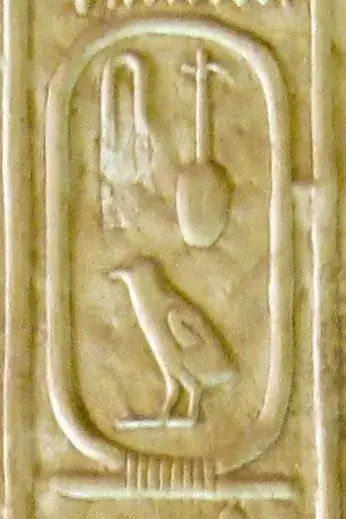
The king’s name appears in modern publications in several forms, including Sneferu, Snefru and Snofru. These differences result from the way ancient Egyptian writing is transliterated and reconstructed into modern languages. Therefore, travelers may encounter several spellings even when reputable museums and academic publications are discussing the same pharaoh.
How Sneferu’s Name Appears in Hieroglyphs
Ancient royal names could appear inside a cartouche, the elongated oval used around certain royal names in hieroglyphic inscriptions. In addition, Egyptian kings possessed several royal names and titles, reflecting the religious and political ideas surrounding kingship.
King Sneferu’s Family: Hetepheres and Khufu
Sneferu belonged to the royal world that marked the transition into Egypt’s Fourth Dynasty. However, some details concerning his parentage remain uncertain. For that reason, modern reconstructions of his early family relationships should not always be presented as established fact.
Queen Hetepheres I and Sneferu’s Royal Family
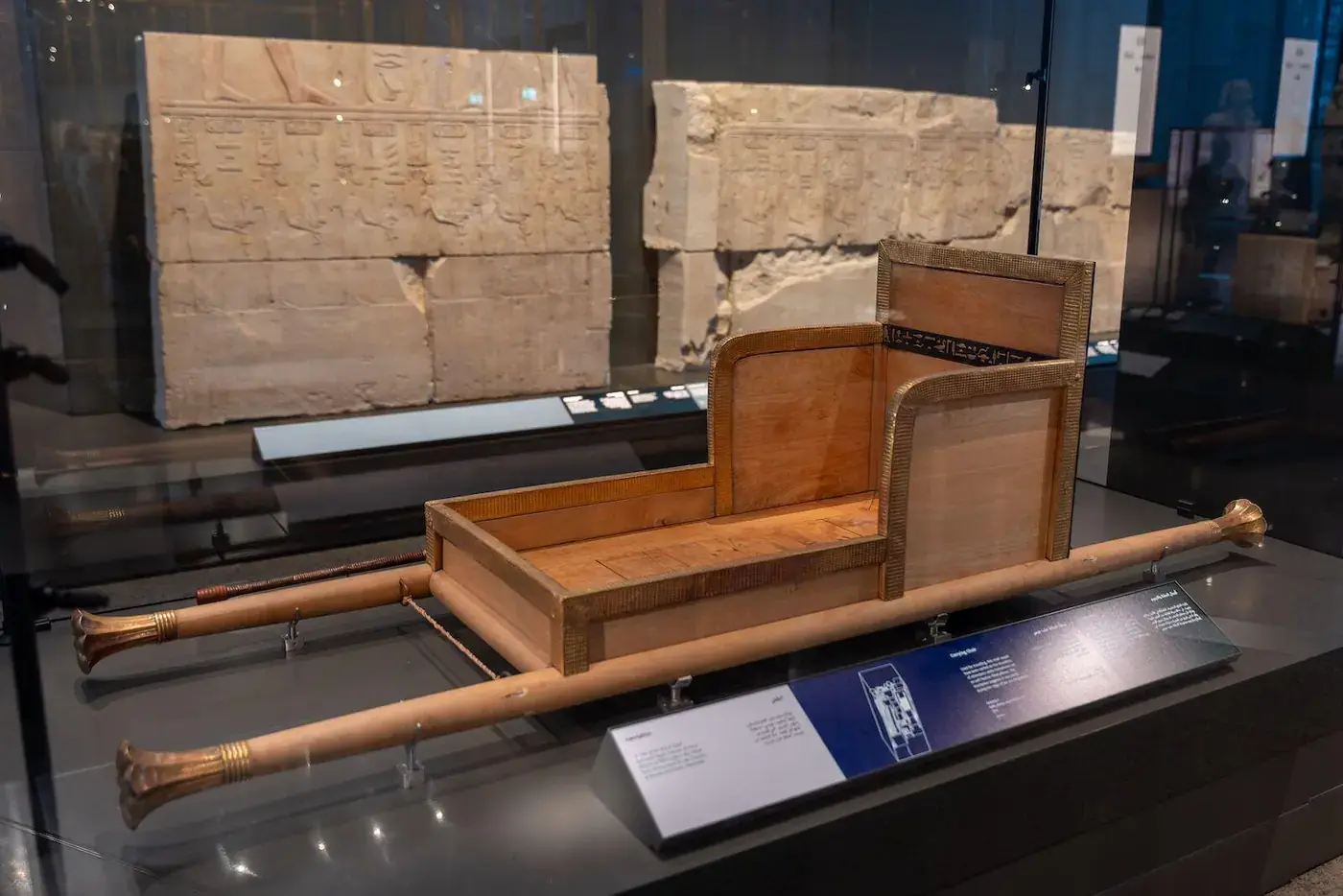
Queen Hetepheres I occupied an important position within the early Fourth Dynasty royal family and is closely connected with Sneferu and Khufu. Moreover, her burial equipment, discovered near the Great Pyramid at Giza, includes remarkable examples of royal furniture and craftsmanship from the Old Kingdom.

Was King Khufu the Son of Sneferu?
Yes. King Khufu, builder of the Great Pyramid of Giza, succeeded Sneferu. This relationship is particularly important because Khufu inherited a kingdom whose architects and builders had already accumulated enormous experience in monumental pyramid construction.
As a result, the architectural history of Sneferu and Khufu is closely connected. Continue the story in our complete guide to King Khufu.
King Sneferu’s Reign and Achievements
Sneferu ruled during the Old Kingdom, an era characterized by increasingly powerful kingship, major state-organized building projects and the development of large royal cemeteries. Moreover, his reign appears to have possessed the administrative capacity and resources required to support several enormous pyramid projects.
How King Sneferu Organized Monumental Building
Royal construction on this scale required far more than stonecutters. For example, quarrying, stone transport, food supply, skilled craftsmen, administrators and organized labor all had to work together. Therefore, Sneferu’s monuments provide evidence not only for architectural ambition but also for the growing organizational capacity of the Egyptian state.
In addition, constructing several monumental projects allowed builders to accumulate practical knowledge from one site to the next. As a result, Sneferu’s reign became a critical period in the development of large-scale stone construction.

King Sneferu’s Expeditions and Royal Power
Evidence associated with Sneferu’s reign also points to activity beyond the royal pyramid fields. In particular, ancient records and inscriptions have been used by Egyptologists to study expeditions, access to resources and Egyptian activity in regions such as Sinai and Nubia.
However, these sources require careful interpretation because royal inscriptions often presented events from the ideological perspective of the Egyptian monarchy. Nevertheless, they help place Sneferu’s pyramid projects within the broader political and economic world of the Old Kingdom.
How Many Pyramids Did King Sneferu Build?
Three major pyramids are conventionally associated with Sneferu: the Meidum Pyramid, the Bent Pyramid and the Red Pyramid. Together, these monuments preserve an exceptional architectural sequence. Therefore, studying them together is more useful than viewing each pyramid as an isolated monument.
| Pyramid | Location | Why It Matters |
|---|---|---|
| Meidum Pyramid | Meidum | Developed from a stepped monument toward a smooth-sided pyramid. |
| Bent Pyramid | Dahshur | Its visible change of angle preserves evidence of a major engineering adjustment. |
| Red Pyramid | Dahshur | Represents a successful monumental true smooth-sided pyramid. |
Why King Sneferu Changed Pyramid Building Forever
Sneferu’s monuments allow us to see architectural development rather than only the finished result. First, Meidum demonstrates the transformation of a stepped form. Next, the Bent Pyramid preserves a dramatic change in slope. Finally, the Red Pyramid shows the successful application of the smooth-sided form on a huge scale. Consequently, the knowledge accumulated through these projects helped prepare the architectural tradition inherited by Khufu.
King Sneferu and the Meidum Pyramid
The Pyramid of Meidum is essential to understanding Sneferu. According to Egypt’s Ministry of Tourism and Antiquities, the monument began as a seven-step pyramid, was enlarged into an eight-step structure and was eventually transformed into a true pyramid with smooth sides.
Earlier scholarship sometimes attributed the beginning of the monument to Sneferu’s predecessor, Huni. However, the Ministry notes that this is no longer the consensus. Instead, Sneferu’s name appears in texts at Meidum, whose ancient name was associated with the king.

Did Sneferu’s Meidum Pyramid Suddenly Collapse?
A famous older theory proposed that the debris surrounding Meidum resulted from a sudden catastrophic collapse. However, the Egyptian Ministry’s description explains that the layers within the debris indicate a gradual process of erosion and destruction rather than one dramatic collapse during construction.
Why Meidum Matters to Pyramid Engineering
Meidum also contains important developments in internal architecture. For example, corbelled construction helped distribute the enormous weight of masonry above internal spaces. Similar principles would later appear in other Old Kingdom pyramids. Therefore, Meidum provides valuable evidence for the architectural experimentation taking place during Sneferu’s reign.
For official archaeological information, see the Egyptian Ministry of Tourism and Antiquities — Pyramid of Meidum.
King Sneferu’s Bent Pyramid at Dahshur
The Bent Pyramid at Dahshur is one of the most recognizable pyramids in Egypt because its slope changes partway up the monument. However, this unusual silhouette is not simply decorative. Instead, it preserves evidence of an important engineering decision made during construction.
Why Is King Sneferu’s Bent Pyramid Bent?
According to Egypt’s Ministry of Tourism and Antiquities, construction began at an angle of approximately 55 degrees. Subsequently, the angle was reduced to about 43 degrees because the load of the masonry created instability. As a result, the lower part rises more steeply while the upper section has a noticeably shallower slope.

Inside the Bent Pyramid
The Bent Pyramid is also unusual because it has two entrances, one on the northern side and another high on the western side. Moreover, these entrances lead to internal spaces featuring corbelled roofs, a sophisticated technique for managing the immense pressure created by the pyramid’s masonry.
For further archaeological details, see the official Bent Pyramid page from Egypt’s Ministry of Tourism and Antiquities.
King Sneferu’s Red Pyramid: An Engineering Breakthrough
After the challenges visible in the Bent Pyramid, Sneferu’s builders constructed the Red Pyramid nearby at Dahshur. Its modern name comes from the reddish color of the local limestone visible today. Originally, however, the monument was covered with fine white Tura limestone casing.
Why the Red Pyramid Was So Important
The Red Pyramid is particularly important because it demonstrates the successful construction of a monumental true smooth-sided pyramid. Moreover, Egypt’s Ministry of Tourism and Antiquities describes it as the third-largest Egyptian pyramid after the pyramids of Khufu and Khafre at Giza.

Inside King Sneferu’s Red Pyramid
Visitors entering from the northern side descend through a long passage into a sequence of chambers. Inside, the rooms use impressive corbelled ceilings, in which successive courses of stone project inward as they rise. Therefore, the interior is important not only as a visitor experience but also as evidence of Old Kingdom structural engineering.

Was the Red Pyramid Sneferu’s Burial Place?
The Ministry identifies the third internal chamber as the space believed to have served as the burial chamber. Nevertheless, that wording is important because archaeology does not answer every question about Sneferu’s final burial with absolute certainty.
Read the official Red Pyramid guide from Egypt’s Ministry of Tourism and Antiquities.
How King Sneferu Revolutionized Pyramid Engineering
Sneferu’s greatest legacy may be the accumulated engineering knowledge generated during his reign. Rather than viewing his pyramids as isolated monuments, they can be understood as stages within an extraordinary period of architectural development. Consequently, each major project helps explain the next step in the evolution of the Egyptian pyramid.
From Meidum to Dahshur
First, the Meidum Pyramid demonstrates the transformation of earlier stepped architecture toward a smooth-sided form. Next, the Bent Pyramid preserves evidence of a major change in construction angle. Finally, the Red Pyramid shows that builders had developed a successful approach to constructing a monumental true pyramid.
Stage 1 — Earlier Step-Pyramid Architecture
Earlier royal monuments, especially the Step Pyramid of King Djoser at Saqqara, established the tradition of monumental stone pyramid construction.
Stage 2 — Sneferu at Meidum
The monument passed through multiple building phases and was ultimately transformed toward the true pyramid form.
Stage 3 — The Bent Pyramid
A pyramid intended with smooth faces required a major adjustment in slope, leaving visible evidence of the engineering challenge.
Stage 4 — Sneferu’s Red Pyramid
The builders successfully produced a huge true smooth-sided pyramid using a more sustainable angle.
Stage 5 — Khufu and Giza
In the next reign, Fourth Dynasty pyramid construction reached an unprecedented scale with the Great Pyramid of Giza.
From King Sneferu to the Great Pyramid
As a result, Khufu inherited far more than royal power from his father. He also inherited a building tradition enriched by extensive experimentation. Therefore, the architectural history of the Great Pyramid becomes much clearer when Sneferu’s earlier monuments are studied first.

Where Was King Sneferu Buried?
The Red Pyramid at Dahshur is widely considered the strongest candidate for Sneferu’s final burial place. In particular, its position as the later successful pyramid within his monumental building program makes this interpretation plausible. Furthermore, one of its internal chambers is generally regarded as the burial chamber.
Do We Have King Sneferu’s Mummy?
No securely identified royal mummy provides simple final confirmation of Sneferu’s burial place. Therefore, a careful historical account should distinguish between the most widely accepted interpretation and absolute archaeological certainty. In other words, the Red Pyramid remains the leading candidate, but the evidence does not justify presenting every detail as proven fact.
What Evidence Do We Have for King Sneferu?
Our knowledge of Sneferu comes from several kinds of evidence rather than a single ancient biography. These sources include monumental architecture, royal names and inscriptions, ancient annals, relief fragments and archaeological material connected with the Fourth Dynasty.
King Sneferu’s Royal Inscriptions and Reliefs
Inscriptions bearing or associated with Sneferu’s name help establish his royal presence at sites connected with his reign. In addition, reliefs contribute to our understanding of Old Kingdom kingship, ritual and royal ideology. However, individual inscriptions must always be interpreted within their archaeological context.
The Palermo Stone and Royal Annals
Fragments of ancient Egyptian royal annals, commonly discussed in connection with the Palermo Stone, preserve records relating to early Egyptian kings. Consequently, this material is extremely valuable for reconstructing early royal history. Nevertheless, incomplete preservation means scholars must interpret the surviving information carefully.
Later Egyptian Memory of Sneferu
Sneferu was remembered long after the Old Kingdom. For example, later Egyptian literary tradition preserved an image of him as an ancient ruler. These texts are valuable for understanding how Egyptians remembered their distant past. However, because they were written much later, they should not automatically be treated as contemporary eyewitness accounts of Sneferu’s reign.
King Sneferu’s Legacy
Sneferu’s legacy is visible every time someone looks at the classic silhouette of an Egyptian pyramid. Before the Great Pyramid of Giza came the engineering experience accumulated through Sneferu’s extraordinary building program.
How King Sneferu Influenced Khufu
The reign of King Khufu carried pyramid construction to an even greater scale. However, Khufu’s achievement belonged to an architectural tradition that had already been transformed during his father’s reign.
Furthermore, the Metropolitan Museum of Art describes Sneferu’s massive pyramids at Meidum and Dahshur as central to the transformation of the stepped pyramid into the true smooth-sided form. In the next generation, that development culminated in Khufu’s Great Pyramid.
Why King Sneferu Still Matters Today
Sneferu is therefore much more than the father of Khufu. His monuments preserve one of the clearest archaeological records of experimentation in ancient Egyptian architecture. Moreover, visitors can still compare the different solutions developed by his builders at Meidum and Dahshur thousands of years later.
Why is King Sneferu important? Sneferu is important because his reign represents a turning point in Egyptian monumental architecture. The sequence of pyramids associated with him demonstrates technological development that led toward the classic smooth-sided pyramid and, ultimately, helped establish the architectural tradition inherited by the builders of the Great Pyramid of Giza.
Can You Visit King Sneferu’s Pyramids Today?
Yes. The monuments at Dahshur and Meidum can be visited, although opening conditions, accessible interiors and ticket prices can change. Dahshur is especially rewarding because visitors can see both the Bent Pyramid and Red Pyramid and compare two critical stages of Fourth Dynasty architecture within the same archaeological landscape.
Combining Dahshur, Saqqara and Giza
For travelers interested in the development of the pyramids, a broader route connecting Saqqara, Dahshur and Giza provides an excellent chronological introduction to Egyptian architecture. First comes the Step Pyramid of King Djoser. Next come Sneferu’s experiments. Finally, the sequence reaches Khufu’s Great Pyramid at Giza.
Therefore, travelers who want to understand the pyramids rather than simply photograph them should consider visiting more than one archaeological site. Explore our Giza Pyramids, Saqqara & Memphis Tour, our Half-Day Giza Pyramids Tour, or browse all Cairo Day Tours.
King Sneferu vs King Khufu: What Changed?
Sneferu and Khufu belong to consecutive generations of the Fourth Dynasty. However, their monuments represent different stages in pyramid development. Sneferu’s reign is particularly valuable for showing architectural experimentation, whereas Khufu’s Great Pyramid demonstrates how far that tradition could be taken on a single monumental project.
| King Sneferu | King Khufu |
|---|---|
| Early Fourth Dynasty | Succeeded Sneferu |
| Strongly associated with Meidum and Dahshur | Strongly associated with Giza |
| Major experimentation in true pyramid construction | Built the Great Pyramid on an unprecedented scale |
| Bent Pyramid and Red Pyramid | Great Pyramid of Giza |
| Helped establish the mature smooth-sided pyramid tradition | Produced its most famous monumental expression |
To continue chronologically through the Fourth Dynasty, read our full biography of King Khufu: Great Pyramid, Life, Family & Legacy.
King Sneferu Frequently Asked Questions
Who was King Sneferu?
King Sneferu was an Old Kingdom pharaoh of Egypt’s Fourth Dynasty. He is best known for the major pyramid projects associated with his reign at Meidum and Dahshur and for the architectural developments that helped establish the true smooth-sided pyramid.
When did King Sneferu rule Egypt?
Chronologies vary. However, Egypt’s Ministry of Tourism and Antiquities dates Sneferu approximately to 2613–2589 BC. Other modern scholarly chronologies can differ by several decades.
How many pyramids did King Sneferu build?
Three major pyramids are conventionally associated with Sneferu: the Meidum Pyramid, Bent Pyramid and Red Pyramid. Together, their construction history forms one of the most important sequences in the development of Egyptian pyramid architecture.
Why is King Sneferu famous?
Sneferu is famous primarily for transforming pyramid architecture. In particular, his reign witnessed major experimentation that culminated in the successful construction of the Red Pyramid, a monumental true smooth-sided pyramid.
Why is the Bent Pyramid bent?
The slope was changed during construction. According to Egypt’s Ministry of Tourism and Antiquities, the pyramid began at roughly 55 degrees and was subsequently adjusted to about 43 degrees because excessive loads created instability.
What is the Red Pyramid?
The Red Pyramid is a large pyramid at Dahshur built during Sneferu’s reign. Its exposed local limestone gives it its modern reddish appearance, although it was originally covered with white Tura limestone casing.
Was King Sneferu the father of Khufu?
Yes. Khufu succeeded Sneferu and built the Great Pyramid at Giza. Therefore, the transition between their reigns connects the architectural developments at Meidum and Dahshur with monumental pyramid construction at Giza.
Who was King Sneferu’s wife?
Queen Hetepheres I is closely associated with Sneferu’s royal family and was the mother of Khufu. Moreover, her extraordinary burial equipment discovered near the Great Pyramid provides valuable evidence for royal craftsmanship and elite life around the beginning of the Fourth Dynasty.
Was King Sneferu buried in the Red Pyramid?
The Red Pyramid is generally considered the strongest candidate for Sneferu’s final burial place. However, the absence of a securely identified royal mummy means the question cannot be answered with complete archaeological certainty.
Did King Sneferu build the Meidum Pyramid?
Older scholarship sometimes connected the beginning of Meidum with King Huni. However, Egypt’s Ministry of Tourism and Antiquities states that this is no longer the consensus and emphasizes the evidence linking the monument and site with Sneferu.
Where are King Sneferu’s pyramids?
The Bent Pyramid and Red Pyramid are at Dahshur, south of Cairo. Meanwhile, the Meidum Pyramid lies farther south at Meidum in the Beni Suef area.
Can tourists enter Sneferu’s pyramids?
Some pyramid interiors at Dahshur can be accessible to visitors, subject to current archaeological-site regulations. However, access, opening hours and ticket arrangements can change, so visitors should check official information before traveling.
What came first, the Bent Pyramid or the Red Pyramid?
The Bent Pyramid came before the Red Pyramid. Subsequently, the Red Pyramid was constructed using a more successful approach to the true smooth-sided pyramid form.
Why was King Sneferu important to the Great Pyramid?
The engineering experience accumulated during Sneferu’s pyramid projects helped establish the architectural tradition inherited by his son Khufu. As a result, Khufu’s builders could draw on decades of Fourth Dynasty experience when constructing the Great Pyramid at Giza.
King Sneferu Sources & Further Reading
This guide prioritizes Egyptian archaeological authorities and major museum or academic sources. Nevertheless, dates and interpretations can vary between scholarly chronologies, particularly for the early Old Kingdom.
- Egyptian Ministry of Tourism and Antiquities — The Pyramid of Meidum
- Egyptian Ministry of Tourism and Antiquities — The Bent Pyramid
- Egyptian Ministry of Tourism and Antiquities — The Red Pyramid
- Egyptian Ministry of Tourism and Antiquities — Dahshur Archaeological Site
- Egyptian Ministry of Tourism and Antiquities — Old Kingdom
- The Metropolitan Museum of Art — Egypt in the Old Kingdom
- The Metropolitan Museum of Art — Old Kingdom Royal Jubilee Relief
Continue Exploring Ancient Egypt
King Djoser
Go back to the Third Dynasty and discover the pharaoh whose Step Pyramid at Saqqara began the monumental pyramid tradition that Sneferu later transformed.
Read about King Djoser →King Khufu
Continue from Sneferu to his son and successor, builder of the Great Pyramid.
Read about King Khufu →The Pyramids of Giza
Explore the Great Pyramid and the royal pyramid complexes that followed Sneferu’s architectural breakthroughs.
Explore the Pyramids of Giza →Giza, Saqqara & Memphis
See several major stages of ancient Egyptian history on a private guided tour from Cairo.
View the tour →Cairo Day Tours
Discover private tours to Cairo’s major archaeological sites and museums with local guides.
Browse Cairo tours →Explore Egypt’s Pyramids with a Private Guide
Discover Giza, Saqqara, Dahshur and the monuments that tell the story of how ancient Egyptians developed the pyramid — from early experiments to the Great Pyramid of Khufu.
Plan Your Private Egypt Tour Explore Cairo Day Tours