
Mosque of Ibn Tulun Cairo
Mosque of Ibn Tulun Cairo: History, Architecture & Visitor Guide
Explore one of Cairo’s oldest surviving mosques, from its 9th-century Tulunid origins and vast courtyard to its spiral minaret, pointed arches, stucco decoration and enduring place in Historic Cairo.
Tulunid Cairo
Why the Mosque of Ibn Tulun Is One of Cairo’s Great Islamic Monuments
Mosque of Ibn Tulun Cairo is one of the oldest surviving mosques in Cairo and one of the clearest architectural links between Egypt and the Abbasid world. Ahmad Ibn Tulun built it between 876 and 879 CE in his new capital, al-Qata’i, after establishing semi-independent rule in Egypt.
Moreover, the mosque remains remarkable because so much of its original 9th-century plan survives. A vast open courtyard, arcaded prayer halls, brick construction, carved stucco and a surrounding ziyada create a sense of scale that differs strongly from later Cairene mosques.
Why is the Mosque of Ibn Tulun important? It preserves one of the most complete early Islamic mosque plans in Egypt and shows the architectural influence of Abbasid Samarra while also becoming a distinctive monument of Cairo in its own right.
A new capital for a new ruler
Ahmad Ibn Tulun and the Founding of the Mosque
Ahmad Ibn Tulun arrived in Egypt in 868 CE as an Abbasid governor. However, he soon built his own military and financial power, creating a level of political autonomy that set Egypt apart from direct control in Baghdad.
To express that authority, he founded a new capital called al-Qata’i north of Fustat. At its center, he commissioned a monumental congregational mosque large enough to serve the court, army and wider population.
Although al-Qata’i was later destroyed, the mosque survived. As a result, it became the most important standing architectural witness to Ibn Tulun’s short-lived capital and to the Tulunid period in Egypt.
For the official archaeological overview, see Egypt’s Ministry of Tourism and Antiquities page for the Mosque of Ahmad Ibn Tulun.
Abbasid inspiration in Cairo
Architecture of the Mosque of Ibn Tulun
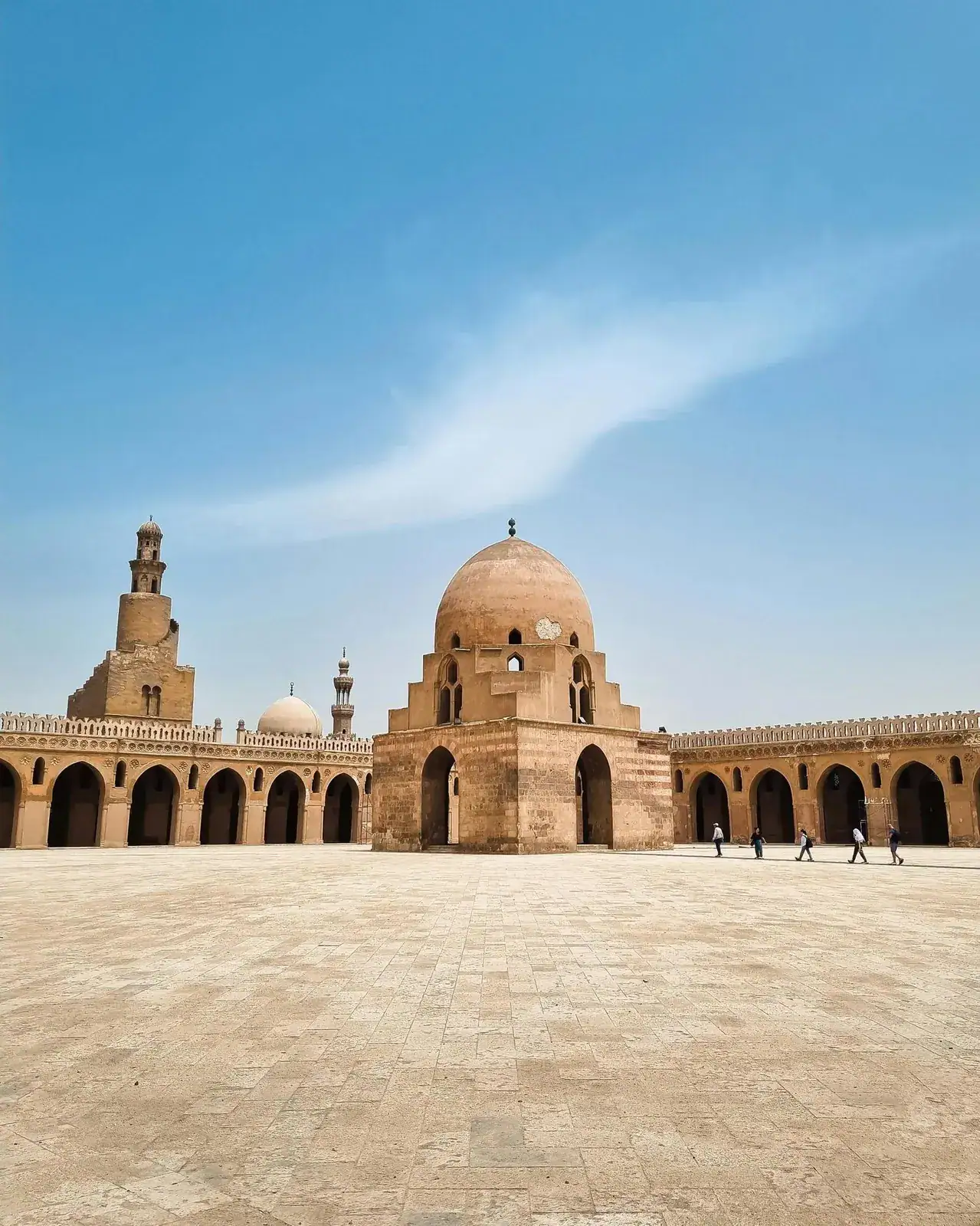
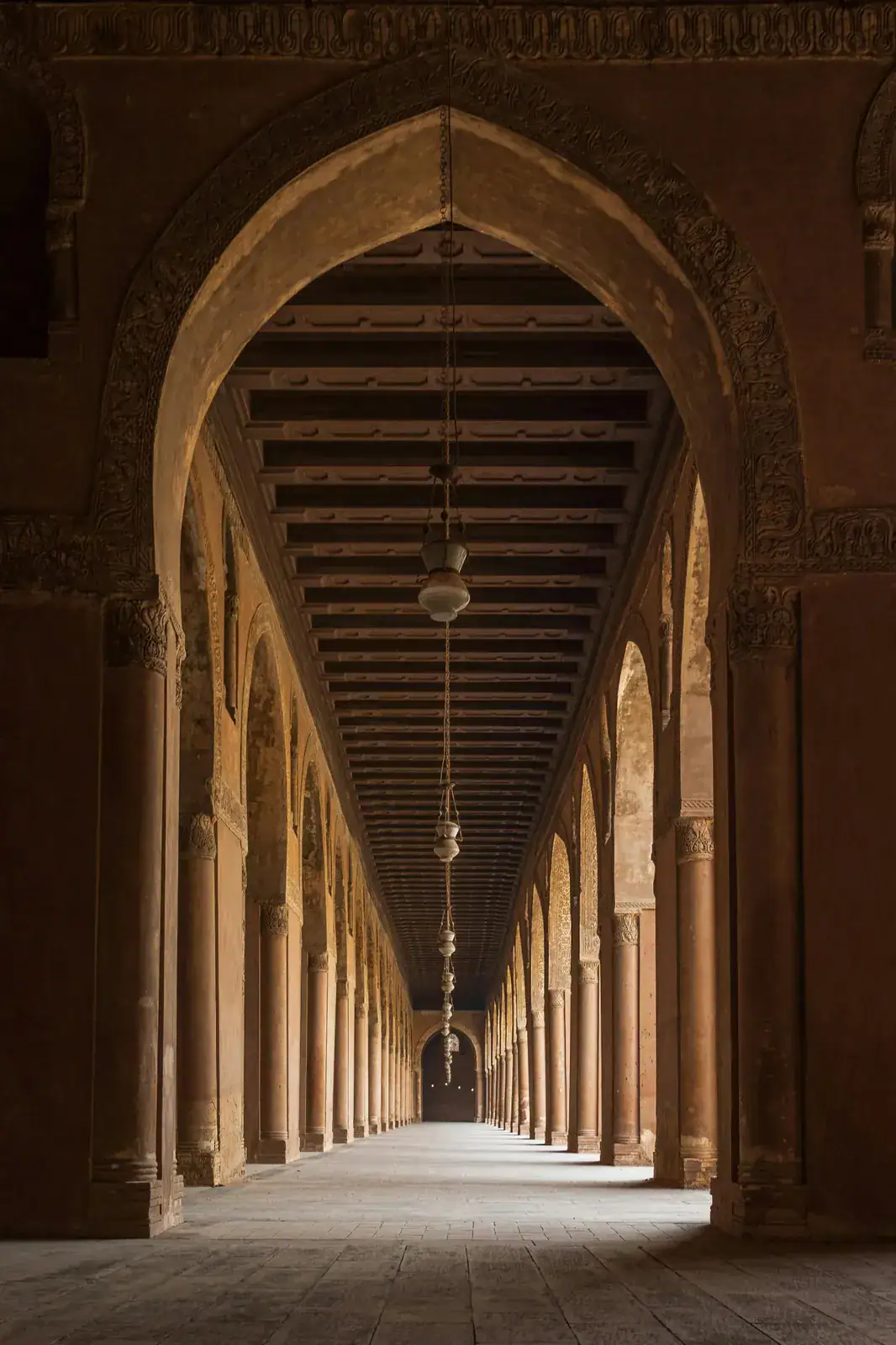
The mosque follows a large rectangular plan centered on an open courtyard, or sahn. Around it, covered arcades create shaded circulation, while the qibla side is deeper to accommodate the main prayer hall.
Unlike many later Cairo monuments built mainly from stone, the Mosque of Ibn Tulun relies heavily on baked brick and plaster. This material choice, together with the monumental scale and repeated arcades, reflects architectural traditions associated with Abbasid Samarra.
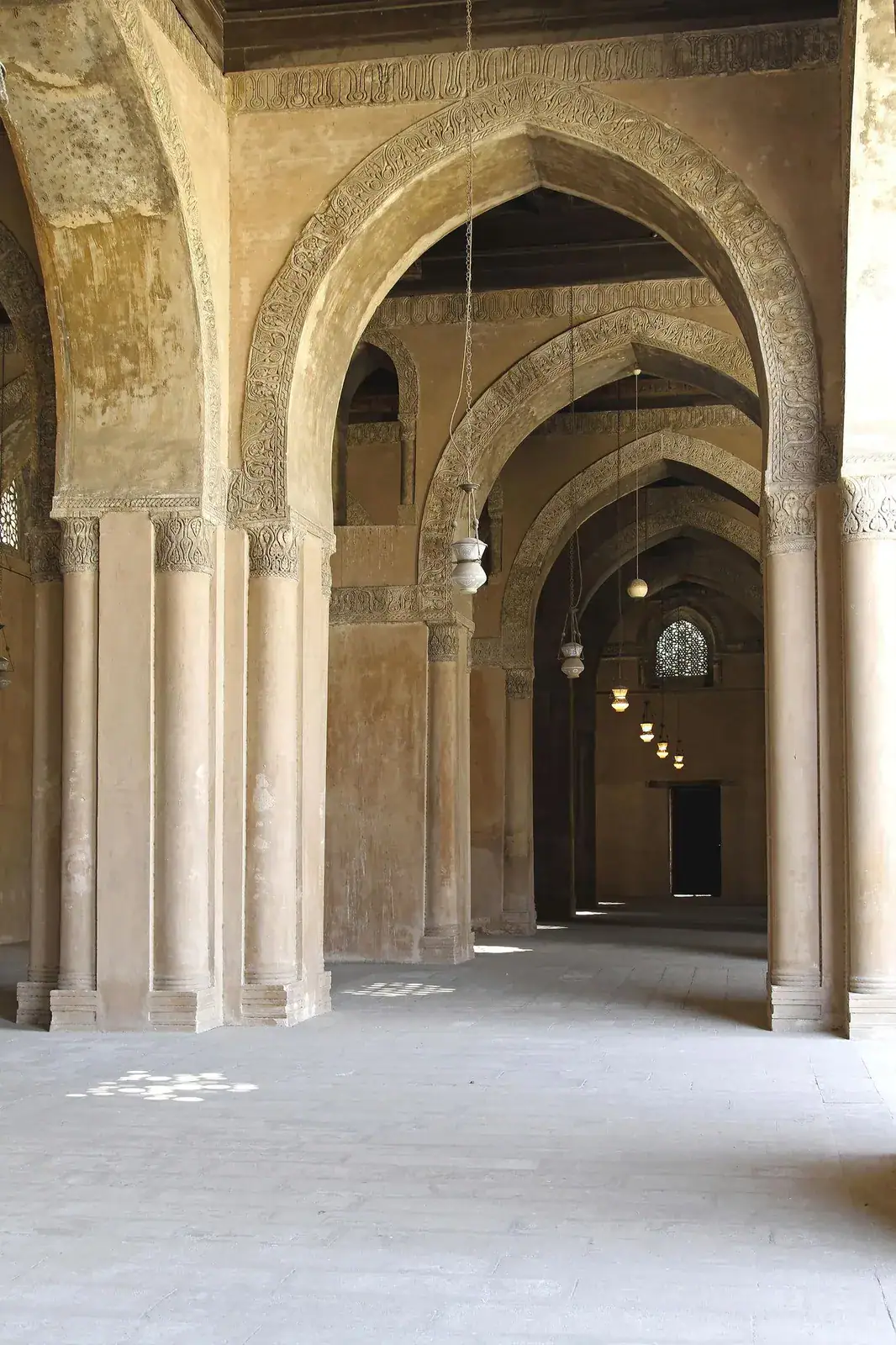
In addition, the mosque is famous for its pointed arches, carved stucco decoration and long friezes of Qur’anic inscription. The broad outer ziyada separates the mosque from surrounding streets and reinforces the building’s sense of enclosure and calm.
The mosque’s most famous silhouette
The Spiral Minaret of Ibn Tulun Mosque
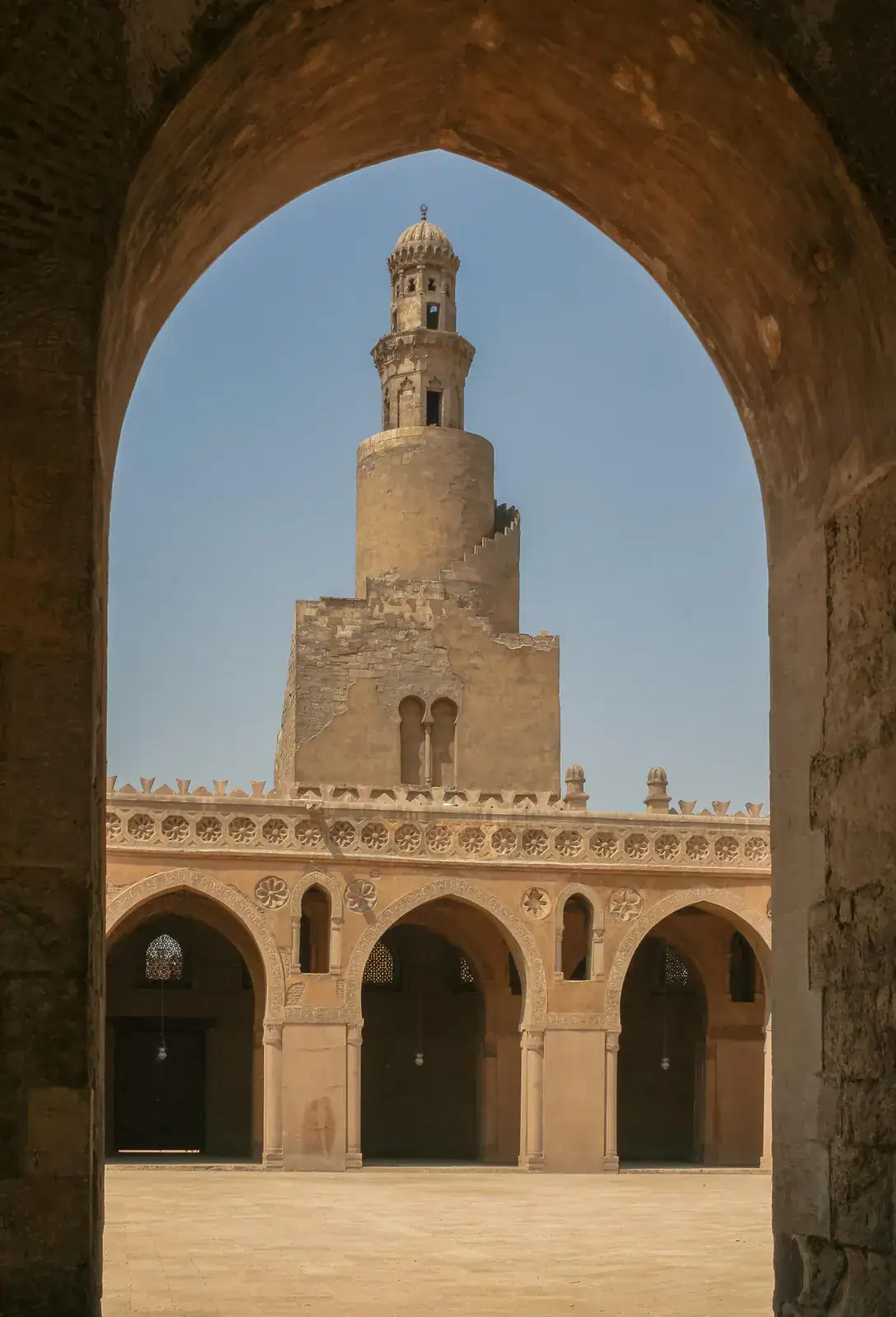
The spiral minaret is the mosque’s most instantly recognizable feature. Its external staircase winds around the tower and recalls the famous spiral minarets of Samarra in Iraq.
However, scholars have long debated the chronology of the minaret in its present form. Much of the monument was restored under the Mamluk sultan Lajin in the late 13th century, and the surviving minaret may reflect that later intervention rather than Ibn Tulun’s exact original design.
Even so, the minaret remains central to how visitors experience the mosque today. Its form creates one of the most distinctive skylines in Islamic Cairo and visually reinforces the building’s connection with Abbasid architectural traditions.

What to notice
Key Architectural Features Inside the Mosque
Central Courtyard
The vast sahn creates the mosque’s spatial center. Arcades frame the open sky, while a later ablution fountain stands prominently in the middle.
Pointed Arches
Repeated pointed arches create a powerful visual rhythm and are among the mosque’s most studied early architectural features.
Ziyada
A broad open buffer surrounds much of the mosque, separating the prayer complex from neighboring buildings and helping protect its monumental form.
Stucco Decoration
Carved stucco patterns and inscriptions add detail to otherwise restrained brick architecture, combining geometry, vegetal motifs and calligraphy.
Mihrab & Qibla Wall
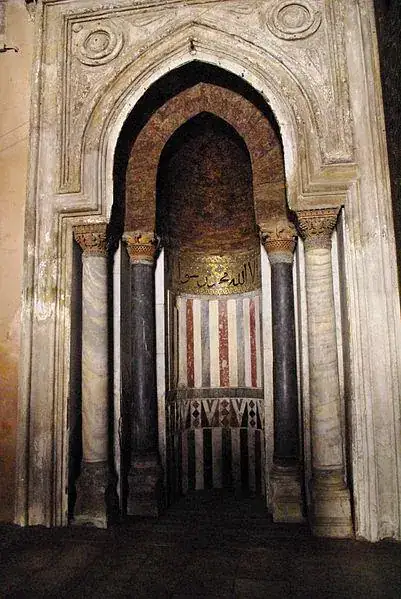
The qibla side contains the principal prayer focus, including the mihrab and later additions that reflect centuries of restoration and devotion.
Ablution Fountain
The domed fountain in the courtyard belongs to a later restoration phase and now forms one of the mosque’s most recognizable visual landmarks.
Survival and restoration
Sultan Lajin and the Preservation of Ibn Tulun Mosque
By the Mamluk period, the mosque had already stood for more than four centuries. Tradition records that Sultan Lajin took refuge there before becoming sultan and later sponsored a major restoration campaign in 1296.
That intervention renewed important elements of the building and helped preserve the complex for later generations. Consequently, the mosque visitors see today combines a remarkably intact Tulunid plan with later restoration layers.
Today, the monument lies within Historic Cairo’s wider Islamic heritage zone, while nearby landmarks such as the Salah El-Din Citadel and Al-Azhar Park help visitors understand the broader evolution of medieval Cairo.
A living architectural experience
Courtyard, Light and the Atmosphere of the Mosque
One of the mosque’s greatest strengths is the experience of space itself. The courtyard opens dramatically to the sky, while deep arcades create shade and changing bands of light throughout the day.
Moreover, the simplicity of the brick structure makes decorative details stand out more clearly. Visitors notice carved stucco, inscriptions, timber elements and the contrast between open sunlight and cool interior arcades.
For travelers exploring Islamic Cairo, the mosque also combines naturally with Khan El Khalili Bazaar and Al-Muizz Street on a broader day focused on Cairo’s Islamic architecture.
Plan your visit
Visiting the Mosque of Ibn Tulun in Cairo
Where is the mosque?
The Mosque of Ibn Tulun is in the Sayyida Zeinab district of Cairo, close to the Gayer-Anderson Museum and south of the main Historic Cairo monument zone.
Opening hours
The Ministry of Tourism and Antiquities currently lists the monument as open daily from 9:00 AM to 5:00 PM. However, schedules can change, so confirm before travelling.
How long should you allow?
Allow around 60–90 minutes for the courtyard, arcades, prayer hall and architectural details. Architecture enthusiasts may want longer.
What can you combine it with?
The mosque works well with the nearby Gayer-Anderson Museum and can also be combined with the Salah El-Din Citadel, Al-Azhar Park or a wider Islamic Cairo day.
What should you wear?
Dress modestly because this is a historic mosque and religious site. Comfortable shoes are also useful for walking across the large complex.
Is the minaret accessible?
Access conditions can vary. Ask staff on arrival rather than assuming the minaret staircase is open to visitors every day.
Tickets and access: admission policies and prices can change. Check the official Ministry of Tourism and Antiquities information before your visit.
Sayyida Zeinab, Cairo
Location of the Mosque of Ibn Tulun in Cairo
Quick answers
Frequently Asked Questions About the Mosque of Ibn Tulun
When was the Mosque of Ibn Tulun built?
Ahmad Ibn Tulun built the mosque between 876 and 879 CE in his new capital, al-Qata’i.
Who built the Mosque of Ibn Tulun?
The mosque was commissioned by Ahmad Ibn Tulun, the founder of the Tulunid dynasty in Egypt.
Why is the Mosque of Ibn Tulun important?
It is one of Egypt’s oldest surviving mosques and preserves a large-scale 9th-century mosque plan strongly influenced by Abbasid architecture.
What is special about the minaret?
The minaret has an external spiral staircase and recalls the famous spiral minarets of Samarra. Scholars debate how much of its present form belongs to later restoration.
Is the Mosque of Ibn Tulun part of Historic Cairo?
Yes. The mosque stands within the wider Historic Cairo heritage area, which is inscribed on UNESCO’s World Heritage List.
How long do you need to visit the mosque?
Most visitors should allow around 60–90 minutes, although architecture enthusiasts may want more time.
Is the Mosque of Ibn Tulun worth visiting?
Yes, especially for travelers interested in Islamic architecture, early Cairo and peaceful historic spaces away from the busiest tourist areas.
Heritage context: for the broader significance of Historic Cairo, see the official UNESCO Historic Cairo World Heritage page.
Explore Islamic Cairo
Connect Ibn Tulun Mosque With Cairo’s Great Historic Landmarks
Combine the mosque with the Salah El-Din Citadel, Al-Azhar Park, Al-Muizz Street and Khan El Khalili for a private Cairo route focused on Islamic architecture and living heritage.