
Dendera Temple Egypt
Hathor at Dendera
Dendera Temple Egypt is a remarkably preserved sacred complex celebrated for its Hathor-headed columns, astronomical ceiling, hidden crypts and rooftop chapels.
Dendera Temple Egypt: Hathor’s Great Sanctuary
A sacred place where Egyptian religious tradition continued through the Ptolemaic and Roman eras.
Dendera Temple Egypt is one of the best-preserved ancient temple complexes in Upper Egypt. Specifically, it stands near modern Qena, about 60 kilometres north of Luxor. Although worship at Dendera reaches back to much earlier periods, the principal surviving Temple of Hathor was largely constructed and decorated under the later Ptolemies and Roman emperors.
Moreover, the complex preserves an exceptional combination of monumental architecture, ritual rooms, vivid ceiling colours, underground crypts, rooftop sanctuaries, birth houses and a sacred lake. Consequently, it offers one of the clearest surviving journeys through the working spaces of an Egyptian temple.
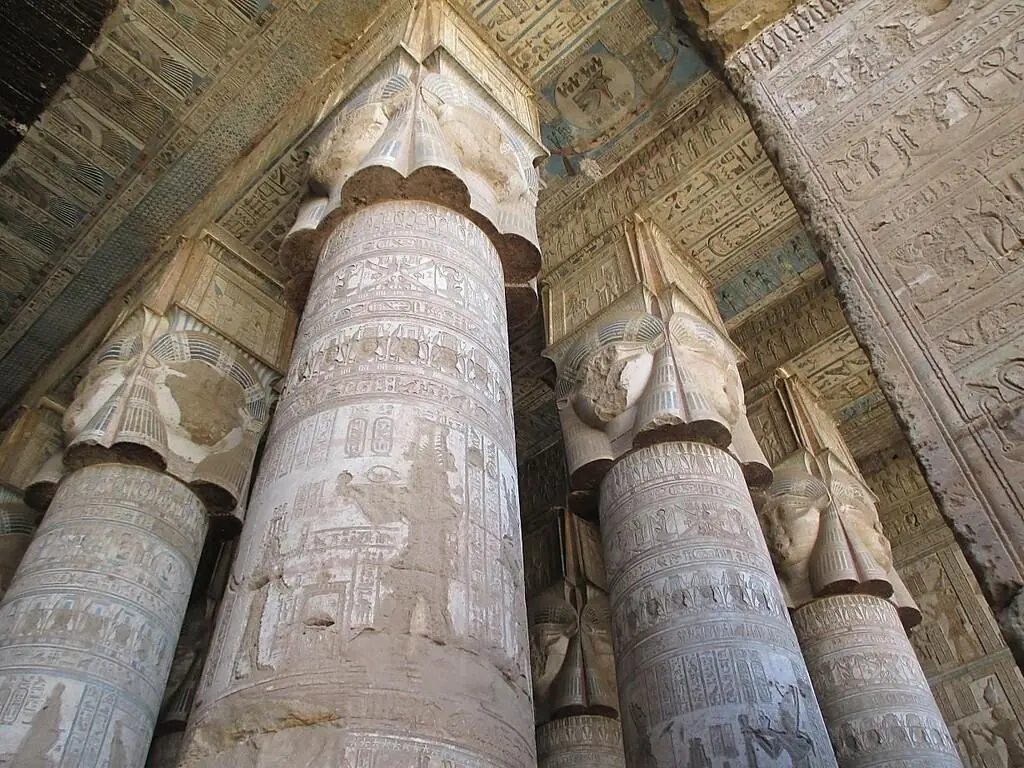
Hathor-Headed Columns at Dendera Temple Egypt
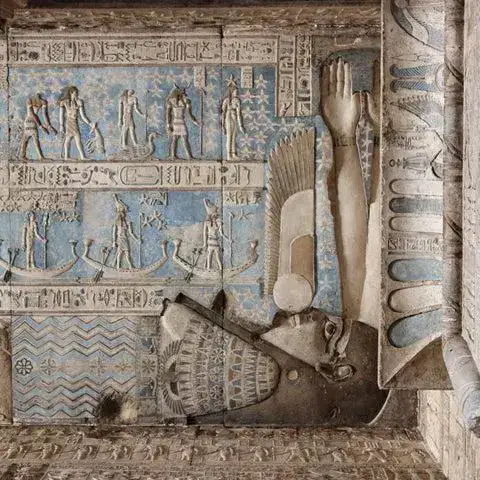
First, visitors enter the grand pronaos, where massive columns carry four-sided capitals shaped with the serene face of Hathor. Above them, astronomical scenes, winged sun disks, divine processions and painted bands cover the ceiling. Therefore, the hall creates one of the most recognisable interiors in ancient Egyptian architecture.
Inside the Temple of Hathor at Dendera
Next, beyond the outer hall, a sequence of increasingly sacred rooms leads toward the sanctuary. In addition, storerooms, offering halls and side chambers reveal how priests prepared rituals and protected ceremonial objects.
Unlike many exposed monuments, Dendera retains substantial roof structures. As a result, visitors can still experience the controlled movement from bright courtyards into shadowed chambers that formed part of the ancient temple’s sacred design.
- Twenty-four Hathor-headed columns in the monumental pronaos.
- Richly carved walls and ceilings with surviving colour.
- Processional rooms leading toward the central sanctuary.
- Side chambers connected with offerings and ritual equipment.

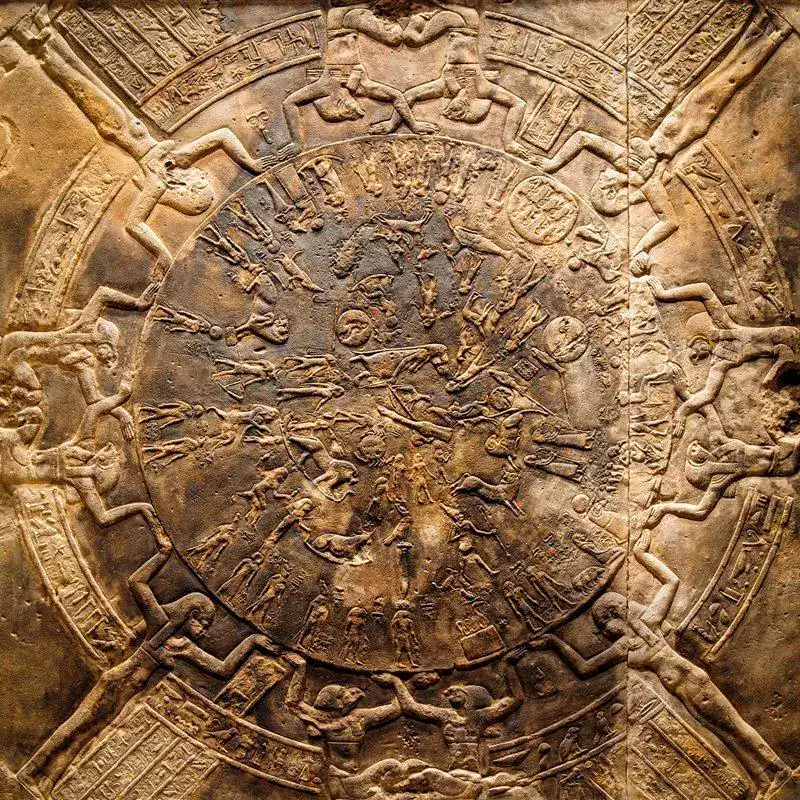
Dendera Temple Zodiac and Astronomical Ceiling
Most importantly, Dendera’s ceilings present the sky as a sacred realm. Long figures of the goddess Nut arch above stars, solar boats and decans, while surrounding scenes express the ordered movement of time and the cosmos.
Furthermore, the circular Dendera Zodiac once decorated a rooftop chapel dedicated to Osiris. The original relief is preserved in the Louvre in Paris, whereas a replica occupies its ancient position at Dendera. Nevertheless, the wider temple contains many original astronomical scenes that remain in place.
Understanding the Dendera Zodiac
Rather than serving as a modern horoscope, the imagery combined Egyptian religious concepts with Greco-Roman zodiac signs. Consequently, it reflects the cultural world in which the late temple was created.
“At Dendera, architecture, colour and astronomy transform the Temple of Hathor into a carefully ordered image of the divine world.”Yalla Egypt Travel
Underground Crypts at Dendera Temple Egypt
Meanwhile, beneath and within the thick temple walls lies a network of narrow crypts. Priests probably used these protected spaces to store valuable ritual objects, divine emblems and equipment required during festivals.
In addition, the walls carry detailed reliefs of deities, sacred barques and ceremonial objects. Some famous scenes are popularly called the “Dendera light,” although Egyptologists interpret them within the religious symbolism of lotus flowers, serpents and creation rather than as evidence of ancient electric lamps.
- Narrow passages built inside and below the temple walls.
- Protected storage for sacred and valuable ritual objects.
- Reliefs associated with divine emergence and creation.
- Separate access conditions may apply to the crypts.

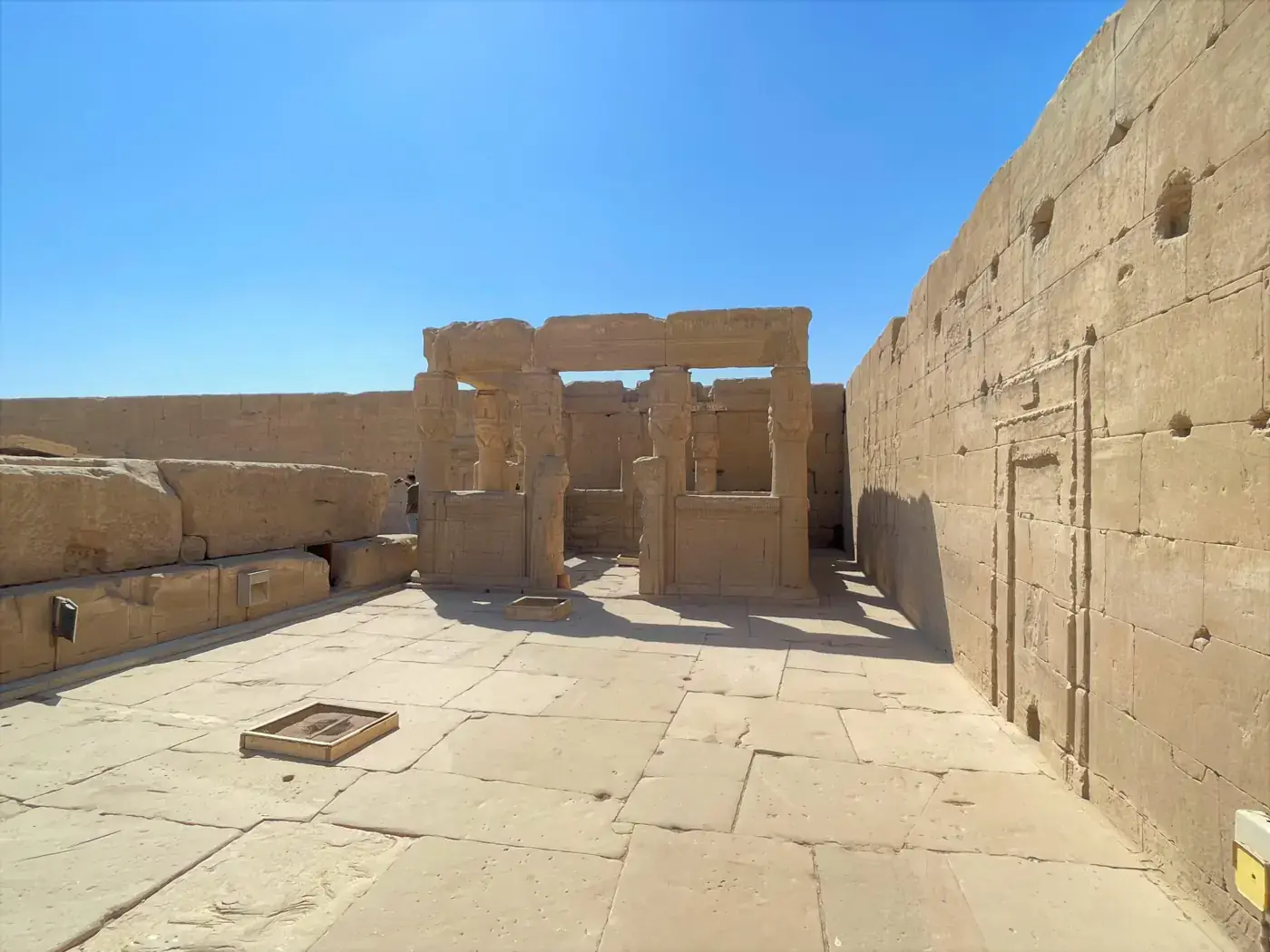
Dendera Temple Rooftop Chapels of Osiris
Next, ancient stairways lead toward the roof, where chapels focused on the death, regeneration and resurrection of Osiris. Processions carried divine images upward during important ceremonies, linking the dark interior with sunlight and the open sky.
The roof also offers a closer view of upper reliefs and the surrounding landscape. However, access can change during conservation work. Therefore, visitors should confirm locally whether the roof and panorama areas are open on the day of their visit.
The Circular Zodiac Chapel
For example, one Osiris chapel originally held the celebrated circular zodiac. Today, a replica marks its former position and helps visitors understand how celestial imagery supported ideas of time, death and rebirth.
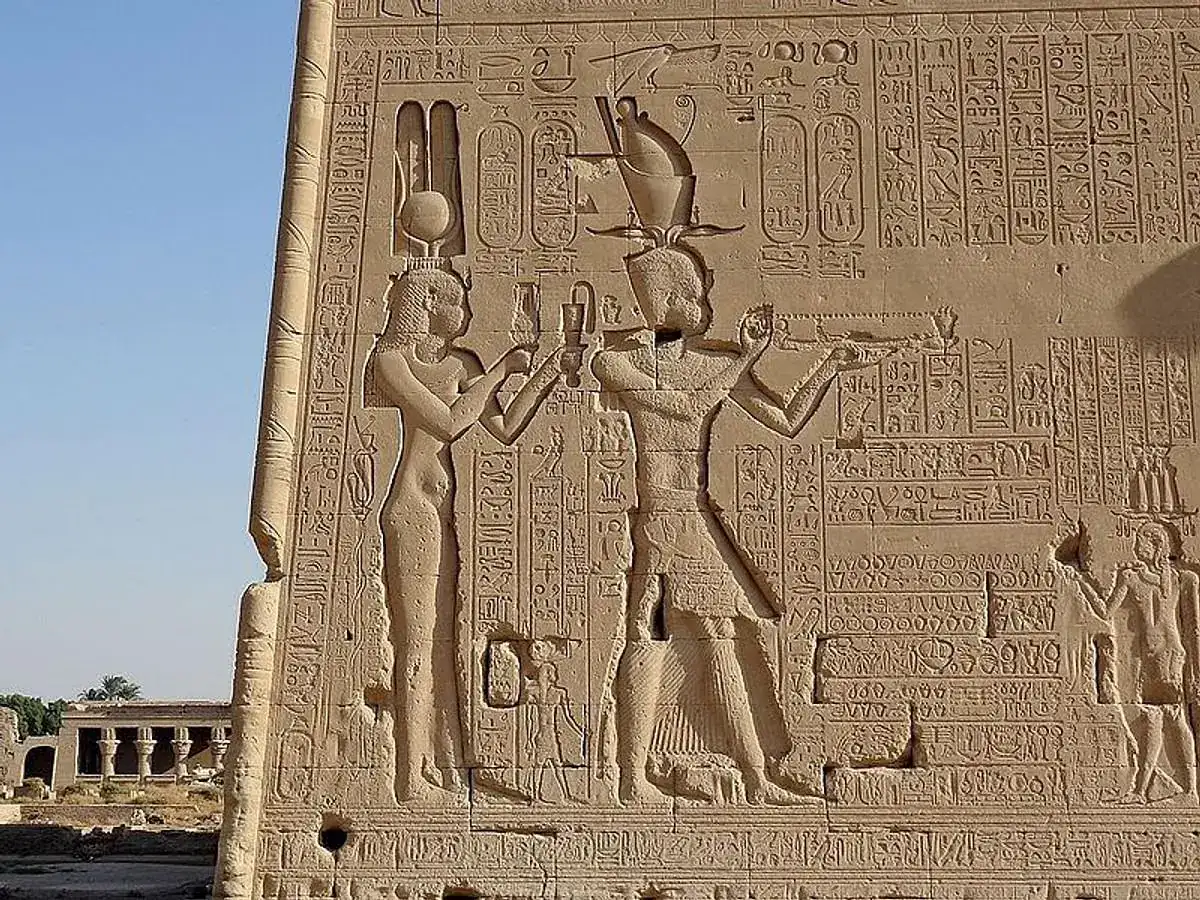
Cleopatra VII and Caesarion at Dendera Temple
Meanwhile, on the exterior rear wall, a famous relief shows Cleopatra VII with her son Ptolemy XV Caesarion. They stand before Egyptian deities and perform the traditional ritual role of pharaohs.
Although visitors often say Cleopatra “built Dendera,” the monument developed across several reigns. Nevertheless, this scene connects Egypt’s final Ptolemaic rulers with a much older visual language of divine kingship.
Therefore, the relief is especially valuable: it presents Cleopatra not as a Roman portrait subject, but as an Egyptian ruler participating in temple ritual.

Dendera Temple Complex: Sacred Lake and Mammisi
Dendera Temple Complex extends beyond the main building. For example, the enclosure contains a sacred lake used in ritual purification, a Roman-period birth house, the remains of an earlier mammisi, a Coptic basilica and smaller sacred structures.
Furthermore, the mammisi celebrated divine birth and the renewal of kingship. Its reliefs link Hathor, Horus and the royal child within a cycle of protection and rebirth.
Roman Gateways and Later History
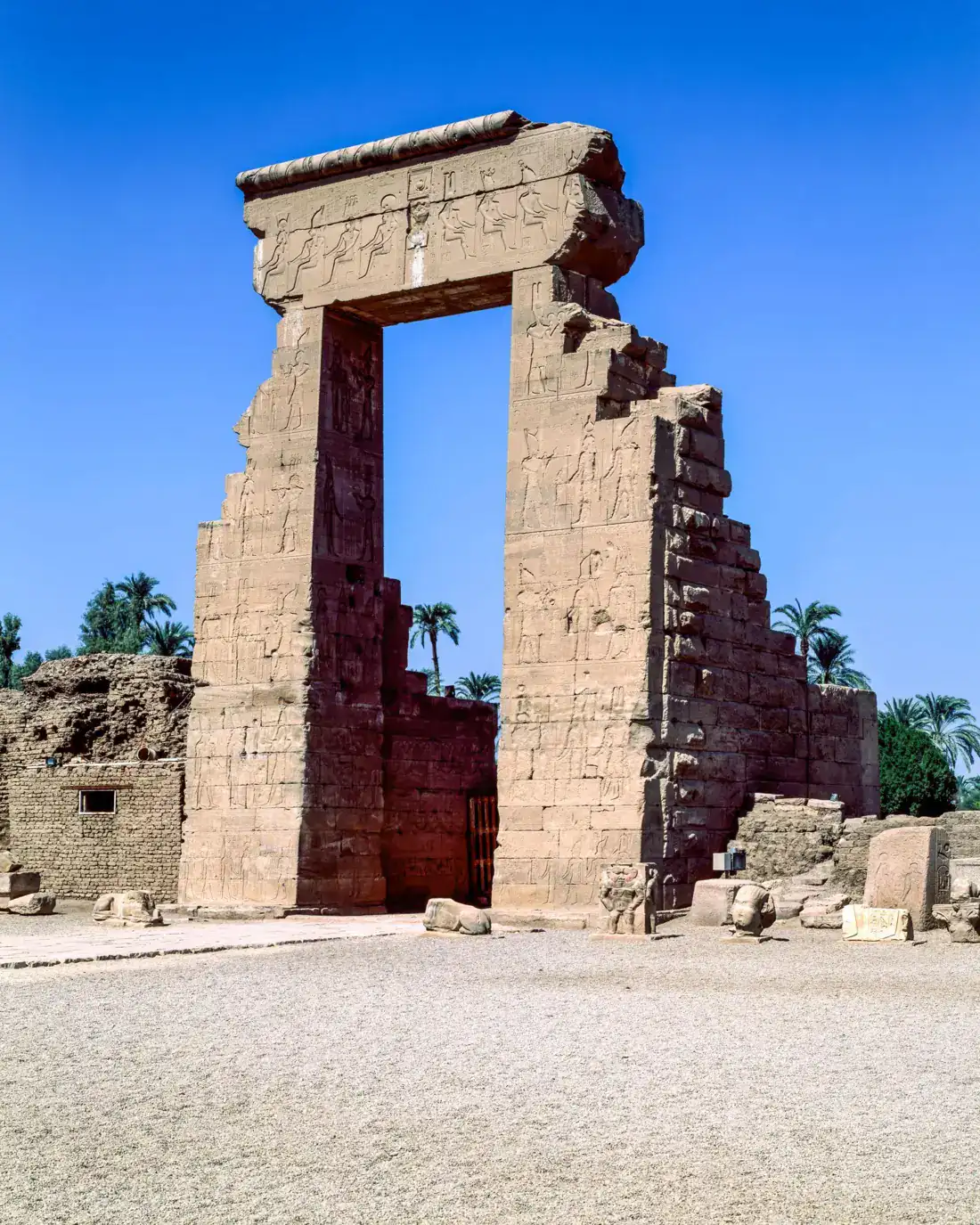
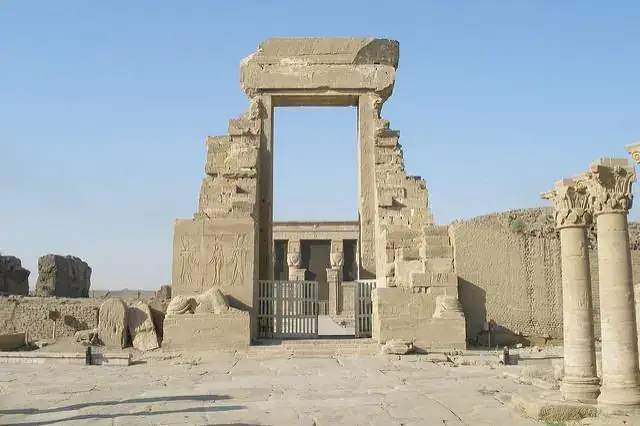
Finally, monumental gates show that worship and building continued under Roman rule. Later Christian remains also demonstrate that the enclosure remained meaningful long after the ancient cult had changed.
Dendera Temple Architecture and Reliefs
Finally, browse the principal features of the Temple of Hathor. In addition, captions remain below every image on both desktop and mobile.


How to Visit Dendera Temple Egypt
Dendera lies near Qena, around 60 kilometres north of Luxor. Therefore, most travellers visit by private car or guided excursion from Luxor.
You can combine Dendera with Abydos on a longer day trip, or include it in a wider itinerary with Karnak Temple, Luxor Temple and the Valley of the Kings.
Near Qena
Specifically, the complex stands on the west bank of the Nile near Dendera village in Qena Governorate.
Private Road Transfer
Generally, the journey takes about 75–90 minutes each way, depending on traffic and the route.
Check Before Travelling
The official listing currently shows daily opening from 7:00 am, with last entry at 4:00 pm. However, hours can change.
Allow 2–3 Hours
Two hours covers the main rooms. Nevertheless, allow longer for the crypts, rooftop, lake and detailed reliefs.
Use Official Information
Admission and supplements for the panorama or crypts can change. Therefore, verify the official Ministry listing.
Steps and Narrow Passages
The main level is easier to visit; however, crypts and rooftop areas involve stairs, tight passages and uneven surfaces.
Dendera and Abydos
For example, a full-day private excursion can combine Dendera with Abydos for two contrasting temple complexes.
Early Morning
Ideally, arrive early for cooler temperatures, softer light and more time to study the decorated rooms.
Dendera Temple Egypt Map
Geographically, the Temple of Hathor is located near Dendera village, west of the Nile and close to Qena in Upper Egypt.
Open Google MapsDendera Temple Egypt FAQ
History and Planning Questions
Discover the Colours of Dendera
Add Dendera Temple to a private Upper Egypt itinerary and explore its painted ceilings, crypts and rooftop chapels with an expert Egyptologist guide.
Contact Yalla Egypt Travel