
Qaitbay Citadel Alexandria guide
Qaitbay Citadel Alexandria Guide: History, Architecture & Visitor Tips
Explore the 15th-century fortress built on the site of Alexandria’s ancient Pharos lighthouse, from Sultan Qaitbay’s coastal defenses to the citadel’s towers, mosque, Mediterranean views and practical visitor information.
Fortress at the end of Pharos
Qaitbay Citadel Alexandria Guide: Essential Overview
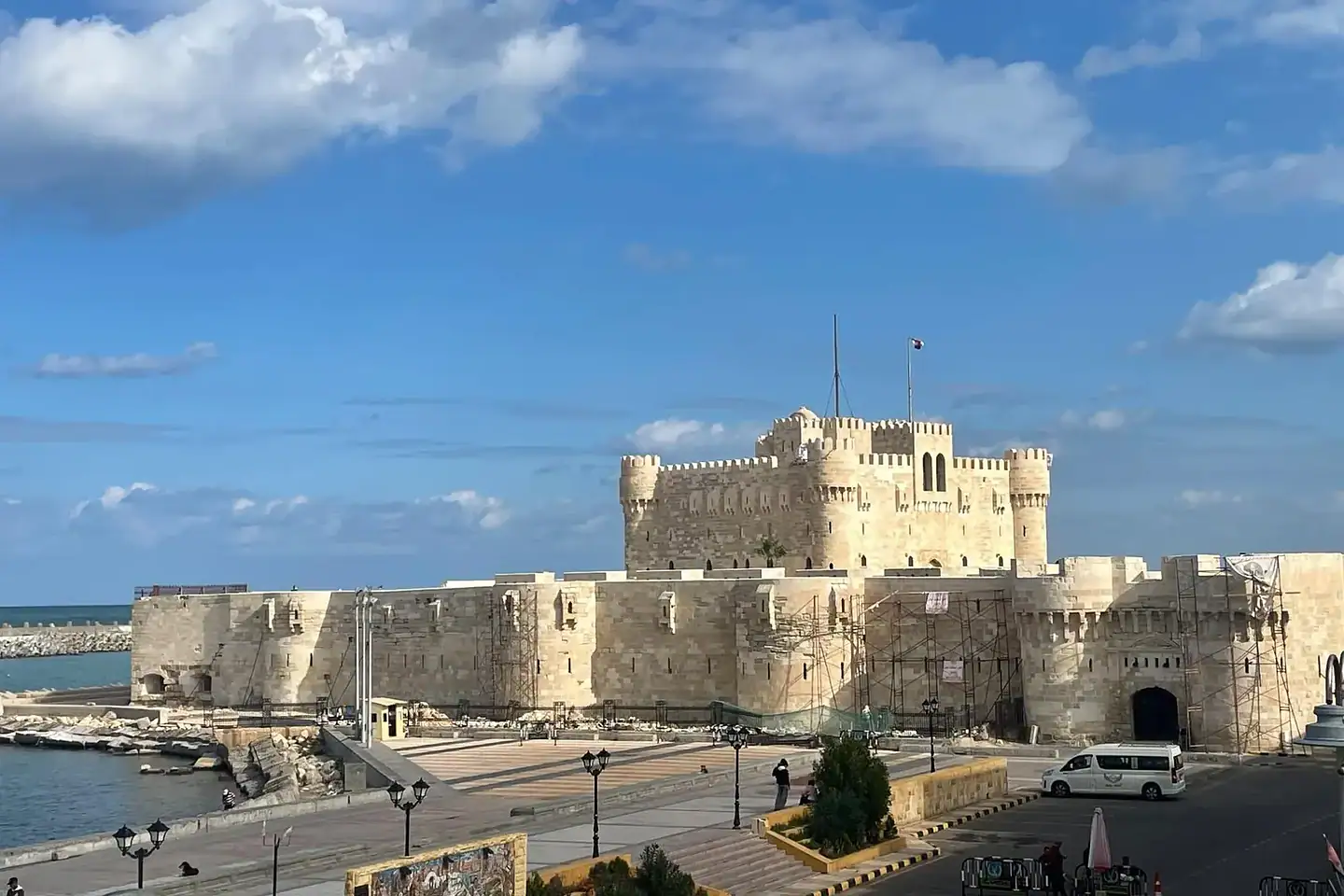
Qaitbay Citadel Alexandria guide begins at the western edge of the Eastern Harbour, where the Mediterranean meets one of Egypt’s most historic cities. Sultan al-Ashraf Qaitbay ordered the fortress in the late 15th century to strengthen Alexandria’s defenses against naval attack. Consequently, it remains one of the defining landmarks of Alexandria.
More importantly, the location carries an older story. The citadel occupies the site of the ancient Lighthouse of Alexandria, the famous Pharos that ranked among the Seven Wonders of the Ancient World. Therefore, one location connects Ptolemaic maritime history with Mamluk military architecture.
Why is Qaitbay Citadel important? It combines three exceptional stories in one place: the lost Lighthouse of Alexandria, Mamluk coastal defense, and the later military history of Egypt’s Mediterranean gateway.
Mamluk Alexandria
History of Qaitbay Citadel in Alexandria and Mamluk Alexandria
Sultan al-Ashraf Abu al-Nasr Qaitbay ruled Egypt from 1468 to 1496. During his reign, growing pressure in the eastern Mediterranean made coastal defense increasingly important. As a result, he invested heavily in fortifications along Egypt’s northern shoreline.
According to Egypt’s Ministry of Tourism and Antiquities, construction at Alexandria took place between 882 and 884 AH, corresponding to 1477–1479 CE. From the beginning, the fortress protected the harbor and helped monitor maritime approaches to the city.
Furthermore, later rulers continued to value the site. Sultan Qansuh al-Ghuri repaired it before the Ottoman conquest, while Ottoman authorities retained troops and artillery there after 1517. Consequently, the citadel remained part of Alexandria’s defensive system for centuries.
From ancient wonder to fortress
Qaitbay Citadel in Alexandria and the Ancient Lighthouse
The ancient Pharos lighthouse once guided ships toward Alexandria’s harbor. Over the centuries, however, repeated earthquakes damaged the structure, while the powerful 1303 earthquake caused especially severe destruction. By Qaitbay’s reign, the surviving structure had largely become a ruin.
Instead of abandoning this strategic point, the Mamluks transformed it. Then, builders raised the new fortress on the lighthouse site and reused stone available from the ruins. Thus, the citadel preserves the location—and part of the material legacy—of one of antiquity’s most famous monuments.
In addition, underwater archaeology around the fort has revealed thousands of architectural blocks, statues and other remains. The Ministry’s underwater-archaeology record documents the remarkable concentration of ancient material around the site.
Designed for defense
Qaitbay Citadel Alexandria Architecture: Walls, Towers & Mosque
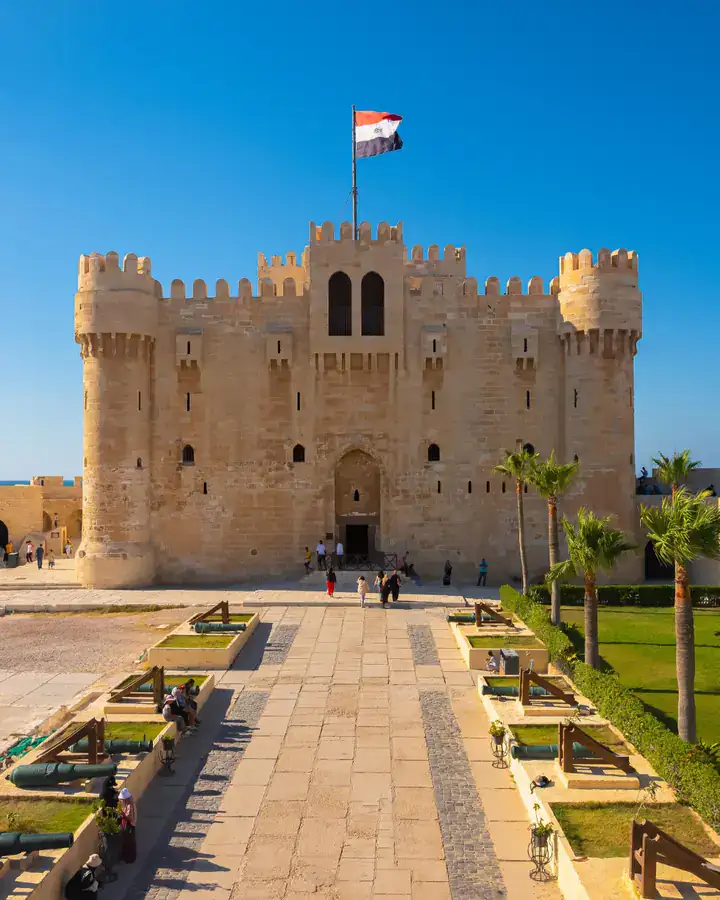
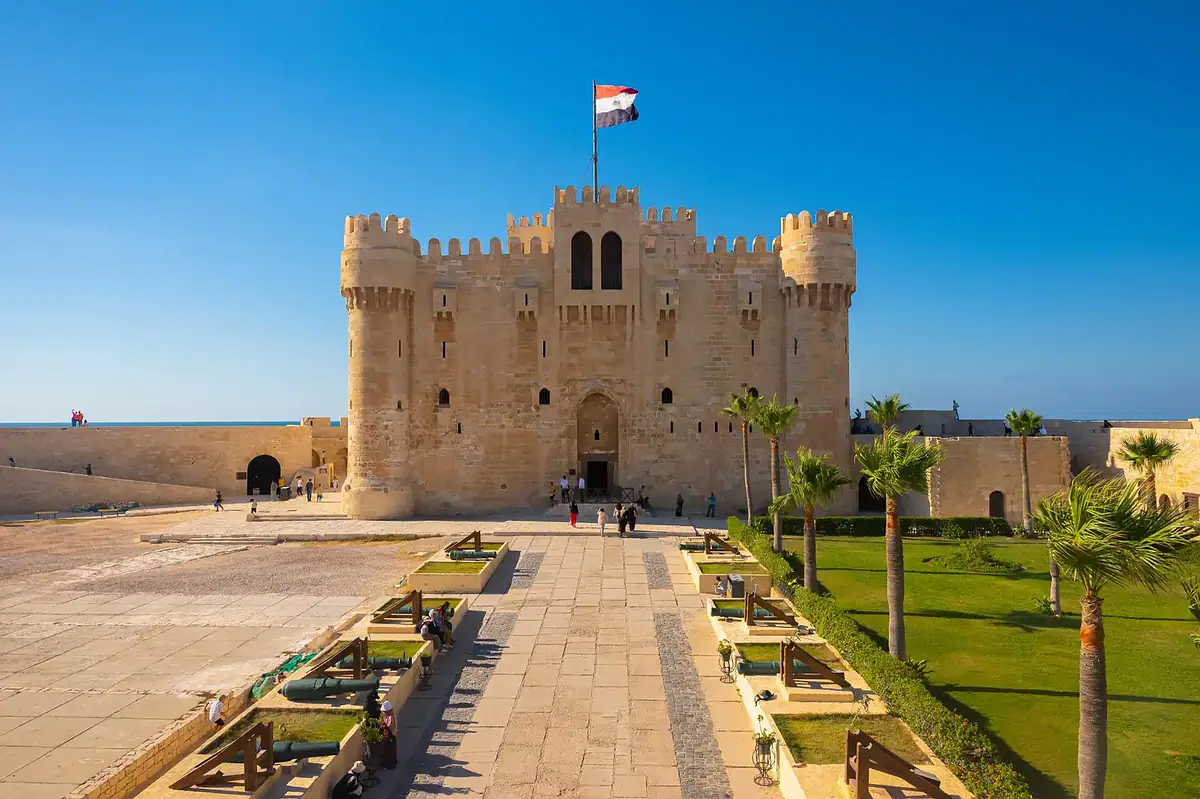
The Main Keep
At the center, a massive square, three-storey tower dominates the courtyard. In addition, half-circular corner towers strengthen the structure and provided defenders with protected positions overlooking the approaches.
Walls and Barracks
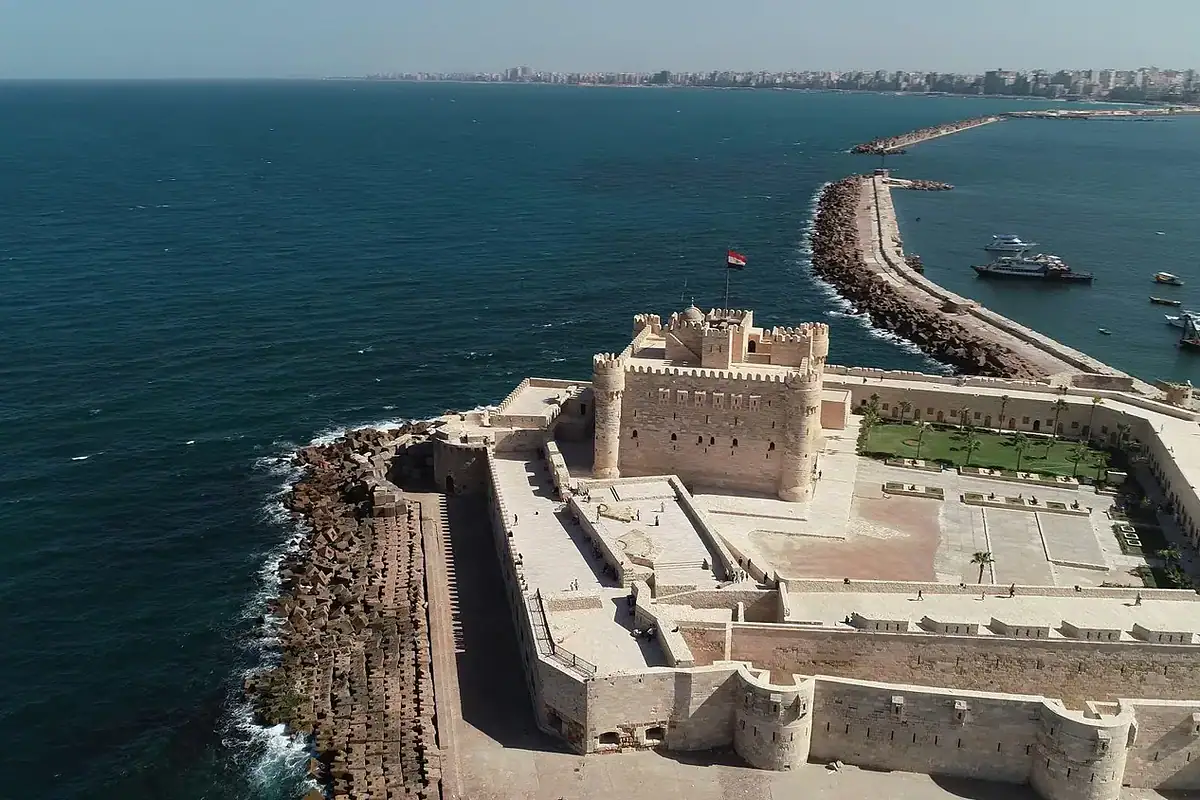
Meanwhile, outer defenses surround the complex, while an inner wall encloses the courtyard. Meanwhile, rooms within the defenses served as barracks and storage for weapons, provisions and military supplies.
The Mosque
Notably, the main tower includes a mosque, demonstrating how religious and military functions shared the same fortified space. Moreover, its location reflects the citadel’s importance as a permanent garrison.
Architecture in one sentence: thick limestone walls, compact circulation, defensive towers and carefully controlled openings turned the citadel into a highly practical coastal stronghold.
Inside the fortress
Inside Qaitbay Fort Alexandria: Passages, Chambers & Defensive Design
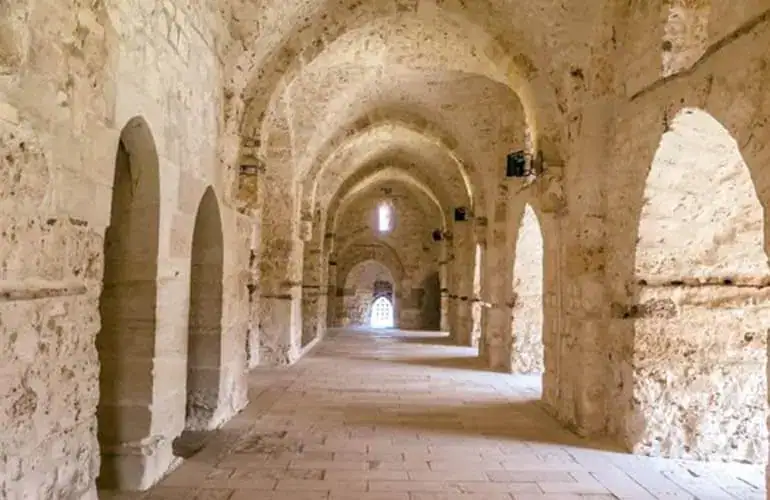
Inside the main keep, narrow corridors and vaulted chambers create a completely different experience from the bright Mediterranean exterior. At the same time, thick masonry keeps the spaces enclosed and protected, while small openings control light, visibility and exposure.
Next, stairs connect the different floors and lead toward rooms that supported the garrison. Although the exact use of every surviving chamber is not always certain, the layout clearly reflects military priorities: movement, storage, observation and defense.
For visitors, however, these interior spaces explain the monument better than the exterior alone. Therefore, this Qaitbay Citadel Alexandria guide recommends allowing enough time to walk through the tower rather than treating the citadel simply as a photo stop.
Five centuries of changing defenses
Military History of the Citadel of Qaitbay in Alexandria
Mamluk Period
Initially, Qaitbay created the fortress as a coastal defense. Later, Qansuh al-Ghuri strengthened and repaired it as threats in the Mediterranean continued to change.
Ottoman & French Periods
After 1517, Ottoman forces continued to use the citadel. Subsequently, during the French expedition of 1798, French troops took control of the fortress and adapted it to contemporary military needs.
1882 Bombardment
The British bombardment of Alexandria severely damaged the city’s coastal defenses. Consequently, Qaitbay Citadel also suffered major damage before later restoration campaigns stabilized and rebuilt important sections.
Restoration and interpretation
Qaitbay Citadel Alexandria Preservation & Visitor Center
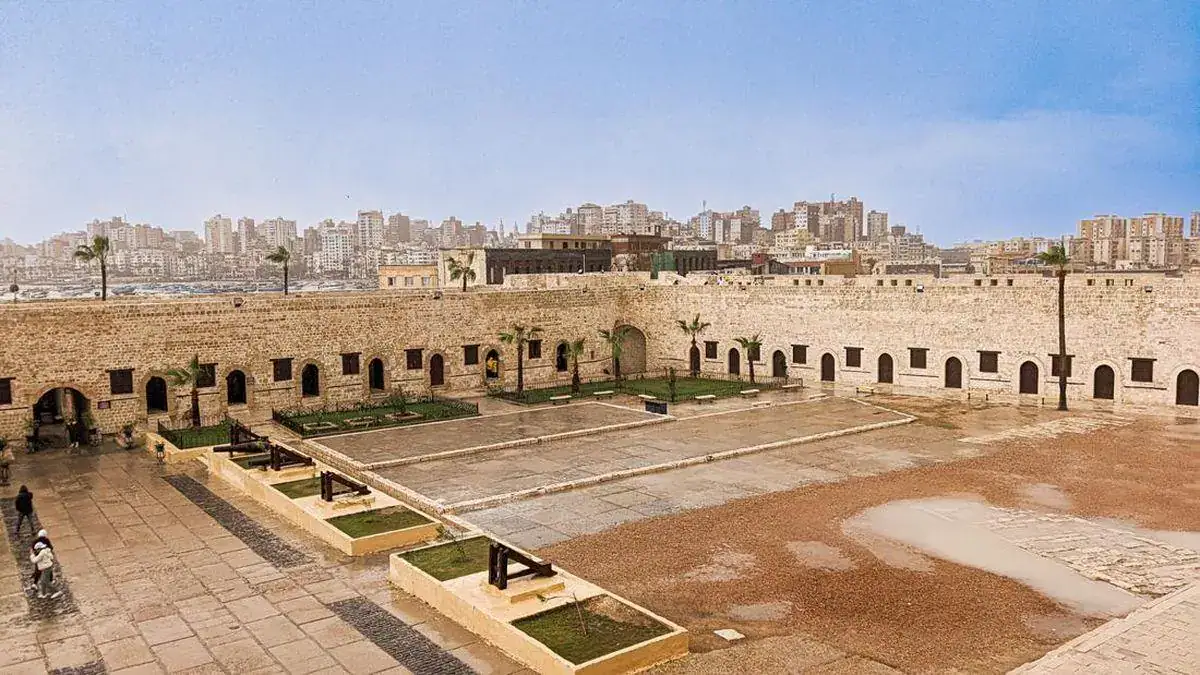
Over time, the citadel has undergone repeated conservation and restoration work. In particular, the Ministry records significant strengthening and conservation projects, including work in the early 21st century, because the maritime environment constantly exposes the limestone to salt, moisture and wind.
More recently, the Ministry opened a visitor center inside a hall of the main tower in cooperation with the Centre d’Études Alexandrines. There, bilingual panels, maps and illustrations to explain Alexandria’s ancient harbor, defensive fortifications and the old lighthouse site. Read the Ministry announcement.
As a result, visitors can now place the fortress within the wider story of Alexandria’s maritime landscape rather than seeing it as an isolated monument. In addition, this Qaitbay Citadel Alexandria guide connects the visitor center with the lighthouse site, the harbor and the fortress’s later military history.
Plan your visit
Qaitbay Citadel Alexandria Guide: Visiting Hours, Tickets & Tips
Where is Qaitbay Citadel?
Geographically, the fortress stands at the end of the Pharos peninsula in Alexandria’s Anfushi district. From there, visitors overlook the Mediterranean and the entrance to the Eastern Harbour.
Opening hours
As of August 2026, Egypt’s Ministry of Tourism and Antiquities lists the citadel as open daily from 9:00 AM to 8:00 PM. However, schedules can change on holidays or during special events.
Current ticket prices
Currently, the Ministry lists foreign adult admission at EGP 200 and foreign student admission at EGP 100. Meanwhile, Egyptian adult admission is EGP 60 and student admission is EGP 30.
How long should you allow?
This Qaitbay Citadel Alexandria guide suggests roughly 60–90 minutes for the courtyard, tower interiors, visitor center and sea views. In addition, sunset or photography may justify a longer visit.
Important: opening hours and ticket prices can change. Therefore, check the official Qaitbay Fort page before travelling.
Pharos, Alexandria, Egypt
Location of Qaitbay Citadel
Quick answers
Qaitbay Citadel Alexandria Guide: Frequently Asked Questions
Who built Qaitbay Citadel in Alexandria?
During the Mamluk period, Sultan al-Ashraf Qaitbay ordered its construction. The Ministry of Tourism and Antiquities dates the work to 1477–1479 CE.
Was Qaitbay Citadel built on the Lighthouse of Alexandria?
Yes. Historically, the fortress occupies the site of the ancient Pharos lighthouse, and builders reused stone associated with the lighthouse ruins when constructing the citadel.
Why was Qaitbay Citadel built?
Primarily, Qaitbay built the fortress to strengthen Alexandria’s coastal defenses and protect the city and harbor against naval attack.
What is inside Qaitbay Citadel?
Inside the monument, visitors can explore the main keep, vaulted passages and defensive towers. In addition, the courtyard, mosque areas and visitor center explain the site’s maritime history.
How long does it take to visit Qaitbay Citadel?
Generally, allow around 60–90 minutes. However, photographers and history enthusiasts may prefer additional time.
What are the opening hours of Qaitbay Citadel?
As of August 2026, the Ministry lists daily opening from 9:00 AM to 8:00 PM. Check the official site before your visit because schedules can change.
What can I visit near Qaitbay Citadel?
For a fuller day, combine the fortress with Alexandria’s Corniche, the Bibliotheca Alexandrina, Pompey’s Pillar and other historic attractions for a fuller day in the city.
Explore Alexandria’s layers of history
Combine Qaitbay Citadel with Alexandria’s Essential Sights
Continue from the medieval fortress to the Bibliotheca Alexandrina, Pompey’s Pillar and the city’s Mediterranean waterfront.