
Pompey’s Pillar
Pompey’s Pillar in Alexandria: History, Architecture & Visitor Guide
Discover why Pompey’s Pillar is not really connected to Pompey, how the enormous Aswan-granite column honored Emperor Diocletian, and what survives today from Alexandria’s ancient Serapeum.
Roman Alexandria
Pompey’s Pillar: Alexandria’s Great Roman Column
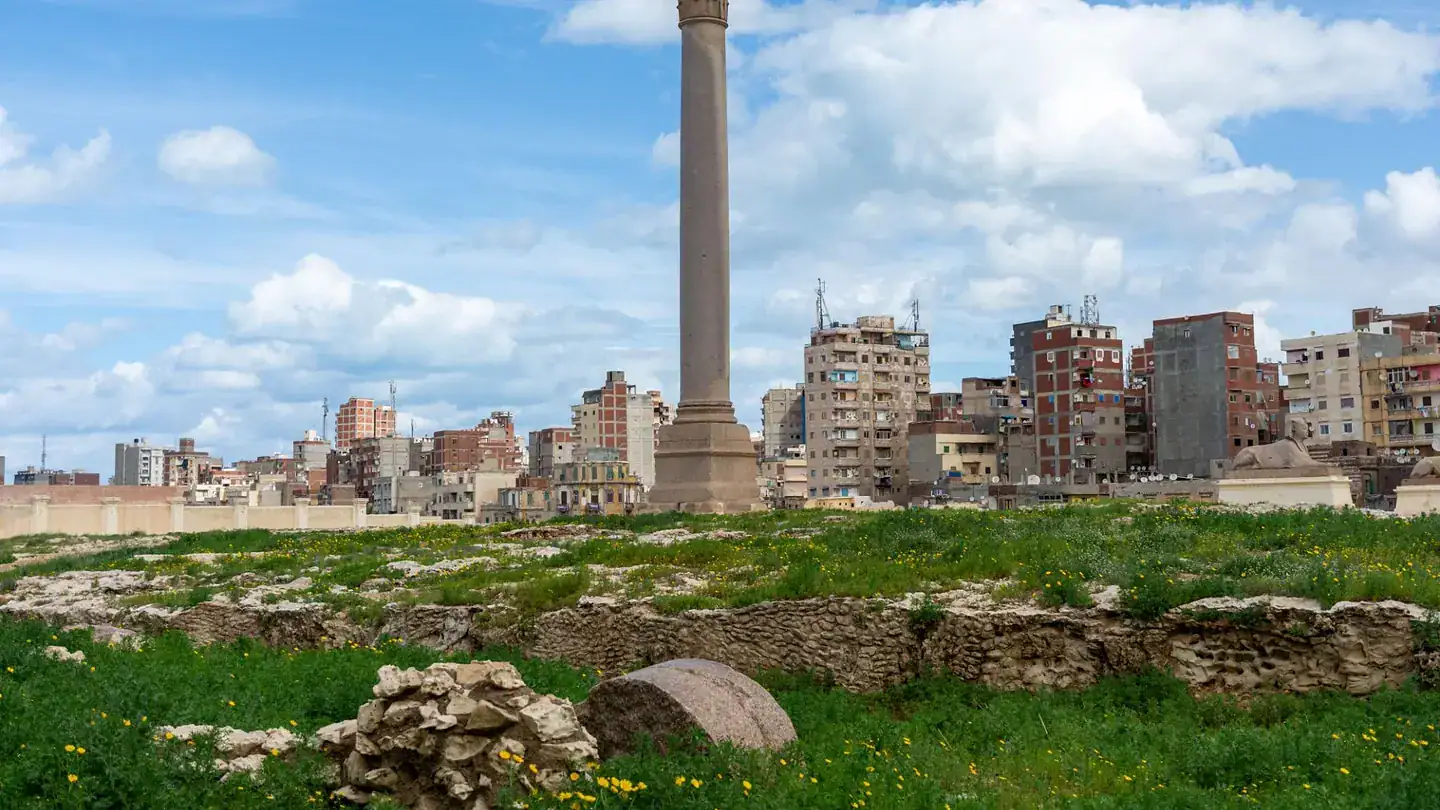
Pompey’s Pillar in Alexandria rises above the archaeological remains of the ancient Serapeum on the western side of Alexandria. Despite its familiar name, the monument does not commemorate the Roman general Pompey. Instead, a surviving Greek dedication connects the column with Emperor Diocletian in the late 3rd or very early 4th century CE.
Moreover, the monument combines Roman imperial symbolism with Egyptian stoneworking on an extraordinary scale. Craftsmen cut its huge monolithic shaft from red granite quarried at ancient Syene, modern Aswan. Then, engineers transported the stone north and raised it above Alexandria’s Serapeum precinct.
Why is Pompey’s Pillar important? It ranks among the largest surviving monolithic columns of the Roman world and dominates the remains of Alexandria’s Serapeum. In addition, its inscription preserves the real historical connection: Emperor Diocletian, not Pompey.
Monolithic engineering
Architecture of Pompey’s Pillar
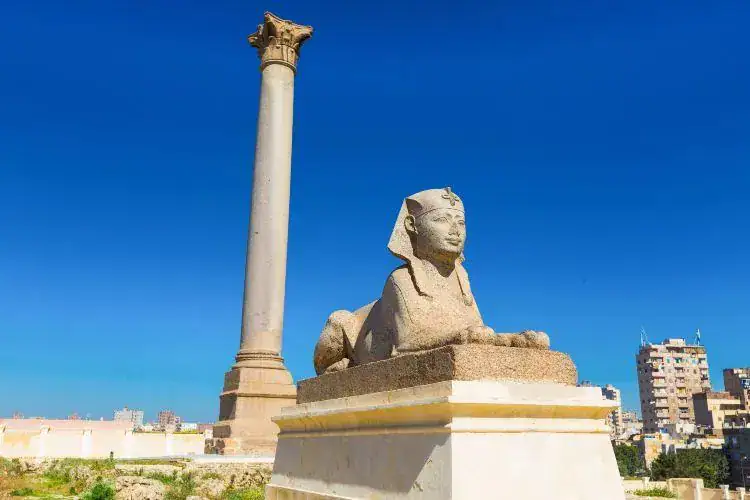
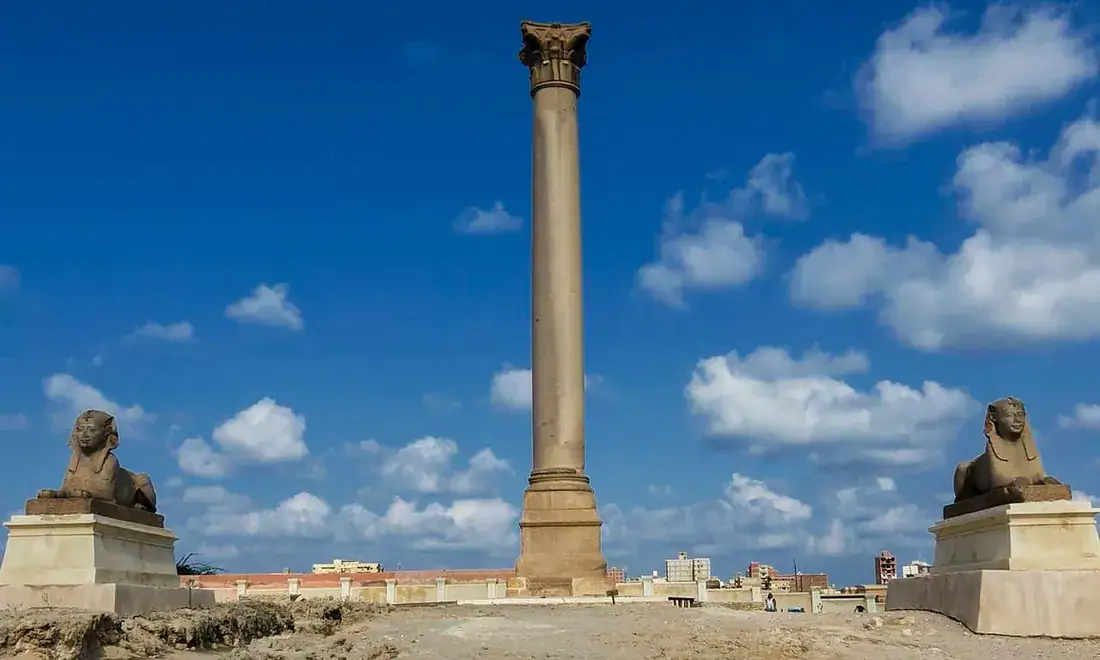
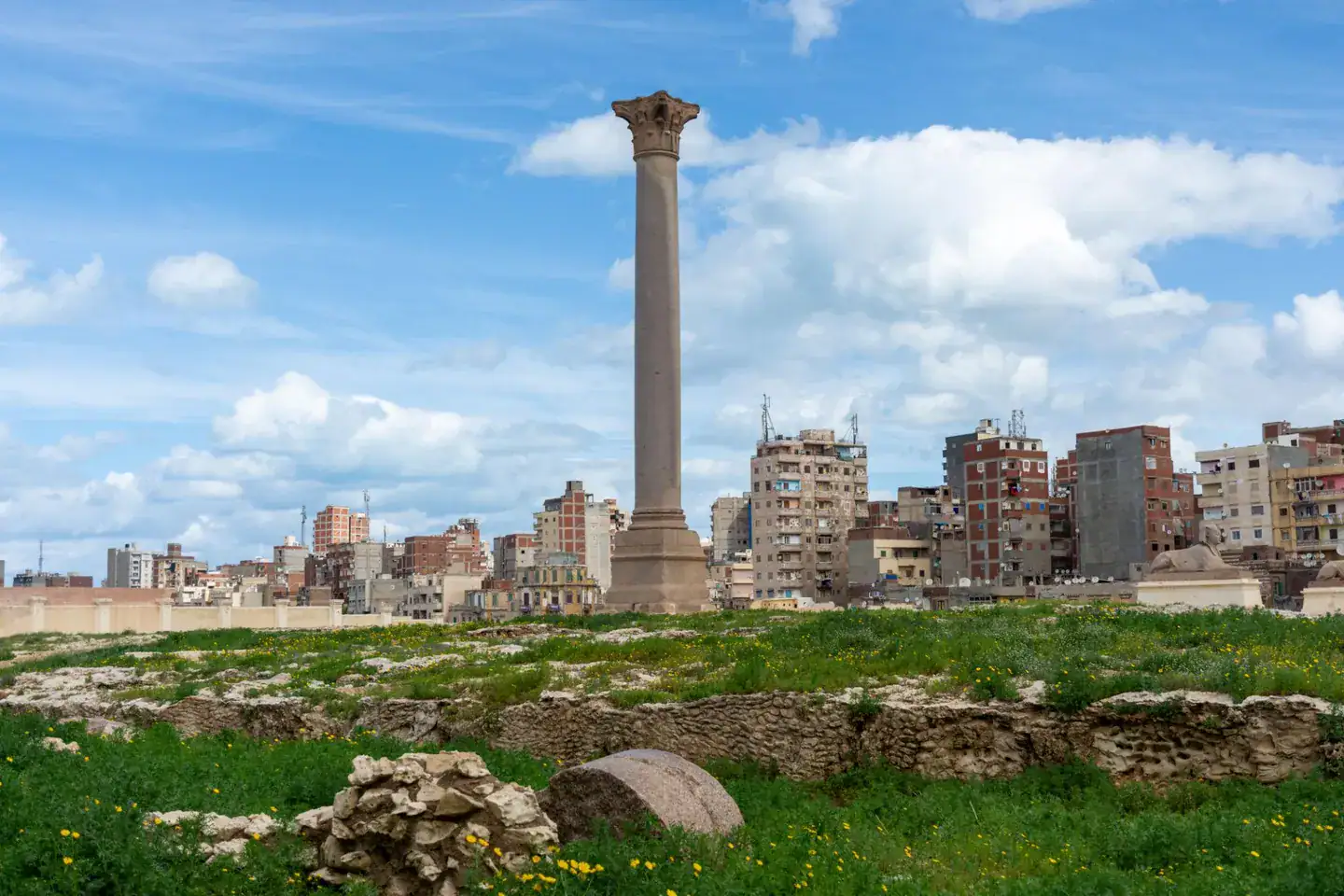
The column’s most remarkable feature is its single-piece granite shaft. It measures roughly 20.75 meters in height and about 2.7 meters in diameter at the base. Together with the pedestal and capital, the surviving monument reaches approximately 26.85 meters.
Above the shaft sits a Corinthian-style capital. In antiquity, a colossal imperial statue—generally identified as Diocletian—stood above it. Therefore, the complete ensemble once rose even higher and looked more imposing than the monument visitors see today.
Moreover, the shaft weighs an estimated 285 tons, so its quarrying, river transport and erection demonstrate remarkable ancient engineering. Workers brought the granite from the Aswan region, more than 1,000 kilometers south of Alexandria.
A famous historical mistake
Why Is It Called Pompey’s Pillar?
The name “Pompey’s Pillar” comes from a medieval misidentification. European travelers associated the monument with Pompey the Great, the Roman general murdered in Egypt in 48 BCE. However, the surviving inscription rules out that interpretation.
Pompey died more than three centuries before workers raised the column. Instead, the Greek text on the base honors Emperor Diocletian and records a dedication by a Roman prefect of Egypt. Consequently, historians often describe the monument more accurately as Diocletian’s Column.
Was Pompey buried beneath the pillar? No reliable archaeological evidence links the monument to Pompey’s burial or death. Nevertheless, the traditional name survived because later travel literature made it famous.
Imperial power after rebellion
Diocletian, Alexandria and the Purpose of the Column
Revolt
In 297–298 CE, Diocletian fought to restore Roman control after rebellion in Egypt. Eventually, his forces retook Alexandria after a major siege.
Dedication
Around 298–302 CE, Roman authorities raised the column in Diocletian’s honor. Moreover, its Greek inscription identifies a Roman prefect of Egypt as the official behind the dedication.
Imperial Image
A colossal statue of the emperor once crowned the monument. Thus, the complete composition projected Roman authority high above the Serapeum precinct.
Key historical point: the monument is best understood in the political world of Diocletian’s Egypt, not as a memorial to Pompey the Great.
Temple of Serapis
Pompey’s Pillar and the Serapeum of Alexandria
The column stands within the remains of the Serapeum, one of ancient Alexandria’s most important religious complexes. The sanctuary honored Serapis, a deity whose cult blended Egyptian and Greek religious traditions during the Ptolemaic and Roman periods.
Archaeological evidence shows that the site developed through several phases. For example, foundation deposits associate a major Ptolemaic building phase with Ptolemy III Euergetes. Later, Roman rebuilding transformed the sanctuary before officials added Diocletian’s column.
In 391 CE, conflict surrounding the Christianization of the Roman Empire brought the Serapeum’s traditional cult to an end and the sanctuary suffered destruction. Today, little of the temple survives above ground. As a result, the standing column appears even more dramatic within the archaeological landscape.
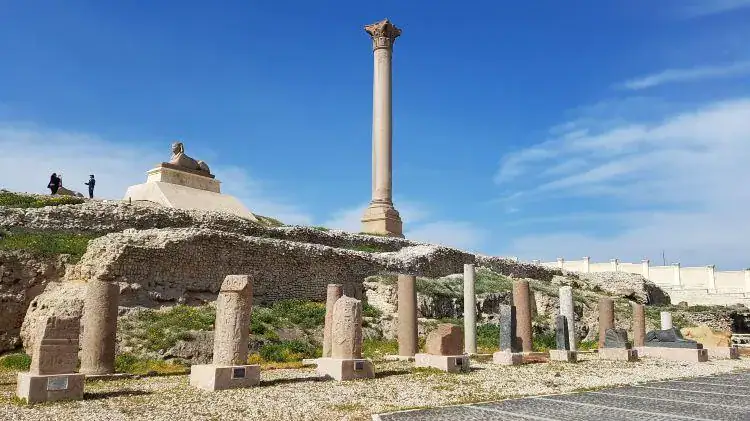
What else can you see?
Monuments Around Pompey’s Pillar
Sphinx Statues
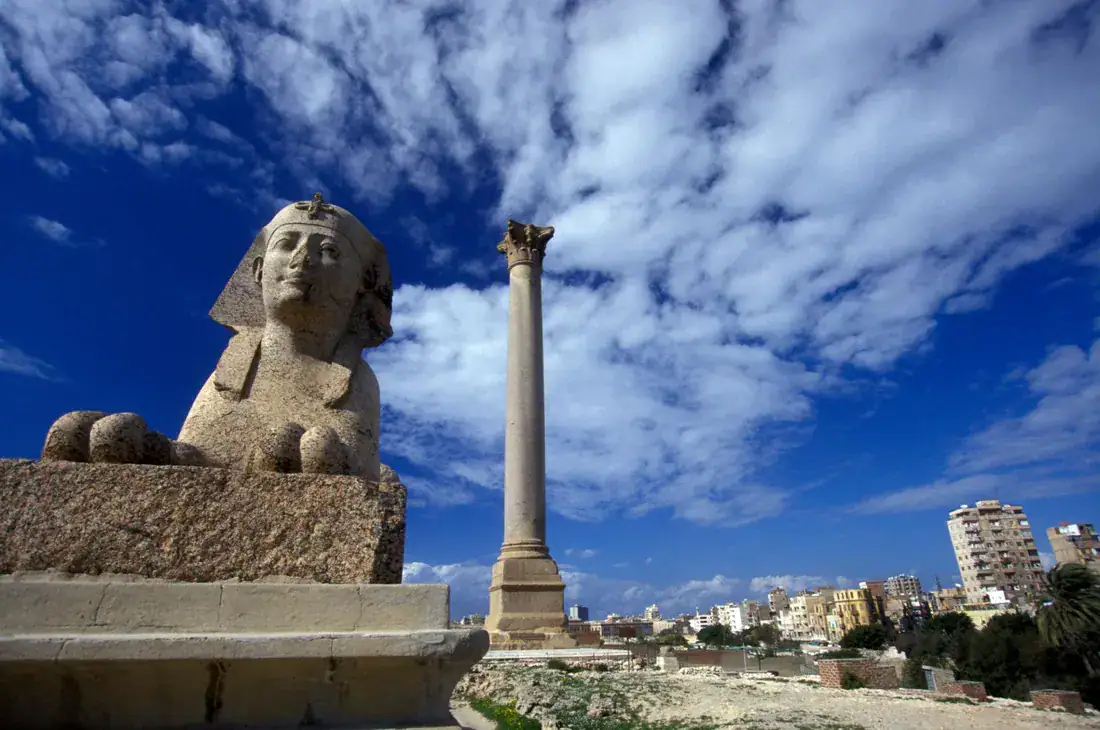
Large sphinx sculptures stand near the column and create one of the site’s most recognizable views. They also emphasize the blending of Egyptian imagery with the later Greco-Roman setting.
Serapeum Foundations
Low walls, foundations and architectural fragments reveal the footprint of the once monumental sanctuary. Together, they help visitors understand the column as part of a larger sacred complex.
Subterranean Areas
Underground spaces survive within the archaeological zone. Their exact functions changed over time, so they are best interpreted within the broader history of the Serapeum rather than as a single-purpose tunnel system.
From Aswan to Alexandria
How Was Pompey’s Pillar Transported and Erected?
Craftsmen cut the shaft from granite quarried in the Aswan region. Next, ancient engineers moved this enormous monolith north toward Alexandria, most plausibly using Nile transport for the long-distance stage of the journey.
Once near the site, workers still faced the challenge of moving the stone overland and lifting it onto a massive pedestal. Although no ancient account preserves the exact erection sequence, Roman and Egyptian engineers already had centuries of experience moving extremely heavy stone.
Therefore, the monument represents more than imperial politics. It also provides physical evidence of the logistical skill needed to quarry, transport and raise one of antiquity’s largest monolithic column shafts.
Plan your visit
Visiting Pompey’s Pillar in Alexandria
Where is Pompey’s Pillar?
The monument stands in the Kom El Shoqafa area of western Alexandria, within the archaeological remains of the ancient Serapeum.
Opening hours
The Ministry of Tourism and Antiquities has listed the site from 9:00 AM to 5:00 PM. However, schedules can change, so confirm the current opening time before your visit.
How long should you allow?
Most visitors can explore the column, sphinxes and visible Serapeum remains in around 45–75 minutes. In addition, allow extra time if you enjoy archaeology and photography.
What can you combine it with?
Pompey’s Pillar fits naturally into an Alexandria sightseeing day with other Greco-Roman monuments. Afterwards, you can continue toward the city’s Mediterranean waterfront.
Tickets: ticket prices can change. Check the latest Ministry of Tourism and Antiquities price list or ask your guide before travelling rather than relying on an old online price.
Kom El Shoqafa, Alexandria
Location of Pompey’s Pillar
Quick answers
Frequently Asked Questions About Pompey’s Pillar
Who built Pompey’s Pillar in Alexandria?
Roman authorities raised the monument around 298–302 CE in honor of Emperor Diocletian. Moreover, a Greek inscription on the base records the imperial dedication.
Why is it called Pompey’s Pillar if it honors Diocletian?
The name comes from a later historical mistake. Medieval and early modern travelers connected the column with Pompey the Great; however, the inscription places the monument firmly in Diocletian’s period.
How tall is Pompey’s Pillar?
The surviving monument is approximately 26.85 meters high, including its base and capital. The monolithic granite shaft itself is about 20.75 meters high.
What stone is Pompey’s Pillar made from?
The shaft is made from red granite quarried in the Aswan region of southern Egypt.
Was there a statue on top of Pompey’s Pillar?
Yes. A colossal imperial statue once crowned the column, and scholars generally identify the figure as Emperor Diocletian.
What was the Serapeum of Alexandria?
The Serapeum served as a major sanctuary for Serapis, a deity whose worship blended Egyptian and Hellenistic traditions. Today, the monumental column stands within the remains of this complex.
Is Pompey’s Pillar worth visiting?
Yes, especially for travelers interested in Roman Alexandria. The scale of the column, the sphinx statues and the surviving Serapeum remains make the site one of Alexandria’s most distinctive archaeological stops.
Explore the Mediterranean city
Discover Roman Alexandria Beyond the Waterfront
Combine Pompey’s Pillar with Alexandria’s other archaeological landmarks for a private day that connects the Ptolemaic, Roman and modern city.