
Egypt souvenirs are more than simple reminders of a holiday. From handmade papyrus and personalized cartouches to perfume oils, Egyptian cotton, spices and traditional crafts, the best things to buy in Egypt carry a piece of the country’s history, creativity and everyday culture home with you. Therefore, this guide explains what to buy in Egypt, where to shop and how to recognize authentic Egyptian souvenirs.
What Are the Best Egypt Souvenirs?
The best Egypt souvenirs include genuine papyrus, personalized hieroglyphic cartouches, perfume oils, Egyptian cotton, handwoven scarves, spices, alabaster, brass and copper work, galabeyas and carefully made pharaonic replicas.
However, the best souvenir is not necessarily the most expensive one. Instead, a small handmade object purchased directly from an Egyptian artisan can carry far more meaning than a mass-produced decoration.
Best Egypt Souvenirs at a Glance
Why Are Egypt Souvenirs So Special?
Egypt has produced skilled craftspeople for thousands of years. Ancient Egyptians worked with stone, metal, linen, glass, pottery, wood and precious materials. Later, Egyptian cultures added new traditions in textiles, metalwork, jewelry and decorative arts.
Moreover, visitors can still discover workshops and markets where crafts are produced by hand. Therefore, shopping in Egypt can become much more than buying a gift. It can introduce you to local materials, traditional skills and the people who keep those skills alive.
In historic Cairo, for example, Khan El Khalili Bazaar remains one of the country’s best-known shopping districts. Its narrow streets contain shops selling jewelry, perfume, textiles, spices, brassware, lamps and countless Egyptian souvenirs.
15 Best Egypt Souvenirs to Bring Home
1. Papyrus – A Classic Egypt Souvenir
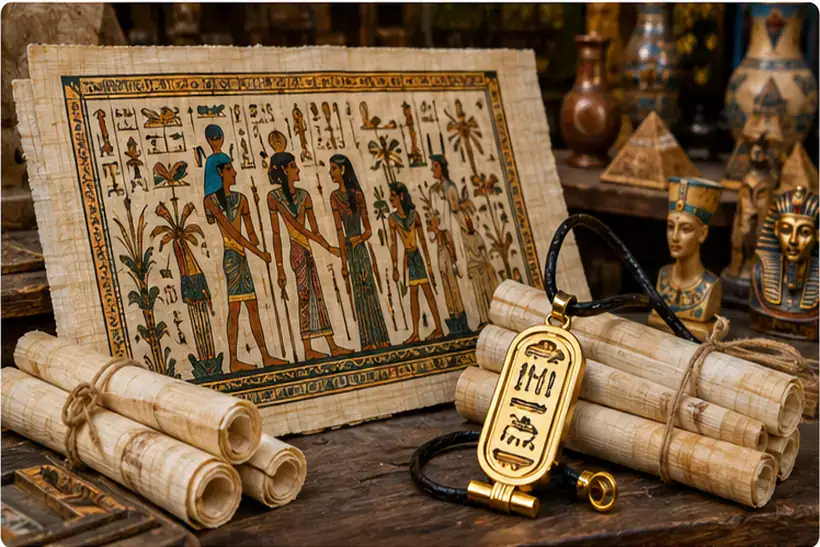
Few materials are more closely associated with ancient Egypt than papyrus. Ancient Egyptians used the papyrus plant to create one of history’s most famous writing surfaces.
Modern papyrus artwork often reproduces scenes from ancient tombs, temples and mythology. For example, popular designs feature Tutankhamun, Nefertiti, the Tree of Life, the weighing of the heart, Horus, Isis and scenes from ancient Egyptian daily life.
In addition, many workshops can write your name in hieroglyphs, making papyrus one of the most personal souvenirs from Egypt.
2. Personalized Cartouches – Unique Egypt Souvenirs
A cartouche is one of the most distinctive Egypt-inspired gifts you can buy. In ancient Egypt, royal names were written inside an elongated oval shape that modern visitors immediately recognize.
Today, jewelers can create pendants bearing your name, or the name of someone you love, represented with hieroglyphic symbols. Moreover, cartouches are available in silver, gold and other materials.
Because they are small, lightweight and personal, they also make excellent gifts.
3. Egyptian Perfume Oils – Fragrant Souvenirs from Egypt
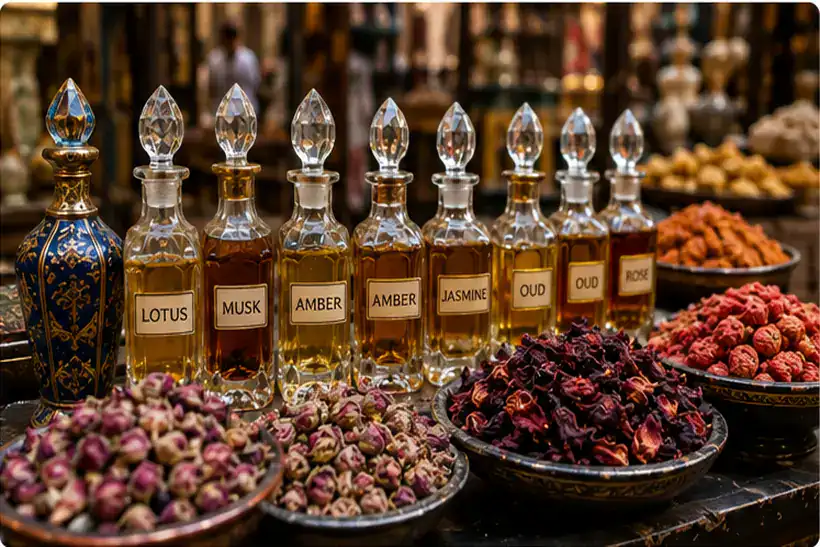
Walk through an Egyptian perfume shop and the experience begins before you buy anything. Bottles may contain fragrances inspired by lotus, jasmine, rose, musk, amber and other traditional scents.
Meanwhile, concentrated perfume oils can last a long time because only a small amount is normally required. In addition, decorative glass perfume bottles make beautiful gifts on their own.
4. Traditional Galabeya – A Cultural Souvenir from Egypt
The galabeya is a loose traditional garment worn in many parts of Egypt. Styles, fabrics and decoration vary considerably between regions and occasions.
Furthermore, simple cotton versions are comfortable in warm weather, while embroidered and decorative galabeyas make colorful gifts. In Upper Egypt and Nubia, travelers can find especially distinctive styles.
5. Egyptian Spices – Popular Egypt Souvenirs
Egyptian markets are filled with color and fragrance. Spices and dried herbs are inexpensive, lightweight and easy to carry. Therefore, they are some of the most practical souvenirs from Egypt.
- Karkadeh (dried hibiscus)
- Cumin
- Black cumin
- Anise
- Mint
- Coriander
- Dukkah spice blends
For example, karkadeh is particularly associated with southern Egypt and can be served hot or cold.
6. Luxor Alabaster – Handmade Egypt Souvenirs
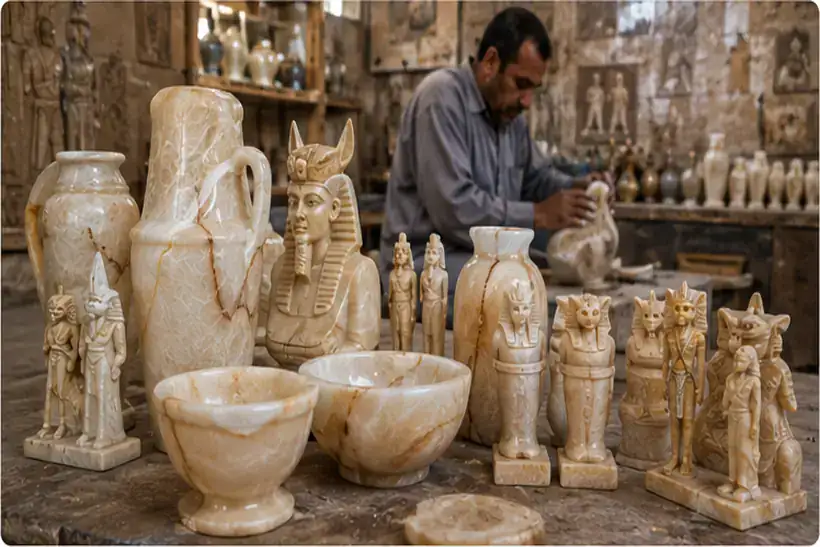
Luxor is particularly famous for workshops producing decorative objects inspired by ancient Egyptian stonework. Alabaster vases, bowls and statues can be striking souvenirs, especially when they are handmade.
However, quality varies widely. Genuine handcrafted pieces may show natural variations in color and texture. By contrast, inexpensive factory-made imitations are also widely sold.
7. Pharaonic Statues – Iconic Souvenirs from Egypt
Tutankhamun, Nefertiti, Anubis, Bastet, Horus and the Sphinx appear in souvenir shops throughout Egypt. Replicas range from inexpensive small figures to detailed decorative pieces.
Likewise, choose according to craftsmanship rather than size. A well-finished small statue often looks far better at home than a large, poorly made replica.
8. Egyptian Cotton – Practical Souvenirs from Egypt
Egyptian cotton has an international reputation, and visitors commonly shop for shirts, scarves, towels, bed linen and other textiles.
Nevertheless, a label containing the word “Egyptian” does not automatically guarantee quality. Therefore, examine the fabric and stitching carefully and shop from reputable sellers when purchasing expensive products.
9. Handwoven Nubian Scarves and Egyptian Textiles
A visit to Aswan offers a different shopping experience from Cairo. Colorful Nubian-inspired textiles, scarves, baskets and decorative objects make beautiful souvenirs while reflecting southern Egypt’s distinctive visual culture.
Additionally, buying directly from local makers can make the souvenir more meaningful because you know something about the person and community behind it.
10. Brass and Copper Egypt Souvenirs
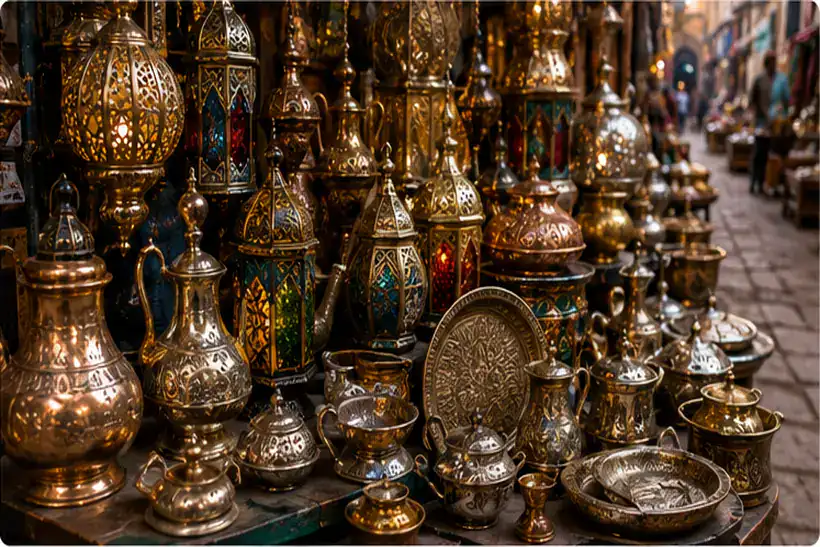
Cairo has a long tradition of decorative metalwork. Visitors can find engraved trays, lanterns, coffee pots, incense burners, bowls and wall decorations featuring geometric, floral or calligraphic designs.
Therefore, for travelers interested in Islamic art and traditional craftsmanship, these are among the most attractive things to buy in Egypt.
Historic Islamic Cairo, particularly around Khan El Khalili , is a natural place to explore this tradition.
11. Handmade Pottery – Traditional Souvenirs from Egypt
Egyptian pottery ranges from simple everyday pieces to colorful decorative ceramics. Styles differ between Cairo, Upper Egypt, Nubia and oasis communities.
For instance, small bowls, cups and decorative plates can make affordable gifts. However, fragile pieces need careful packing for the flight home.
12. Mother-of-Pearl Boxes and Egyptian Wooden Crafts
Decorative wooden boxes inlaid with mother-of-pearl are among Egypt’s most elegant traditional gifts. Geometric patterns reflect craft traditions found across Cairo and the wider Middle East.
In addition, small jewelry boxes are particularly practical because they fit easily inside luggage.
13. Egyptian Leather Goods
Leather bags, wallets, belts and handmade notebooks can be found in markets and workshops around Egypt. As with textiles, quality differs greatly. Therefore, examine the stitching, lining, fasteners and leather before buying.
14. Traditional Musical Instruments from Egypt
Travelers looking for something unusual can explore Egyptian musical instruments. Small tablas, sagat finger cymbals and other percussion instruments make memorable gifts. Meanwhile, serious musicians may also encounter traditional ouds.
However, large instruments require more planning for air travel. Therefore, check airline baggage requirements before buying.
15. Egyptian Dates, Sweets and Local Food Gifts
Not every souvenir needs to sit on a shelf. Dates, packaged Egyptian sweets and selected food products can let you share part of the journey with family and friends.
Again, always check customs rules at your destination before packing food. Commercially packaged products are generally easier to transport than loose market products.
Where to Buy the Best Egypt Souvenirs
| Destination | Good Souvenirs to Look For | Shopping Experience |
|---|---|---|
| Cairo | Metalwork, jewelry, perfume, textiles, papyrus | Huge variety and historic markets |
| Luxor | Alabaster, papyrus, replicas, spices | Workshops and bazaars near archaeological sites |
| Aswan | Spices, hibiscus, Nubian crafts and textiles | Colorful southern Egyptian markets |
| Nubian Villages | Handmade crafts, baskets, textiles and local art | Smaller community-based shopping |
| Museum Shops | Books, quality replicas and cultural gifts | Fixed prices and convenient shopping |
Shopping for Egypt Souvenirs in Cairo
Khan El Khalili for Egypt Souvenirs
The legendary Khan El Khalili Bazaar is the obvious starting point. Moreover, shopping here is also about atmosphere: narrow alleys, historic buildings, metal lanterns, perfume shops, jewelry, spices and cafés create one of Cairo’s most memorable experiences.
Al-Muizz Street and Islamic Cairo
The surrounding historic district is particularly interesting for travelers who enjoy traditional crafts, architecture and metalwork. Therefore, shopping can easily be combined with sightseeing in Islamic Cairo.
Museum Gift Shops
Museum shops are useful when you prefer clearly priced items, books and professionally produced replicas. Although they may cost more than bazaar products, the buying process is simpler.
Best Egypt Souvenirs to Buy in Luxor
Because Luxor lies at the heart of ancient Thebes, pharaonic-inspired souvenirs are everywhere.
However, Luxor is particularly interesting for alabaster workshops. As a result, watching craftspeople work can turn a simple shopping stop into a cultural experience.
Best Egypt Souvenirs to Buy in Aswan
Aswan has one of Egypt’s most atmospheric markets. The city’s location in southern Egypt gives its shopping a different character from Cairo.
For example, look for karkadeh, spices, colorful textiles, Nubian-inspired crafts, baskets and handmade decorations. Even if you buy nothing, walking through the market is worth including in an Aswan itinerary.
How to Recognize Authentic Egypt Souvenirs
Good Signs When Buying Egypt Souvenirs
- The seller explains where the item was made
- Small handmade variations are visible
- You can see or visit the workshop
- Materials are clearly explained
- Valuable items come with a proper receipt
Warning Signs When Buying Souvenirs in Egypt
- Something is described as “ancient”
- The seller pressures you to buy immediately
- Gold or silver purity is unclear
- A supposed handmade item looks identical to hundreds of others
- The price changes dramatically without explanation
How to Bargain When Buying Egypt Souvenirs
Bargaining is common in many Egyptian bazaars, although it is not appropriate everywhere. For example, shops with clearly displayed fixed prices may not negotiate, while traditional market sellers often expect some discussion.
- Ask the price politely.
- Decide what the item is worth to you.
- Make a reasonable counteroffer.
- Keep the conversation friendly.
- Do not bargain aggressively over a tiny difference.
- If you cannot agree, smile, say thank you and walk away.
Ultimately, the goal should not be to “defeat” the seller. Instead, a good bargain leaves both sides comfortable with the transaction.
Should You Pay in Egyptian Pounds, Dollars or Euros?
For everyday shopping, having Egyptian pounds is useful, especially in smaller markets and local shops. Meanwhile, larger tourist businesses may accept cards or foreign currency, but payment methods vary.
Before agreeing to a price in another currency, make sure both you and the seller understand the exchange rate being used.
Can You Pay by Credit Card for Egypt Souvenirs?
Many larger shops accept cards, especially in major tourist areas. However, smaller workshops, stalls and traditional markets may prefer cash.
Therefore, it is sensible to carry both a payment card and some Egyptian pounds rather than relying entirely on one method.
What Egypt Souvenirs Should You Avoid Buying?
Most souvenirs are straightforward, but travelers should use common sense. In particular, avoid anything claimed to be a genuine ancient artifact. Egypt’s archaeological heritage is protected and authentic antiquities are not ordinary tourist souvenirs.
In addition, you should be cautious with wildlife products, unidentified natural materials or food products that may create customs problems when you return home.
When in doubt, choose a clearly modern handmade craft instead.
How to Pack Egypt Souvenirs for Your Flight Home
- Wrap fragile alabaster and pottery carefully.
- Place perfume oils inside sealed plastic bags.
- Keep jewelry and valuable small items in hand luggage where permitted.
- Protect papyrus from bending by using a strong tube.
- Seal spices securely.
- Check airline rules for liquids and oversized objects.
- Check customs restrictions in your destination country.
Cheap Egypt Souvenirs on a Small Budget
Fortunately, you do not need to spend heavily to bring home something memorable. Affordable Egyptian souvenir ideas include:
- Small papyrus paintings
- Hibiscus tea
- Spice packets
- Small scarab decorations
- Bookmarks
- Miniature statues
- Small perfume bottles
- Simple scarves
- Handmade postcards
For gifts to several friends or colleagues, small lightweight products are usually much easier than buying multiple heavy statues.
Best Egypt Souvenirs for Different Travelers
| Who Is It For? | Souvenir Ideas |
|---|---|
| History lover | Papyrus, quality replica, Egyptology book |
| Partner | Personalized cartouche, perfume, jewelry |
| Food lover | Spices, karkadeh, dates |
| Home decoration | Brass lantern, alabaster, pottery |
| Fashion lover | Egyptian cotton, galabeya, handmade scarf |
| Children | Small replica, papyrus name, simple craft |
| Musician | Tabla, sagat or other traditional instrument |
Are Egypt Souvenirs Expensive?
They can be extremely cheap or very expensive. For example, a packet of spices or a small handmade gift may cost little, while gold jewelry, large alabaster pieces and high-quality handcrafted objects can cost considerably more.
Therefore, comparing only prices makes little sense. Material, craftsmanship, size and place of purchase all influence value.
Is Khan El Khalili Good for Egypt Souvenirs?
Yes. Khan El Khalili is one of the best-known places for Egypt souvenirs because of the enormous variety of products available in one historic district.
More importantly, the market itself is an experience. You can combine shopping with exploring Khan El Khalili , Islamic Cairo and nearby historic streets.
However, compare several shops before buying expensive items, since both quality and prices vary.
Frequently Asked Questions About Egypt Souvenirs
Best Egypt Souvenirs and What to Buy
What is the most famous souvenir from Egypt?
Papyrus, cartouche jewelry and pharaonic replicas are among the most recognizable Egypt souvenirs. In addition, perfume oils, spices and Egyptian cotton are also extremely popular.
What Egypt souvenirs are worth buying?
Genuine papyrus, handmade crafts, perfume oils, Egyptian cotton, spices, alabaster, jewelry and locally made textiles are all worth considering when the quality is good.
What is a good personalized souvenir from Egypt?
A cartouche with your name represented in hieroglyphic symbols is one of the most popular personalized Egyptian gifts. Additionally, customized papyrus artwork is another excellent option.
Are papyrus paintings authentic Egypt souvenirs?
Papyrus can be an excellent Egyptian souvenir, but quality varies. Some inexpensive imitations use other plant materials. Therefore, buy from a reputable workshop when genuine papyrus is important to you.
Where to Buy Egypt Souvenirs in Cairo, Luxor and Aswan
What souvenirs should I buy in Cairo?
Cairo is particularly good for brass and copper work, perfumes, jewelry, textiles, papyrus and traditional crafts. In particular, Khan El Khalili offers one of the largest selections.
What Egypt souvenirs should I buy in Luxor?
Luxor is well known for alabaster workshops, pharaonic-inspired crafts, papyrus and souvenirs connected with ancient Egyptian history.
What souvenirs should I buy in Aswan?
Popular choices include hibiscus, spices, colorful textiles, Nubian-inspired crafts and handmade decorative products. Moreover, Aswan’s traditional market is worth visiting even if you are simply exploring rather than shopping.
Shopping, Bargaining and Taking Egypt Souvenirs Home
Is bargaining normal when buying Egypt souvenirs?
Yes, bargaining is common in traditional markets and bazaars. However, fixed-price stores and some modern shops do not negotiate. Therefore, always keep bargaining friendly and respectful.
Can I buy real ancient Egyptian artifacts?
Do not buy objects presented as genuine antiquities. Ancient artifacts form part of Egypt’s protected cultural heritage. Instead, choose modern replicas and contemporary crafts.
Can I take spices home from Egypt?
Often yes, but food and agricultural import rules vary by country. Therefore, check your destination country’s customs regulations before traveling.
Can I take perfume oils home from Egypt?
Usually, yes. However, airline liquid restrictions apply to hand luggage. Therefore, pack larger perfume bottles in checked baggage when necessary and seal them carefully to prevent leaks.
Final Guide to Buying Egypt Souvenirs
The best Egypt souvenirs do more than prove that you visited the country. Instead, they remind you of a particular place, conversation, smell, color or moment from your journey.
For example, a papyrus can recall the temples of Luxor. A bottle of perfume may bring back the scent of a Cairo shop. Karkadeh can remind you of Aswan, while a handmade brass lantern may take you straight back to the narrow streets of Islamic Cairo.
Therefore, do not simply ask, “What souvenir should I buy in Egypt?” Instead, choose something that connects with the part of Egypt you personally enjoyed most.
Finally, whenever possible, buy from local workshops and artisans. You will return home with something far more interesting than a mass-produced souvenir. At the same time, your purchase can help support the people keeping Egyptian craft traditions alive.
Want to Experience the Real Egypt?
Yalla Egypt Travel can include authentic markets, local workshops and cultural experiences in your private Egypt itinerary. Tell us what interests you and we will design the journey around you — from Cairo and Luxor to Aswan, Abu Simbel and the Nile.
Shopping note: Products, prices, payment methods and availability can change between shops and destinations. In addition, customs and import rules vary by country. Always check current regulations before carrying food, plant products, valuable items or unusual materials internationally.