
Temple of Esna
of Esna
Discover one of Upper Egypt’s hidden architectural treasures, dedicated to Khnum, the ram-headed creator god.
History of the Sanctuary
A sacred sanctuary that preserves the history, religion and art of Ptolemaic and Roman Egypt.
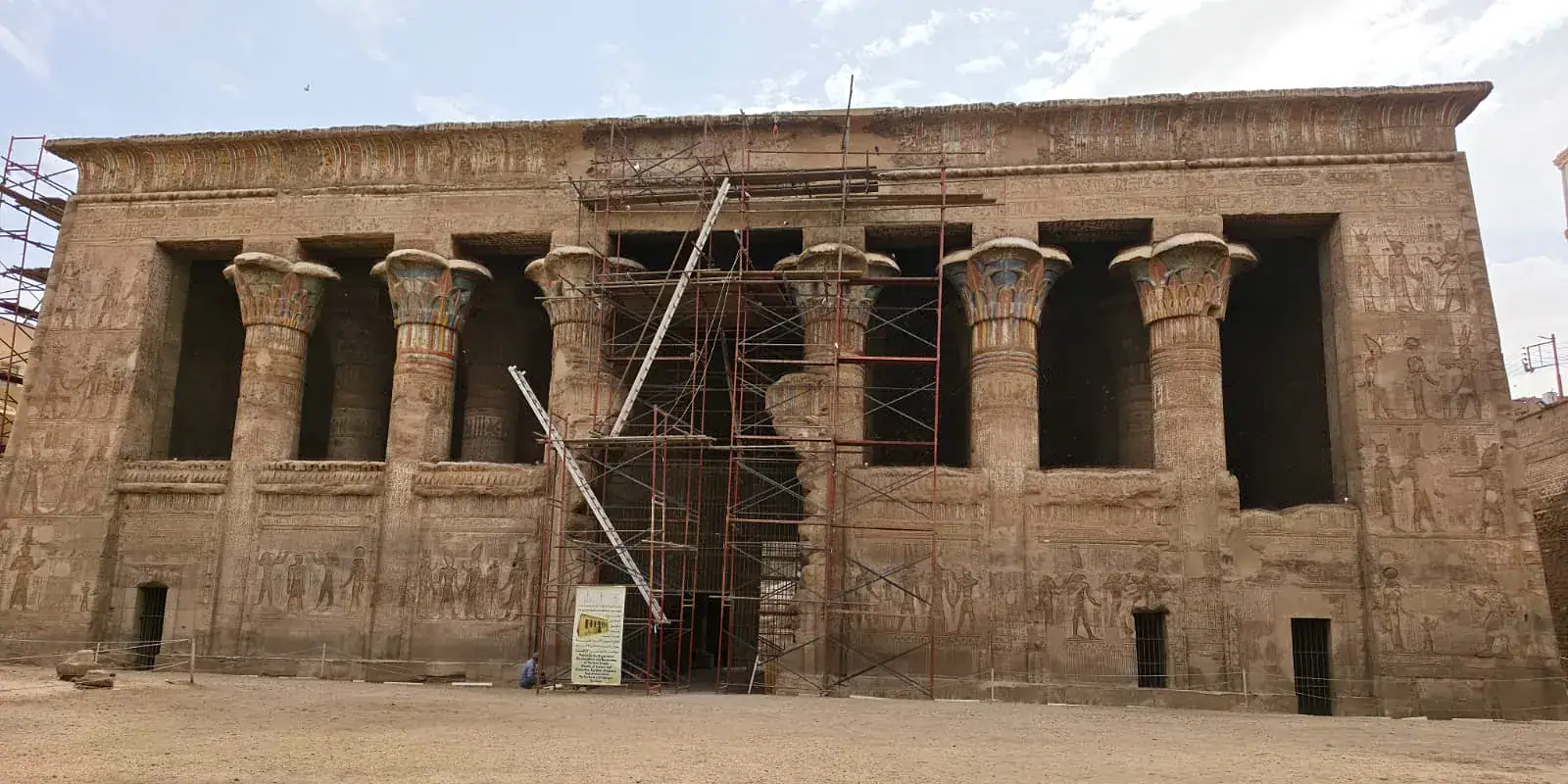
The Temple of Esna is an ancient Egyptian sanctuary located about 55 kilometres by road south of Luxor, on the west bank of the Nile. Dedicated principally to Khnum, the ram-headed creator god, its surviving pronaos, or columned entrance hall, is famous for 24 decorated columns, complex hieroglyphic texts and a large astronomical ceiling.
The original temple complex dates to the Ptolemaic period, but most of the temple proper has been lost. The surviving red-sandstone pronaos was built and decorated mainly between the first and third centuries CE under Roman rule, while preserving traditional Egyptian religious forms and imagery.
The Monumental Hypostyle Hall
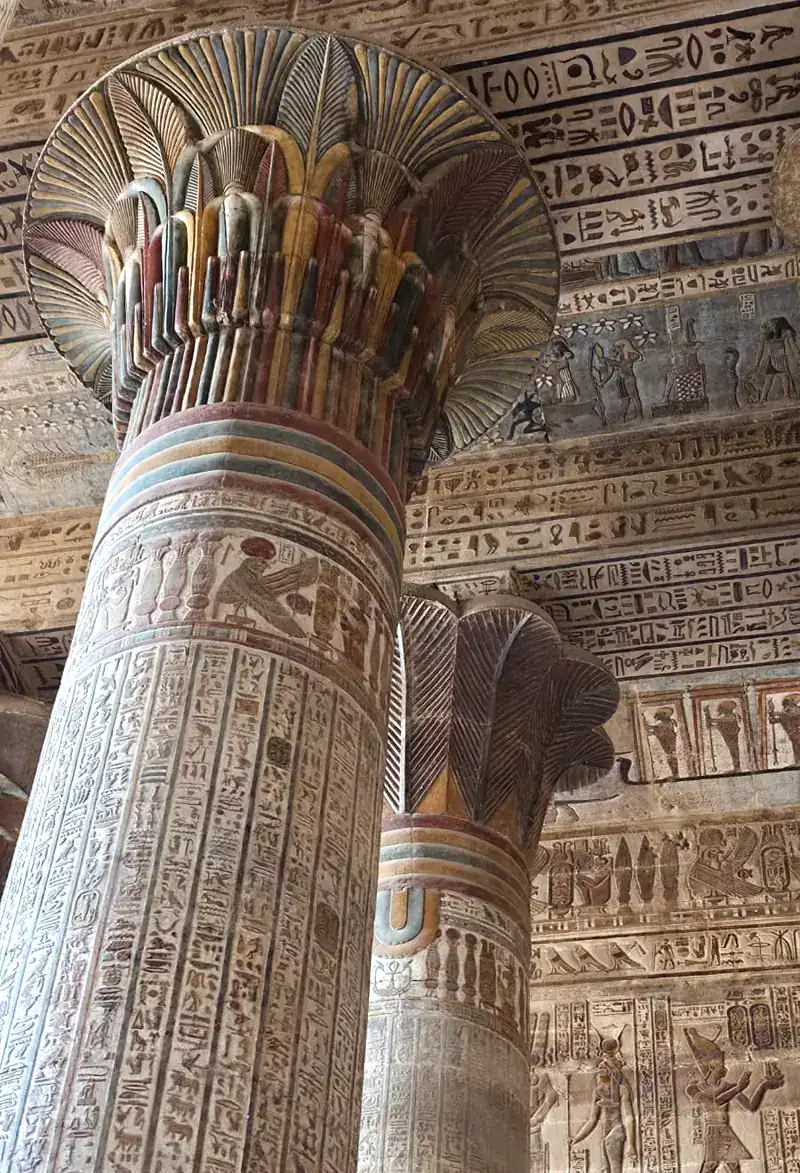
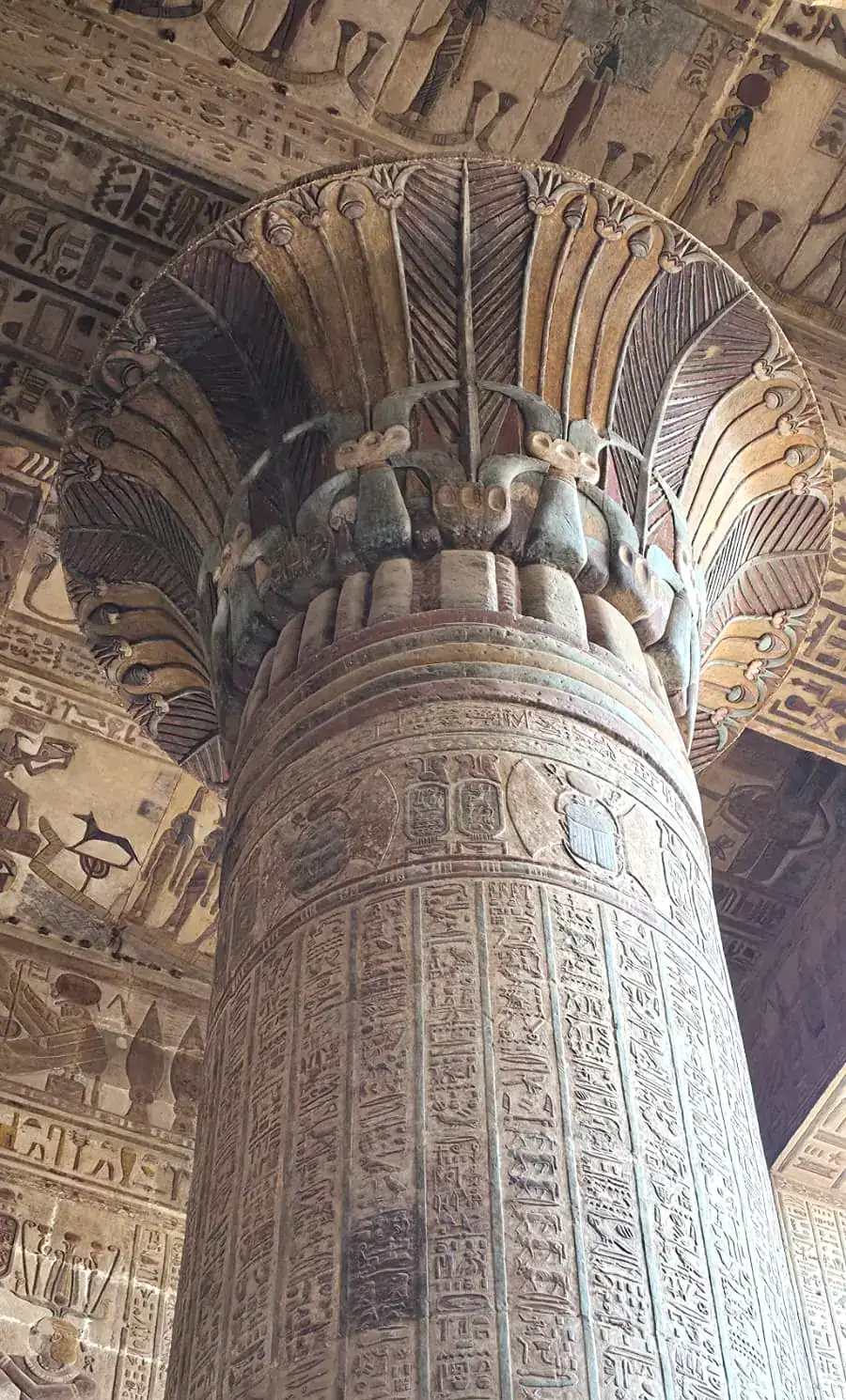
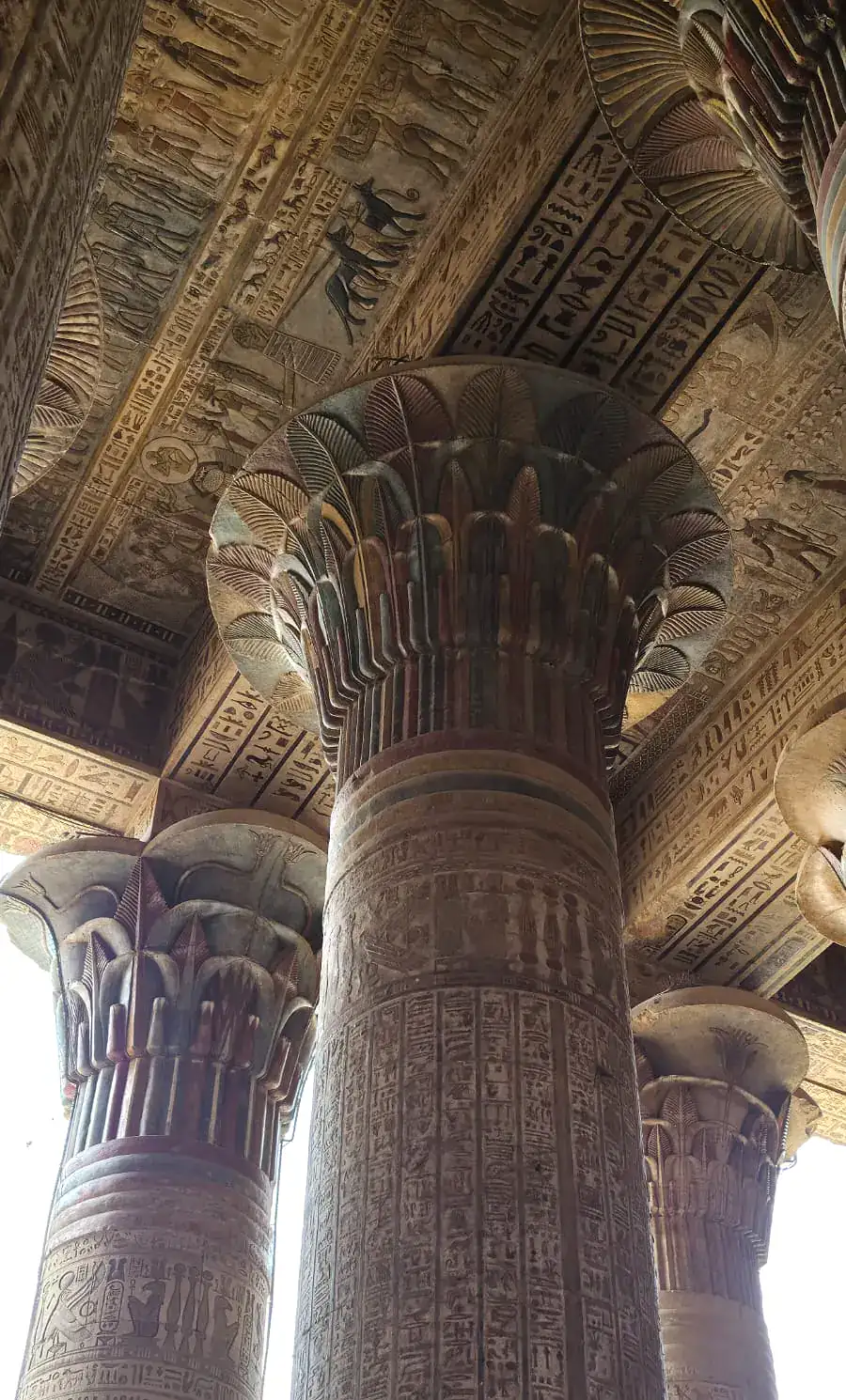
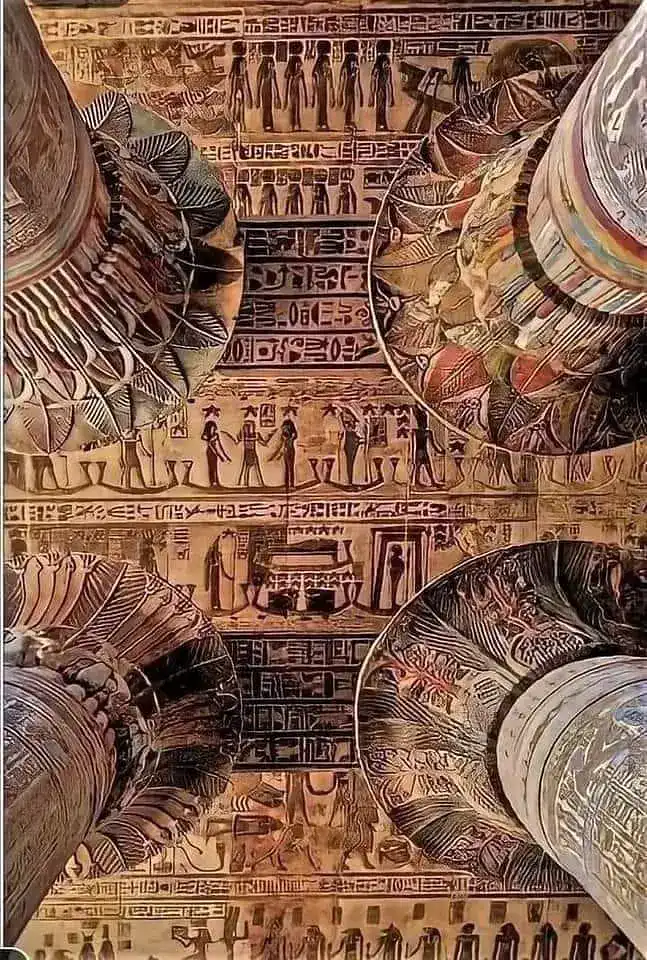
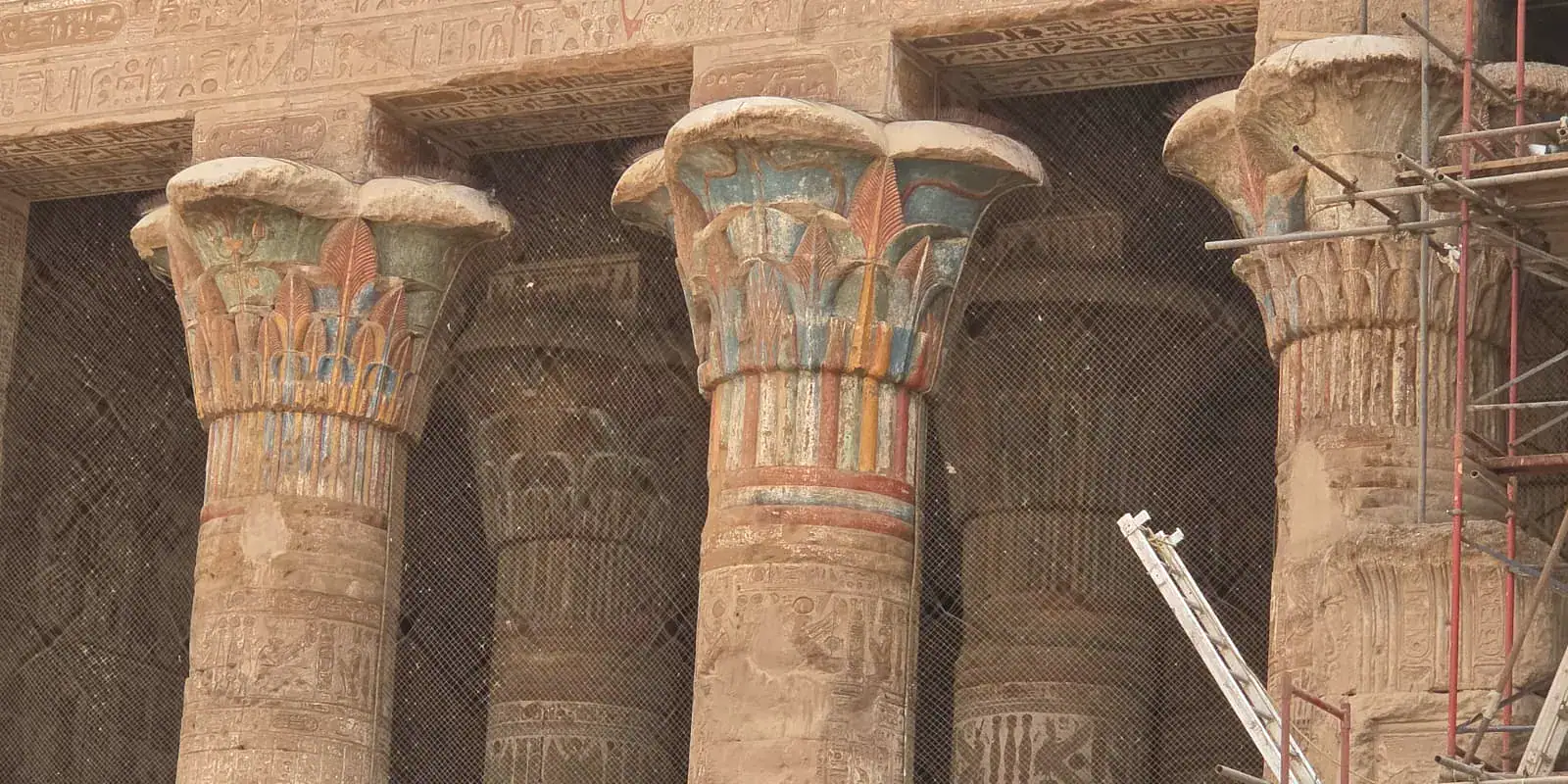
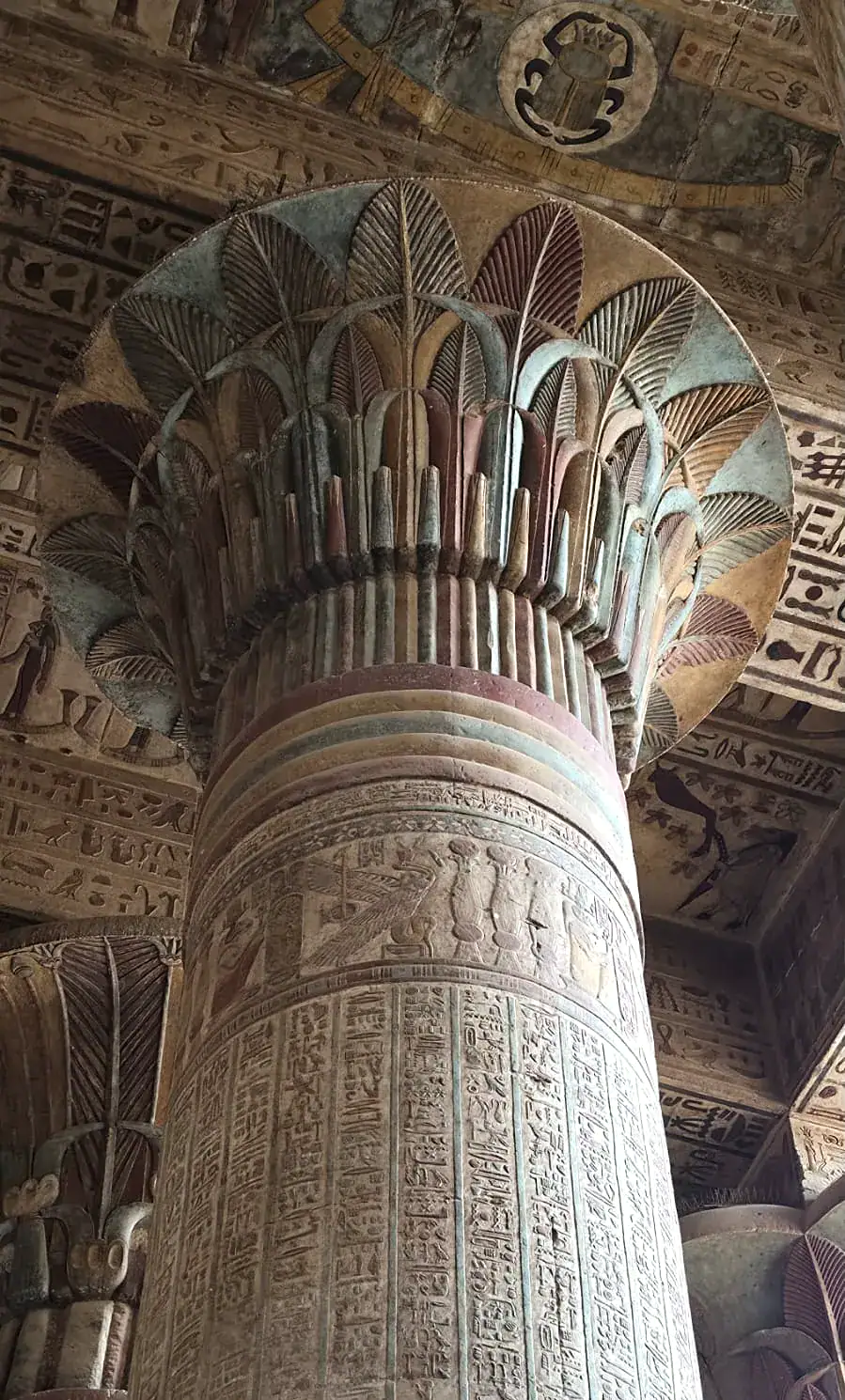
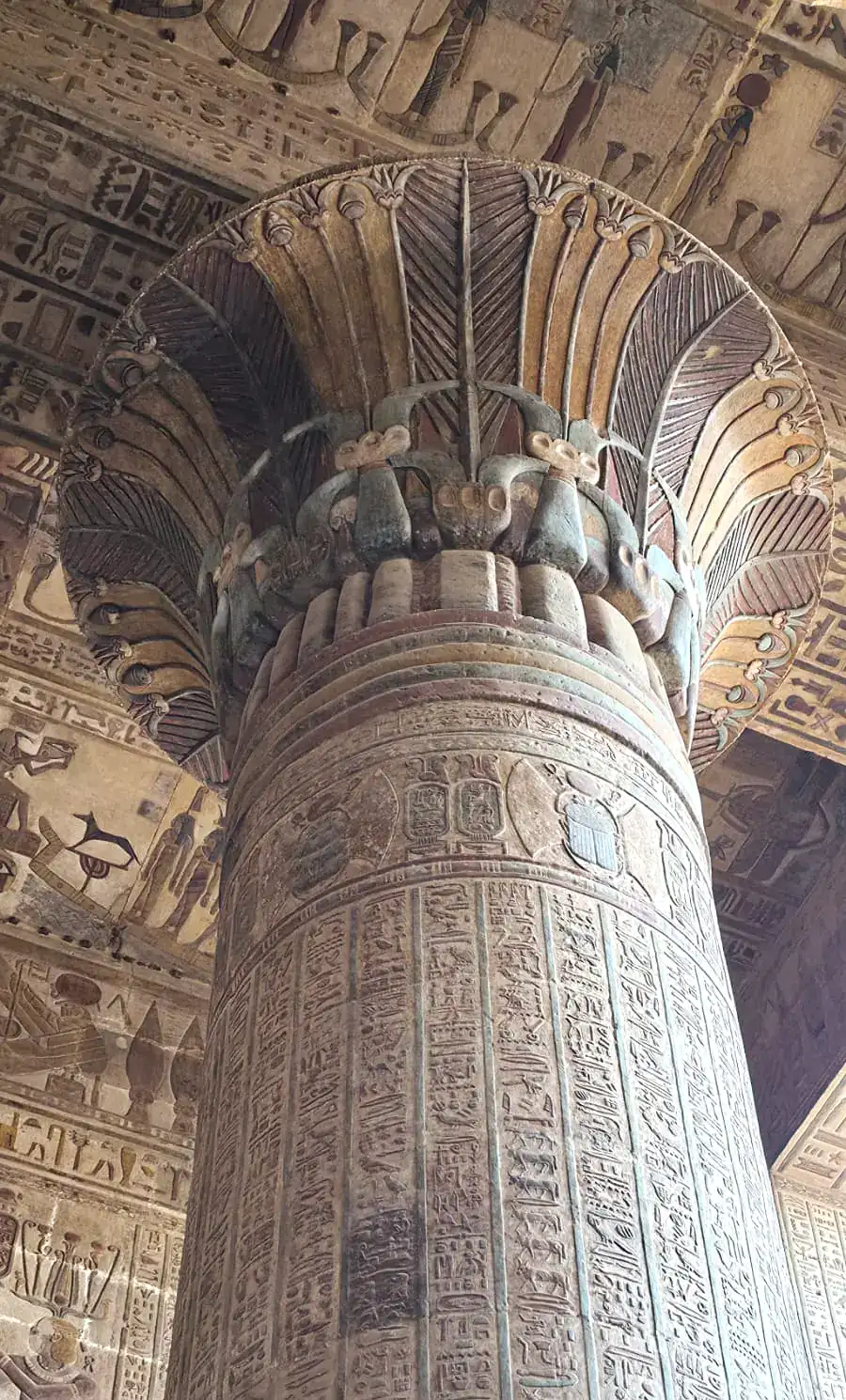
The monument’s most impressive surviving feature is its pronaos, a monumental hypostyle hall formed by 24 columns arranged in six rows of four. They rise beneath a richly decorated ceiling, and their varied capitals draw inspiration from lotus leaves and other Egyptian plants.
The 24 Decorated Columns
Each column in the hypostyle hall has its own decorative character. The capitals reinterpret Egyptian plant forms, creating a varied architectural landscape in stone.
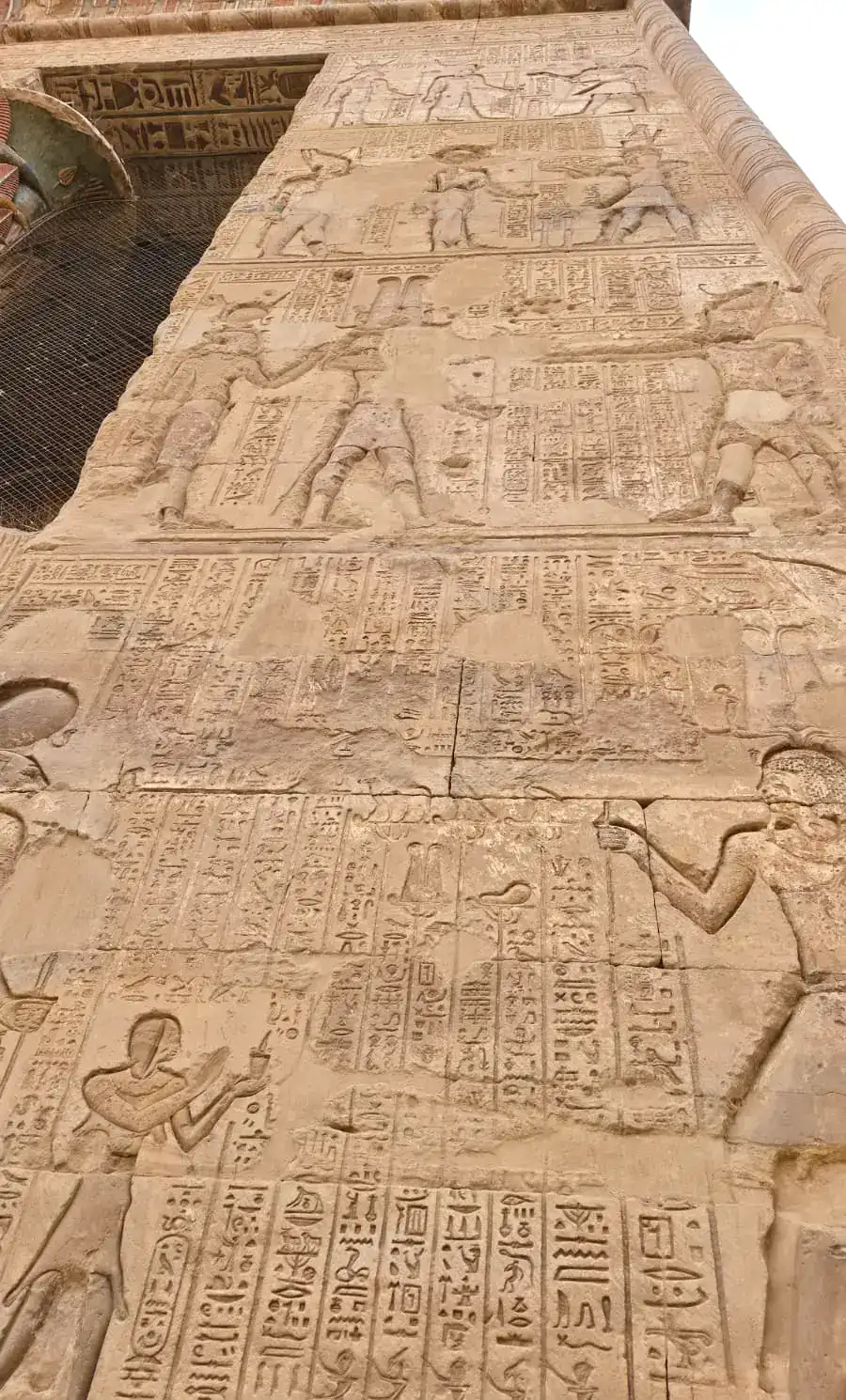
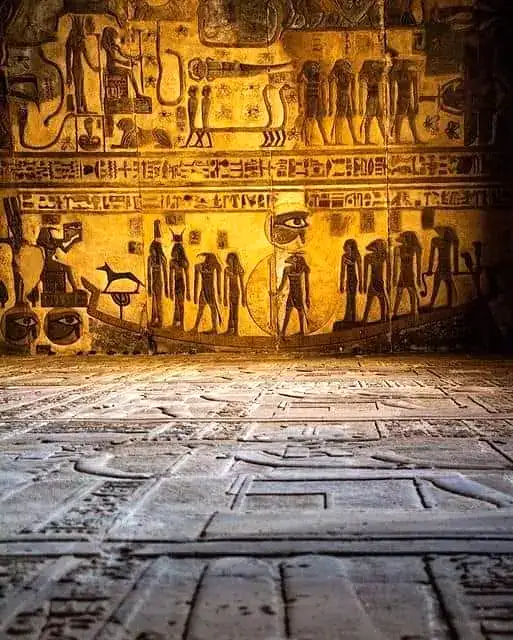
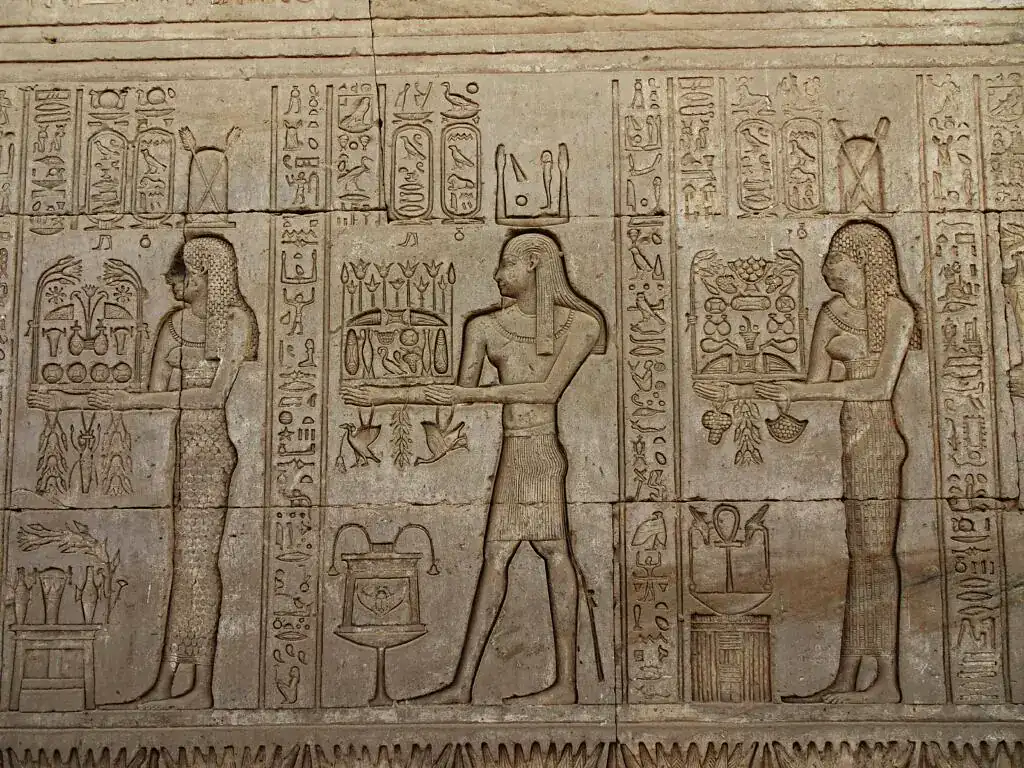
In addition, the walls and columns are covered with religious texts, astronomical imagery, ceremonial processions and scenes of rulers presenting offerings to the gods.
- Twenty-four monumental stone columns.
- Lotus, palm and floral-inspired capitals.
- Religious rituals and royal offering scenes.
- Astronomical and ceremonial inscriptions.

Inscriptions and Sacred Reliefs
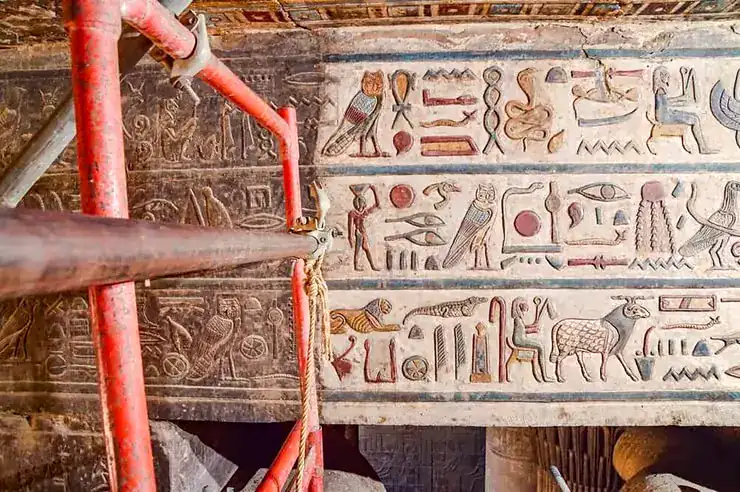
The surviving pronaos is particularly remarkable for inscriptions bearing the names and titles of Roman emperors involved in successive phases of its construction and decoration.
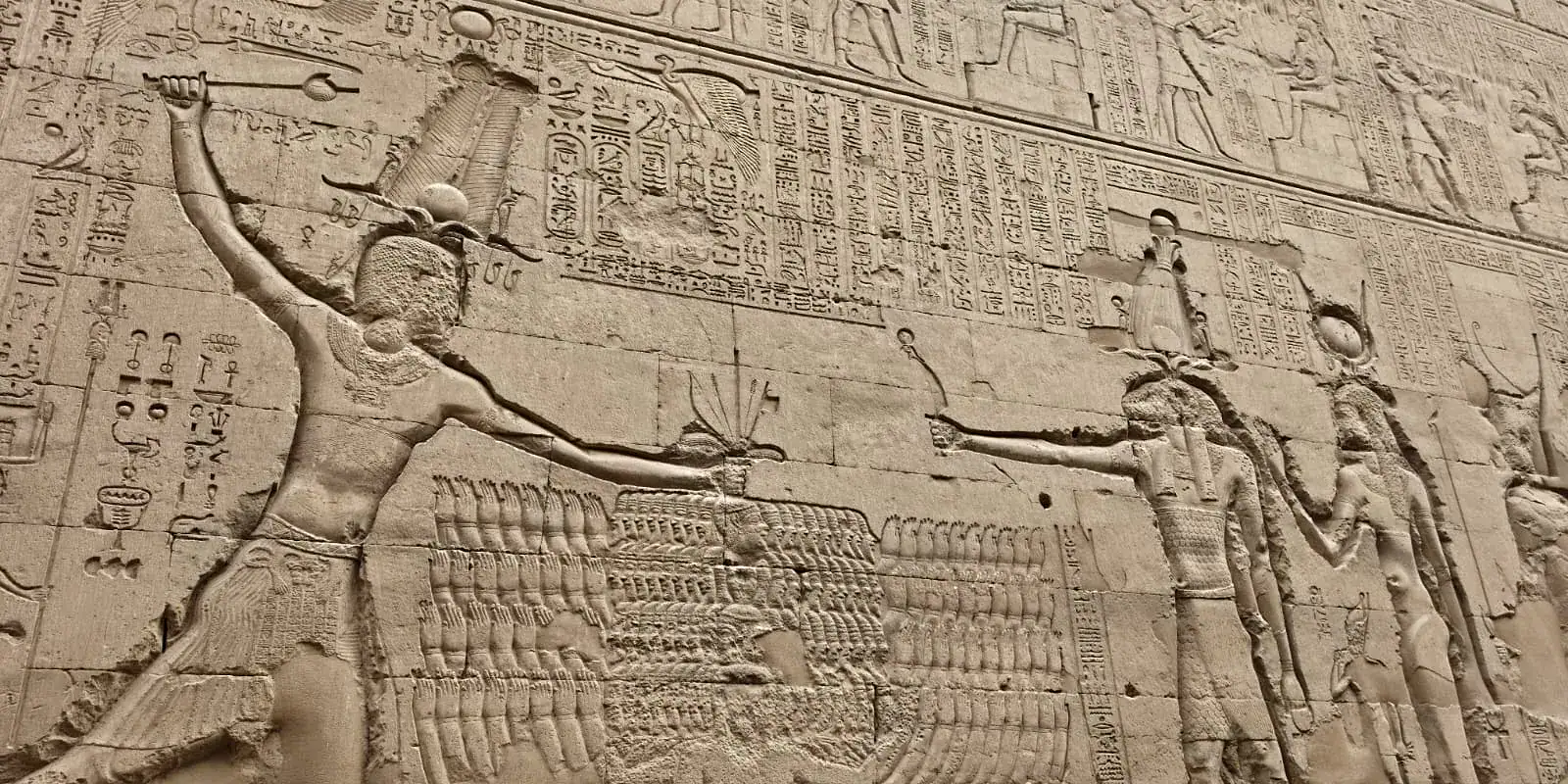
The reliefs depict Roman emperors in the traditional role of Egyptian pharaohs, making offerings before deities and taking part in sacred rituals. The texts also preserve hymns, festival descriptions and religious traditions associated with Khnum and the gods of Esna.
Royal Offering Scenes
Although these rulers governed Egypt during the Roman period, the offering scenes preserve the ancient Egyptian idea of the king as an intermediary between humanity and the divine world.
“This monument preserves a remarkable meeting point between Egyptian religious tradition, Ptolemaic sacred heritage and Roman monumental architecture.” Yalla Egypt Travel
Archaeological Discoveries and Restoration
By the nineteenth century, the surviving pronaos stood within the growing modern city of Esna and was used as a storage facility for cotton. This reuse helped the columned hall survive after most of the earlier Ptolemaic temple complex had disappeared.
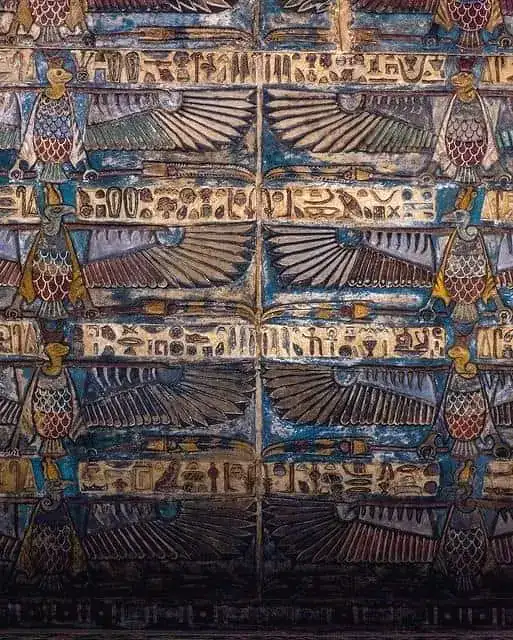
Excavation, documentation and conservation gradually revealed its richly decorated columns, walls and astronomical ceiling. Since 2018, an Egyptian-German project has removed layers of soot, dust and dirt, bringing vivid original colours, painted inscriptions and previously obscured details back into view.
These discoveries transformed the Temple of Esna into an important destination for visitors, historians and archaeologists studying religion, astronomy and temple art during Egypt’s Greco-Roman period.

Khnum and the Sanctuary’s Religious Importance
In ancient Egyptian belief, Khnum fashioned humans and their life force on a potter’s wheel. He was also closely associated with the Nile, fertility and creation.
The sanctuary also honoured other members of Esna’s divine community, including the goddesses Menhit, Nebtu and Neith, as well as Heka, the child god described as the son of Khnum.
Religious Festivals and Nile Ceremonies
The temple inscriptions preserve detailed accounts of annual feasts, hymns and ritual processions. One restored scene shows priests carrying the sacred barque of Khnum so that the god’s shrine could appear before the people of Esna on special occasions.
Architecture and Reliefs Gallery
Explore the monument’s architecture, decorated columns, reliefs and sacred spaces. In particular, notice the variety of floral capitals and the details of the surviving wall scenes.
How to Plan Your Visit
The site can be visited during a private excursion from Luxor or as part of an Egypt Nile cruise journey through Upper Egypt.
In addition, travellers can combine the visit with Luxor attractions, the temples of Edfu and Kom Ombo, or a wider Egypt tour package.
Esna City
The site is located in central Esna, about 55 kilometres by road south of Luxor.
Getting There from Luxor
Visitors can travel by private car, taxi or an organised excursion from Luxor.
Check Current Hours
Opening hours can change. Therefore, check the latest schedule before travelling.
October to April
Consequently, the cooler months provide more comfortable conditions for sightseeing and photography.
Location on Google Maps
The monument is located in the centre of Esna on the west bank of the Nile. Therefore, it can be included in a private day trip from Luxor.
Open Google MapsFrequently Asked Questions
Discover This Hidden Sanctuary
Add this remarkable sanctuary to your private Luxor itinerary. Moreover, combine it with other historic sites in Upper Egypt for a richer travel experience.
Contact Yalla Egypt Travel