
Kom Ombo
Temple
Discover Egypt’s extraordinary double temple, where two parallel sanctuaries, crocodile mythology, sacred medicine and Nile traditions meet above the river.
Kom Ombo Temple: Two Sacred Worlds in One Monument
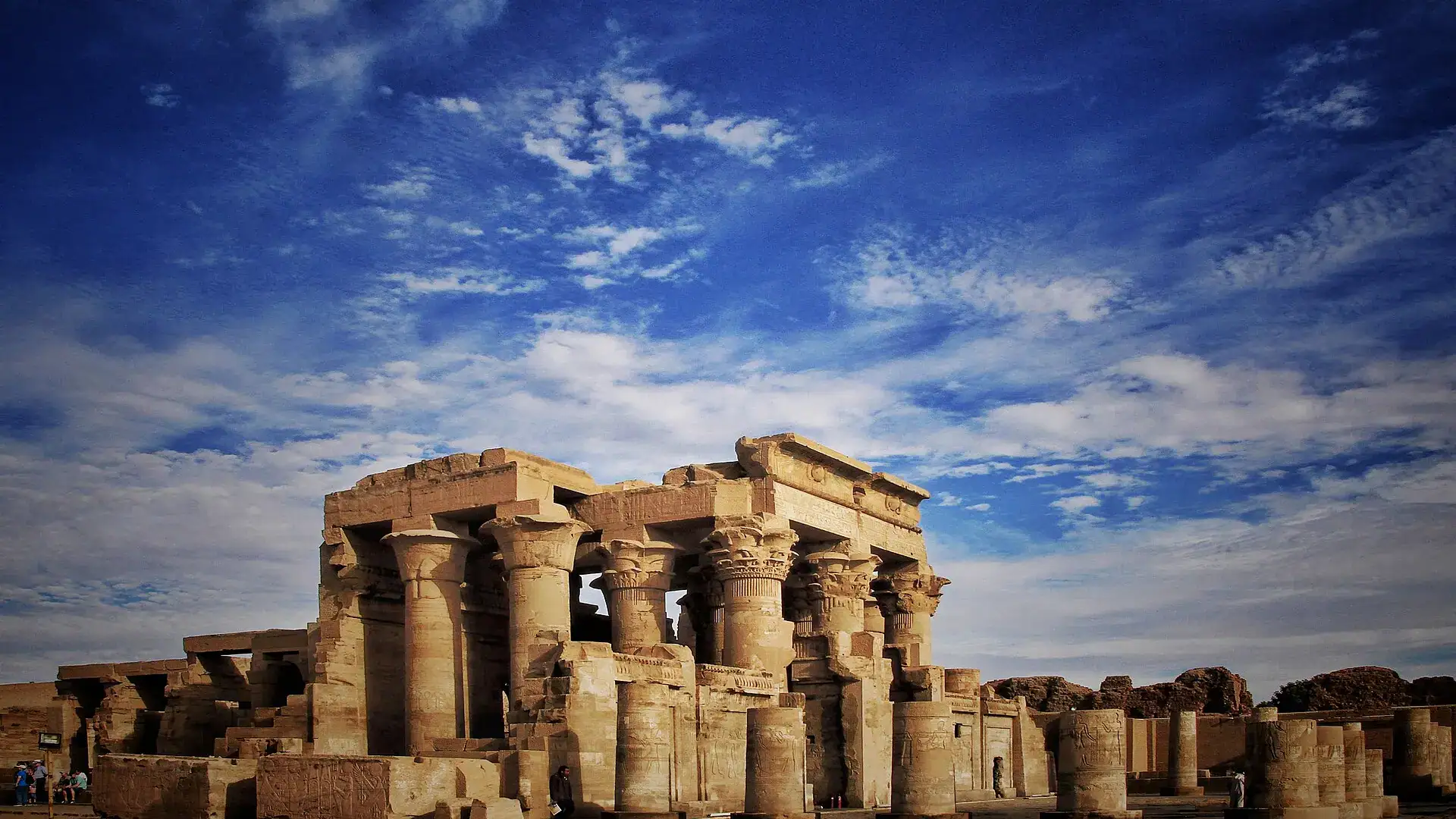
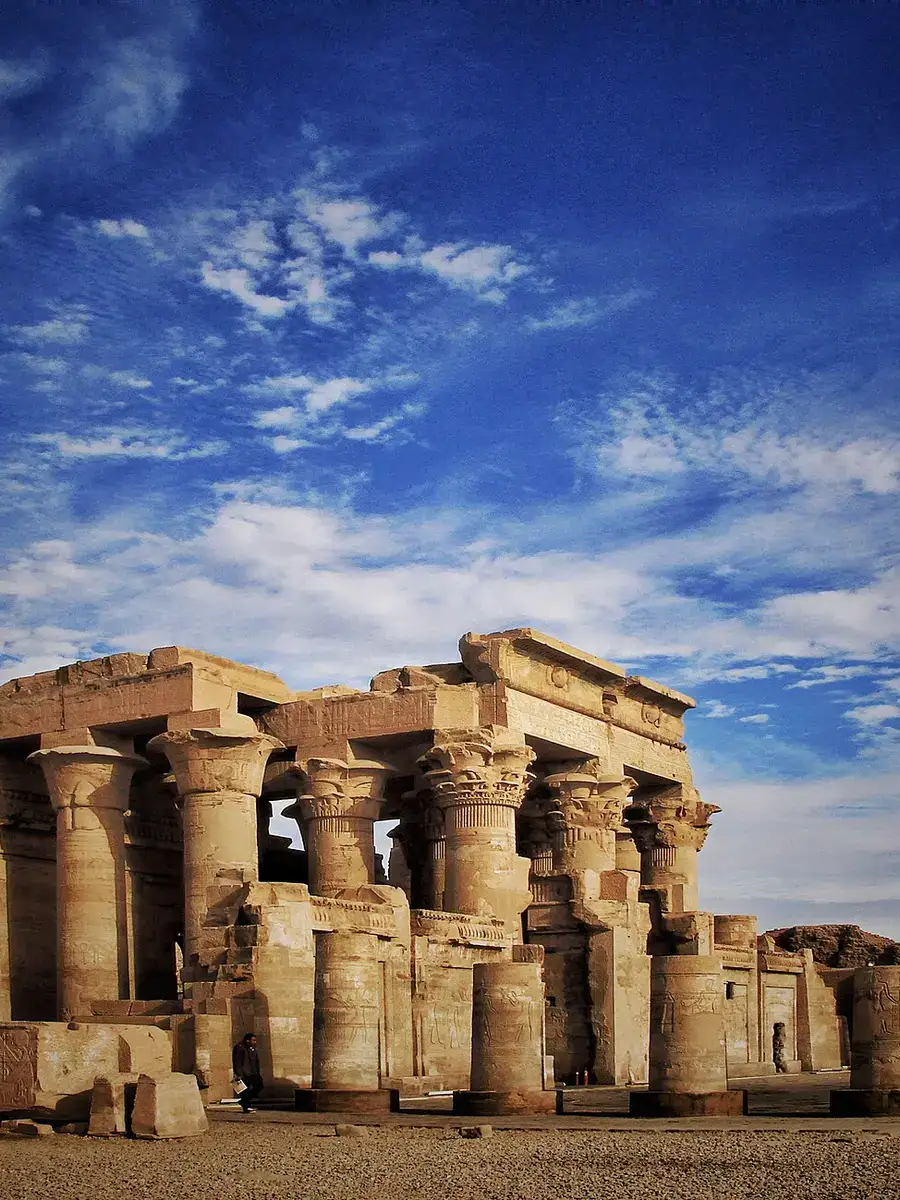
Kom Ombo Temple rises on a bend of the Nile between Aswan and Luxor. Its location gave the ancient town strategic importance on routes linking Egypt with Nubia and the Eastern Desert.
The visible monument was developed mainly from the reign of Ptolemy VI Philometor in the second century BCE. Ptolemy VIII, Ptolemy XII and later Roman emperors continued its building and decoration, although an earlier sanctuary had existed at the site.
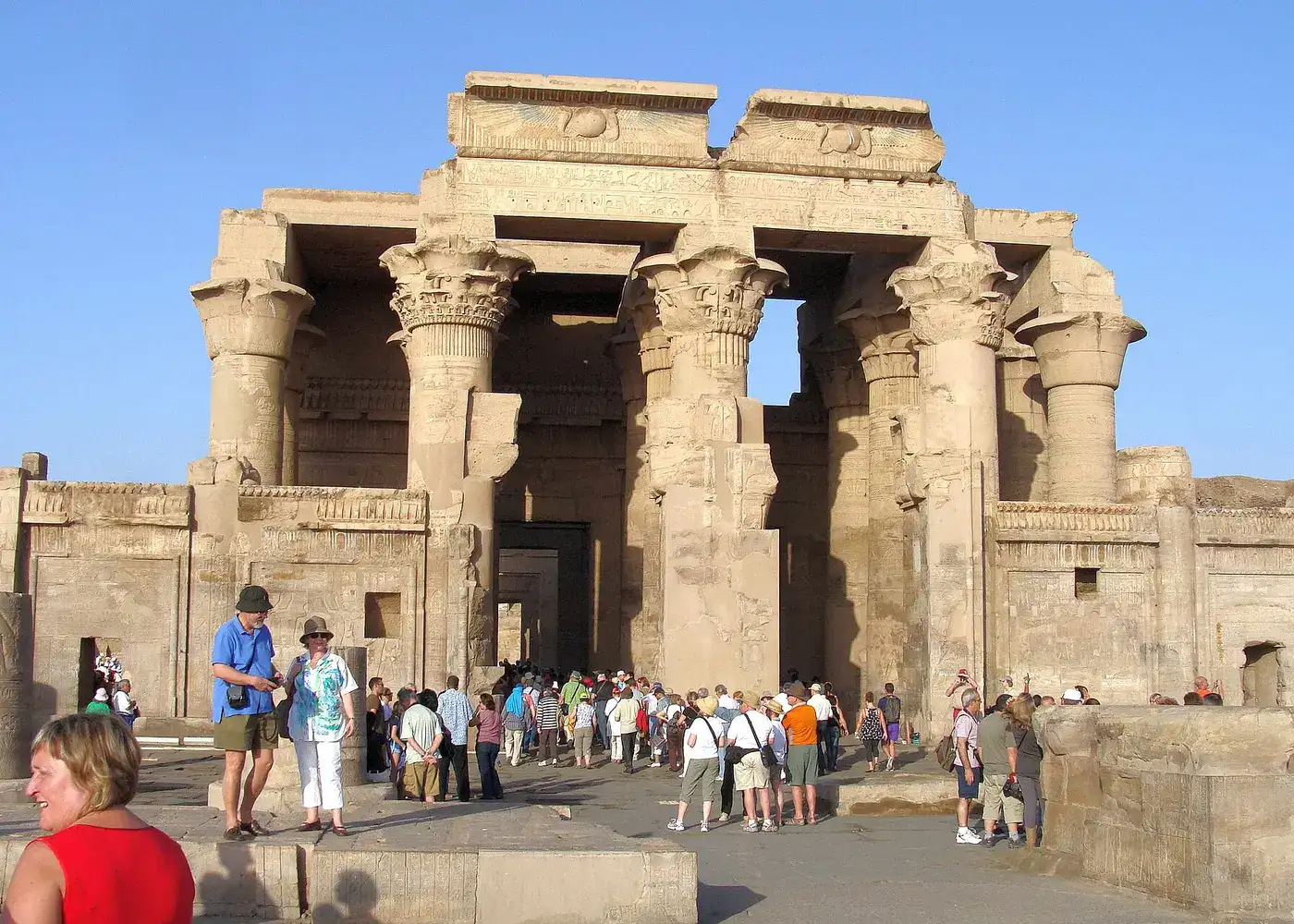
What makes Kom Ombo exceptional is its deliberate symmetry. Two entrances, two processional axes and two sanctuaries served two divine families: Sobek, Hathor and Khonsu on the southern side, and Haroeris, Tasenetnofret and Panebtawy on the northern side.
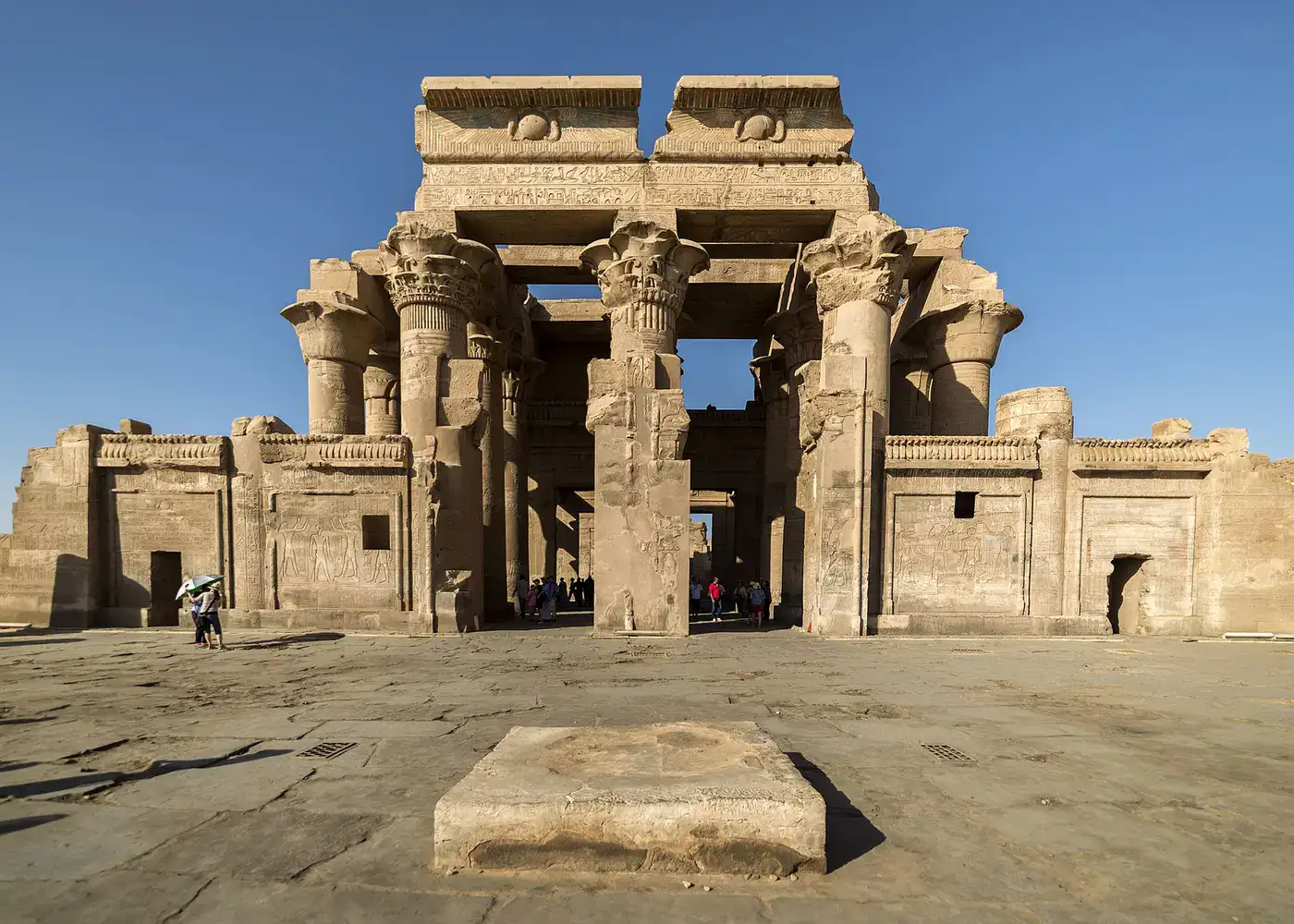
The Double Temple of Sobek and Haroeris
Kom Ombo does not simply place two gods in one building. Its plan duplicates the sacred route itself, allowing both cults equal architectural status from the entrance to the paired sanctuaries.
From Ancient Nubt to the Ptolemies
The ancient town was known as Nubt, a name connected with gold. Its position overlooked the Nile and stood near routes used to reach gold-bearing regions and desert quarries. Archaeological evidence indicates that worship at Kom Ombo predates the present temple.
The Ptolemies built on Egyptian religious traditions while presenting themselves as legitimate pharaohs. Their reliefs show the king offering to the gods, receiving life and authority, and maintaining maat—the ordered balance of the universe.
Roman rulers later completed and embellished parts of the complex. The result is a monument where Egyptian imagery continued to flourish under Greek and Roman political rule.
- Main construction began under Ptolemy VI
- Later Ptolemaic kings expanded the monument
- Roman emperors added reliefs and architectural work
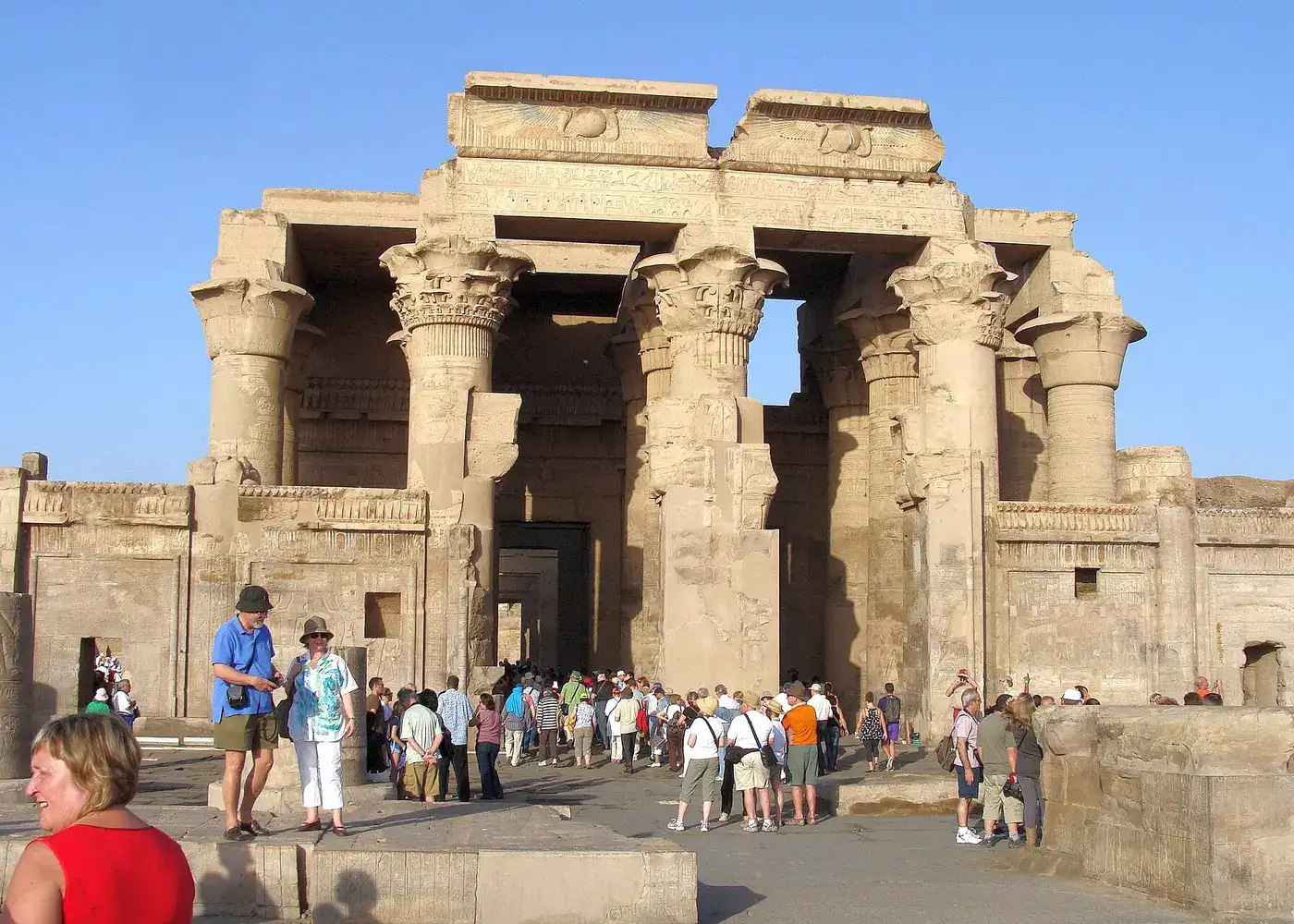
Courts, Columns and Parallel Sanctuaries
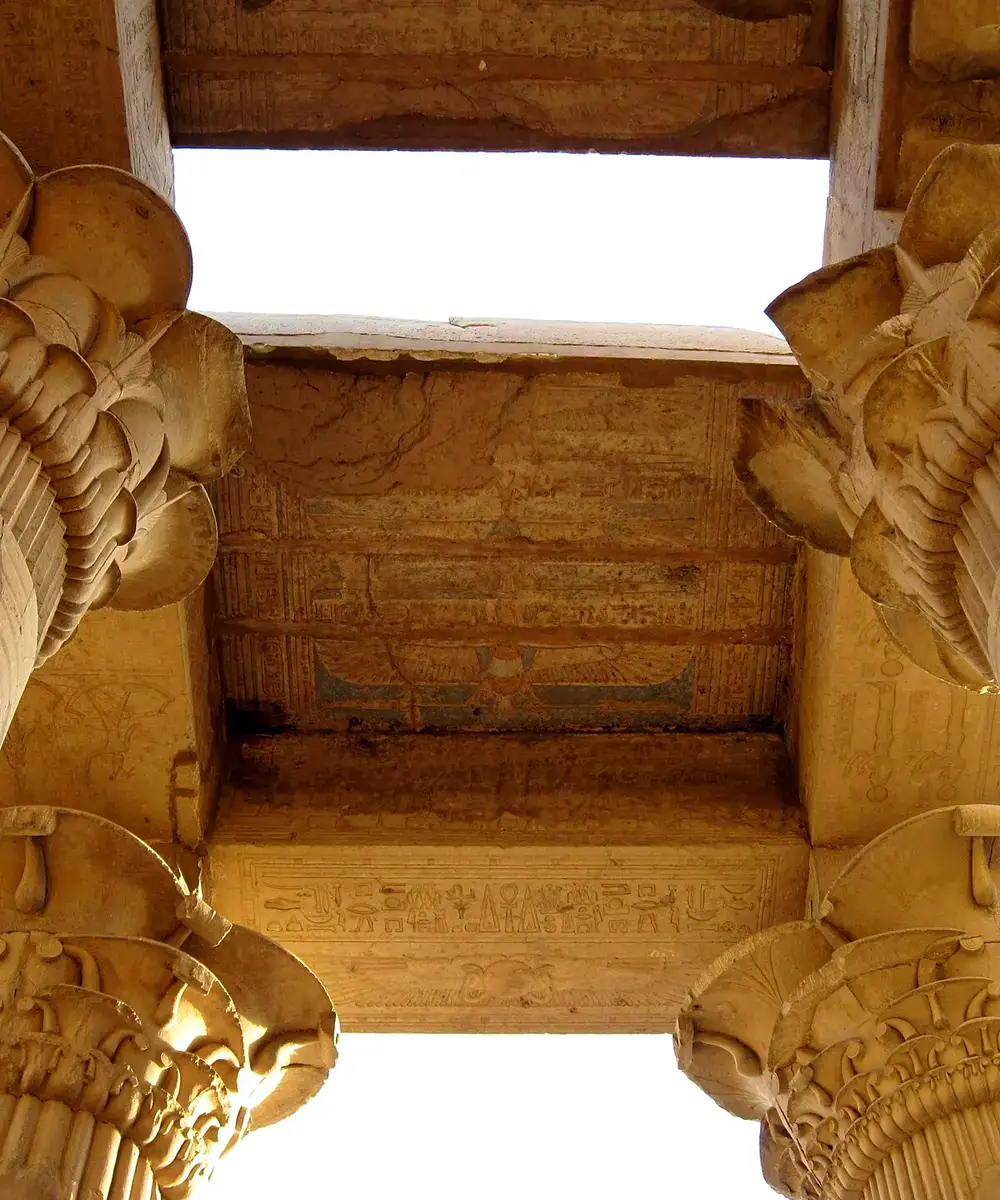
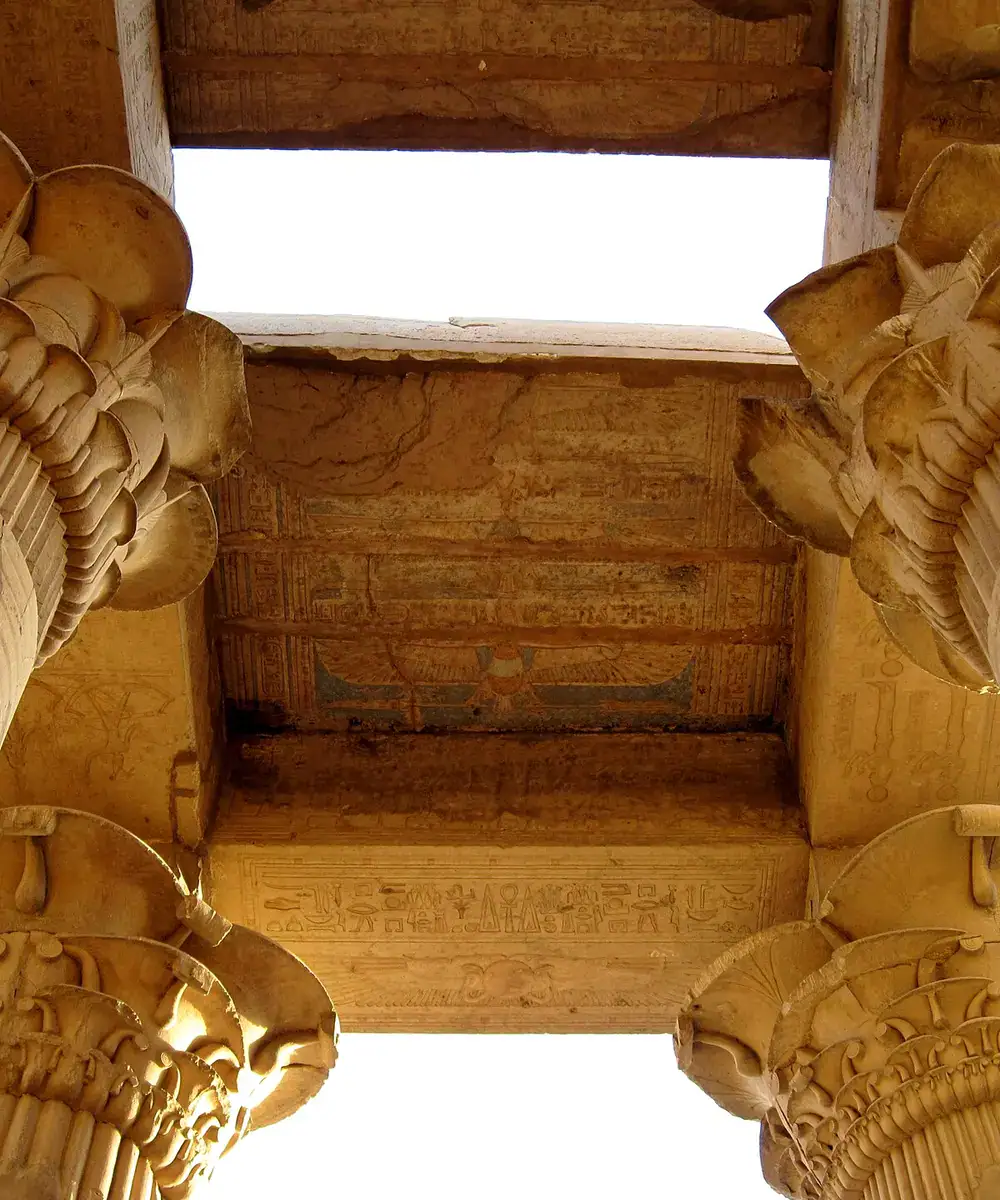
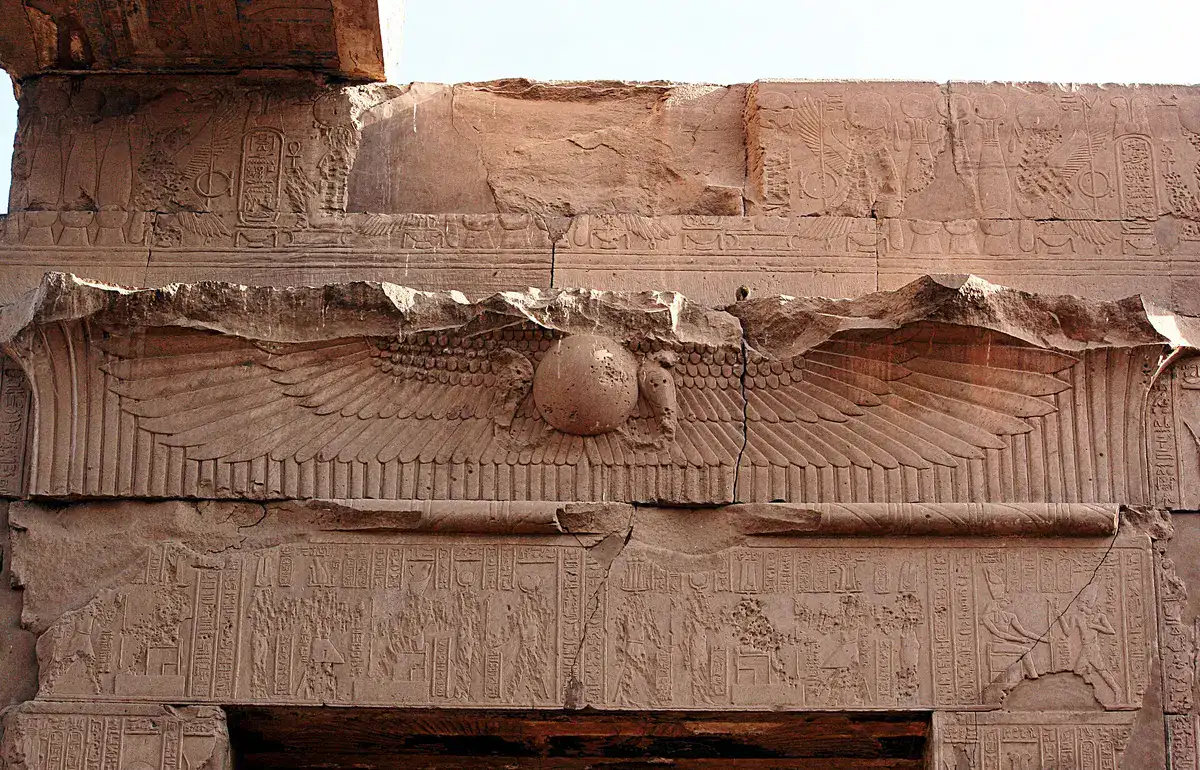
The ritual journey moved from an open court into increasingly enclosed hypostyle halls. Towering sandstone columns carry varied floral capitals, while walls and gateways are covered with offering scenes and hieroglyphic texts.
From the first hall, the double arrangement becomes unmistakable. Doorways and chambers are aligned in pairs, and the two axes lead toward separate sanctuaries. Hidden passages and service rooms supported the daily cult.
Architecture as Theology
At most Egyptian temples, one main axis dominates. At Kom Ombo, symmetry turns religious diplomacy into stone: neither Sobek nor Haroeris is placed behind the other.
At Kom Ombo, symmetry is not decoration—it is the sacred idea that shapes every doorway, hall and sanctuary.
Sobek, Haroeris and the Divine Families
Sobek, often shown as a crocodile or a crocodile-headed man, embodied the dangerous strength of the Nile as well as fertility, protection and royal power. Honouring him transformed a feared creature into a divine guardian.
Haroeris—Horus the Elder—appears as a falcon-headed god associated with the sky, kingship, order and protection. His name distinguishes this ancient form of Horus from Horus the Child.
Each principal god was joined by a consort and child. This created two local divine triads and made the temple a carefully balanced religious universe rather than a simple shared shrine.
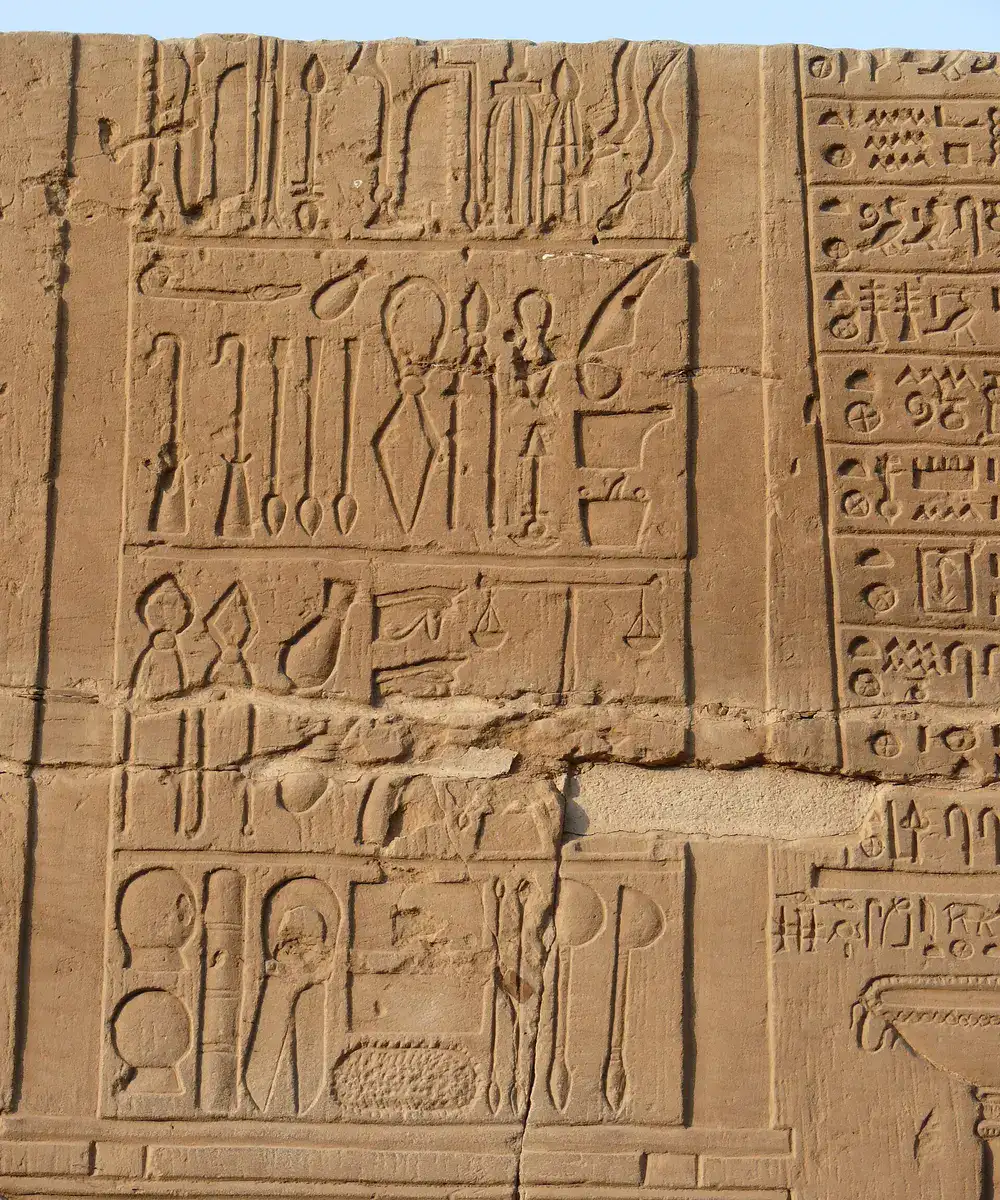
The Medical Instruments Relief
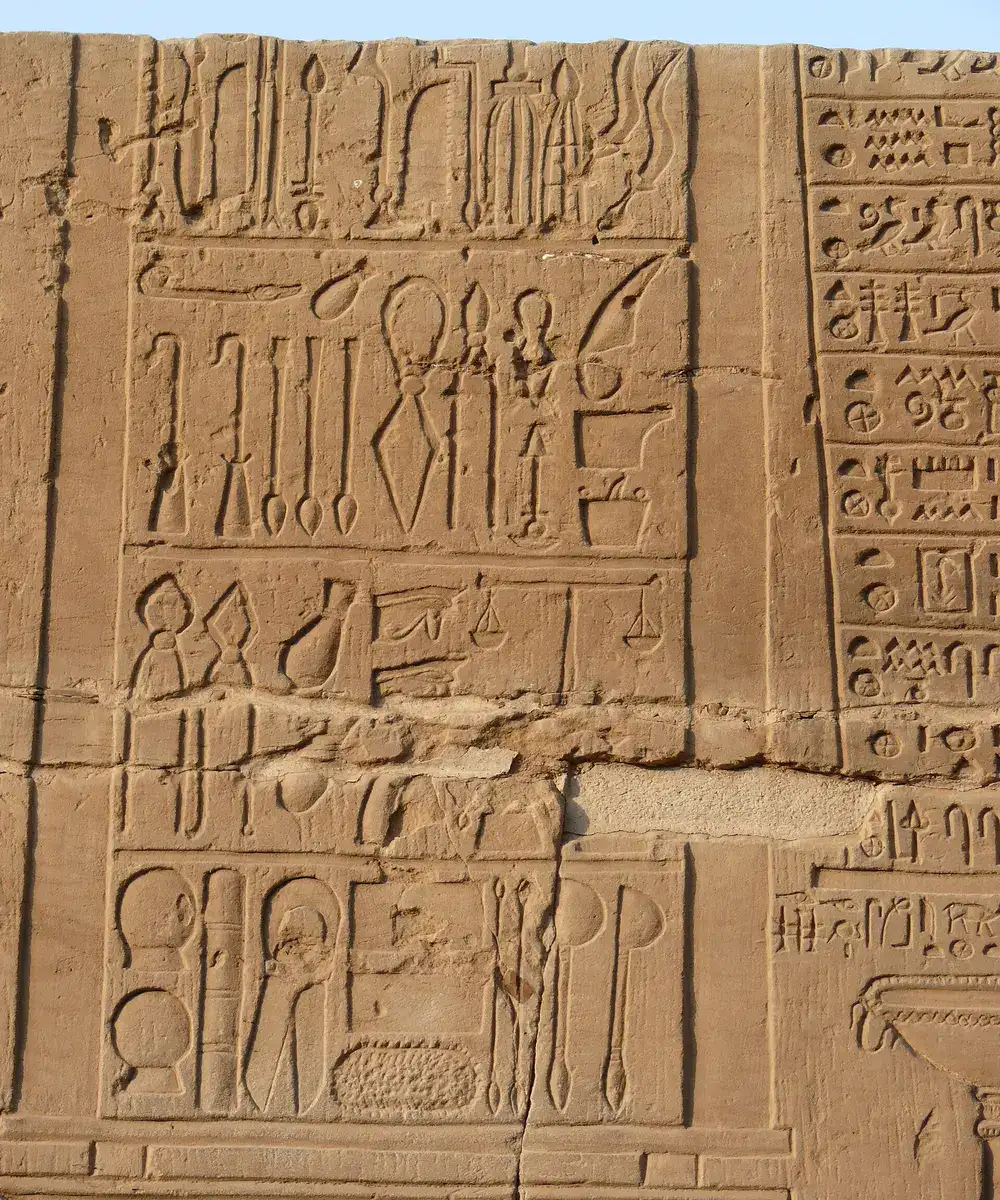
One of Kom Ombo’s most discussed reliefs appears on the outer enclosure wall. It shows a collection of objects often interpreted as surgical or medical instruments, including forceps, probes, cups and blades.
The scene forms part of a ritual presentation, and scholars remain cautious about identifying every object or using it as proof that the temple functioned as a hospital. Nevertheless, it offers a fascinating window into how healing, ritual and specialised tools could overlap in the ancient world.
More Than a Tourist Curiosity
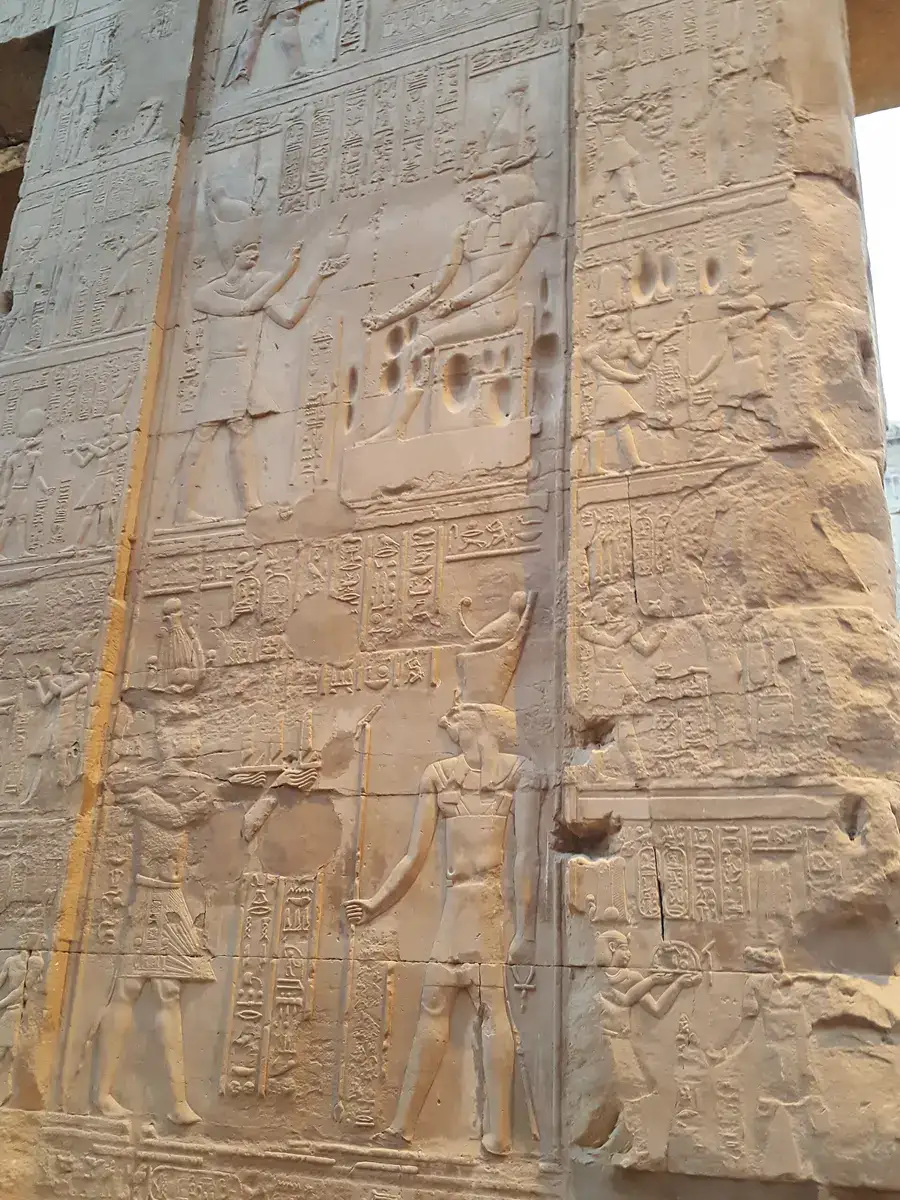
Nearby carvings include figures connected with birth and sacred ritual. Together they remind visitors that health in ancient Egypt joined practical knowledge, divine protection and ceremonial belief.
The Nilometer and Ancient Calendar
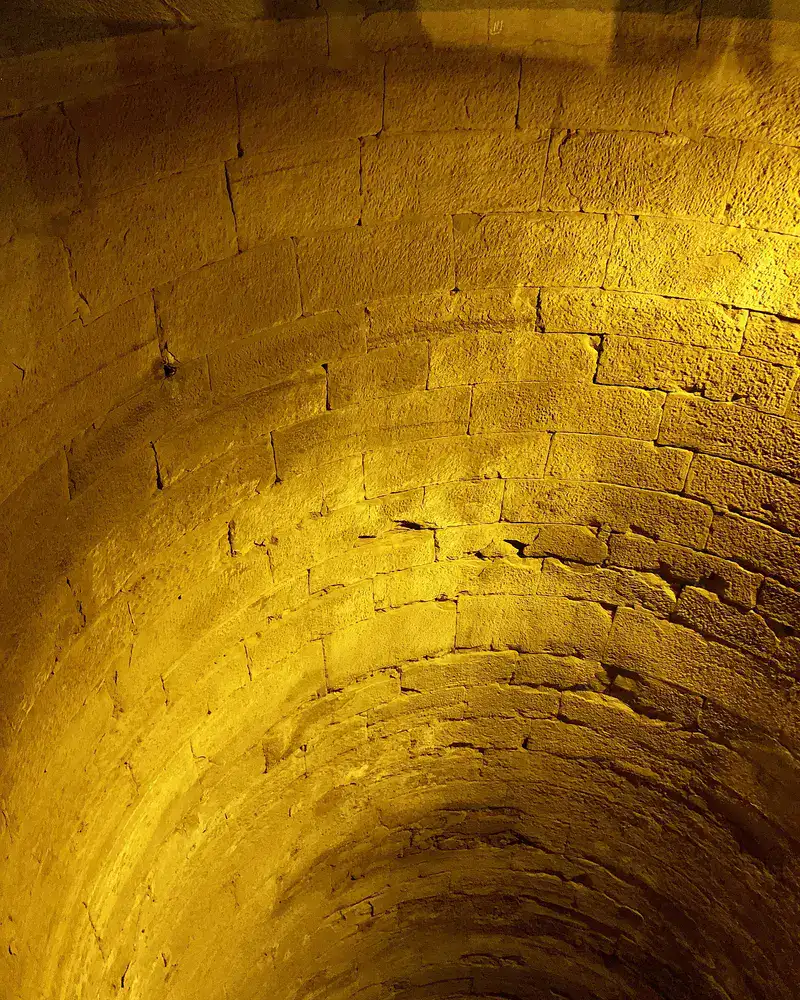
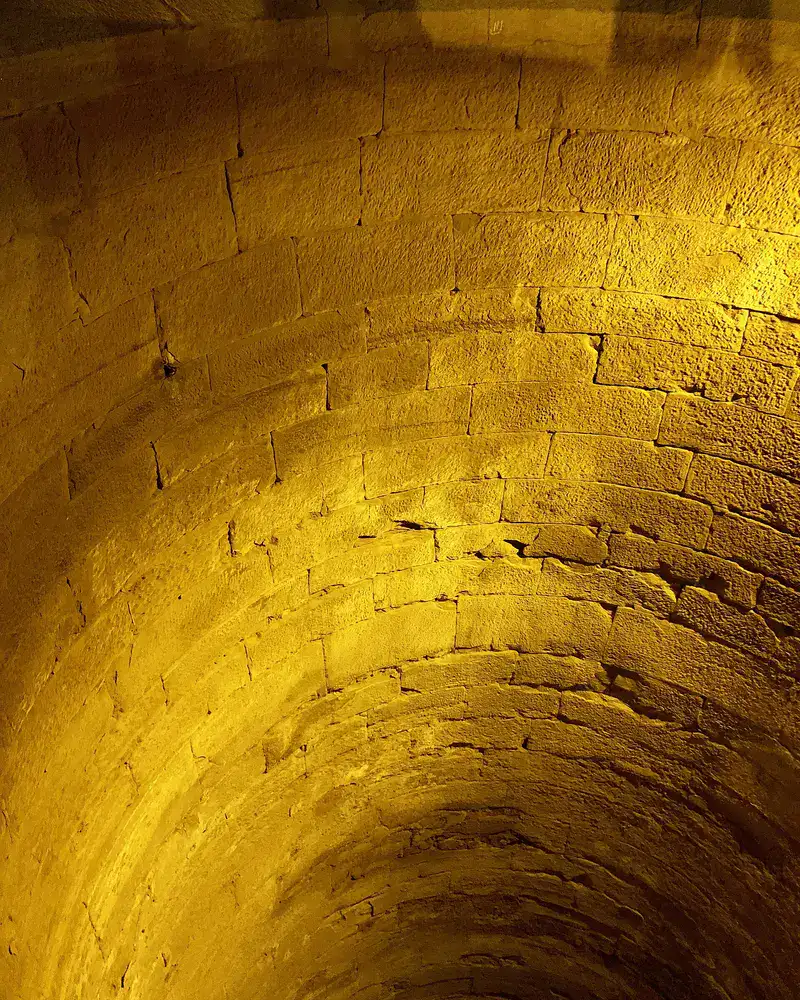
A deep circular well with a staircase is generally identified as a nilometer. Such structures helped observe water levels, information closely connected with agriculture, taxation and expectations for the harvest.
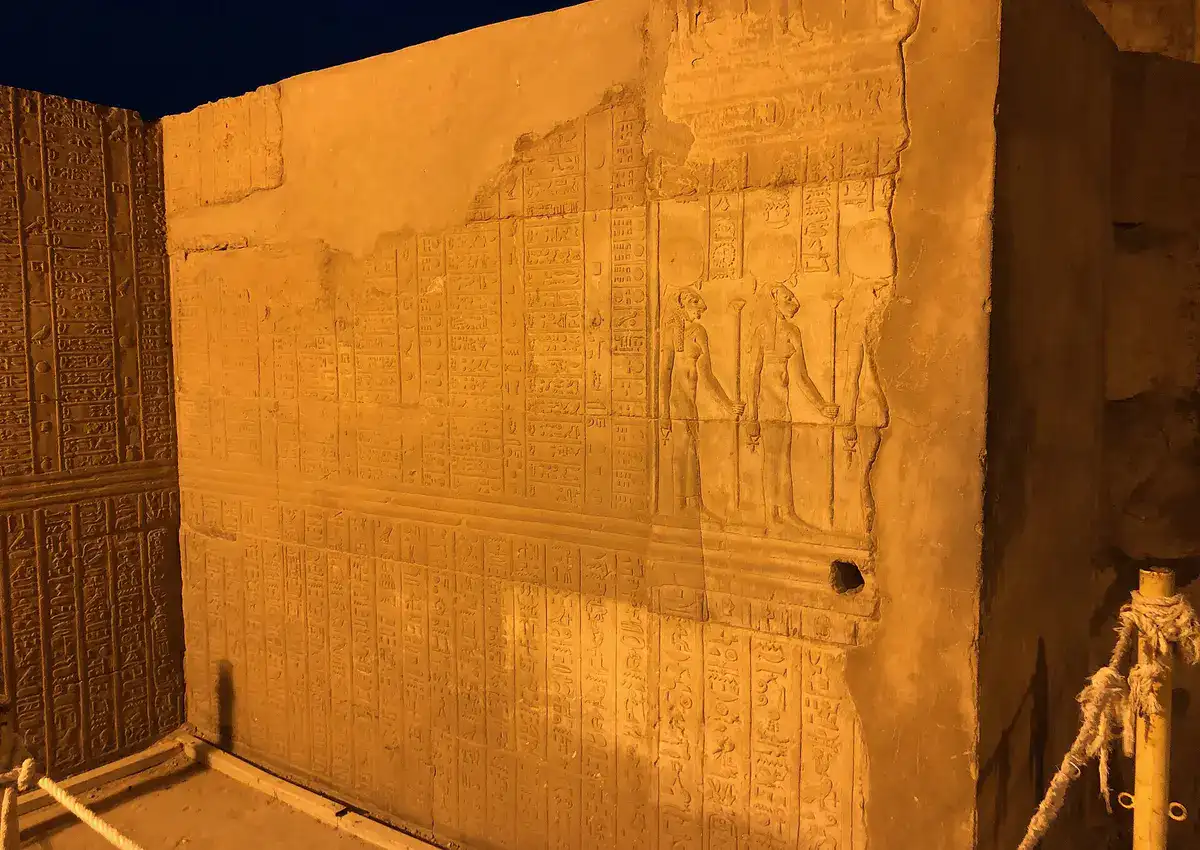
Kom Ombo also preserves a remarkable calendar scene. Priests used calendars to organise festivals, offerings and temple duties, linking divine ritual with the changing seasons of the Nile Valley.
These features reveal that a temple was not isolated from daily life. It observed time, water, work and the natural forces upon which Egyptian society depended.
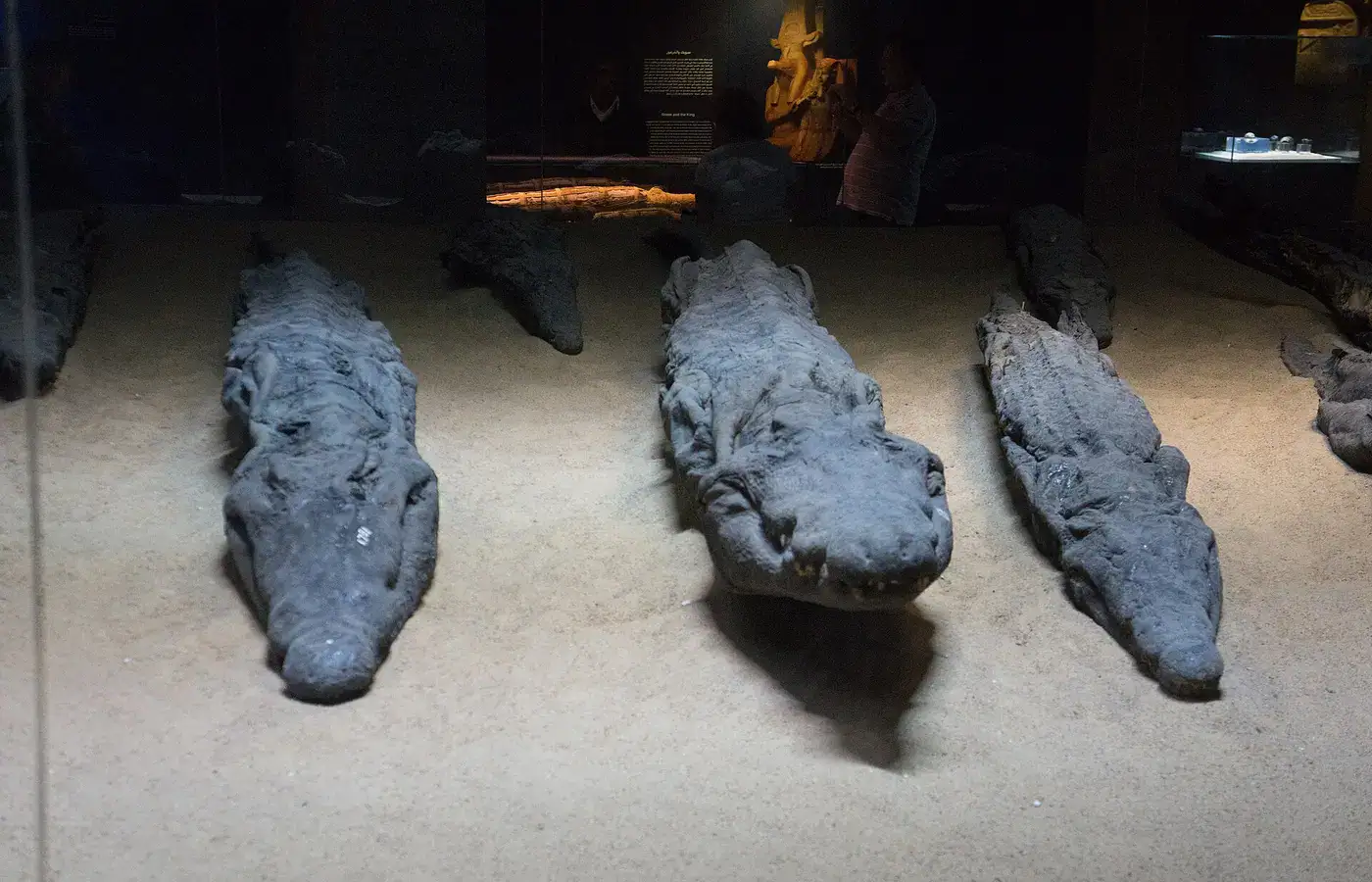
The Kom Ombo Crocodile Museum
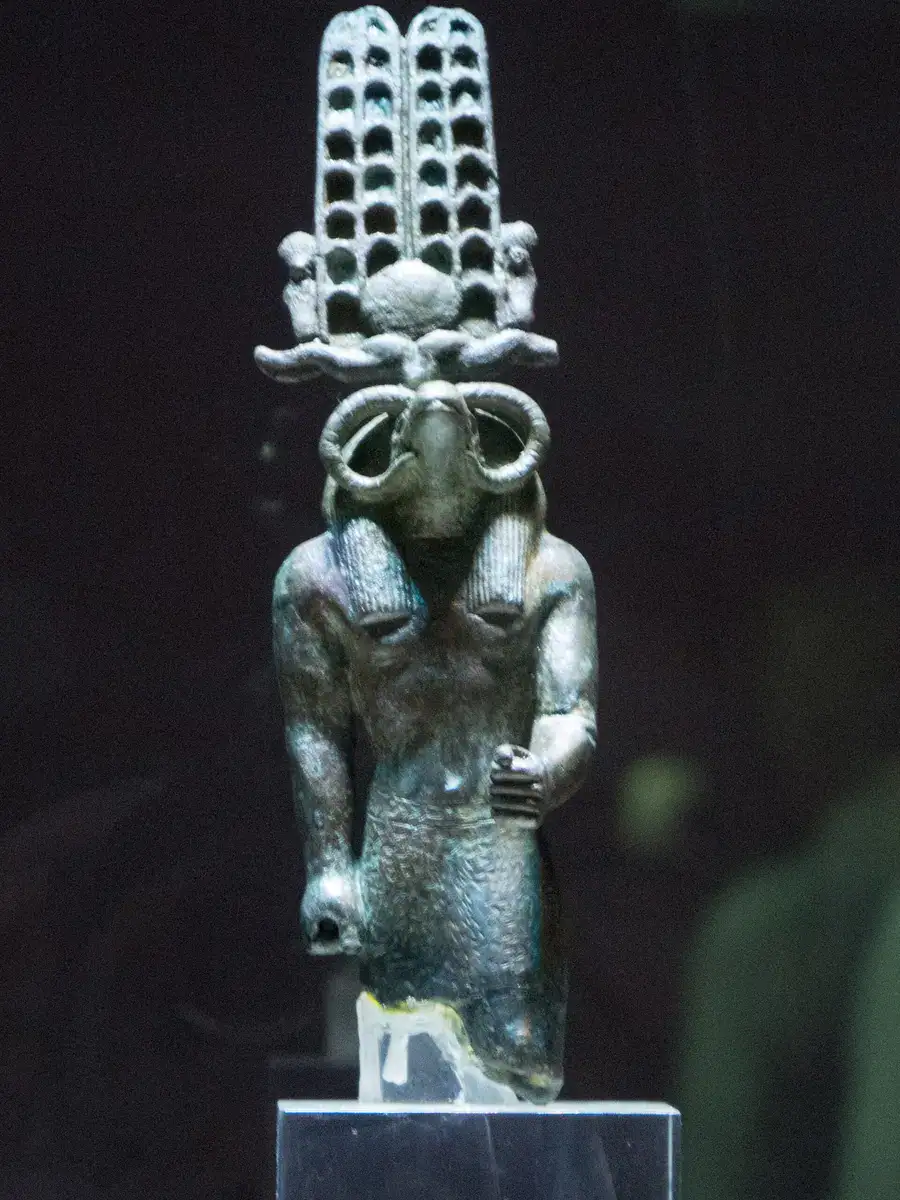
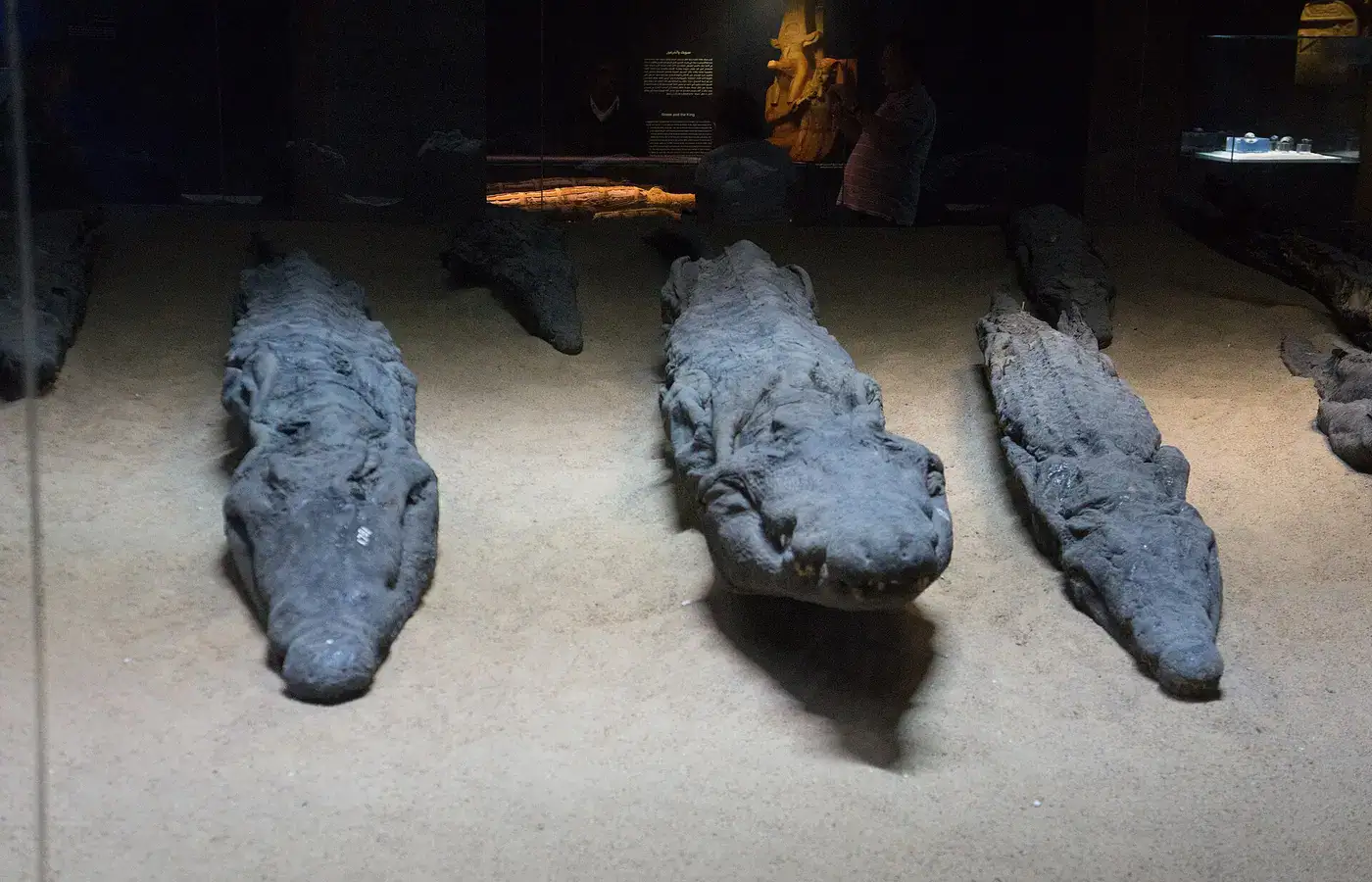
The nearby Crocodile Museum brings the cult of Sobek vividly to life. Its displays include mummified crocodiles, eggs, statues, stelae and objects connected with the worship of the crocodile god.
Ancient communities raised, honoured and mummified crocodiles as sacred manifestations or offerings to Sobek. The museum helps explain why an animal capable of inspiring fear could also represent protection, fertility and the force of the Nile.
Allow time for the museum after exploring the temple; it completes the story told by the southern sanctuary and its reliefs.
Kom Ombo Temple Gallery
Visiting Kom Ombo Temple
Morning or Late Afternoon
Cooler light brings out the reliefs and makes the open areas more comfortable.
Allow 60–90 Minutes
Add extra time for the Crocodile Museum and close-up photography.
Nile Cruise or Private Car
Many cruises stop nearby; a private visit gives you greater flexibility.
Check Current Hours
Opening times and ticket prices can change, especially around holidays.
Kom Ombo Temple Map
On the East Bank of the Nile
Kom Ombo Temple is approximately 45 kilometres north of Aswan. Cruise passengers can usually walk from the river landing to the archaeological site.
Coordinates:
24.4524° N, 32.9281° E
Kom Ombo Temple FAQ
Experience Kom Ombo Temple
Walk between the twin sanctuaries of Sobek and Haroeris, read stories carved in sandstone and discover one of the Nile Valley’s most unusual temples.
Plan a Kom Ombo Visit