

Edfu
Temple
Explore Egypt’s remarkably complete Ptolemaic sanctuary, where monumental architecture, sacred texts and the story of Horus survive in extraordinary detail.
Edfu Temple: History Carved in Stone
Edfu Temple stands on the west bank of the Nile between Luxor and Aswan. Dedicated to Horus of Behedet, it preserves one of Egypt’s most complete ancient temple plans and an exceptional record of ritual life.
Ptolemy III began the surviving monument in 237 BCE. Successive Ptolemaic kings continued the work until Ptolemy XII completed it in 57 BCE, meaning that construction and decoration extended across roughly 180 years.
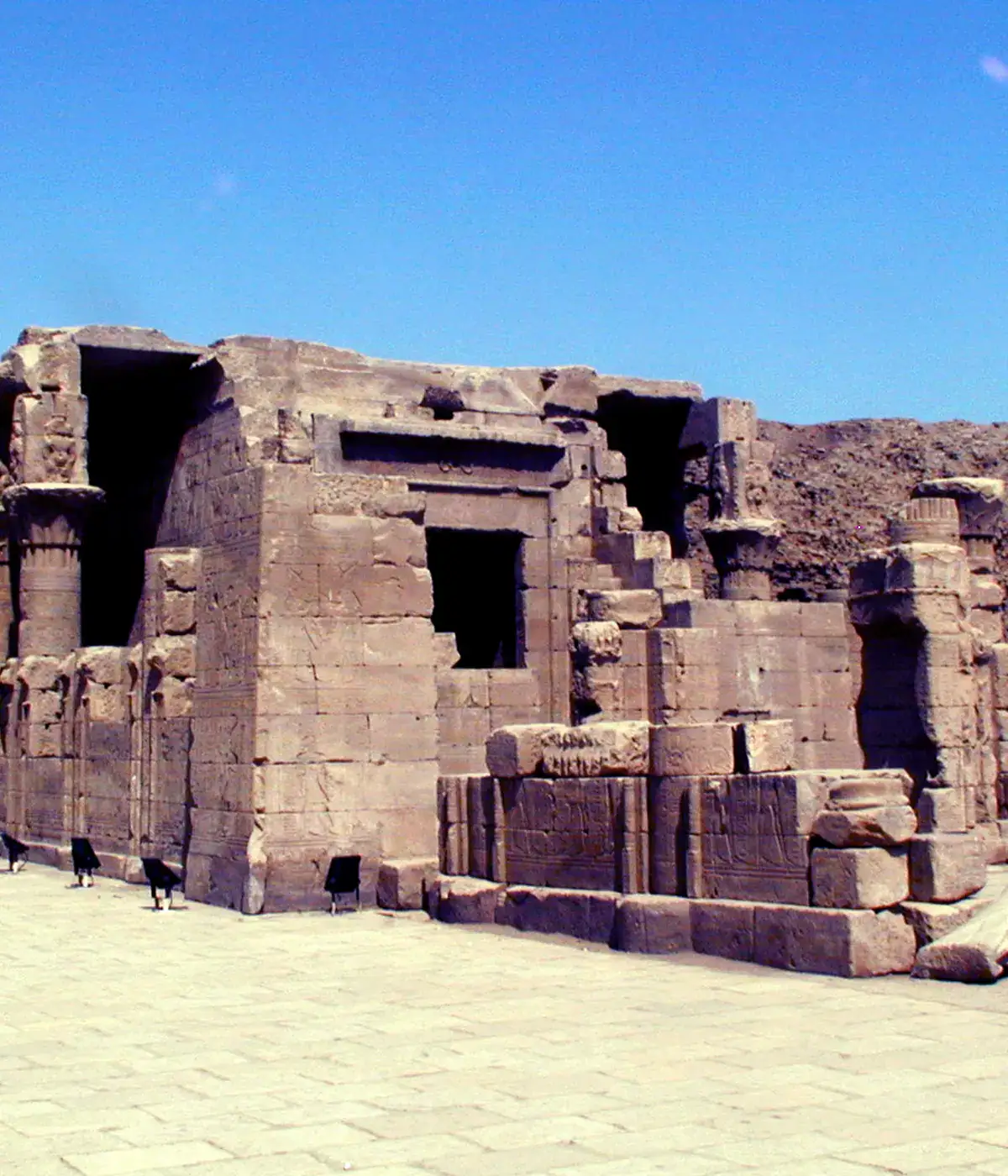
The temple survived in remarkable condition partly because later settlement debris gradually covered much of the structure. When systematic clearance began in the nineteenth century, archaeologists revealed a monument whose walls, roofs, chambers and inscriptions still preserved the logic of an Egyptian sanctuary.
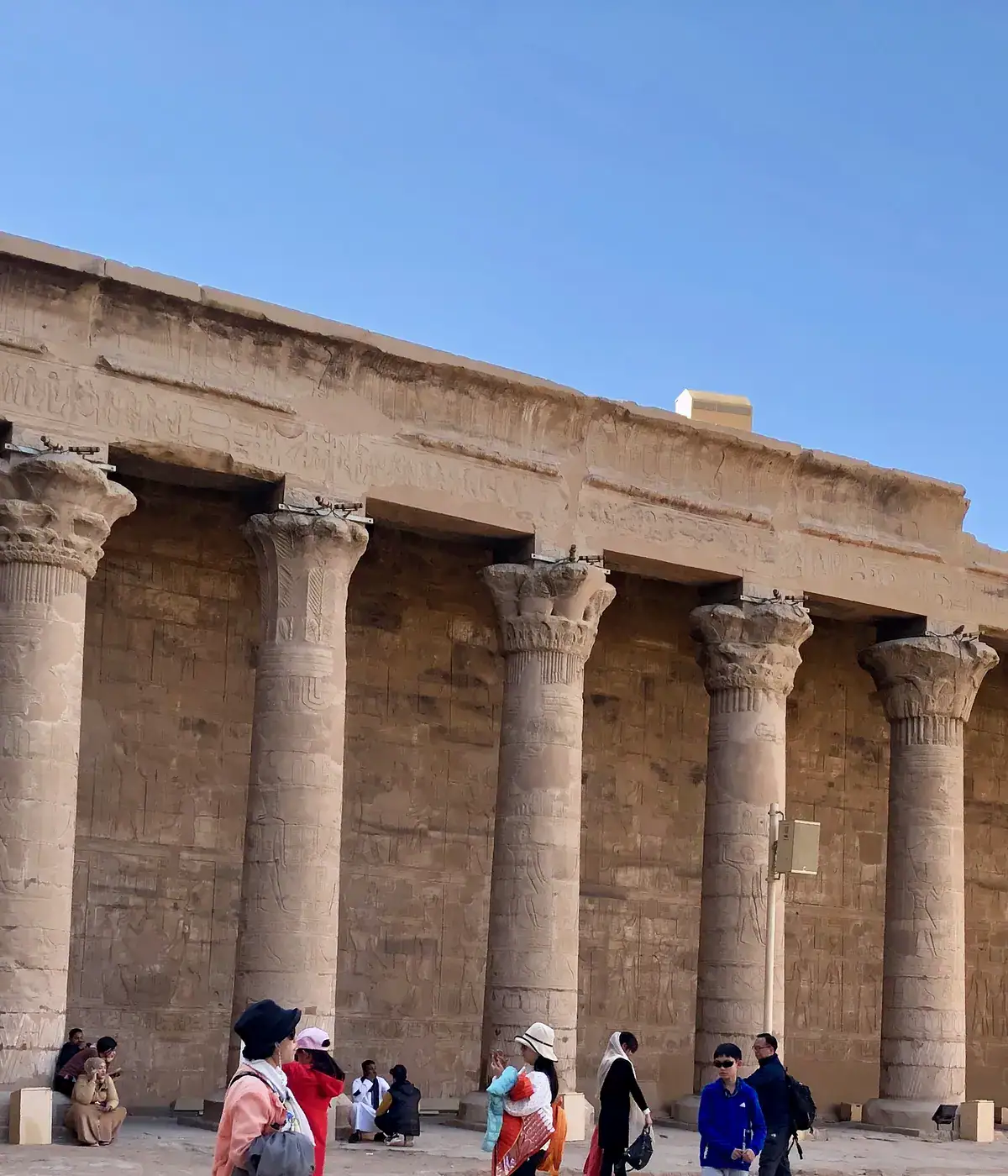
The Open Court and Hypostyle Hall
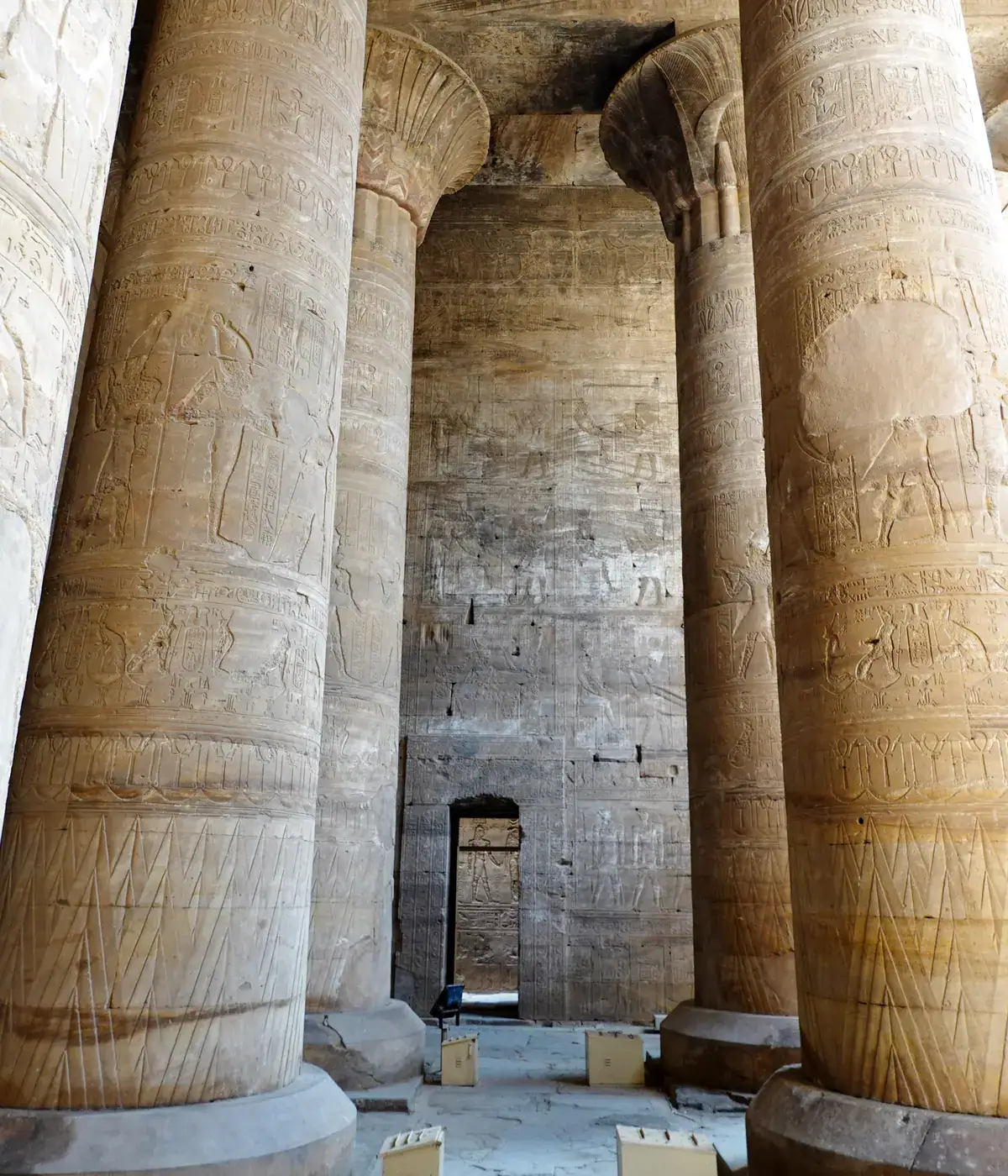
Beyond the pylon, a paved court framed by 32 columns leads toward imposing hypostyle halls and progressively more sacred spaces.
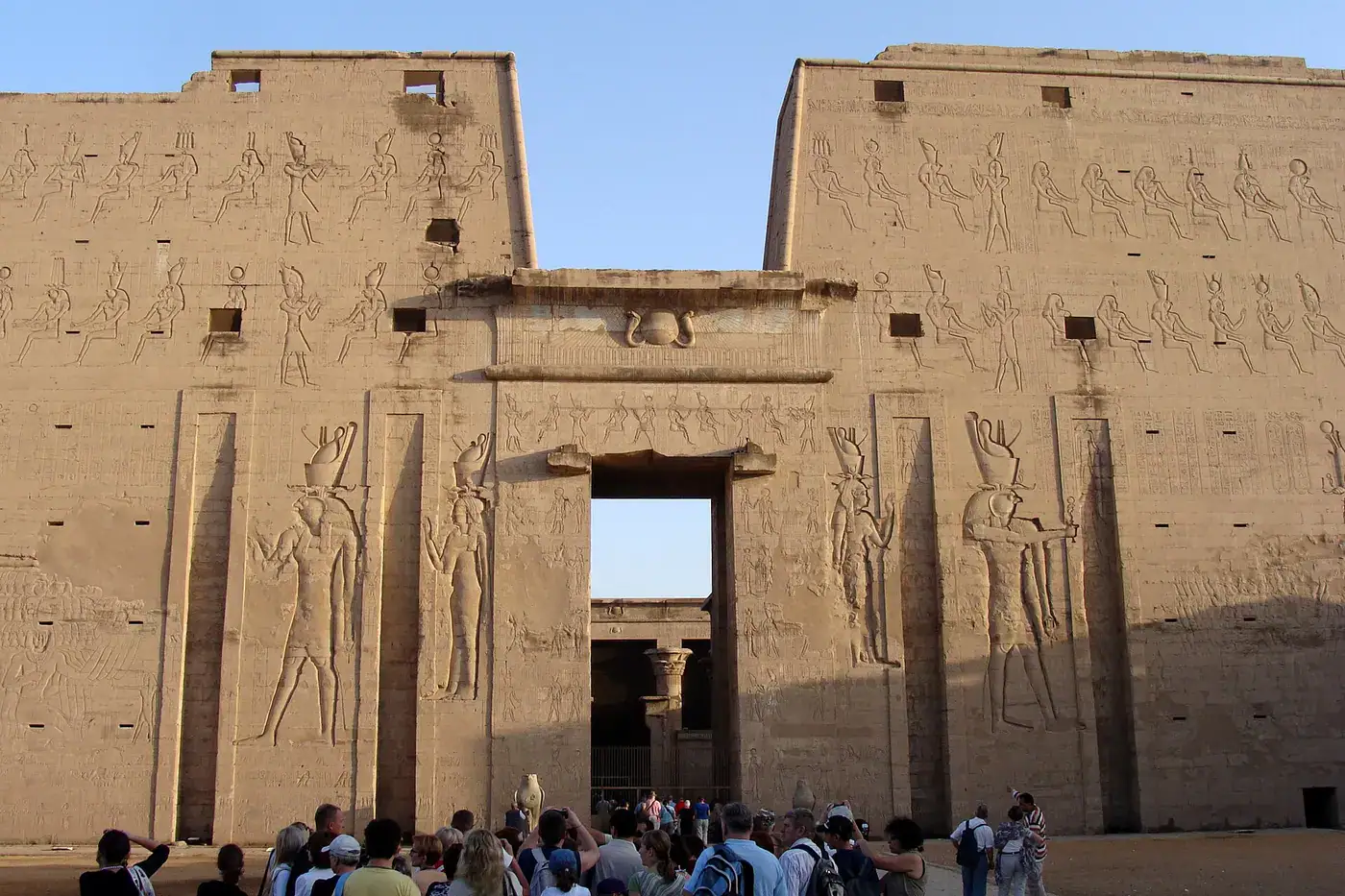
The Great Pylon of Edfu Temple
Enormous reliefs show a Ptolemaic king defeating enemies before Horus and Hathor. This traditional image of royal victory did more than celebrate military power: it presented the king as the defender of divine order against chaos.
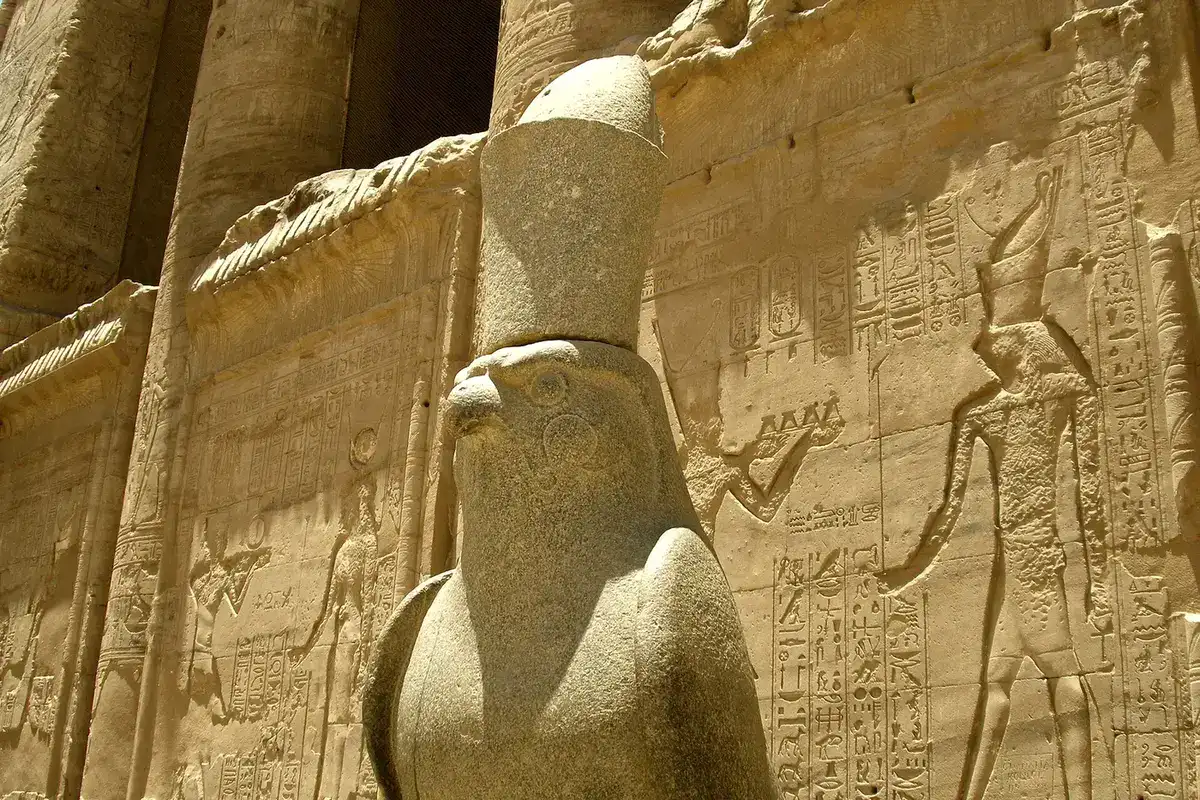
Deep vertical grooves in the masonry once held tall flagpoles with colourful banners, transforming the façade into a ceremonial stage visible from far beyond the temple enclosure. Two monumental falcon statues at the entrance embody Horus as guardian of the sanctuary.
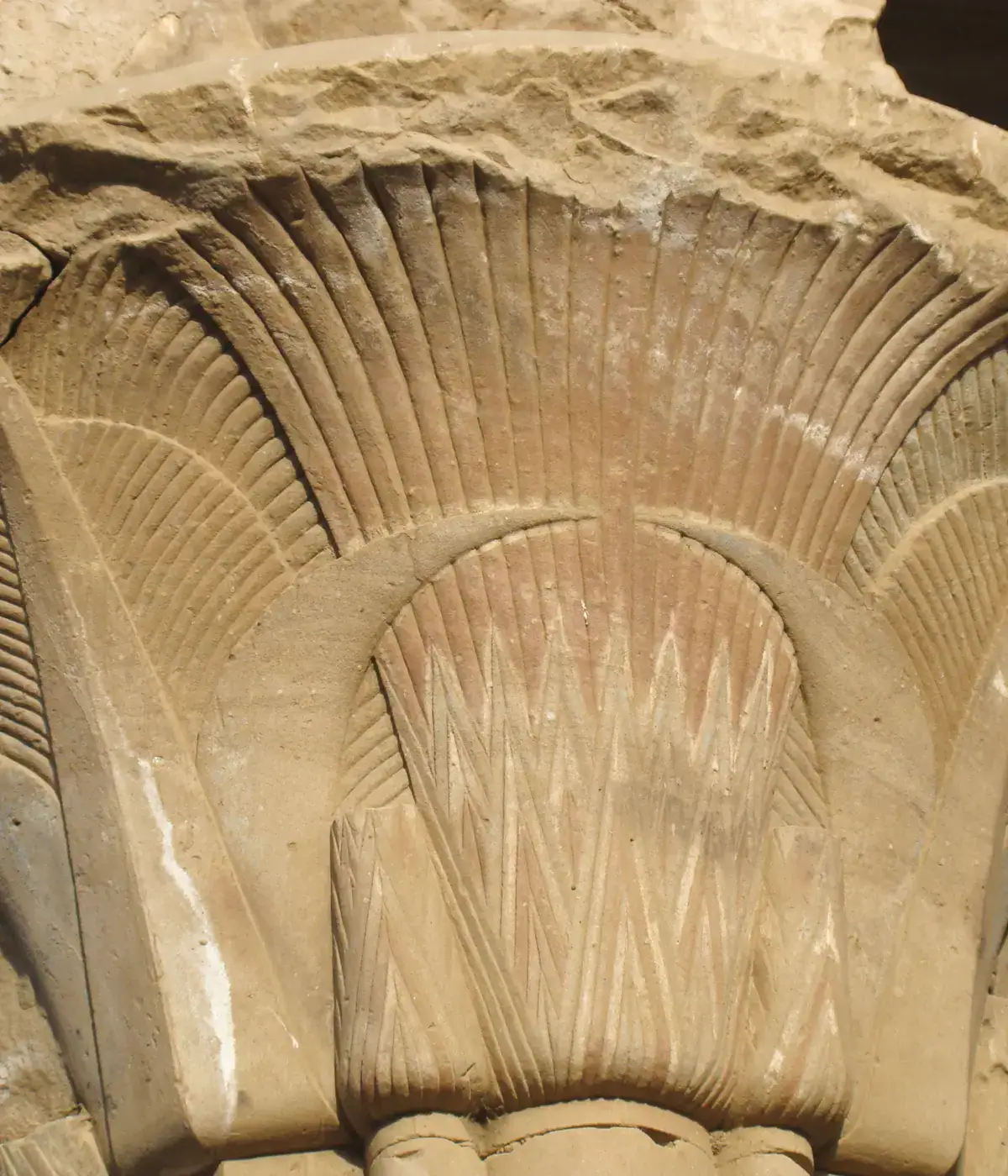
After passing through the gateway, visitors enter a broad open court surrounded by columns with varied floral capitals. This sunlit space formed an important transition between the outside world and the darker, more restricted halls beyond.
- A pylon approximately 36 metres high
- Royal victory and offering scenes
- A colonnaded court with 32 columns
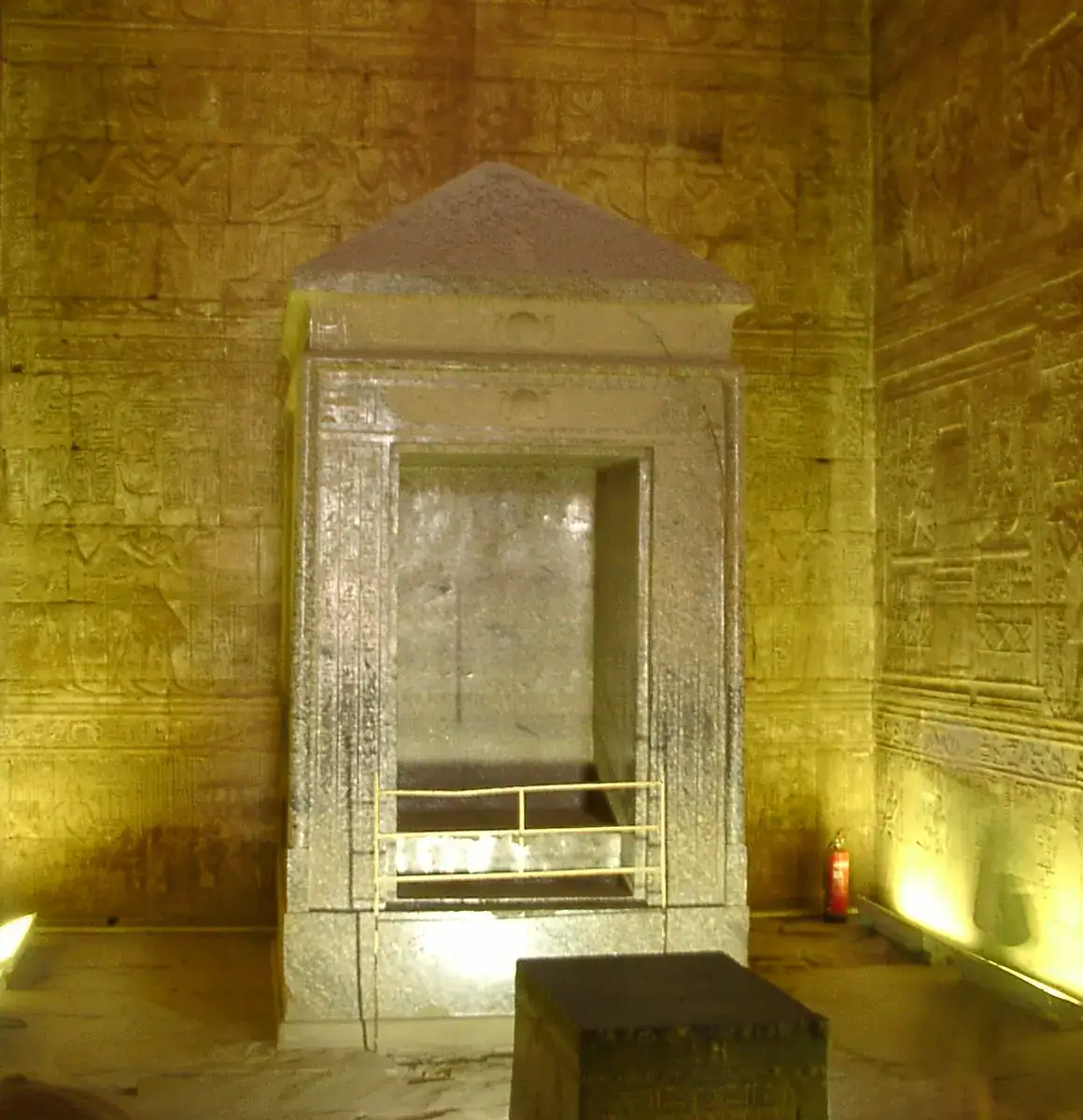
Hypostyle Halls and the Sanctuary of Horus
The ritual route passes through two columned halls, offering chambers, storerooms and sacred rooms. As ceilings become lower and natural light diminishes, the architecture creates a deliberate transition from the public realm to the mysterious presence of the god.
At the building’s heart stands a dark granite naos associated with Nectanebo II. It is older than the surrounding Ptolemaic temple and probably survived from an earlier sanctuary on the site. Around it, chapels accommodated divine images, ritual objects and offerings used during the daily cult.
A Temple Designed for Ritual
Priests purified themselves before entering the inner rooms, prepared food and incense, dressed the divine image and recited carefully prescribed texts. The arrangement of doors and chambers controlled movement, ensuring that access became increasingly restricted as one approached the sanctuary.
At Edfu, architecture guides every step from sunlight and royal power toward mystery, ritual and the hidden presence of Horus.
Horus, Set and the Sacred Reliefs
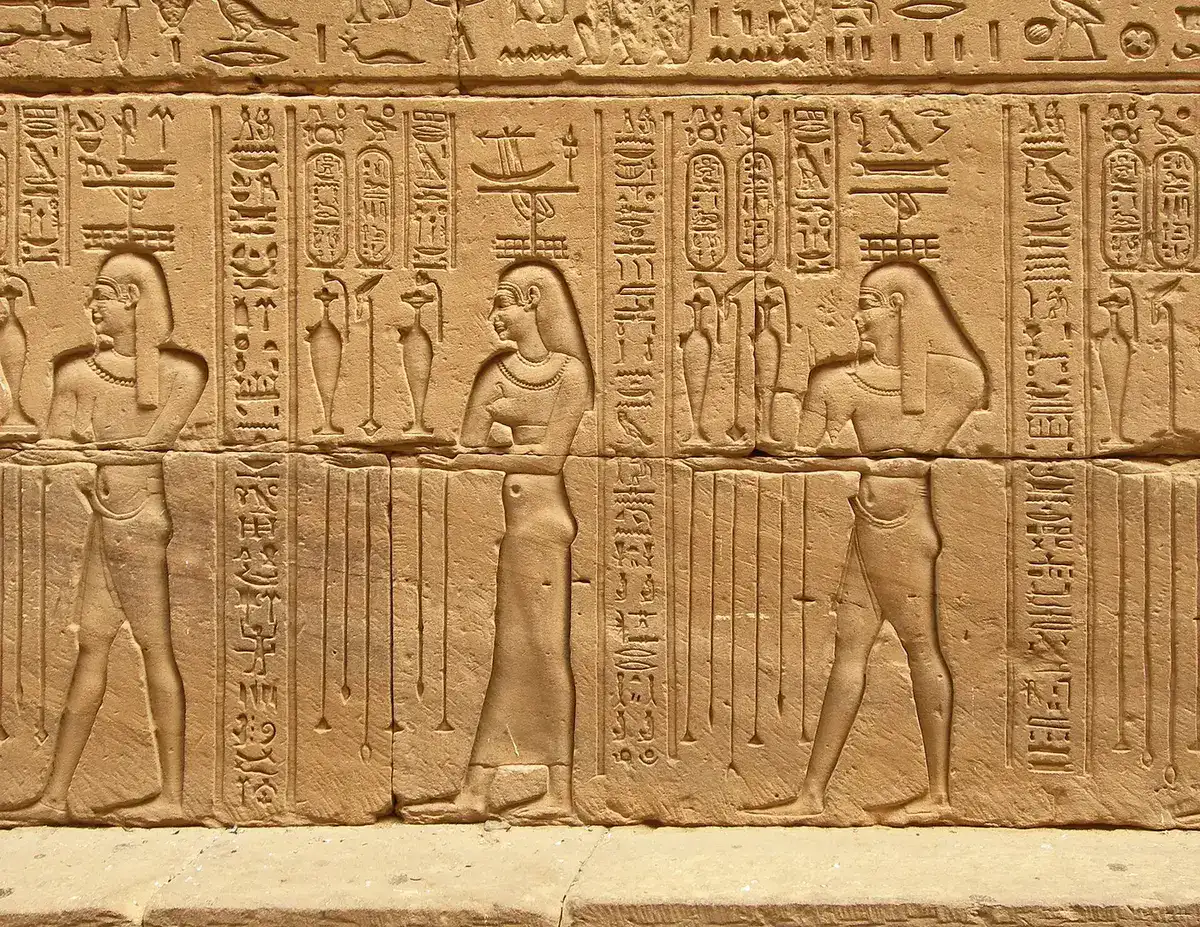
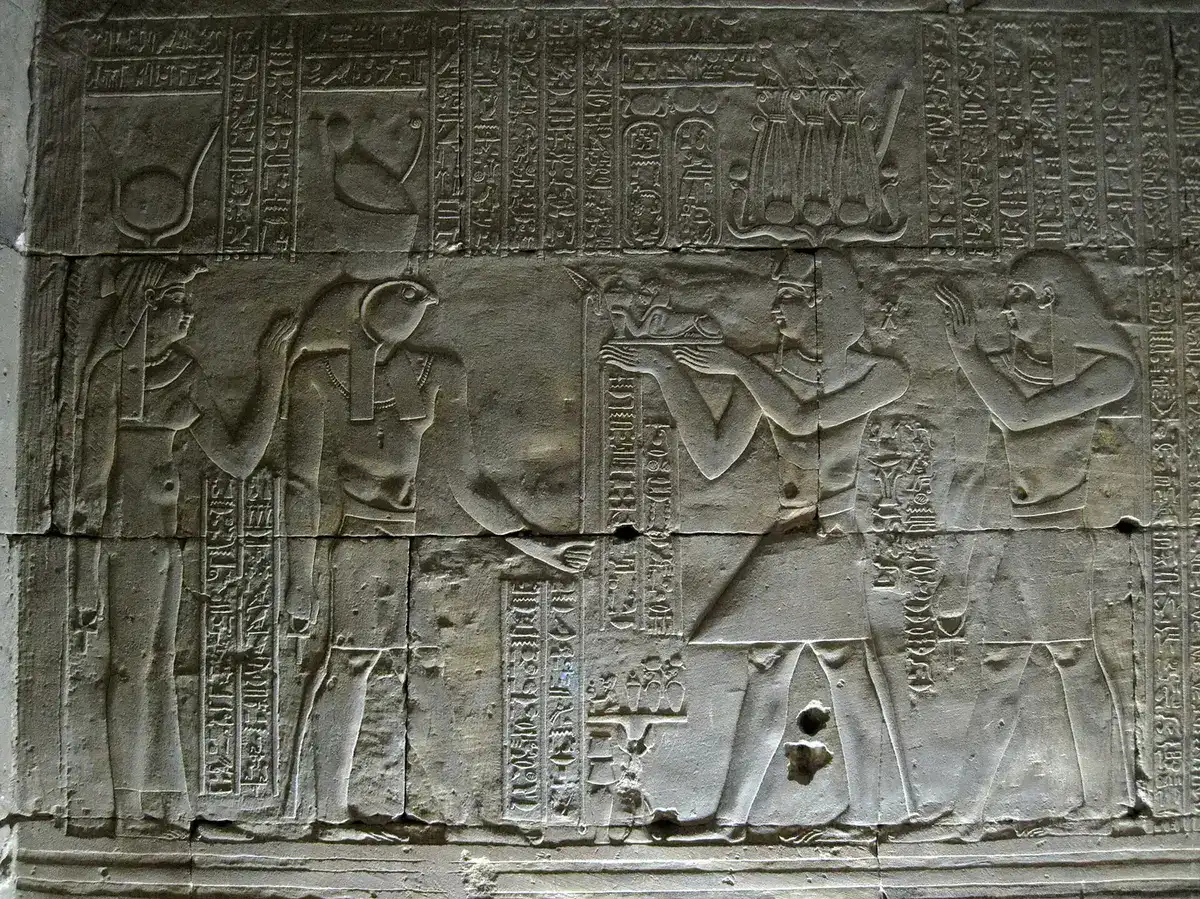
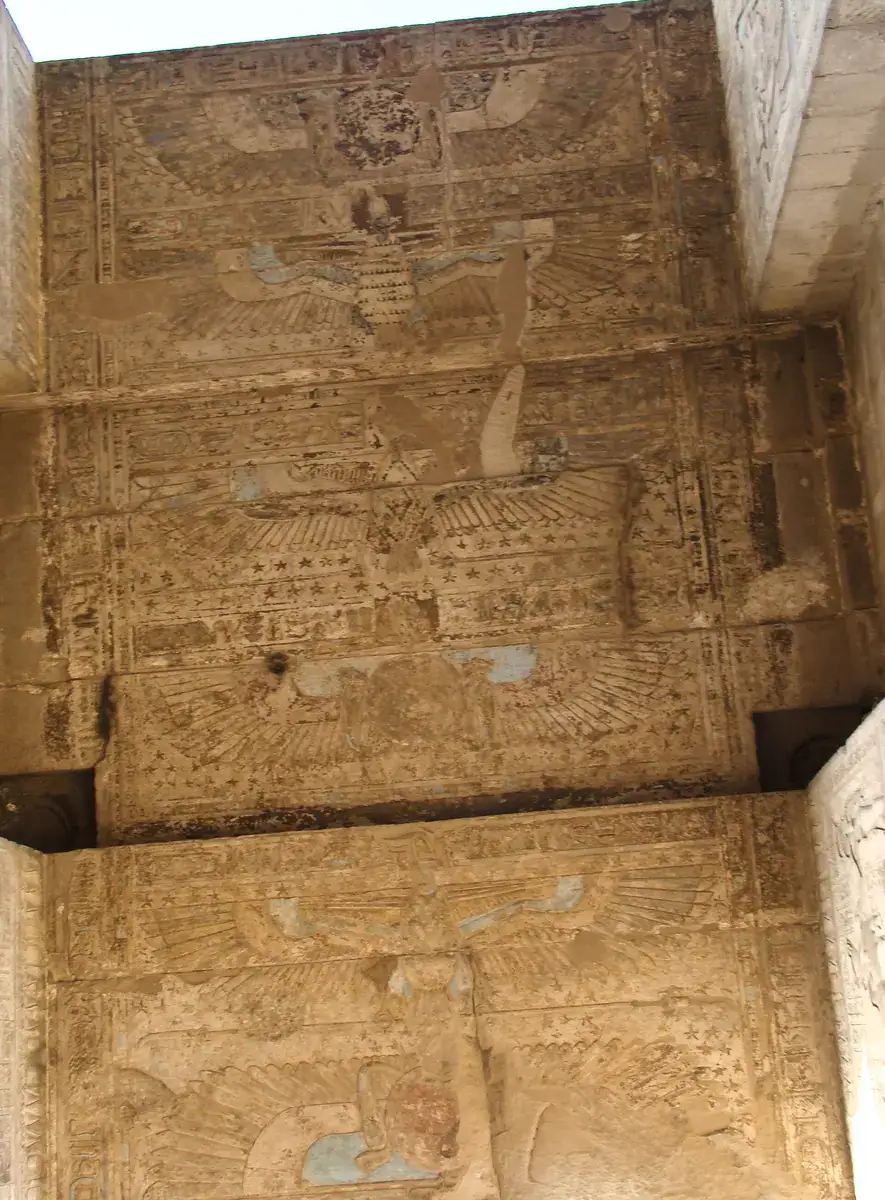
The walls preserve one of the richest collections of late Egyptian temple inscriptions. They record offerings, processions, local theology, building traditions and ritual performances that help scholars understand how a major sanctuary functioned.
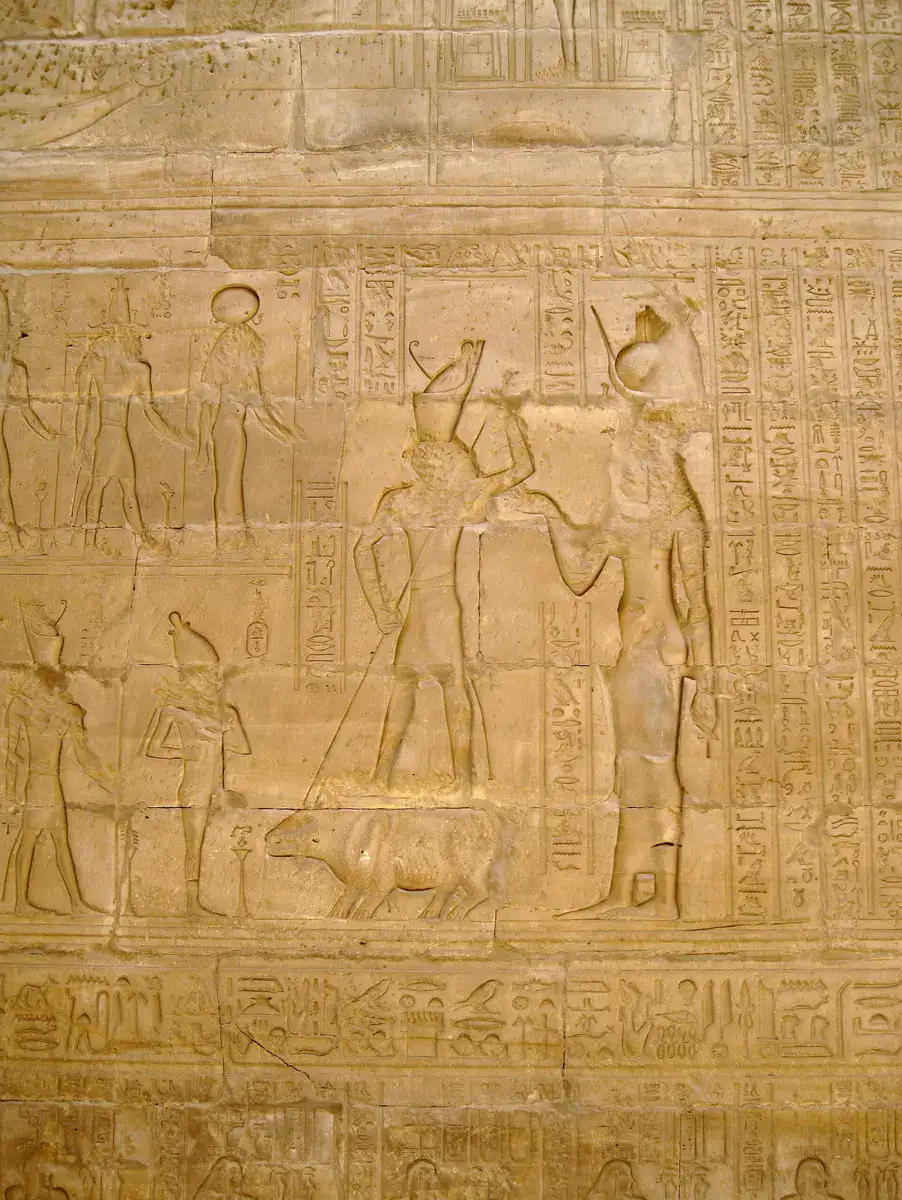
Among the most dramatic scenes are episodes of Horus confronting Set, the force associated with the murder of Osiris and the disruption of rightful rule. In several reliefs, Set appears in animal form while Horus strikes him with a spear.
The victory was understood as a recurring restoration of cosmic order. By taking part symbolically, the reigning monarch presented himself as the earthly successor of Horus and the legitimate protector of Egypt.
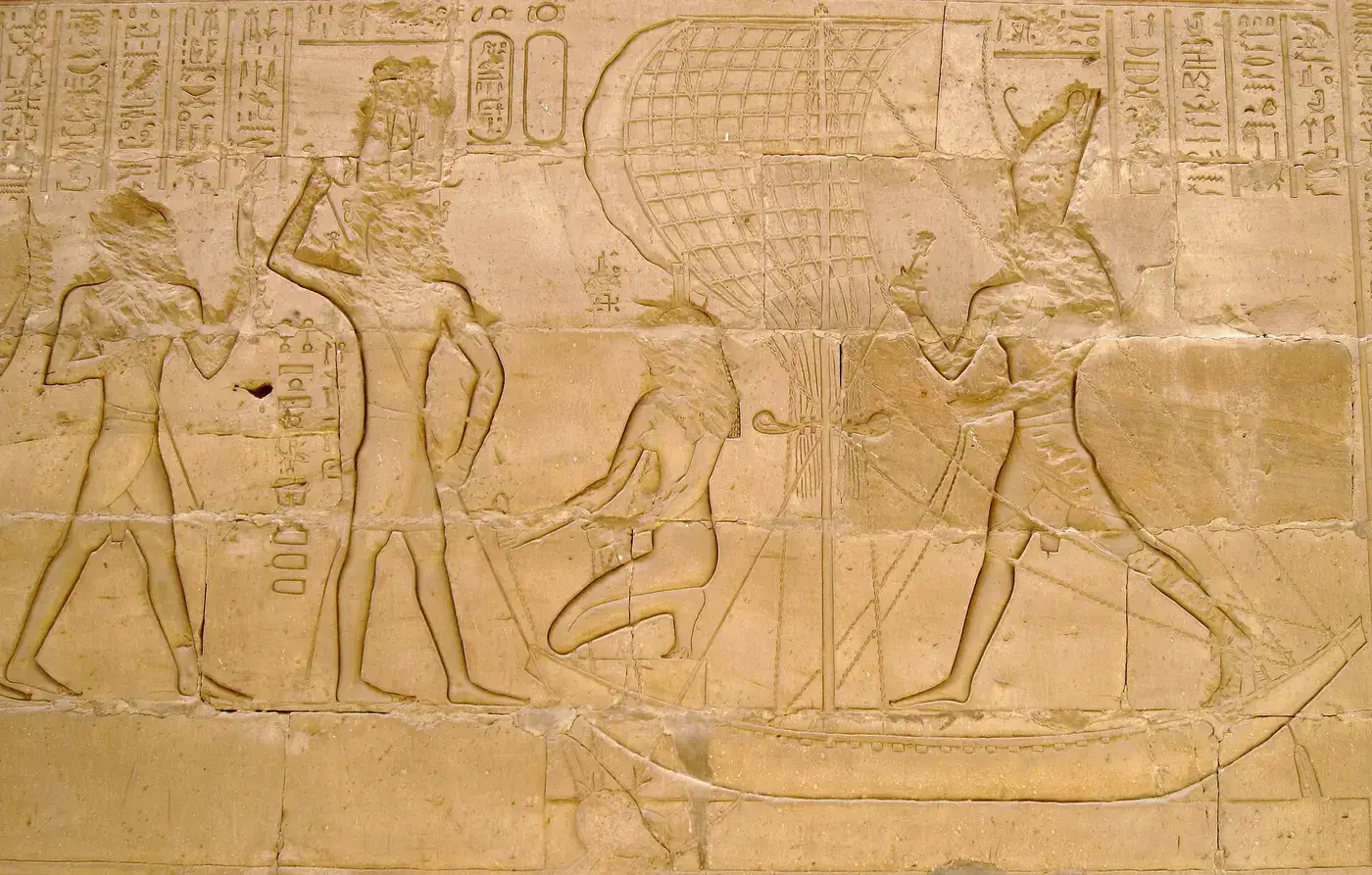
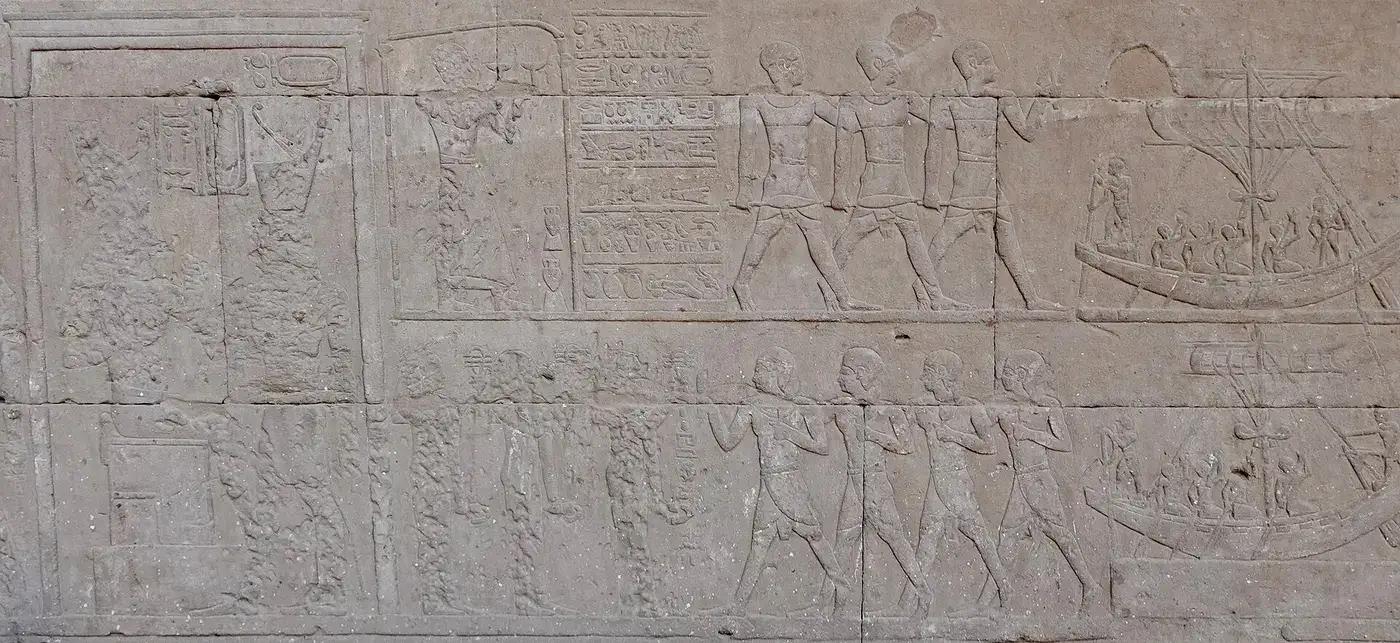
The Feast of the Beautiful Meeting
Each year, Hathor’s sacred image travelled by ceremonial boat from Dendera to meet Horus at Edfu. Her arrival began days of processions, offerings, music and celebration centred on the reunion of the two deities.
The divine images were carried in portable barques and brought together in carefully prepared ritual spaces. Their meeting represented affection, fertility and the renewal of life, while also strengthening the religious relationship between the communities of Dendera and Edfu.
The festival reveals how the Nile served as both a practical highway and a sacred route. Temples were not isolated monuments; they formed a connected religious landscape in which gods, priests and pilgrims travelled between cities.
Edfu Temple Gallery
Visiting Edfu Temple
Arrive Early
Morning temperatures are cooler and the halls are often quieter.
Allow 90 Minutes
Explore the pylon, halls, sanctuary and wall scenes without rushing.
Check Current Hours
Opening hours and admission fees may change.
Plan Your Arrival
Nile cruises are convenient; private trips offer more flexibility.
Edfu Temple FAQ
Experience Edfu Temple
Walk through the sanctuary of Horus and discover one of Egypt’s most complete ancient temples.
Plan an Edfu Visit